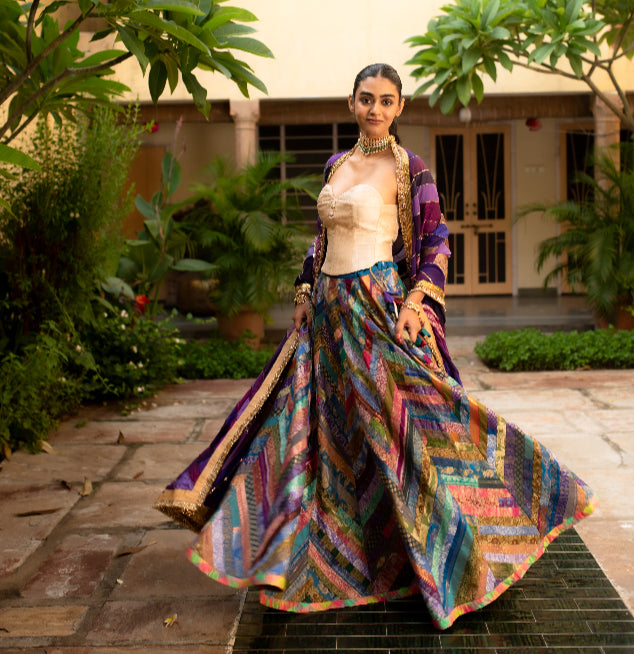
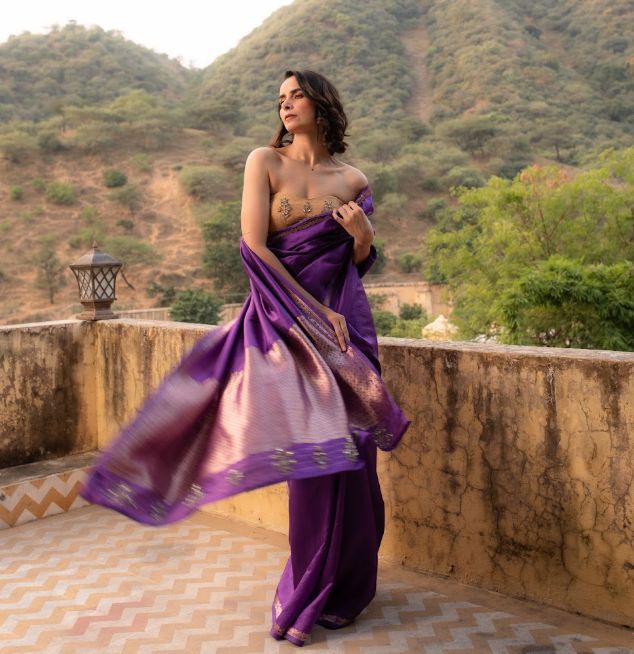
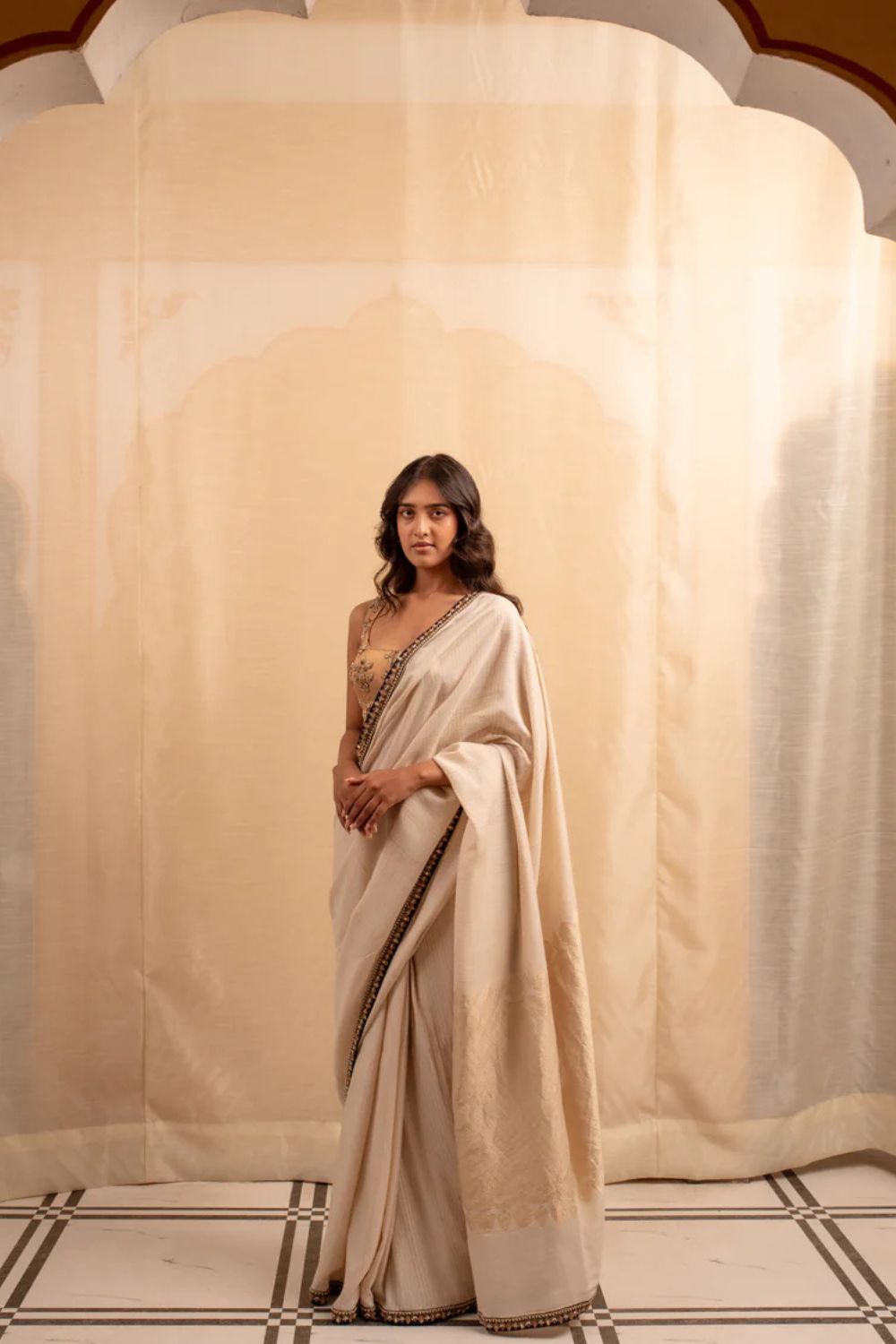
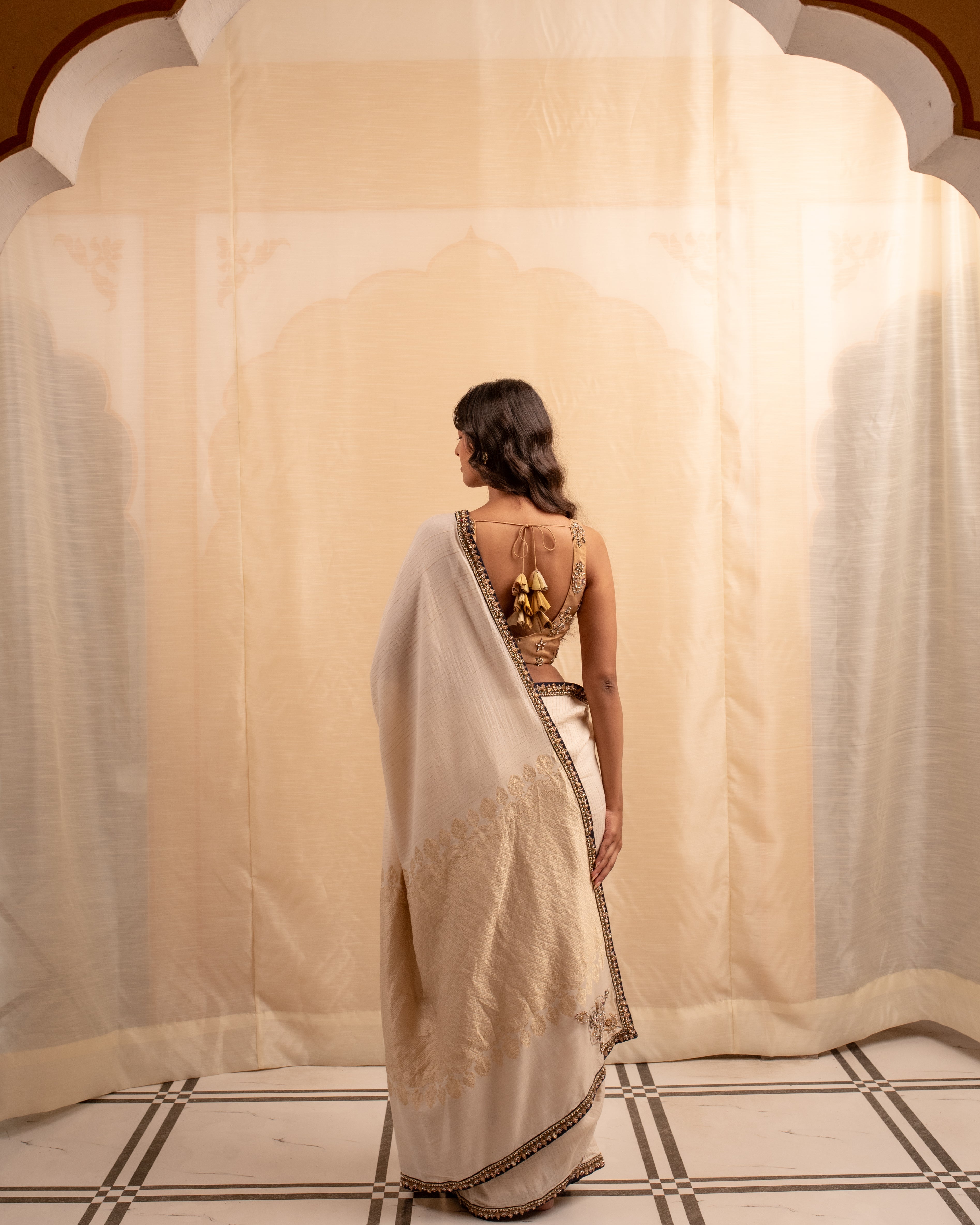
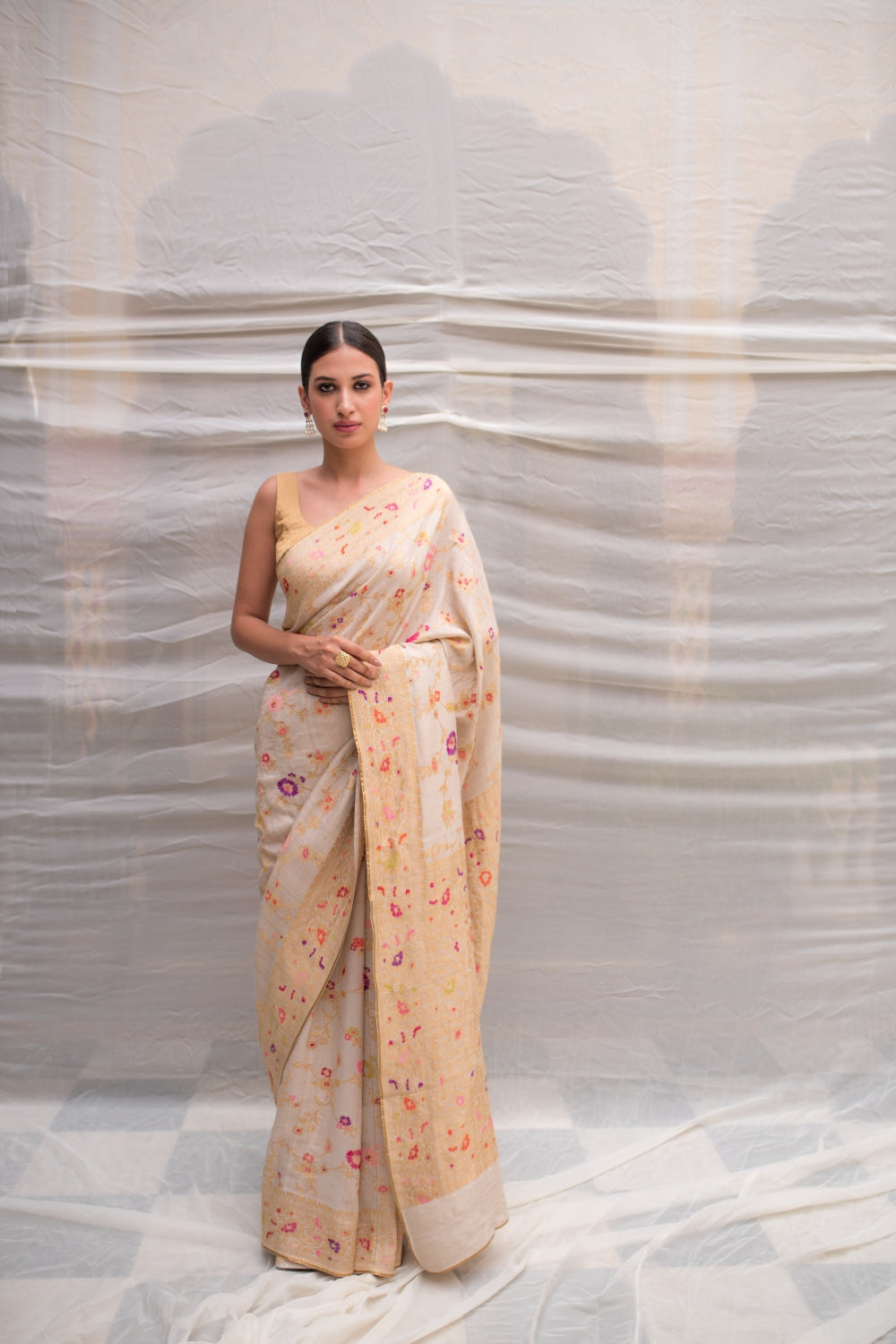
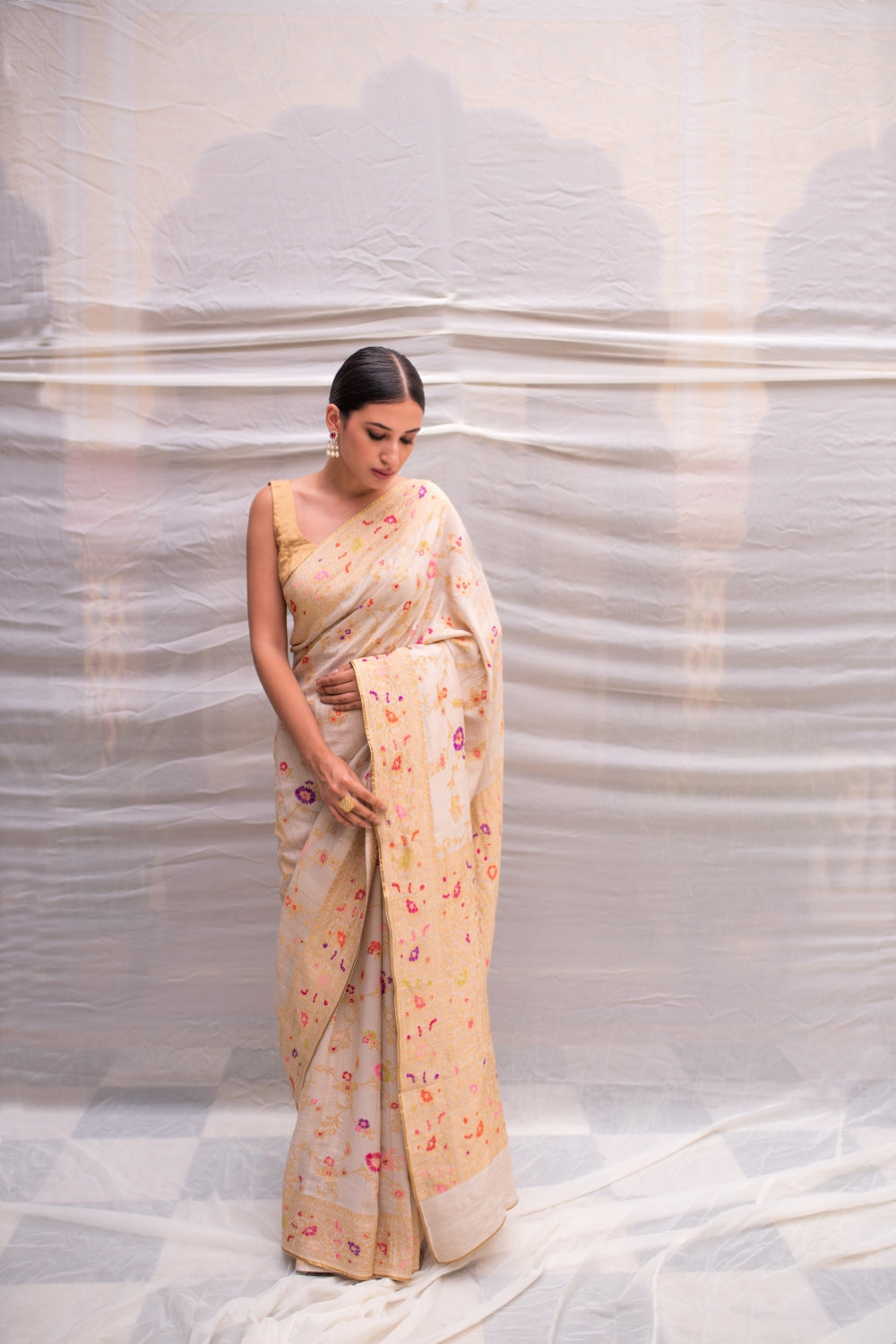
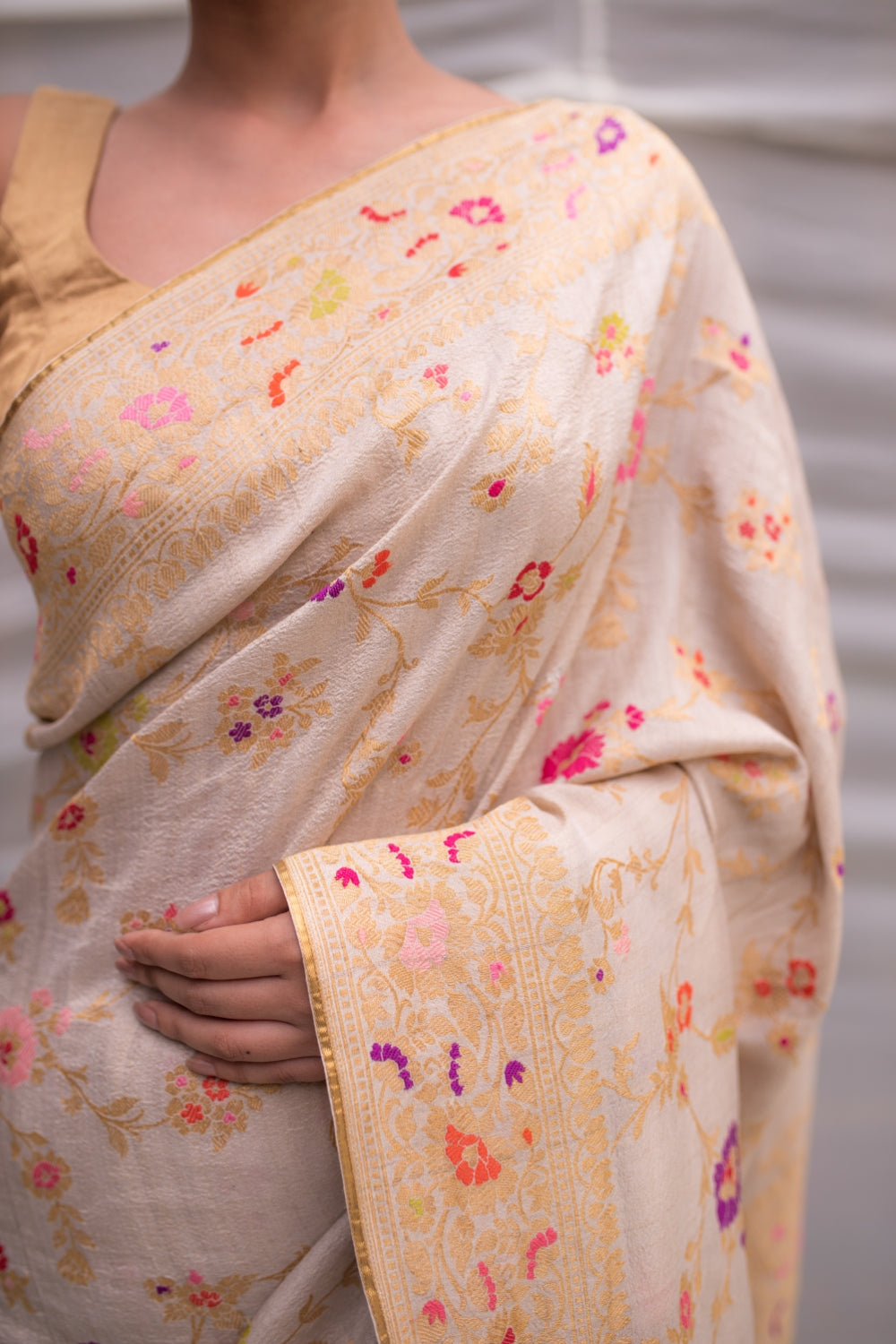
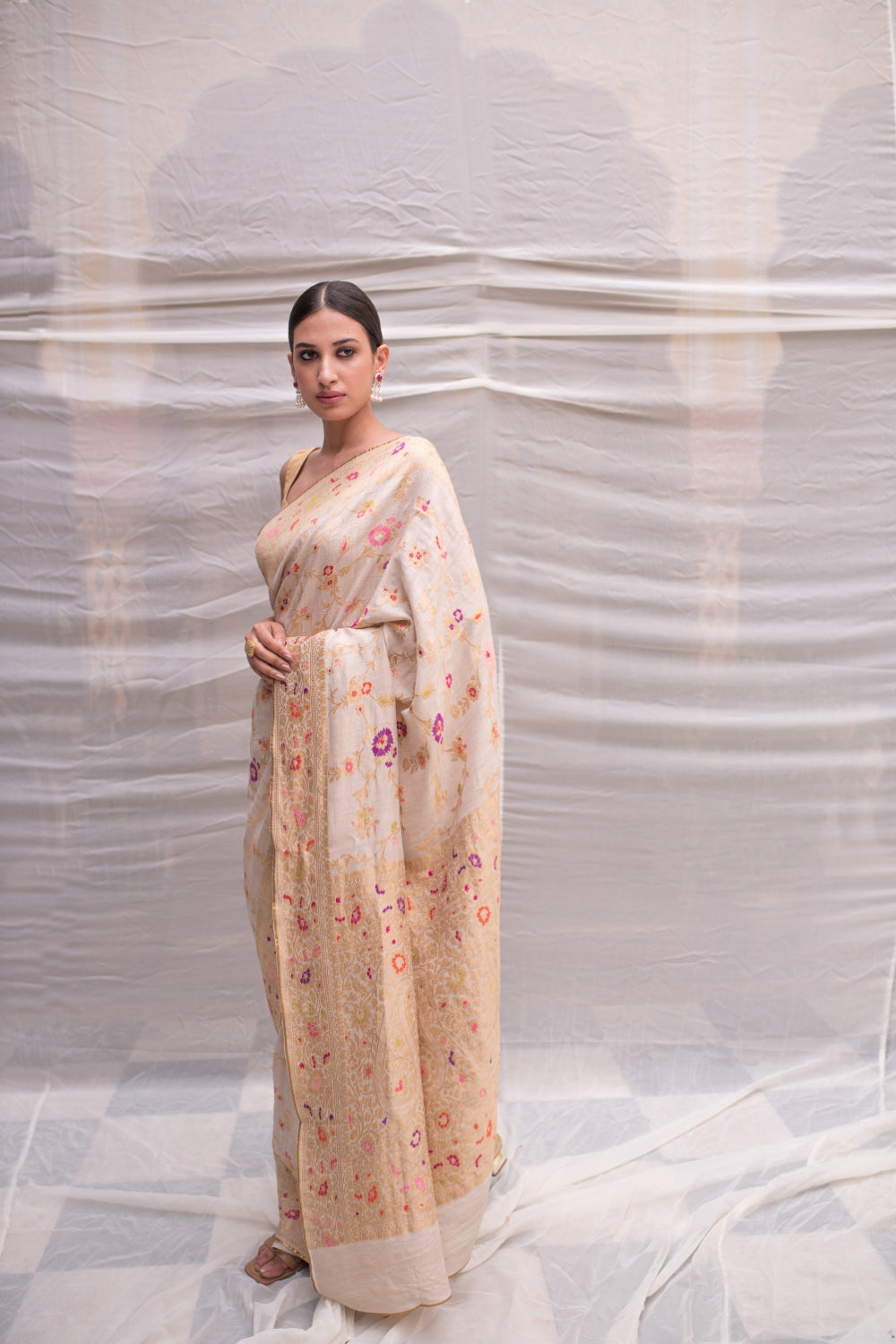
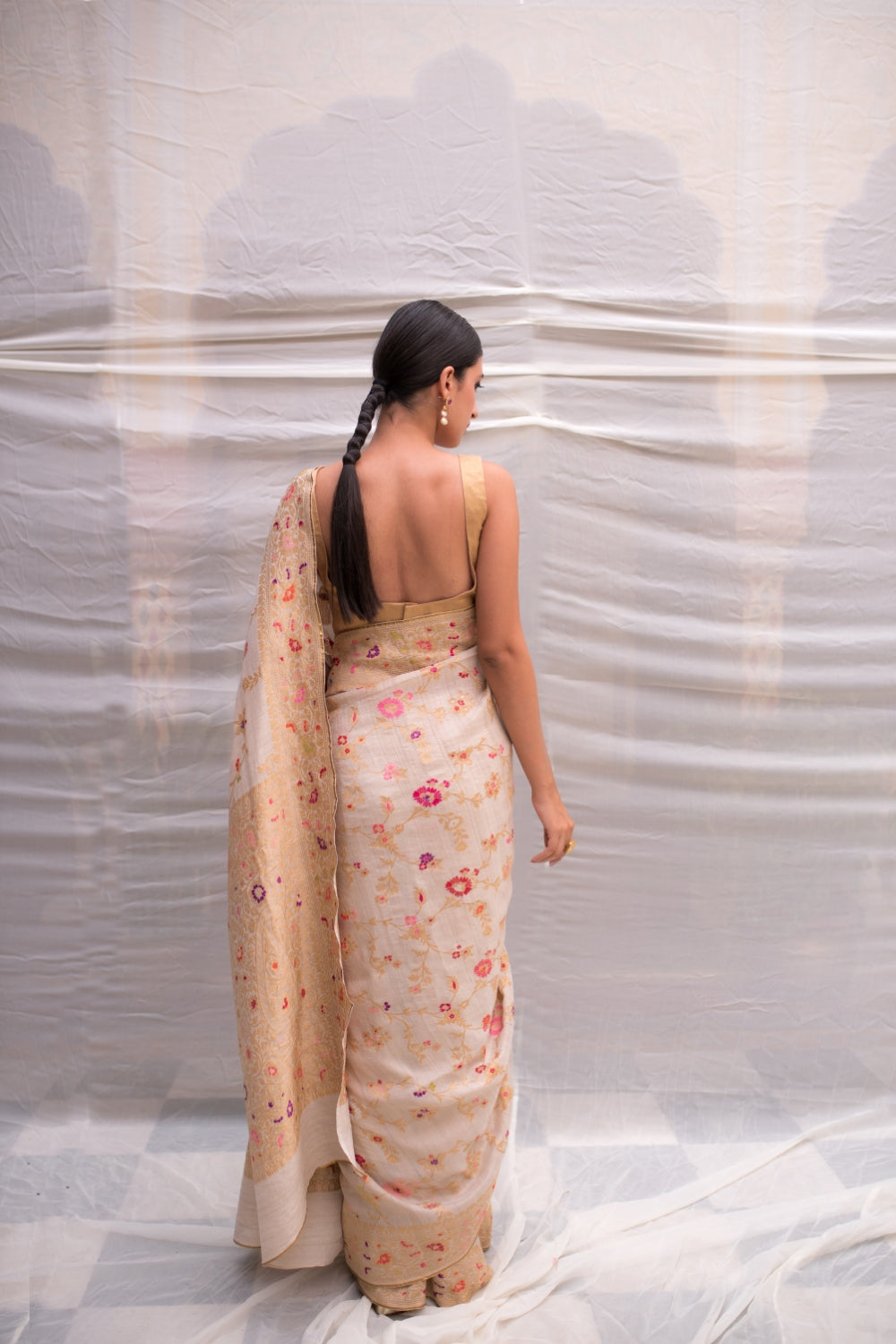
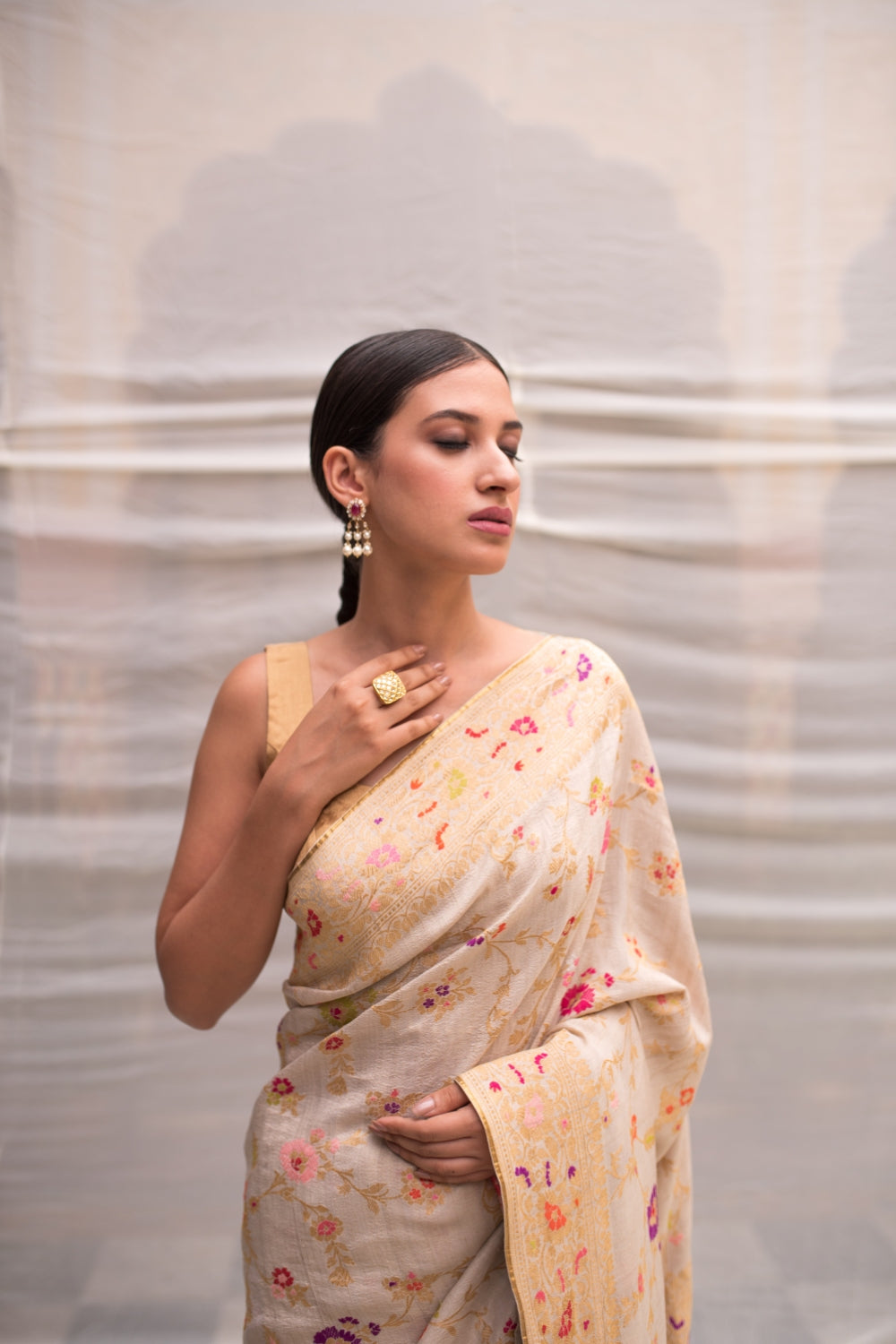
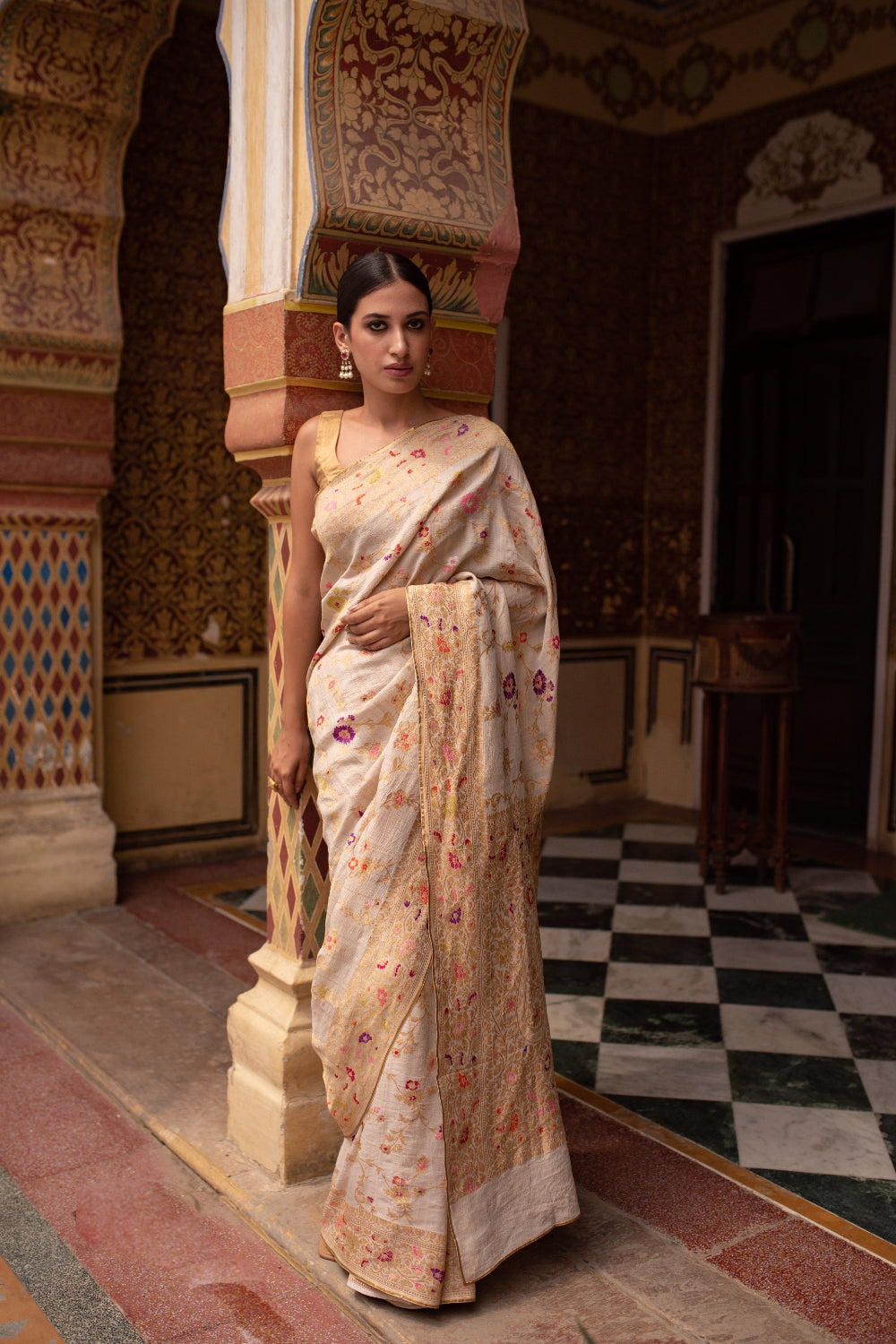
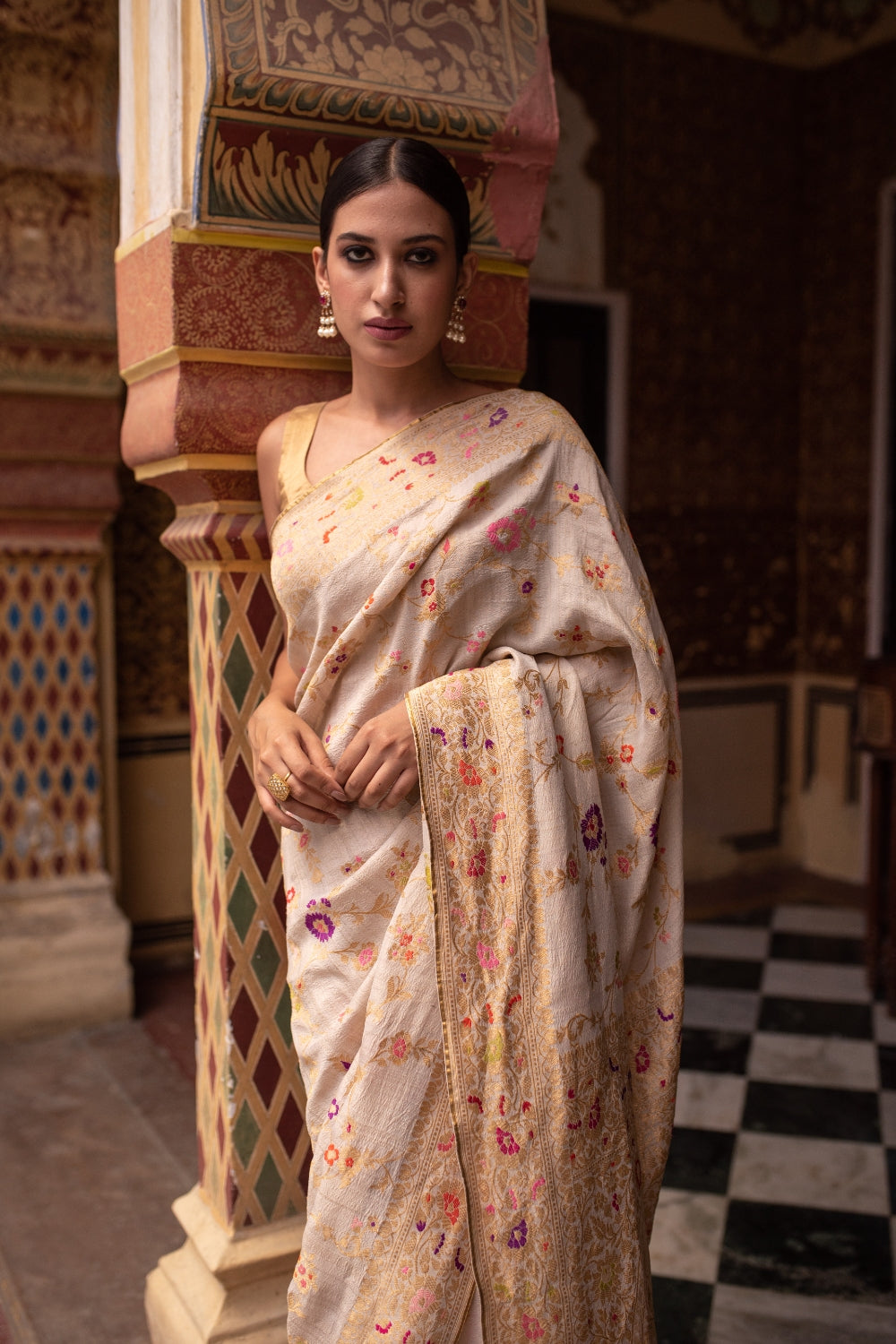
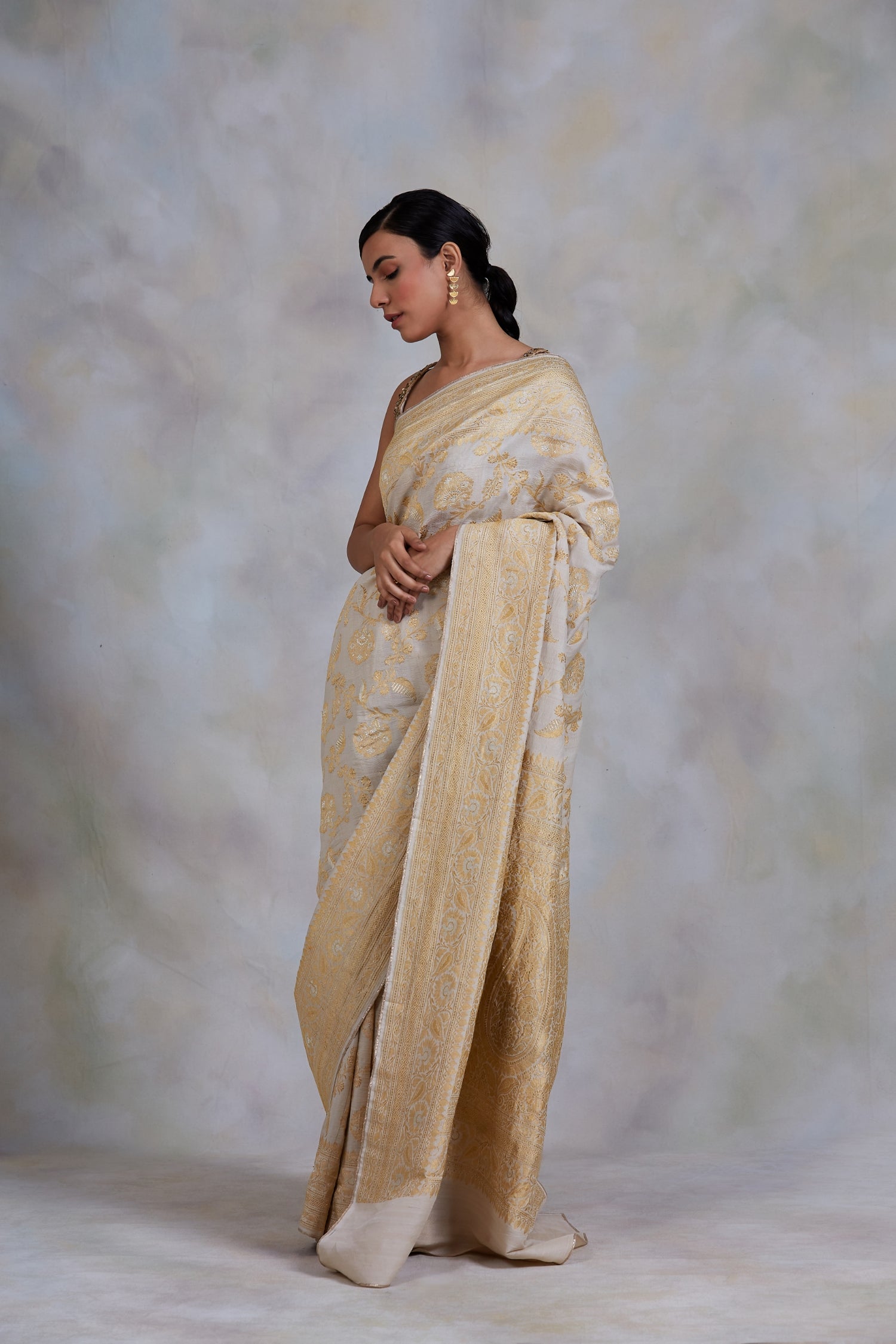
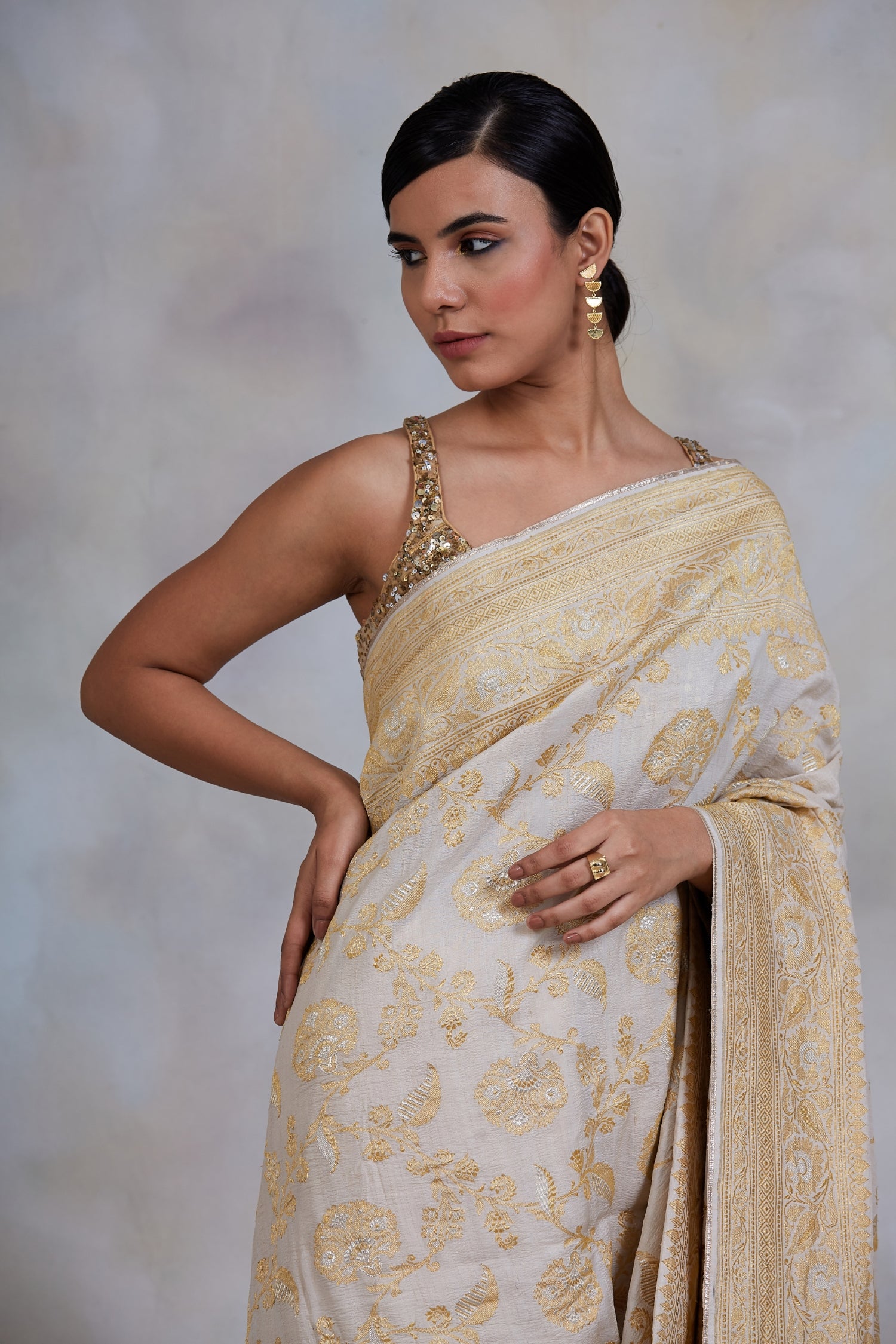
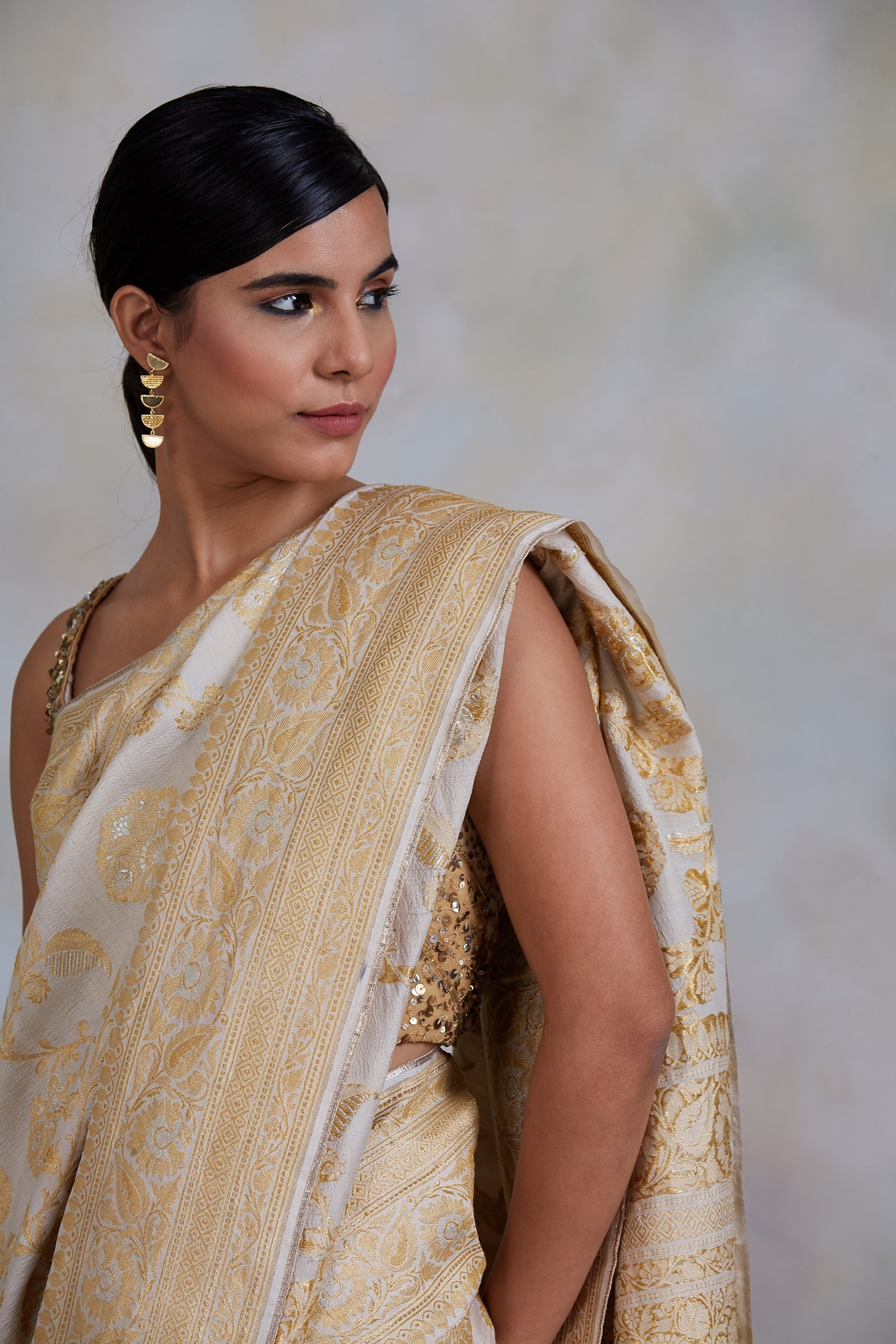
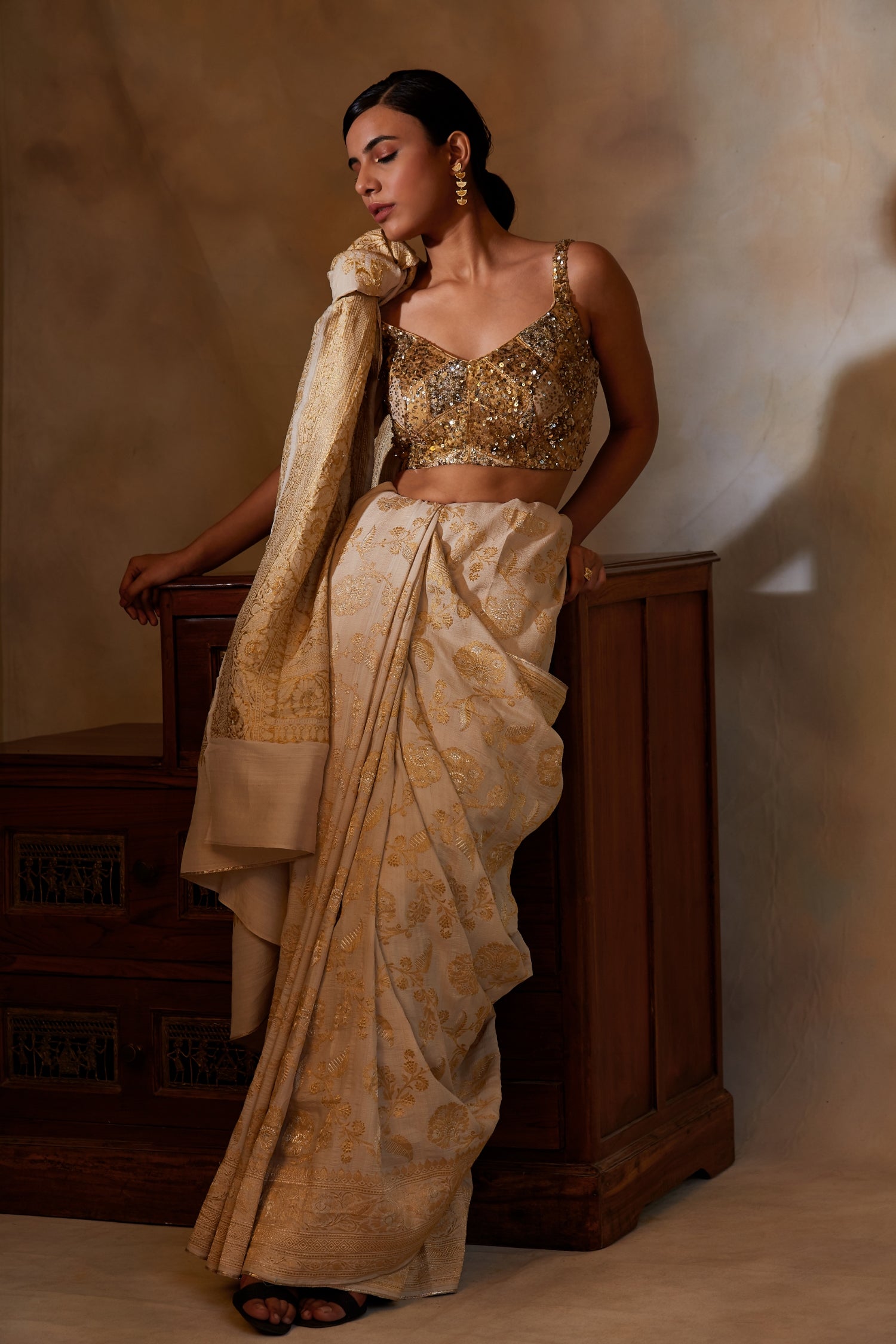
Banarasi Sarees - Tussar

Buy Tussar Banarasi Saree Online

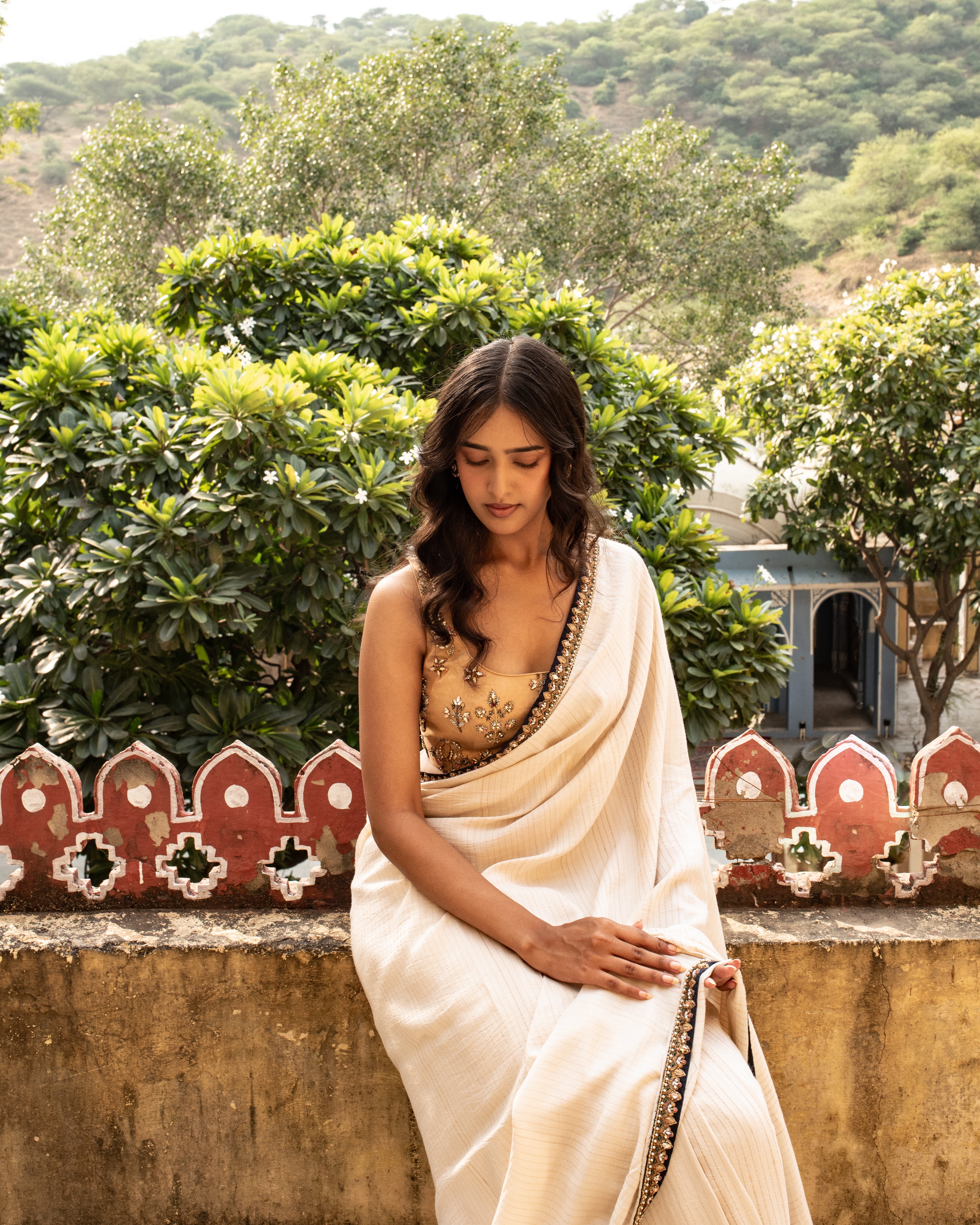
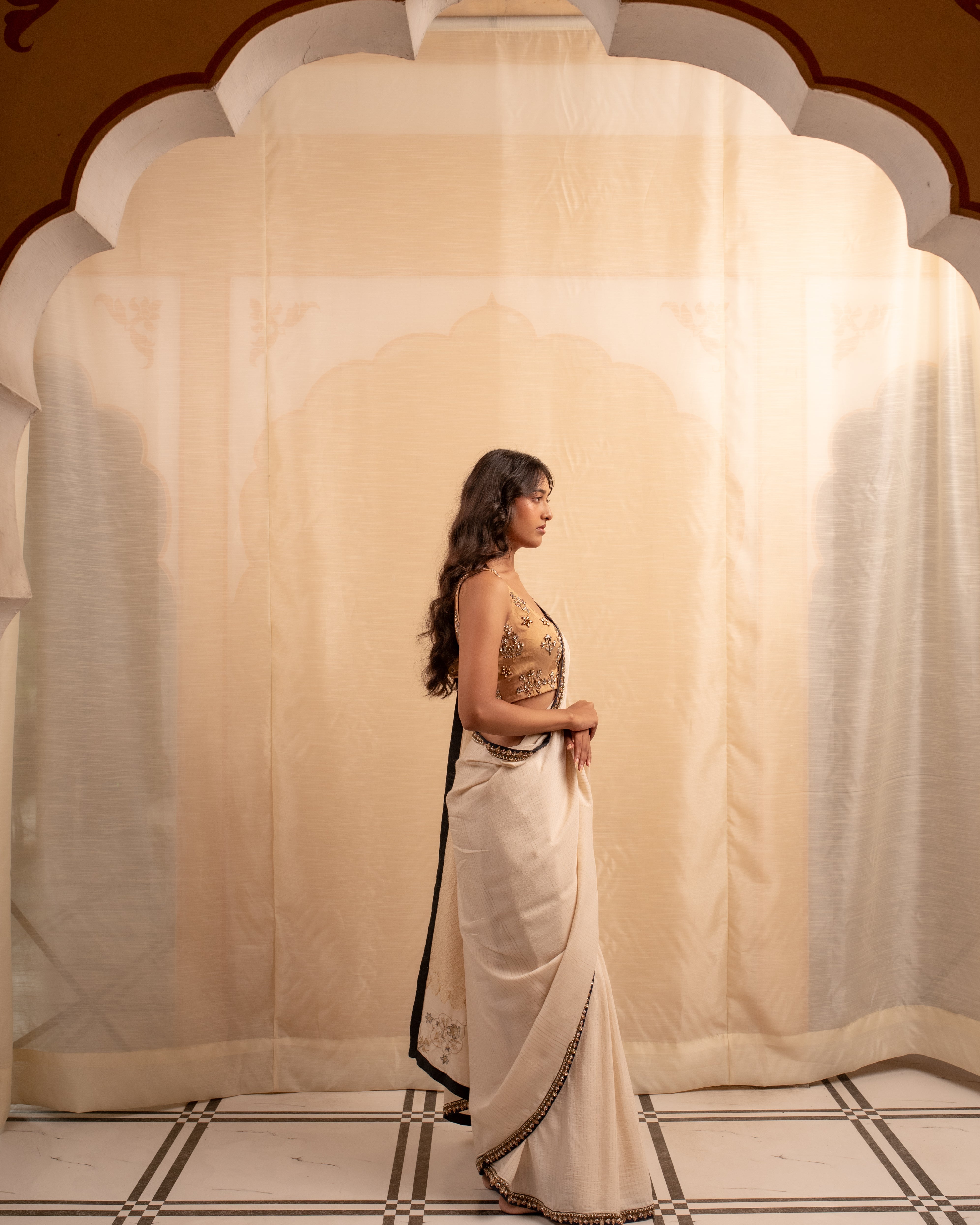
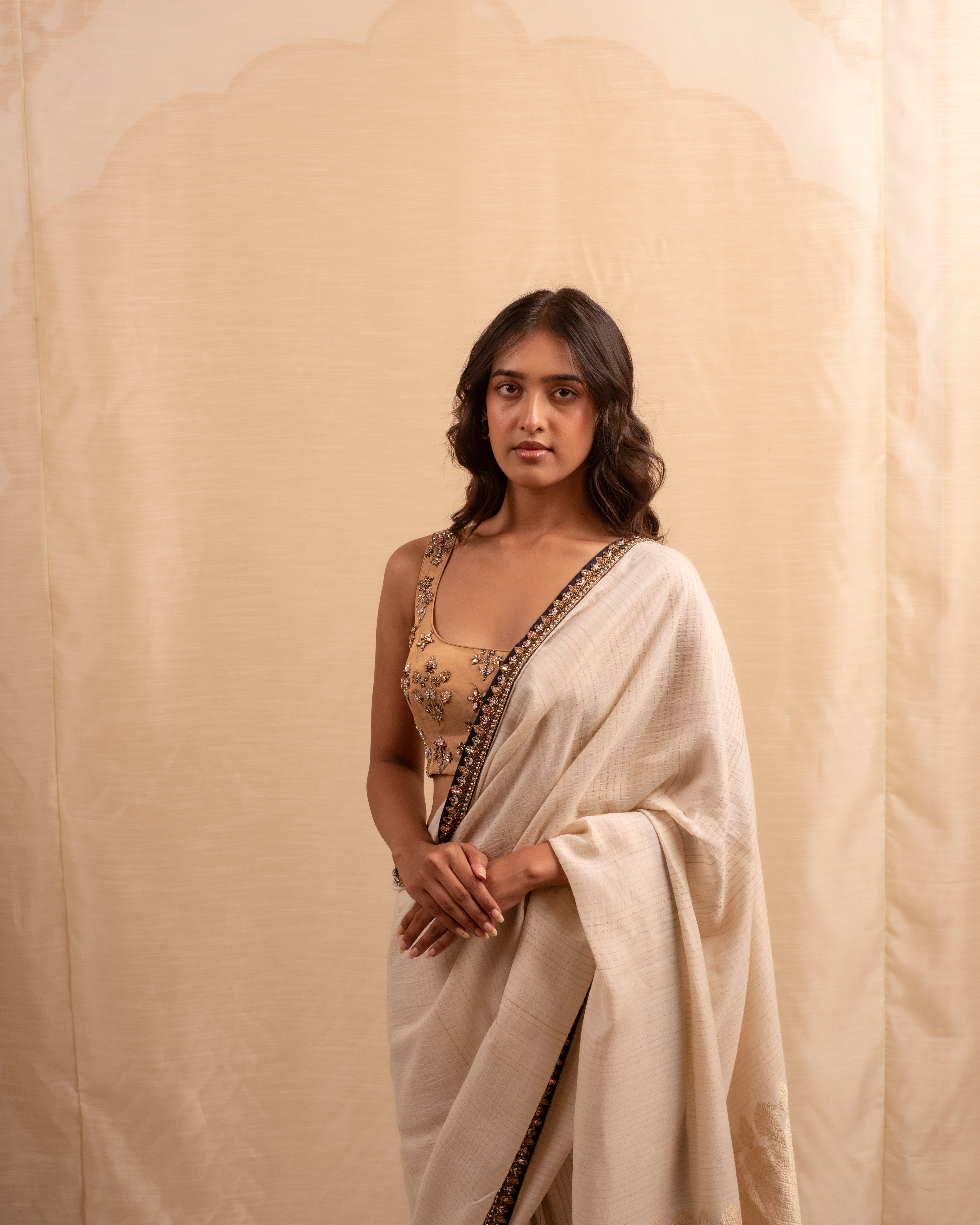
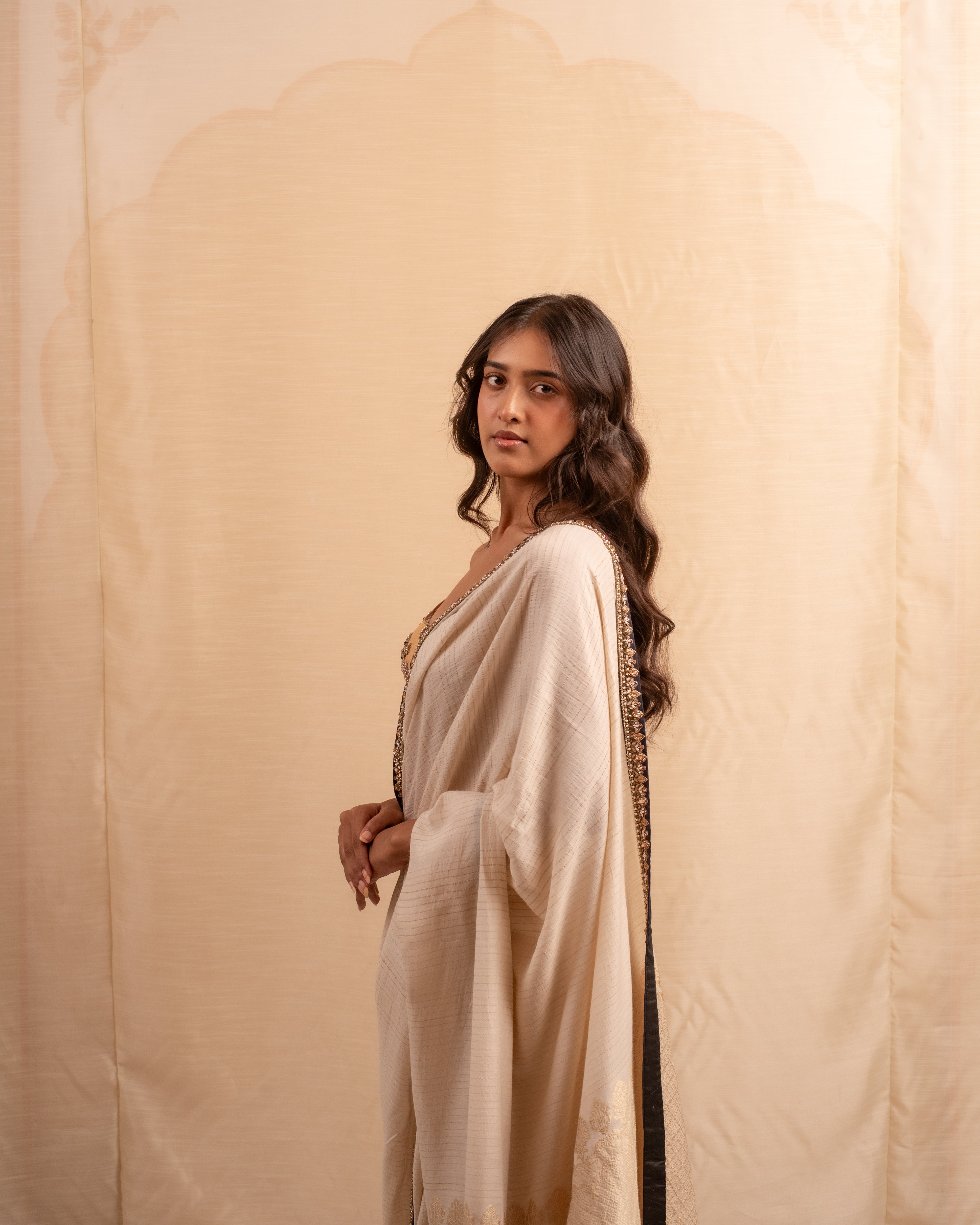
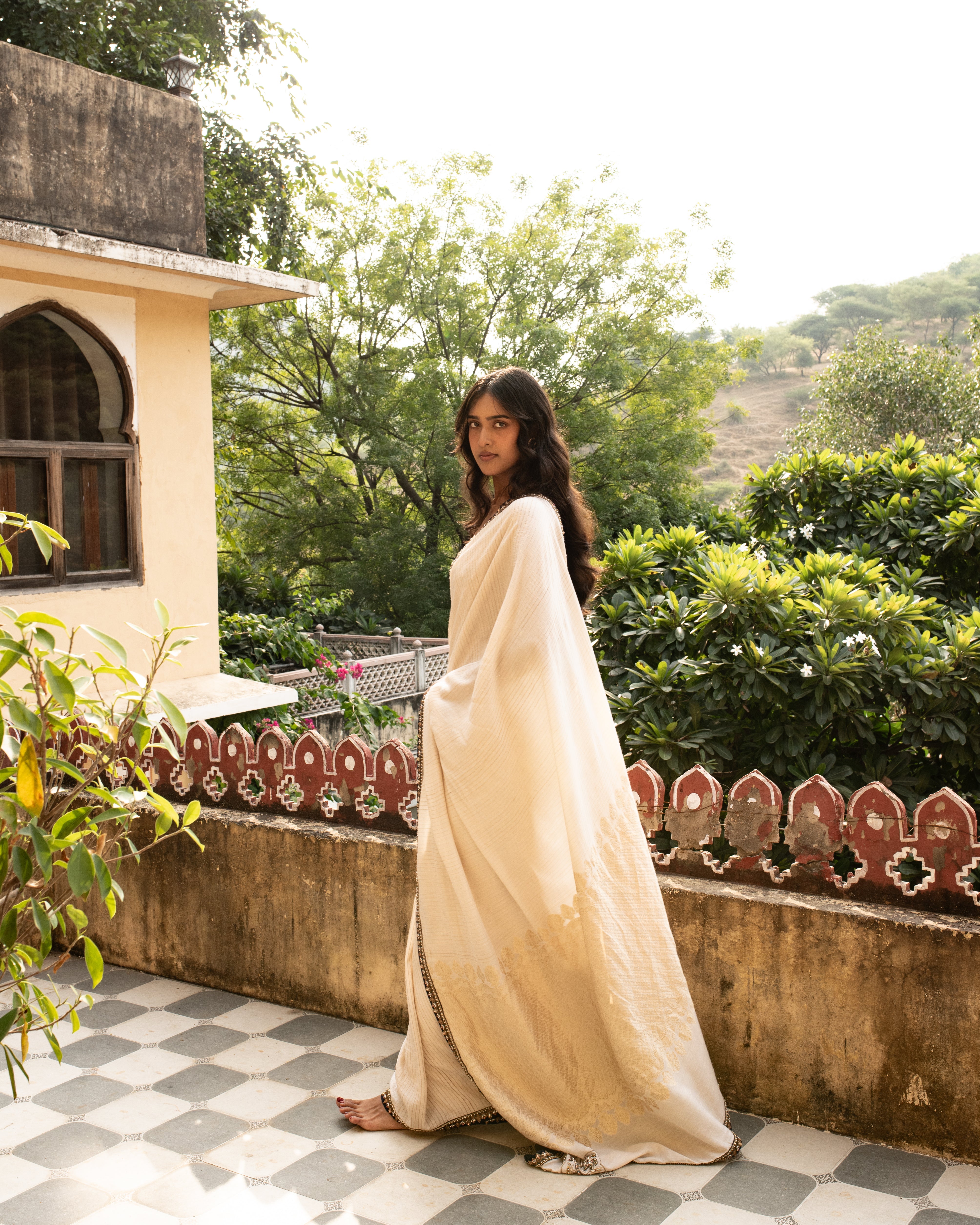
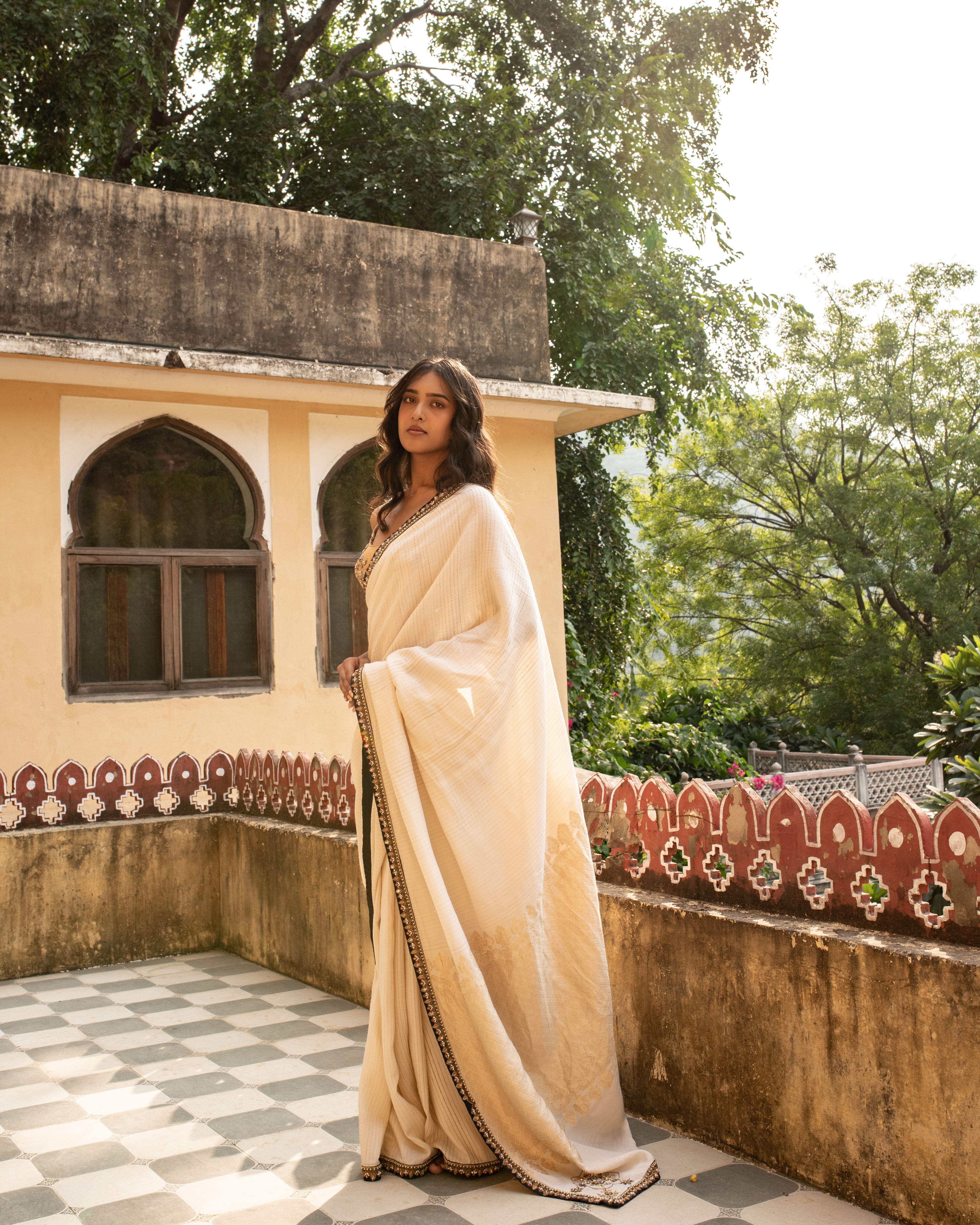
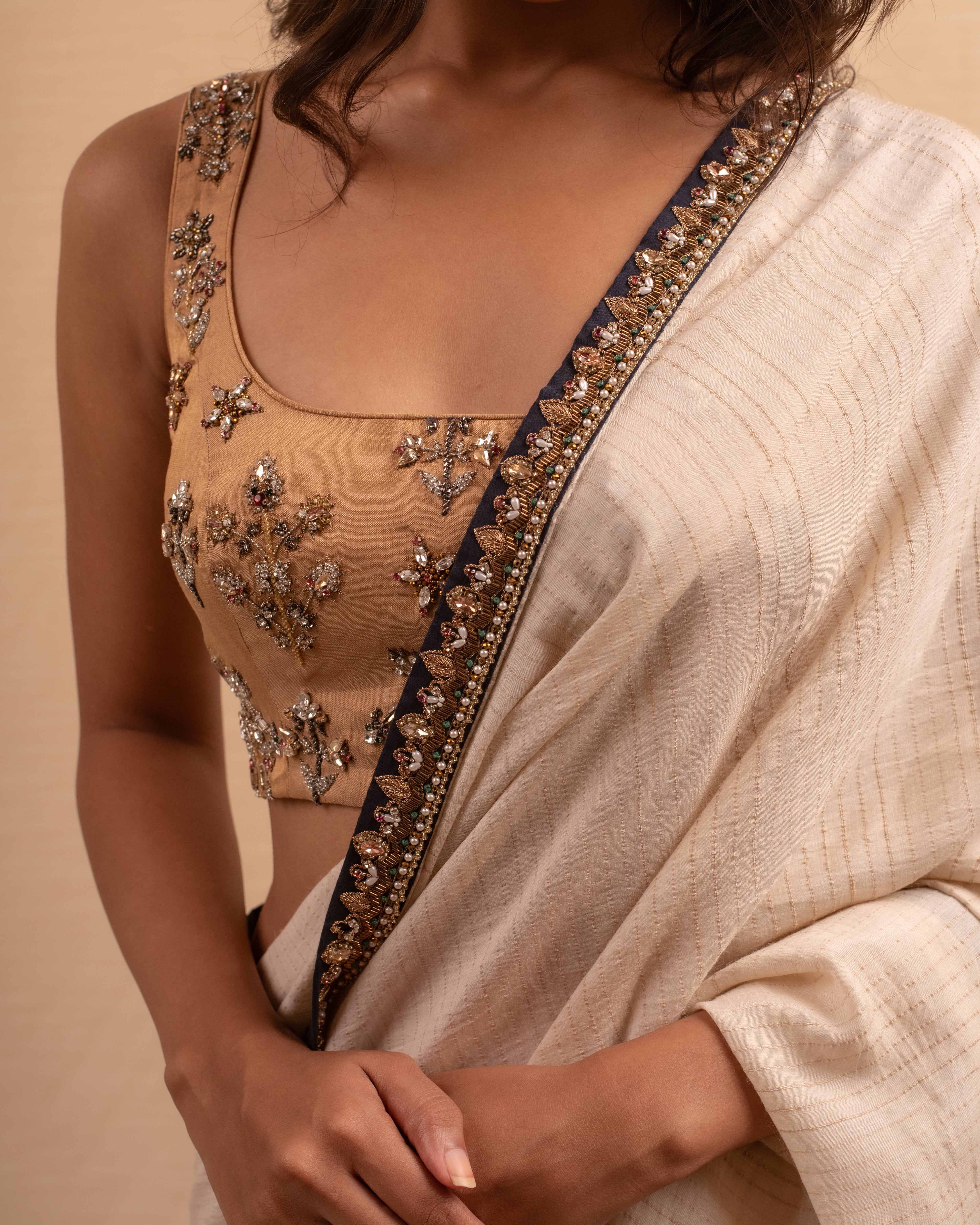
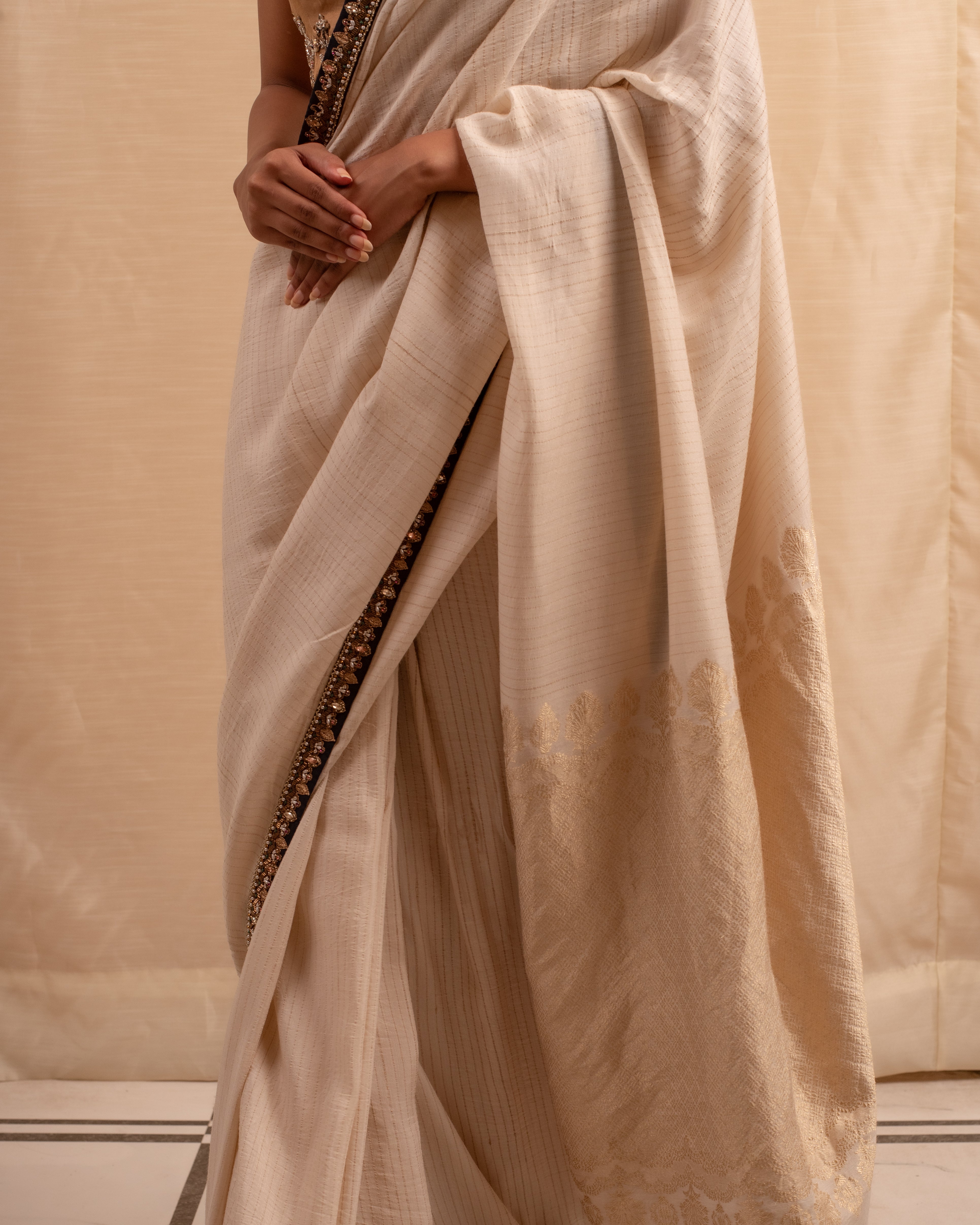
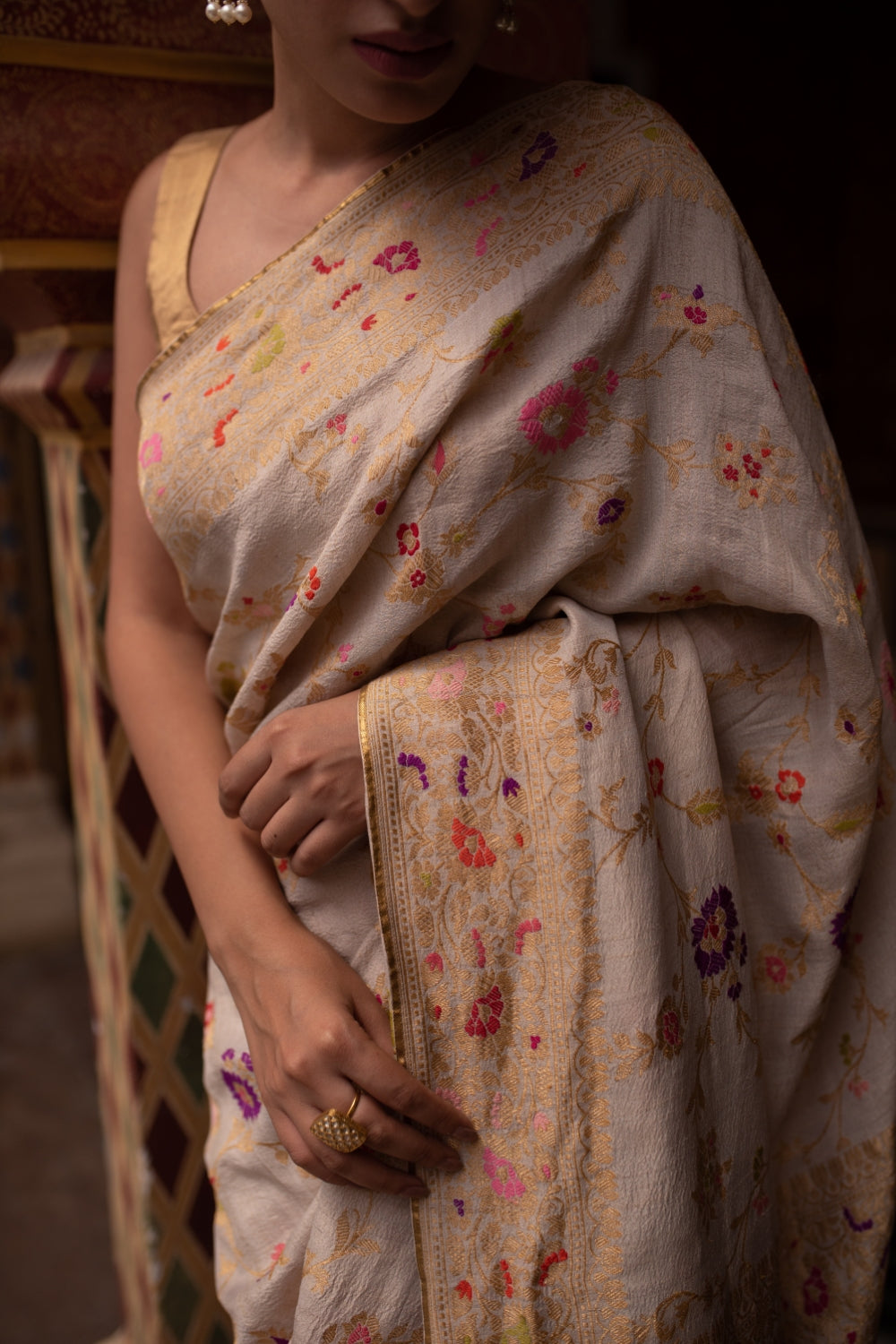
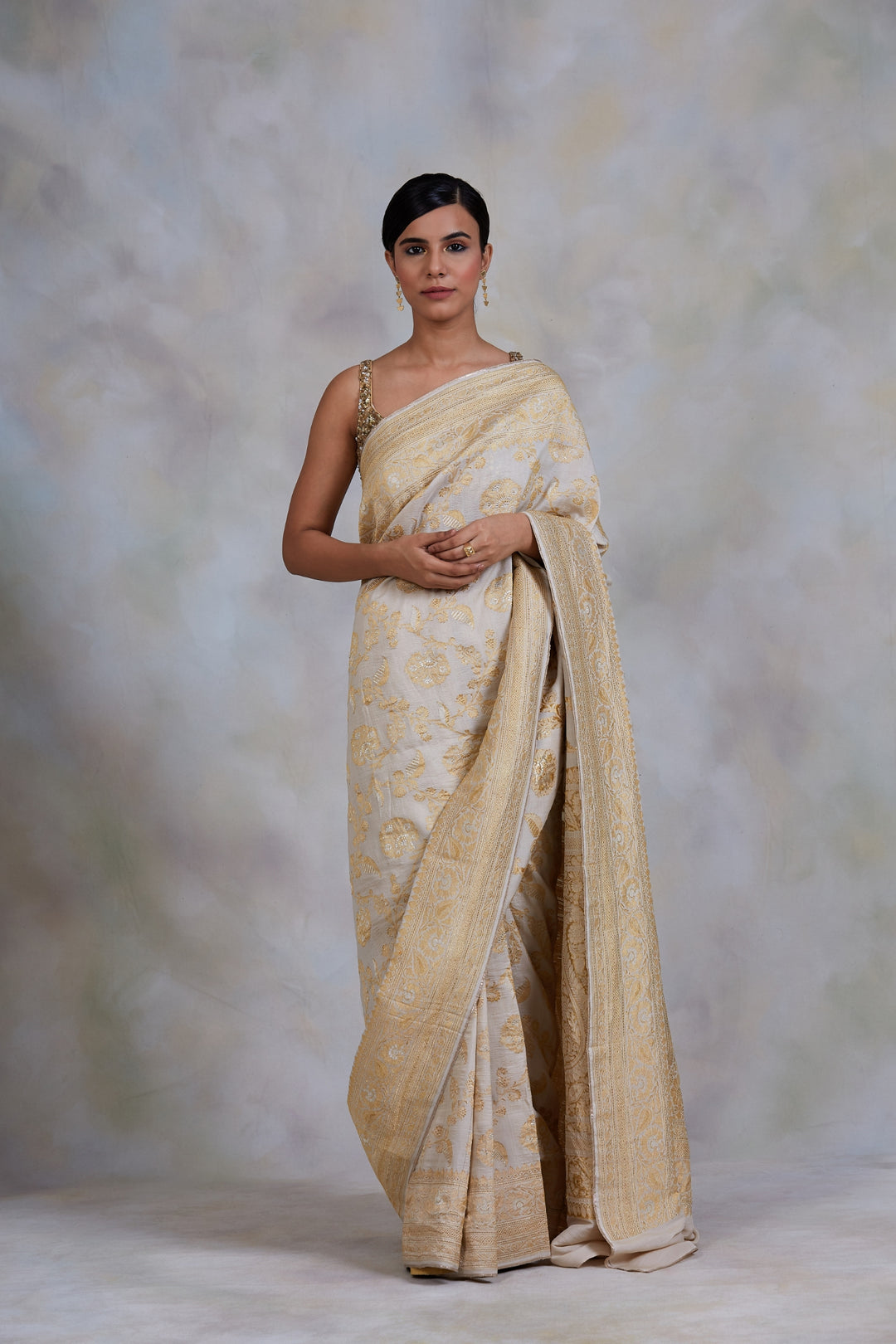
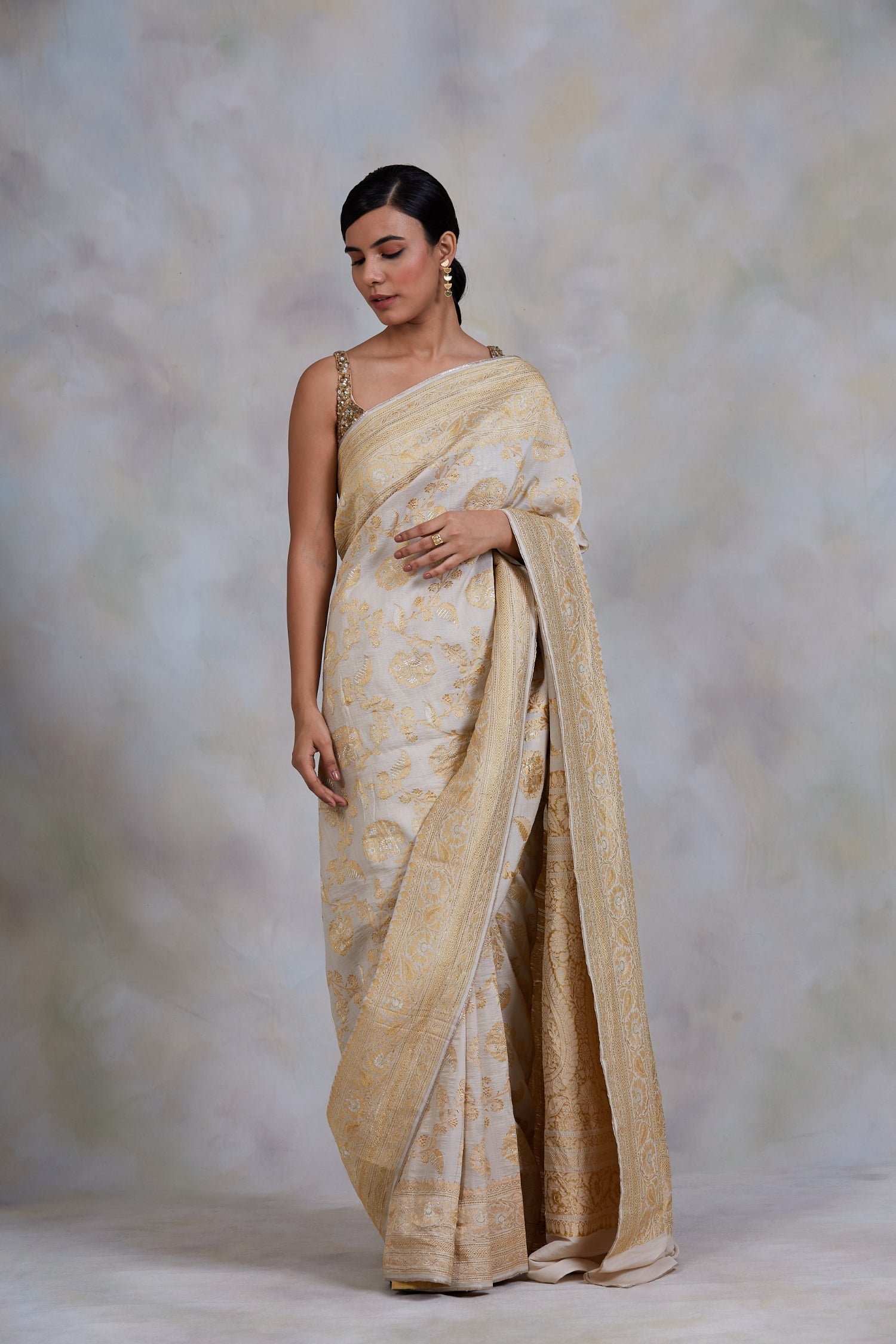
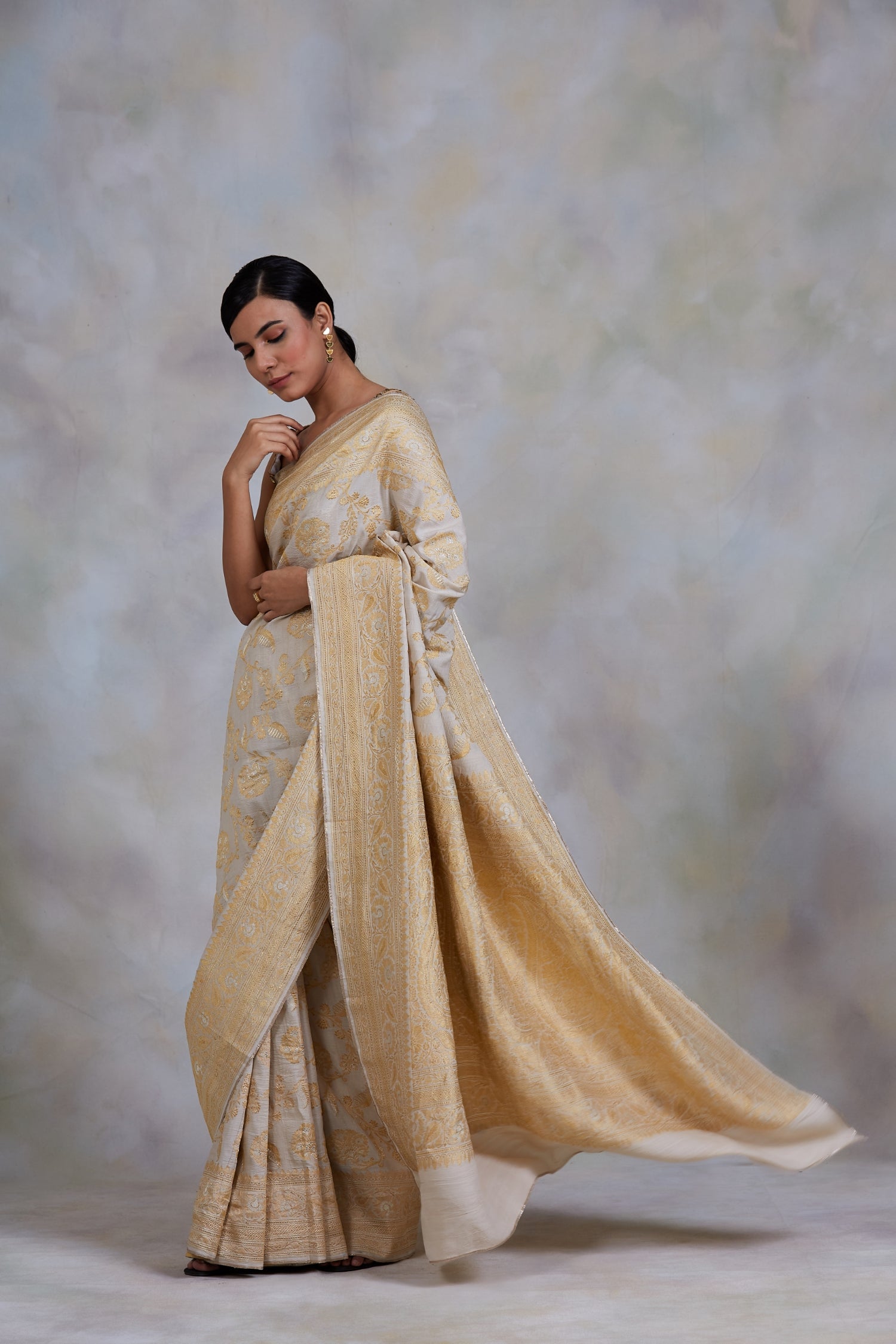
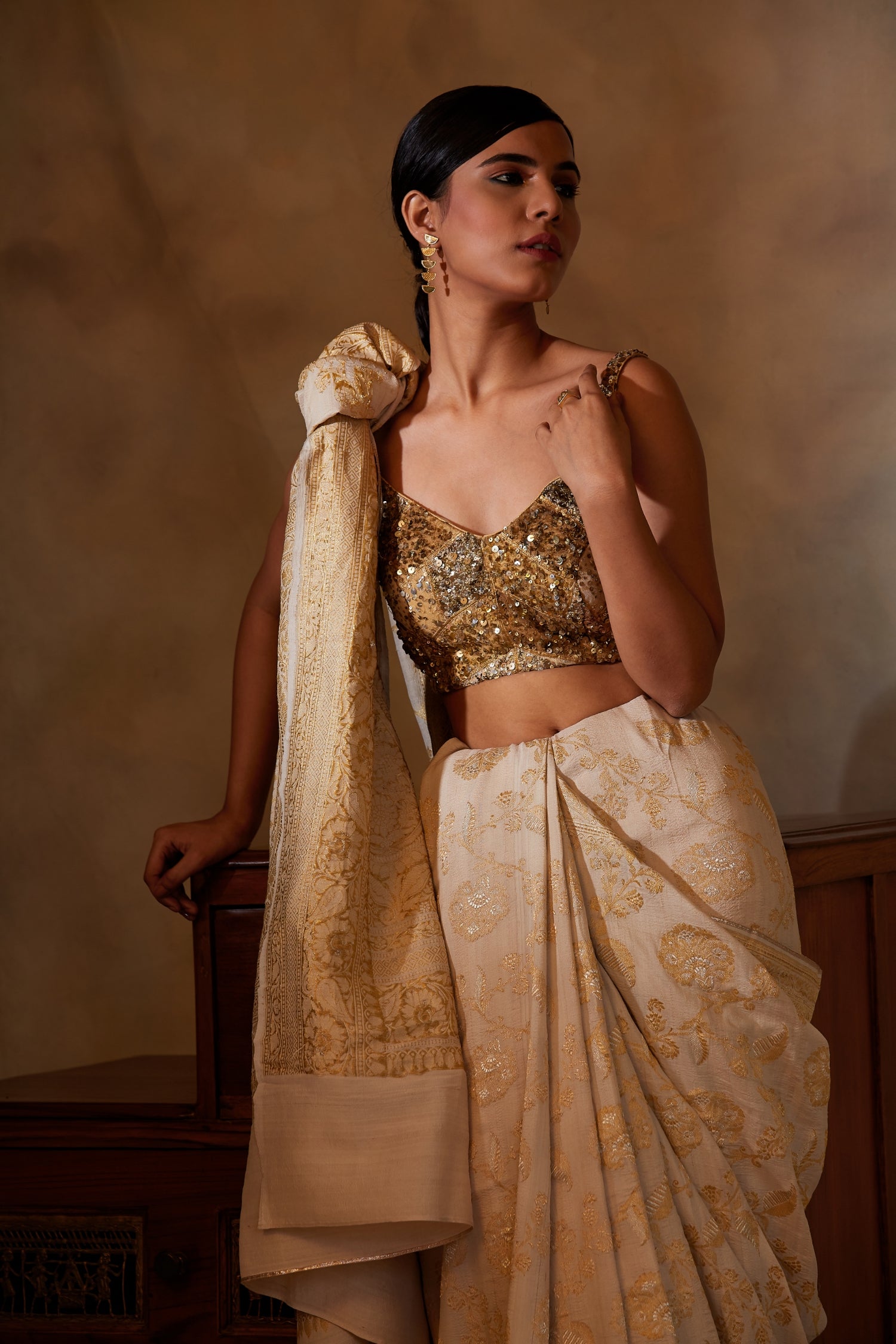
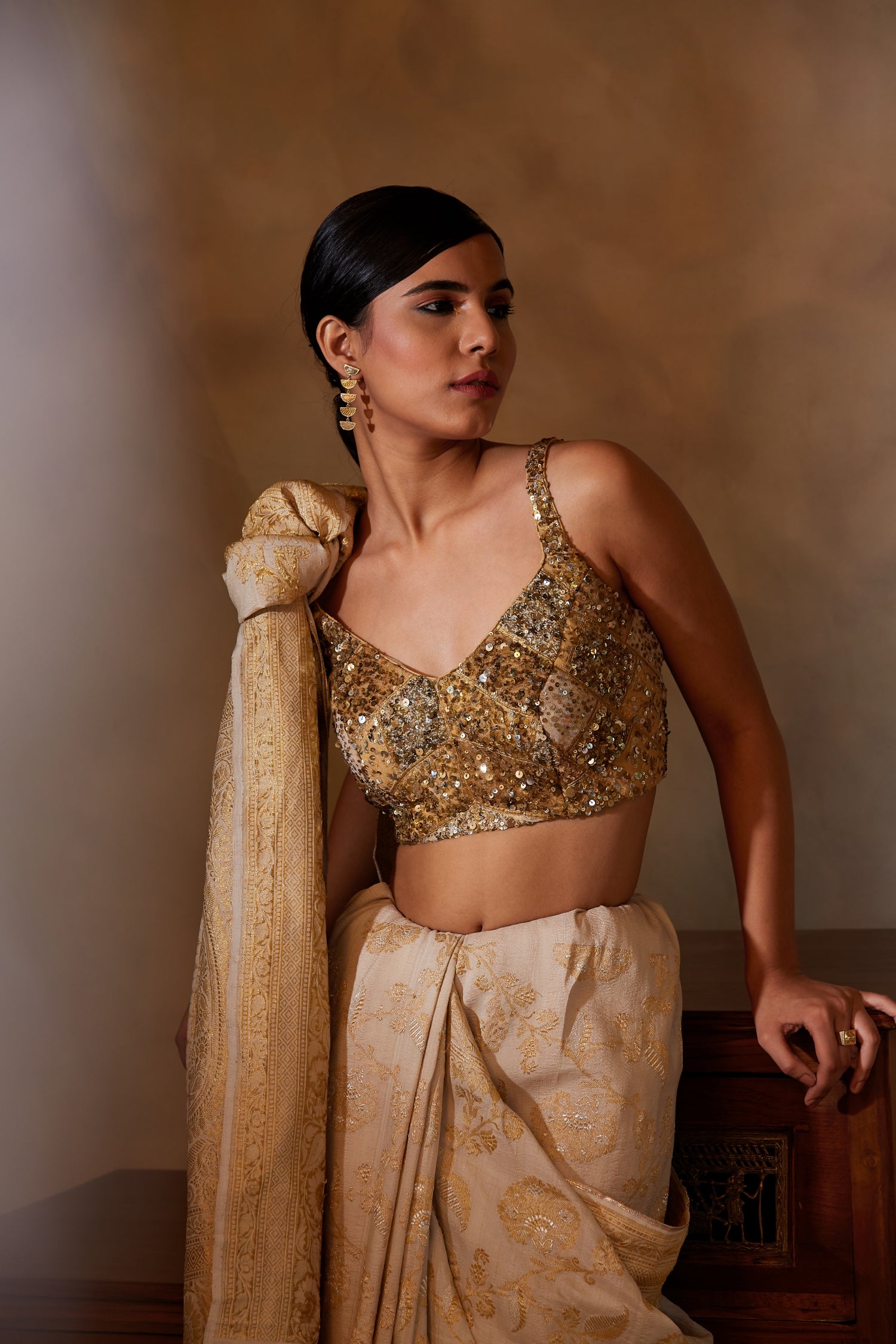
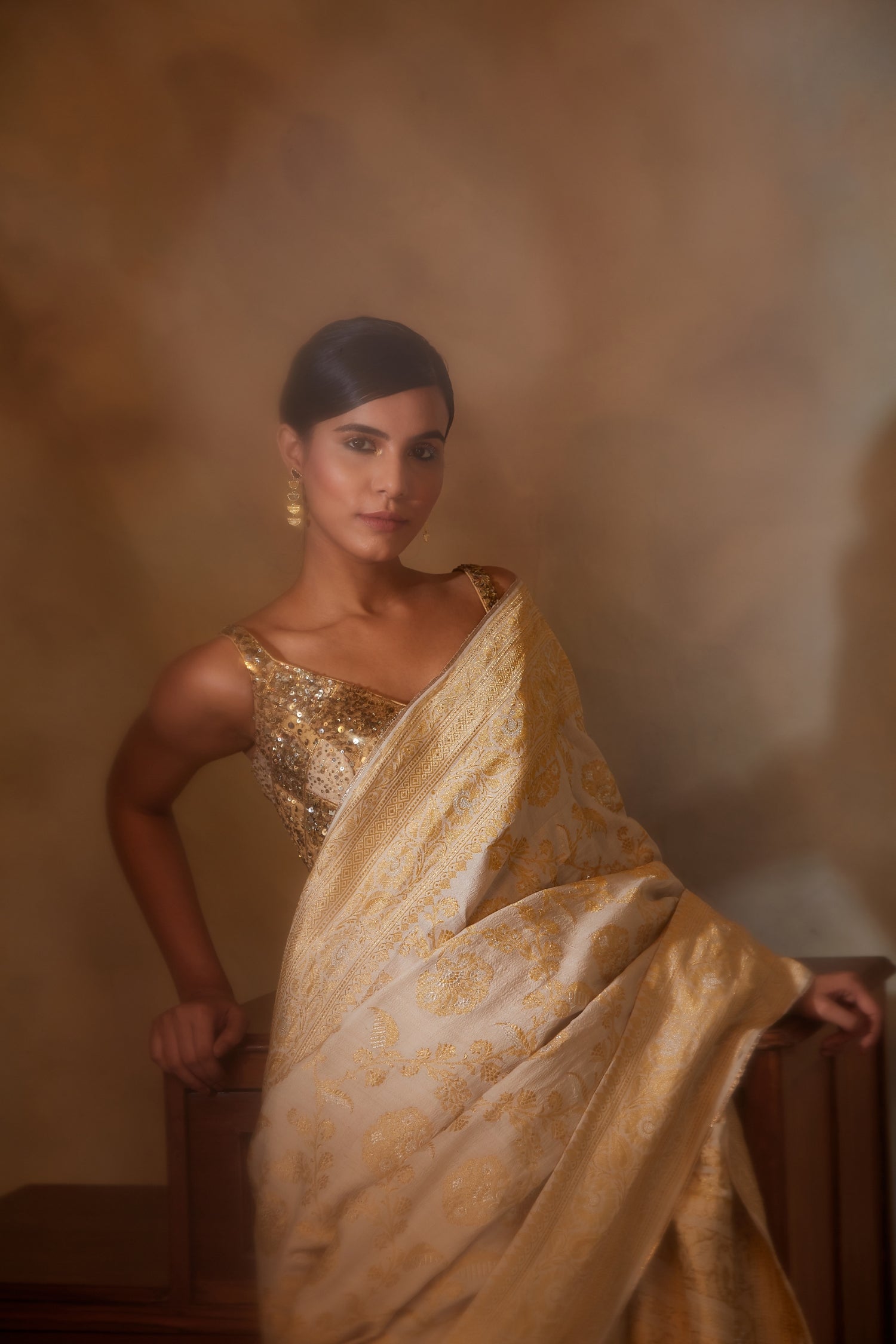
The Tussar Banarasi saree is a beautiful fusion of Tussar silk and traditional Banarasi weaving design elements. Tussar silk is a natural fabric known for its textured feel and earthy color range, which gives it a stunning luster. When woven using the Banarasi technique, it becomes one of the most iconic textiles, resulting in a truly unique product that is rich in heritage.

The wide range of colors available in Tussar Silk is enhanced by the intricate Banarasi Weave, creating a Tussar Banarasi Saree that is an impressive blend of artistry and a rich cultural legacy, passed down from generation to generation of artisans.

The Tussar Silk material exhibits both strength and weight because it contains thick, heavy, and distinctive character elements. The fabric emits a structured appearance, which enables users to stay comfortable during hot weather conditions because it allows air passage.

The coarse texture of Tussar Silk creates a high degree of durability, enabling the wearer of the Tussar Saree to maintain the original shapes and beauty of their garment for many years to come. 

Tussar Silk creates a more pronounced "fall" compared to mulberry silk, which has a heavy drape weight and reaches a softer texture if not stretched.

The environmental impact of Tussar Silk exceeds that of other silk types because it needs fewer chemical treatments and uses wild silk moths, which need fewer resources than domesticated silkworms.

For Priyanka Raajiv, creating a Tussar Banarasi saree is more than just assembling various parts of fabric; it is an intricate, multi-step process that is a celebration of time and art.

1. Collection and Preparation of Silk
The Tussar silk artisan derives the tussar silk fiber found in cocoons from silkworms of a wild-bodied (or 'forest') stripe. As the natural Tussar silkworms feed on the available leaves, this makes way for the special properties of Tussar Silk.

After the cocoons of the wild silkworms have been collected, the artisan can then proceed to extract the fibers from the cocoons without having to use too many chemicals. Hence, the natural irregular structure/texture, feel, and dull sheen of the fiber are retained. The natural faults, irregularities of Tussar silk are seen as 'characteristics' or 'traits', rather than 'imperfections' or defects; they provide Tussar silk with its rich, earthy quality, as well as the strength and depth that you would expect in less uniform and smoother silk.

2. The Handloom Set-up

Handloom setup is like a precision art: initially, the threads are arranged; later, the pressure is applied, and most crucially, the warp and weft are interwoven in such a way that both the building and the artistic side are retained.

3. Weaving and Enhancing
Every single detail, from the border to the pallu, is manually woven, which could take weeks or even months depending on the complexity. The outcome is a product that looks like it is aliveit has the quality of being animated, subtle, and abundant with reason.

4. Lasting Impressions
The saree is, then, weaving-wise, checked for balance, texture, and quality, and the whole process is a testimony to the skillful and humble character of the city of Banaras, which thus puts Tussar silk into the category of a modern heirloom that becomes softer with time and radiates a gentle elegance.

Read More

Buy Tussar Banarasi Saree Online

The Tussar Banarasi saree is a beautiful fusion of Tussar silk and traditional Banarasi weaving design elements. Tussar silk is a natural fabric known for its textured feel and earthy color range, which gives it a stunning luster. When woven using the Banarasi technique, it becomes one of the most iconic textiles, resulting in a truly unique product that is rich in heritage.

The wide range of colors available in Tussar Silk is enhanced by the intricate Banarasi Weave, creating a Tussar Banarasi Saree that is an impressive blend of artistry and a rich cultural legacy, passed down from generation to generation of artisans.

The Tussar Silk material exhibits both strength and weight because it contains thick, heavy, and distinctive character elements. The fabric emits a structured appearance, which enables users to stay comfortable during hot weather conditions because it allows air passage.

The coarse texture of Tussar Silk creates a high degree of durability, enabling the wearer of the Tussar Saree to maintain the original shapes and beauty of their garment for many years to come. 

Tussar Silk creates a more pronounced "fall" compared to mulberry silk, which has a heavy drape weight and reaches a softer texture if not stretched.

The environmental impact of Tussar Silk exceeds that of other silk types because it needs fewer chemical treatments and uses wild silk moths, which need fewer resources than domesticated silkworms.

For Priyanka Raajiv, creating a Tussar Banarasi saree is more than just assembling various parts of fabric; it is an intricate, multi-step process that is a celebration of time and art.

1. Collection and Preparation of Silk
The Tussar silk artisan derives the tussar silk fiber found in cocoons from silkworms of a wild-bodied (or 'forest') stripe. As the natural Tussar silkworms feed on the available leaves, this makes way for the special properties of Tussar Silk.

After the cocoons of the wild silkworms have been collected, the artisan can then proceed to extract the fibers from the cocoons without having to use too many chemicals. Hence, the natural irregular structure/texture, feel, and dull sheen of the fiber are retained. The natural faults, irregularities of Tussar silk are seen as 'characteristics' or 'traits', rather than 'imperfections' or defects; they provide Tussar silk with its rich, earthy quality, as well as the strength and depth that you would expect in less uniform and smoother silk.

2. The Handloom Set-up

Handloom setup is like a precision art: initially, the threads are arranged; later, the pressure is applied, and most crucially, the warp and weft are interwoven in such a way that both the building and the artistic side are retained.

3. Weaving and Enhancing
Every single detail, from the border to the pallu, is manually woven, which could take weeks or even months depending on the complexity. The outcome is a product that looks like it is aliveit has the quality of being animated, subtle, and abundant with reason.

4. Lasting Impressions
The saree is, then, weaving-wise, checked for balance, texture, and quality, and the whole process is a testimony to the skillful and humble character of the city of Banaras, which thus puts Tussar silk into the category of a modern heirloom that becomes softer with time and radiates a gentle elegance.

Why Choose Our Tussar Banarasi Saree?

A tussar banarasi saree is something that you won’t find on a whim; you’ll find one that is chosen with careful consideration through the senses as well as through intuition. These sarees are designed for feelings of being effortlessly beautiful, understated in their intricate detailing, and exquisite in the way their beauty reveals itself over time. Because each handwoven piece is crafted from natural materials, no two sarees are ever identical. Every saree stands as a one-of-a-kind creation rather than an off-the-shelf manufactured product.
  • It complements every silhouette without overpowering.
  • It carries the depth of craft without feeling costume-like.
  • It offers luxury without glitter-confidence, not flash.

Benefits of Tussar Banarasi Saree Fabric

Tussar silk, with its quiet sheen and imperfectly beautiful threads, feels lived-in from the very first drape. It is silk without showmanship and luxury without loudness.
  • Breathable Fabric: Comfortable for summer days and equally luxurious for evenings.
  • Subtle Sheen: Reflects a soft candlelight glow rather than a harsh spotlight.
  • Craft Longevity: Grows stronger with time and care, becoming a treasured heirloom.

Discover the Most Exquisite Tussar Banarasi Saree Online

The essence of true craftsmanship is felt even before the saree is seen. Our curated collection is intentionally selective, focusing on depth rather than volume, ensuring every piece deserves its place.
  • Pieces chosen for clarity, not clutter
  • Motifs that feel artistic rather than ornamental
  • High-definition images that highlight texture, not just colour
  • A selection designed to reward intention, not impulse

How to Style a Tussar Banarasi Saree?

Styling a tussar banarasi saree is a dialogue between eras-where heritage meets modern expression. It adapts seamlessly, whether you seek understated elegance or a refined statement.
  • Understated Day: Natural makeup, a discreet bun, and polished silver jewellery.
  • Evening Classic: Neatly tied hair, vintage earrings, and a beaded embroidered purse.
  • Modern Minimal: High ponytail, no jewellery, pink bangles, and contemporary sandals.

The saree doesn’t demand attention-it earns it.

The Best Events to Dress a Tussar Banarasi Saree

Certain moments don’t just require a saree-they deserve one. A tussar banarasi saree belongs where memories and meaning meet.
  • Festivals with warmth rather than noise
  • Intimate weddings and cultural evenings
  • Receptions where elegance outweighs glitter
This is a saree for those who understand that true luxury can whisper.

How to Care for a Tussar Banarasi Saree for Longevity?

Caring for tussar silk is about respect for the artisan who wove it and for the years it will gracefully endure. With mindful care, it transforms from a purchase into an inheritance.
  • Wash: Always dry clean due to the delicate nature of tussar silk.
  • Storage: Store in pure cotton or muslin cloth; avoid plastic covers.
  • Light: Keep away from direct sunlight to preserve colour and texture.
  • Ironing: Use low heat with a protective cloth to apply indirect heat.
Think of it as a future heirloom, not a fleeting trend.

Frequently Asked Questions

Q1. What is a tussar saree?
A tussar saree is made from tussar silk, a natural wild silk known for its rich texture, firm handfeel, and muted sheen. It has an earthy, structured appearance rather than a glossy finish.

Q2. How to identify a tussar saree?
Tussar sarees can be identified by their natural texture, subtle handloom irregularities, soft sheen, and woven motifs rather than printed designs.

Q3. Is tussar silk costly?
Tussar silk is valued for its craftsmanship, natural sourcing, and labour-intensive handloom process, which determines its price.

Q4. Is tussar silk washable?
No. Tussar silk should only be dry cleaned, as water washing can weaken fibres and dull its natural sheen.