
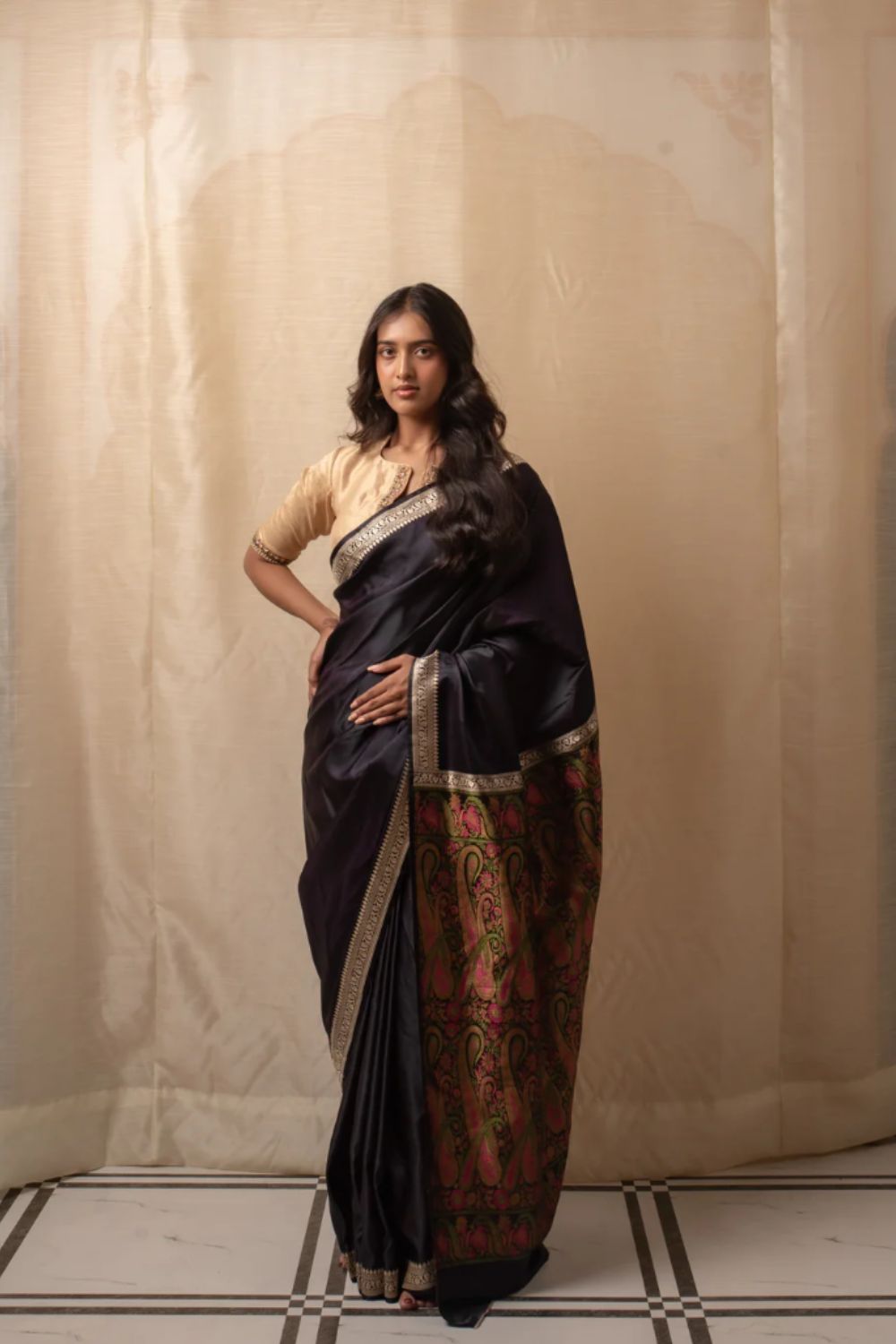
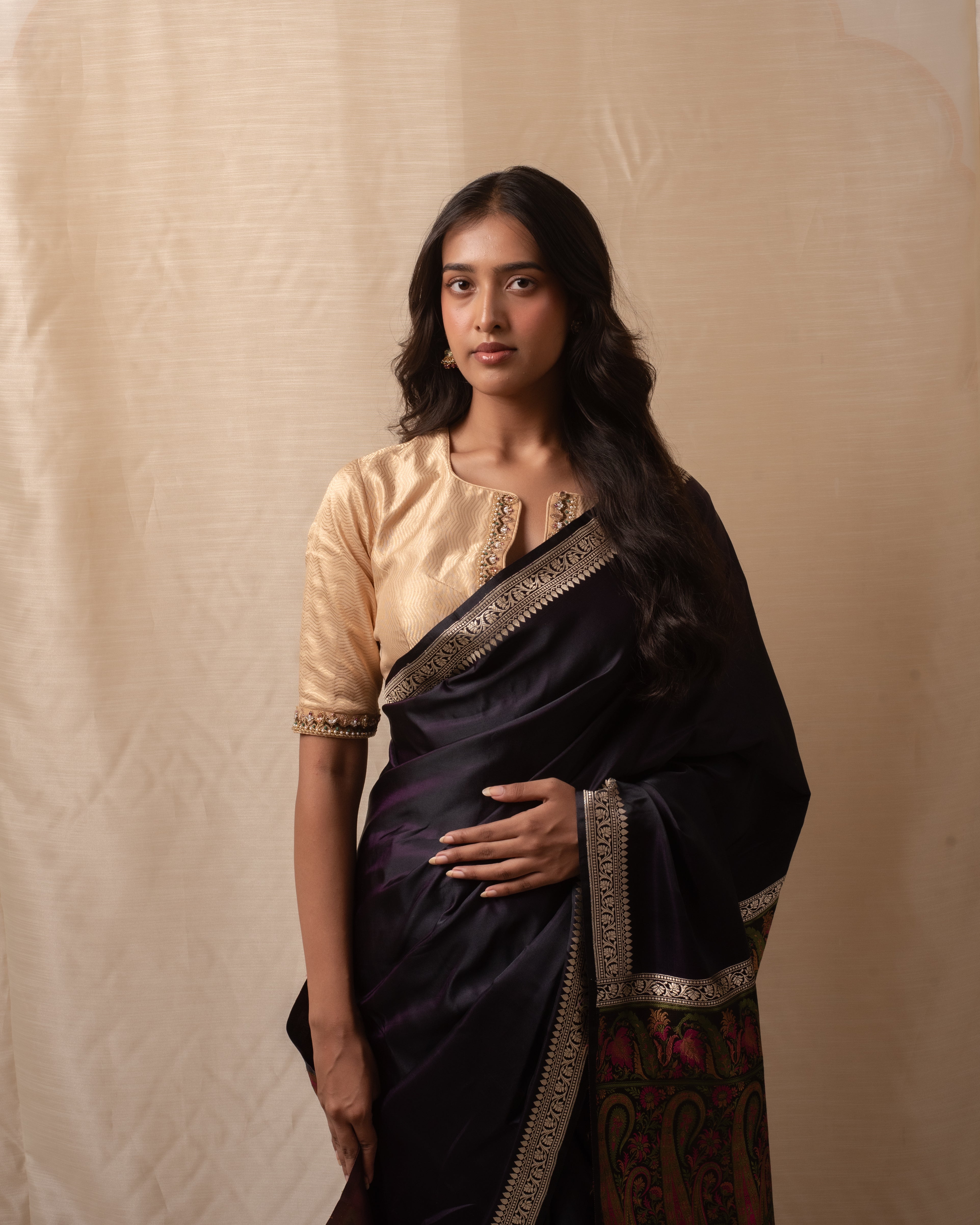
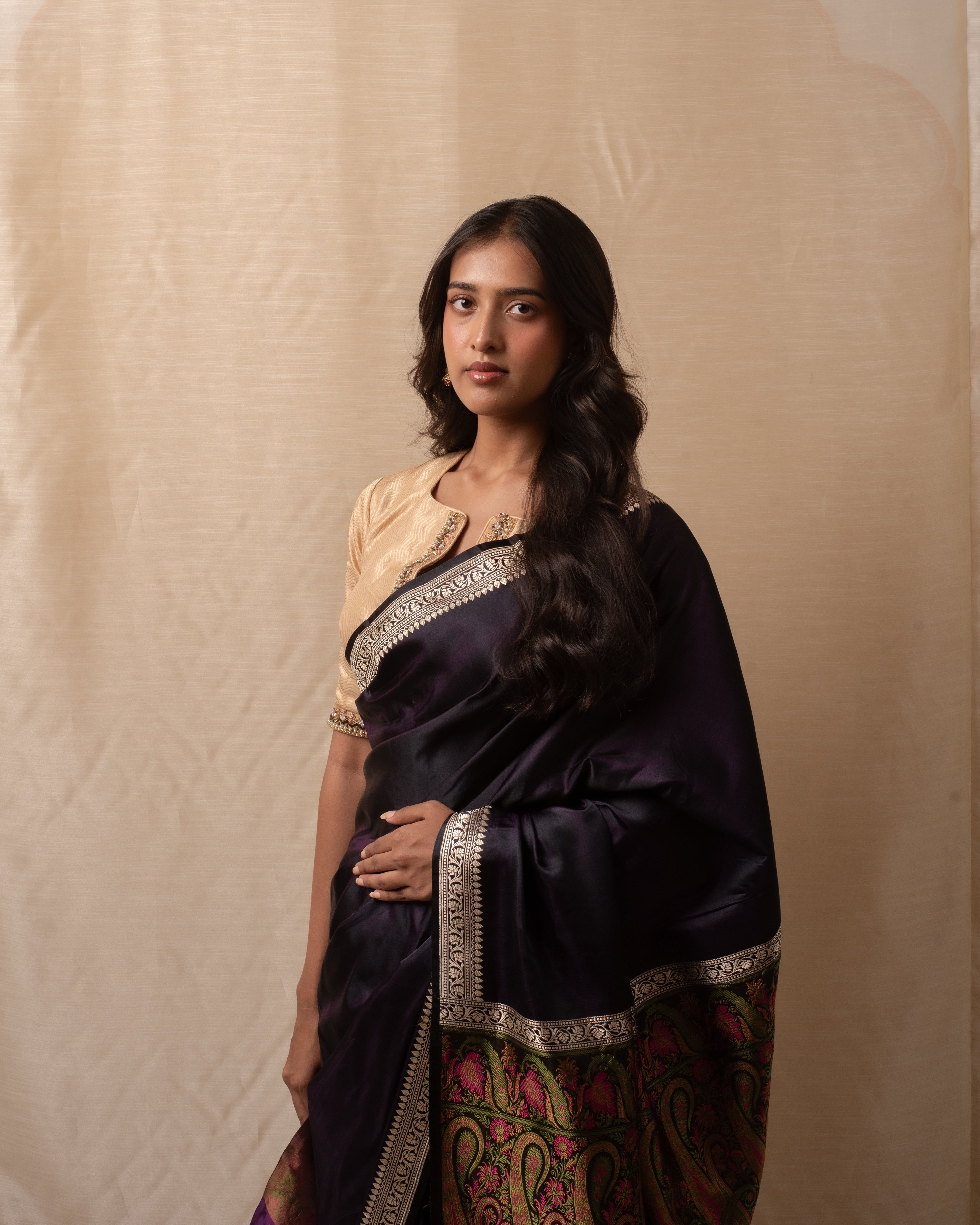
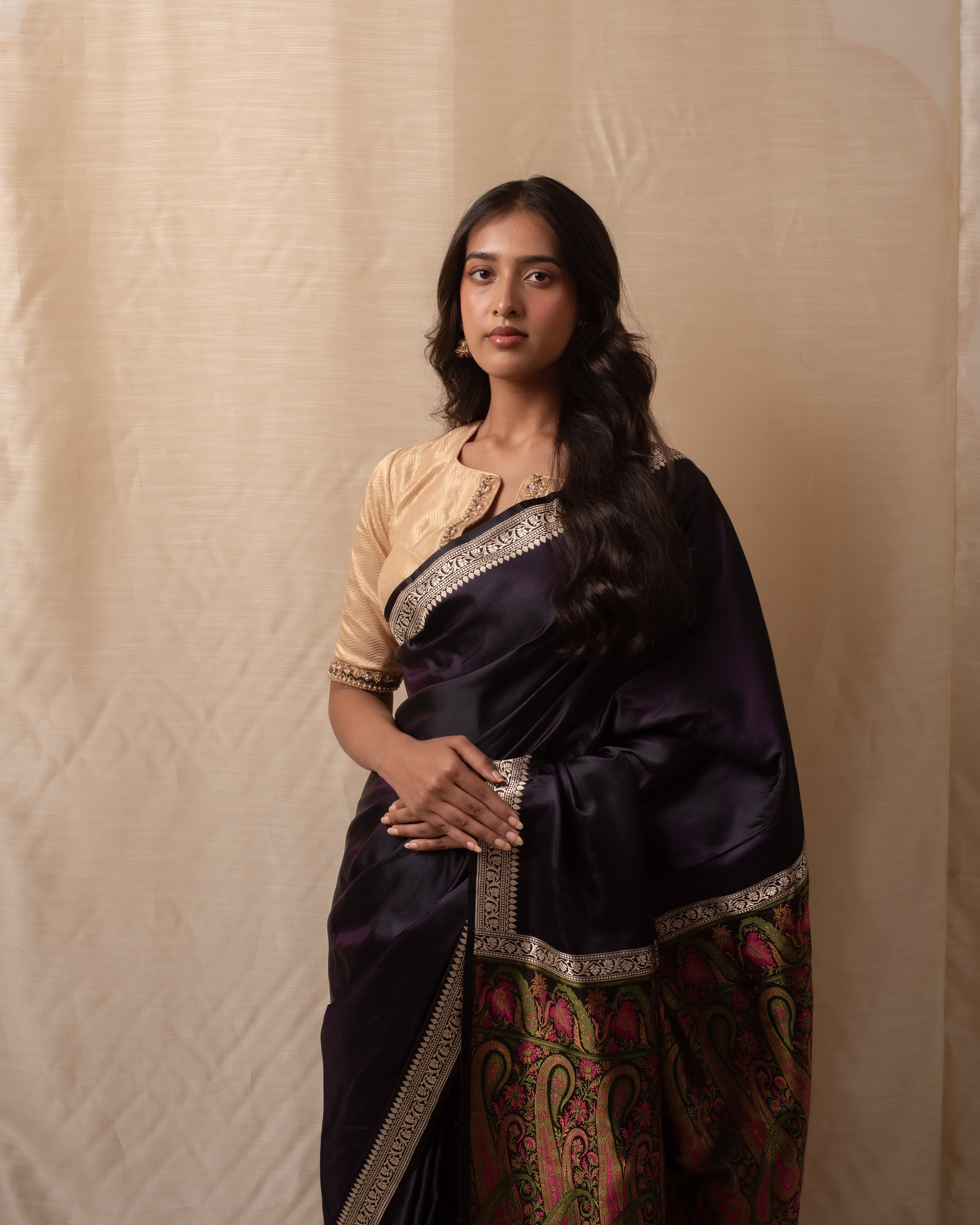
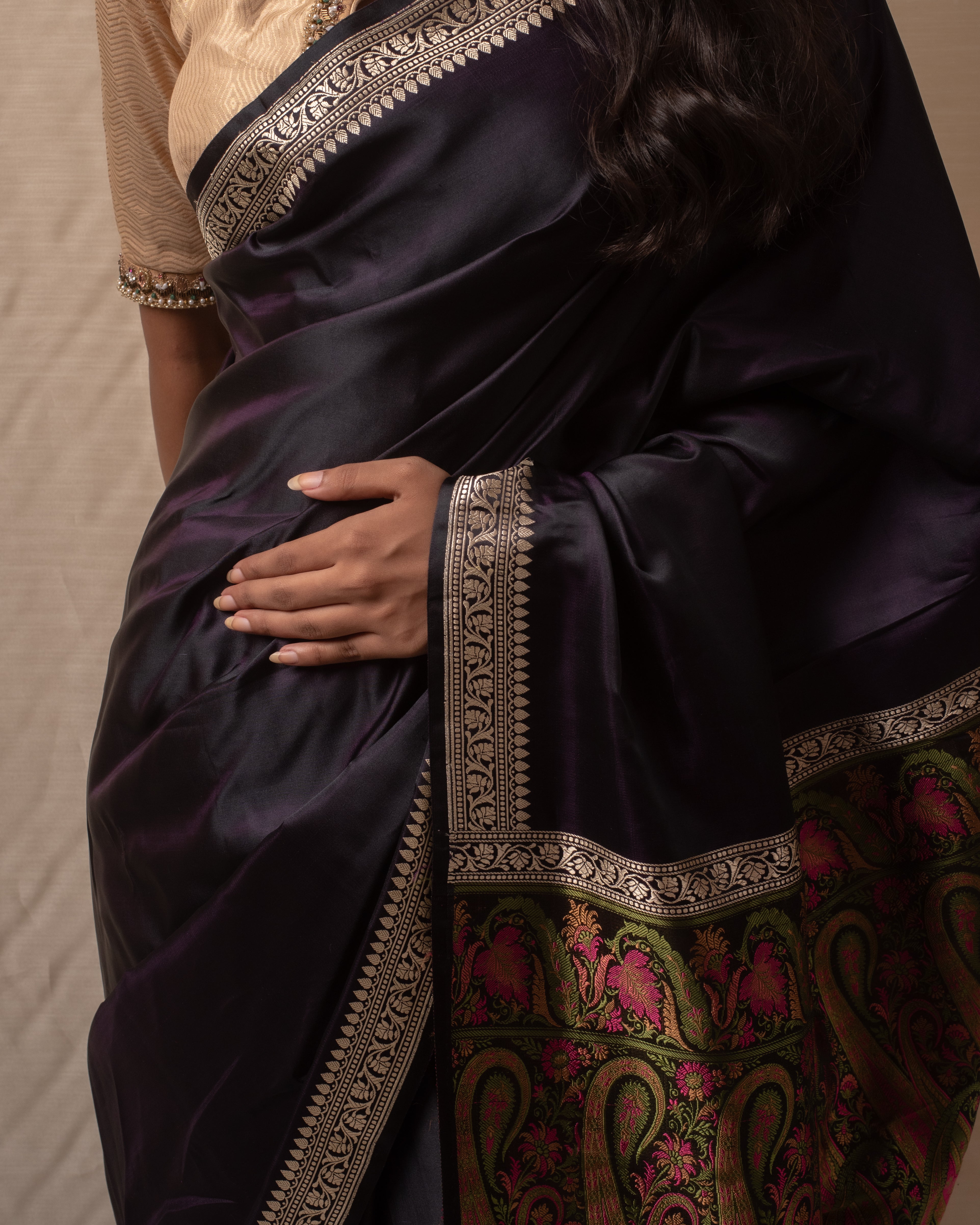
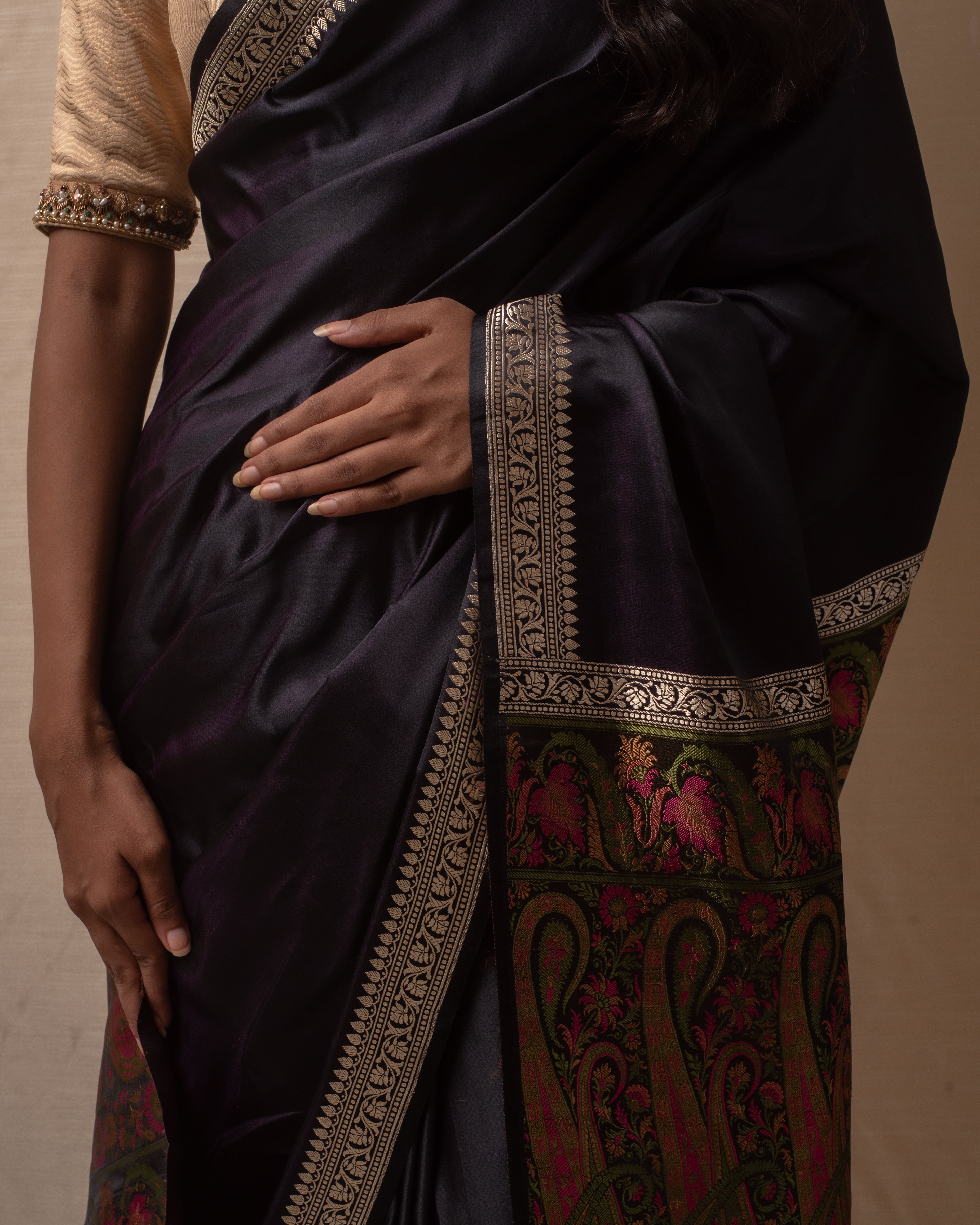
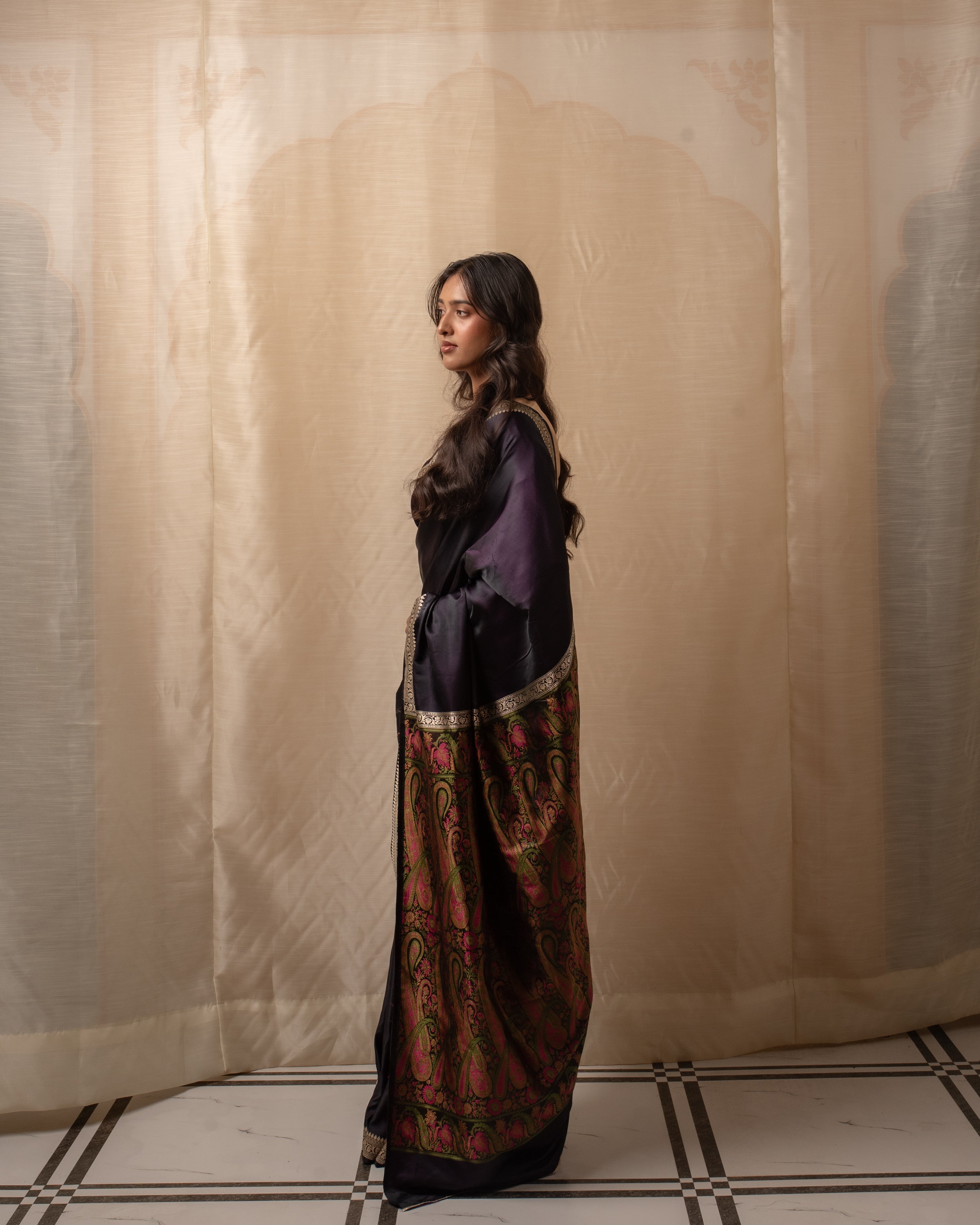
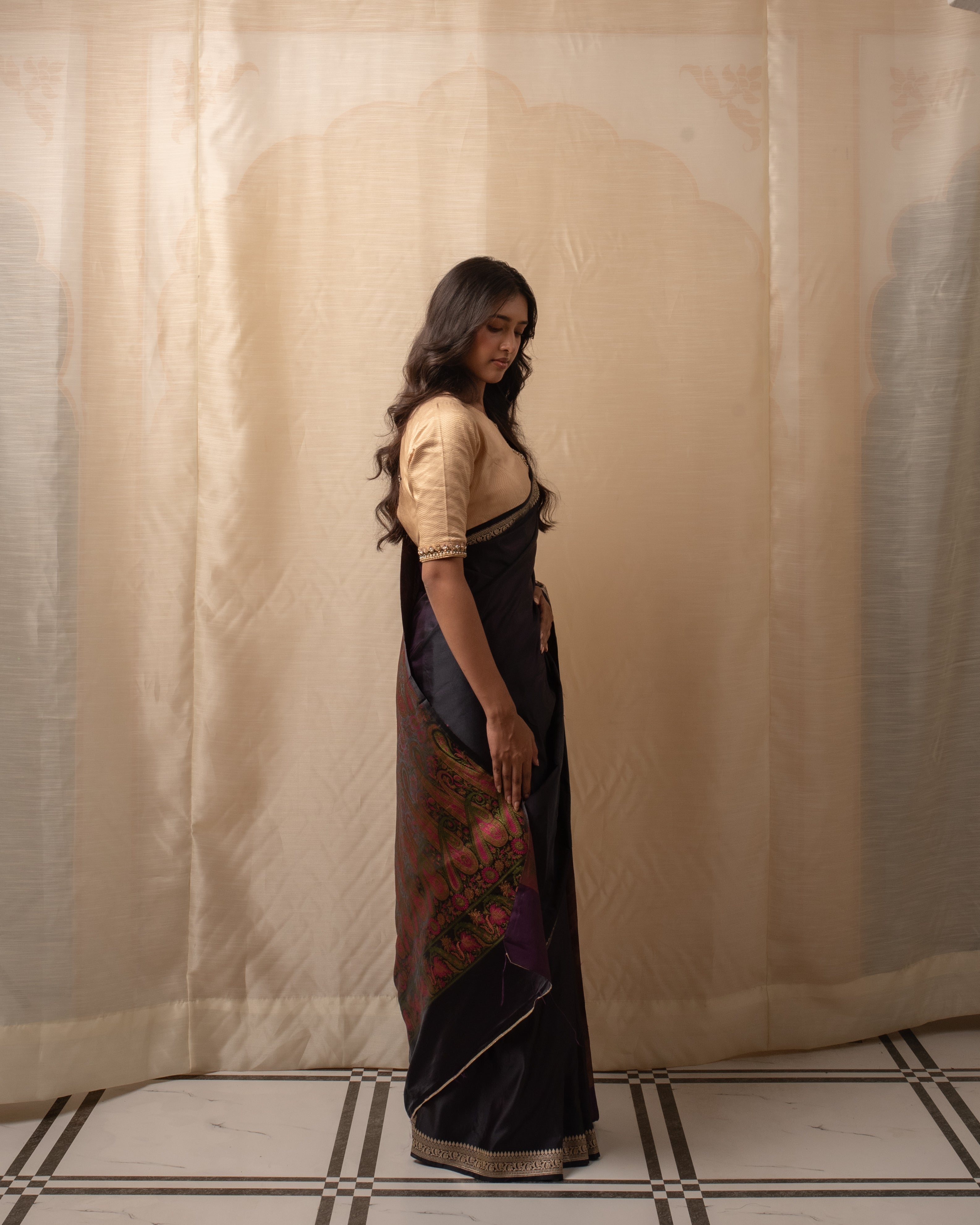
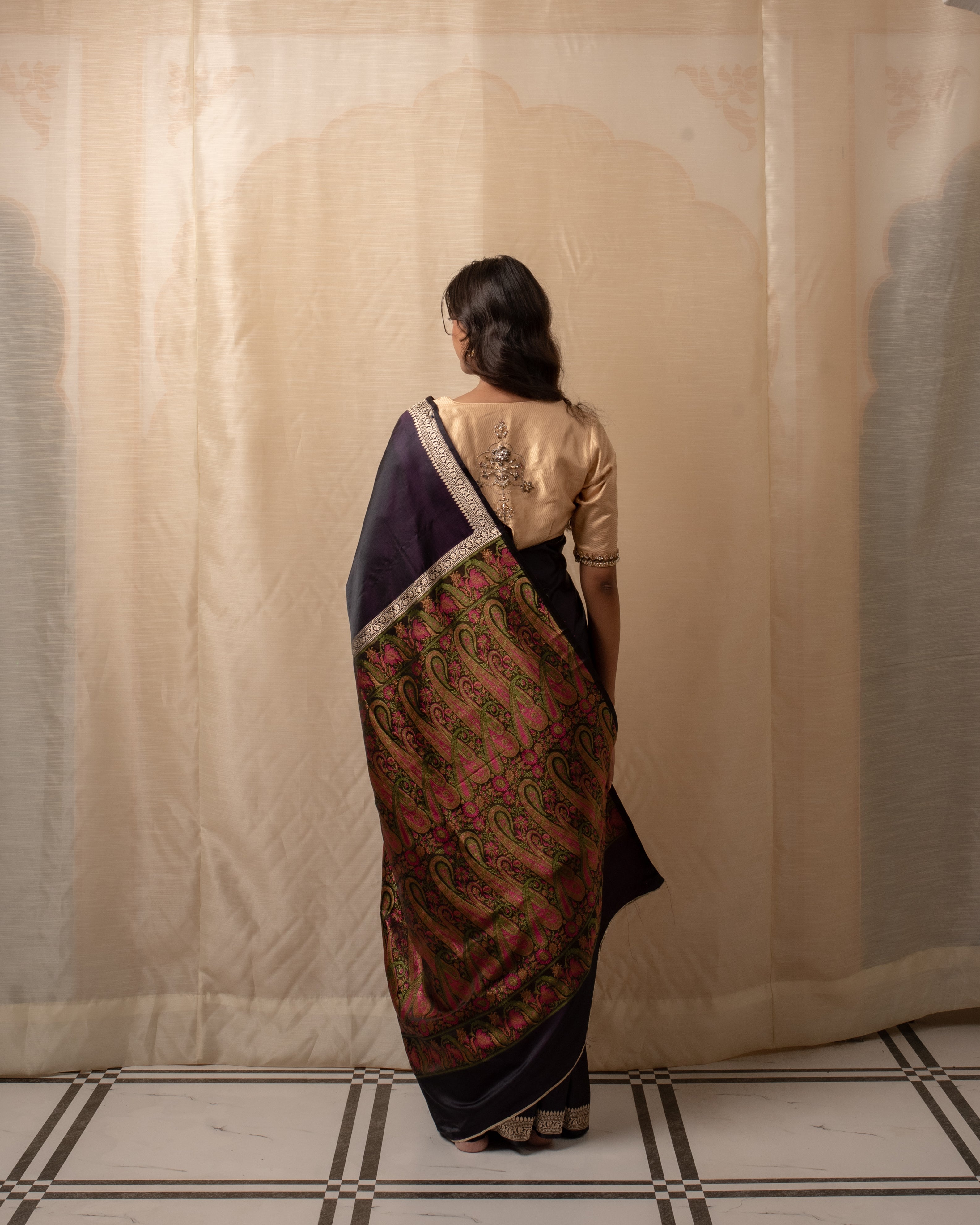
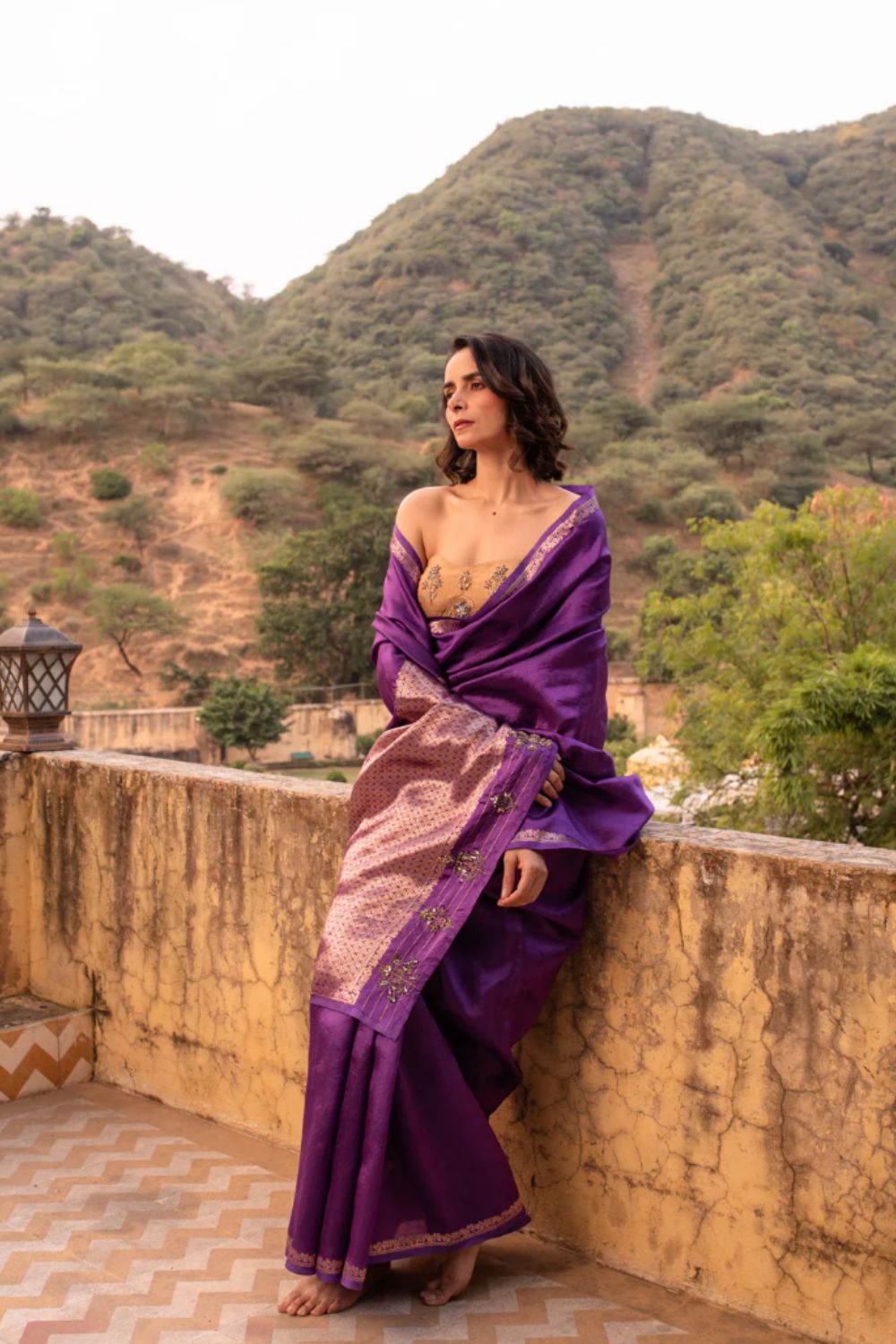
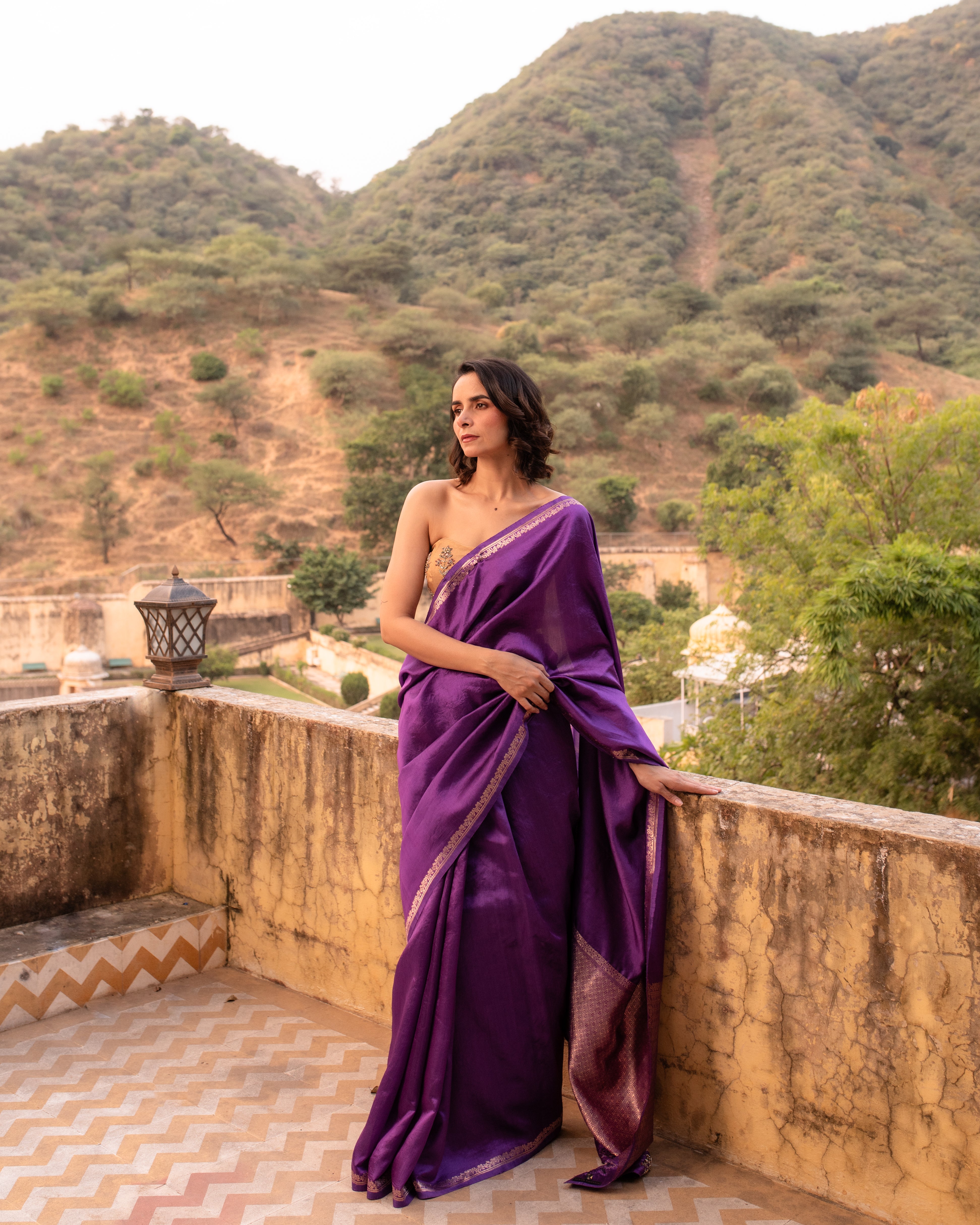
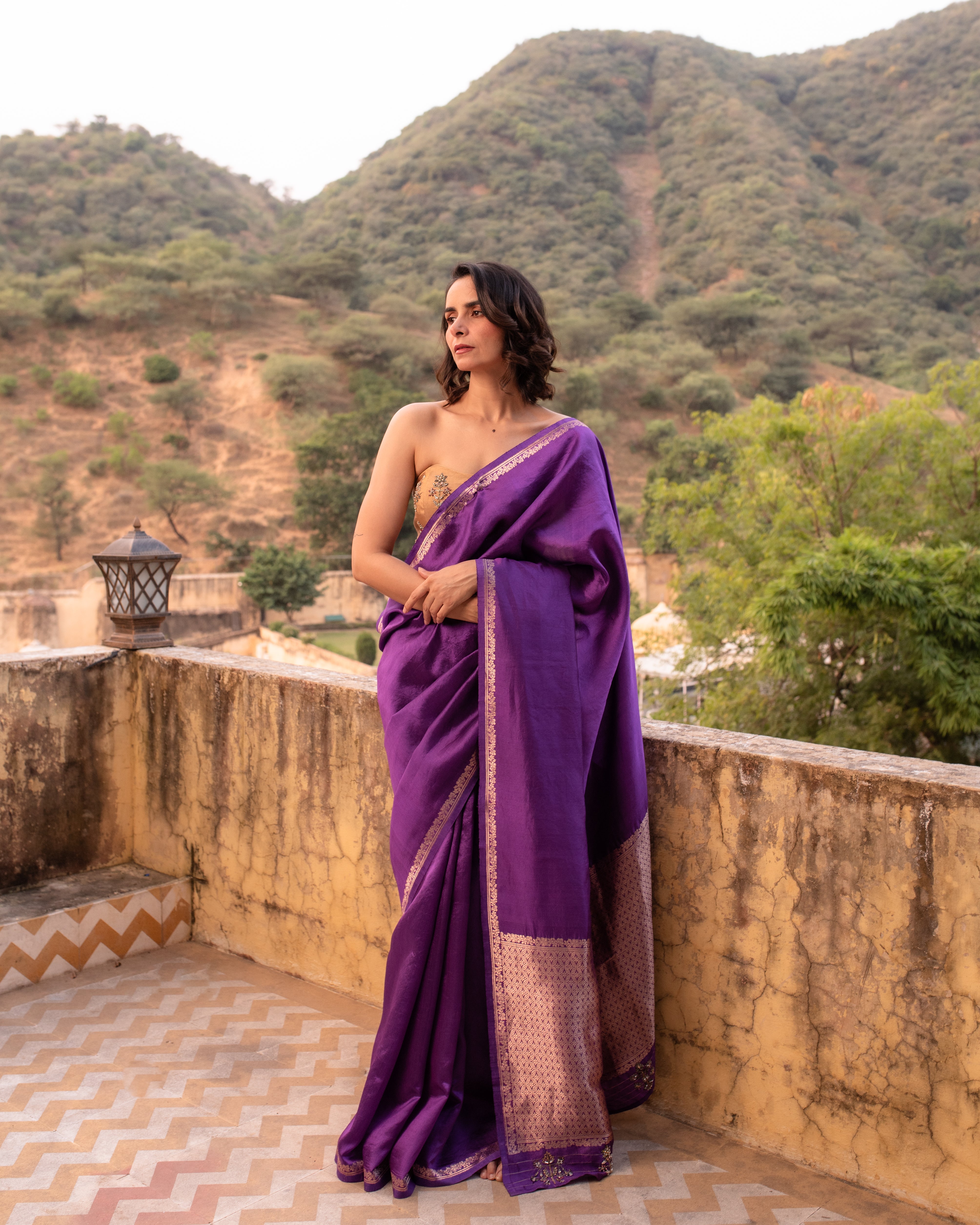
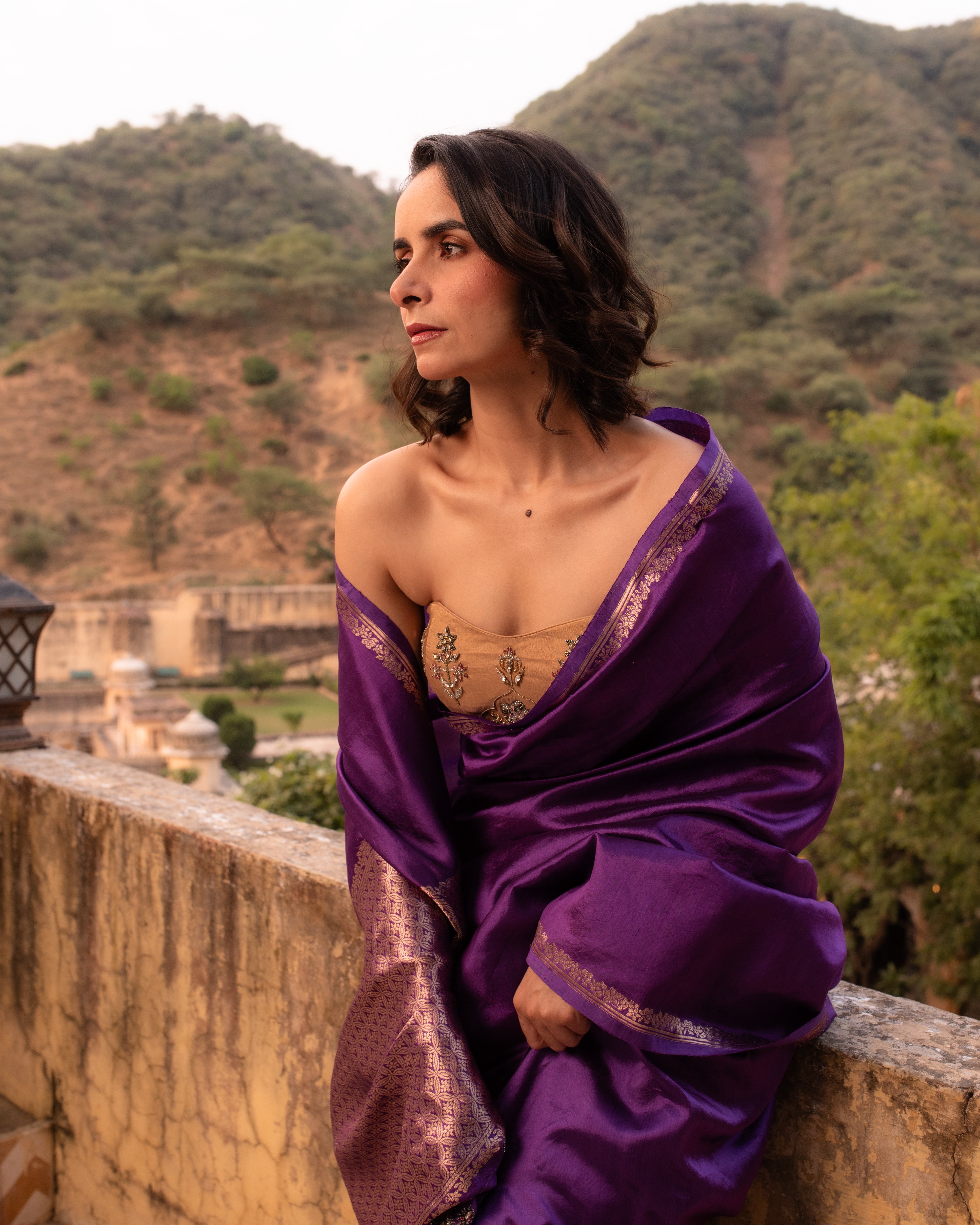
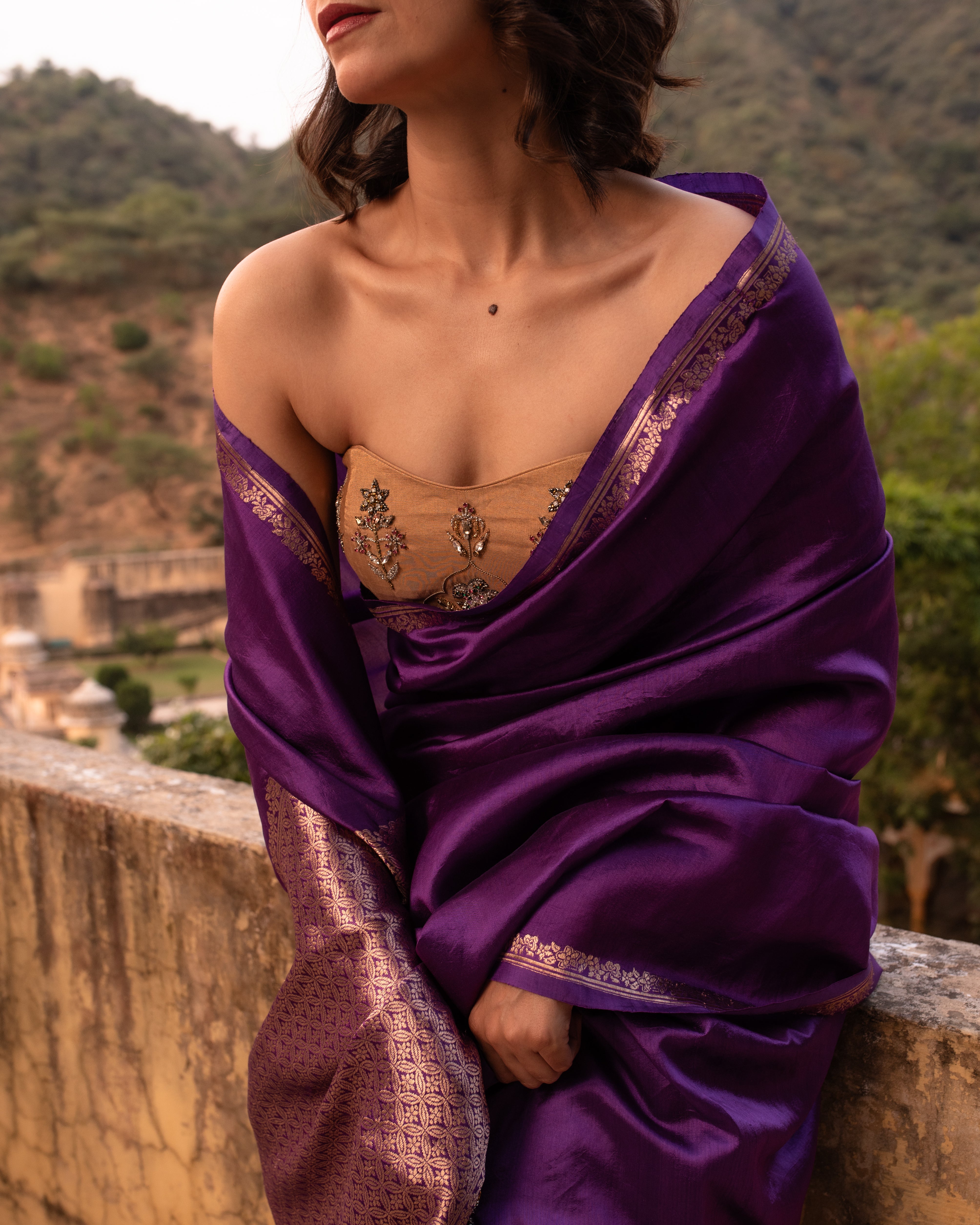
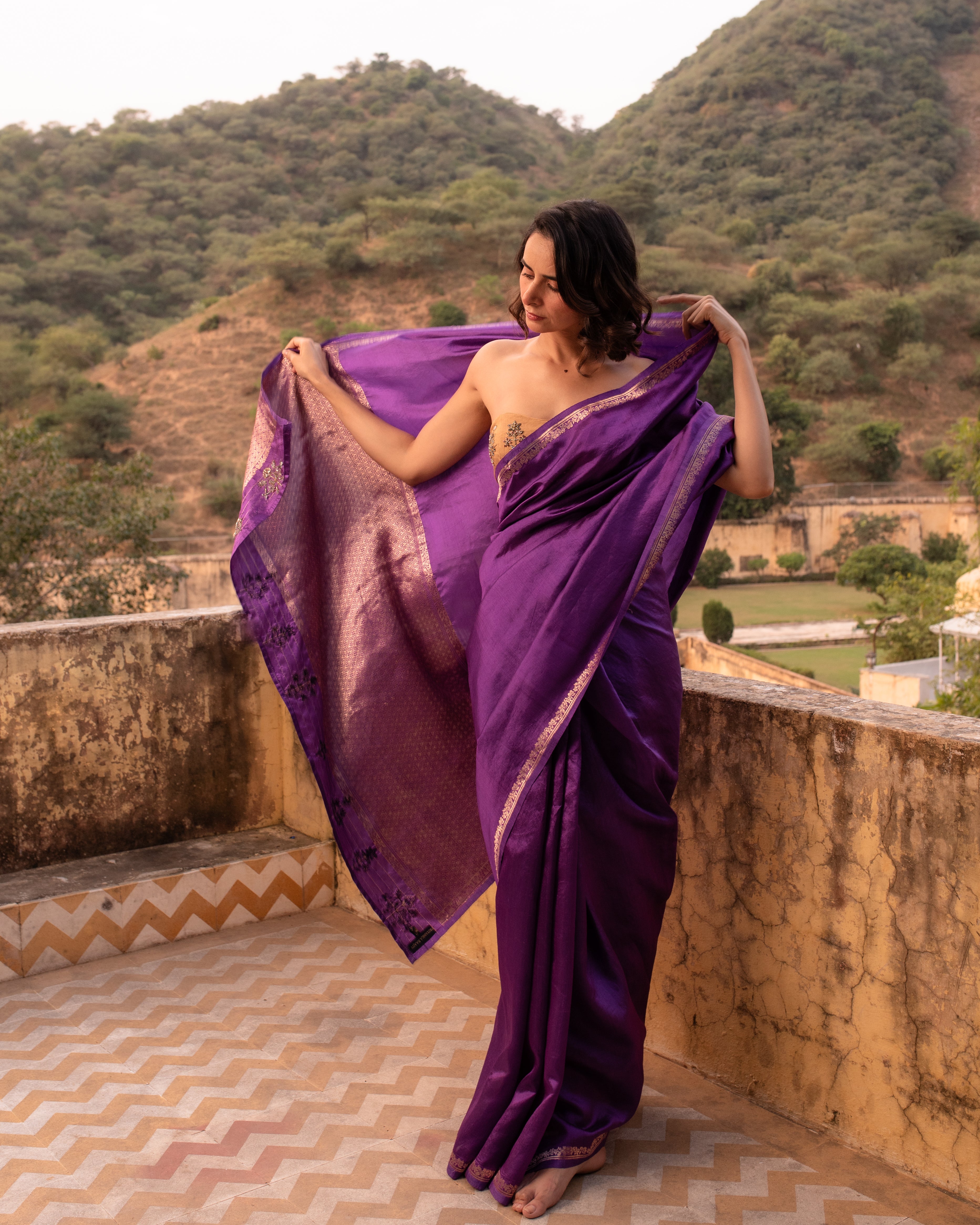
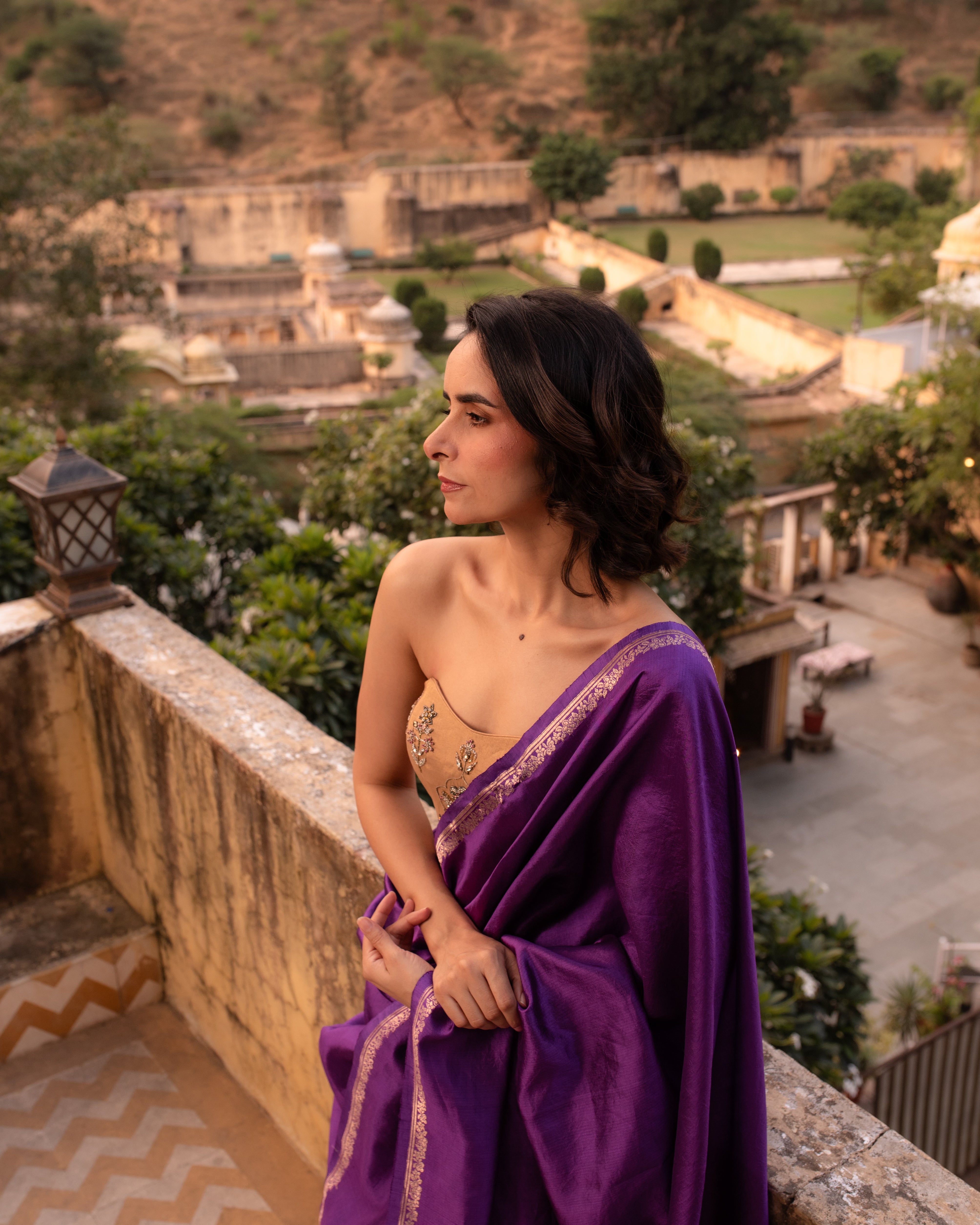
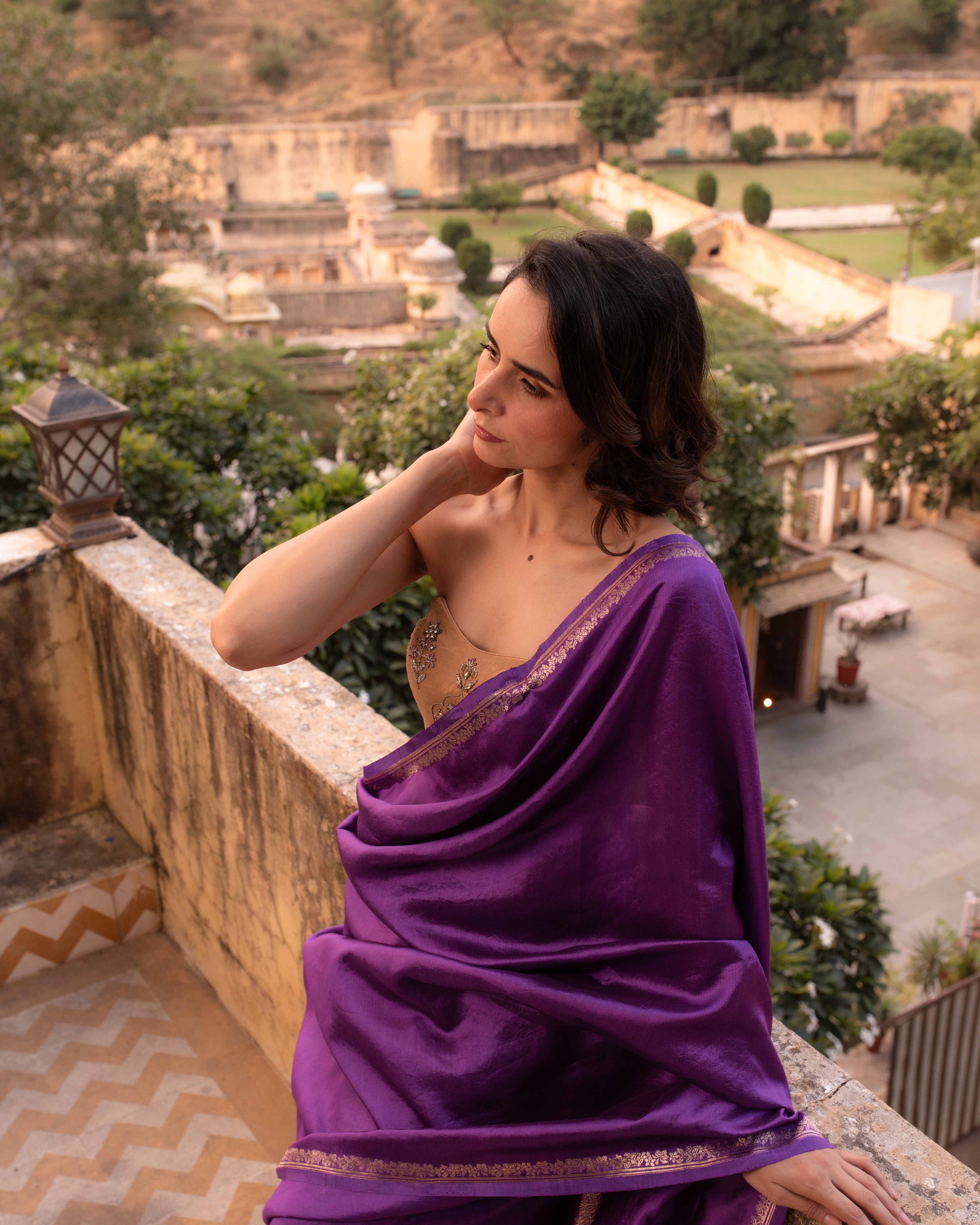
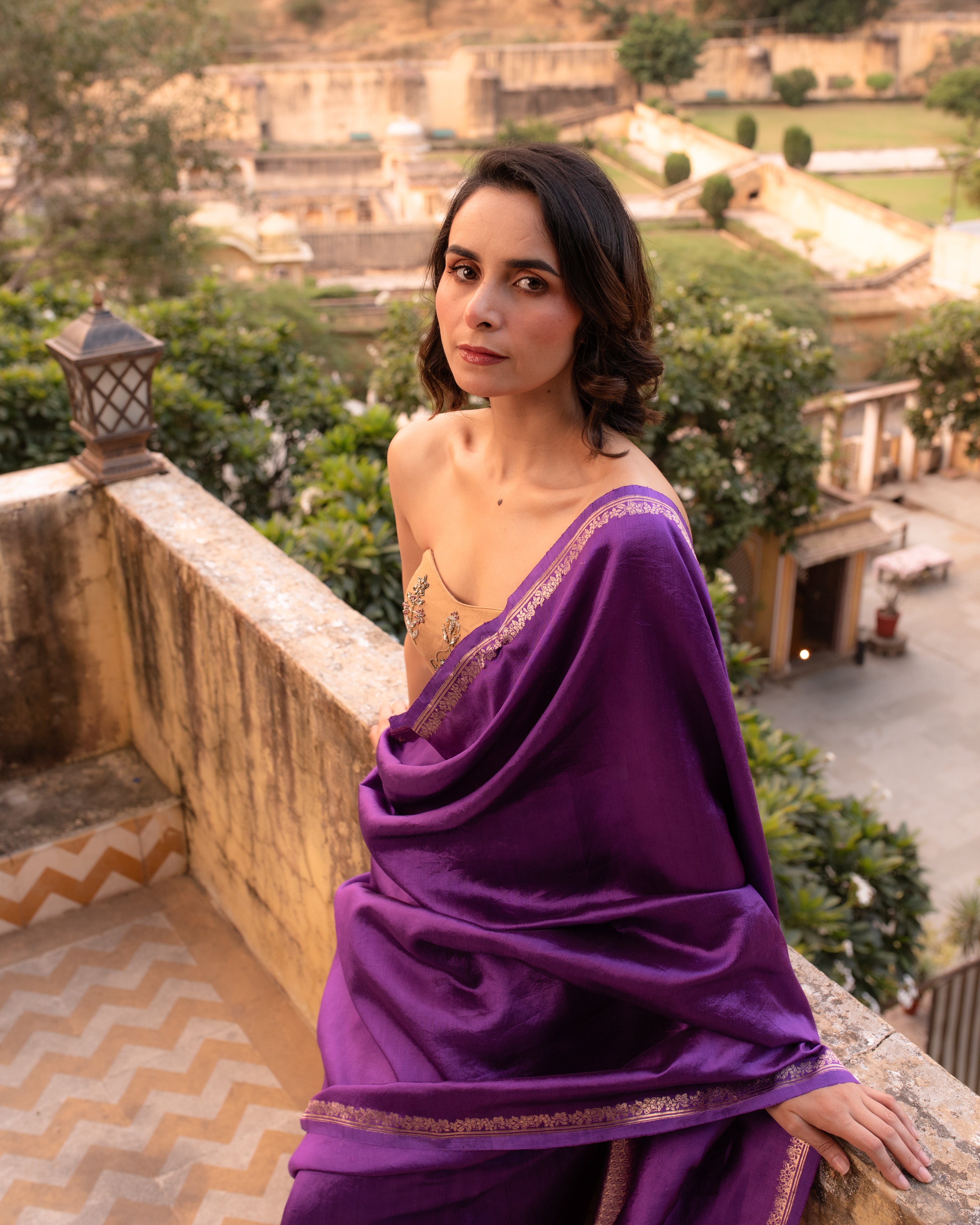
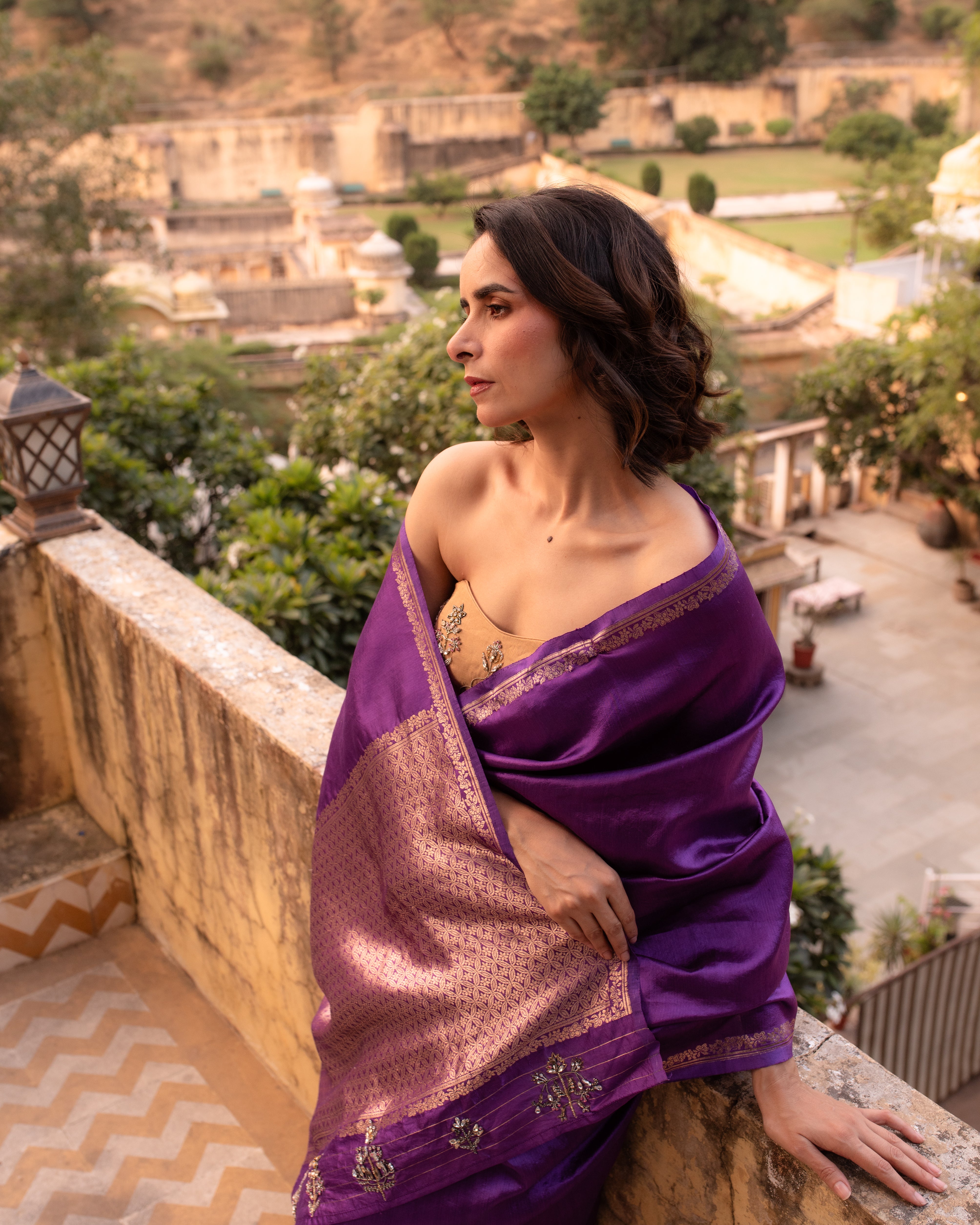

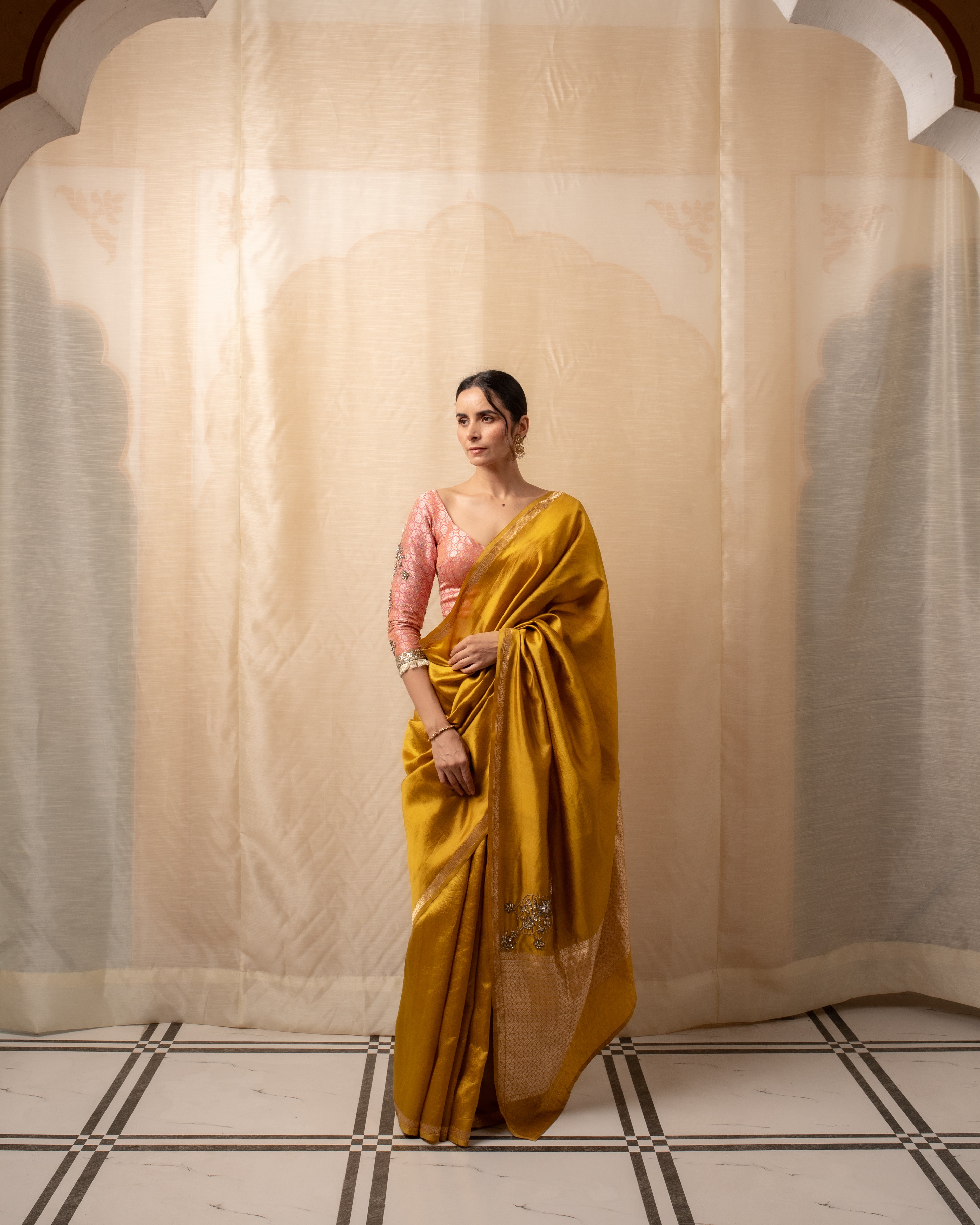
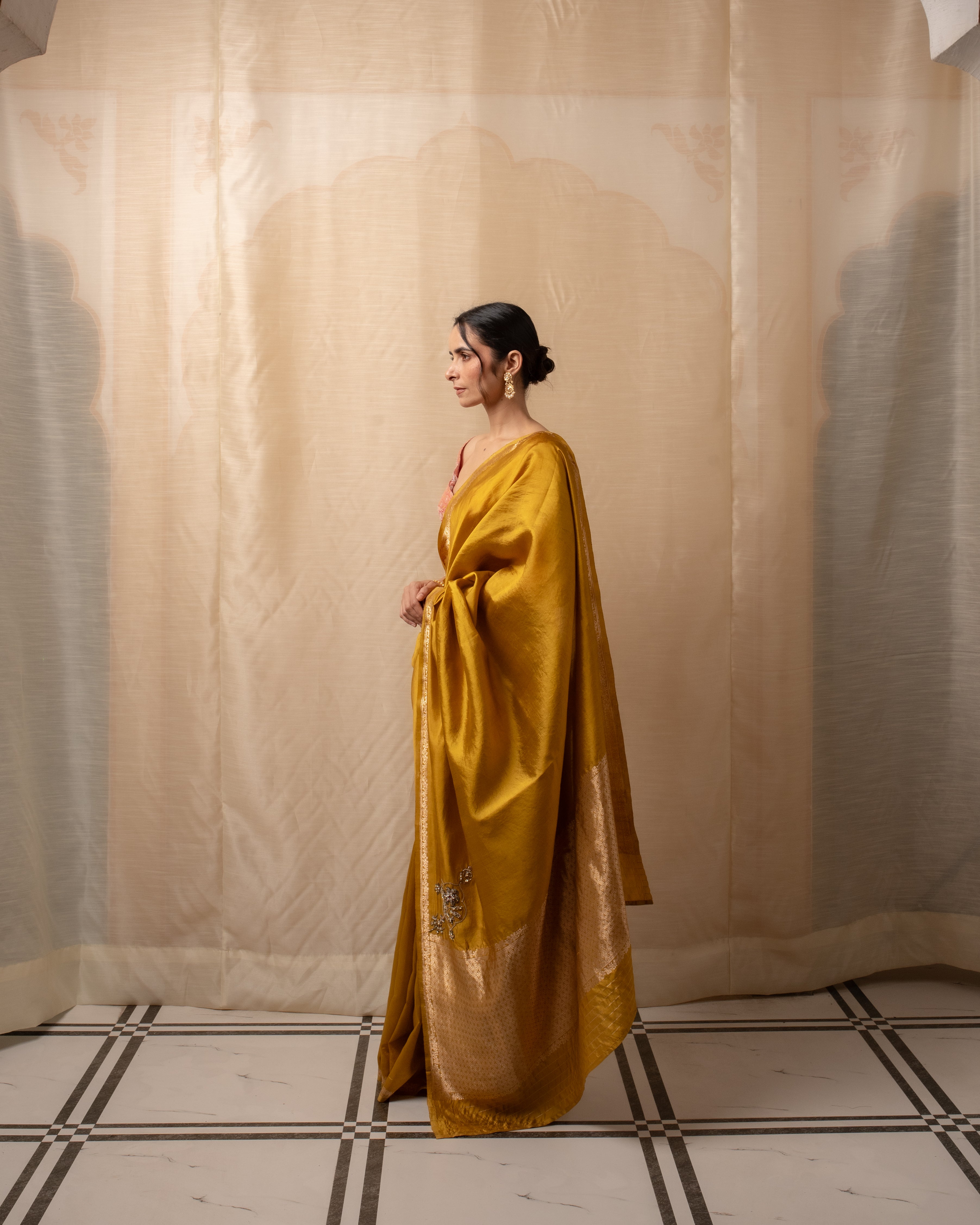
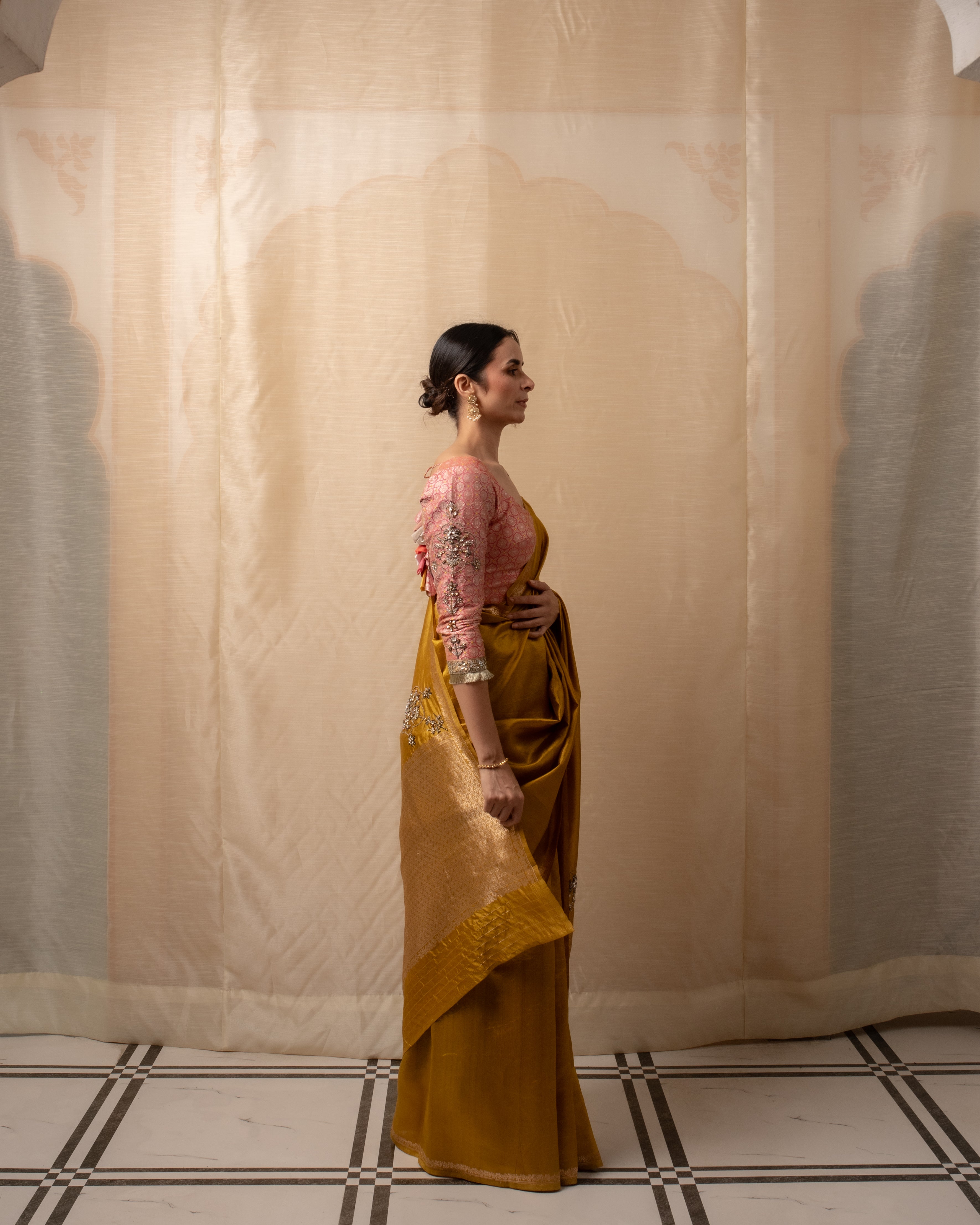
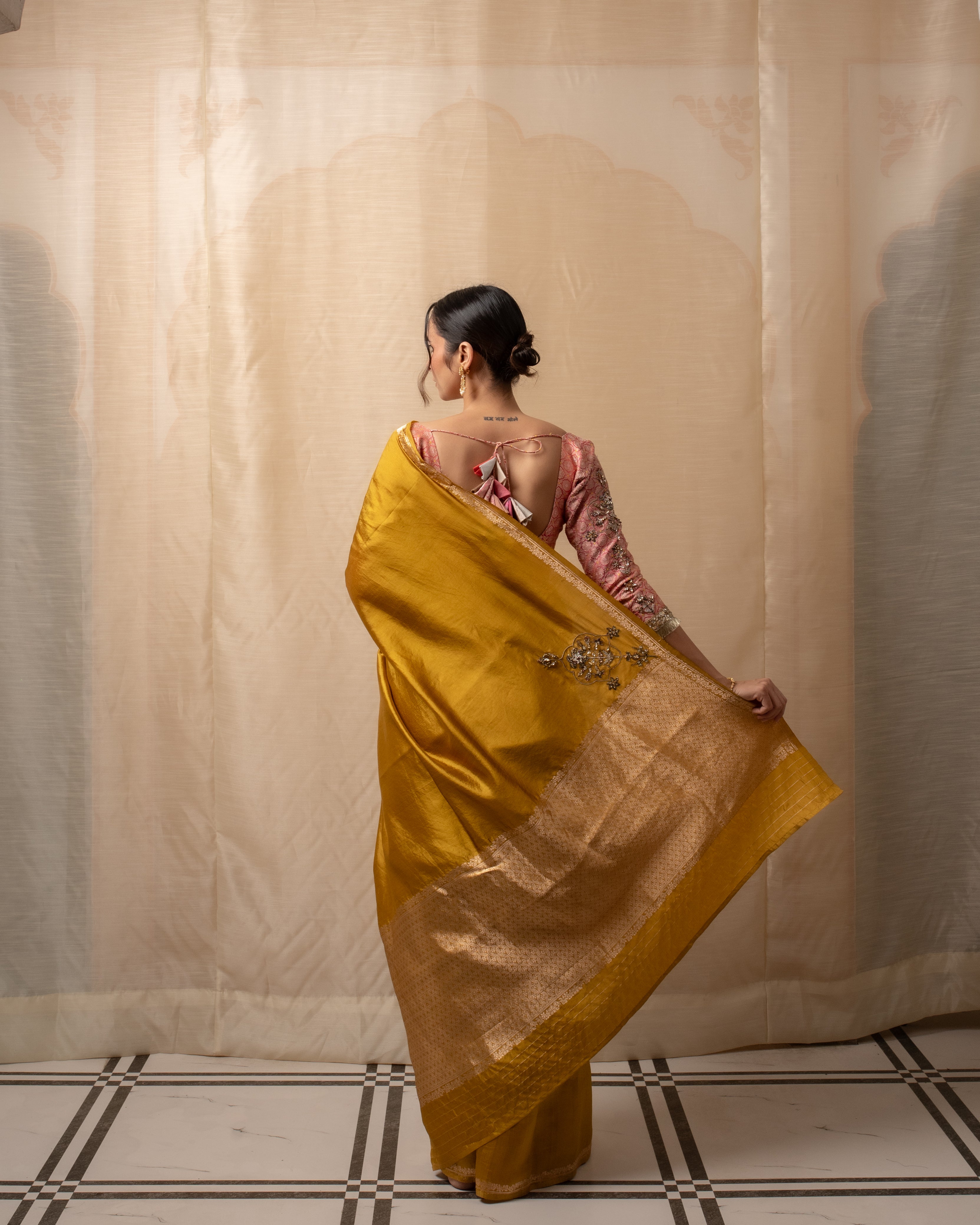
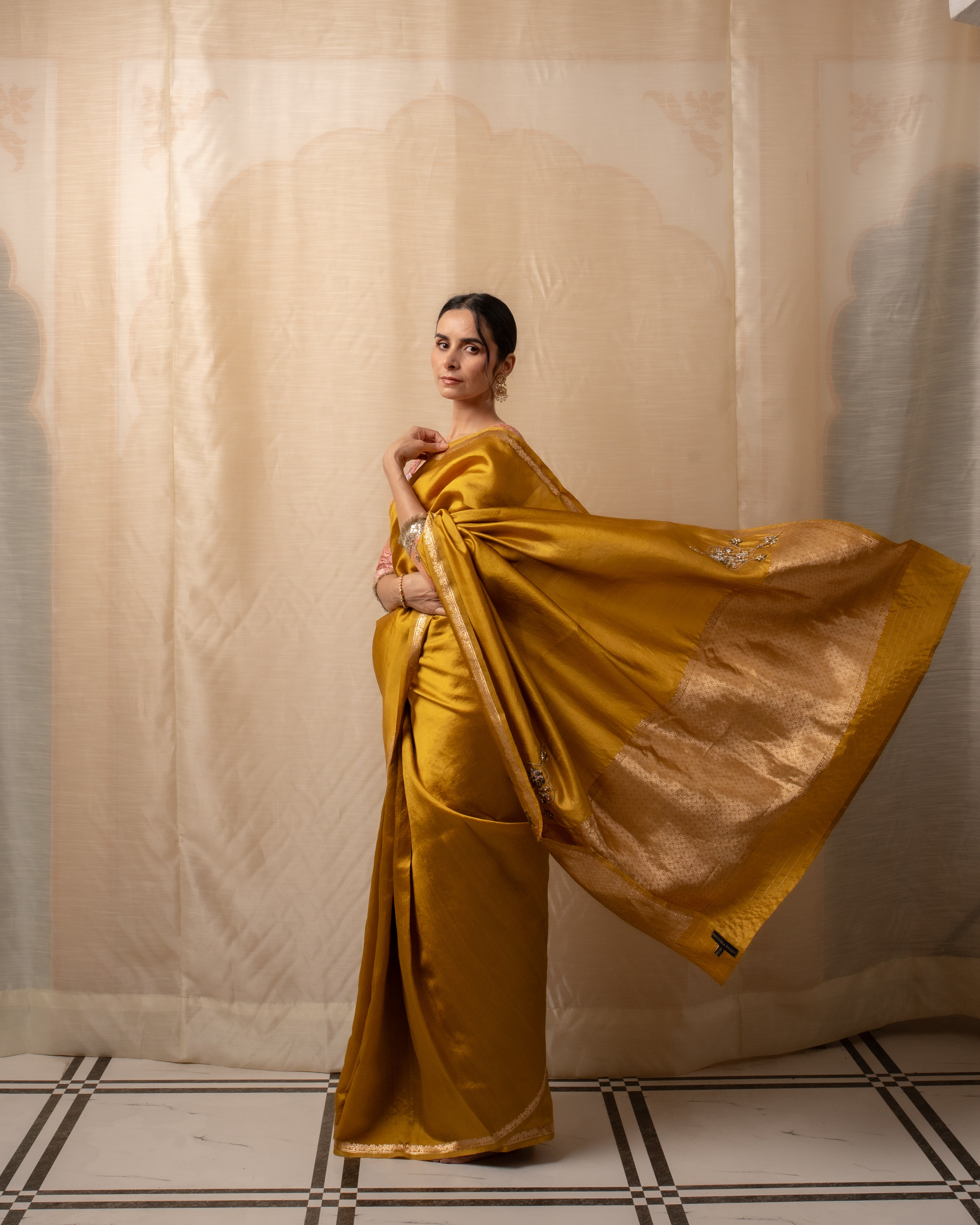
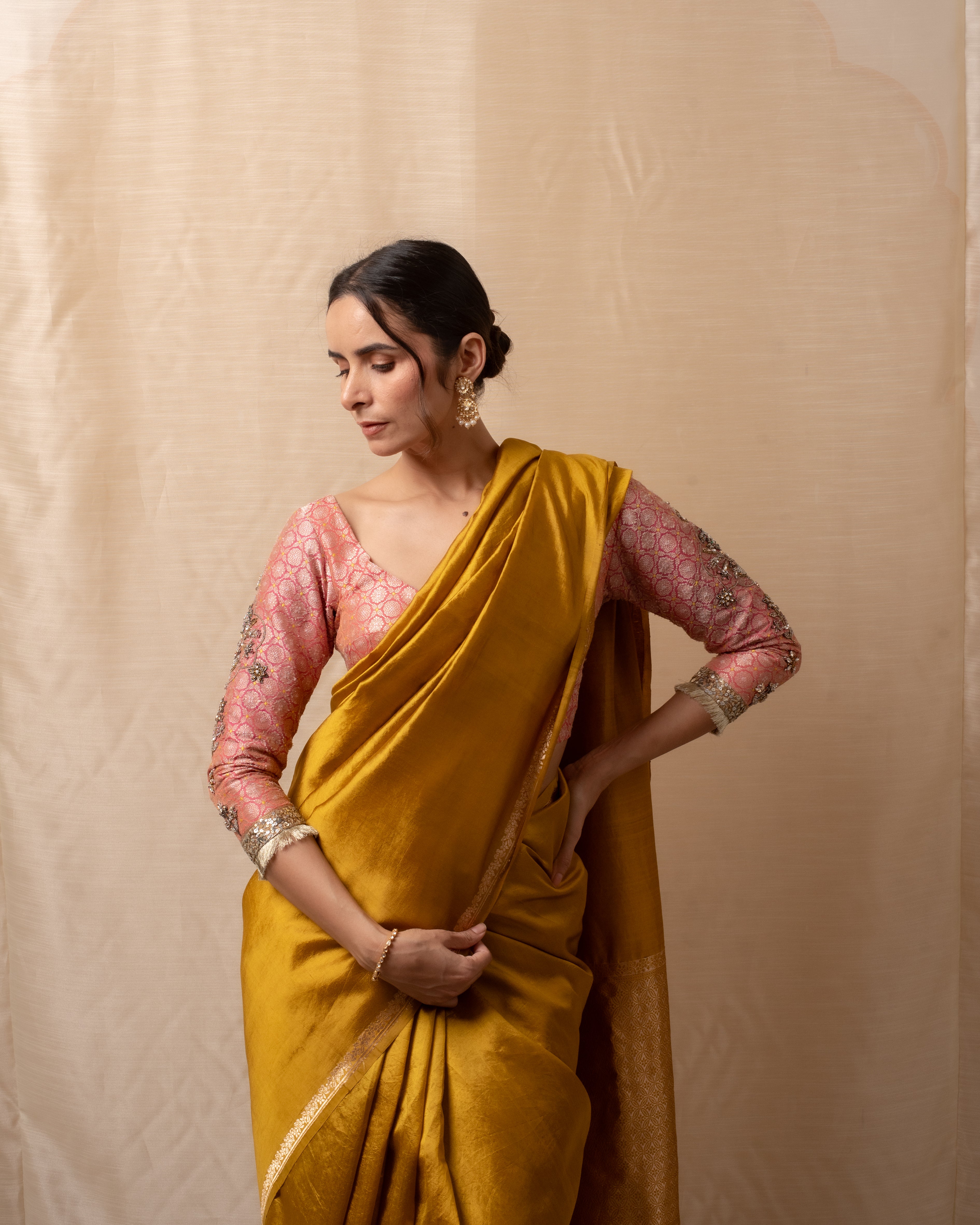
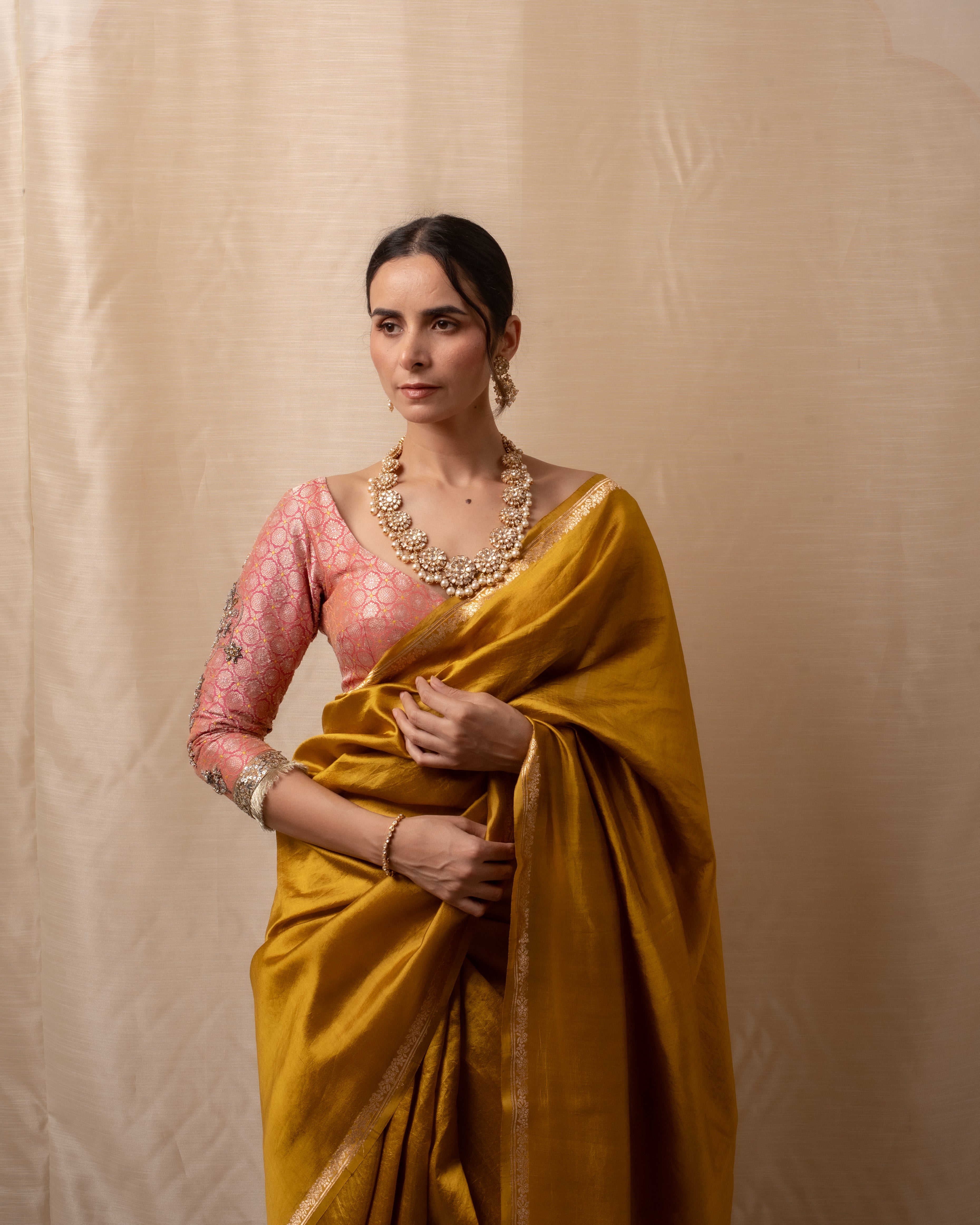
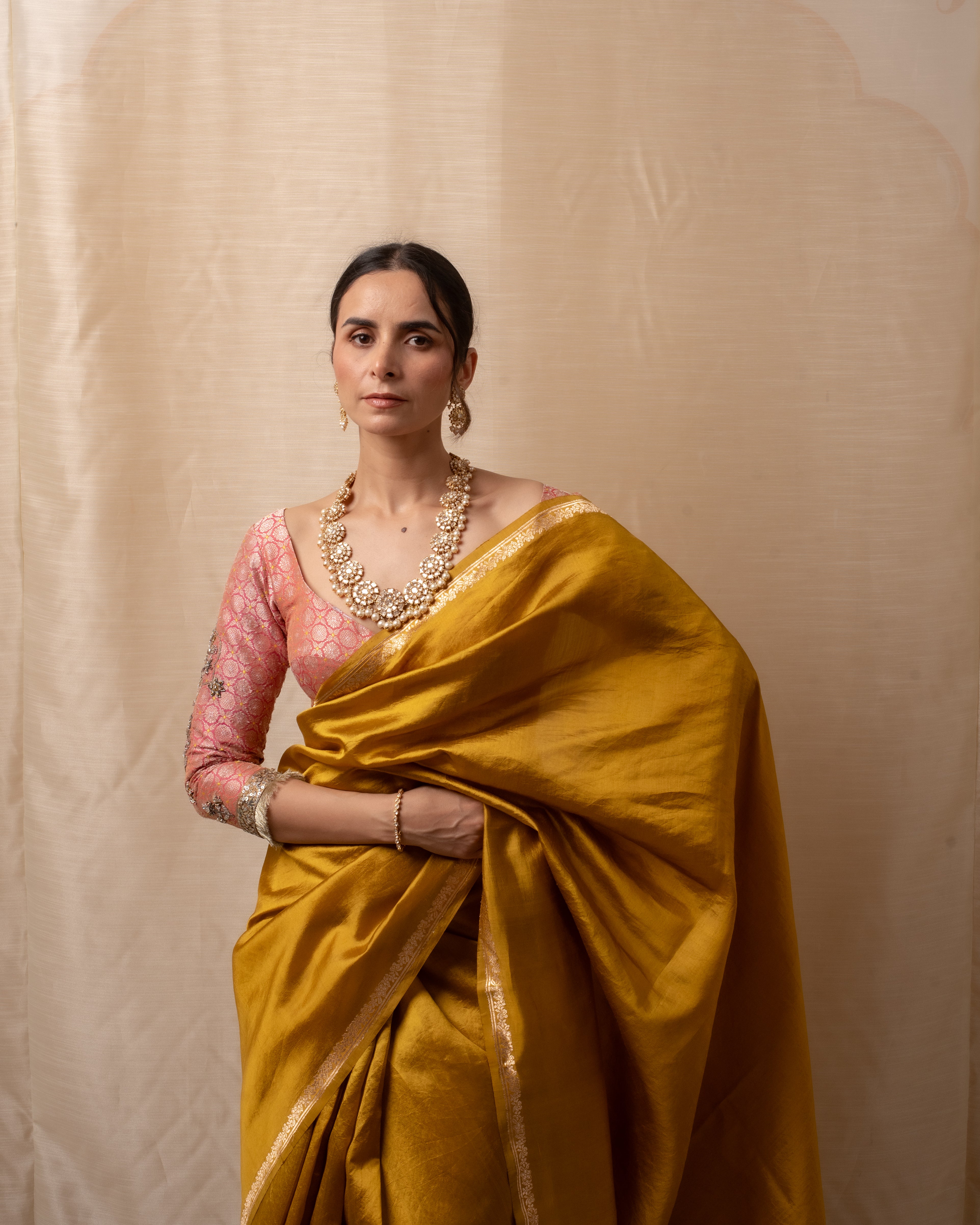
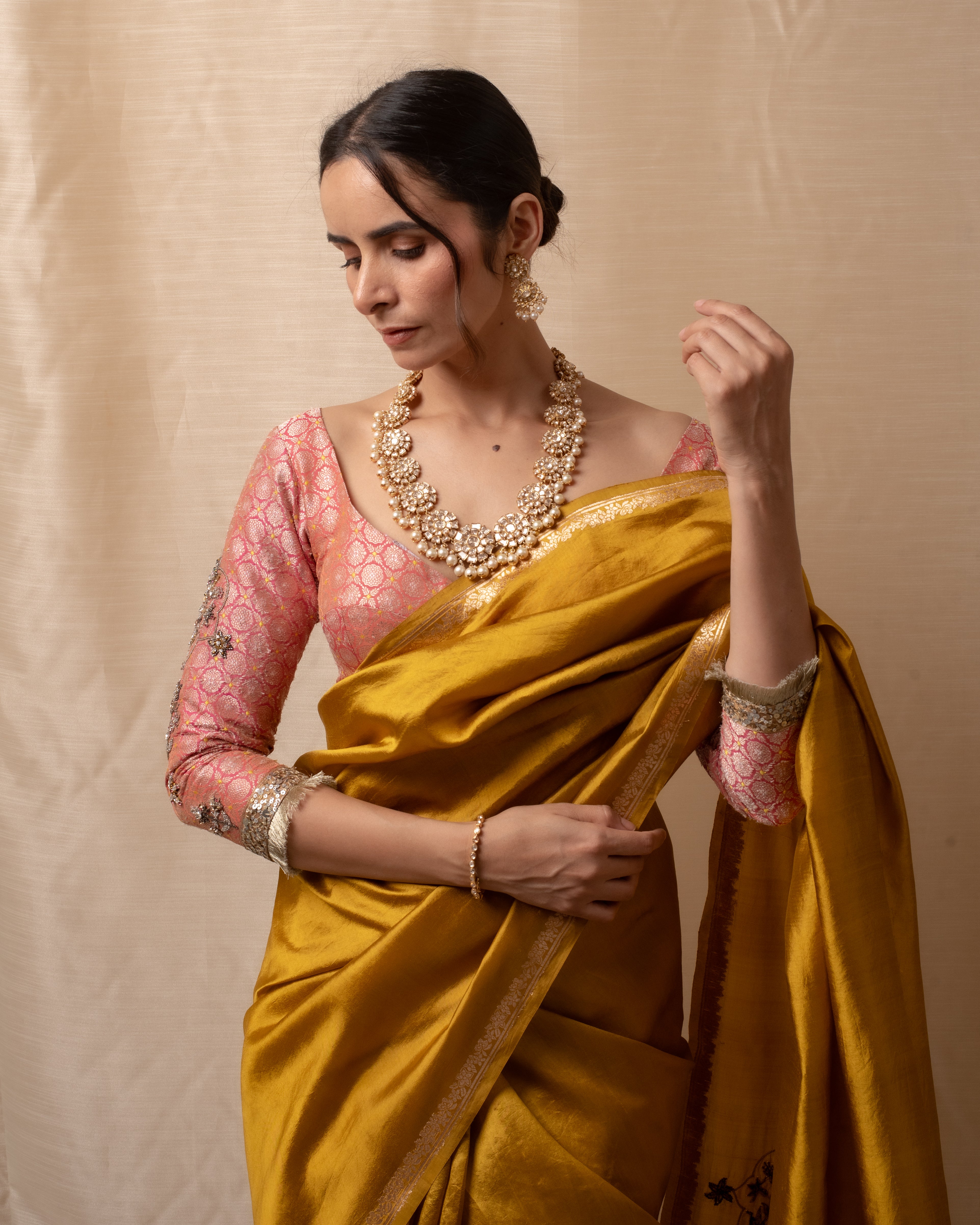
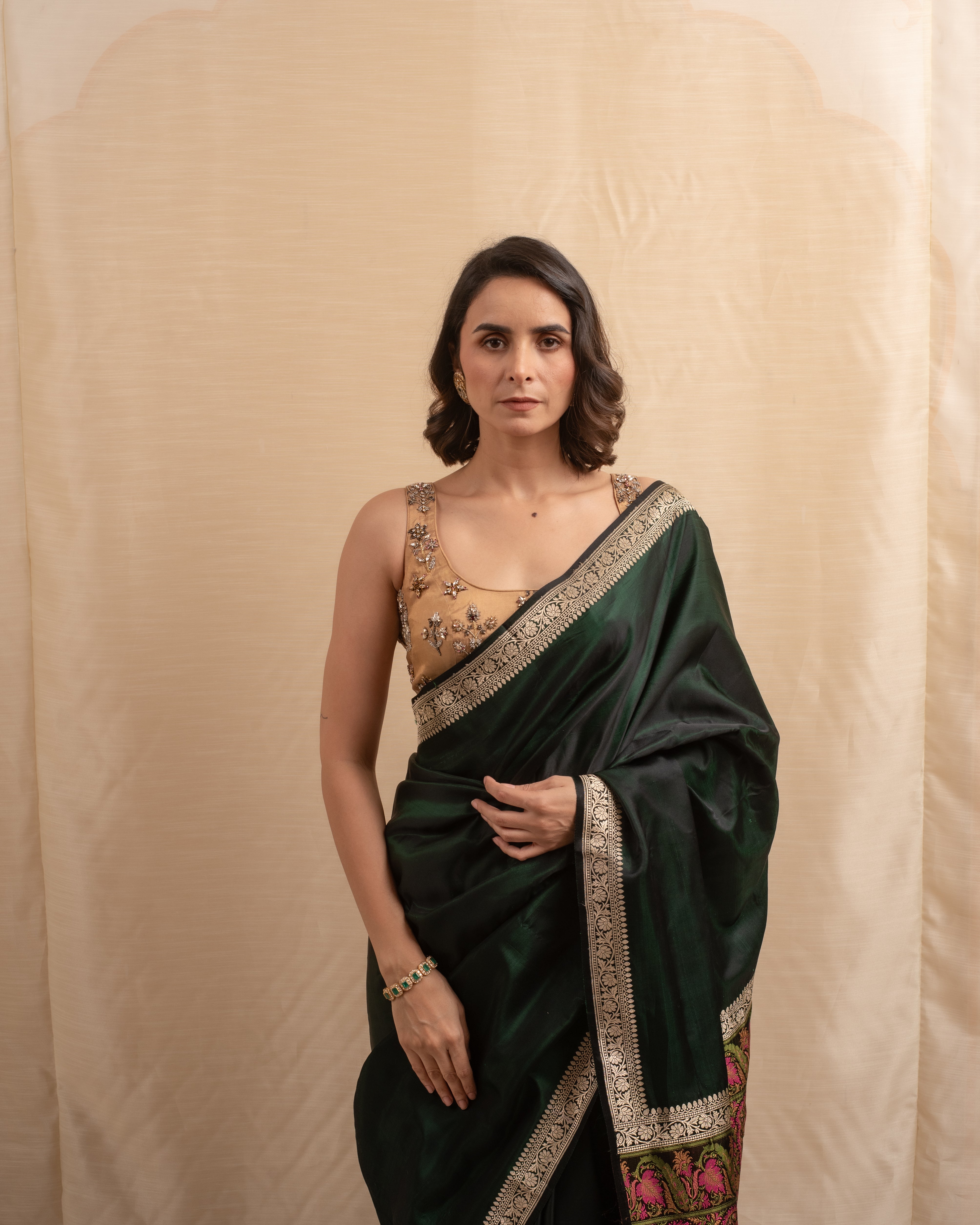
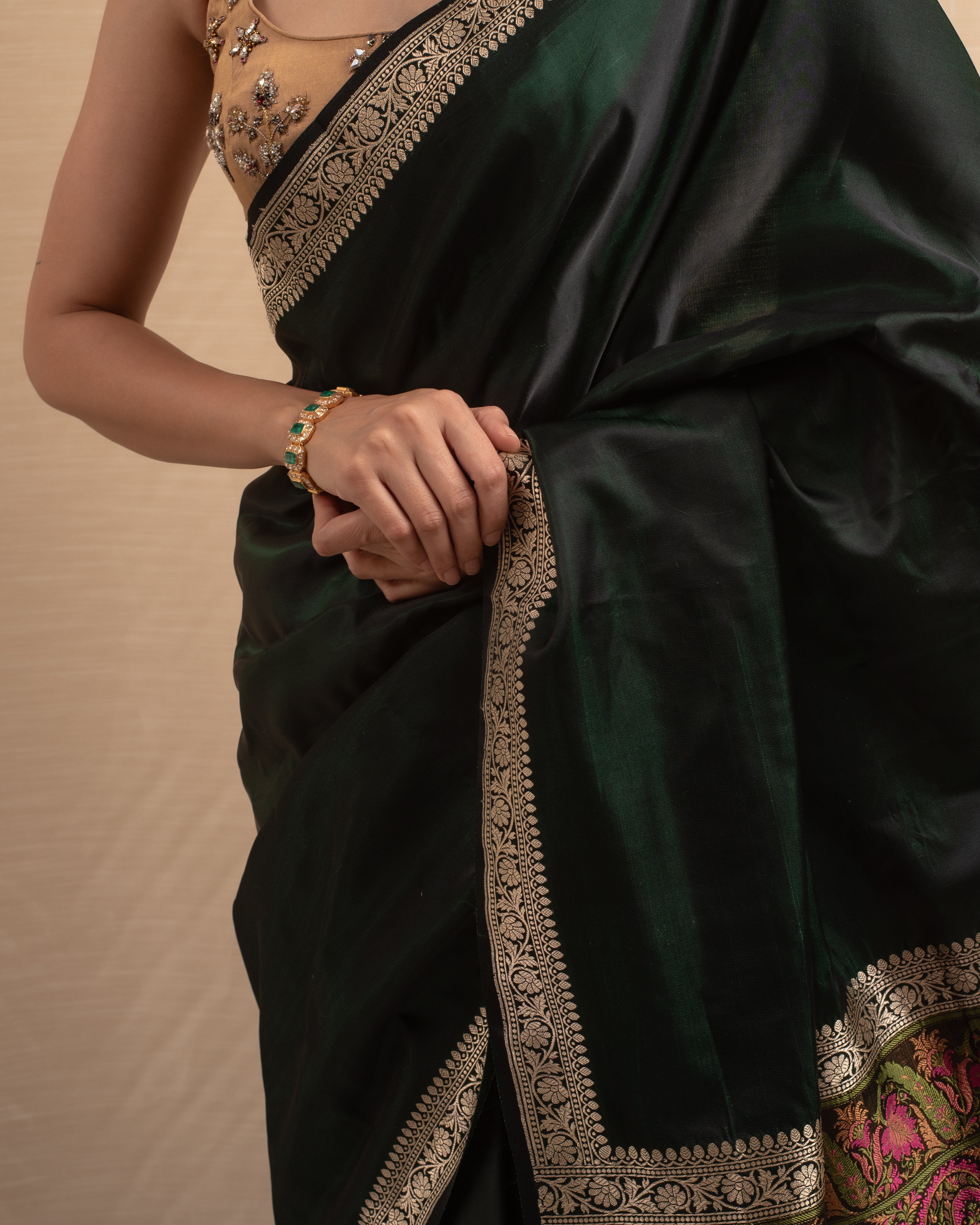
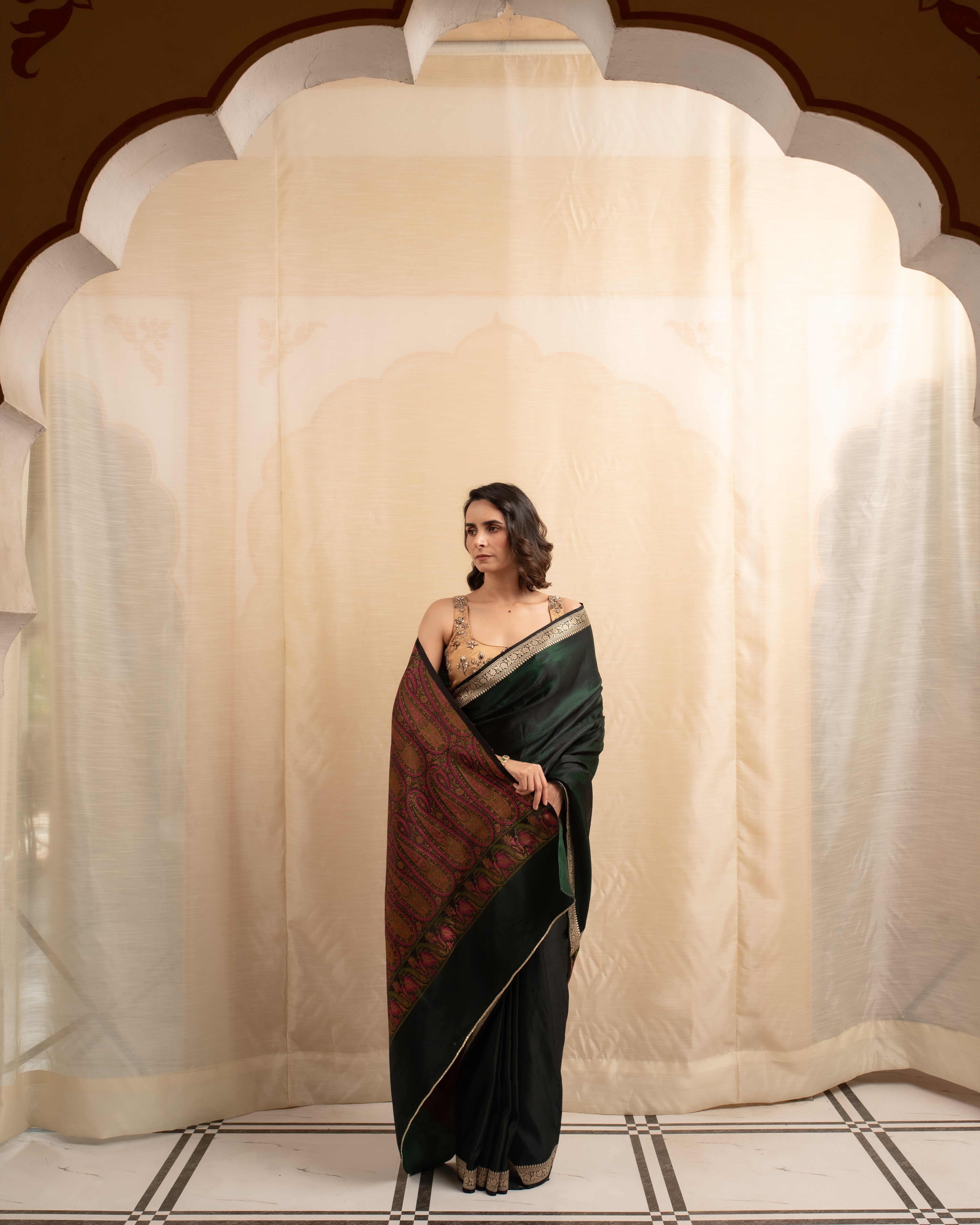
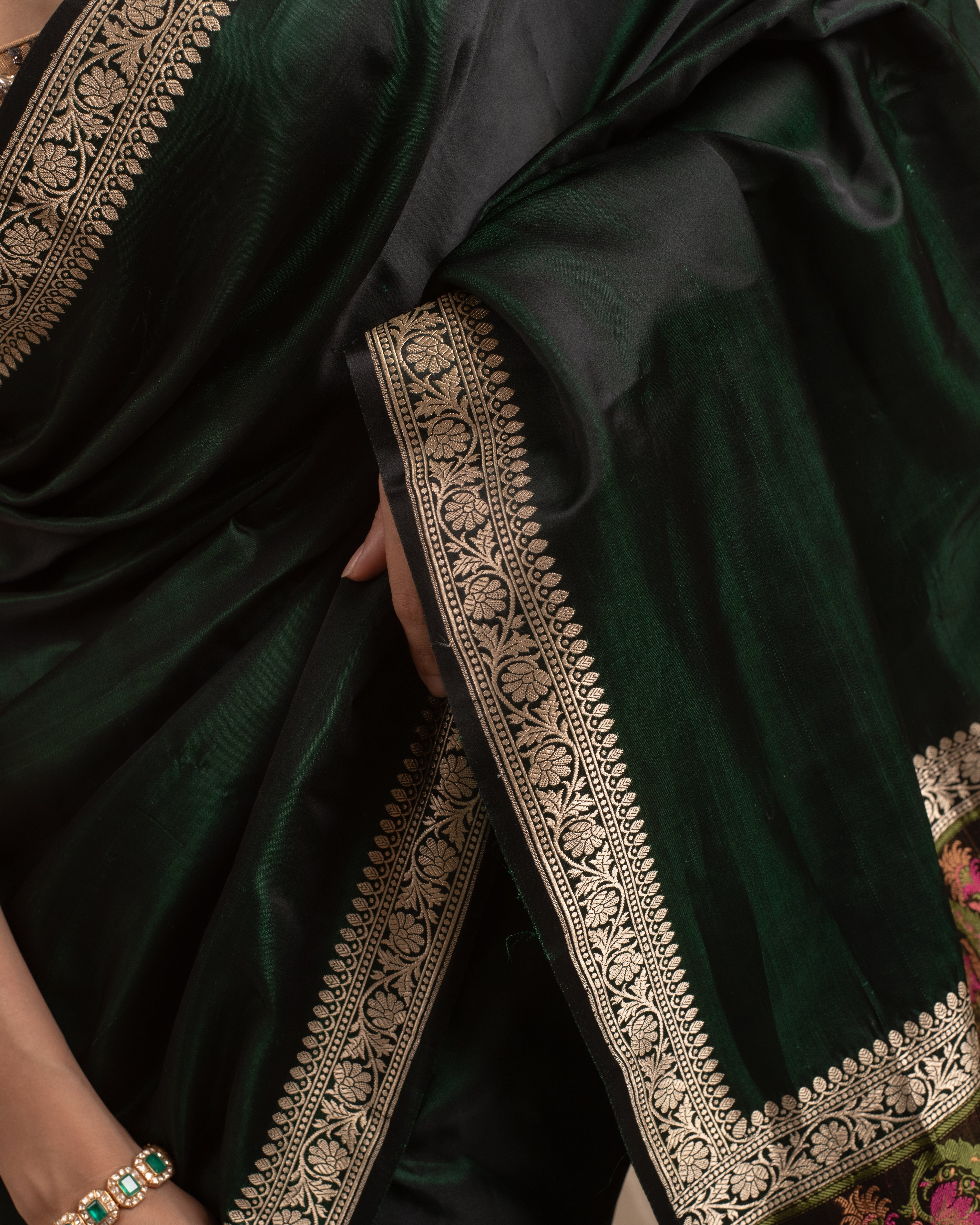
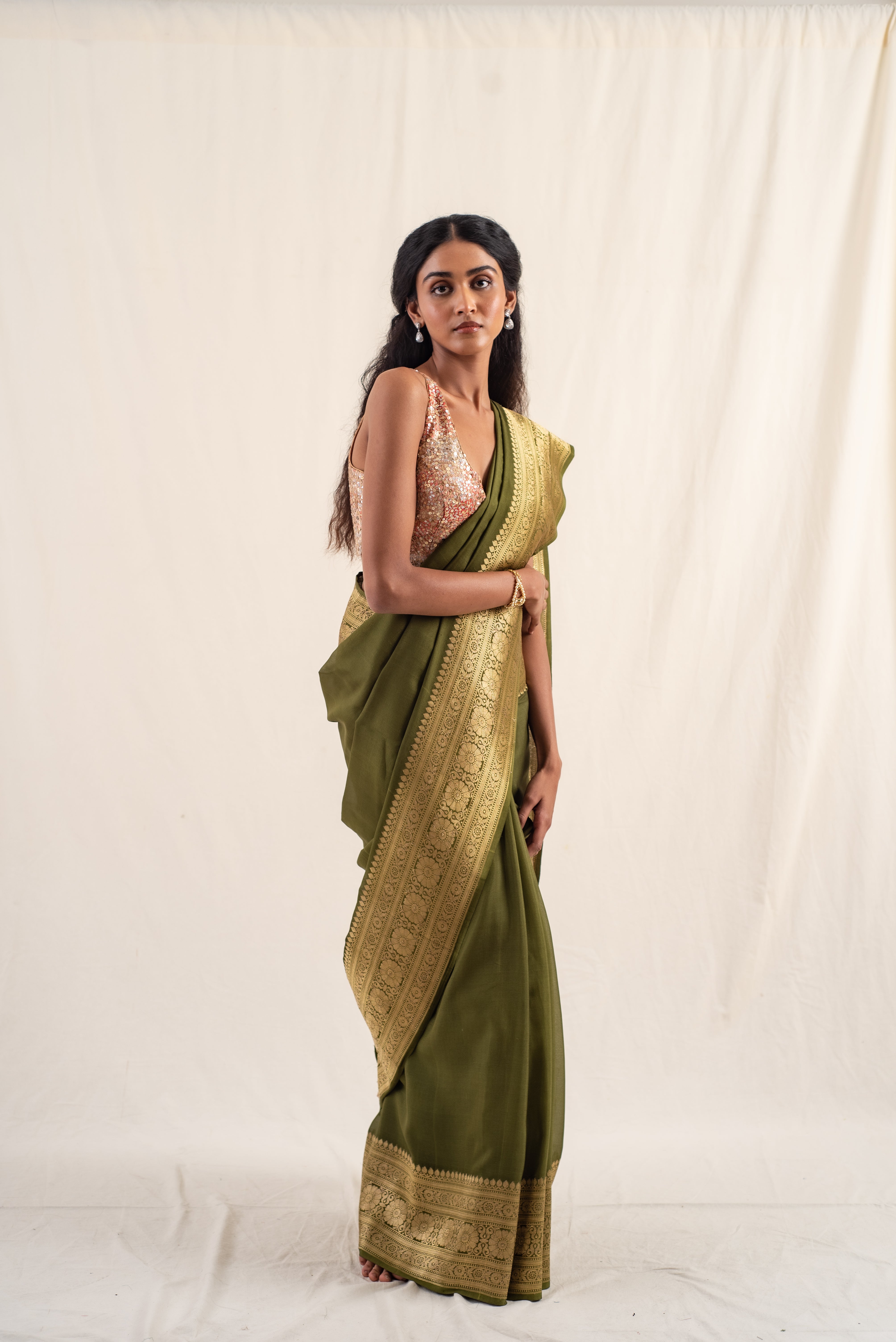
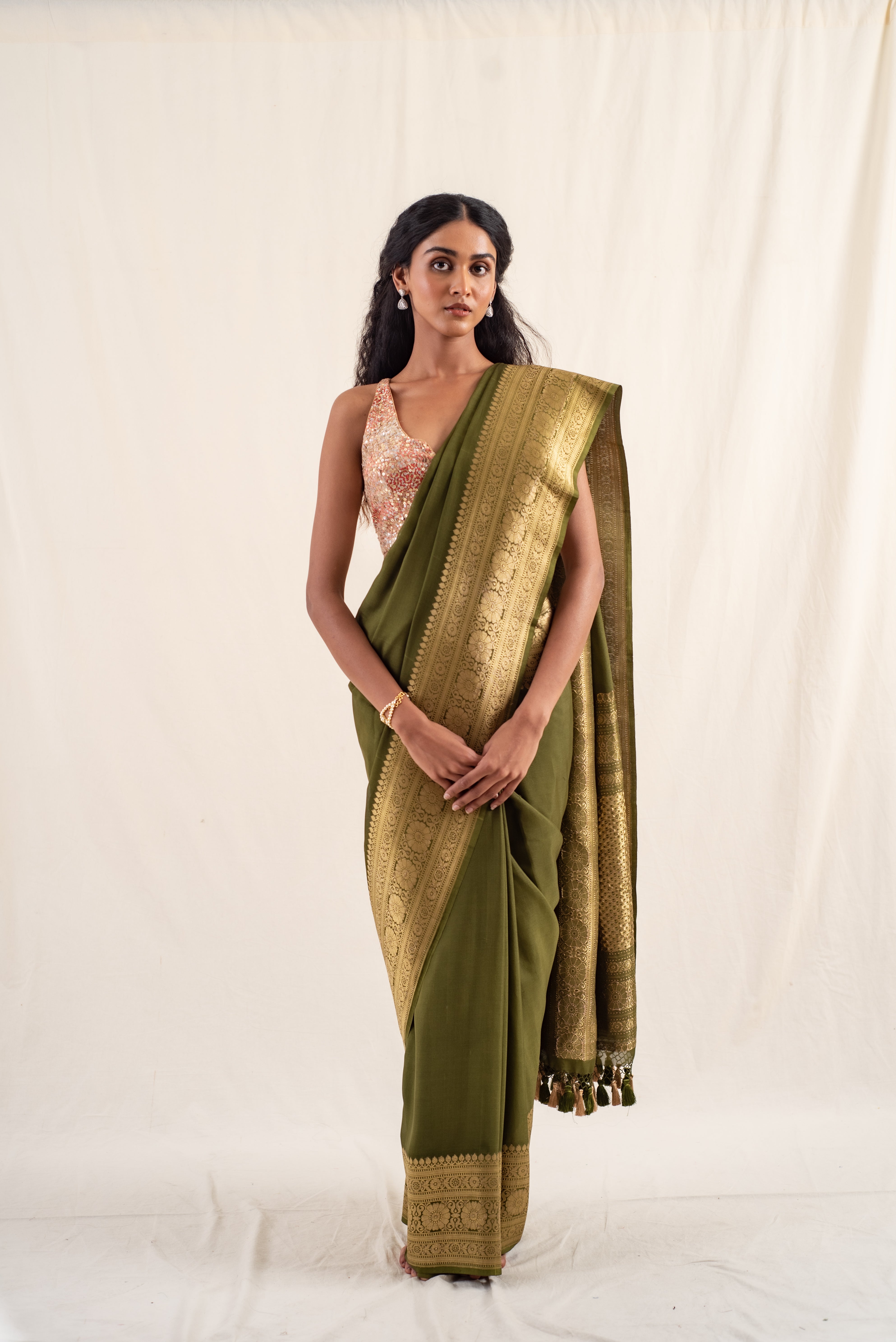
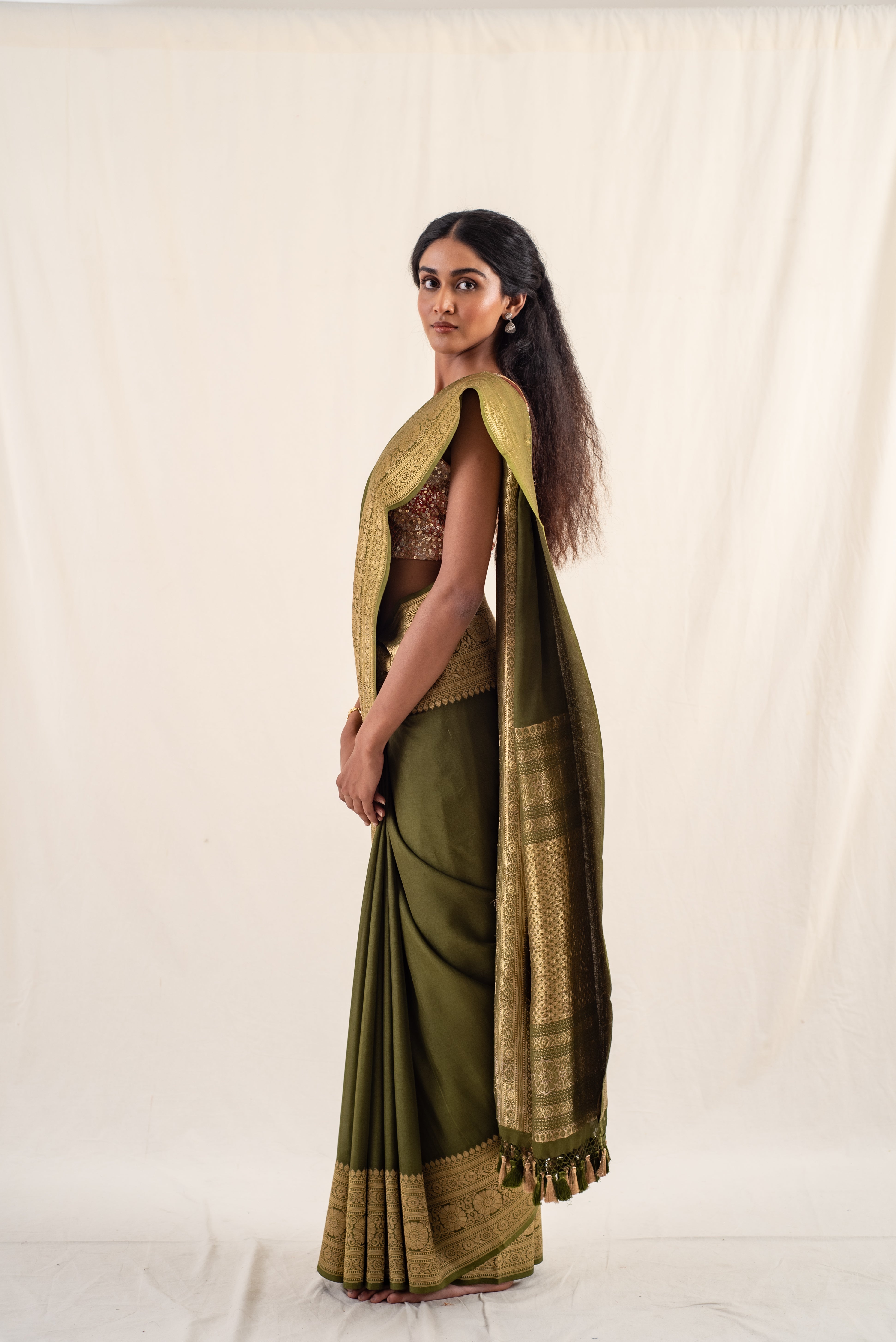

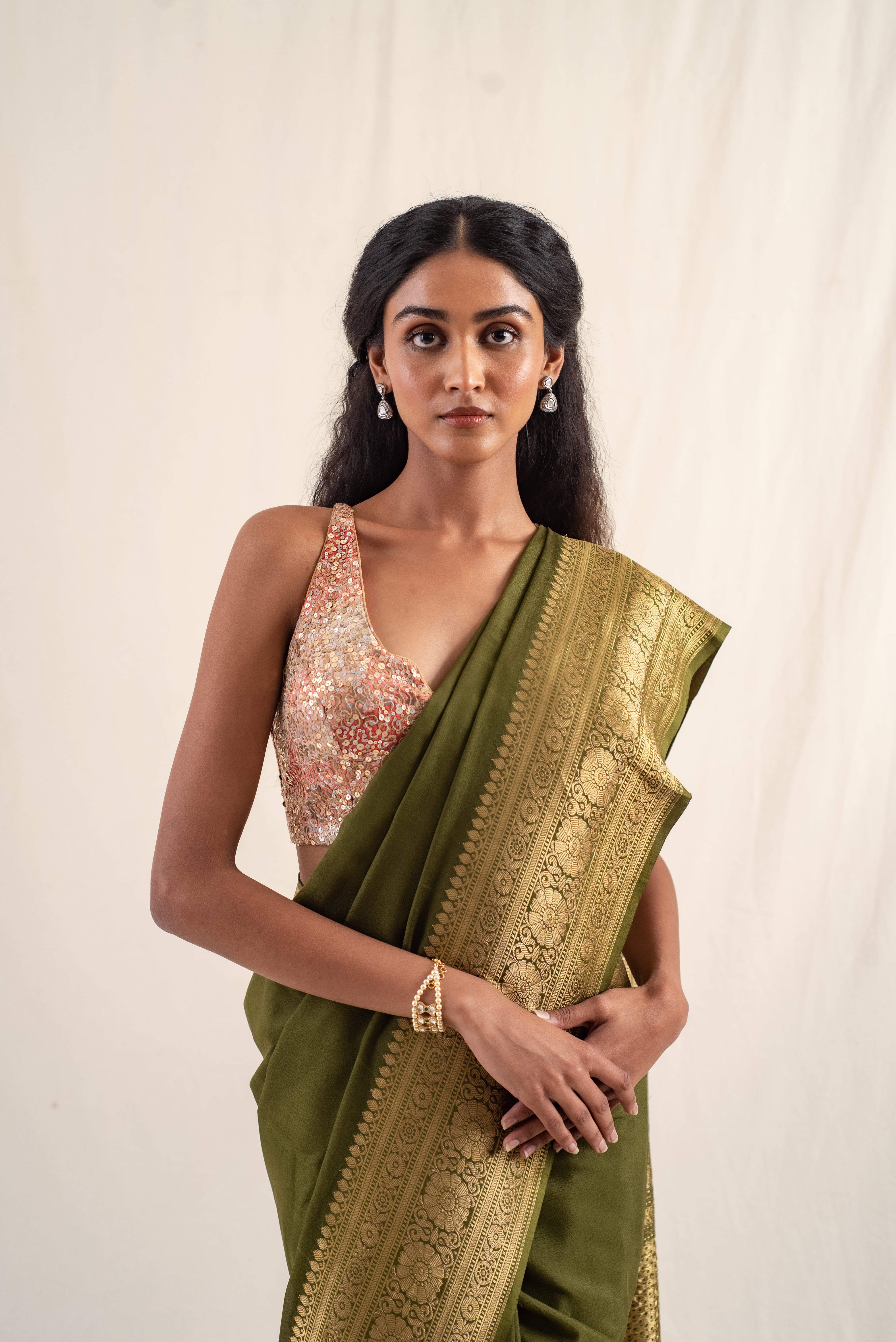


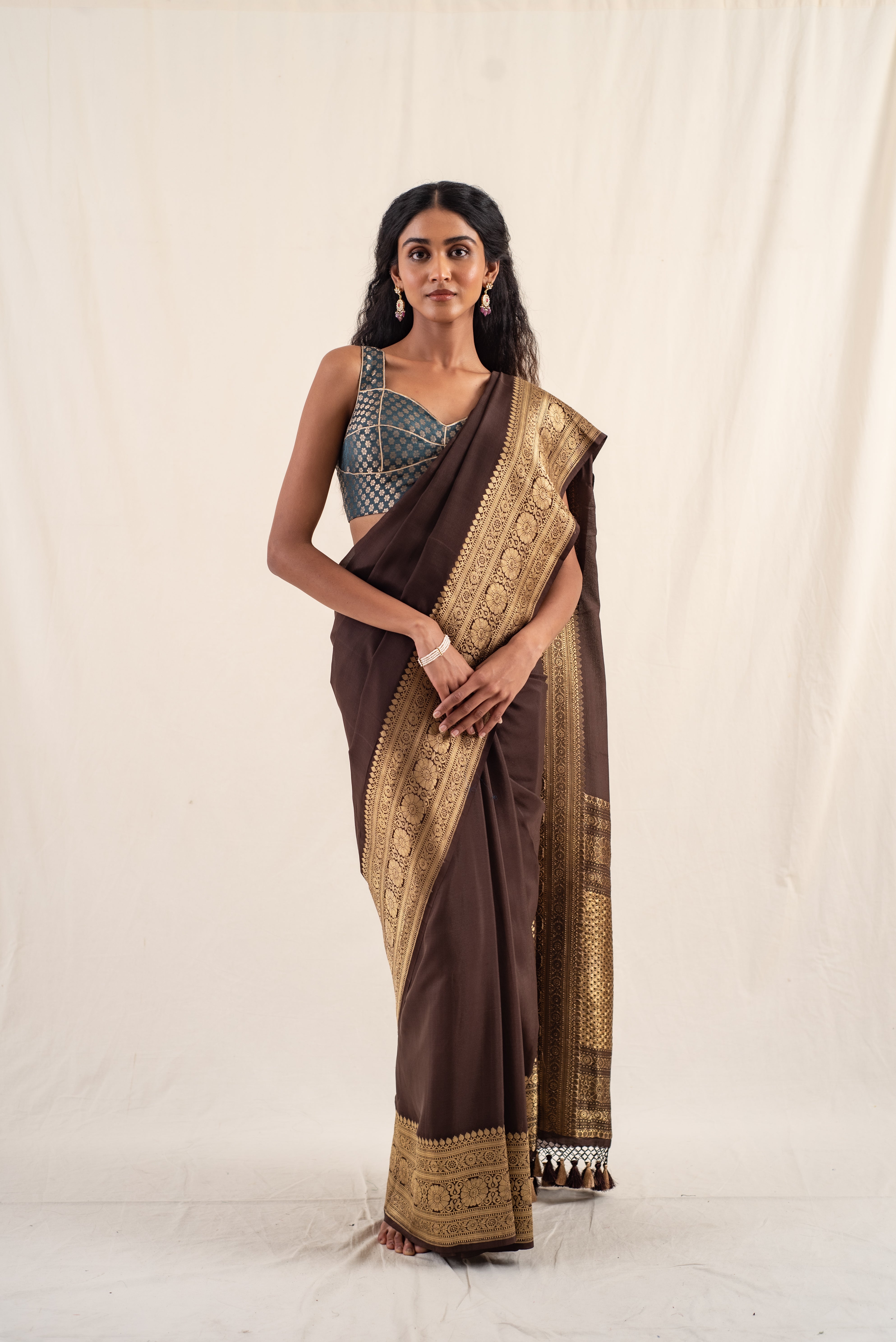
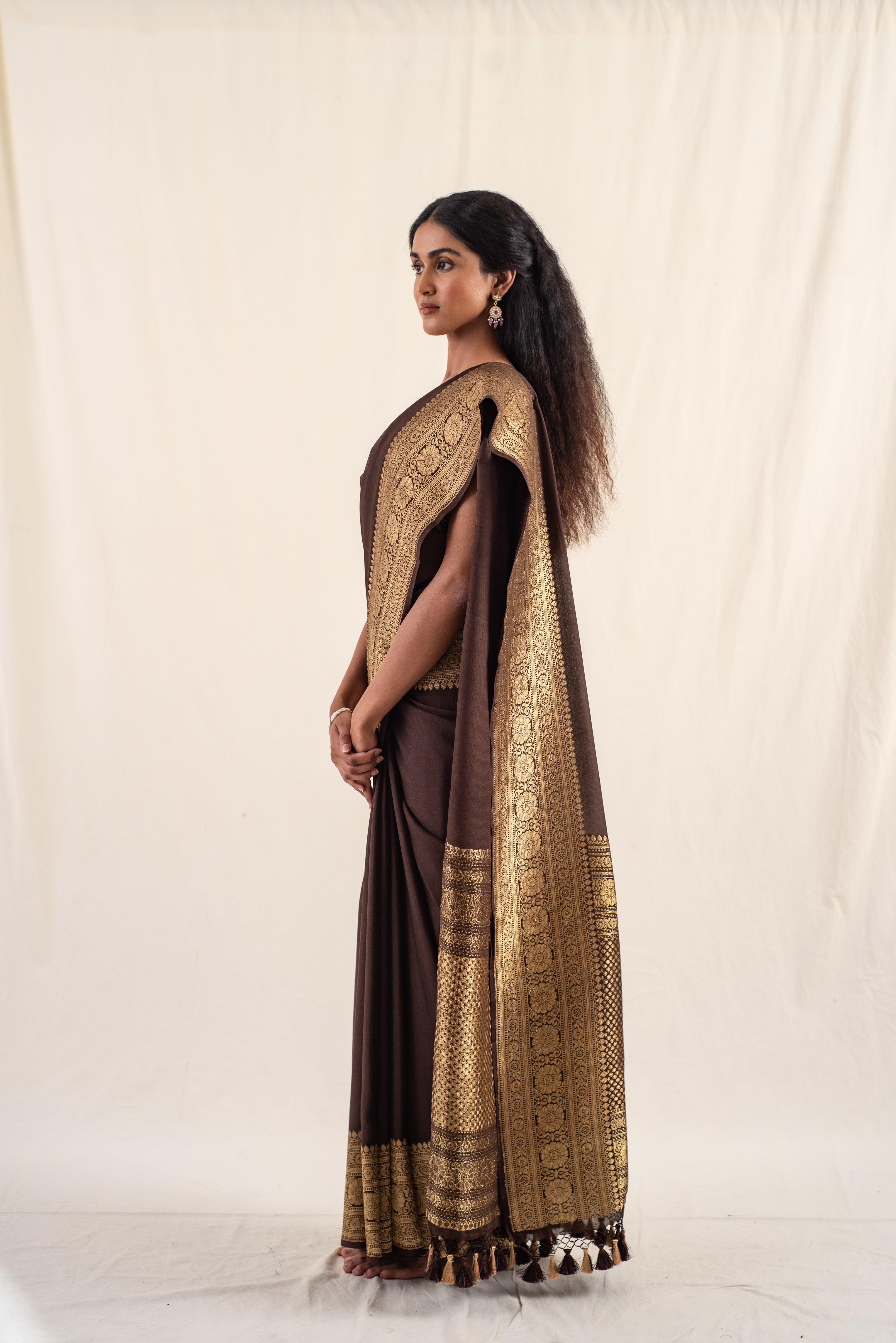
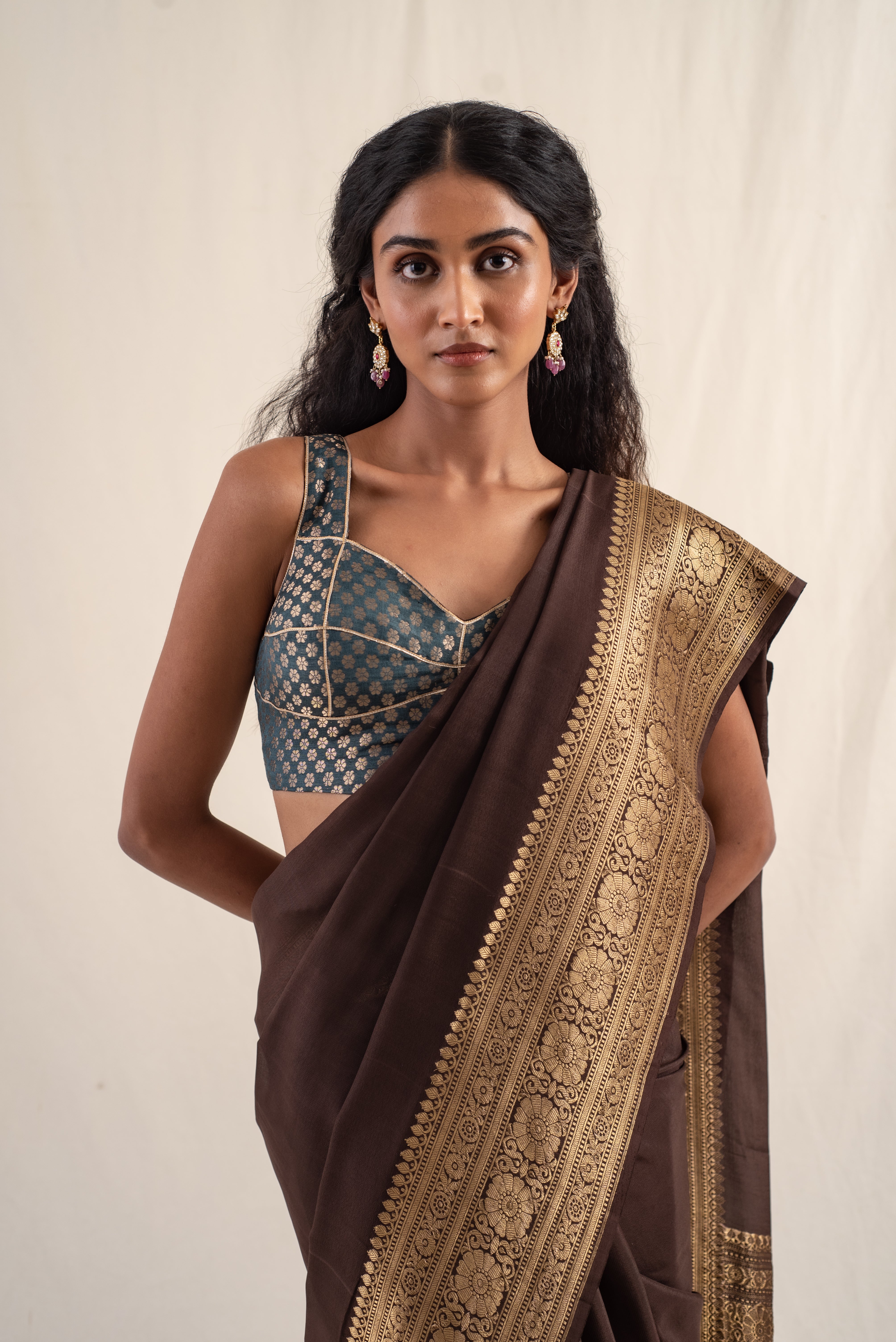
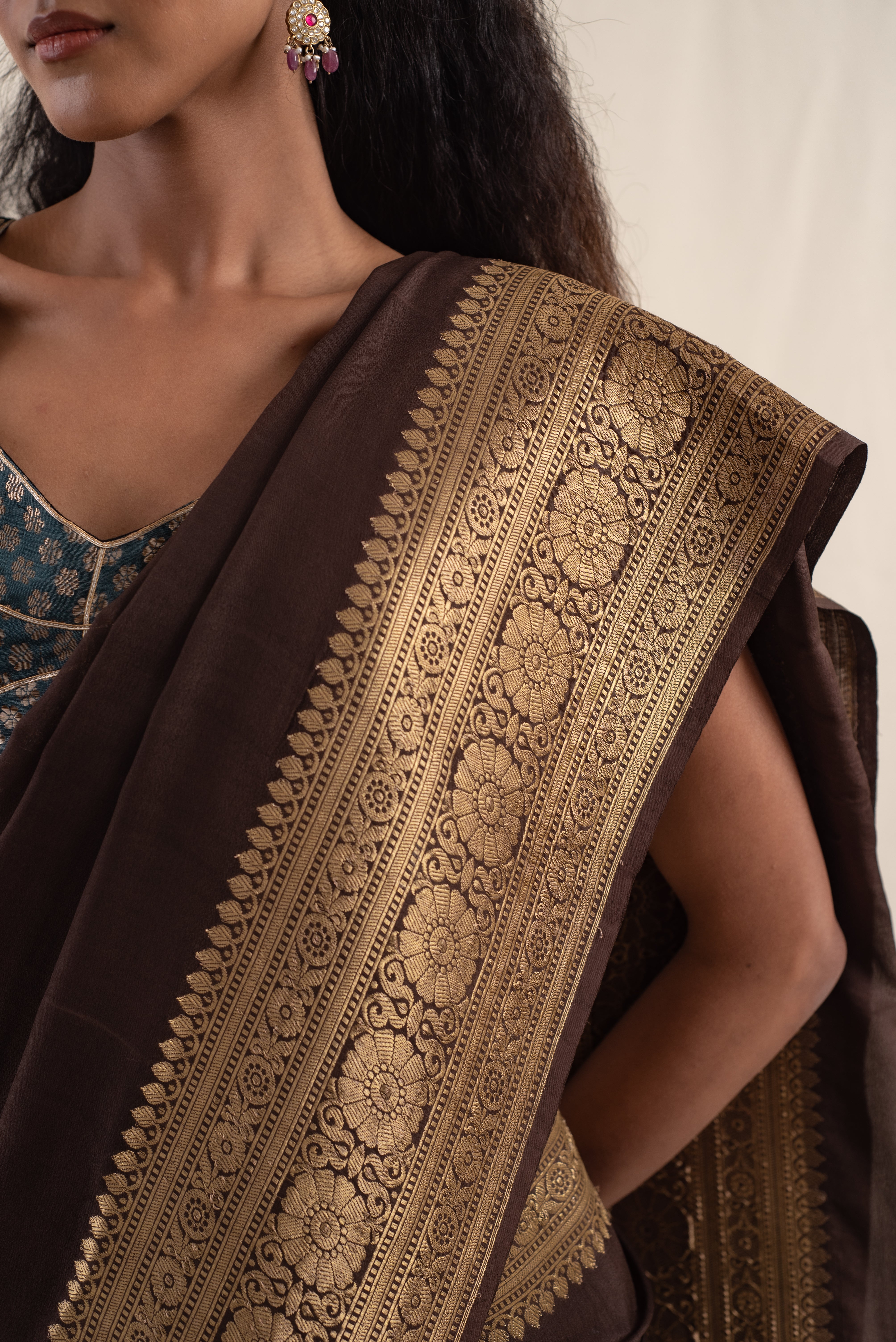
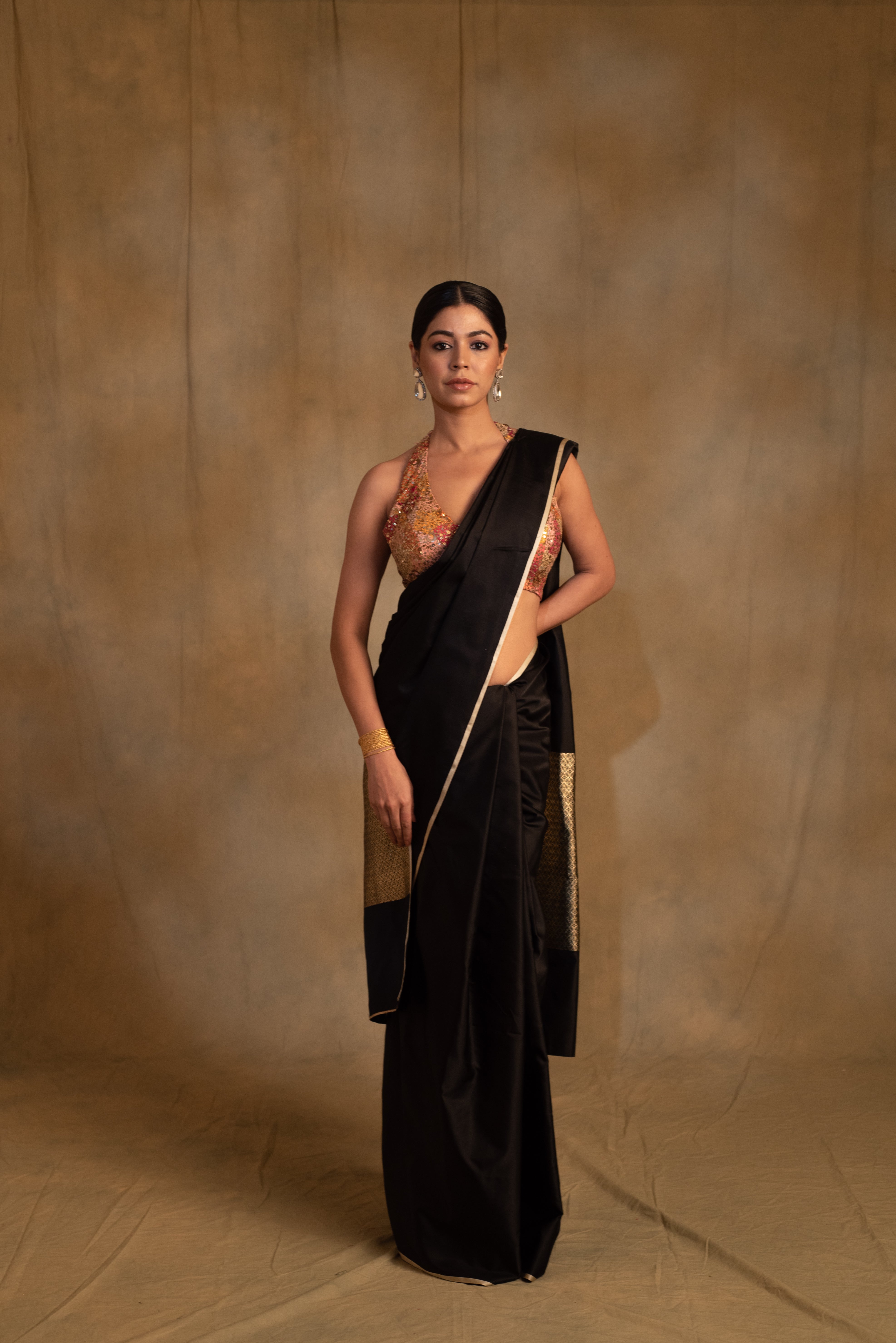
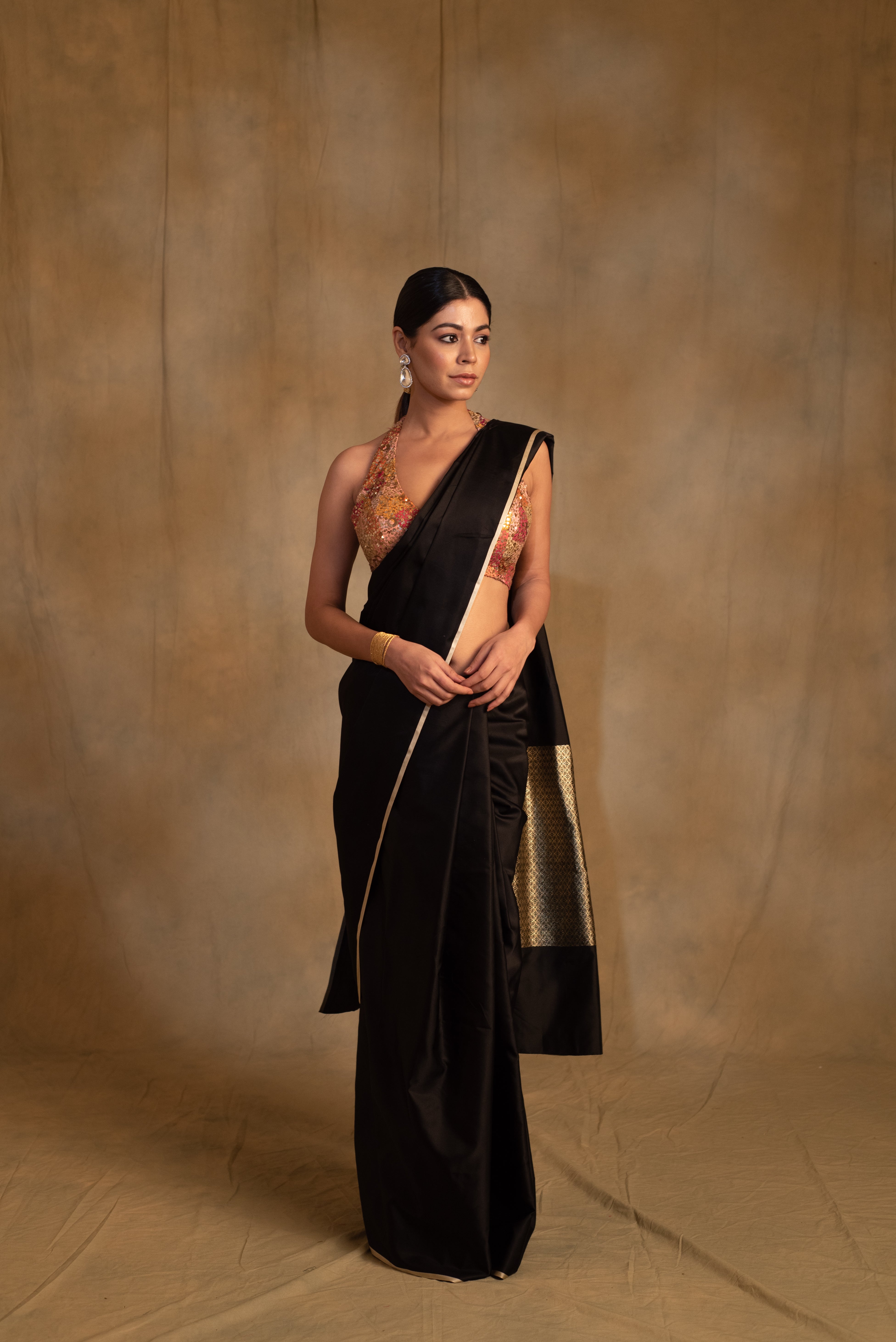
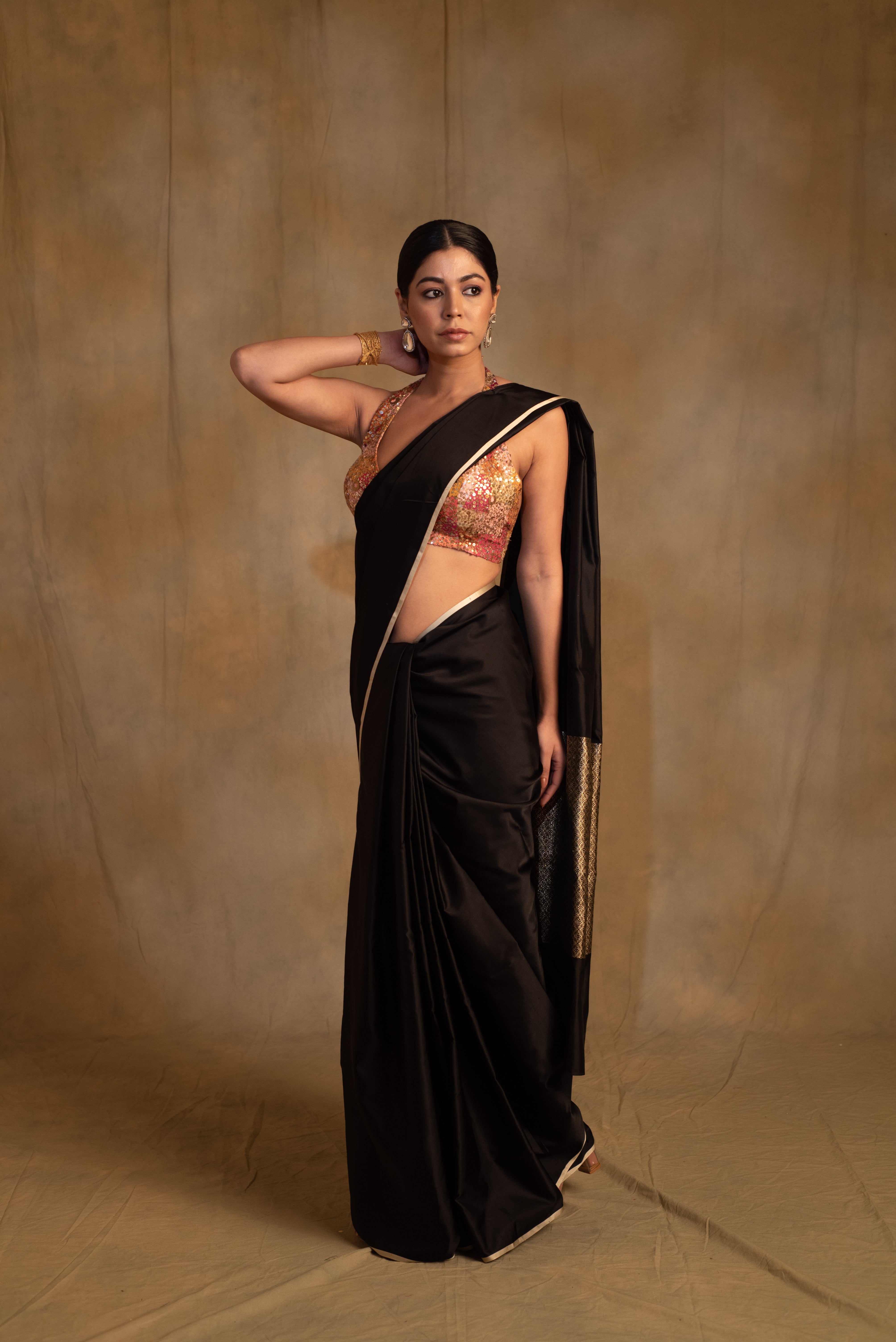
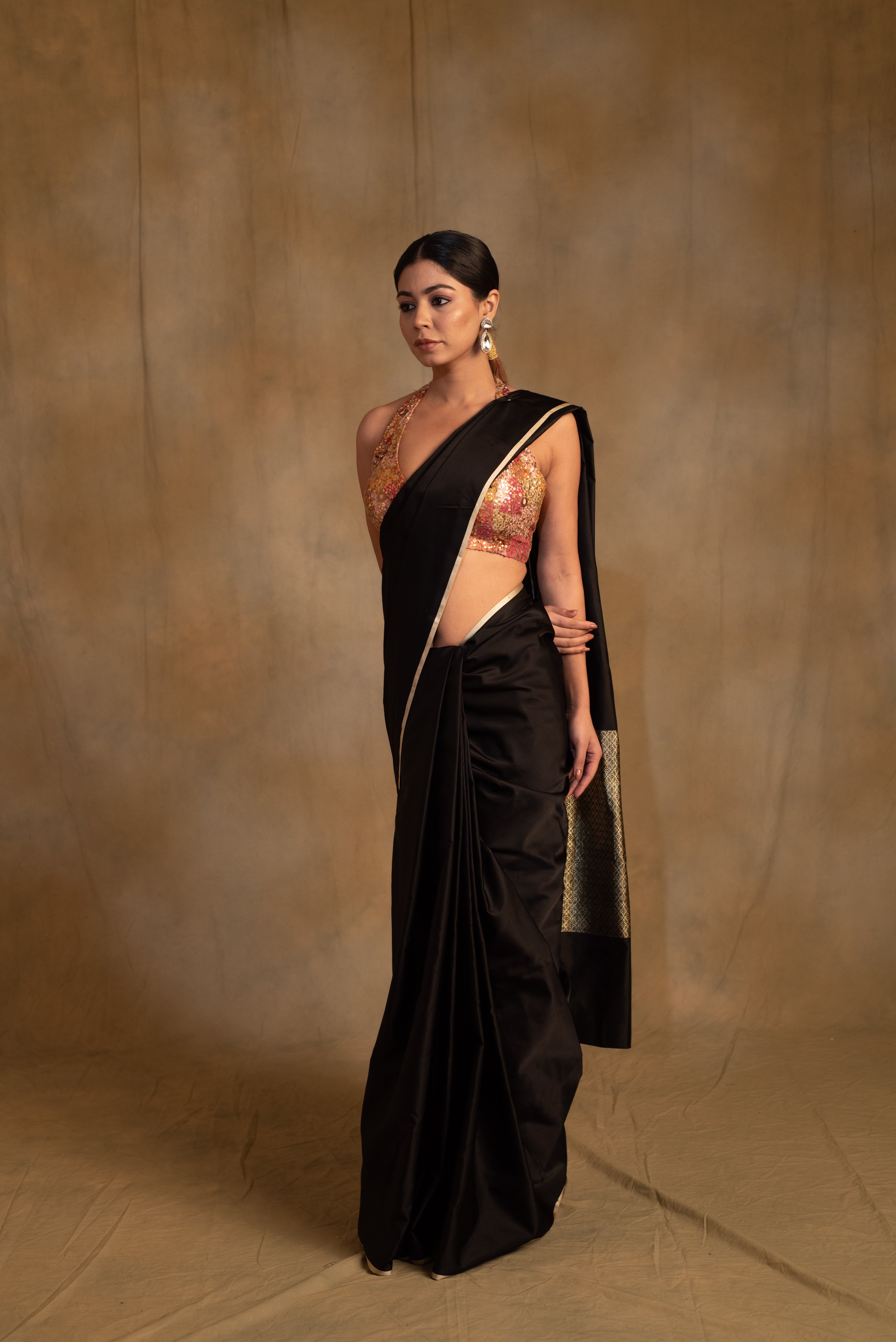
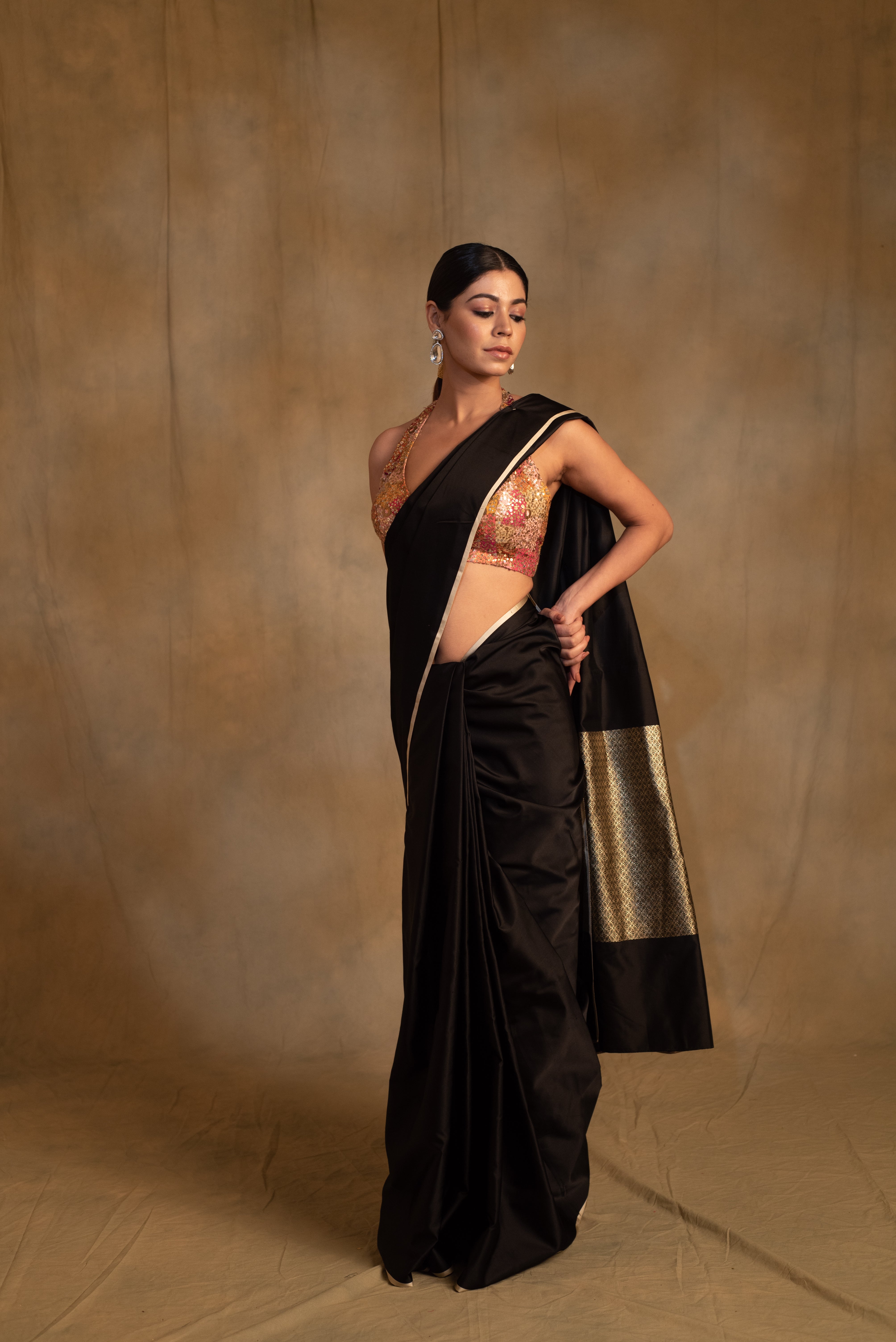
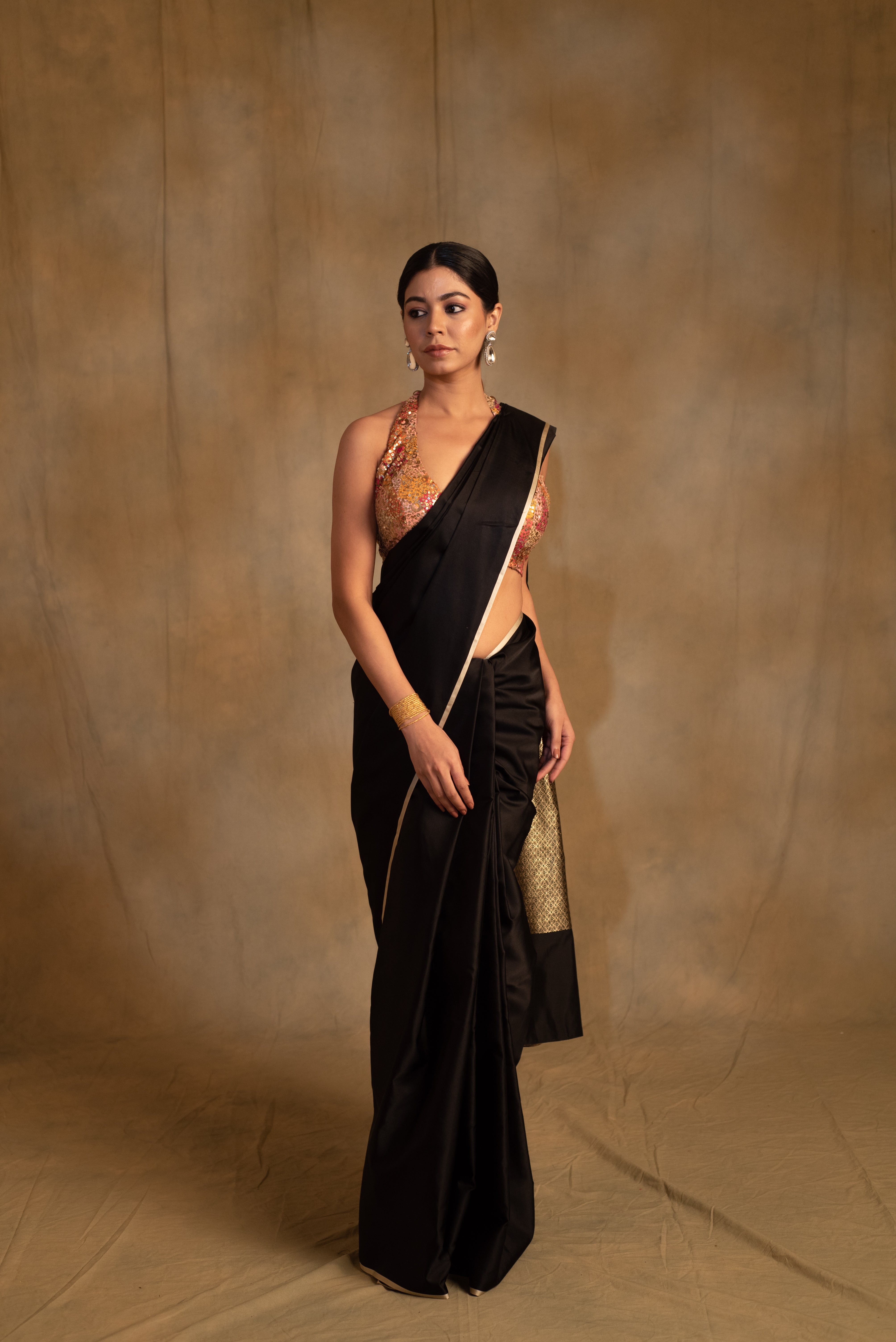
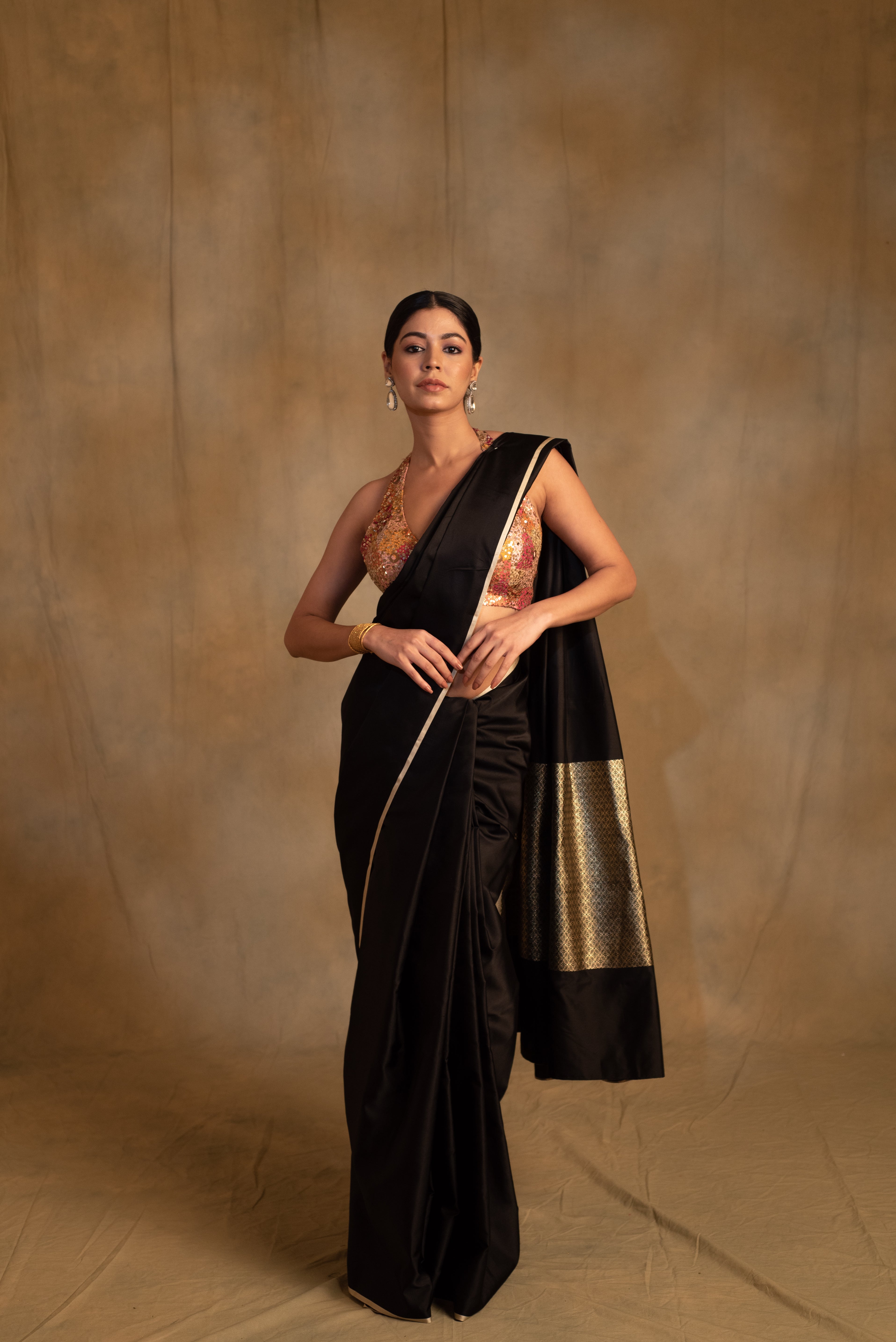
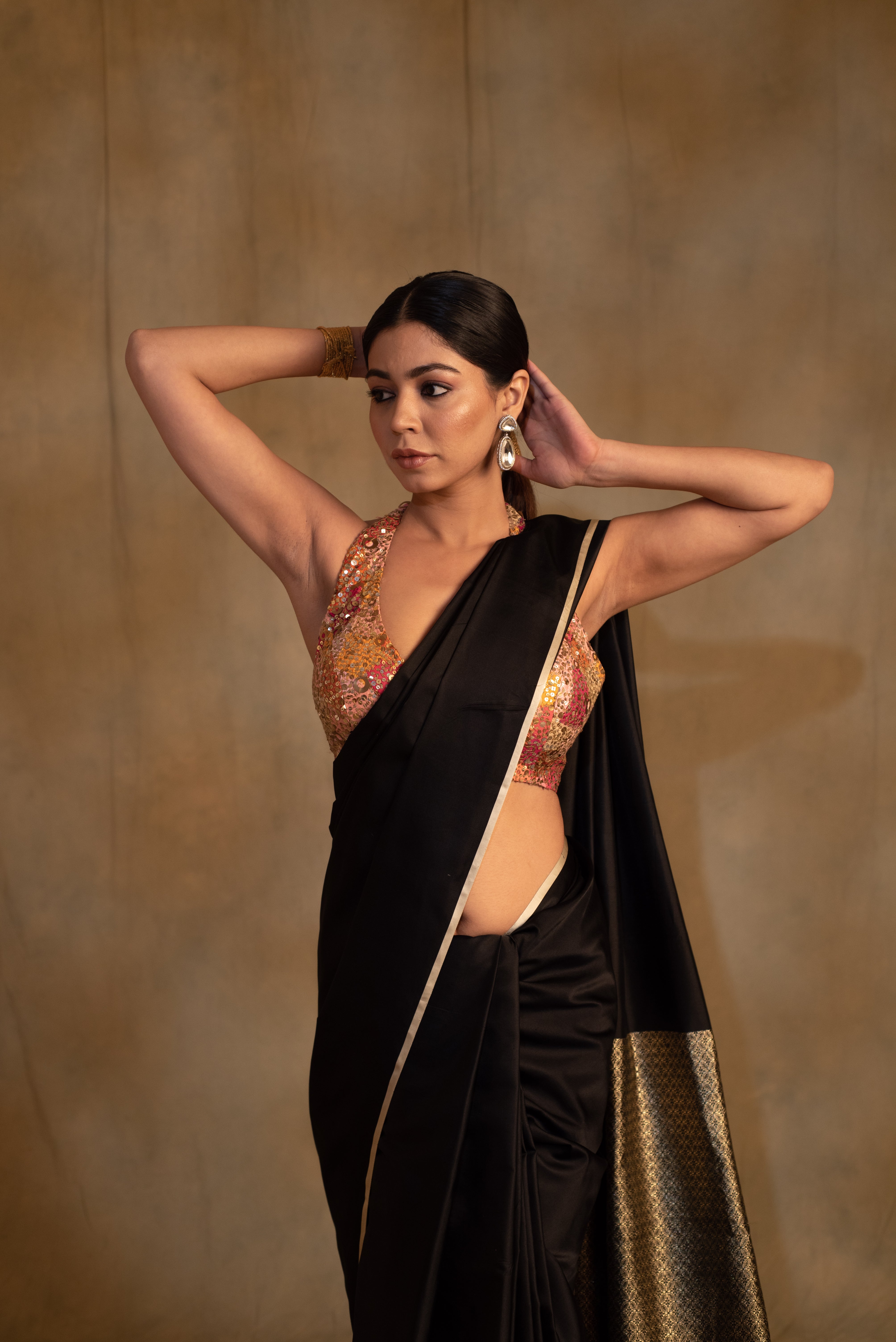
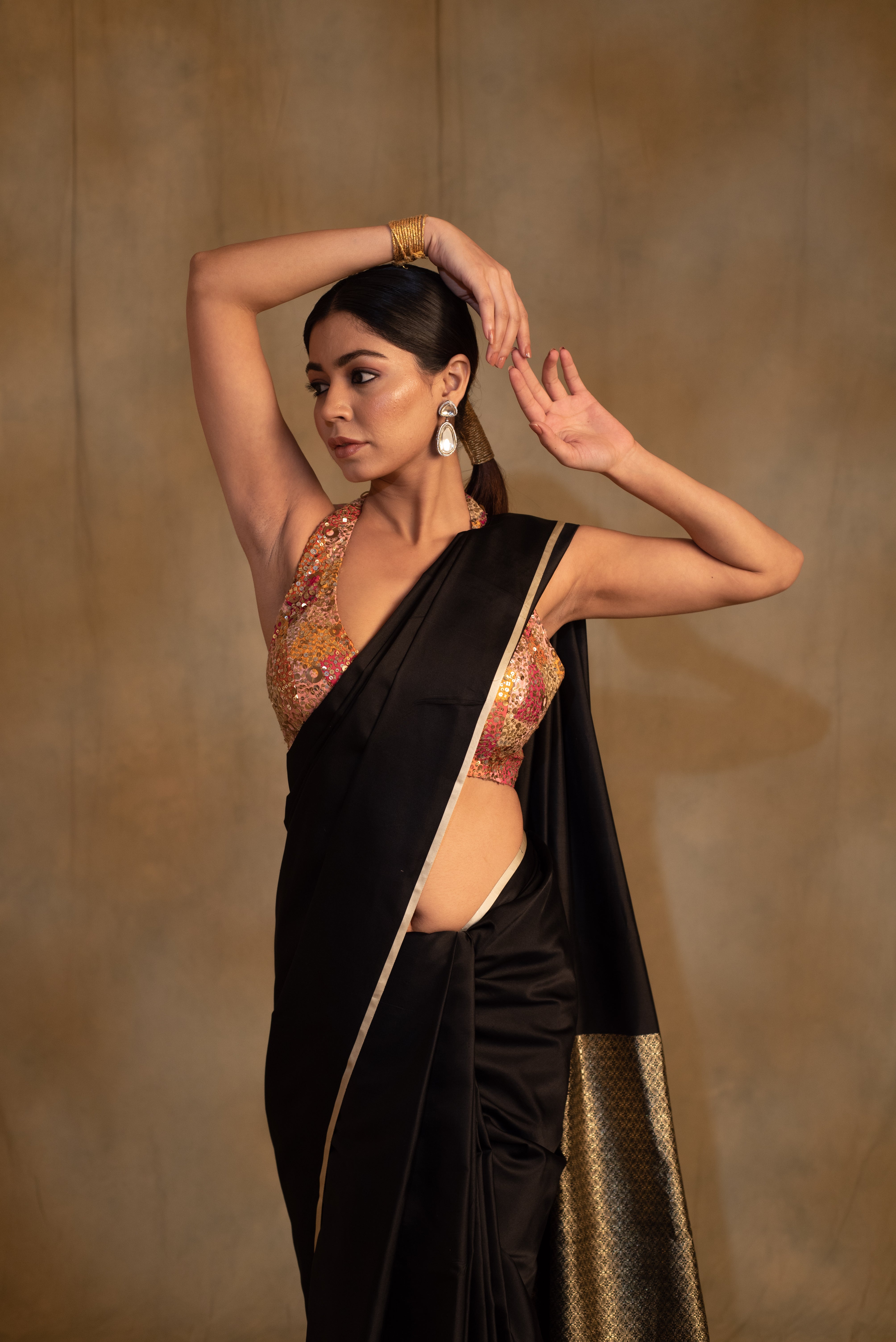
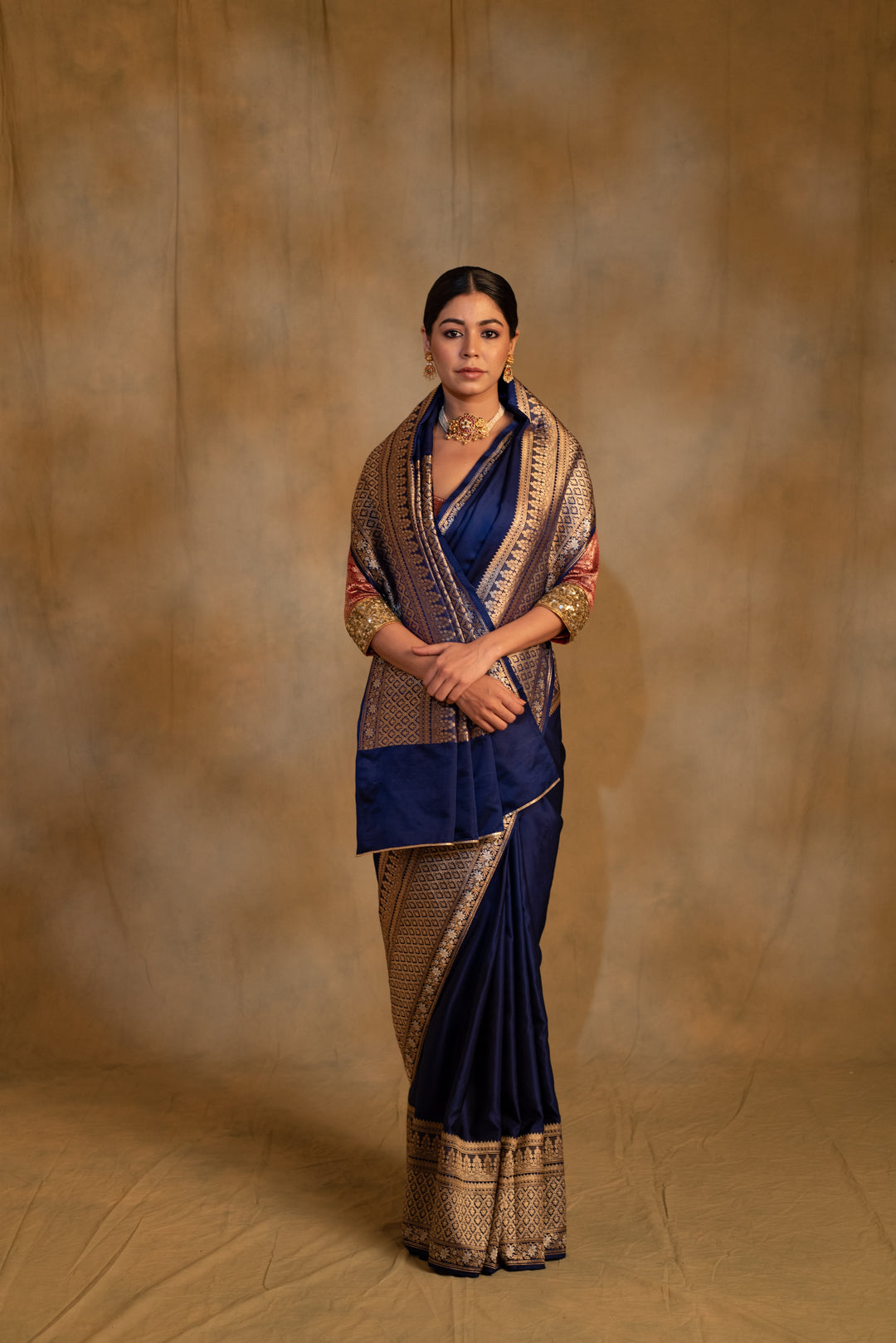
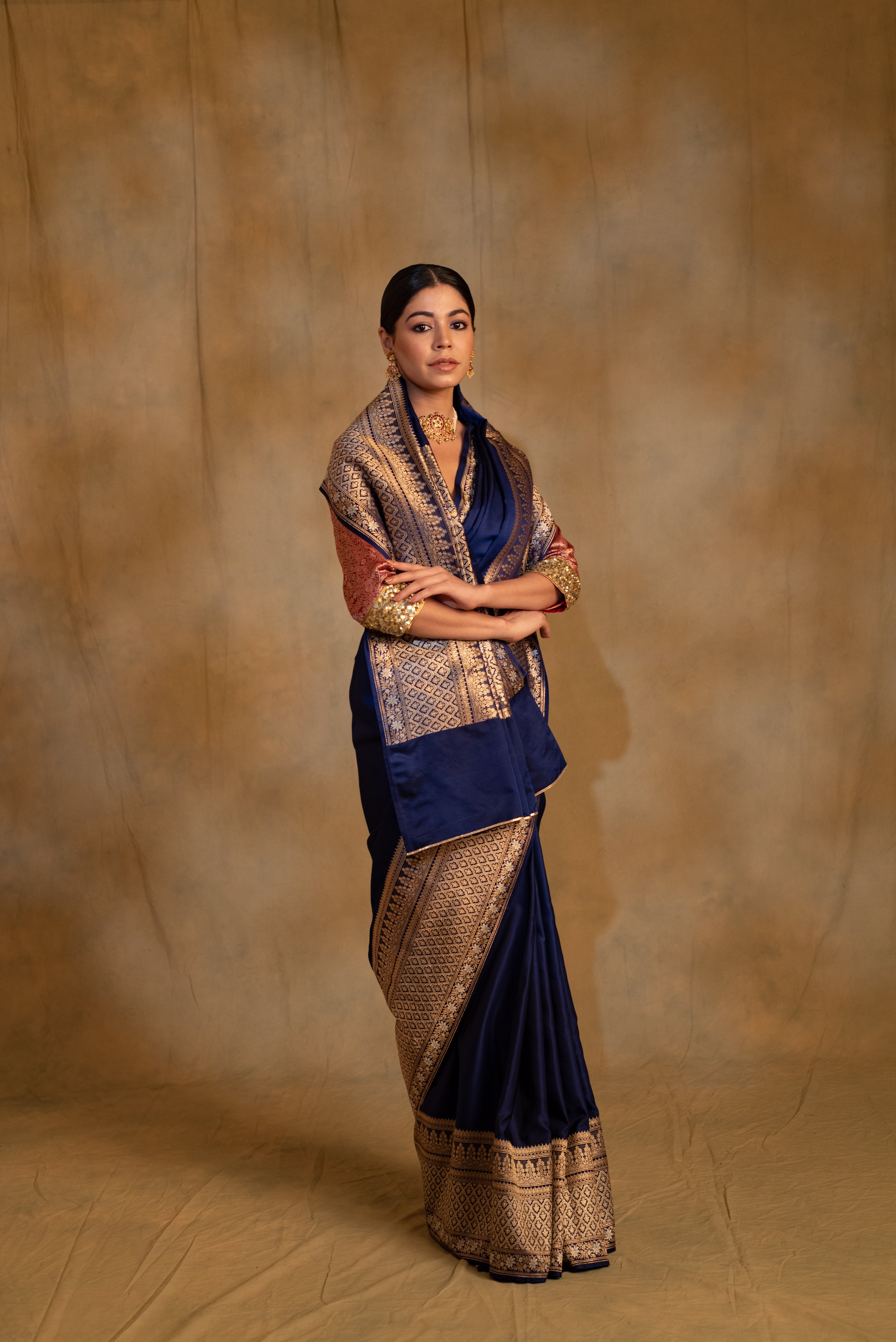
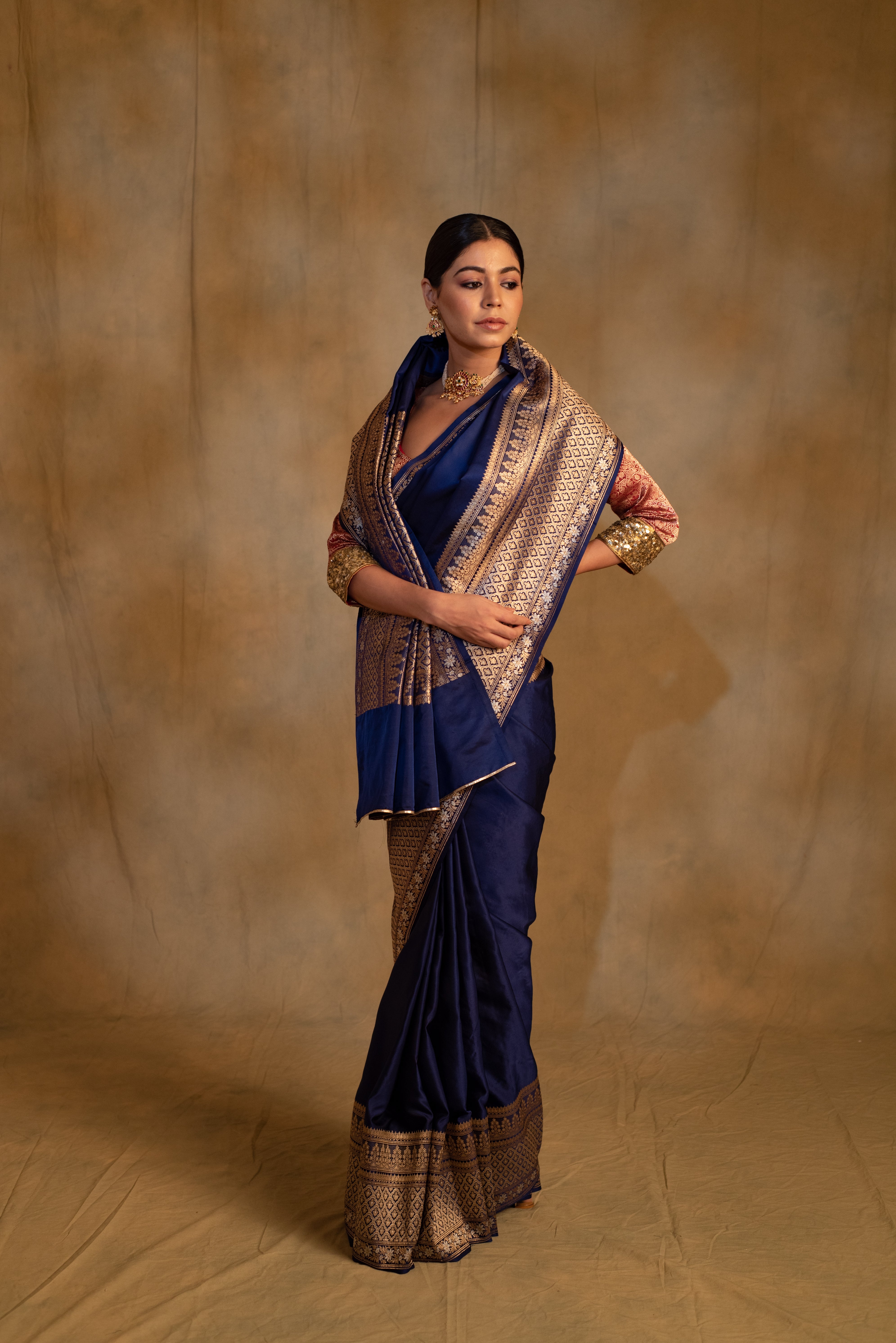
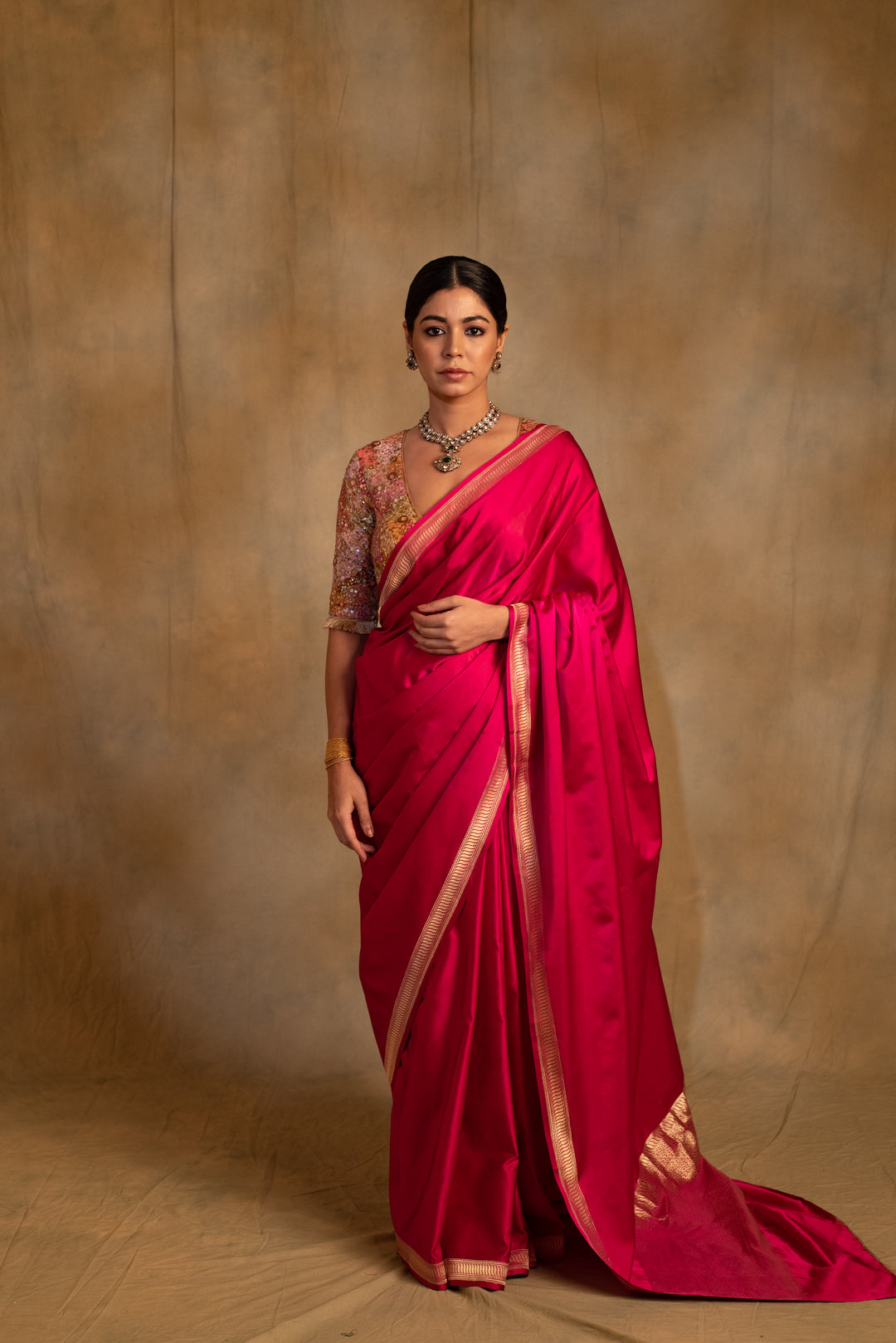
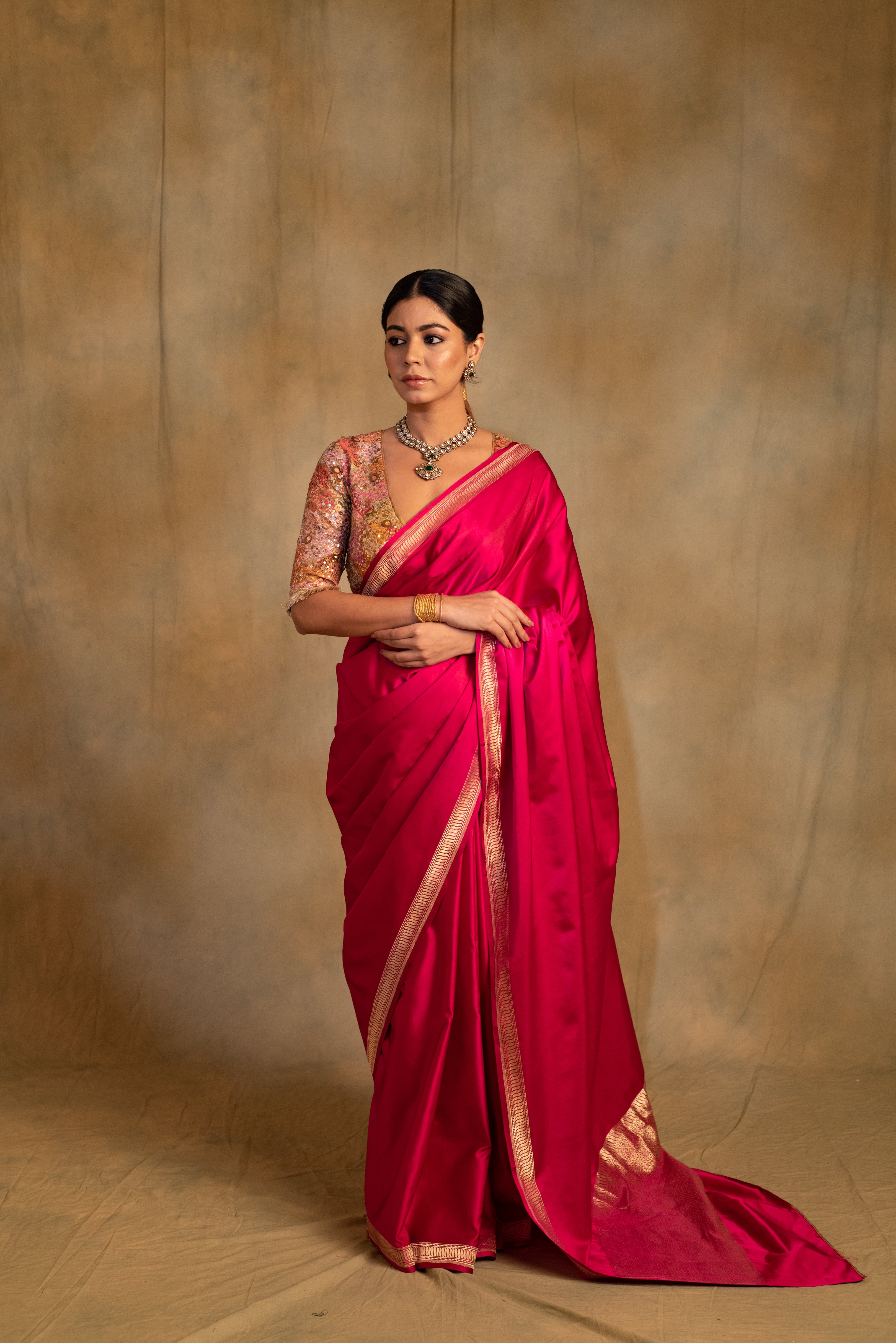
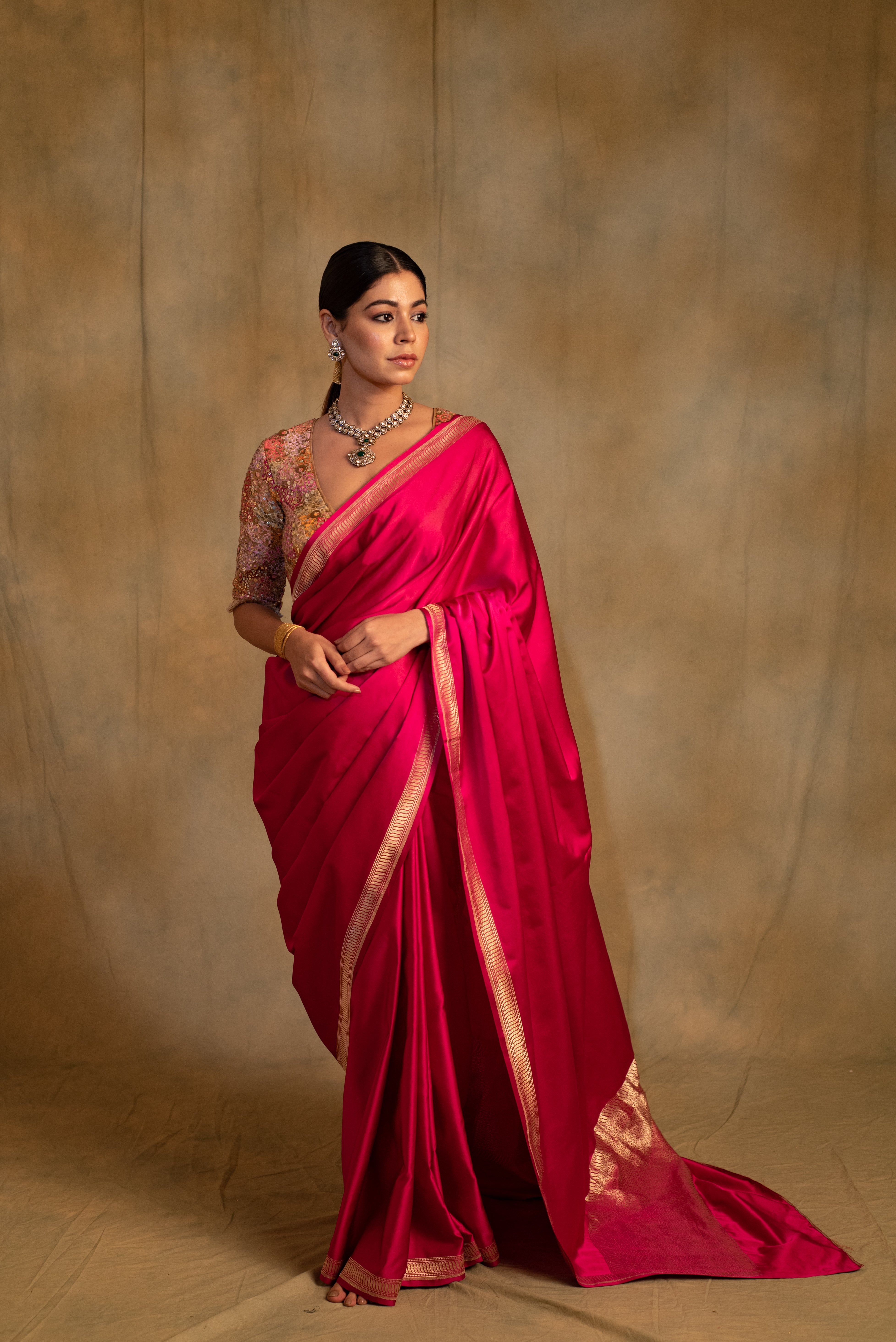
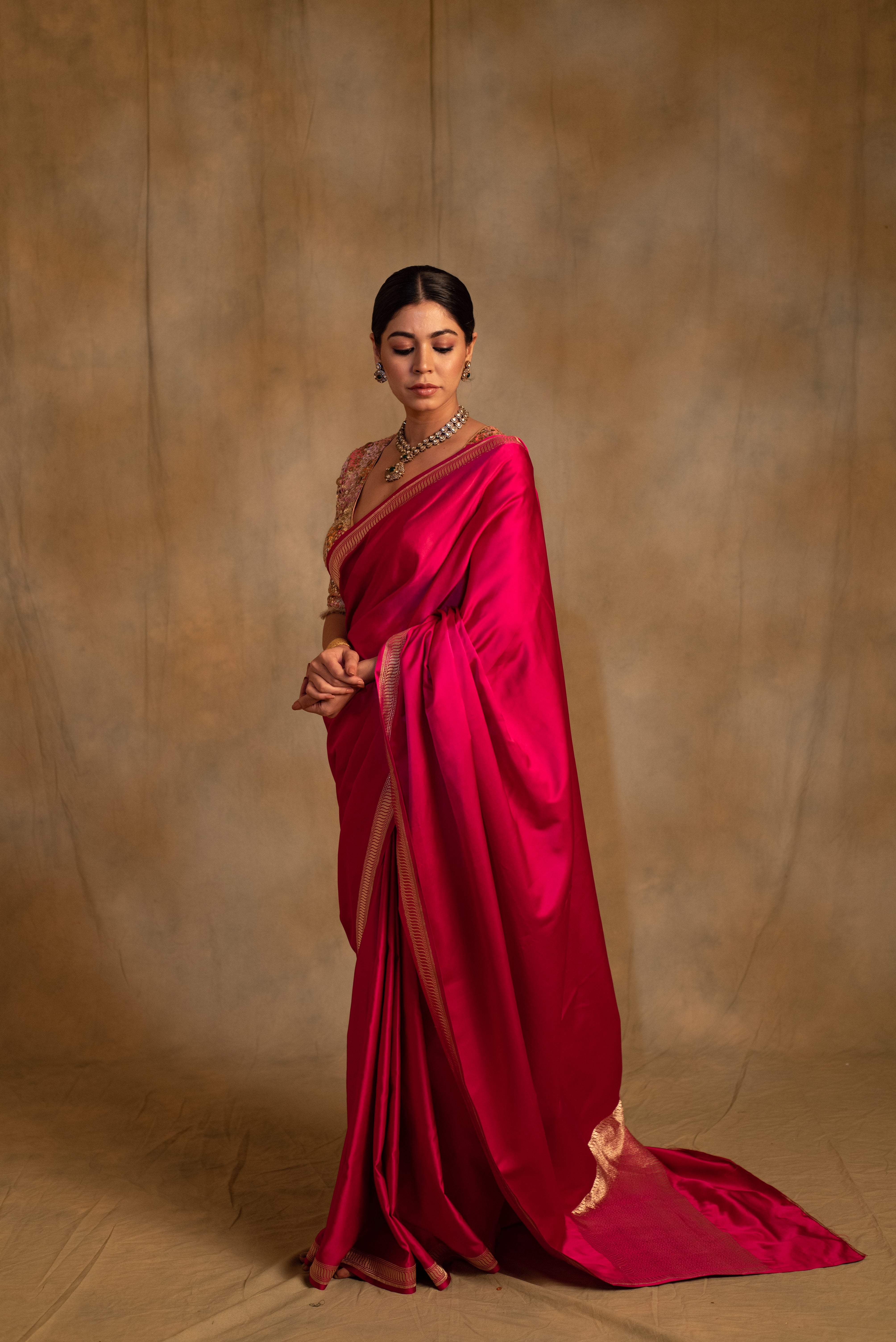
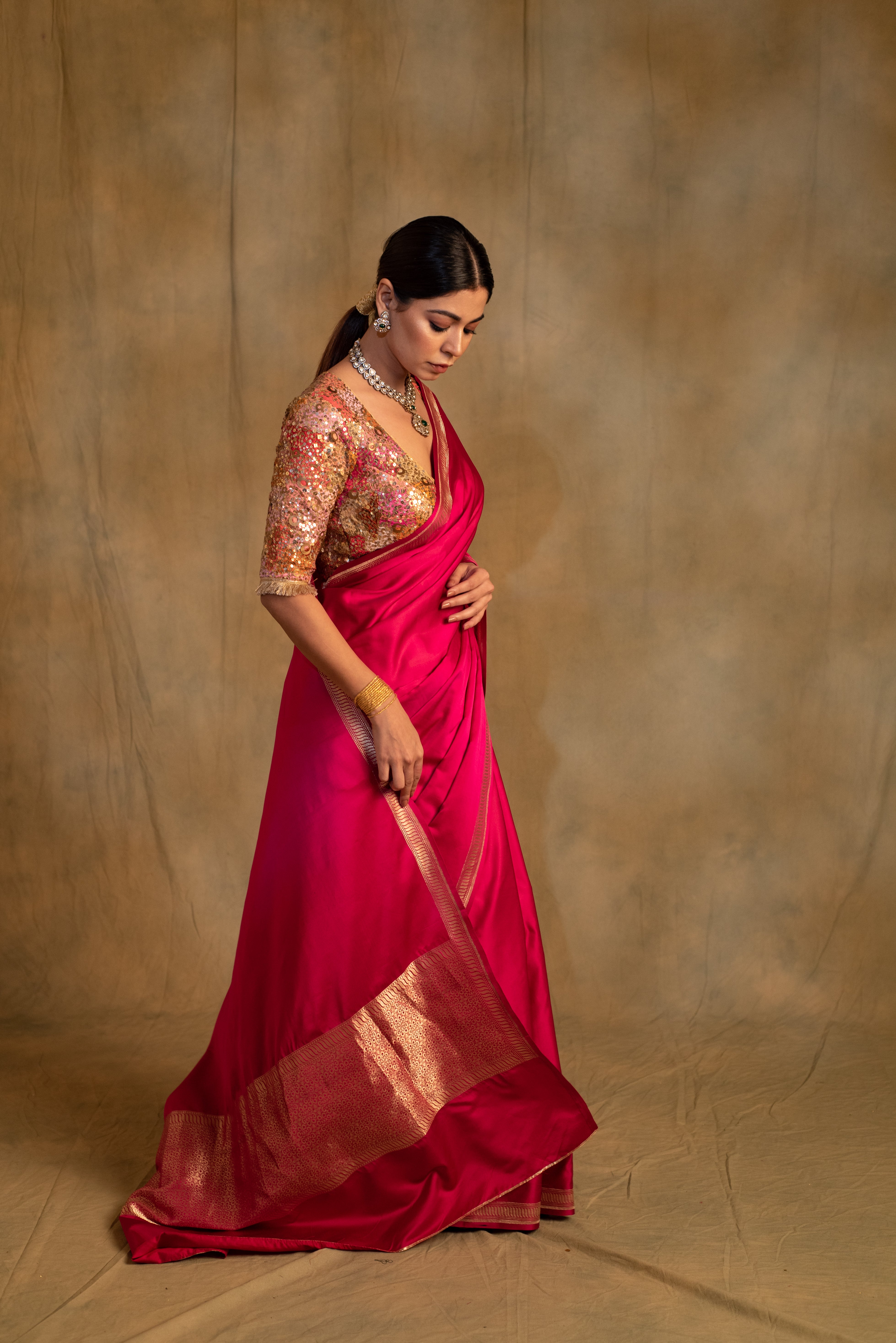
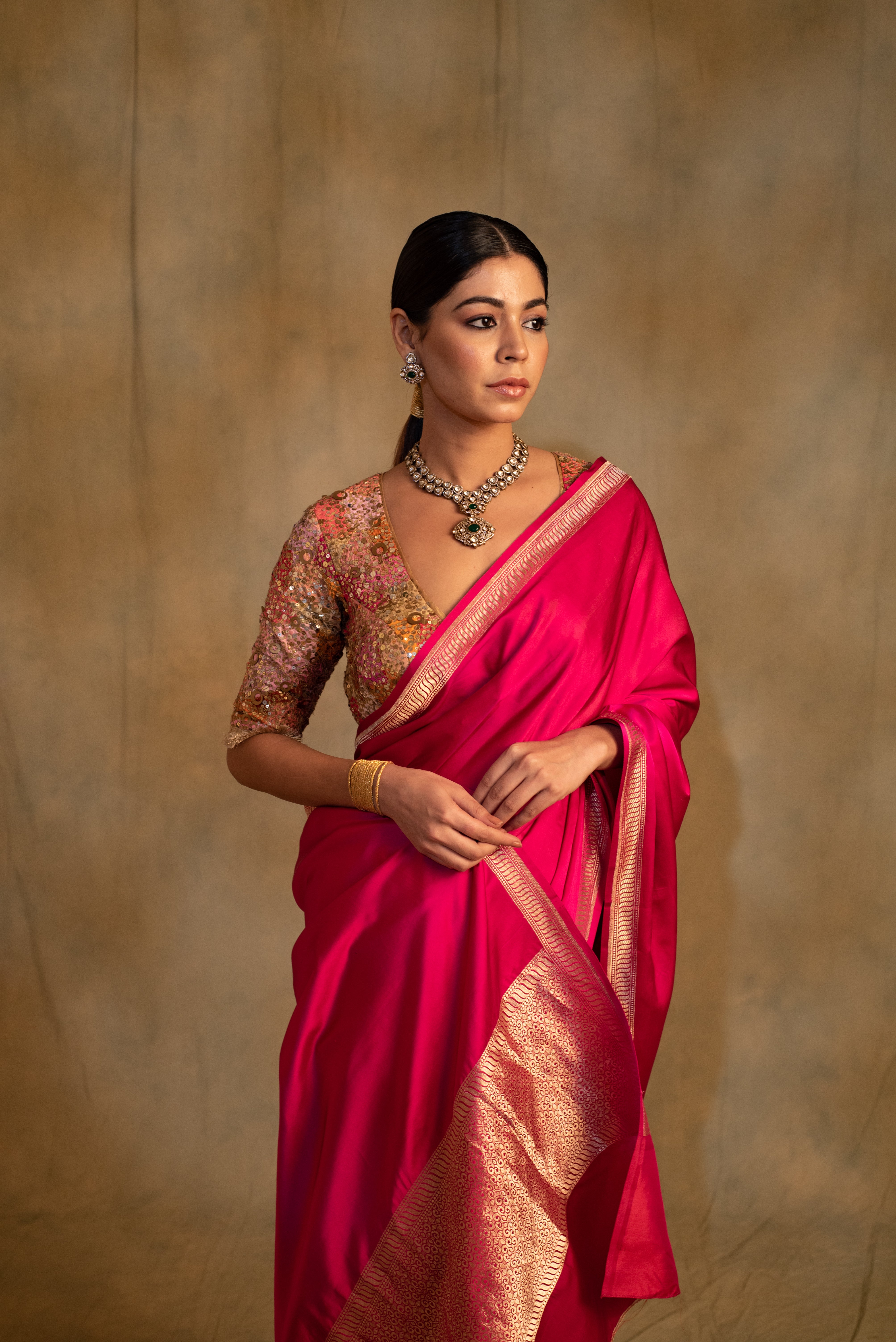
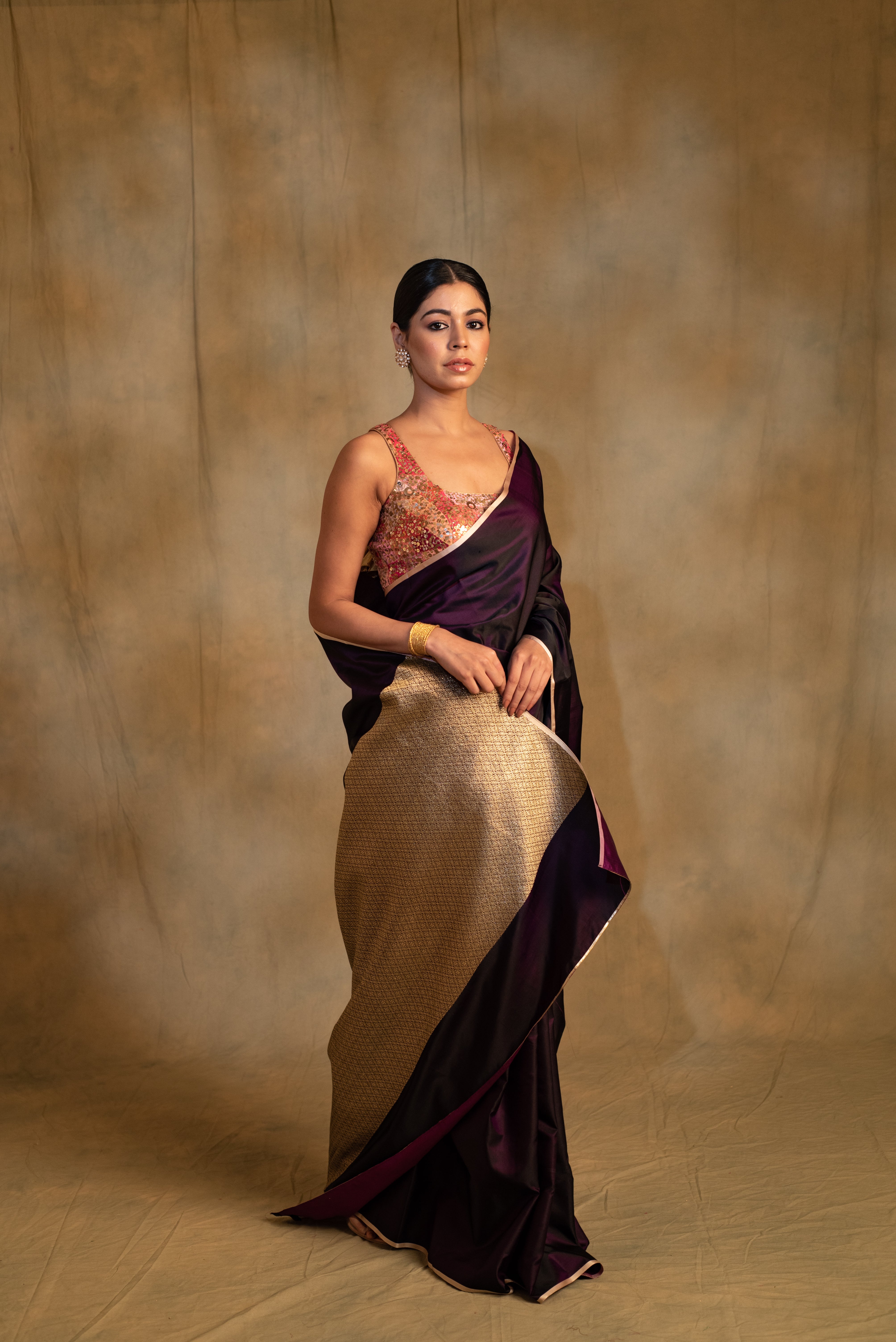
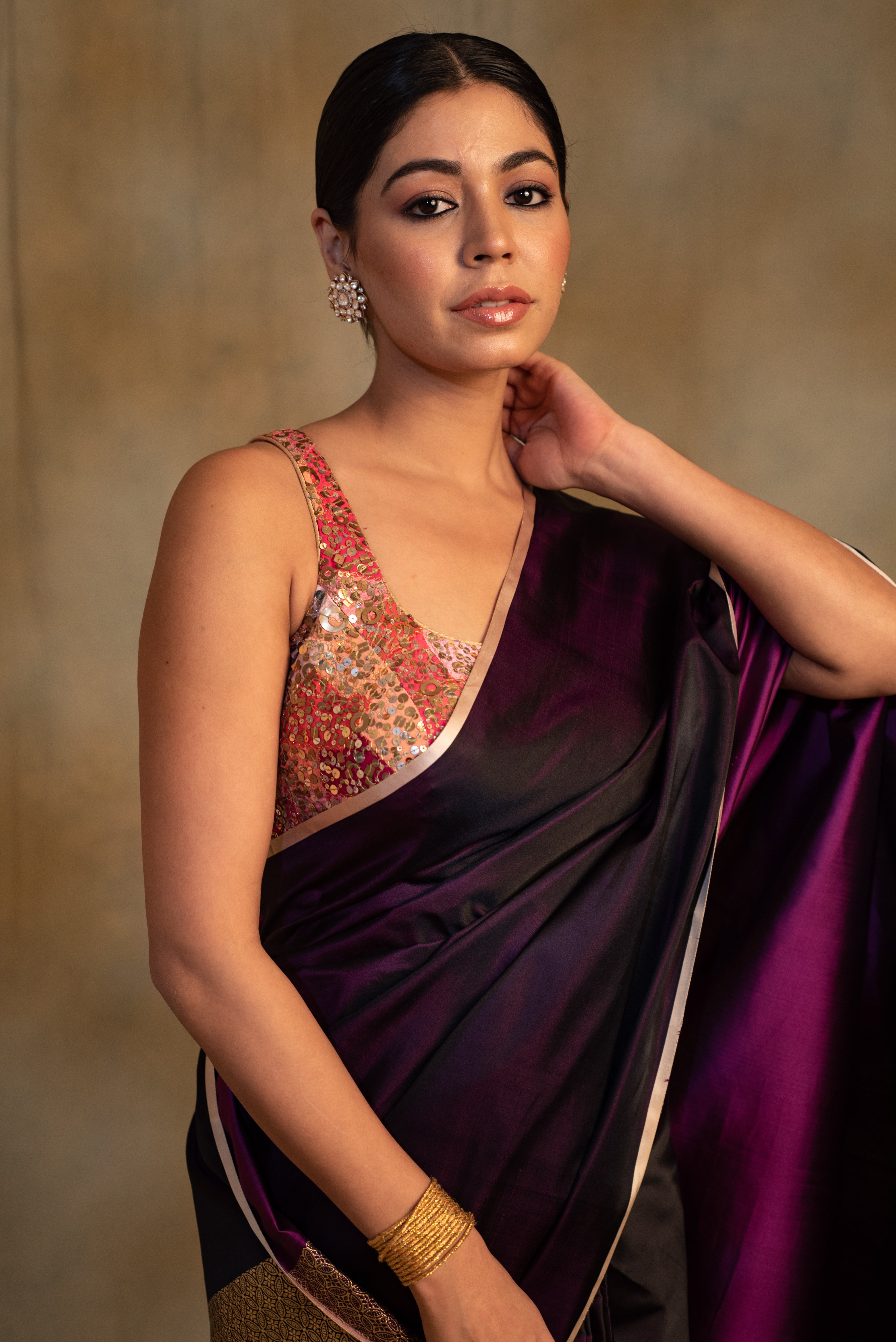
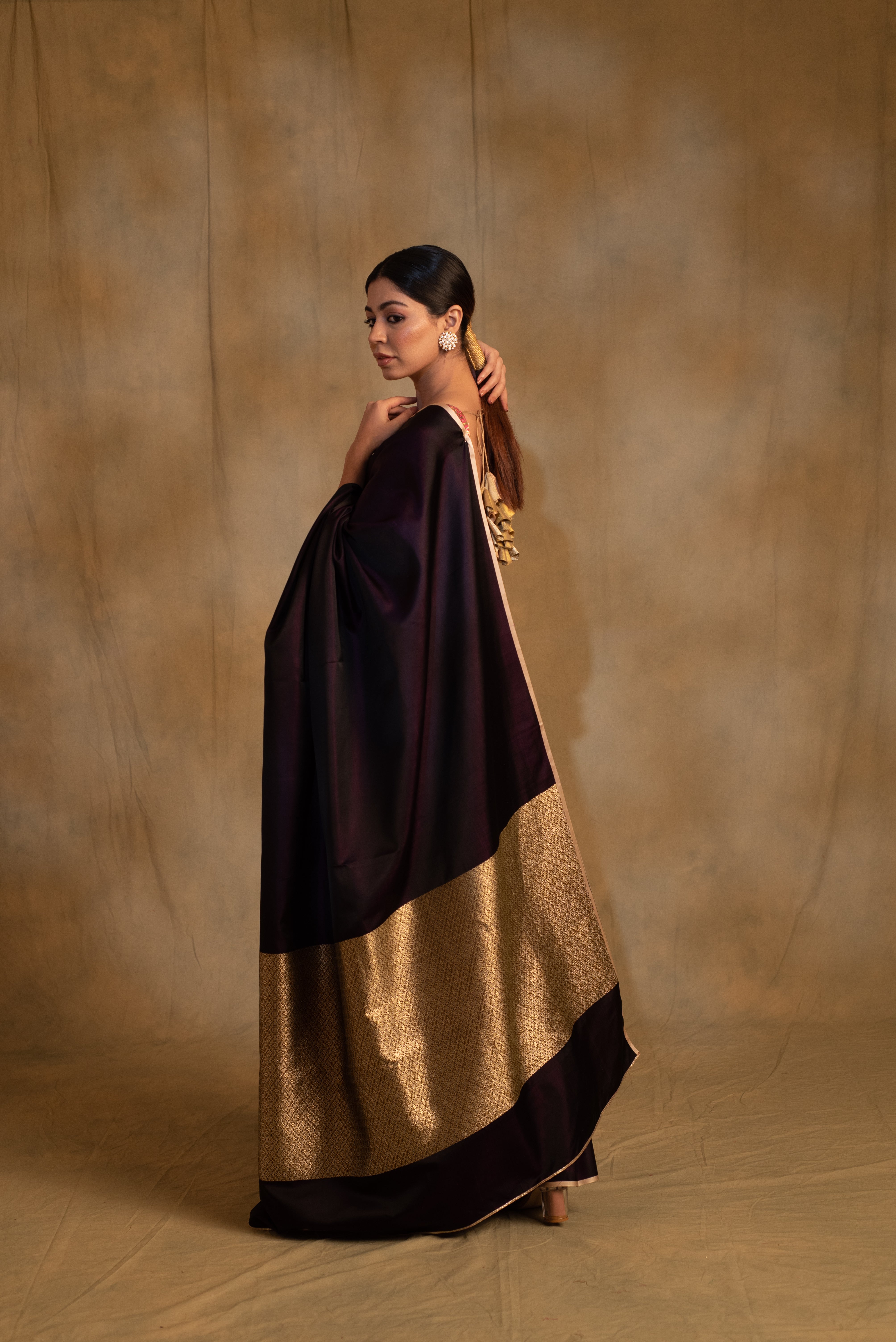
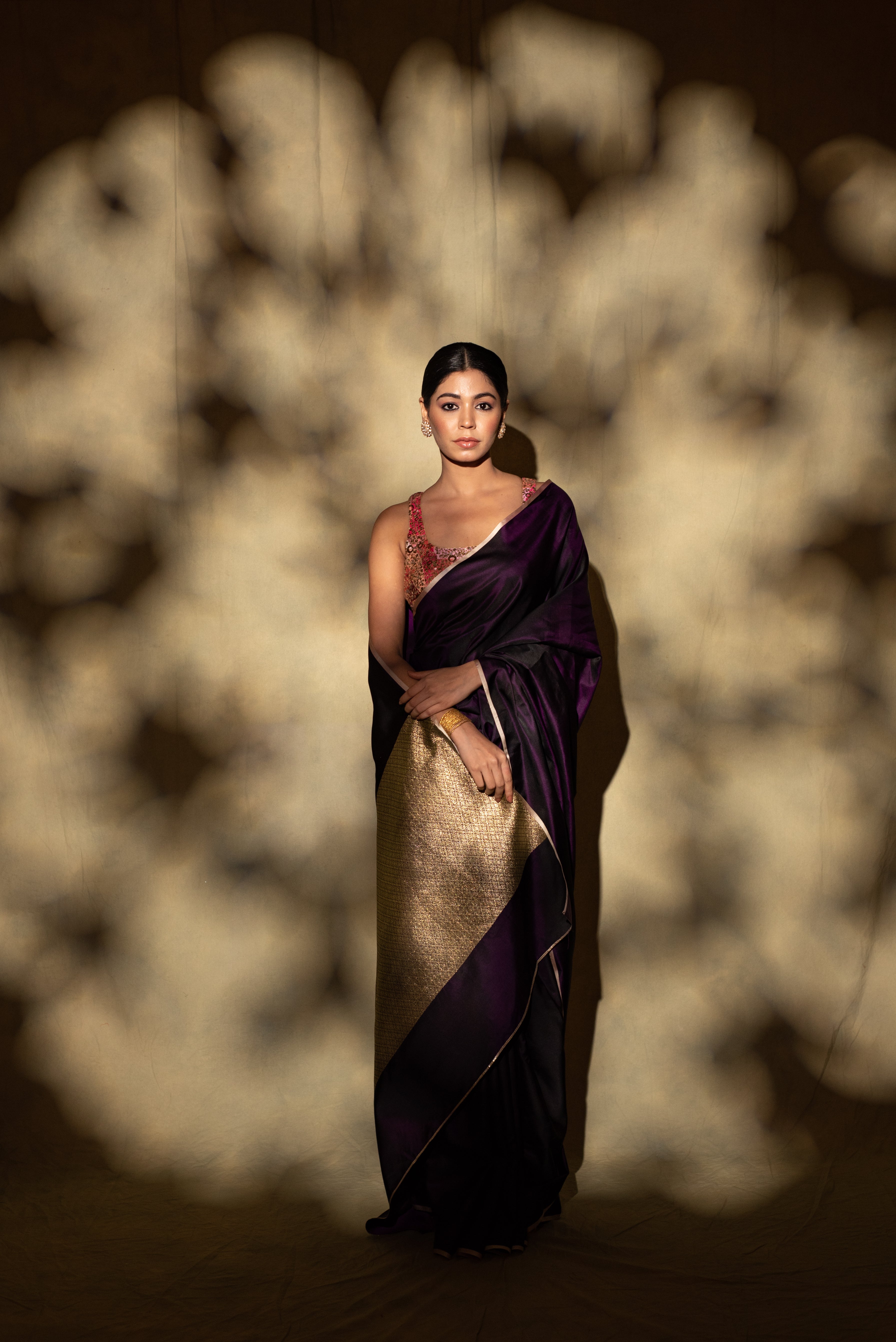
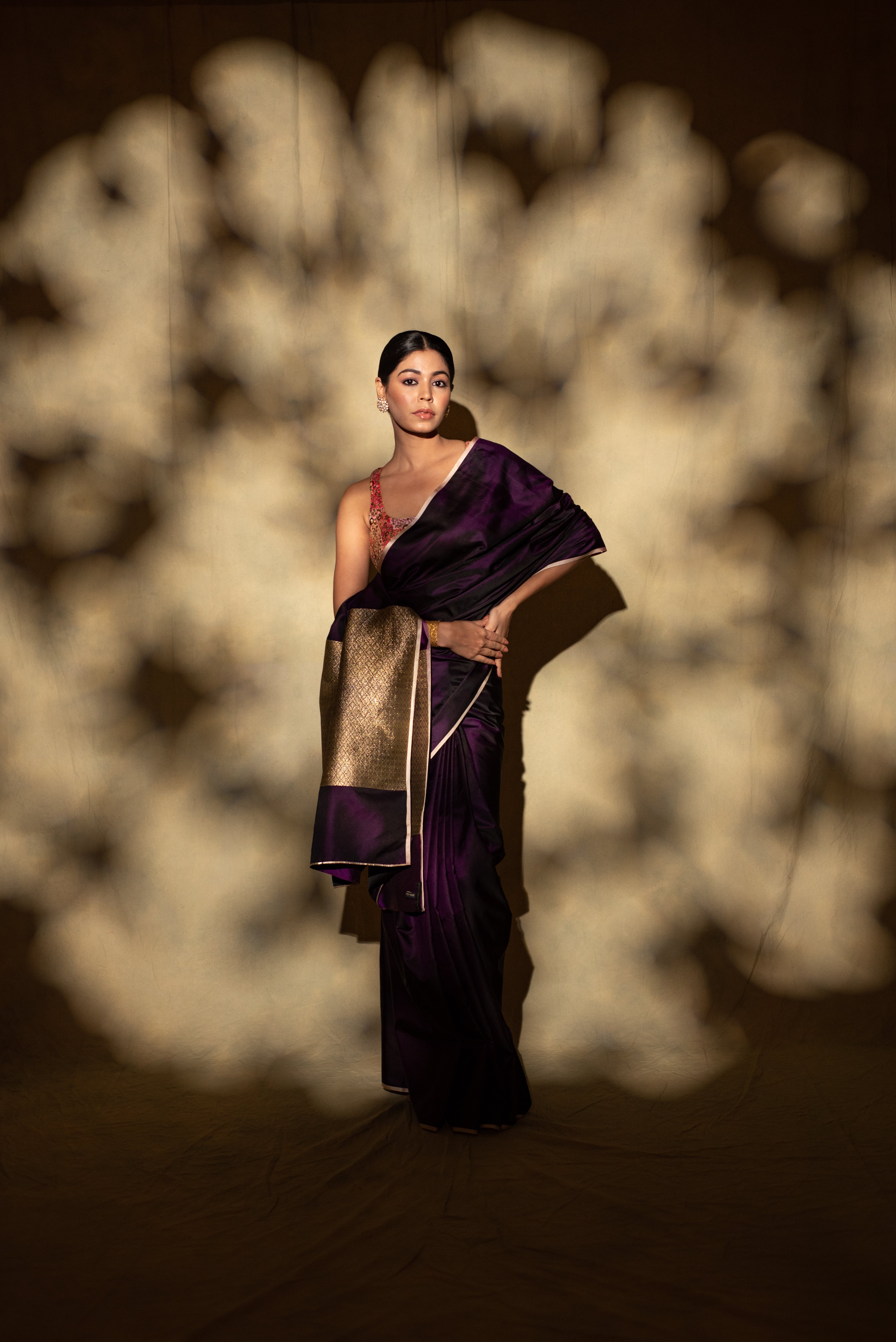
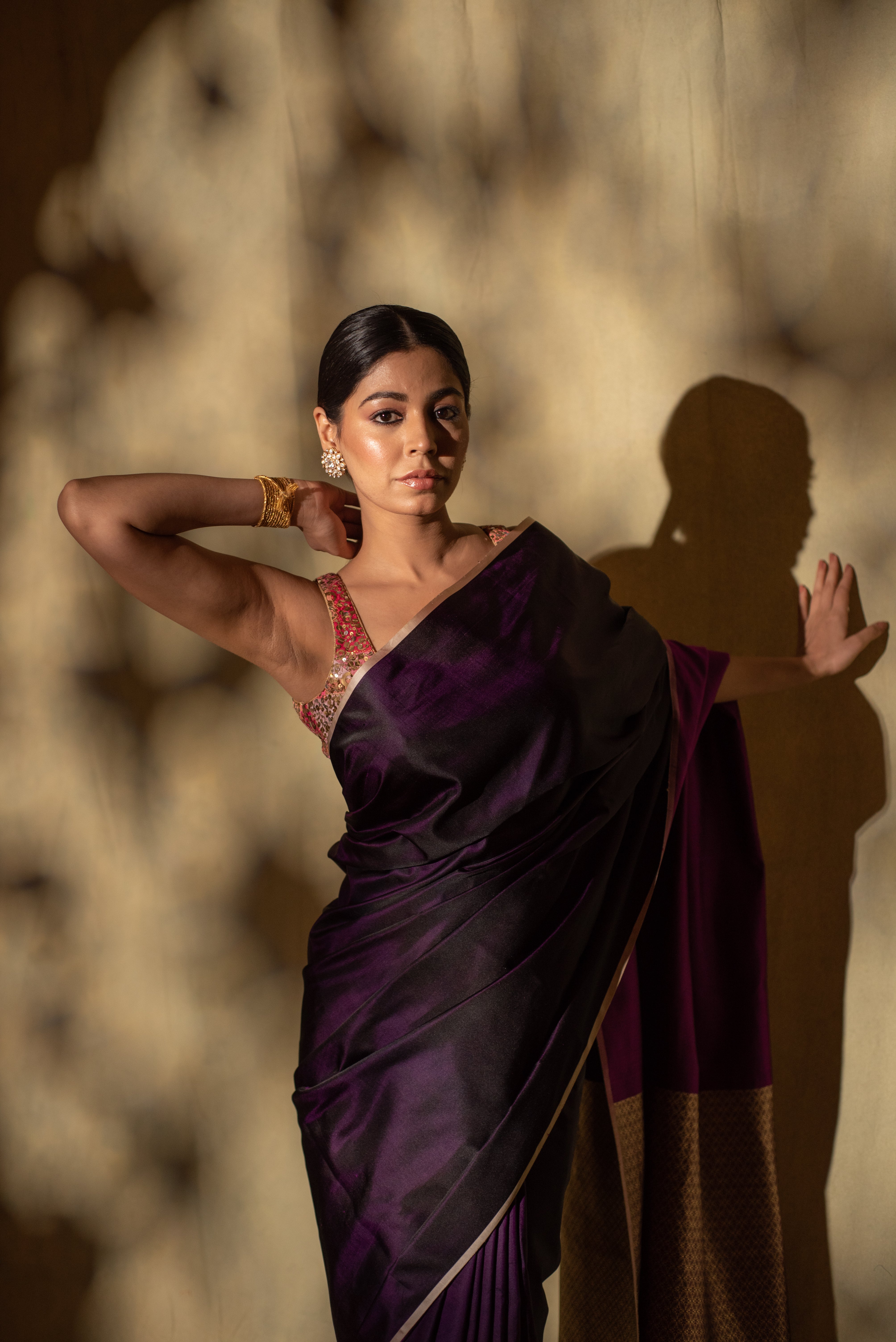
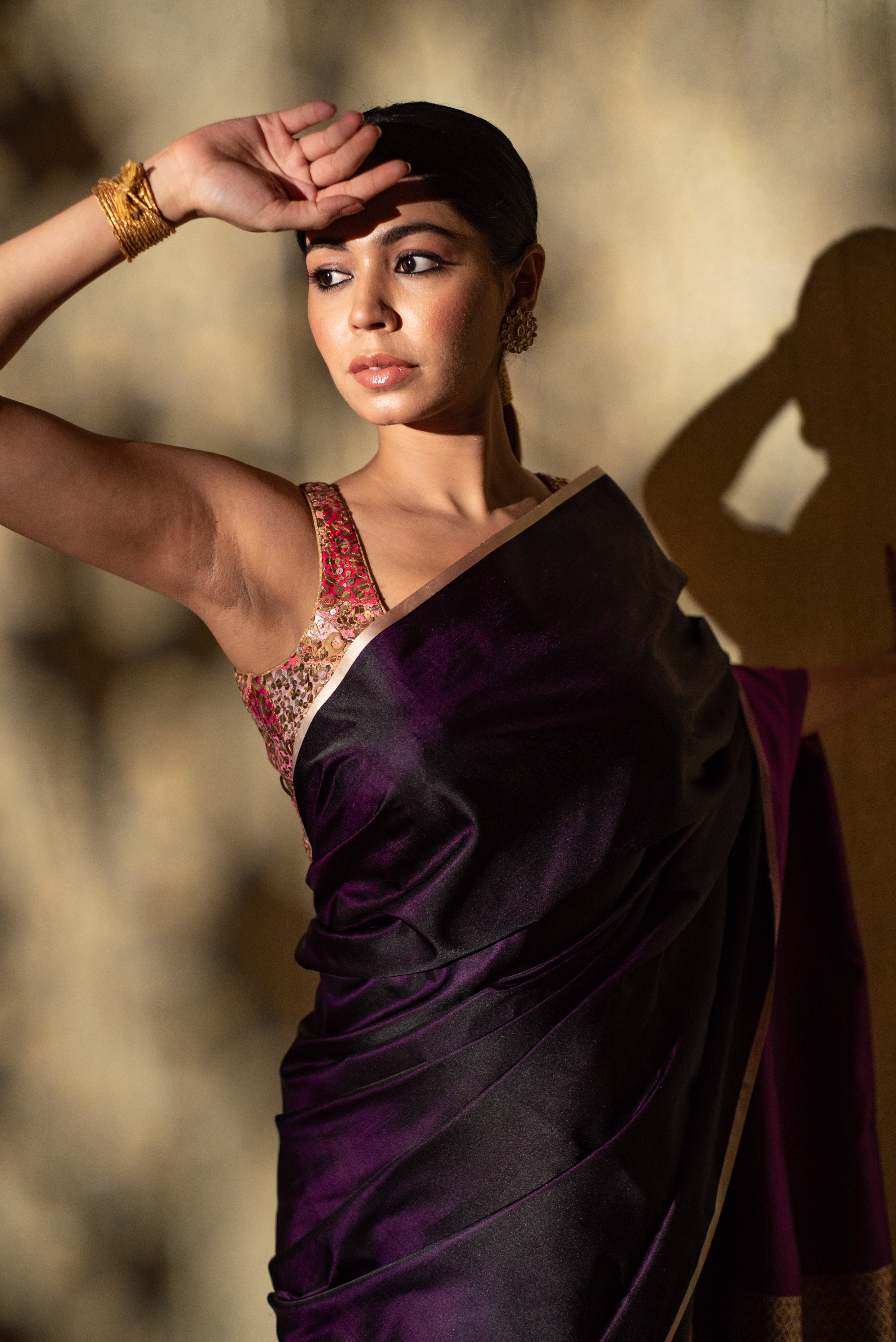
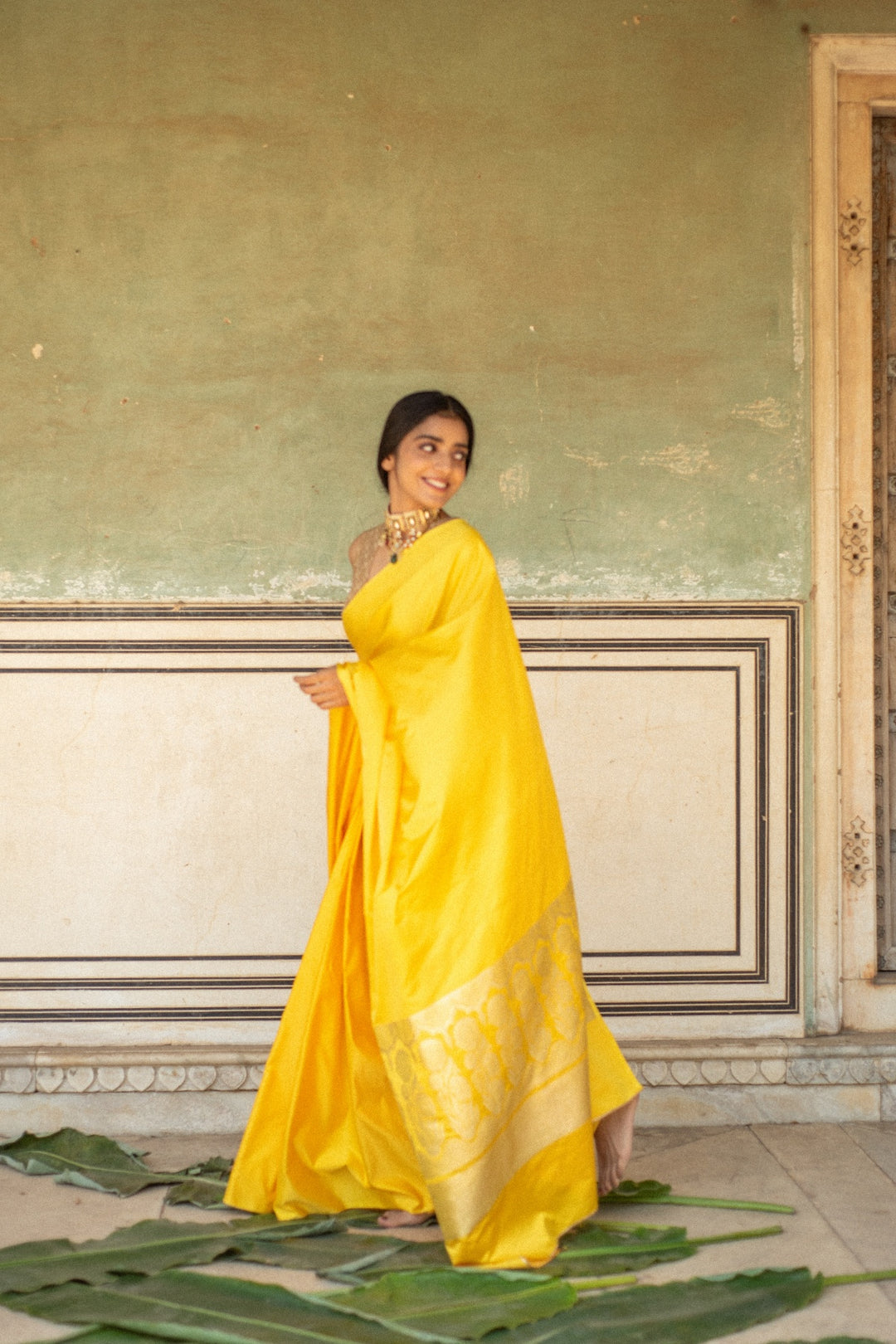
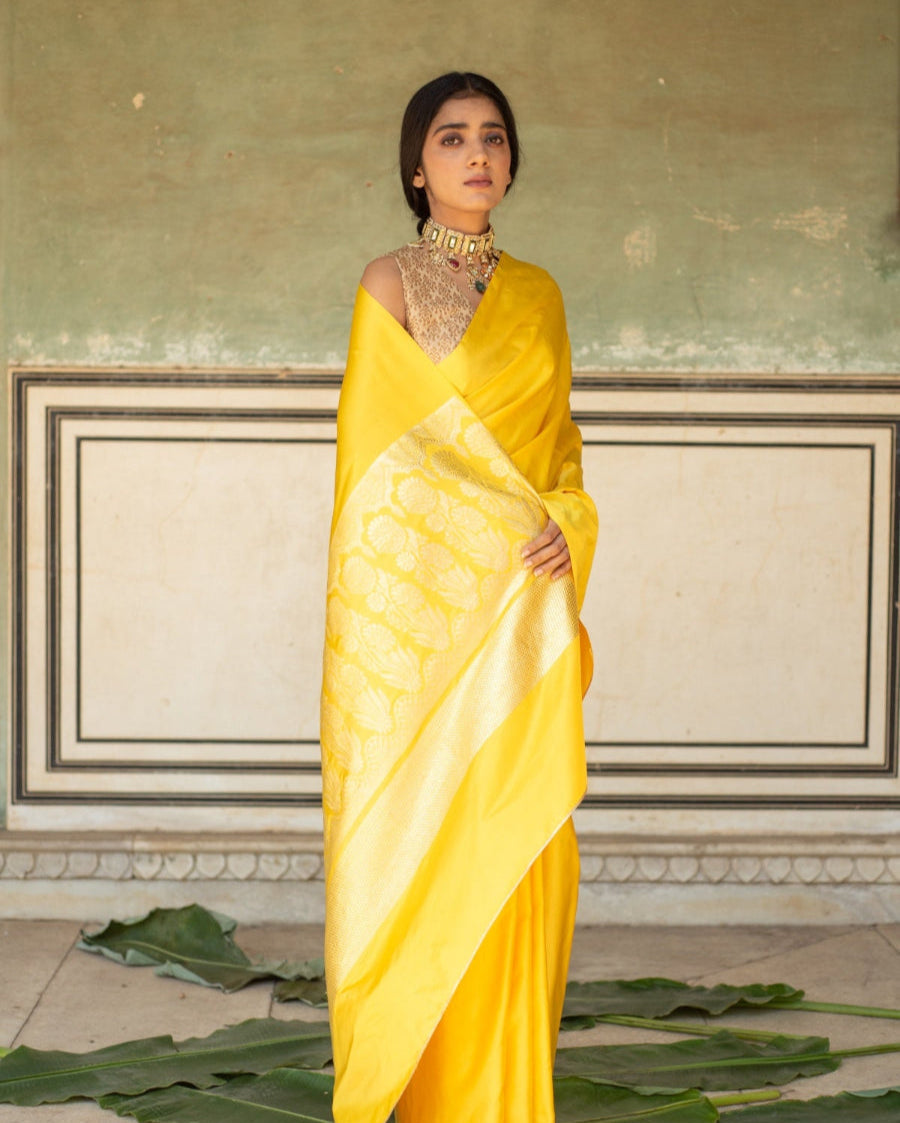
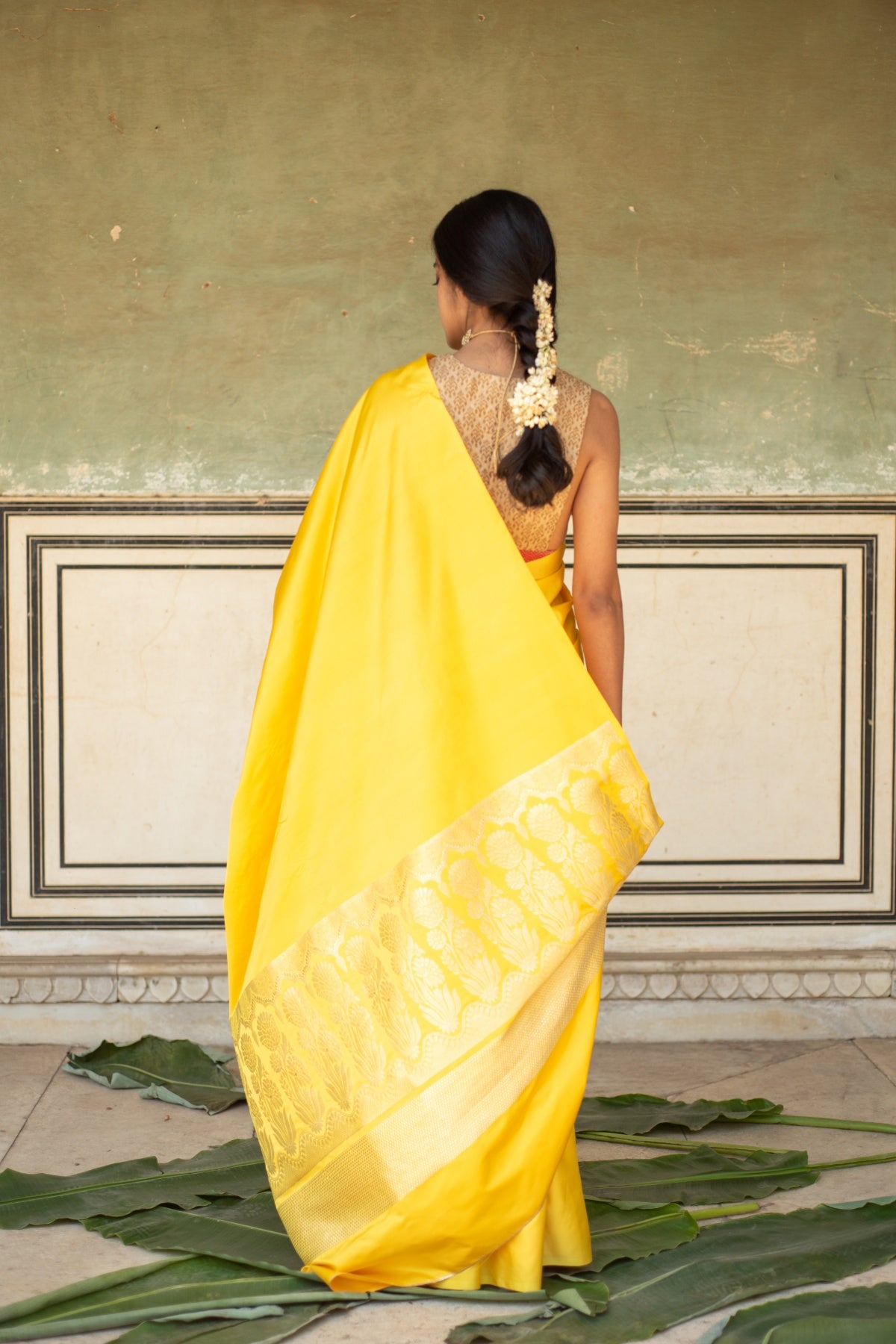
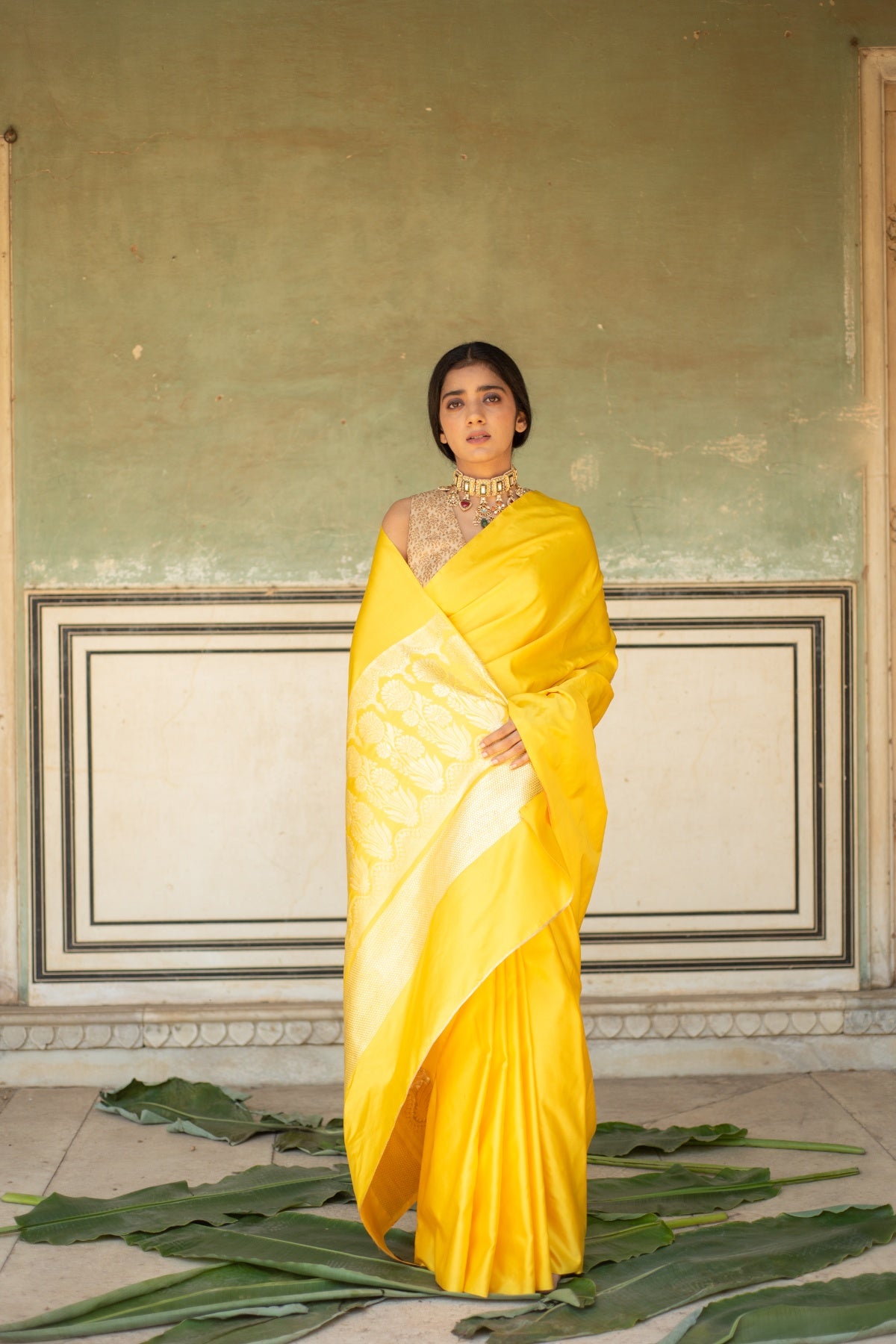
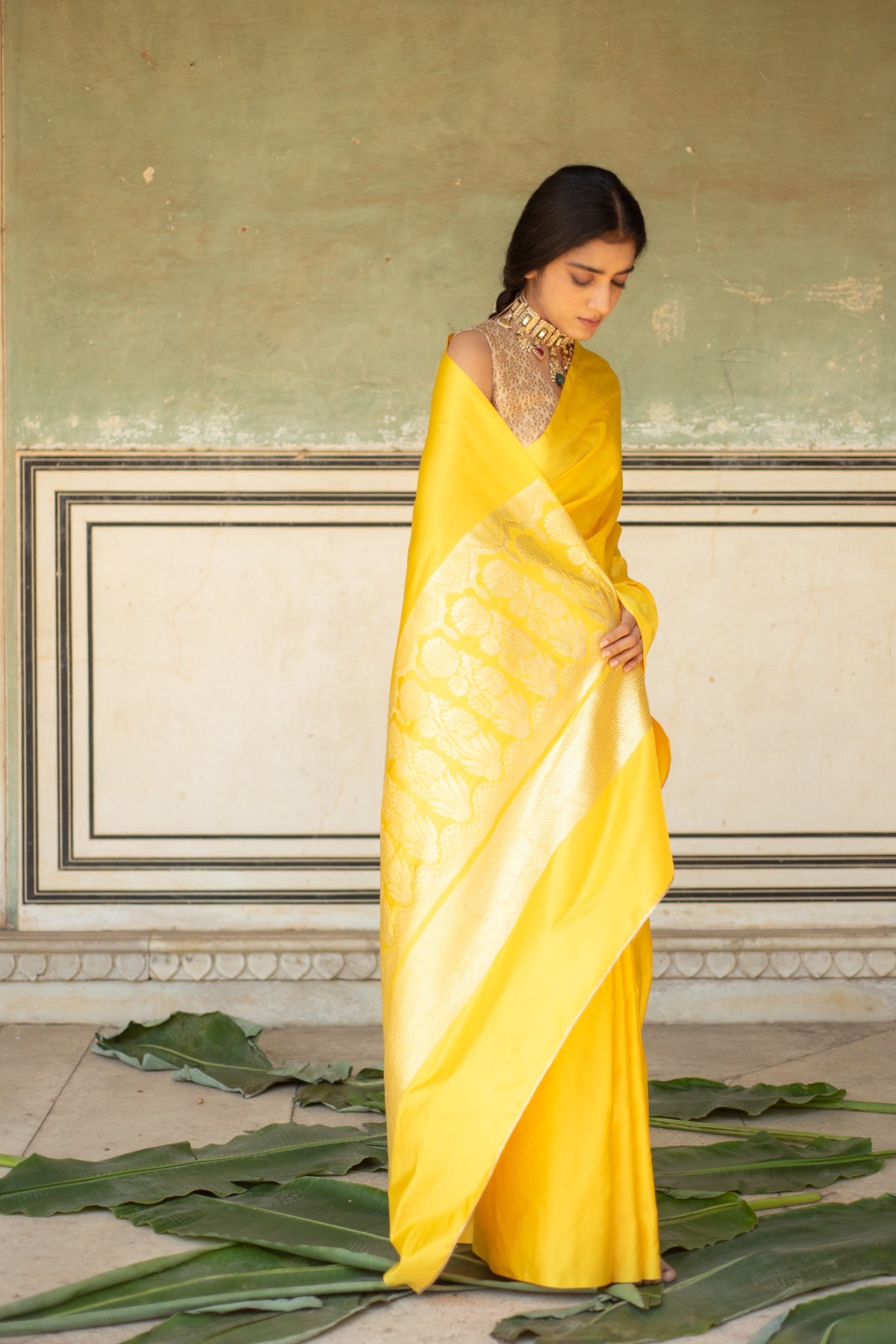
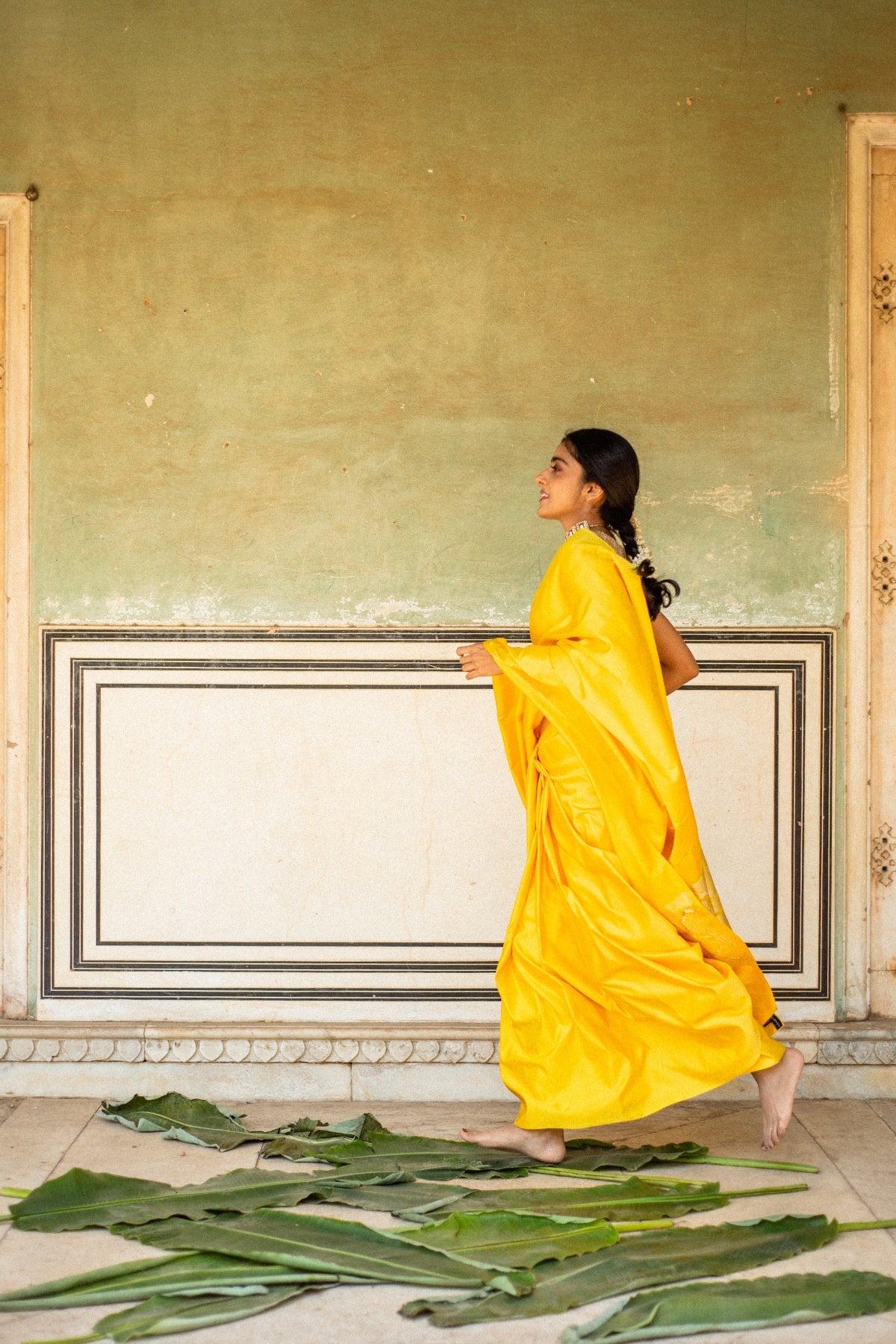
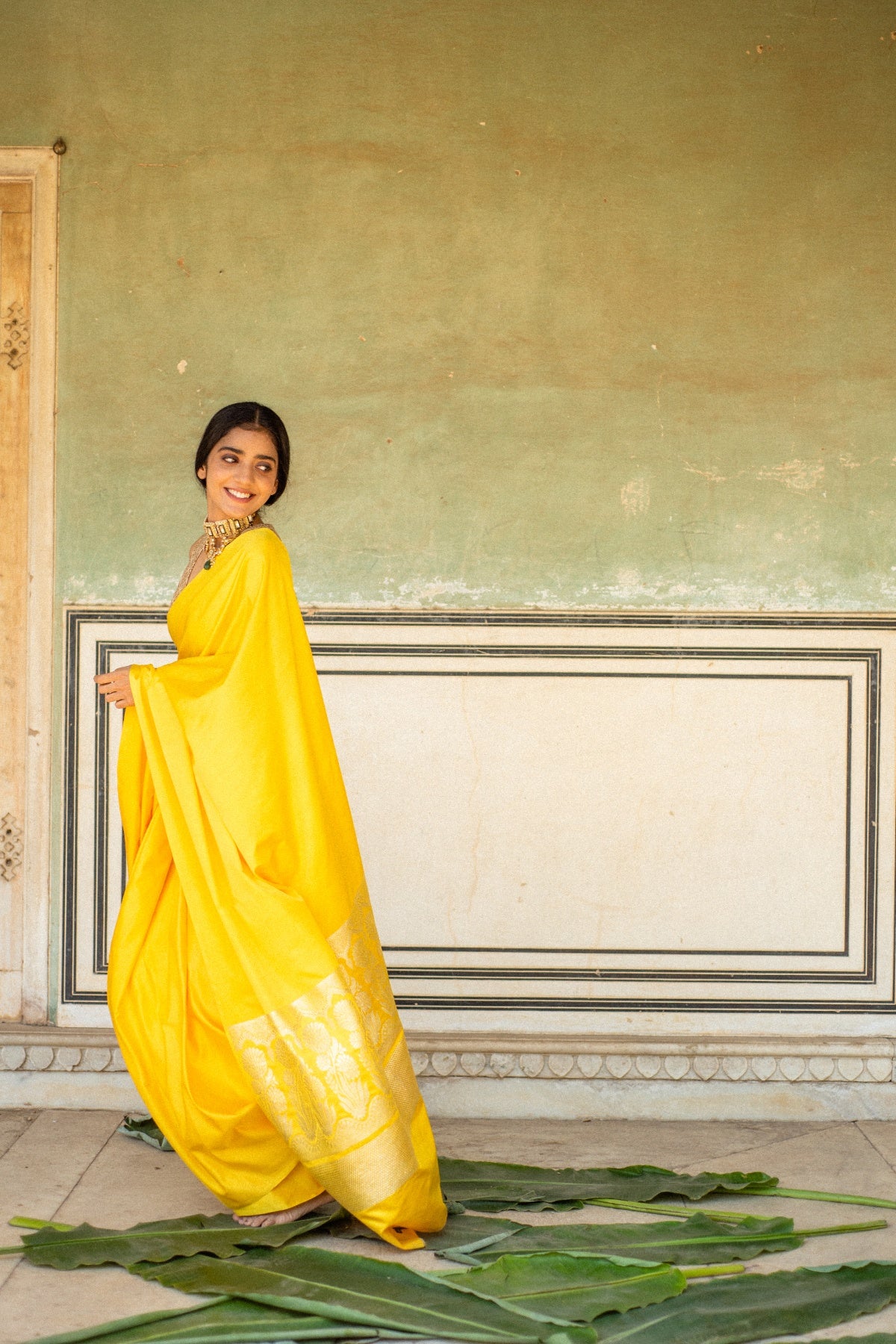
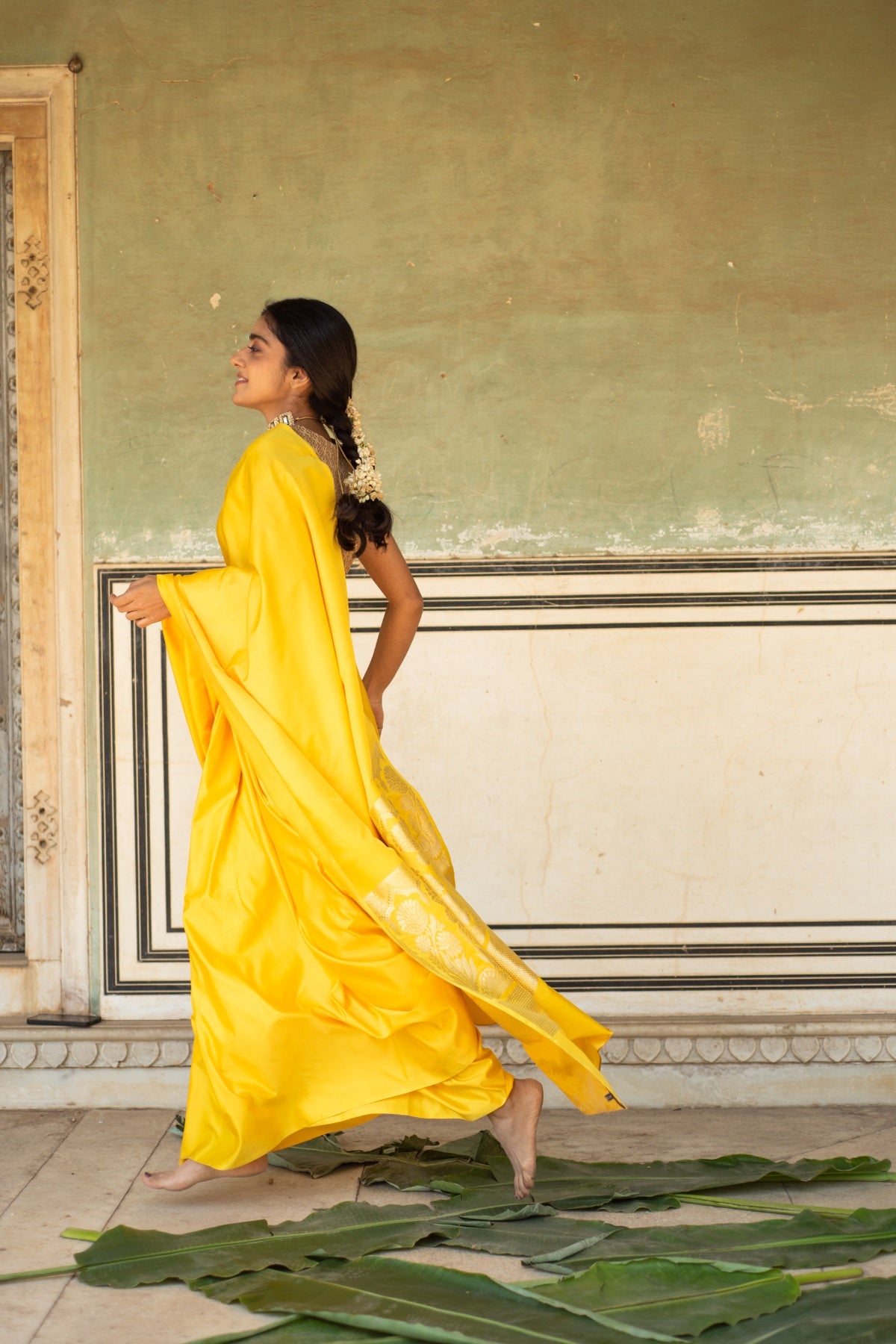
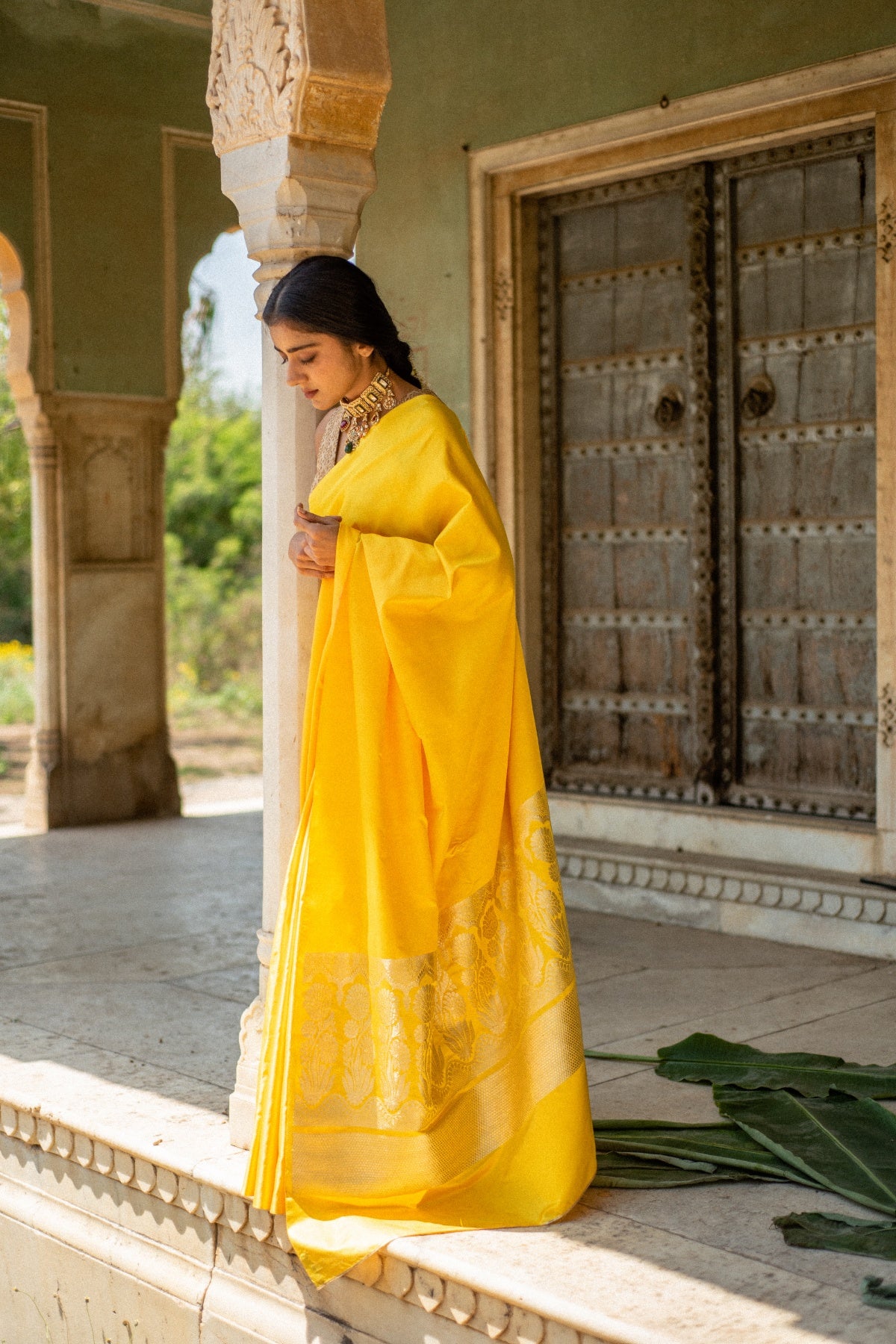
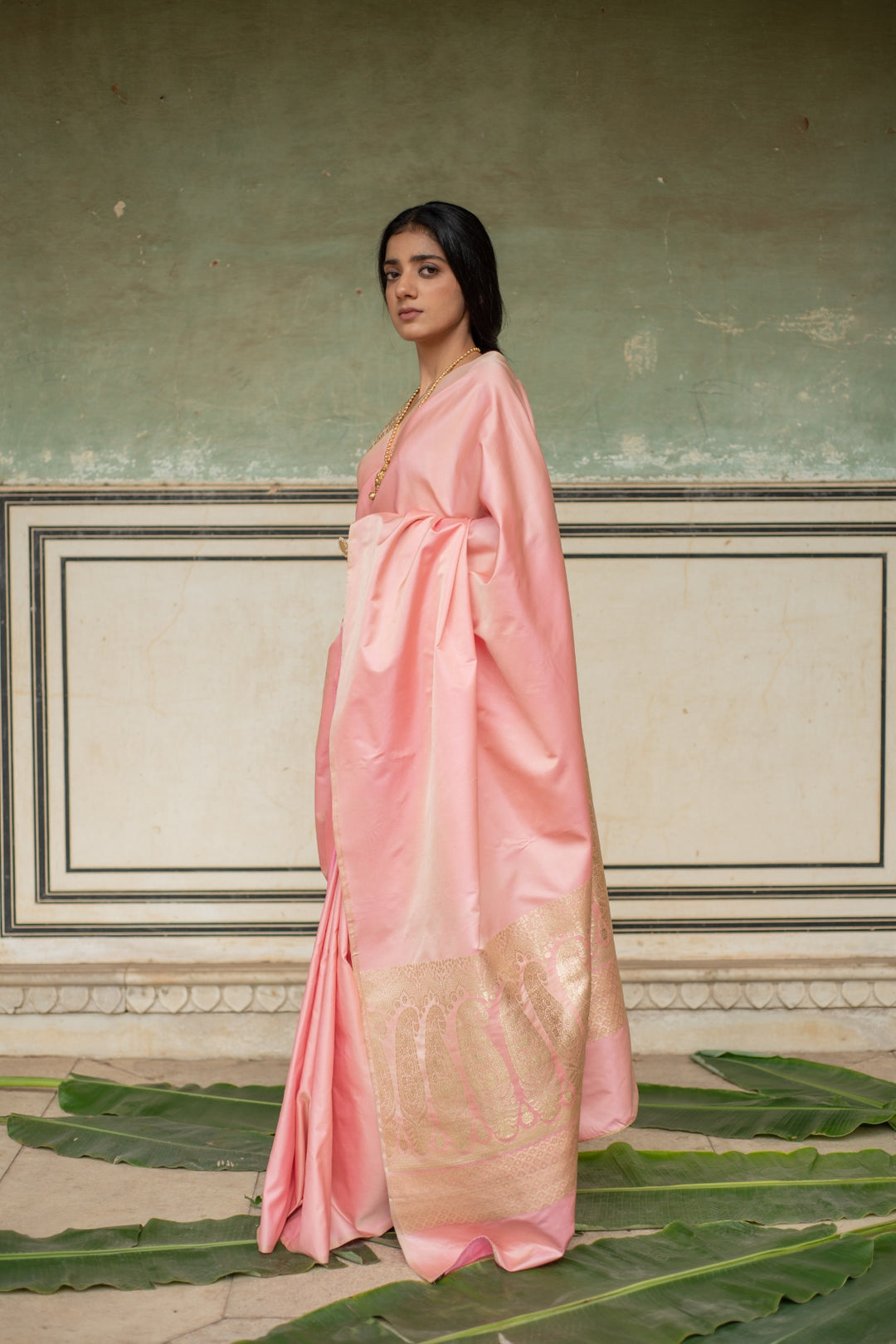
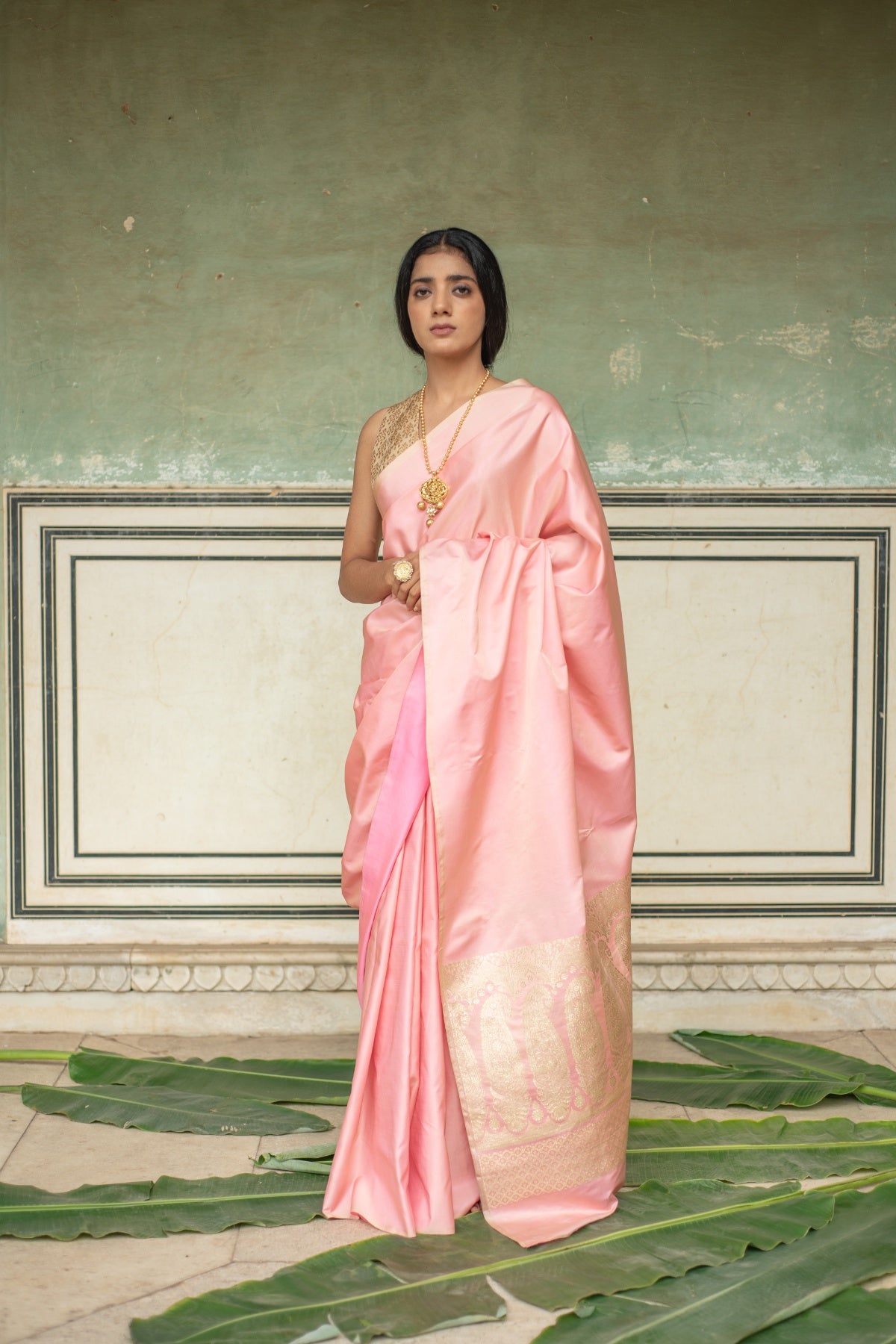
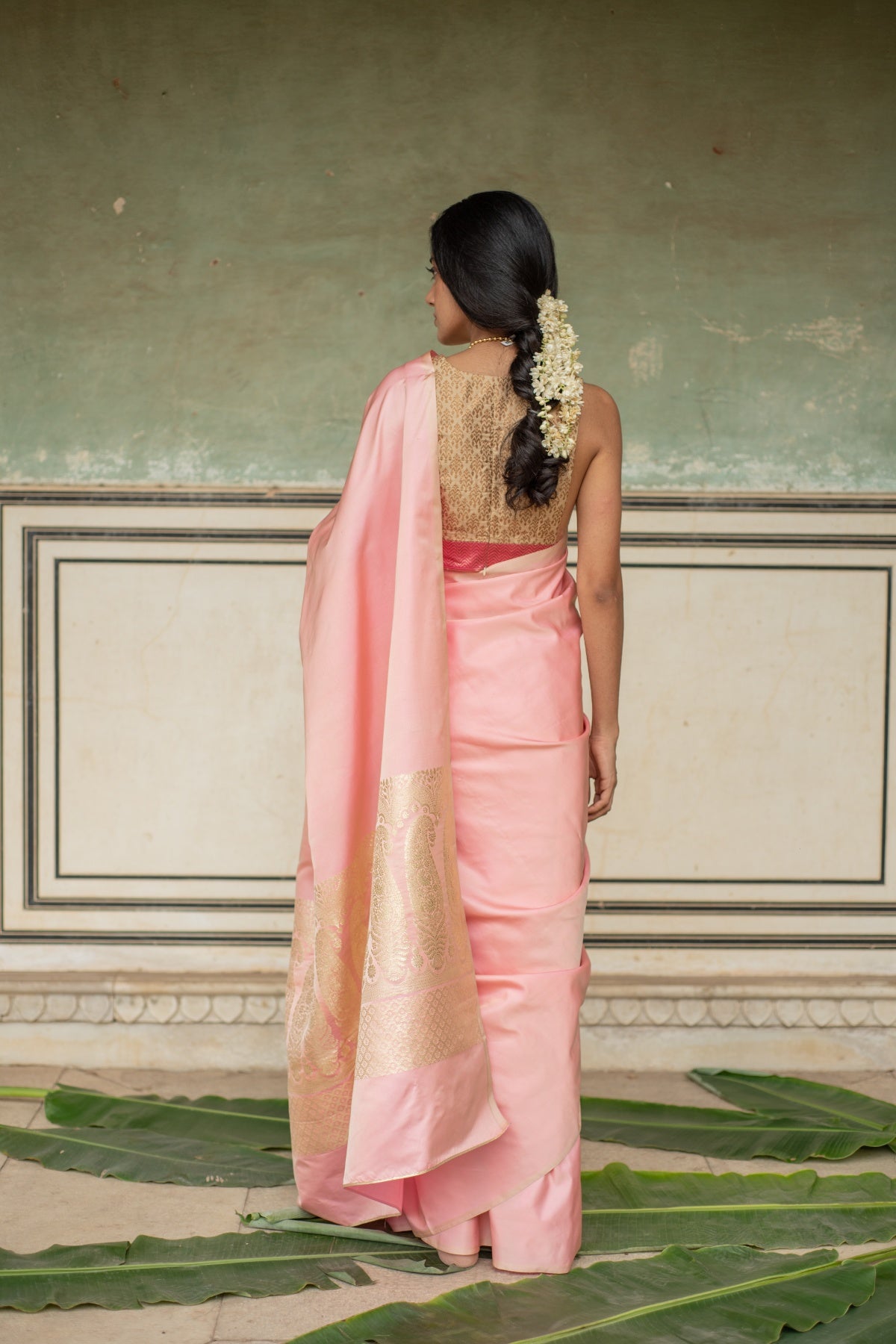
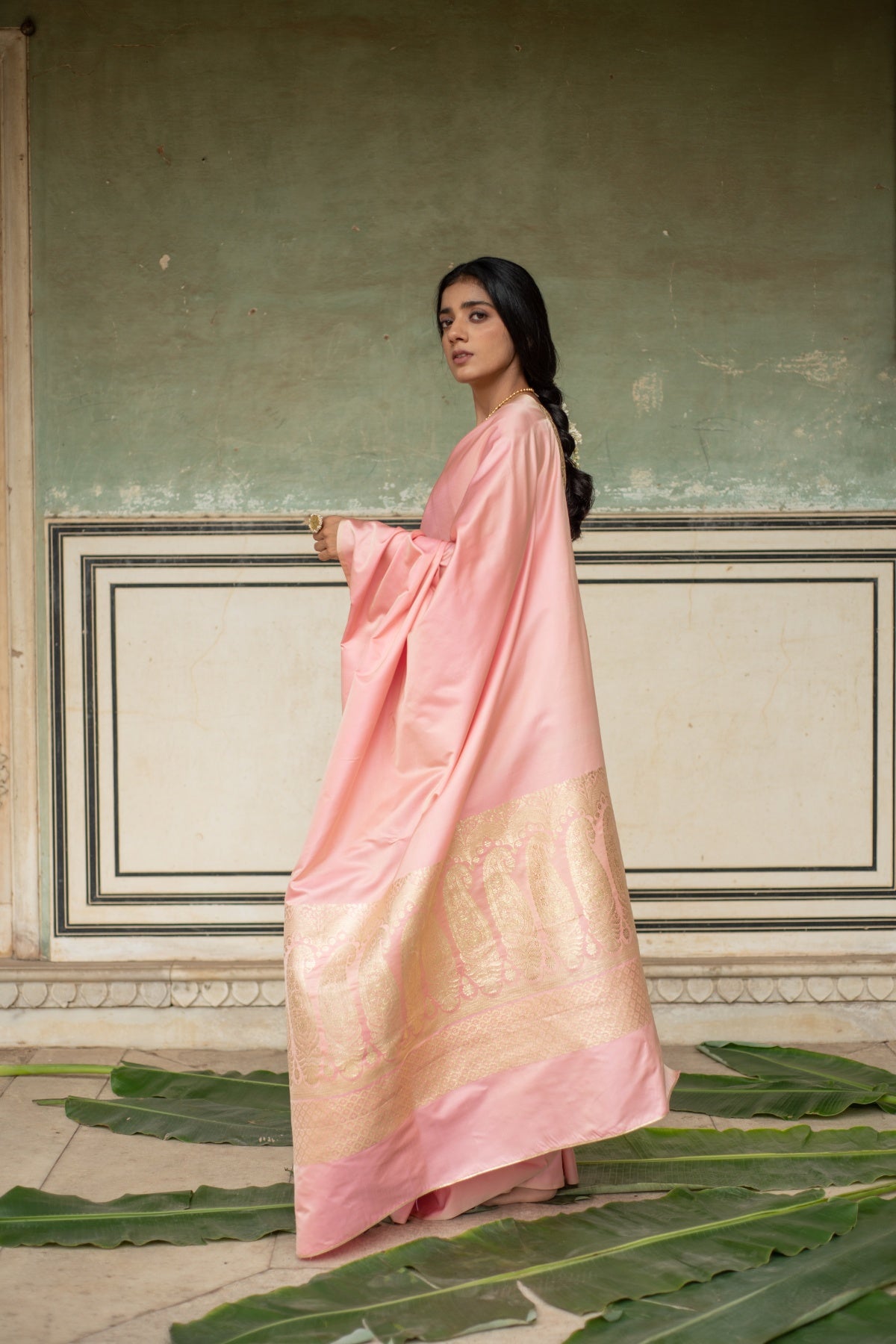
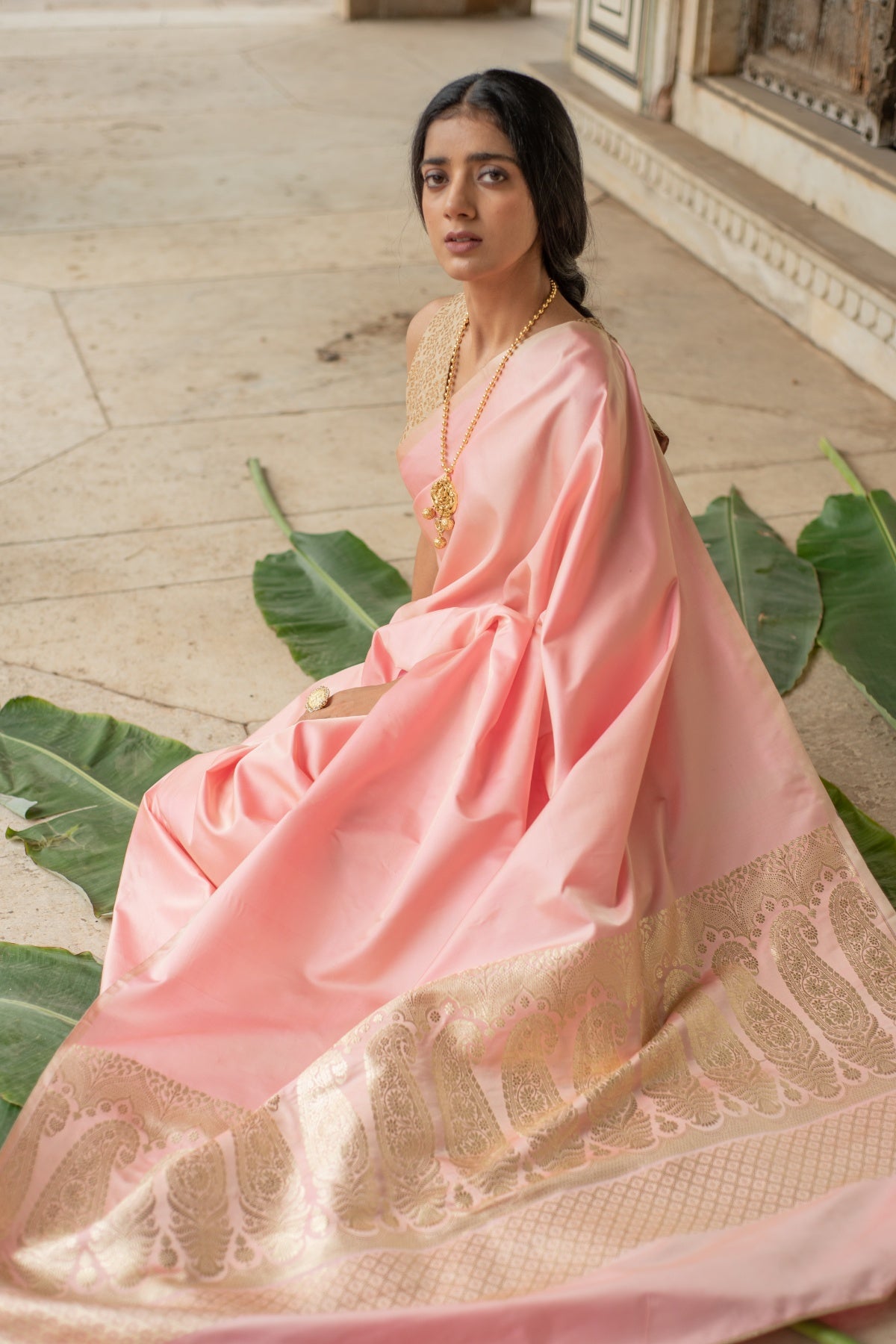
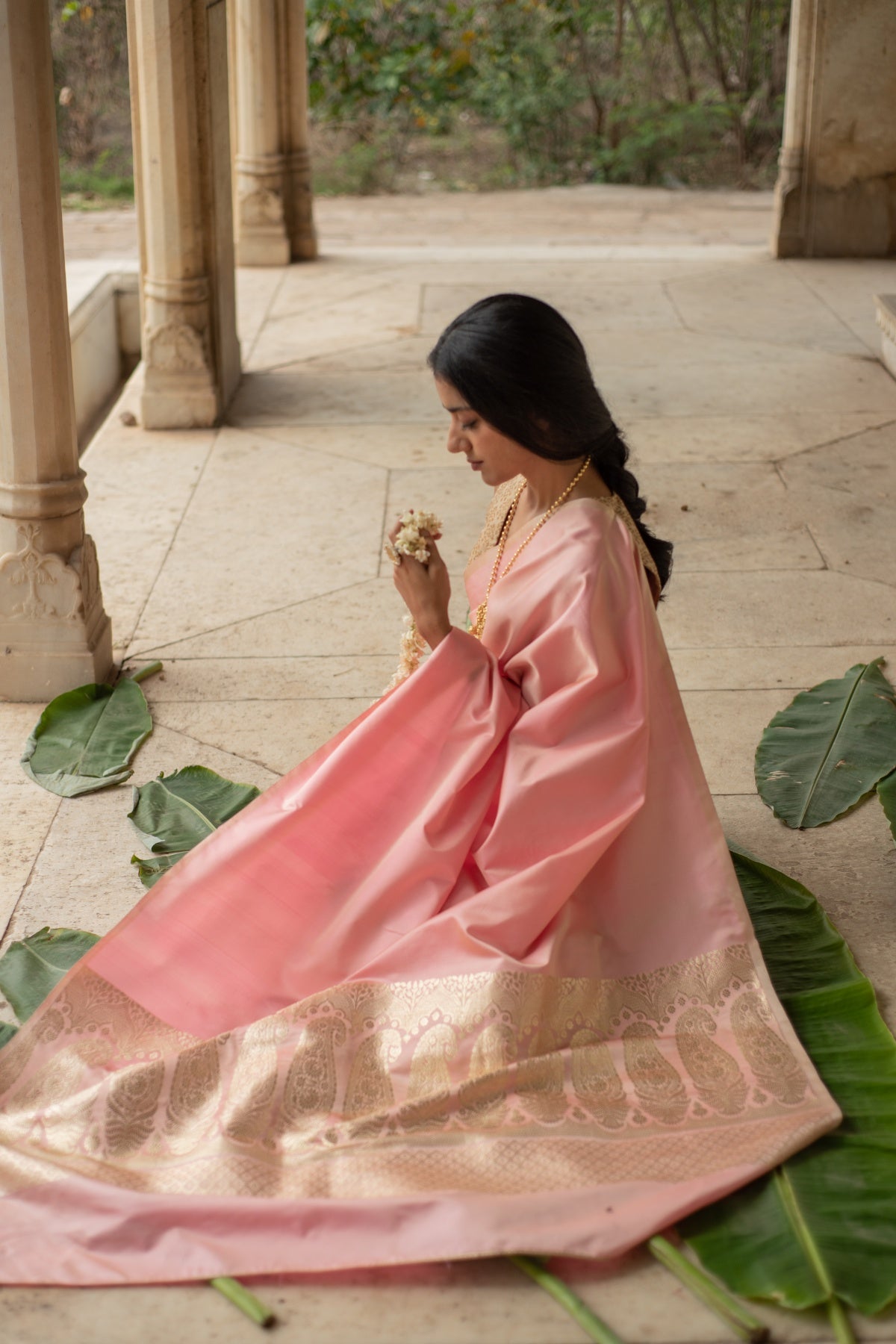
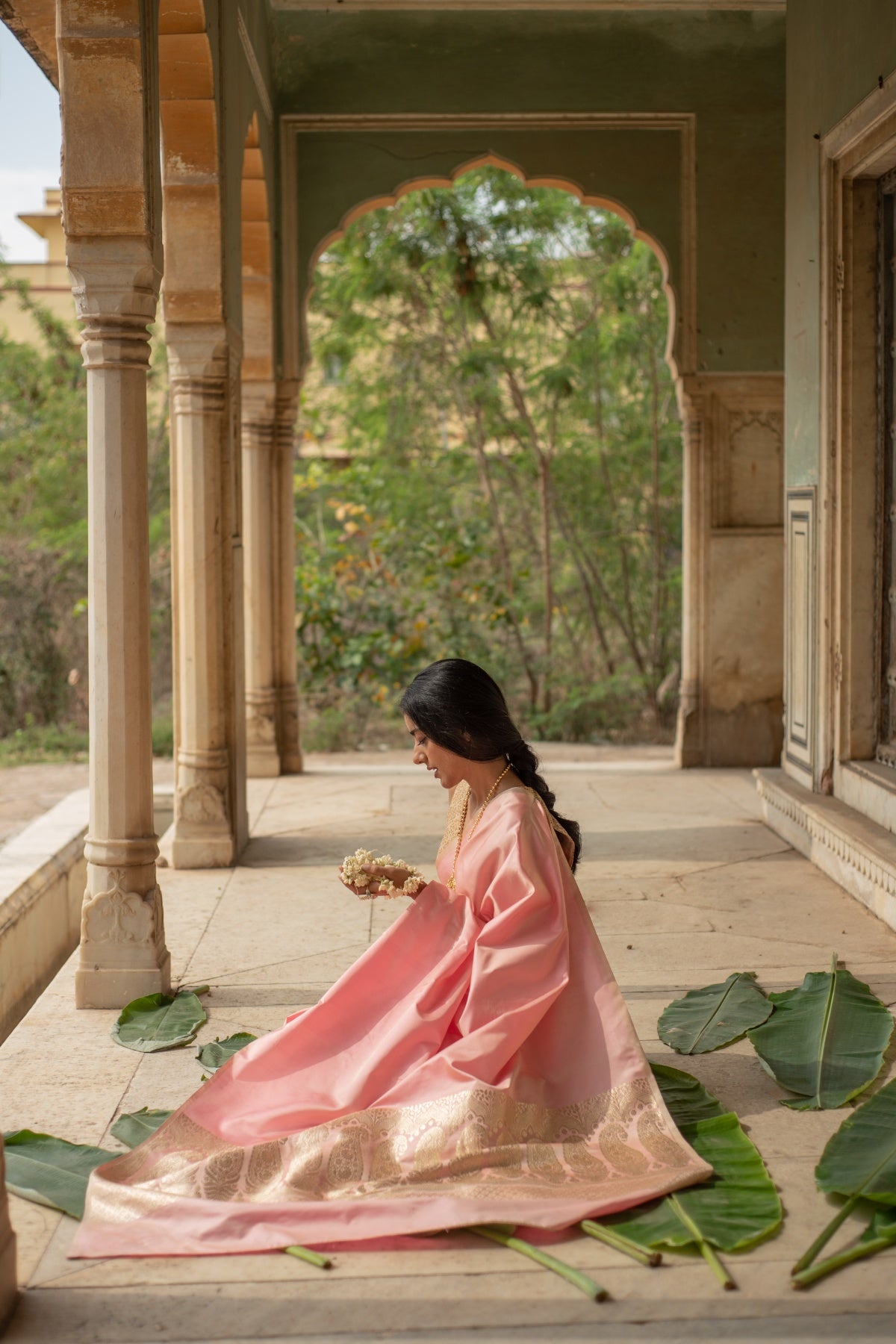
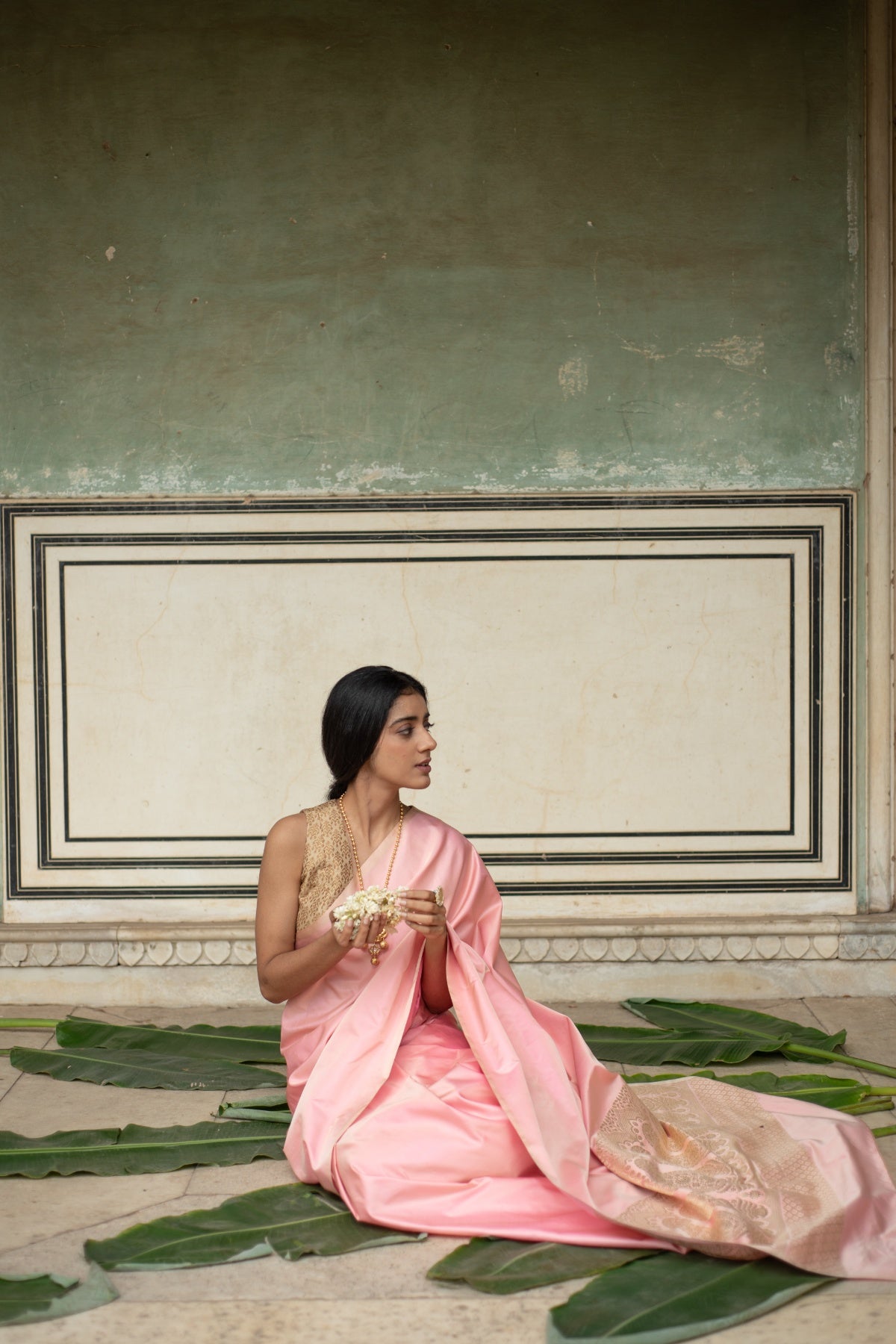
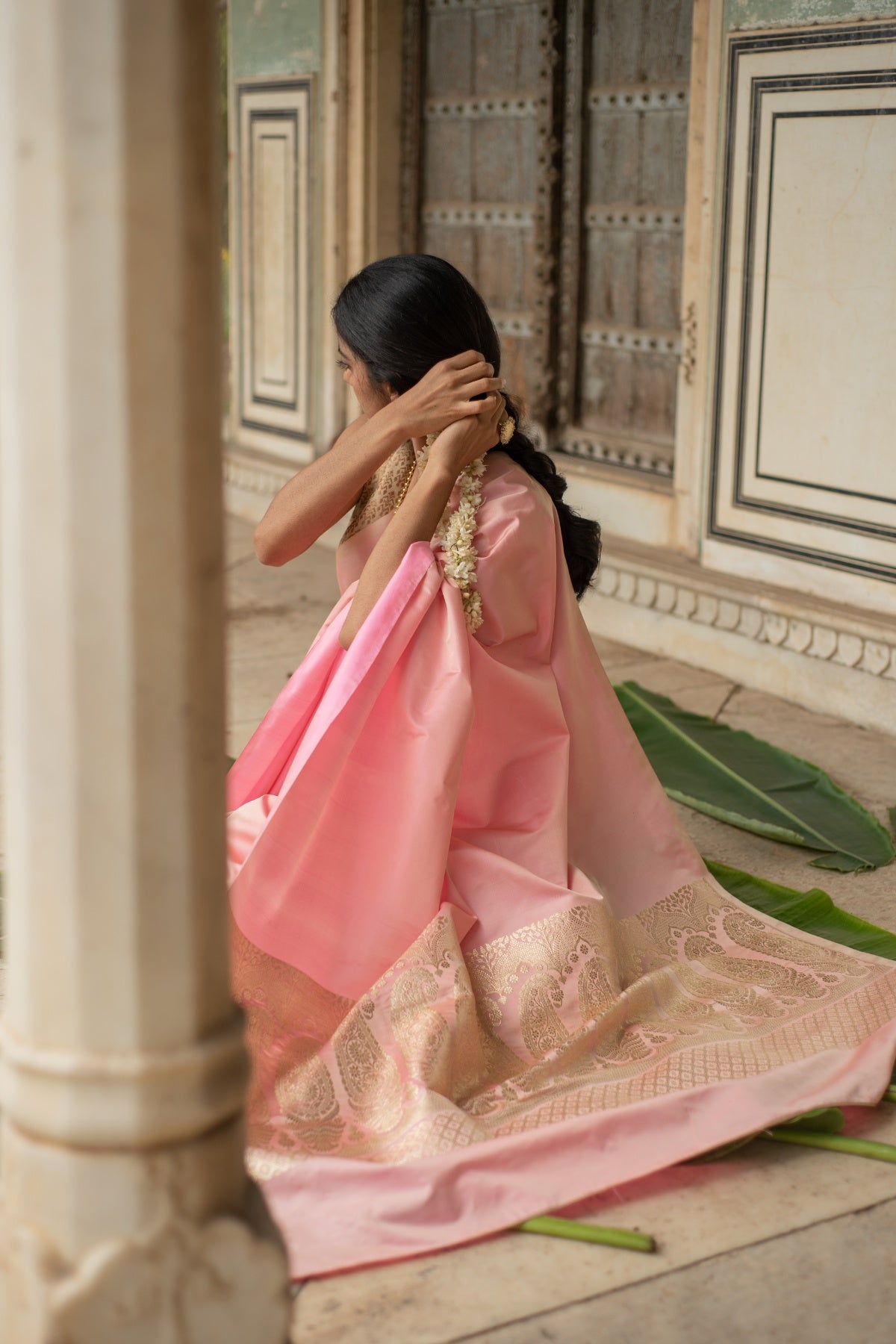
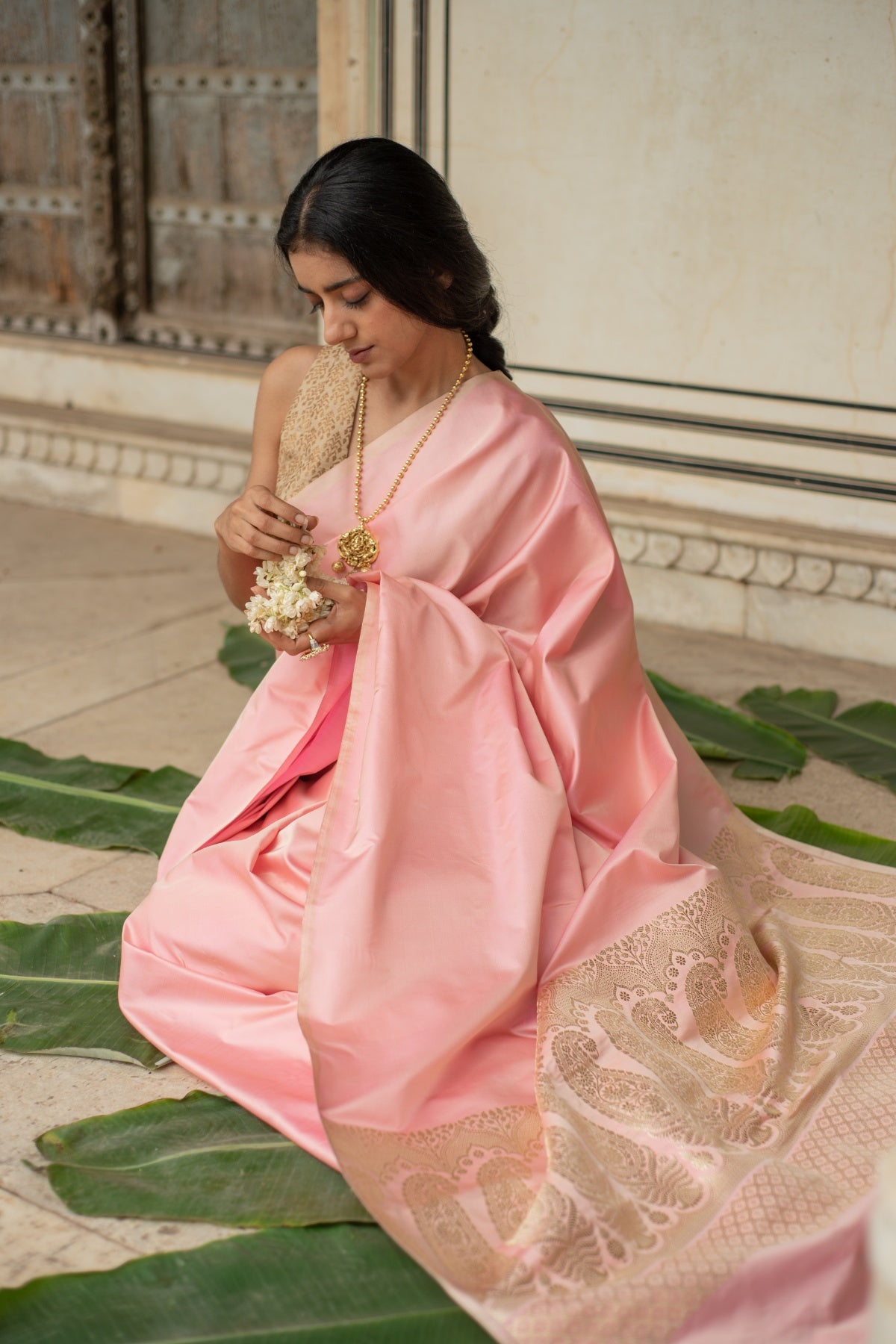
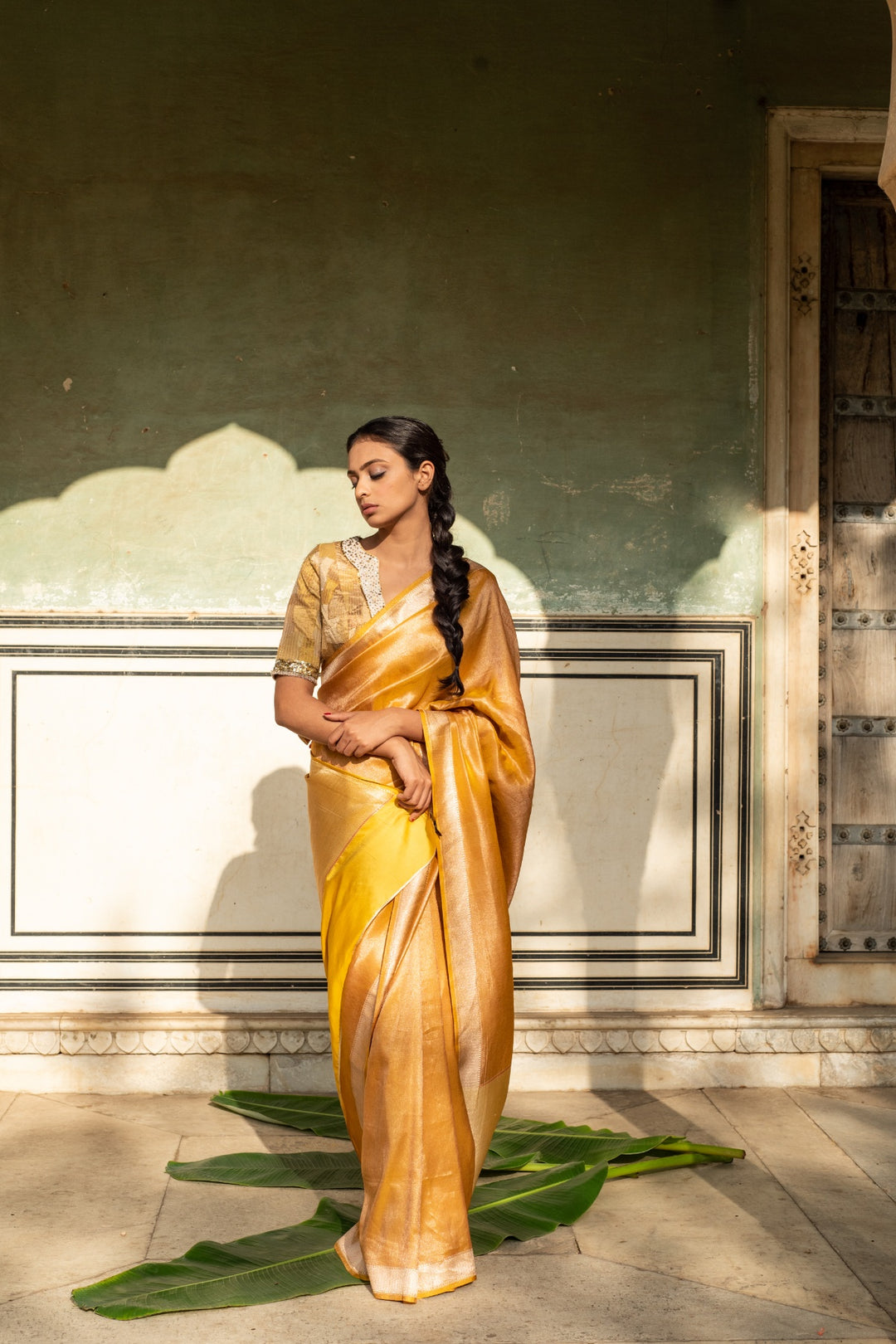
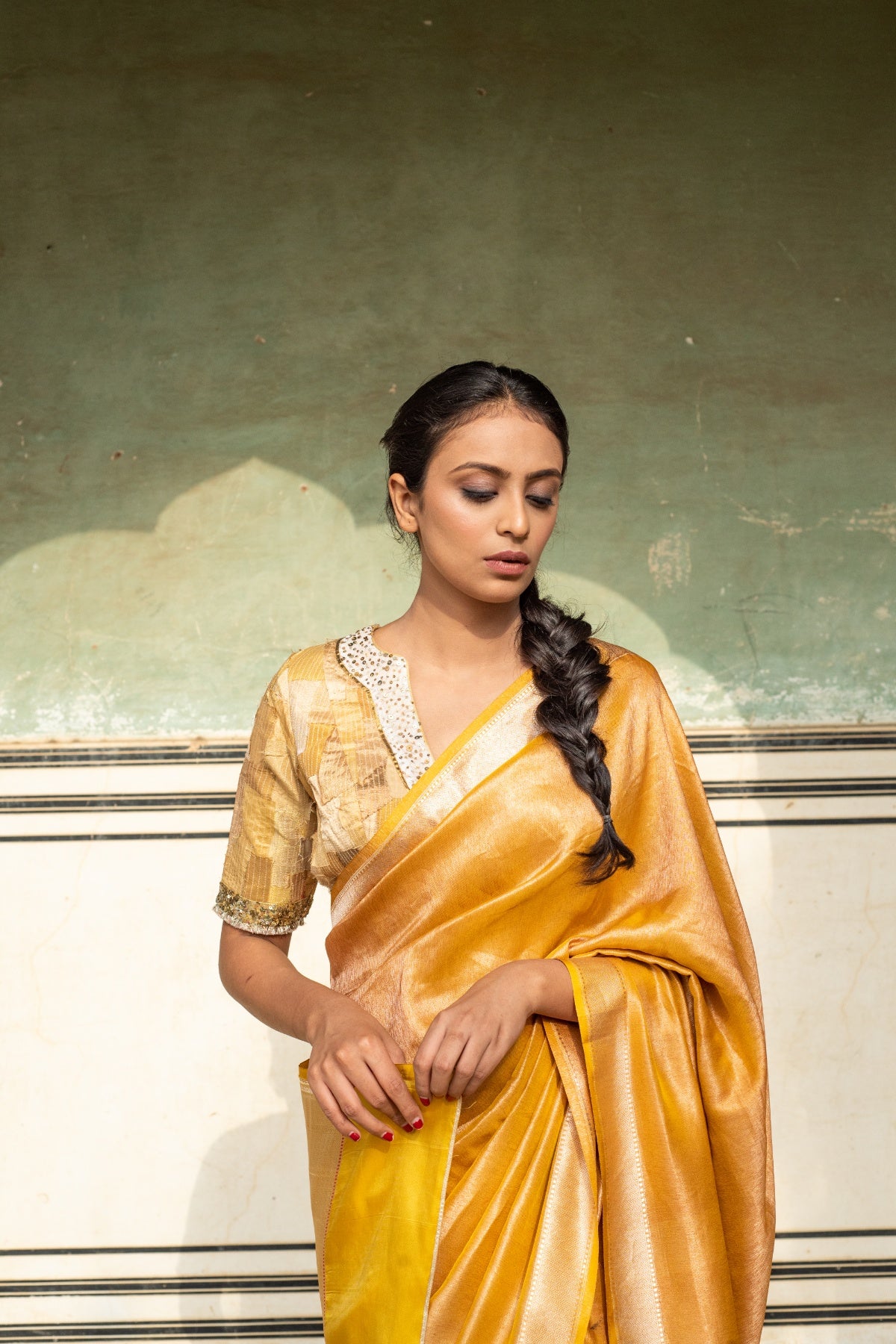
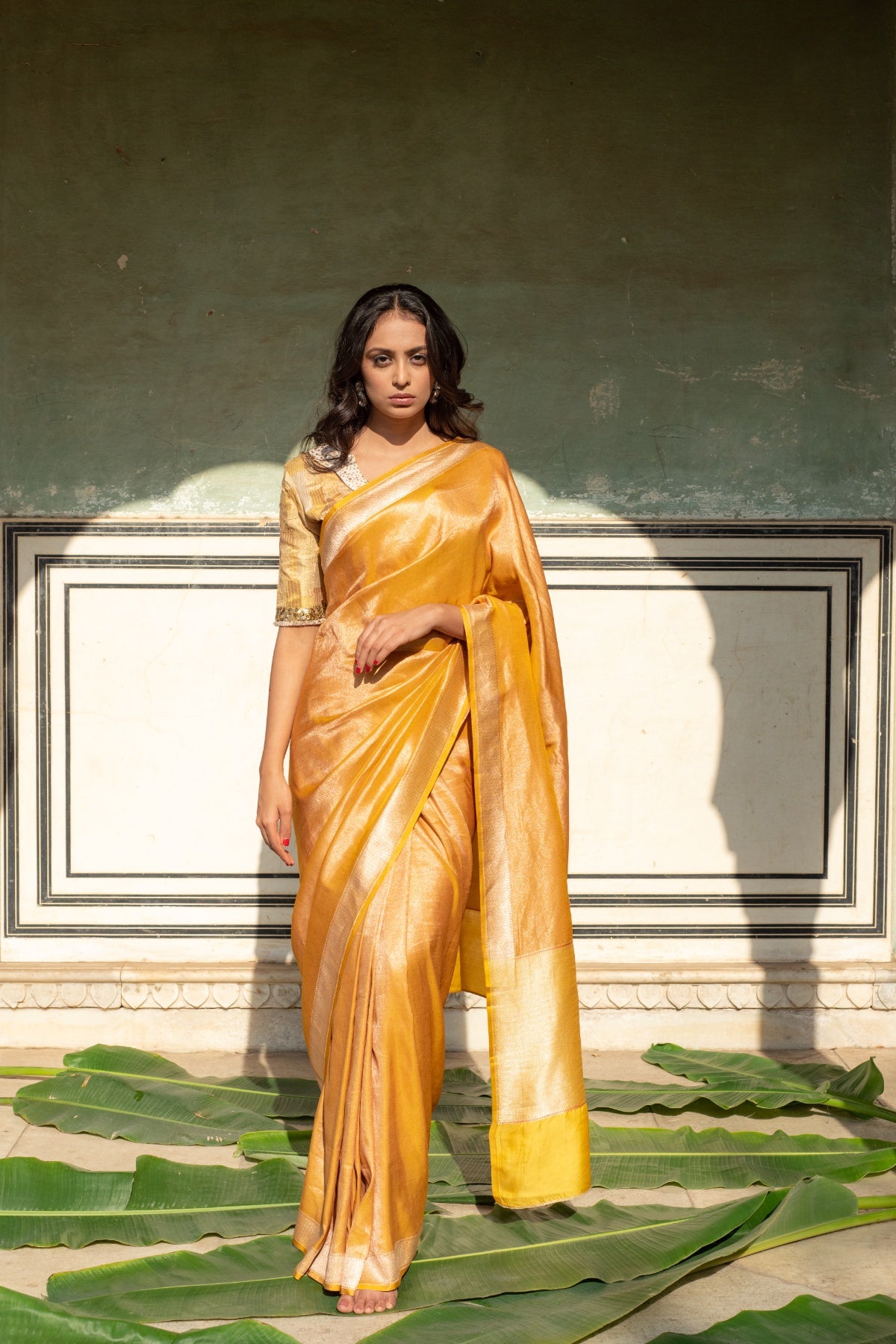
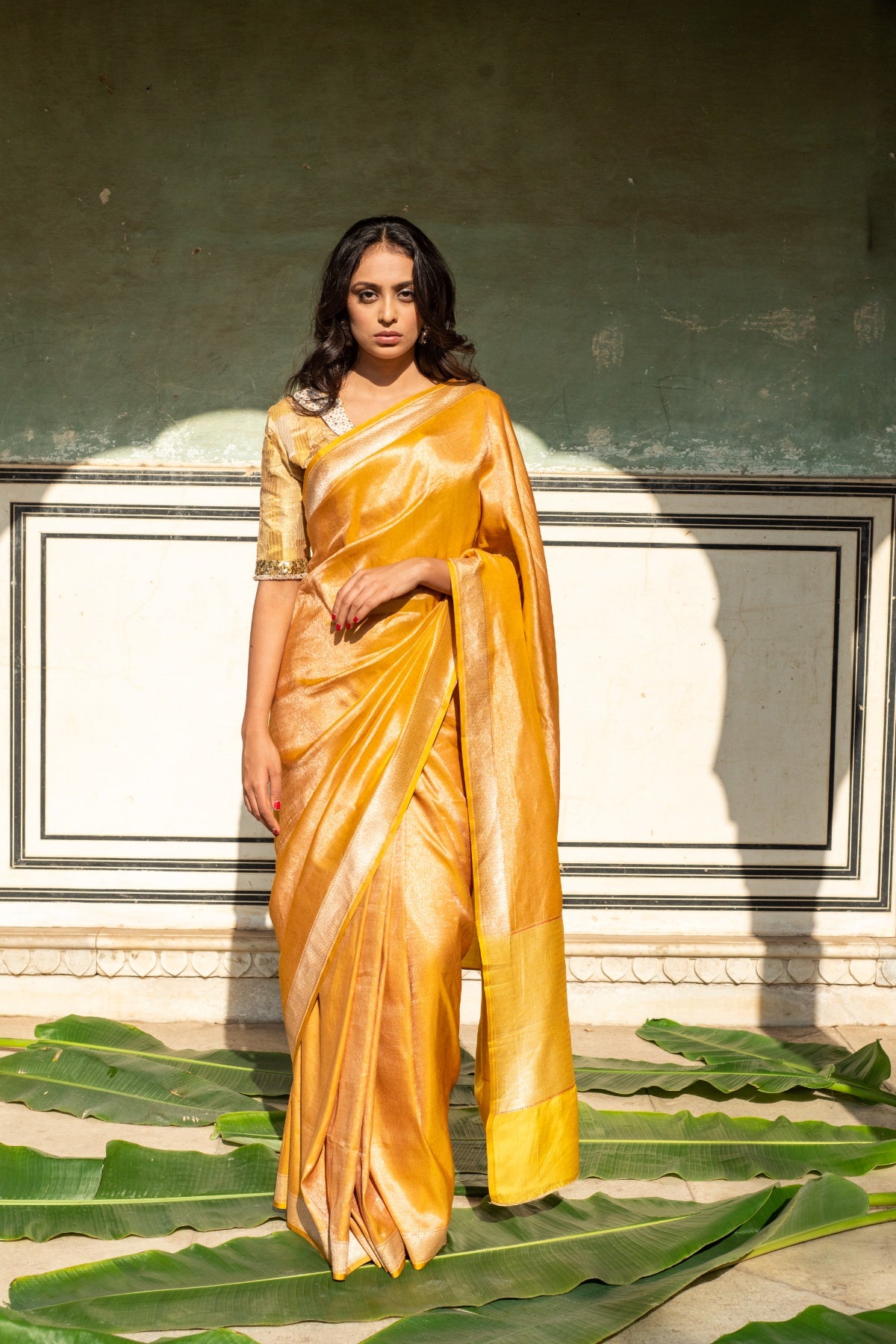
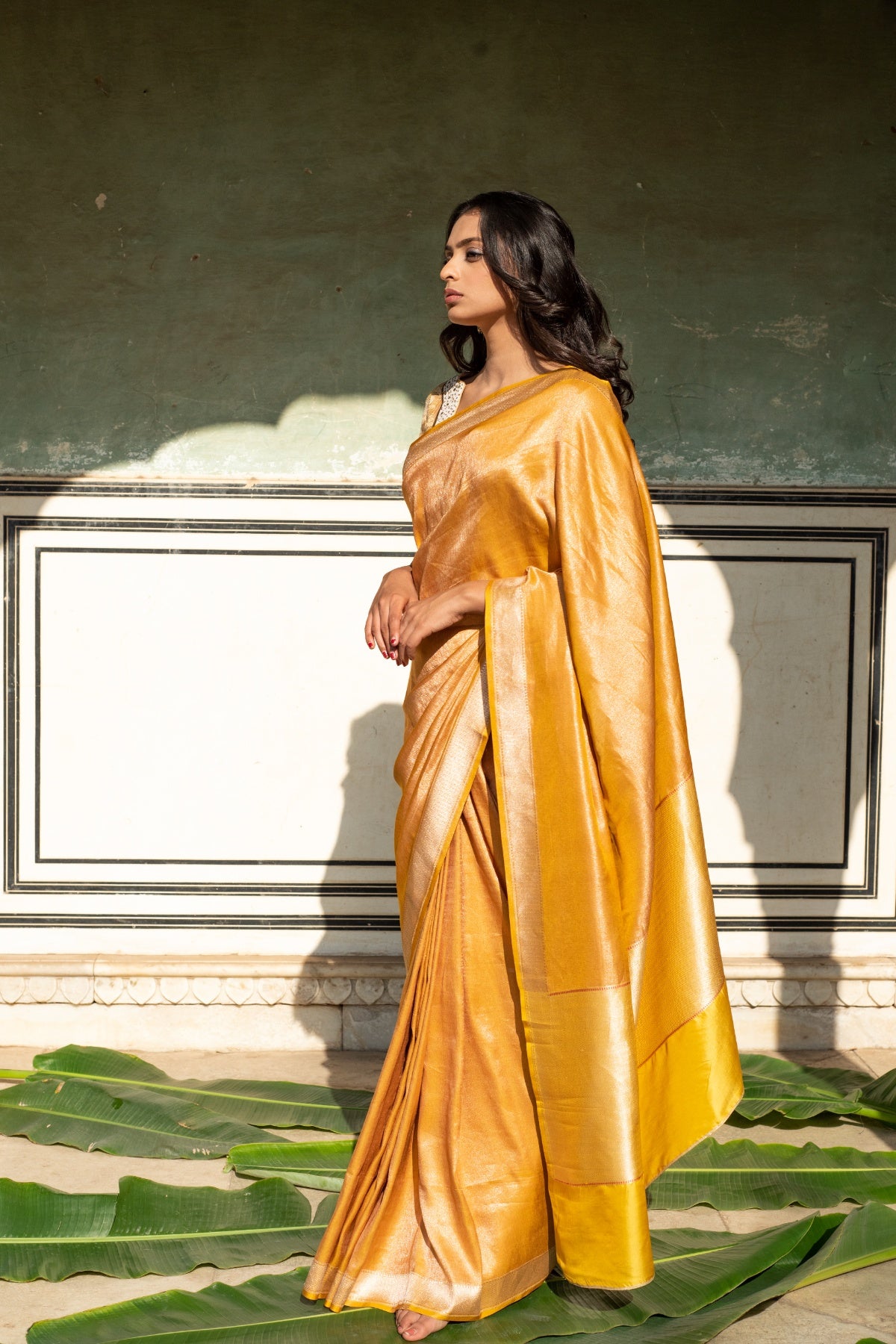
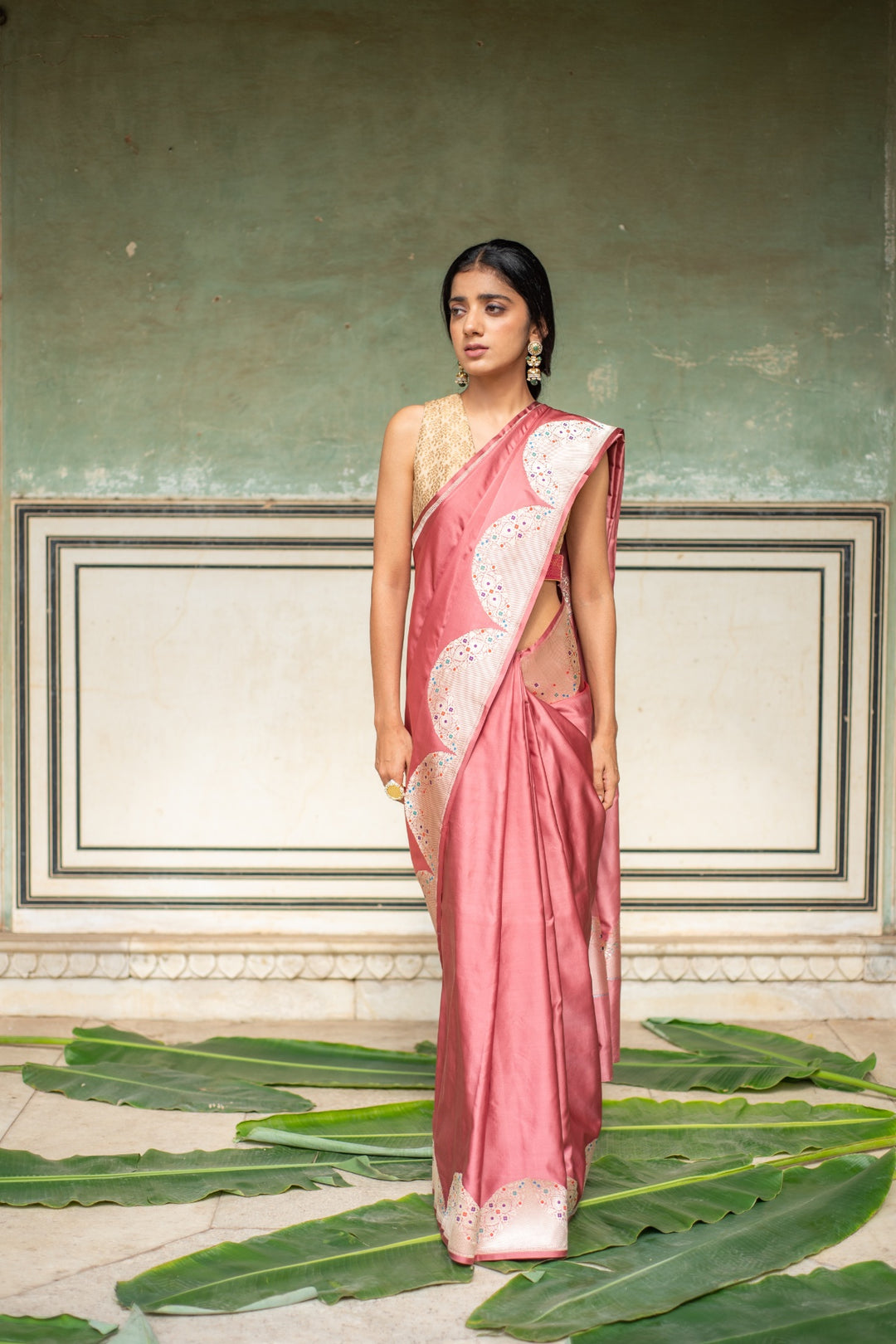
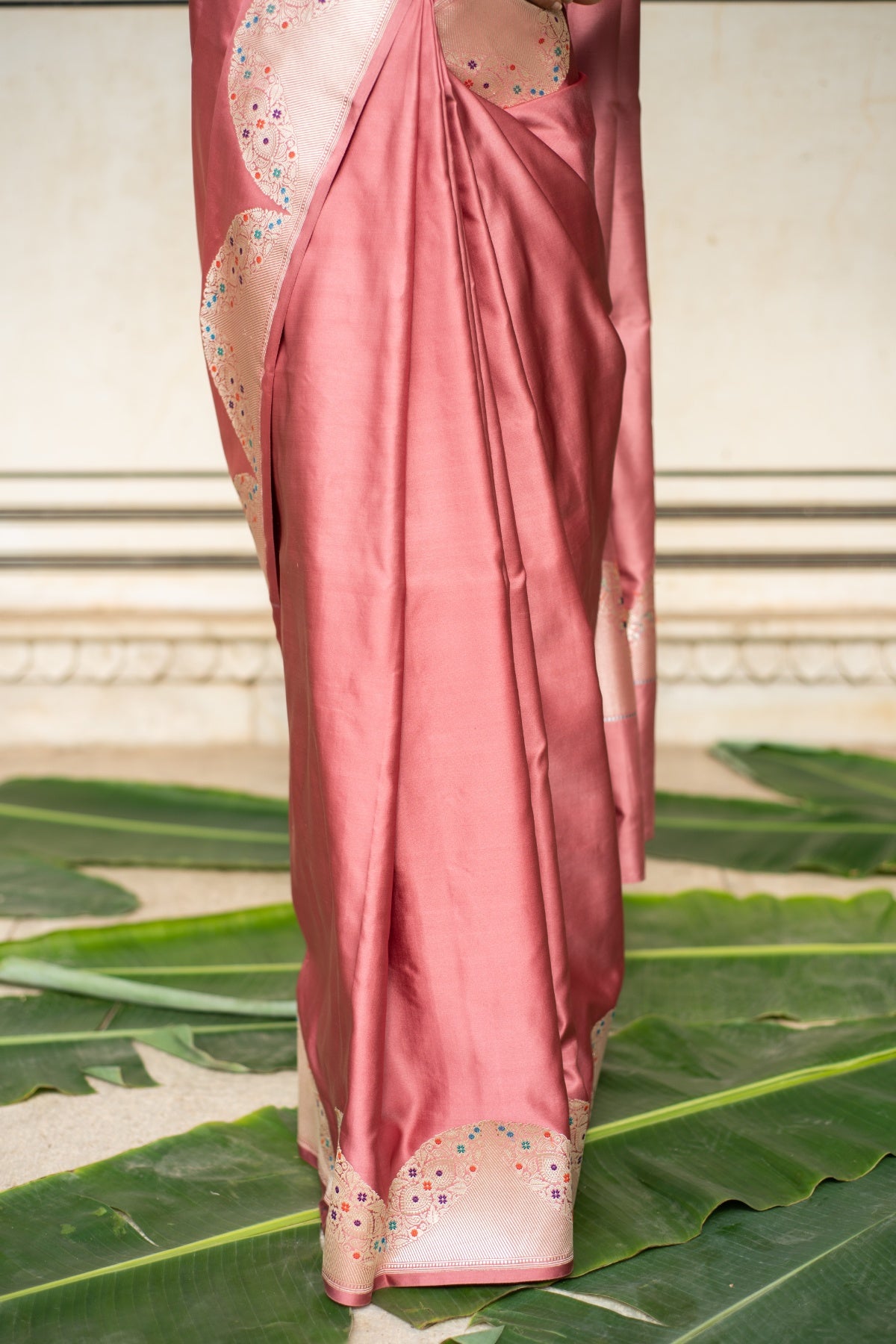
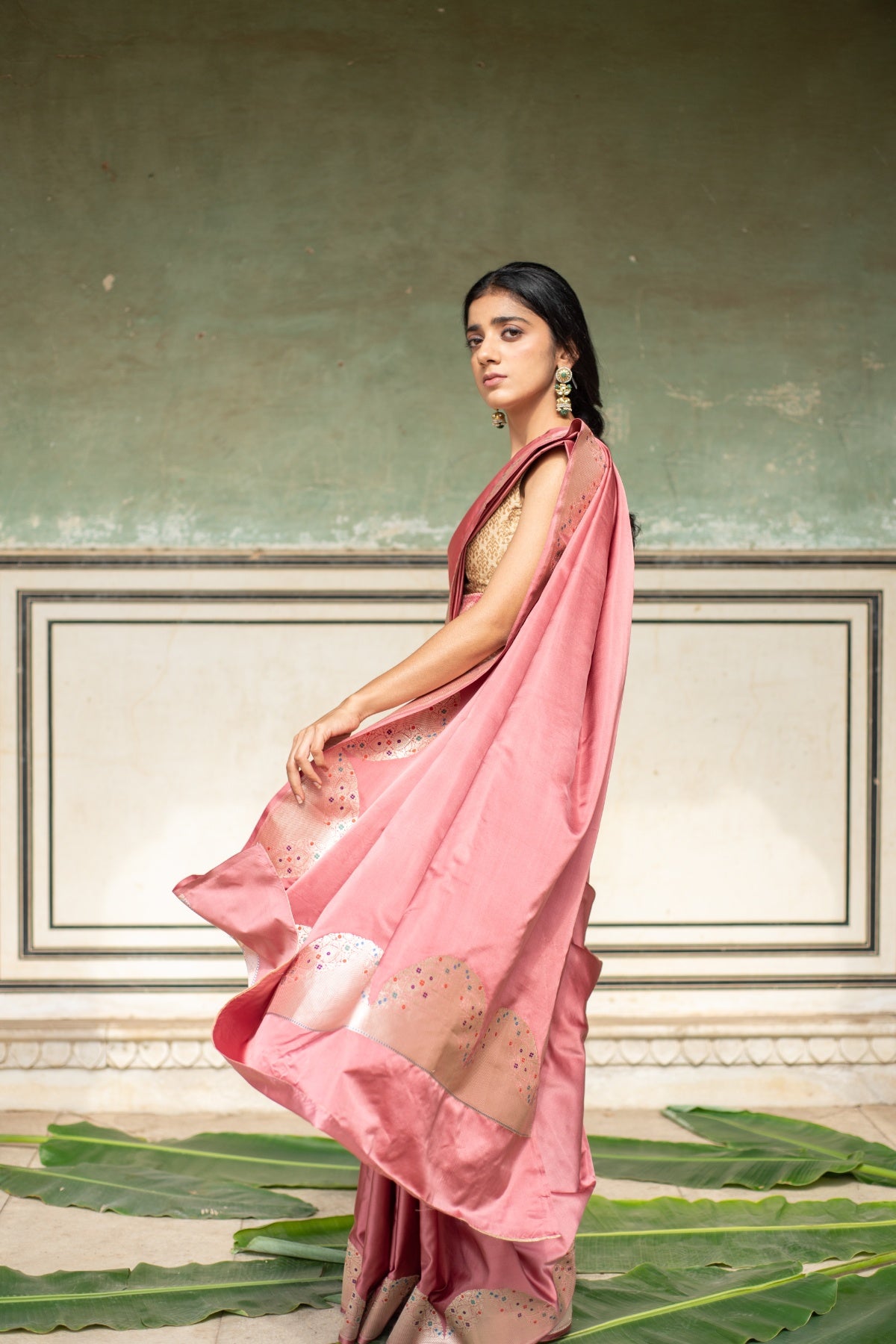
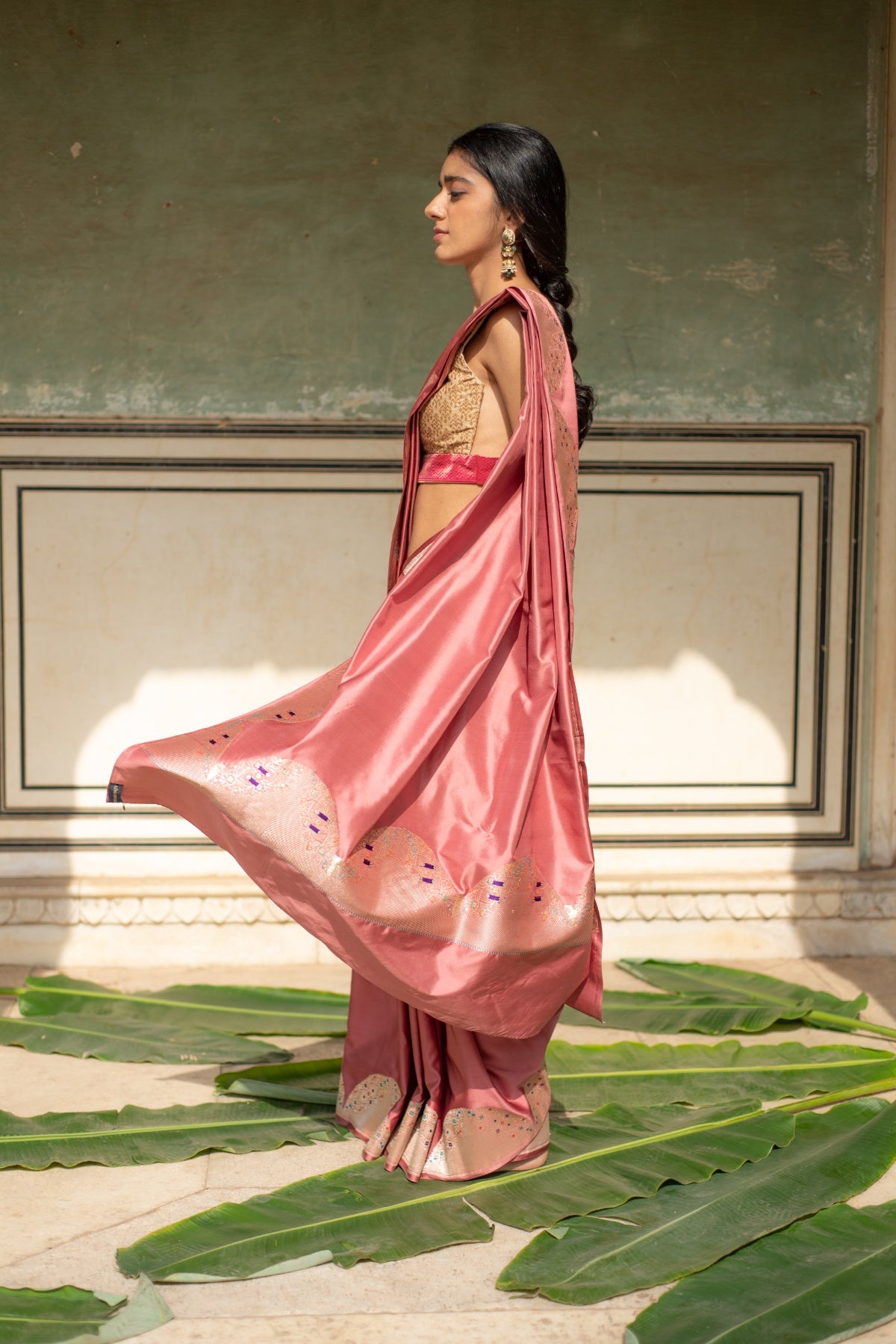
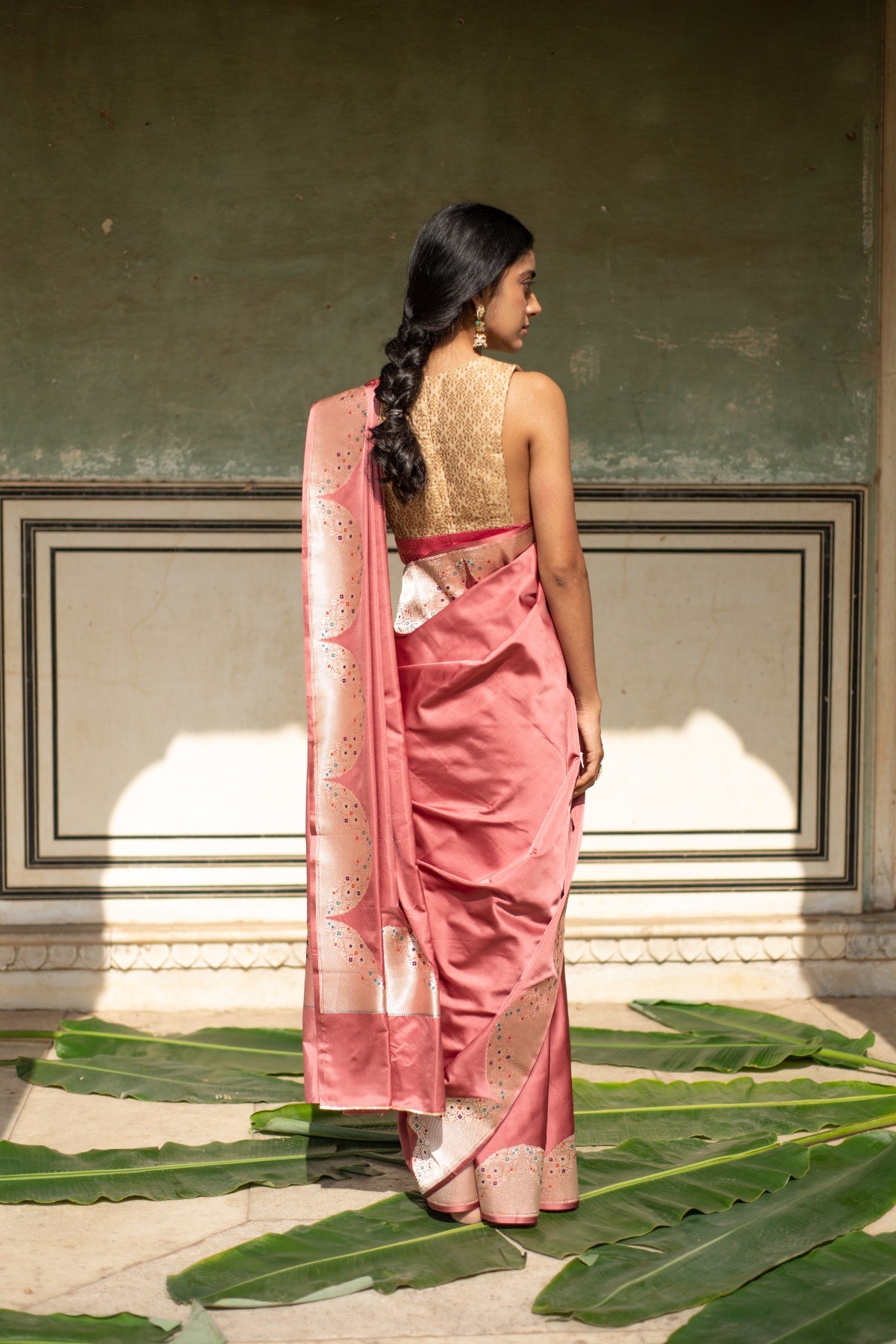
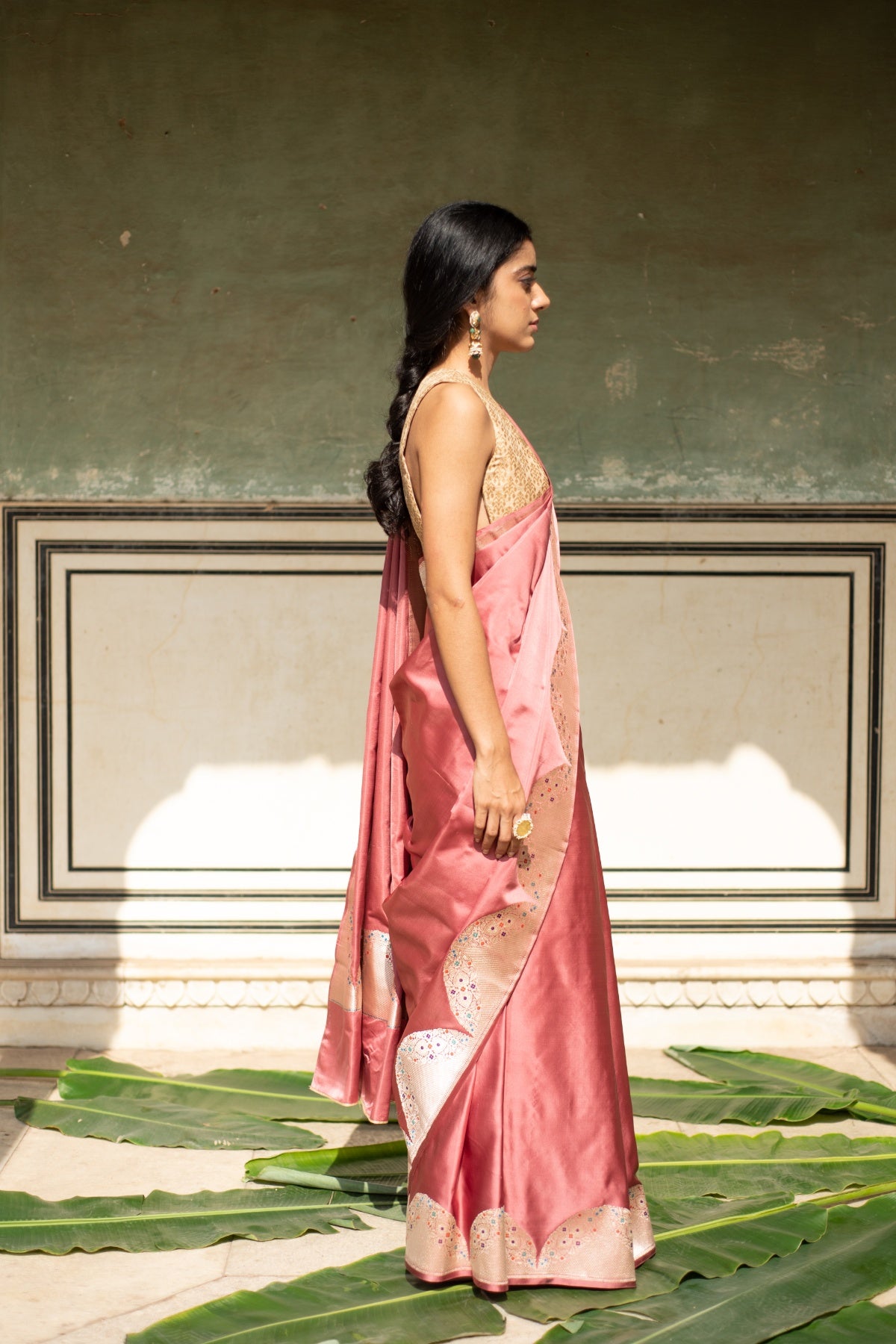
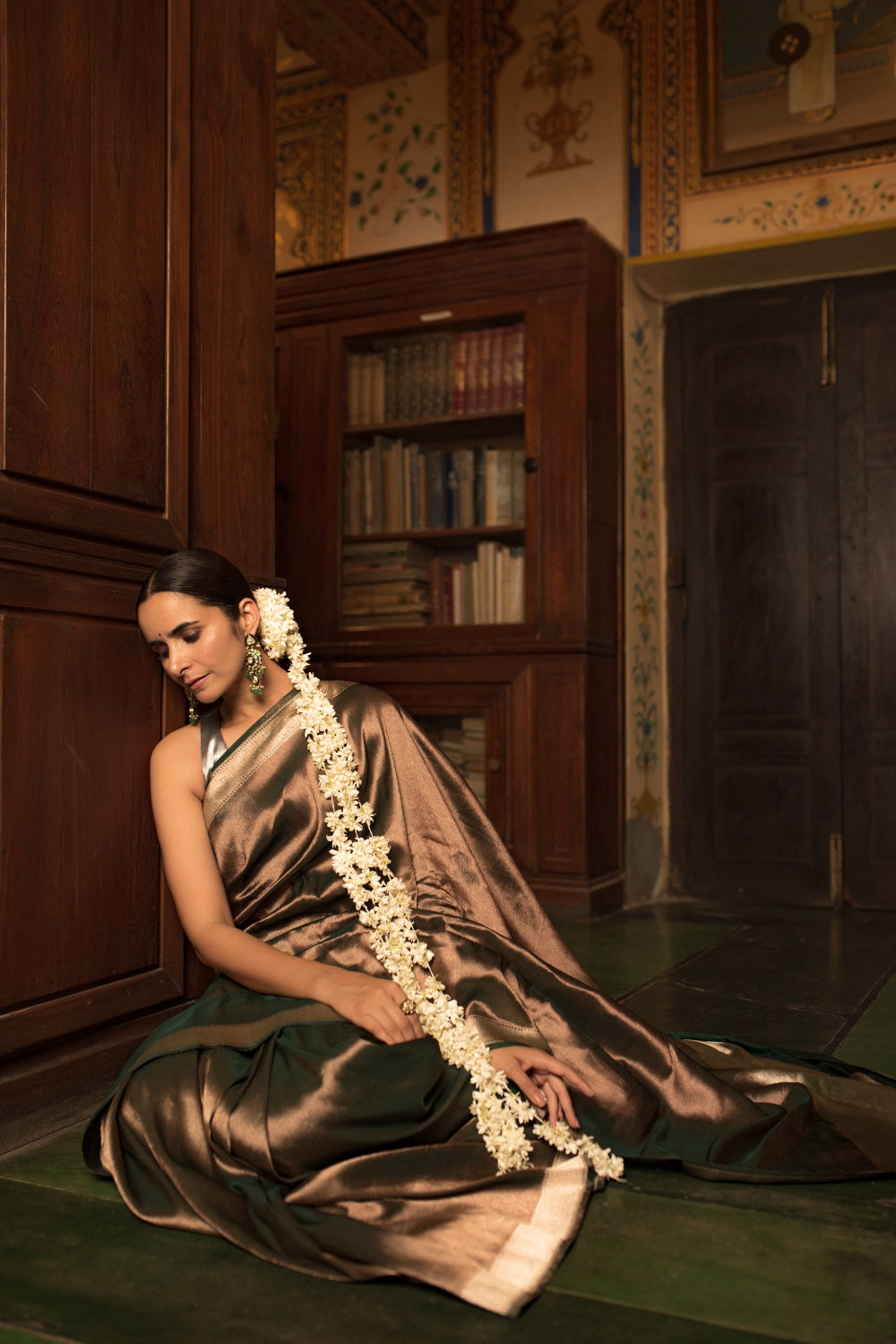
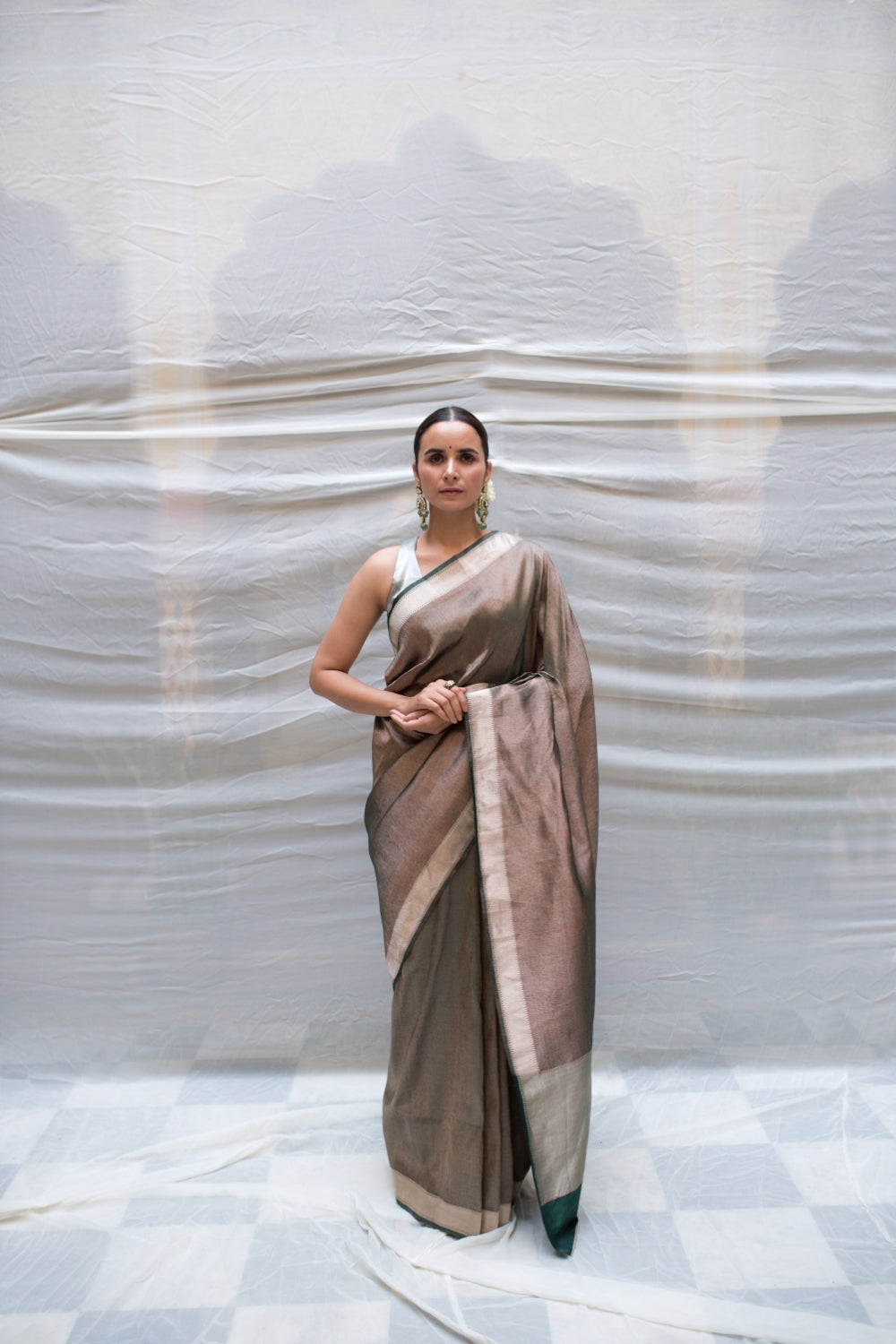
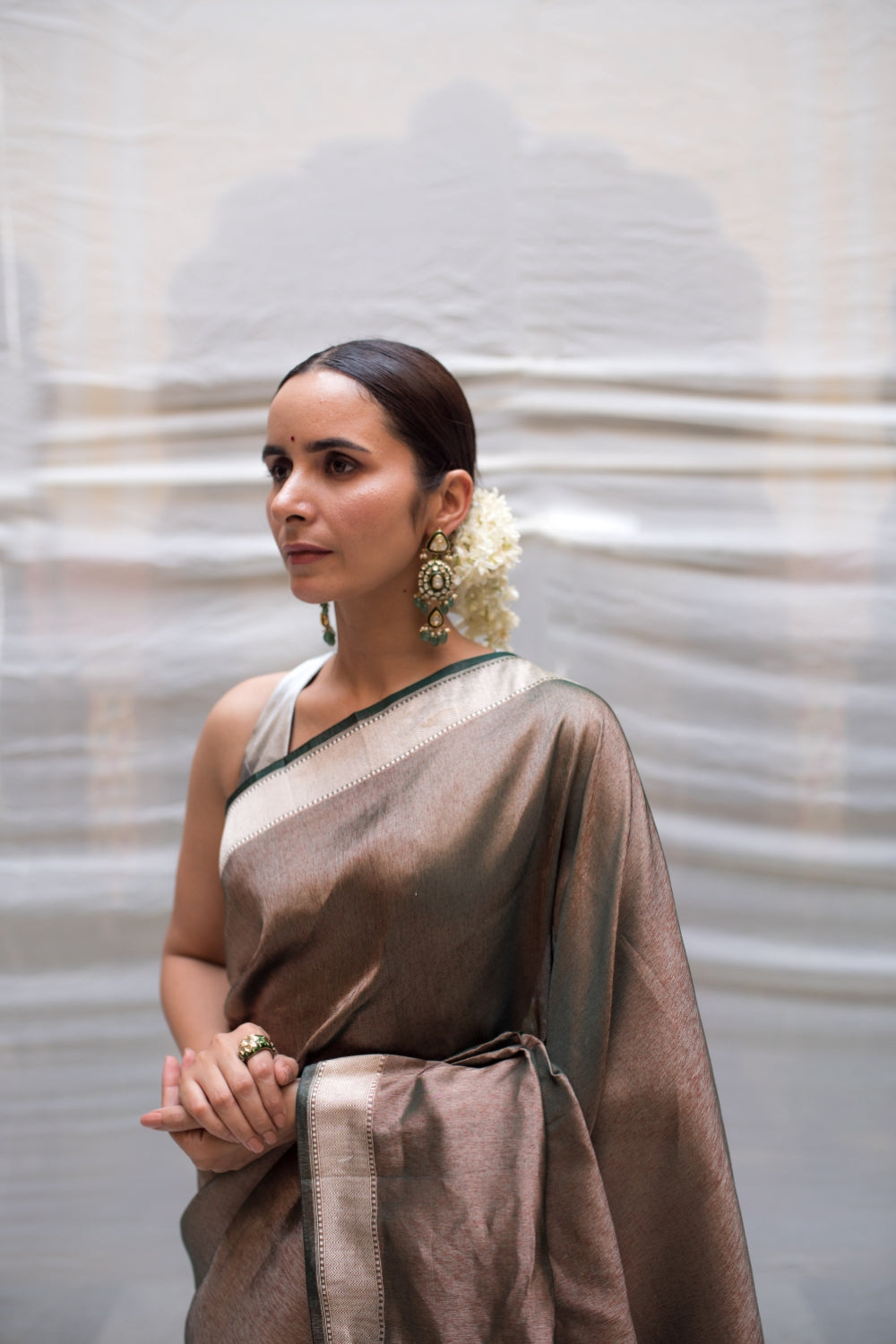
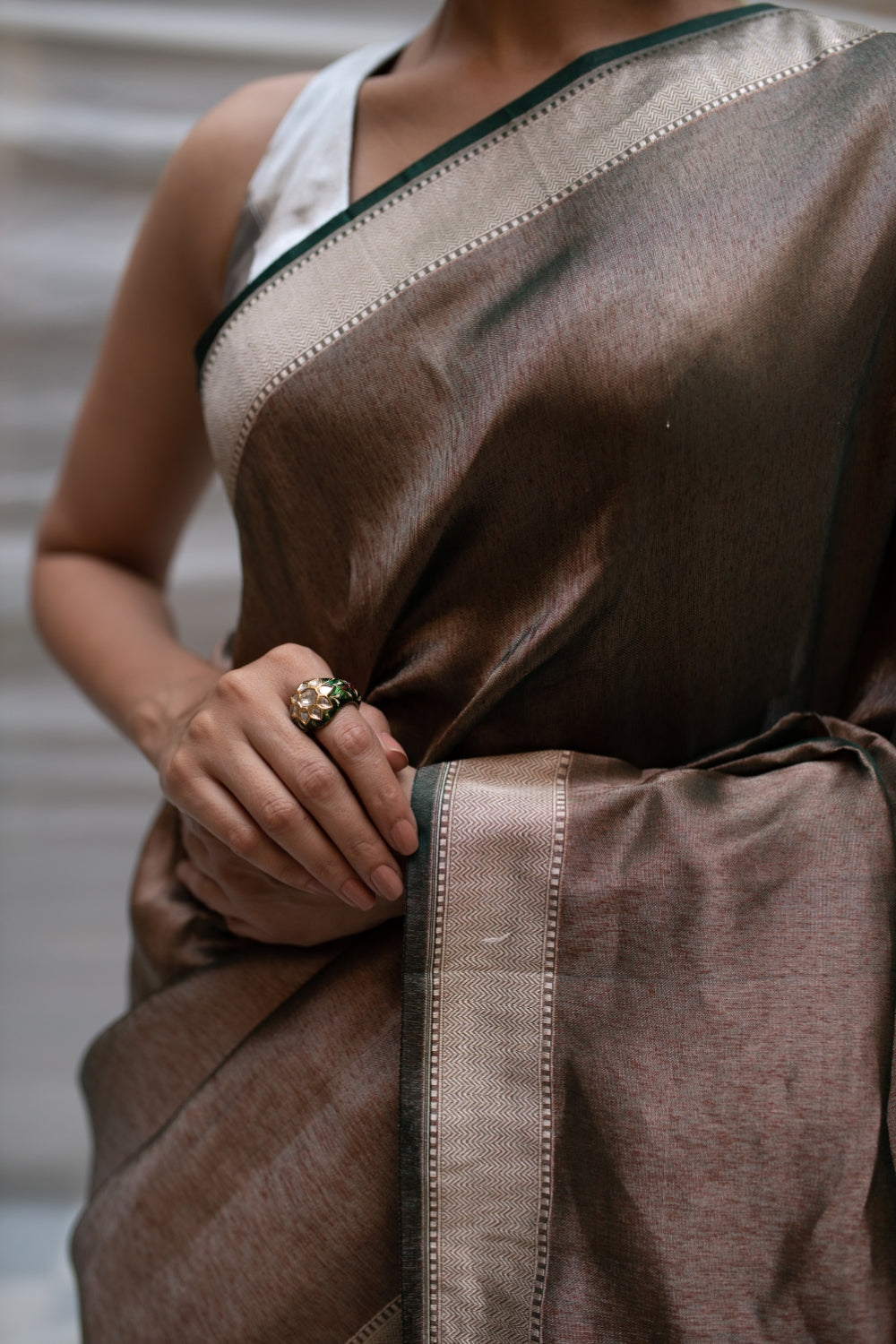
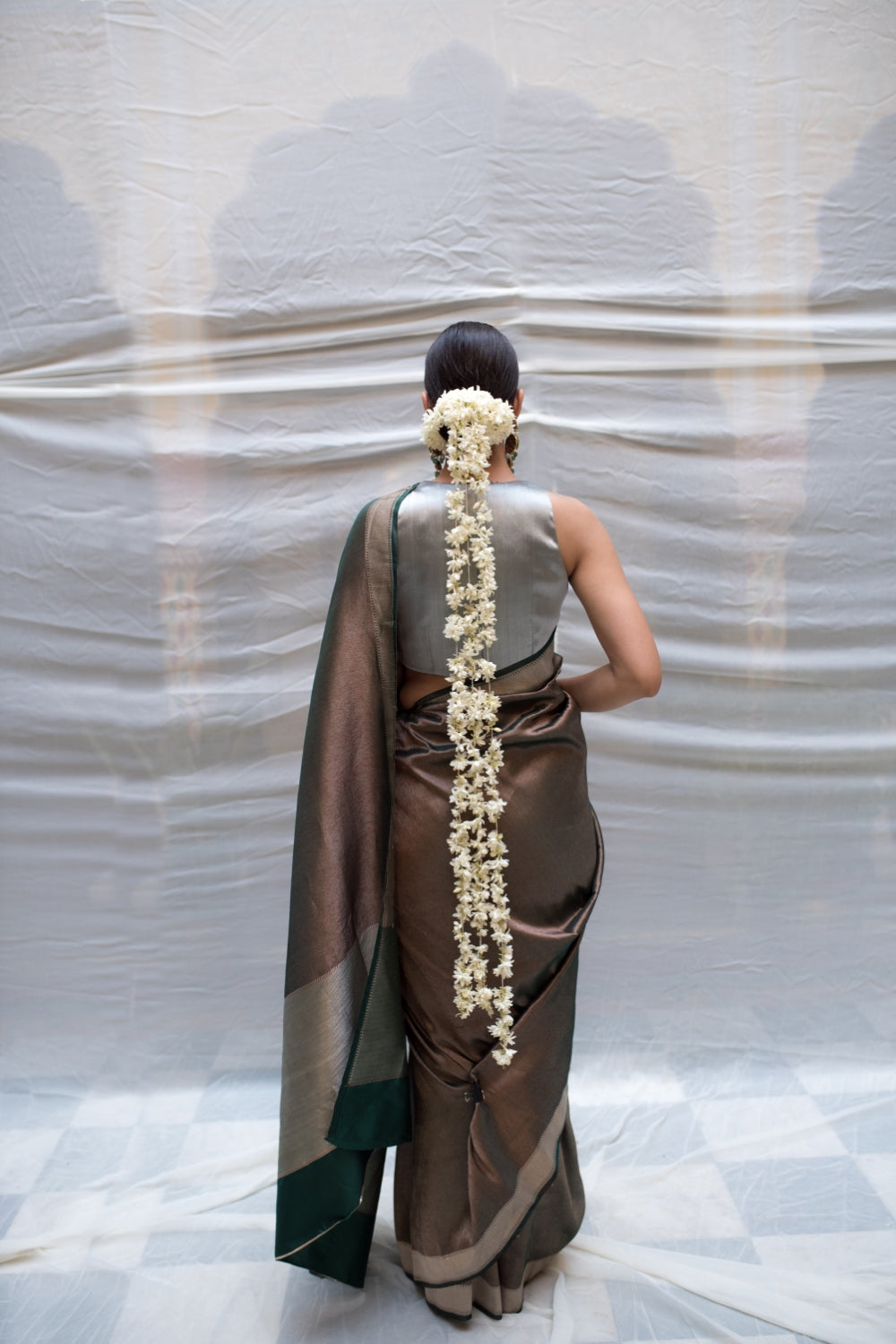
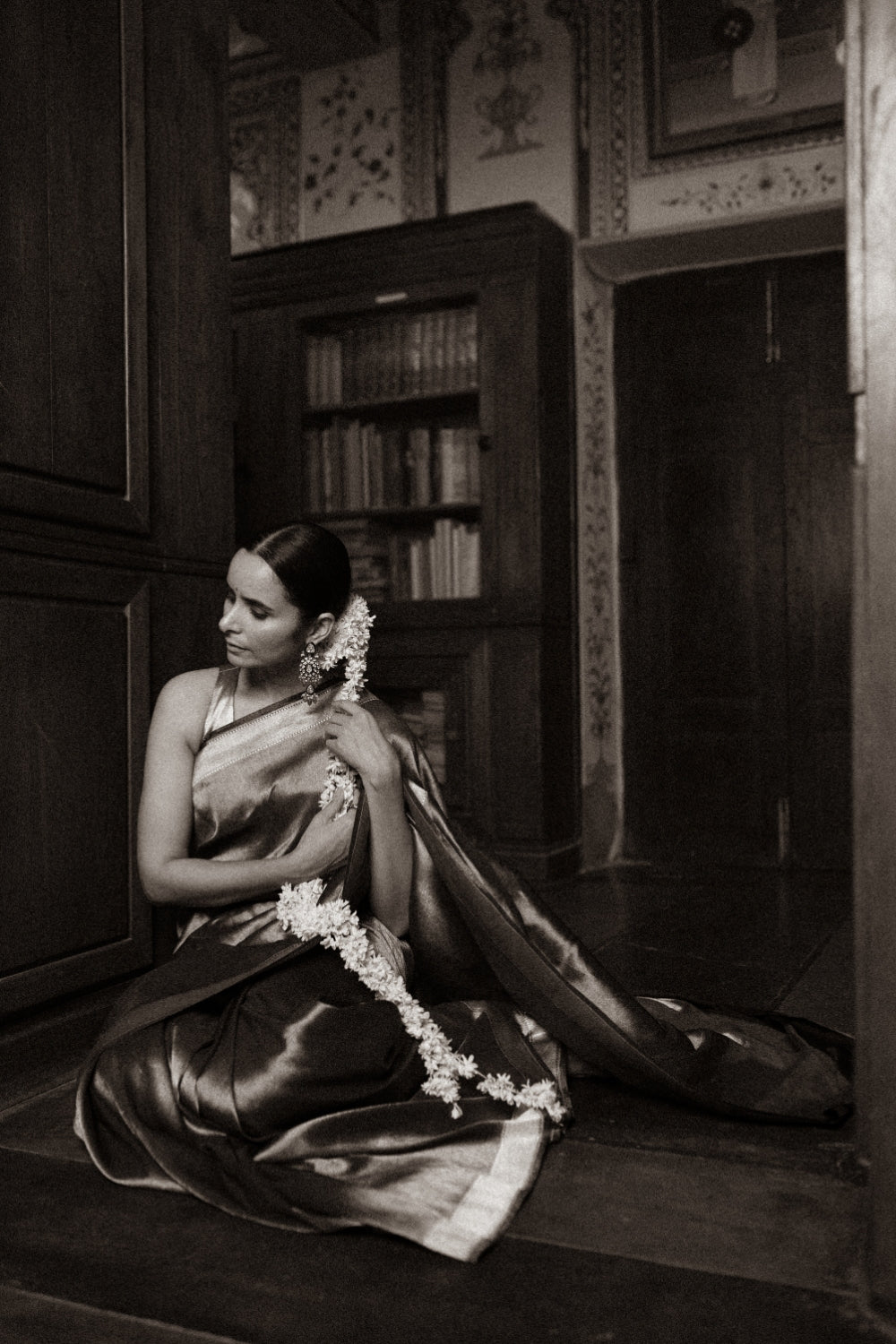
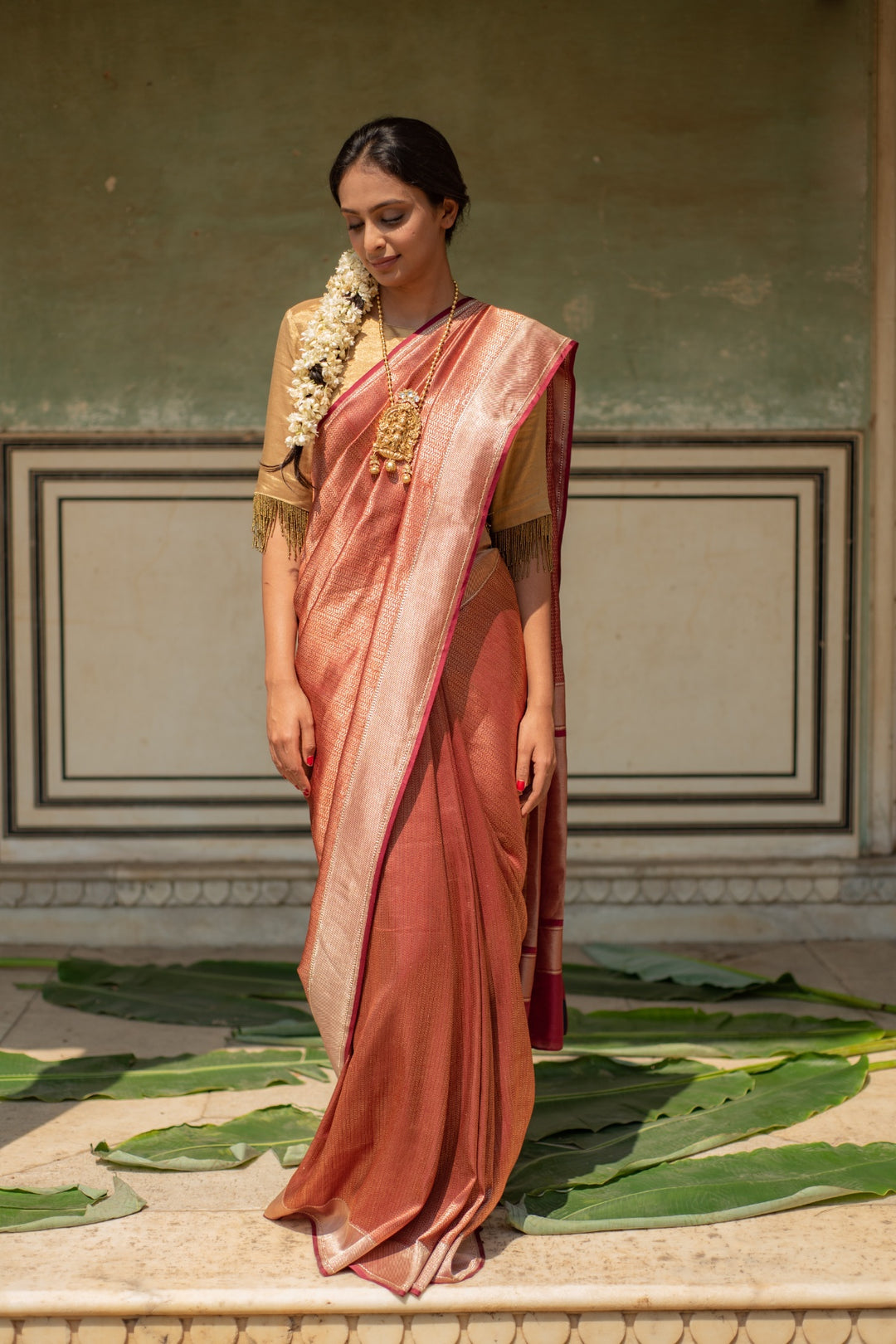
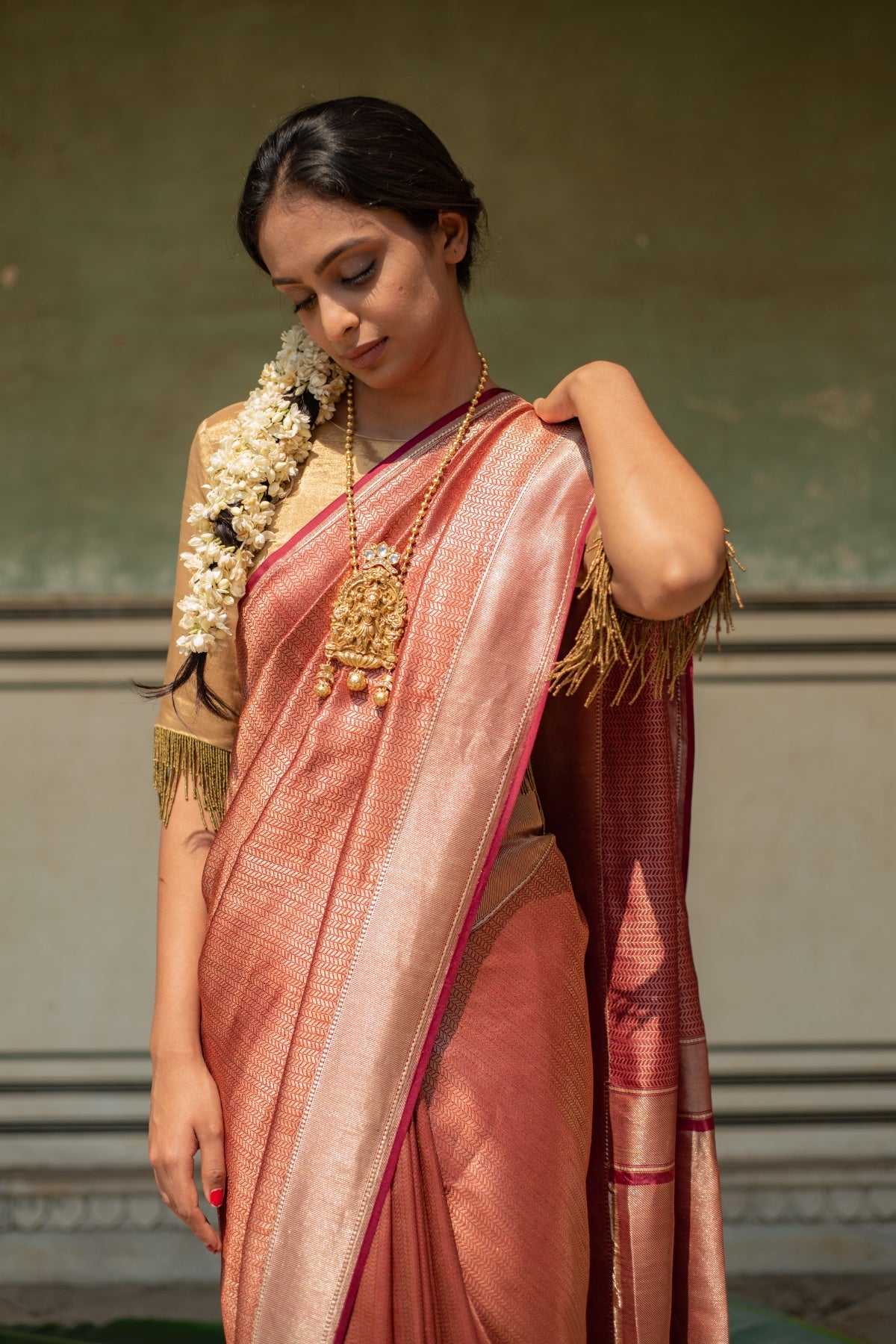
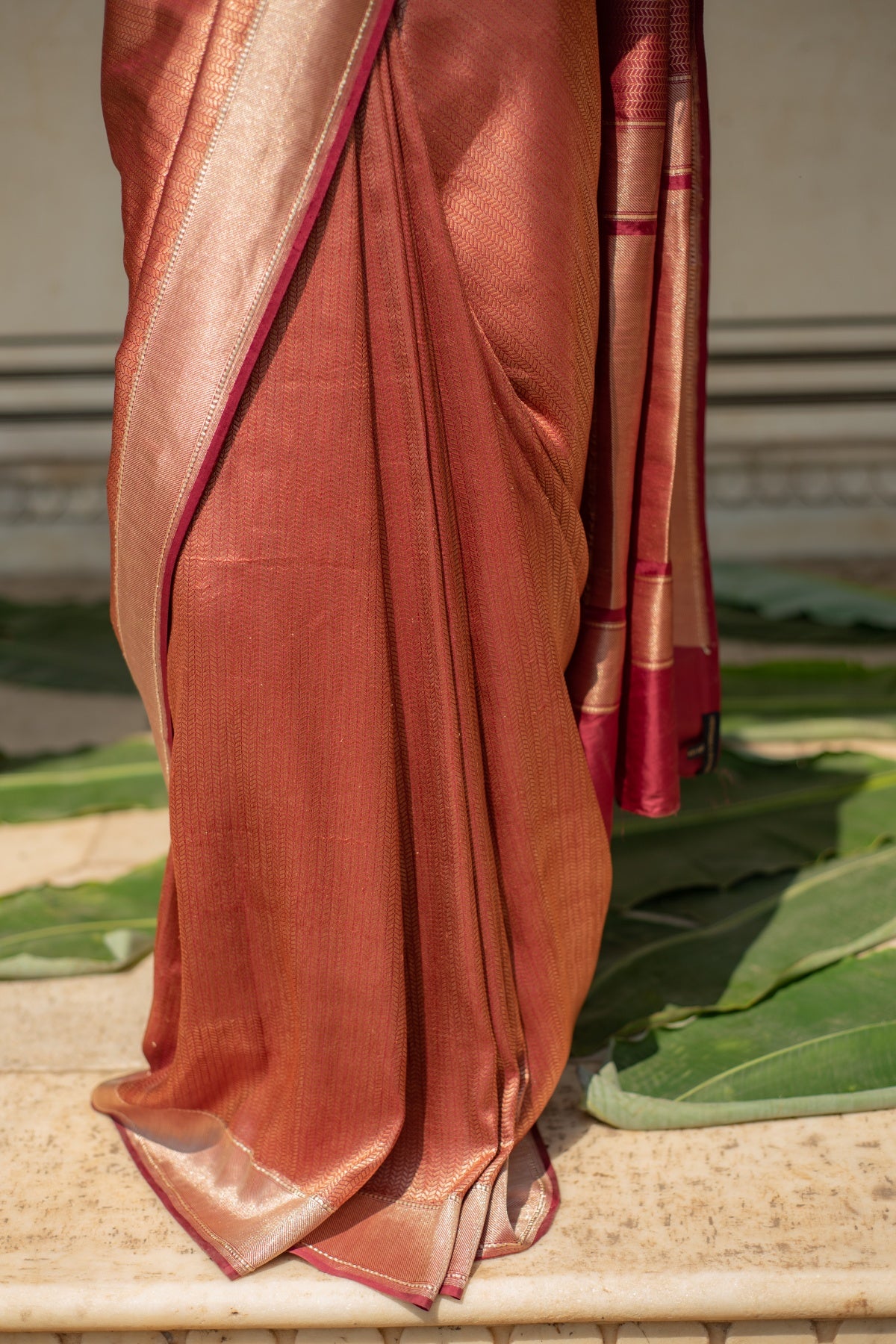
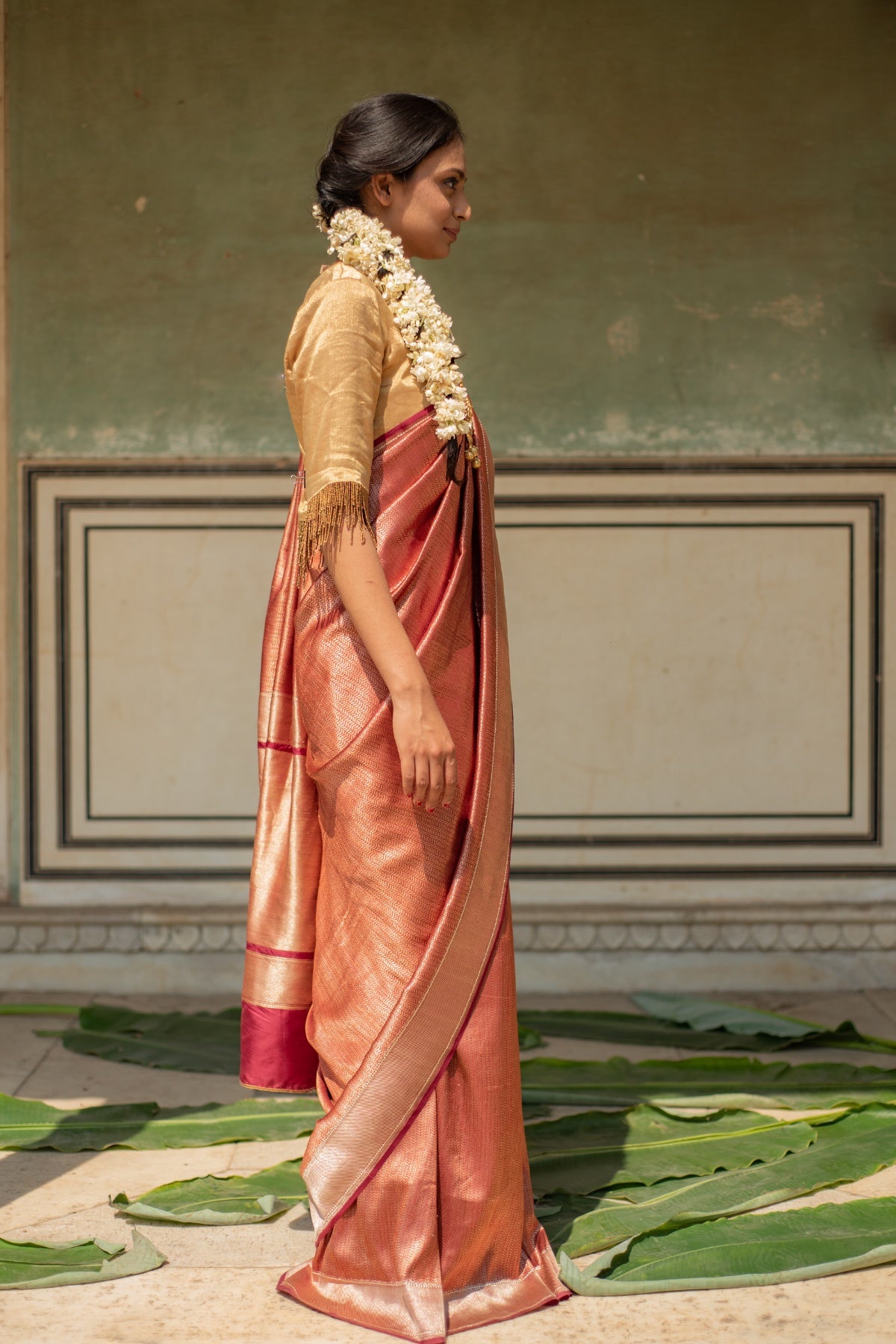
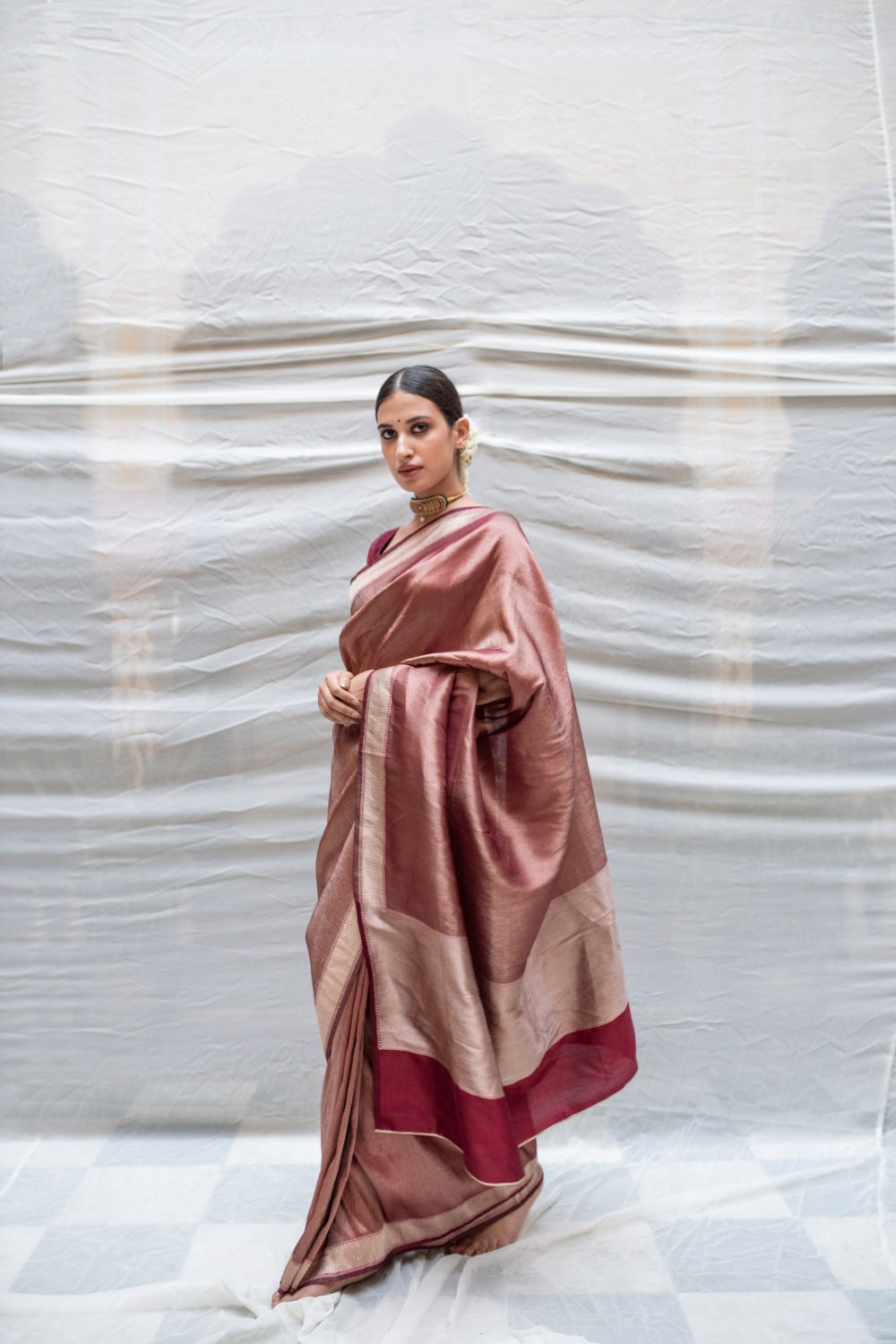
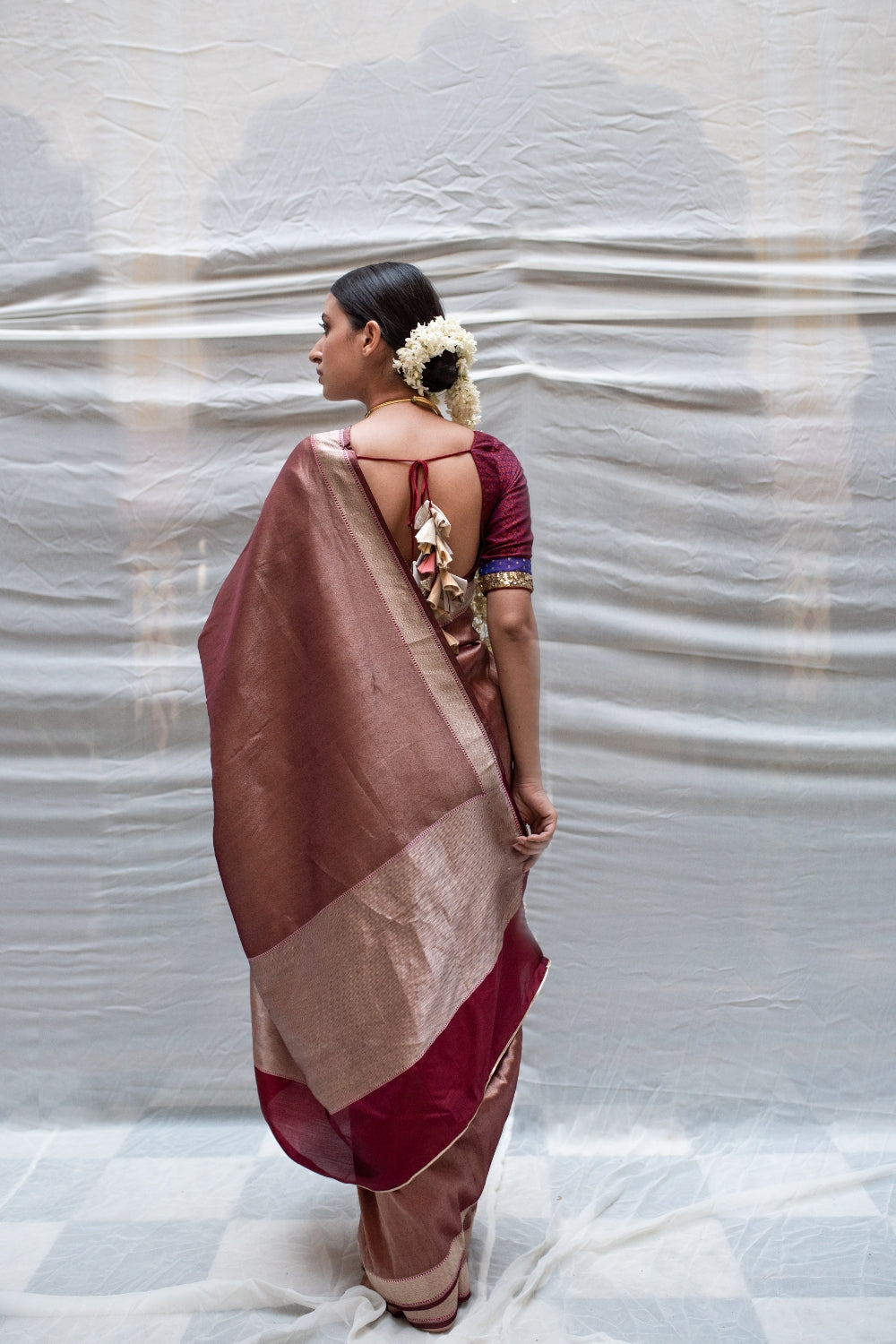
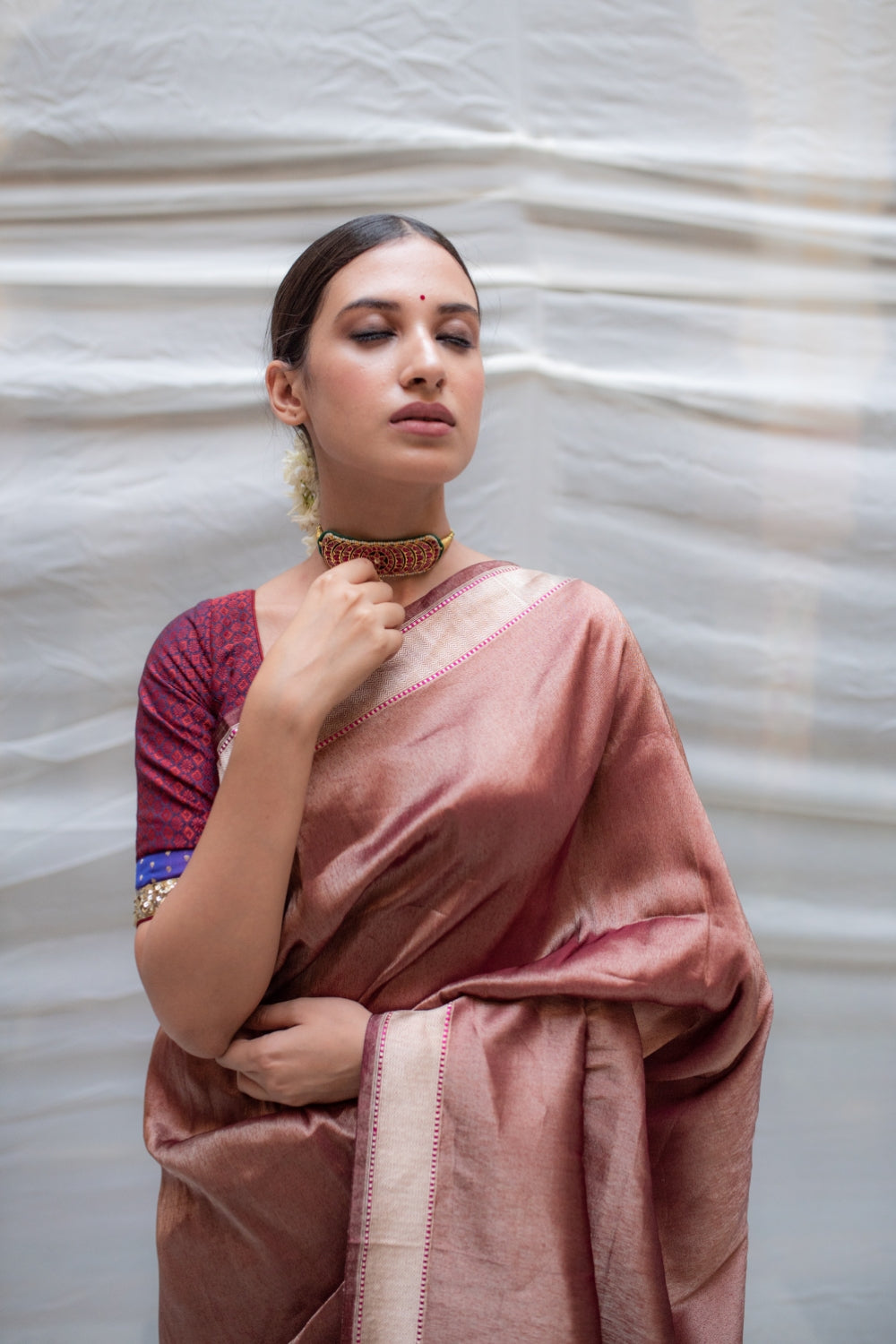
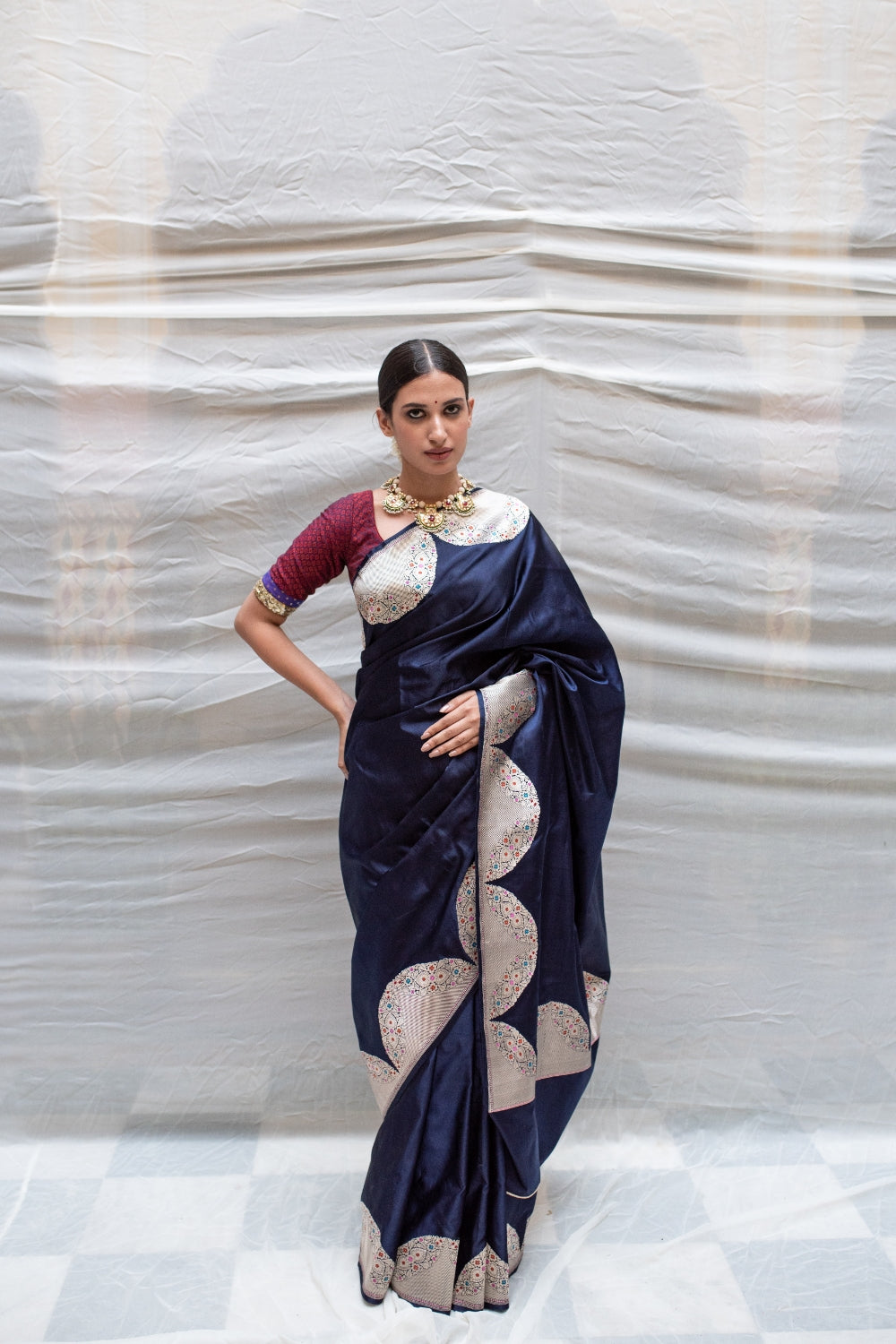
Buy Banarasi Mughal Jaali Sarees
Buy Banarasi Mughal Jaali Sarees
Why Choose Our Banarasi Mughal Jaali Sarees?
Each saree from our collection is born in our atelier—a quiet world where tradition and evolution meet at the loom and turn into art. The expert weavers, who have honed their craft over the years, work with remarkable precision and creativity, combining time-honoured techniques with a contemporary sensibility.
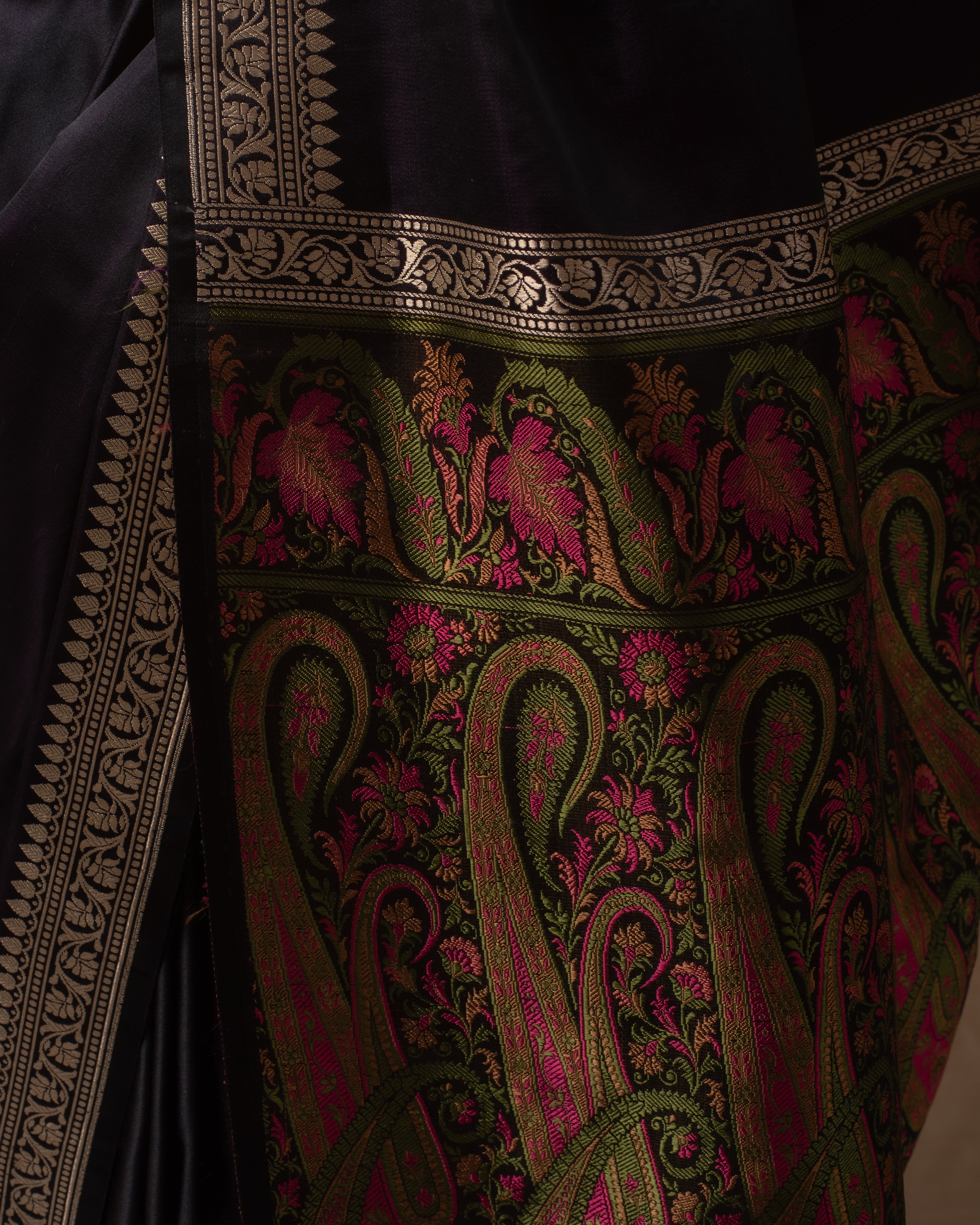
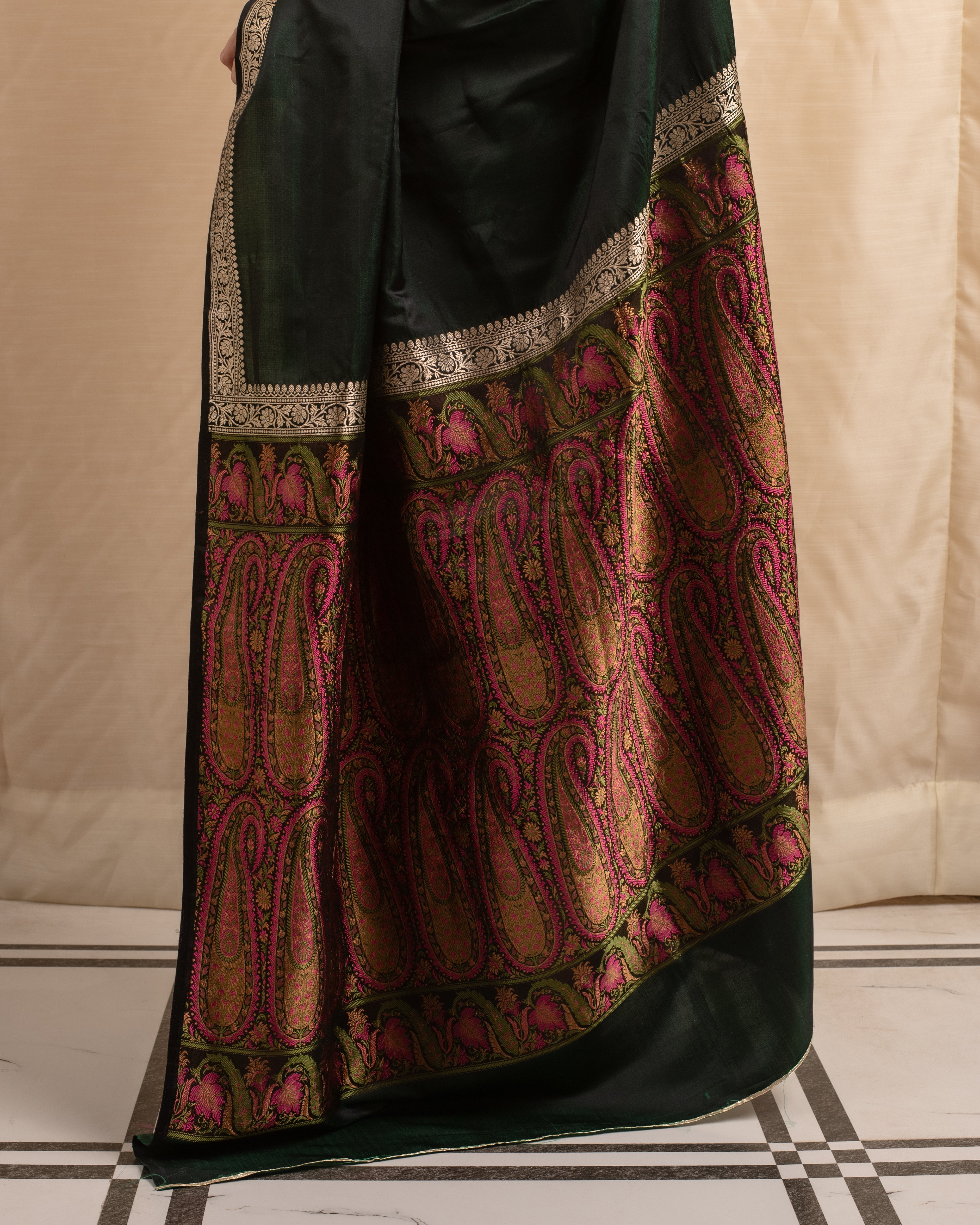
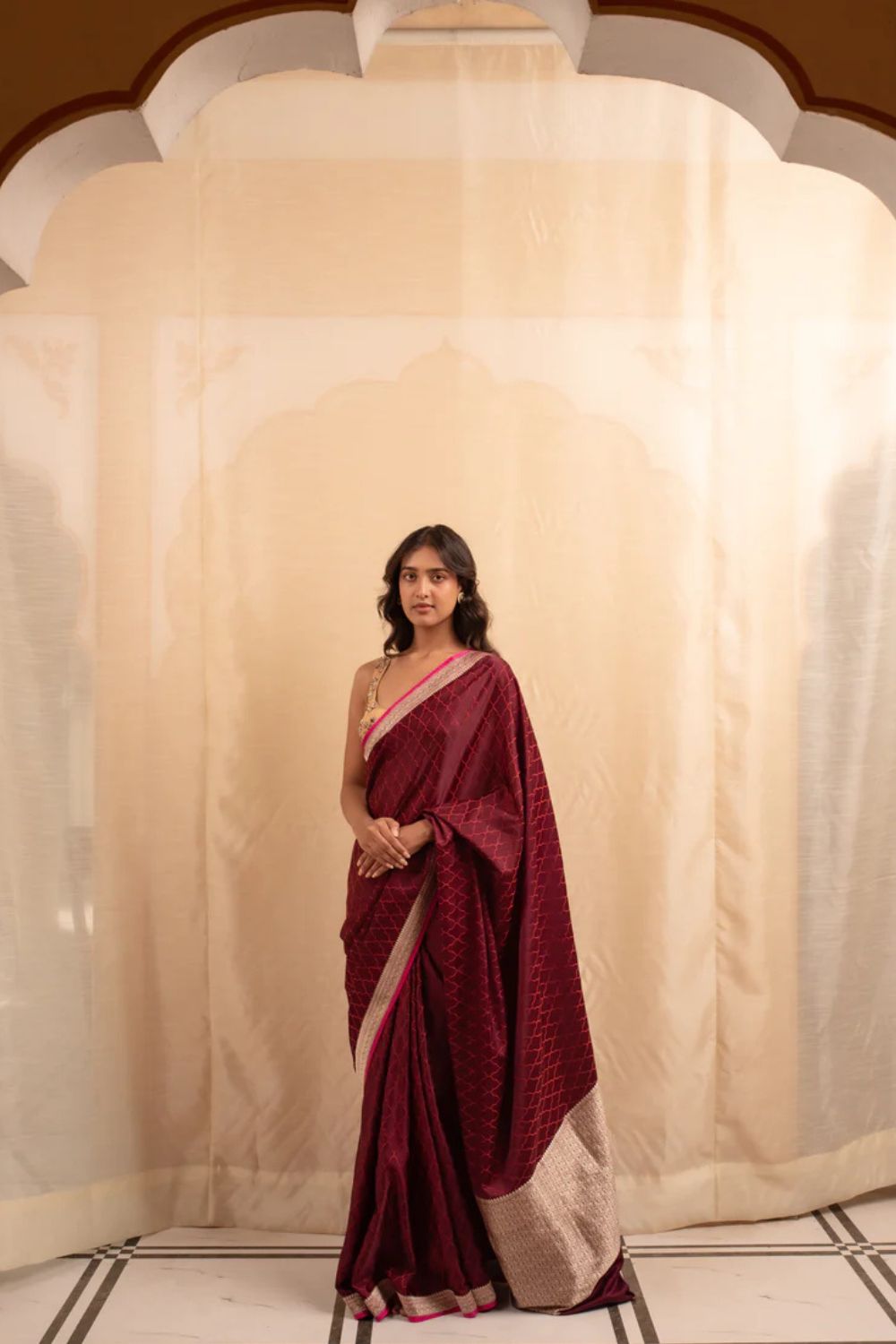
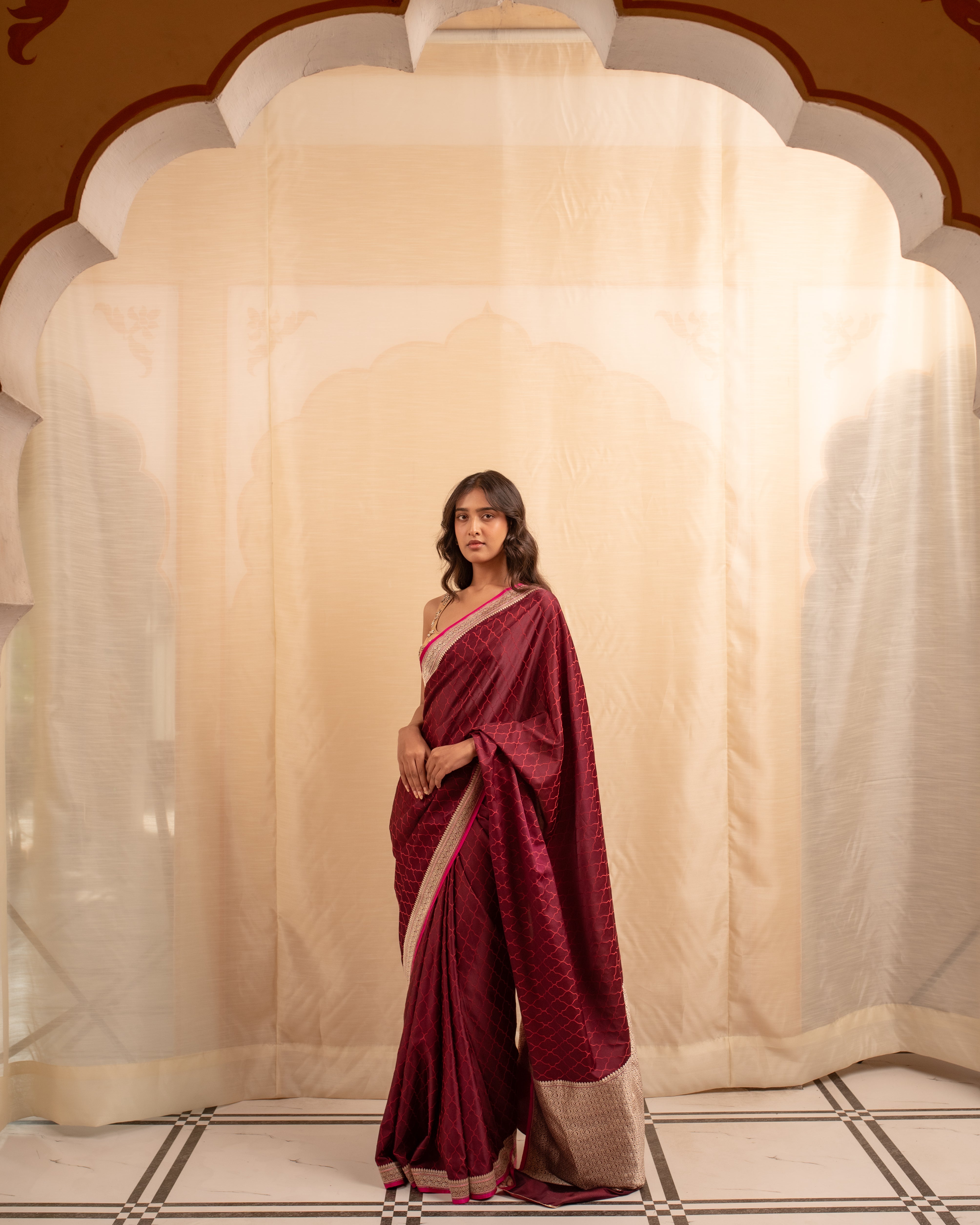
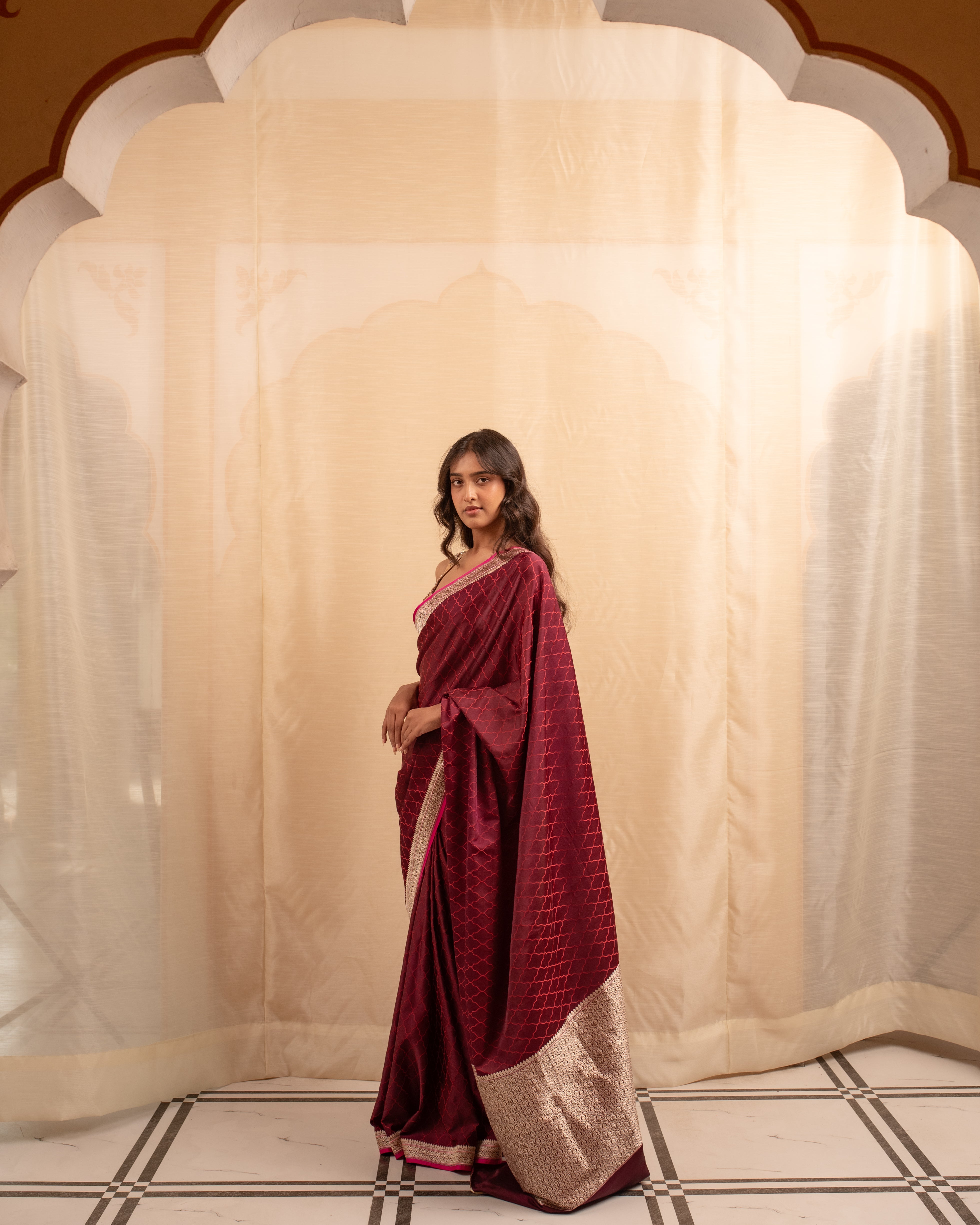
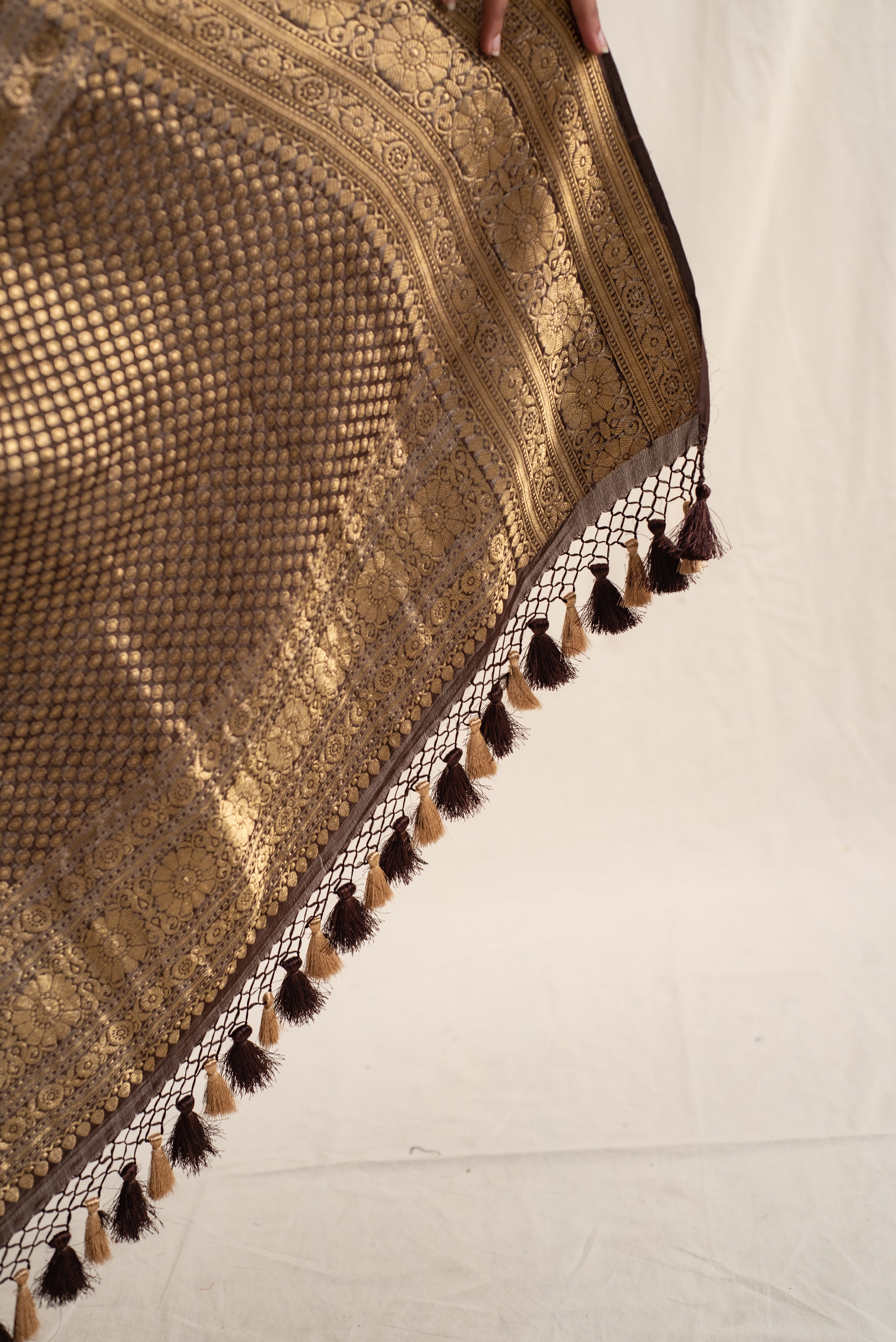
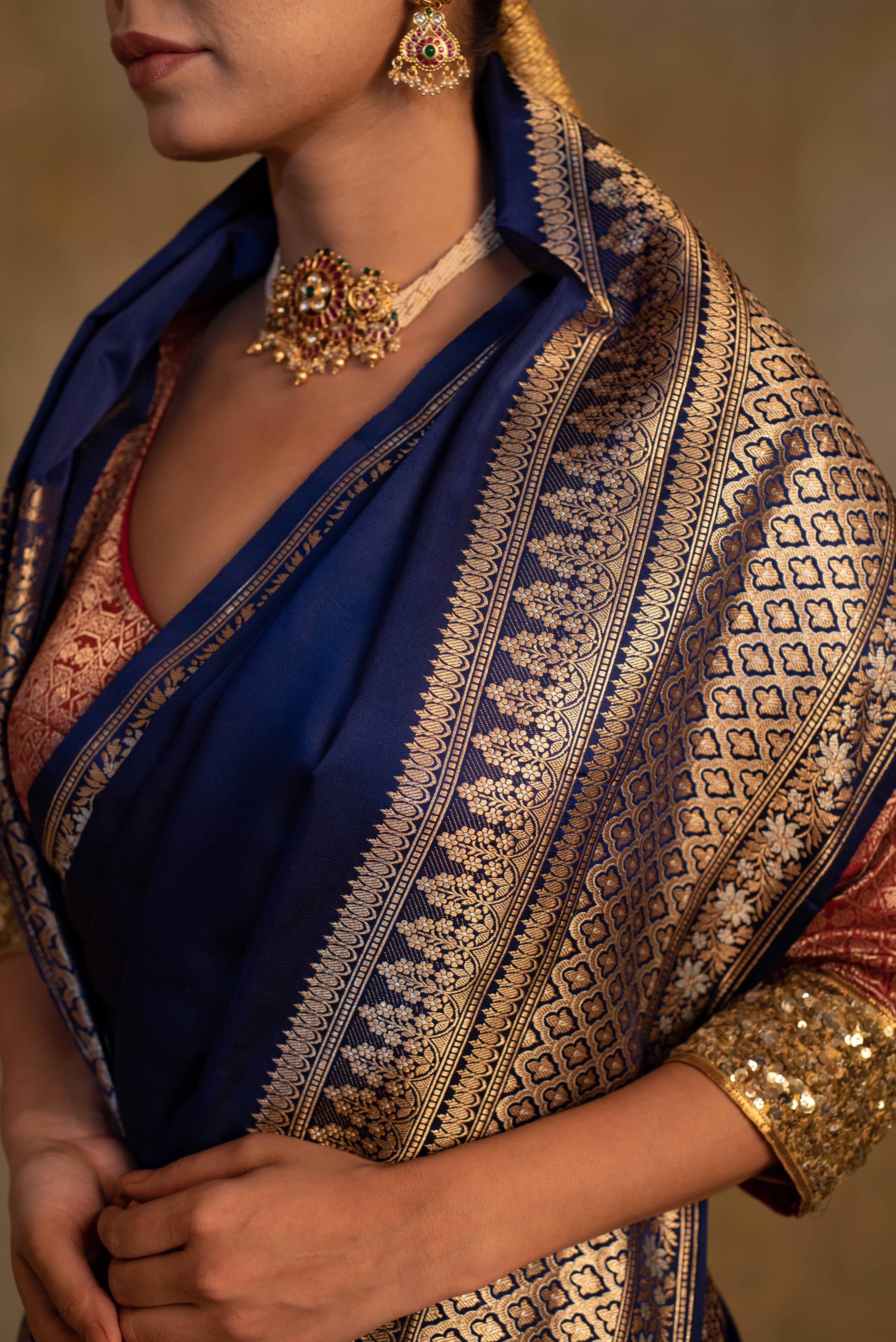
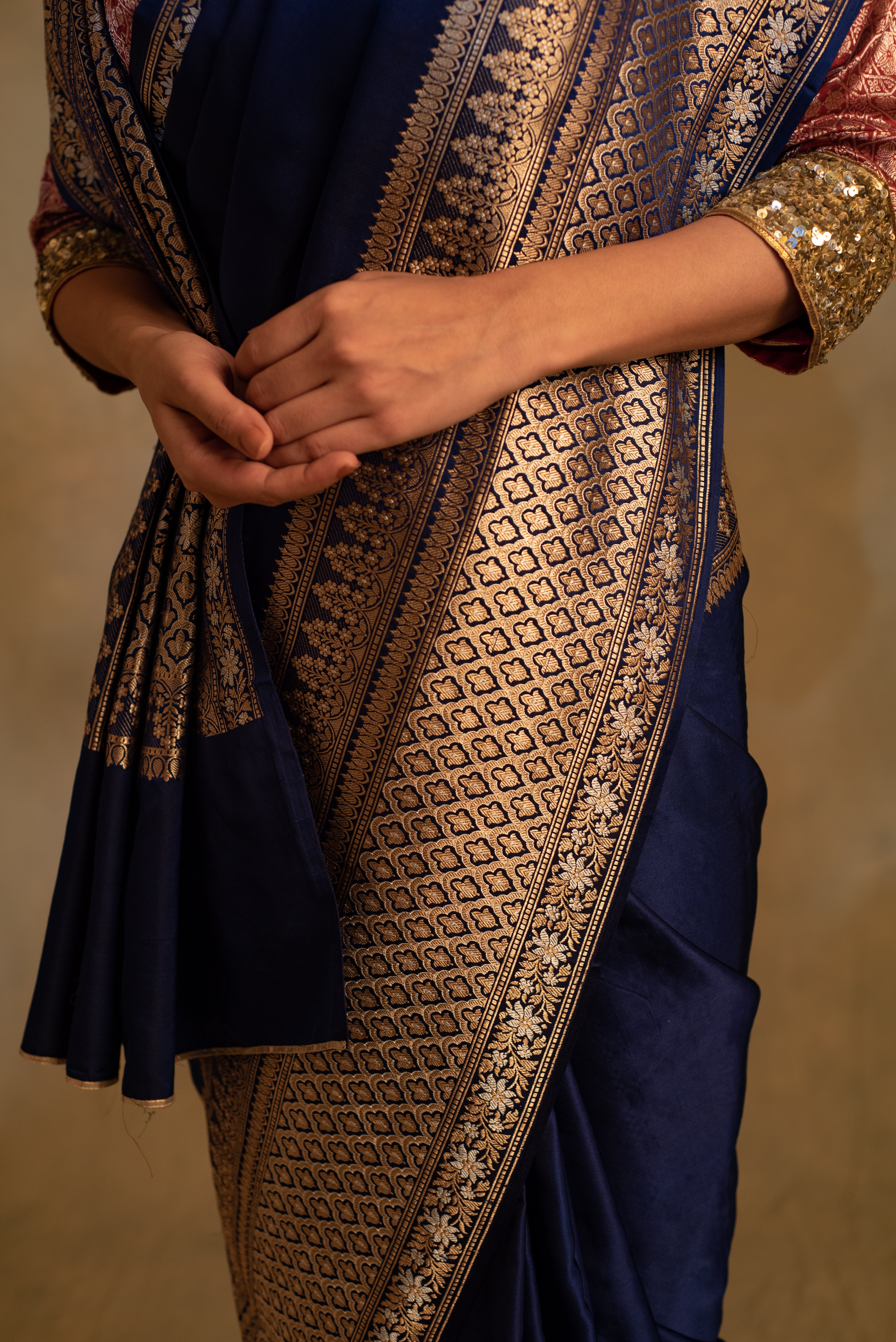
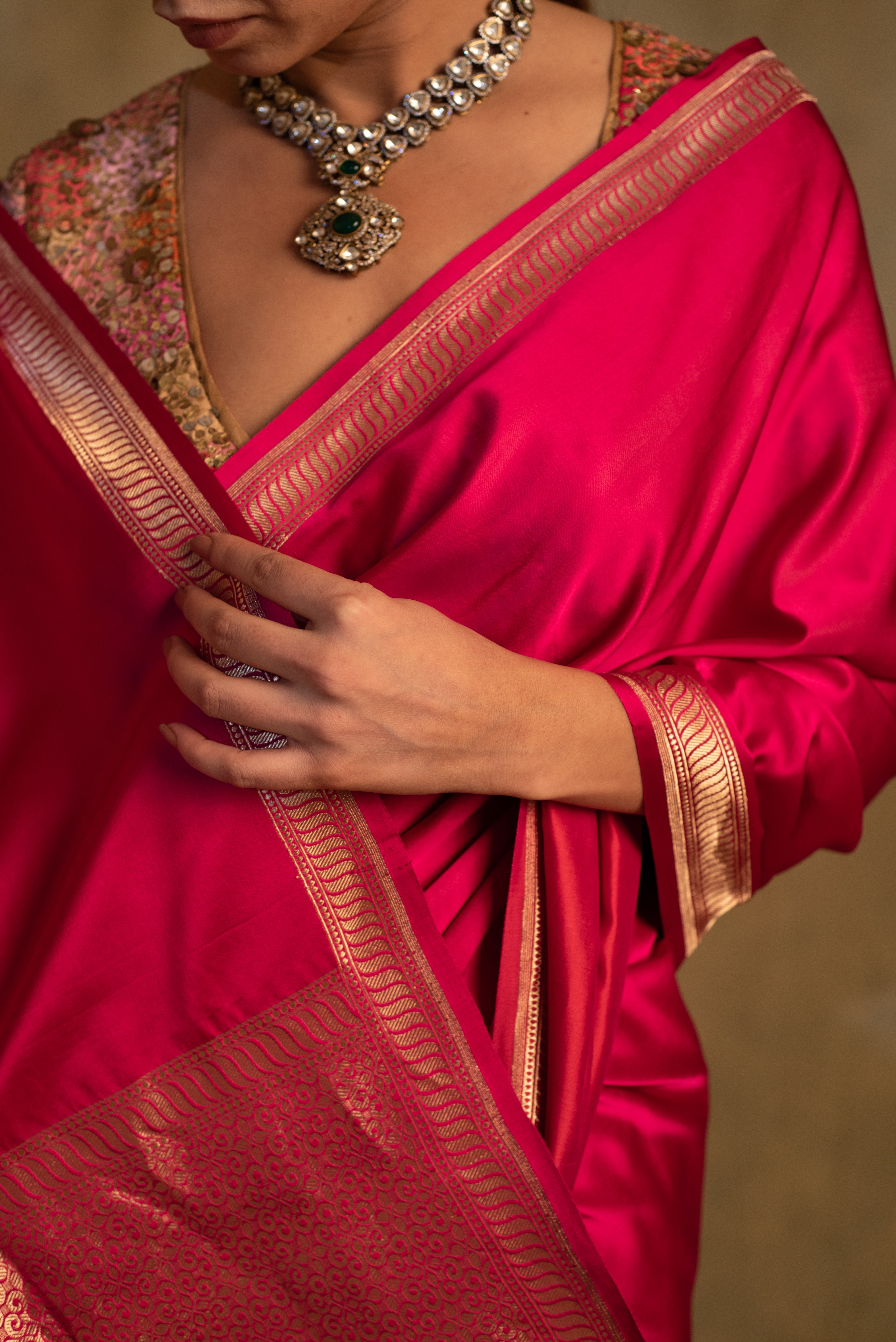
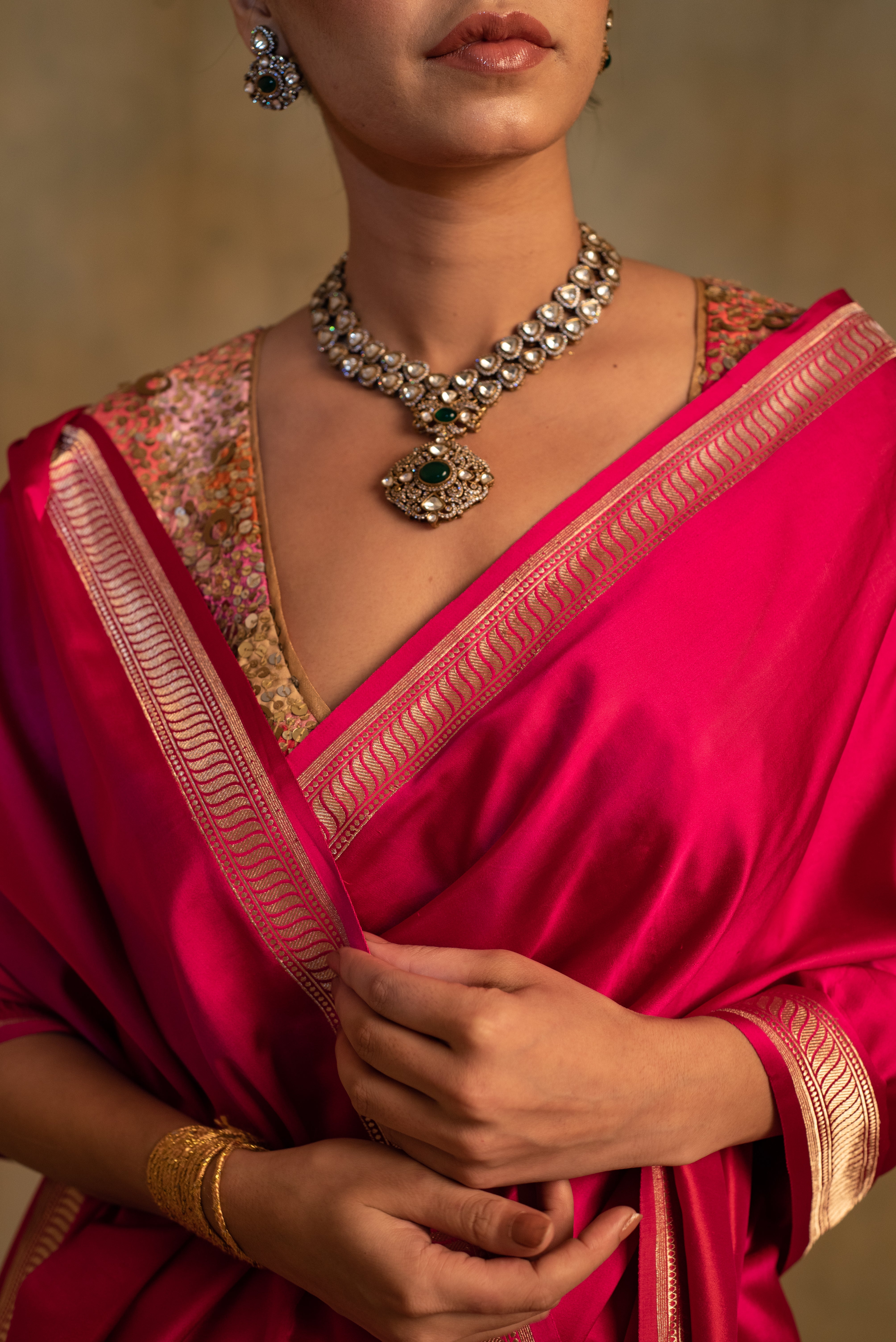
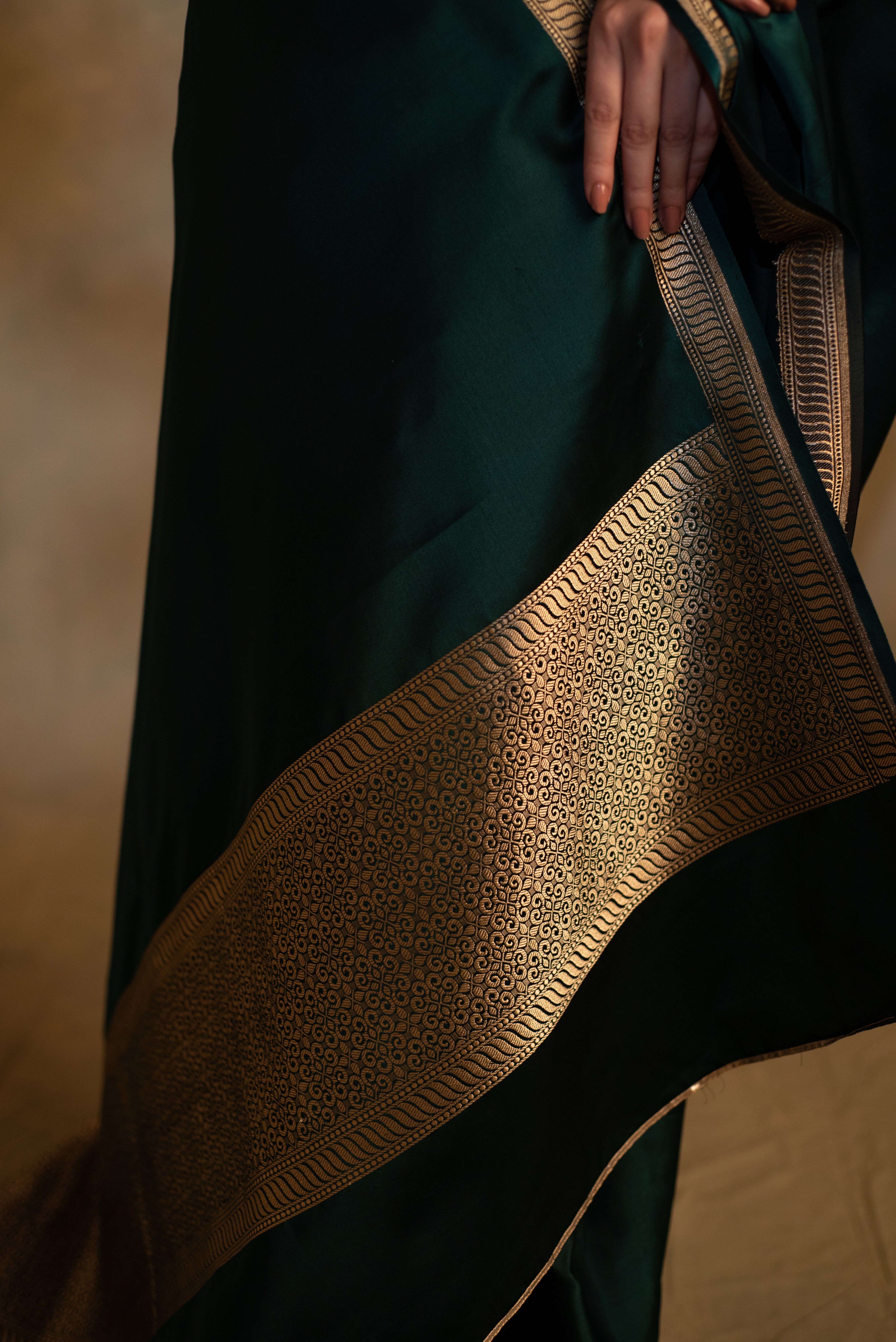
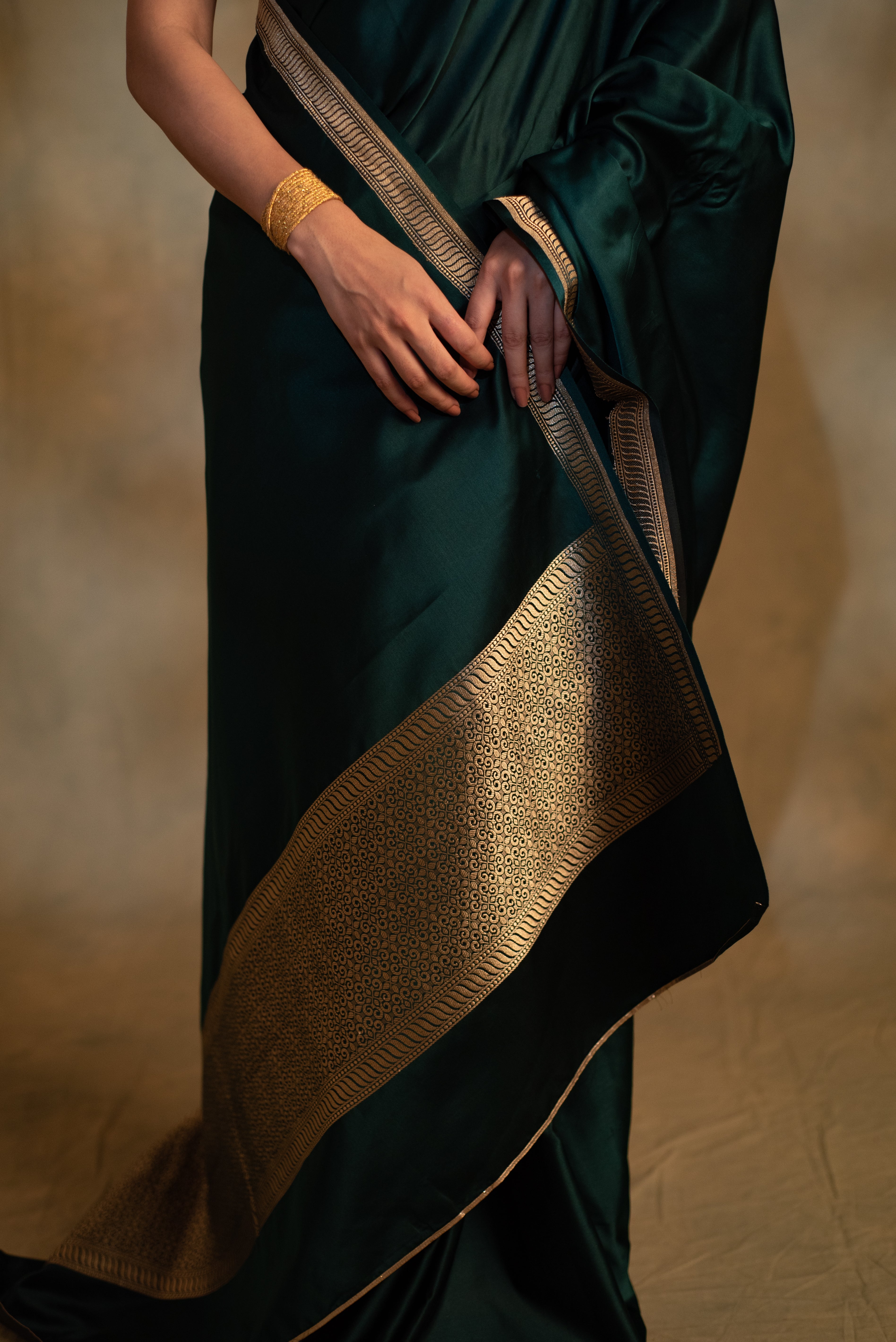
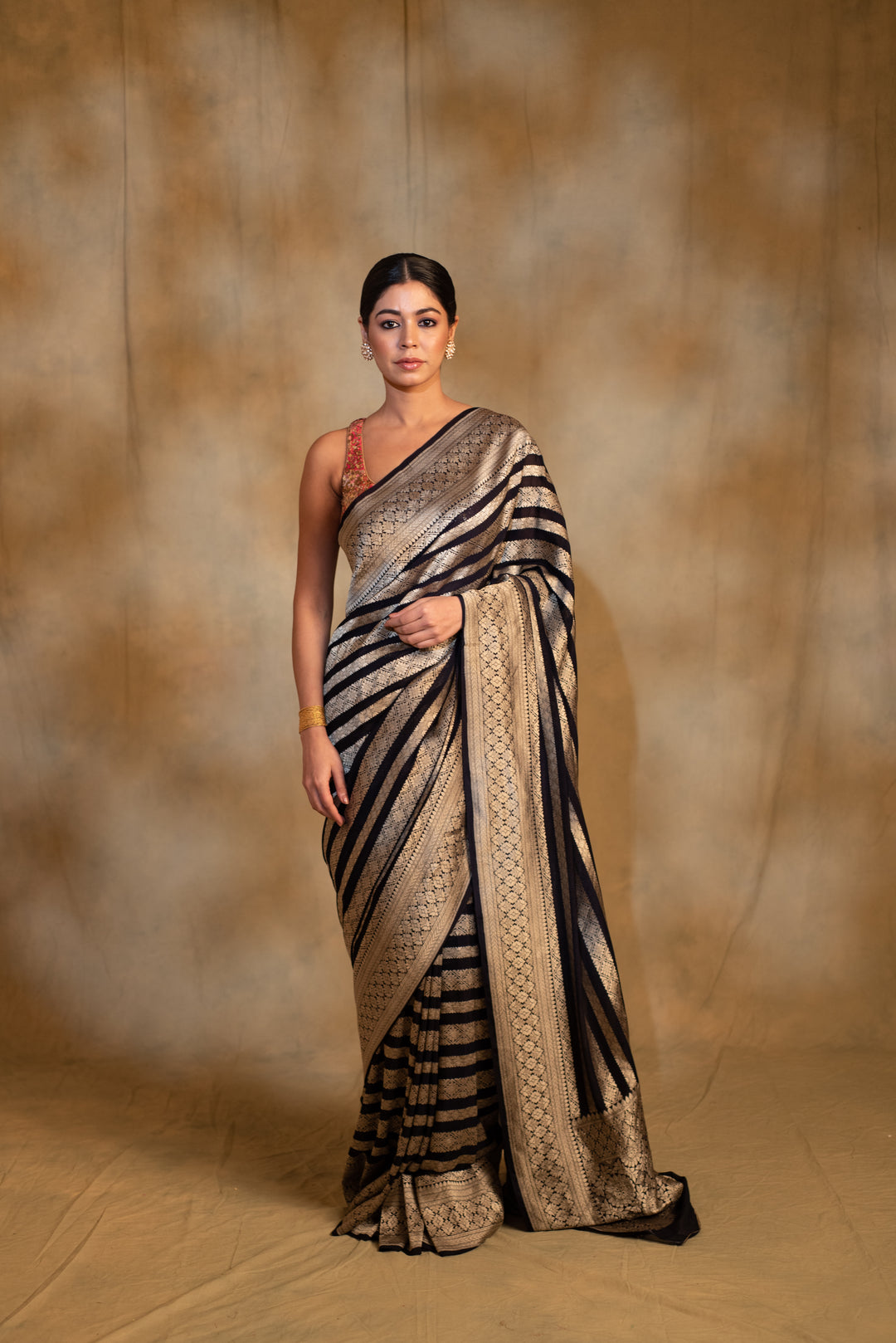
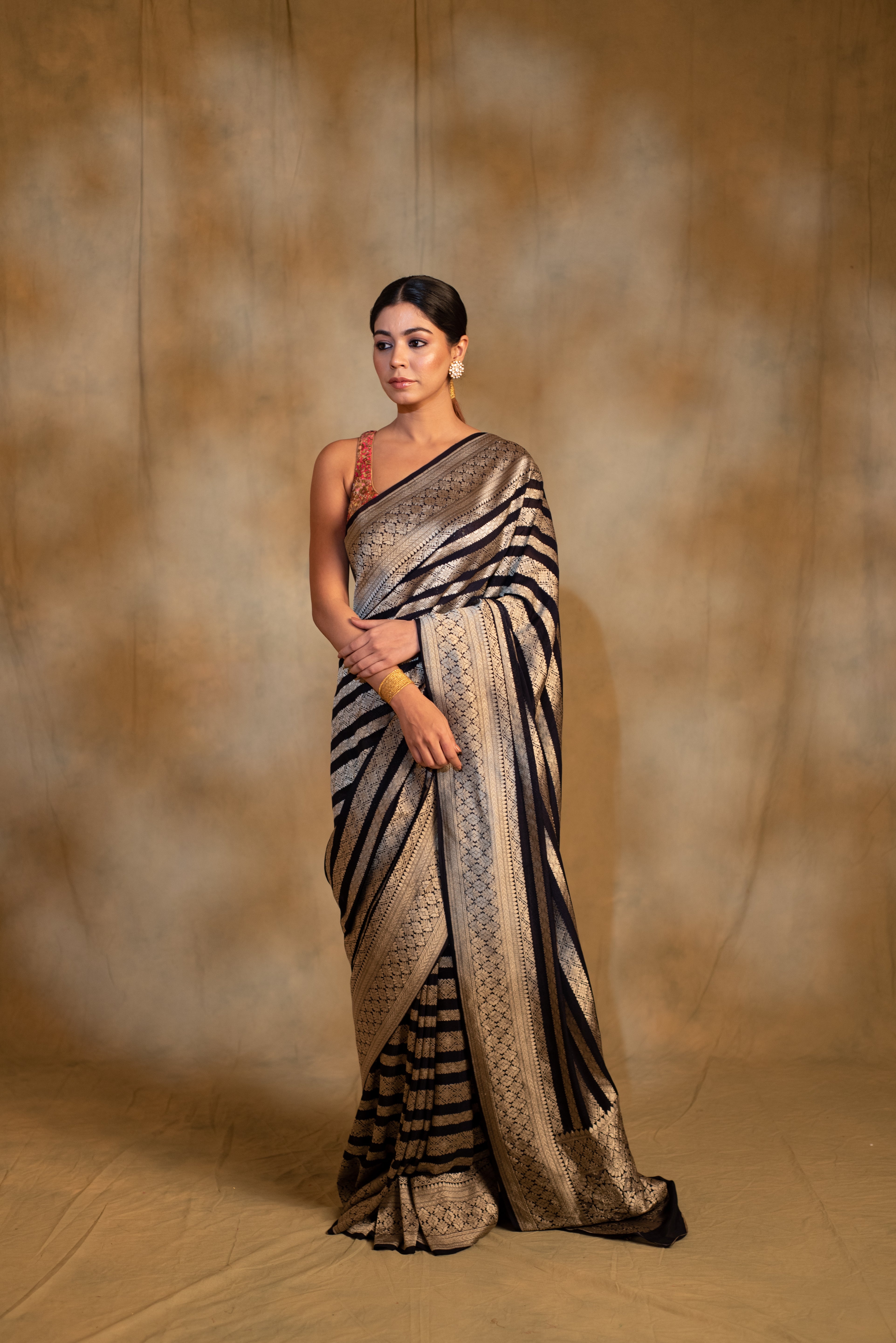
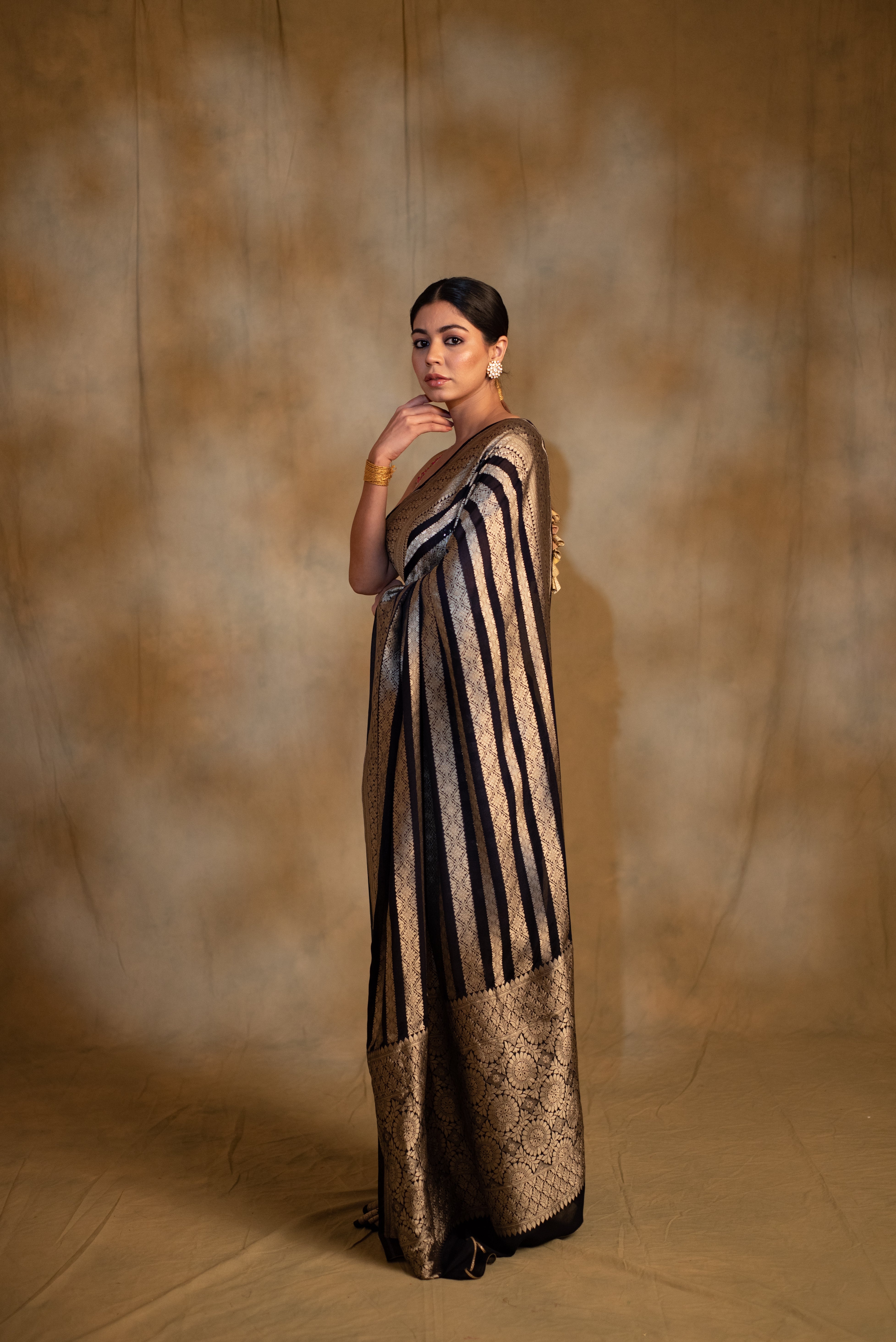
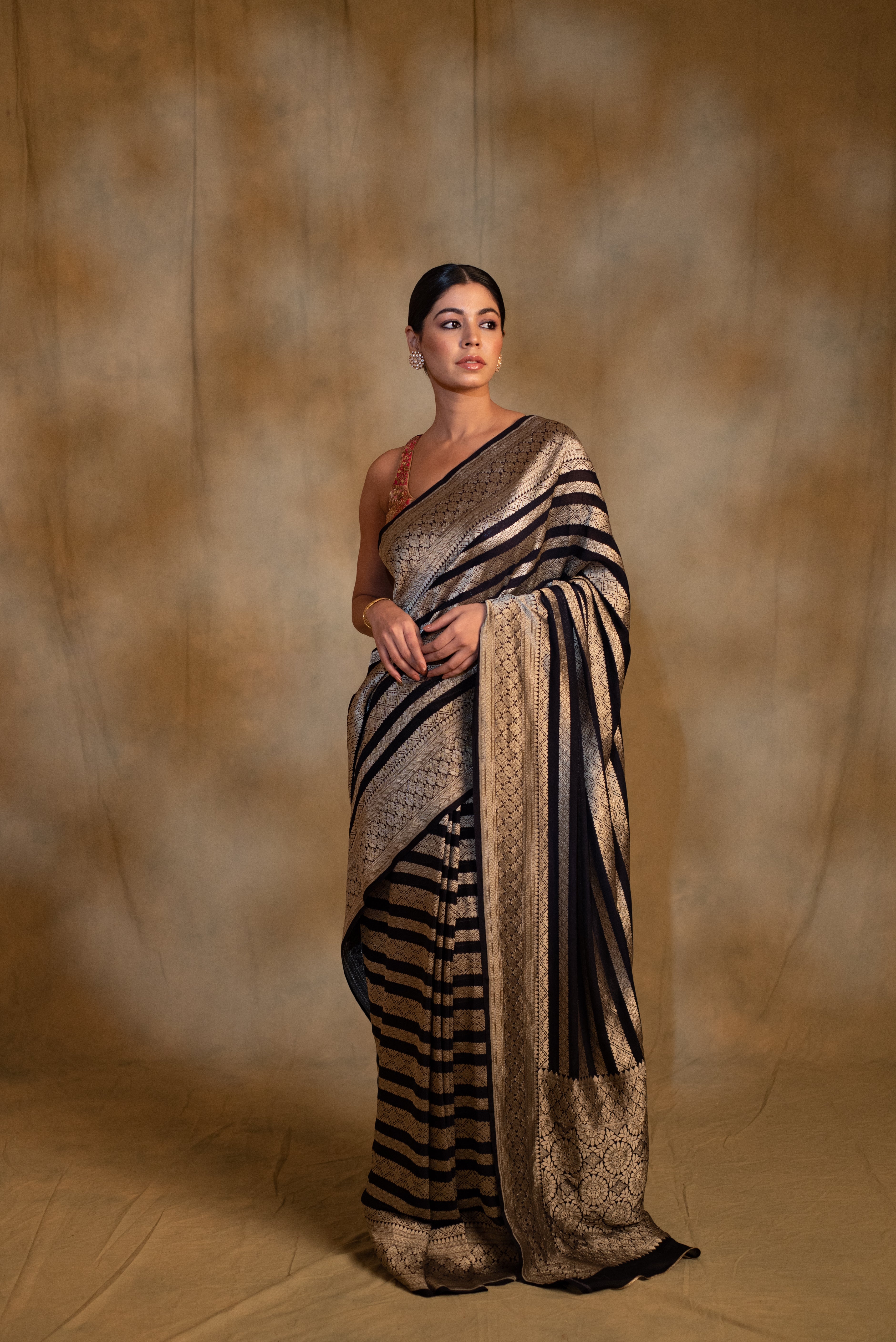
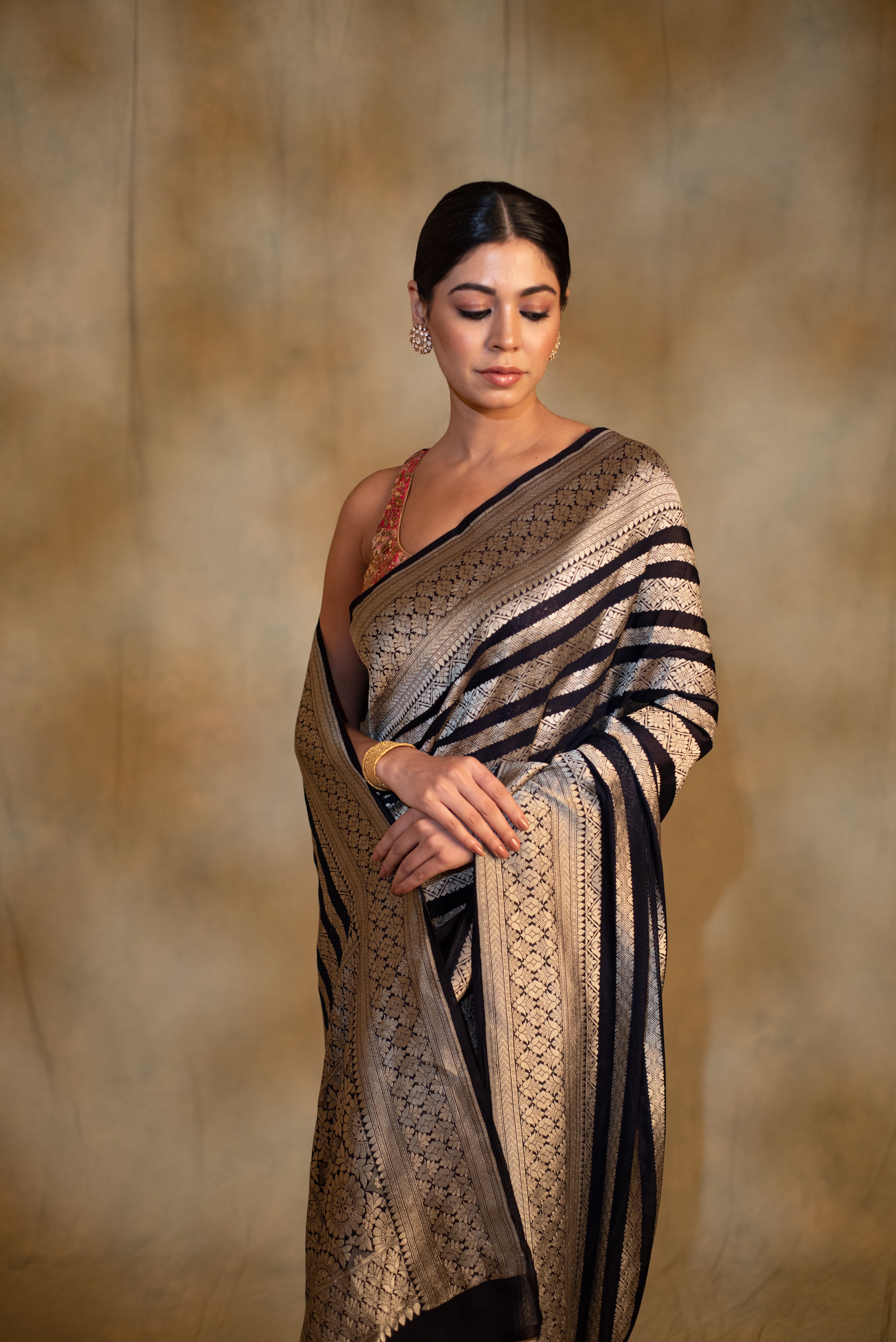
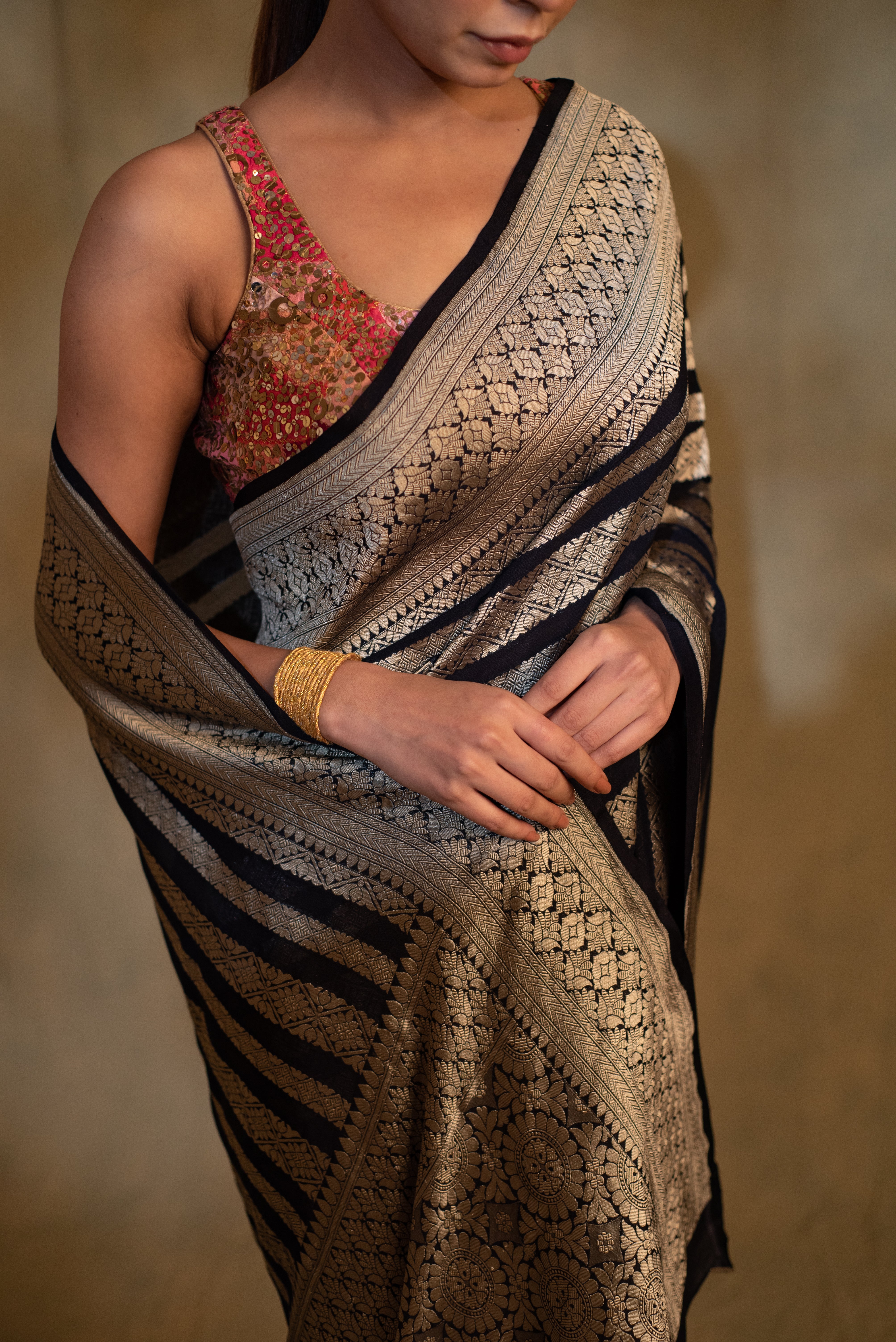
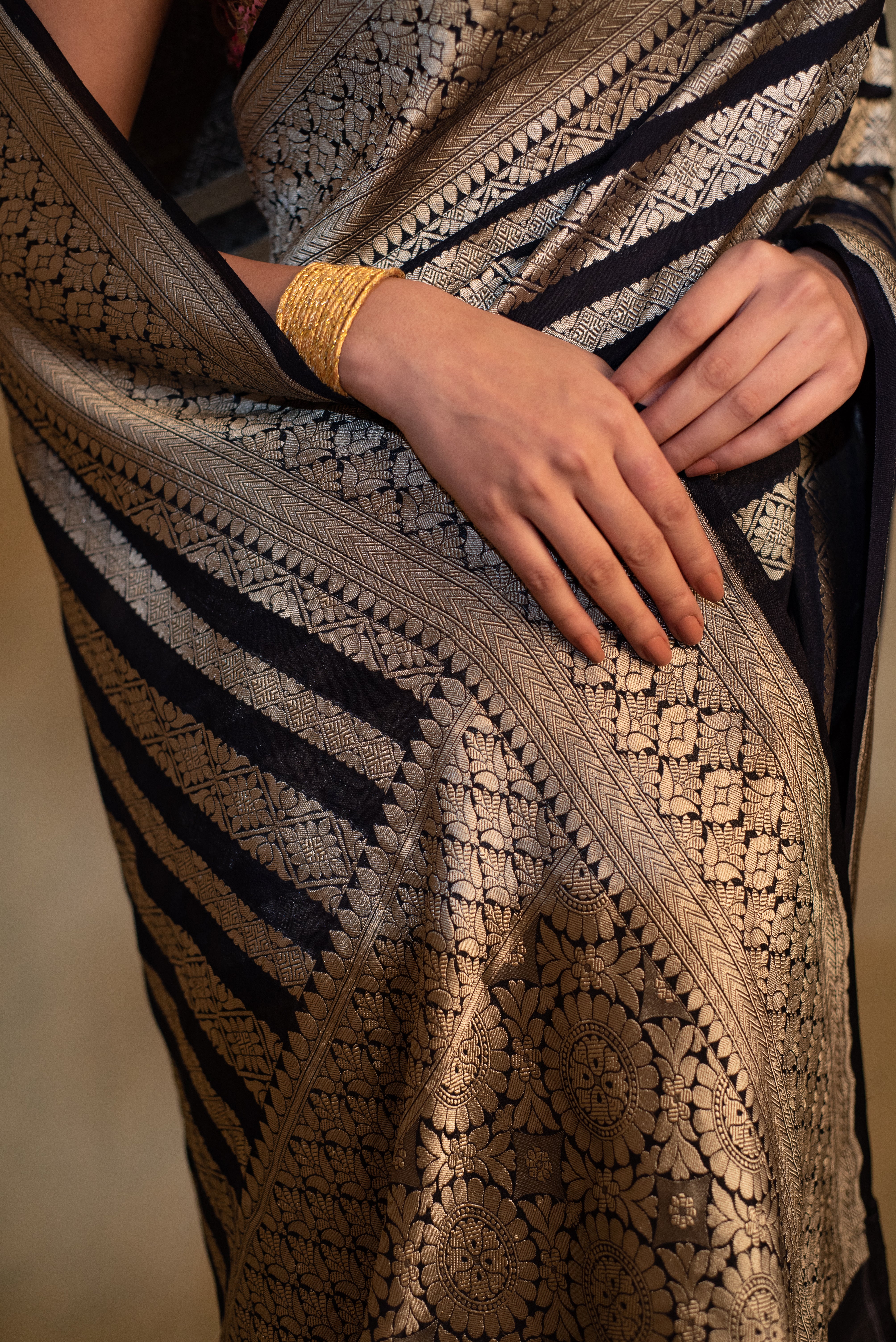
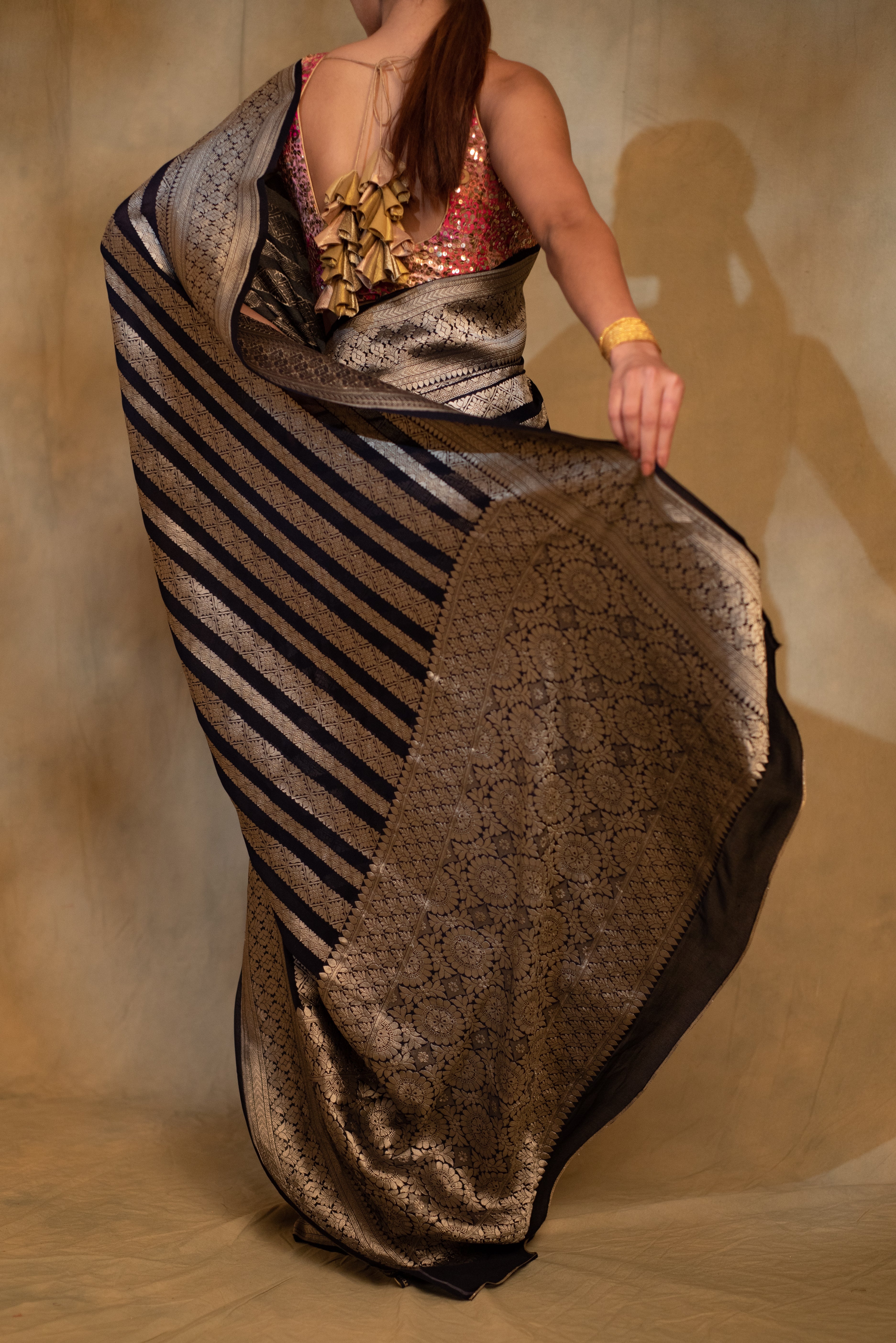
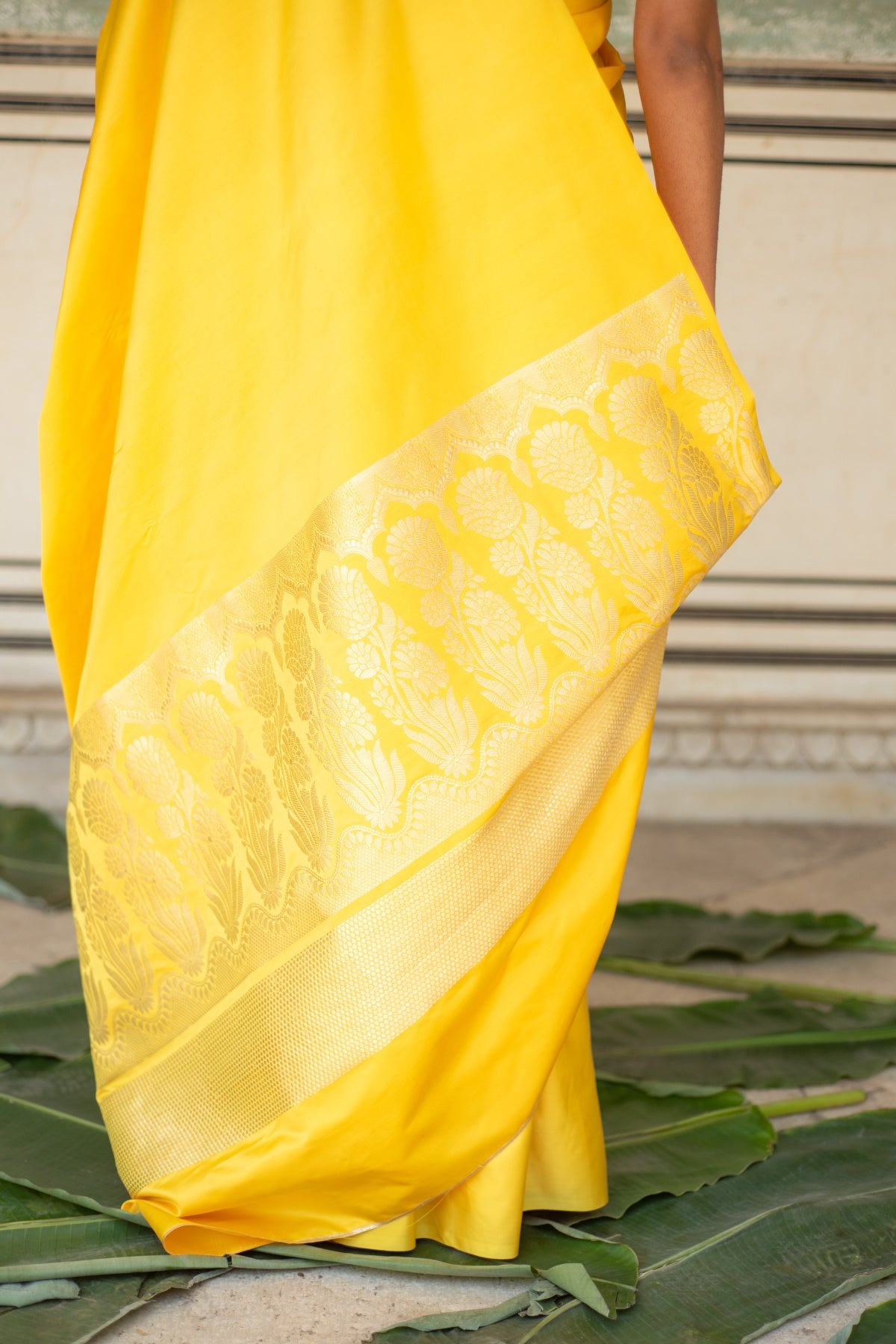
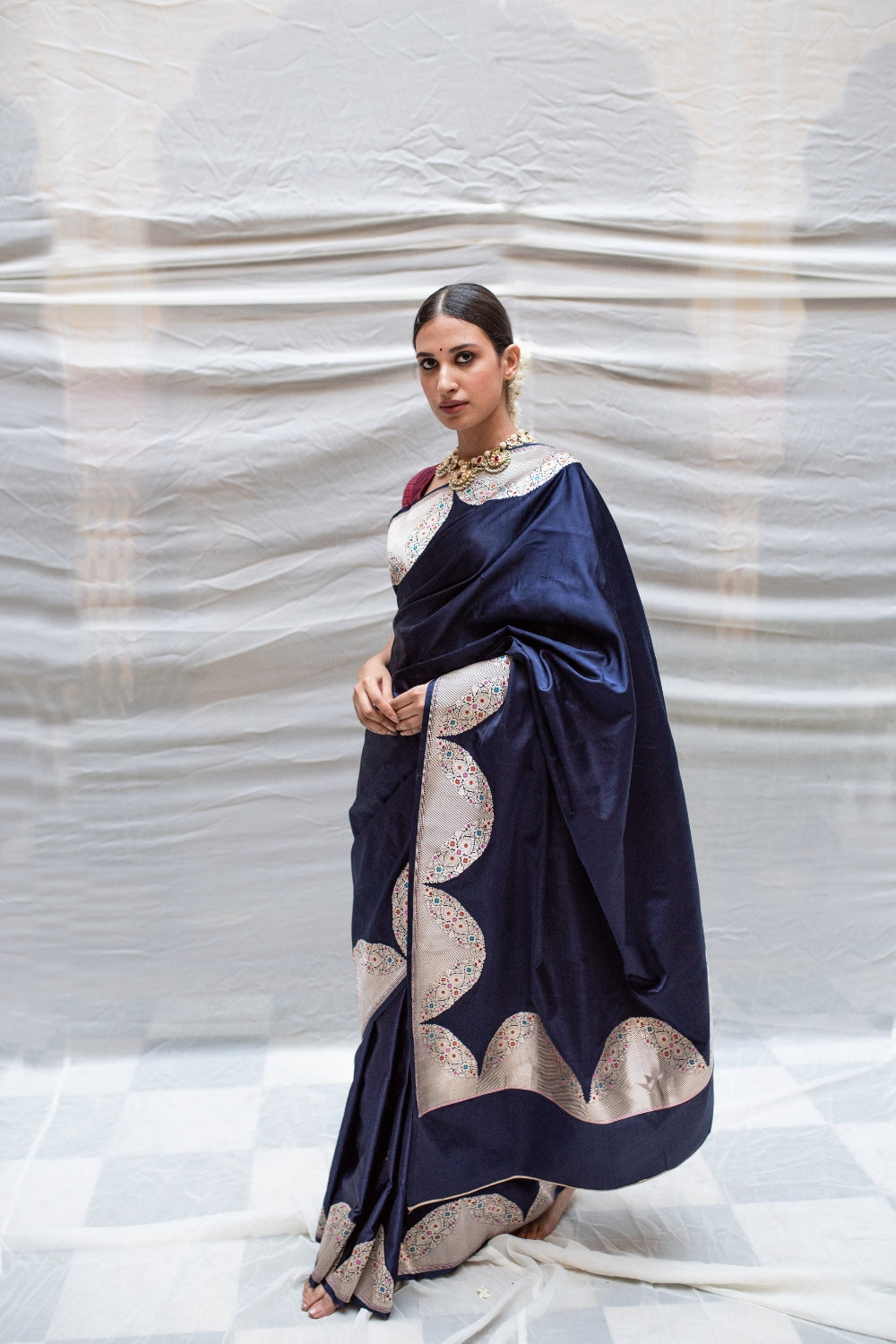
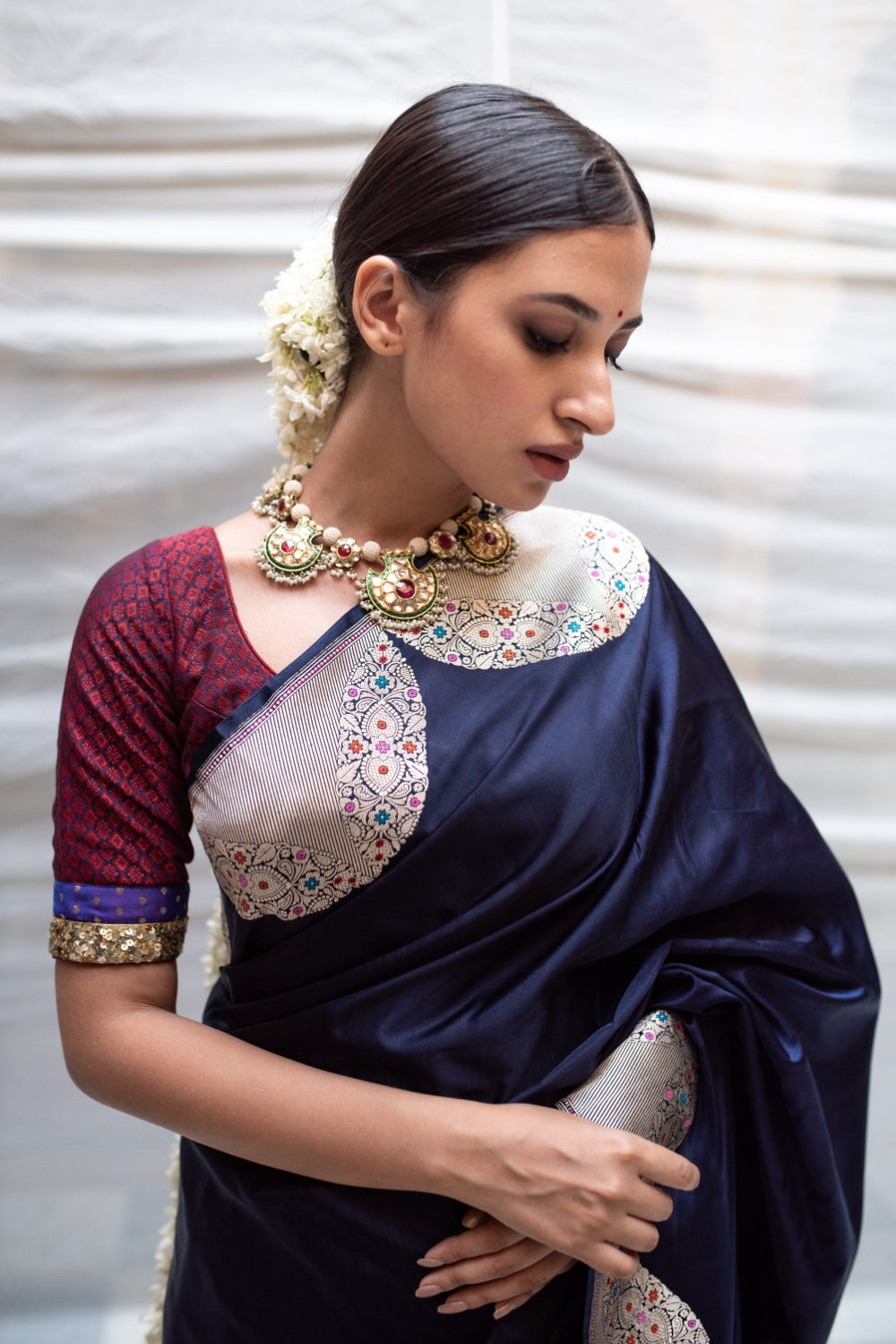
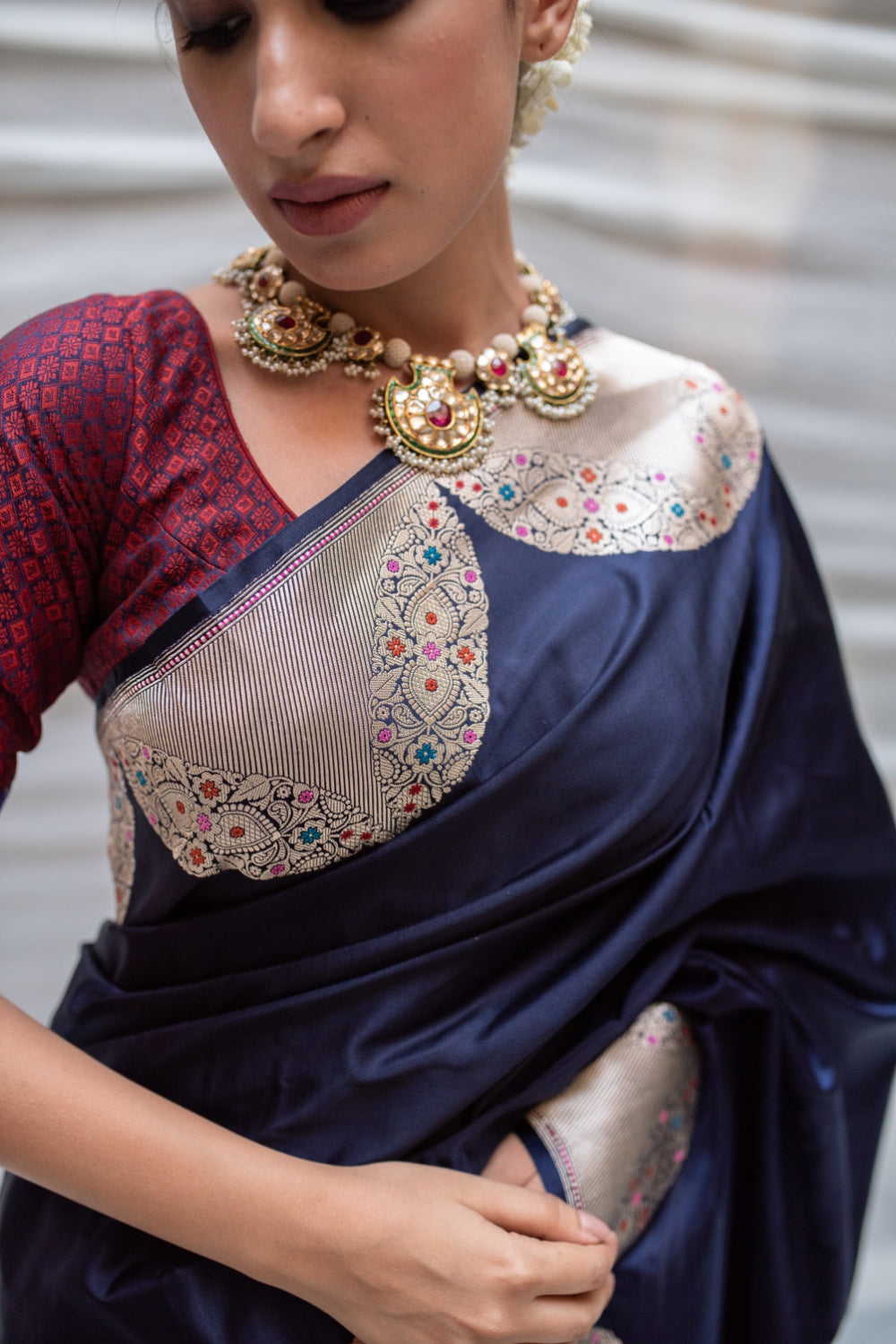
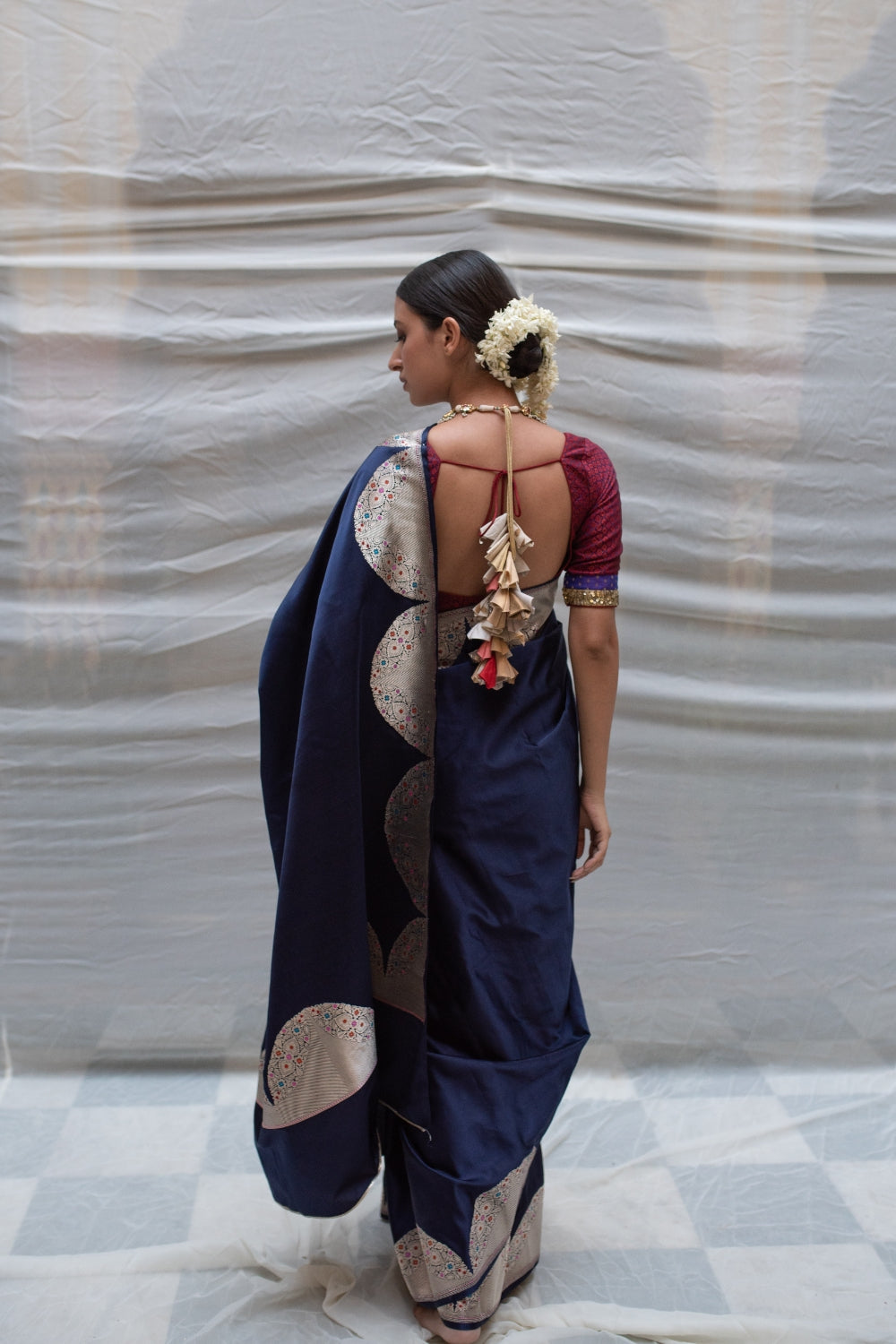
At the heart of these creations lies the intricate Ogee pattern, inspired by the graceful curves of Mughal architecture. The ogee form is created by the meeting of concave and convex lines. This elegant, mirrored S-shaped curve echoes the rhythmic geometry seen in traditional Mughal jaali work and arches. Translating this architectural harmony into textile requires steady hands, deep knowledge of the craft, and careful attention to every detail.
It is a pattern that machines may replicate, but never truly interpret with the same soul. Each motif becomes a quiet statement of handmade excellence, carrying within it the patience and artistry of the weaver.
Over time, the Ogee-pattern saree has evolved into a symbol of the meeting point between heritage and the present. It reflects cultural traditions not frozen in time, but thoughtfully reimagined, creating a textile that feels deeply rooted in history while remaining relevant to the world it belongs to today.
At the heart of these creations lies the intricate Ogee pattern, inspired by the graceful curves of Mughal architecture. The ogee form is created by the meeting of concave and convex lines. This elegant, mirrored S-shaped curve echoes the rhythmic geometry seen in traditional Mughal jaali work and arches. Translating this architectural harmony into textile requires steady hands, deep knowledge of the craft, and careful attention to every detail.
It is a pattern that machines may replicate, but never truly interpret with the same soul. Each motif becomes a quiet statement of handmade excellence, carrying within it the patience and artistry of the weaver.
Over time, the Ogee-pattern saree has evolved into a symbol of the meeting point between heritage and the present. It reflects cultural traditions not frozen in time, but thoughtfully reimagined, creating a textile that feels deeply rooted in history while remaining relevant to the world it belongs to today.
Our Luxury Collection of Banarasi Mughal Sarees
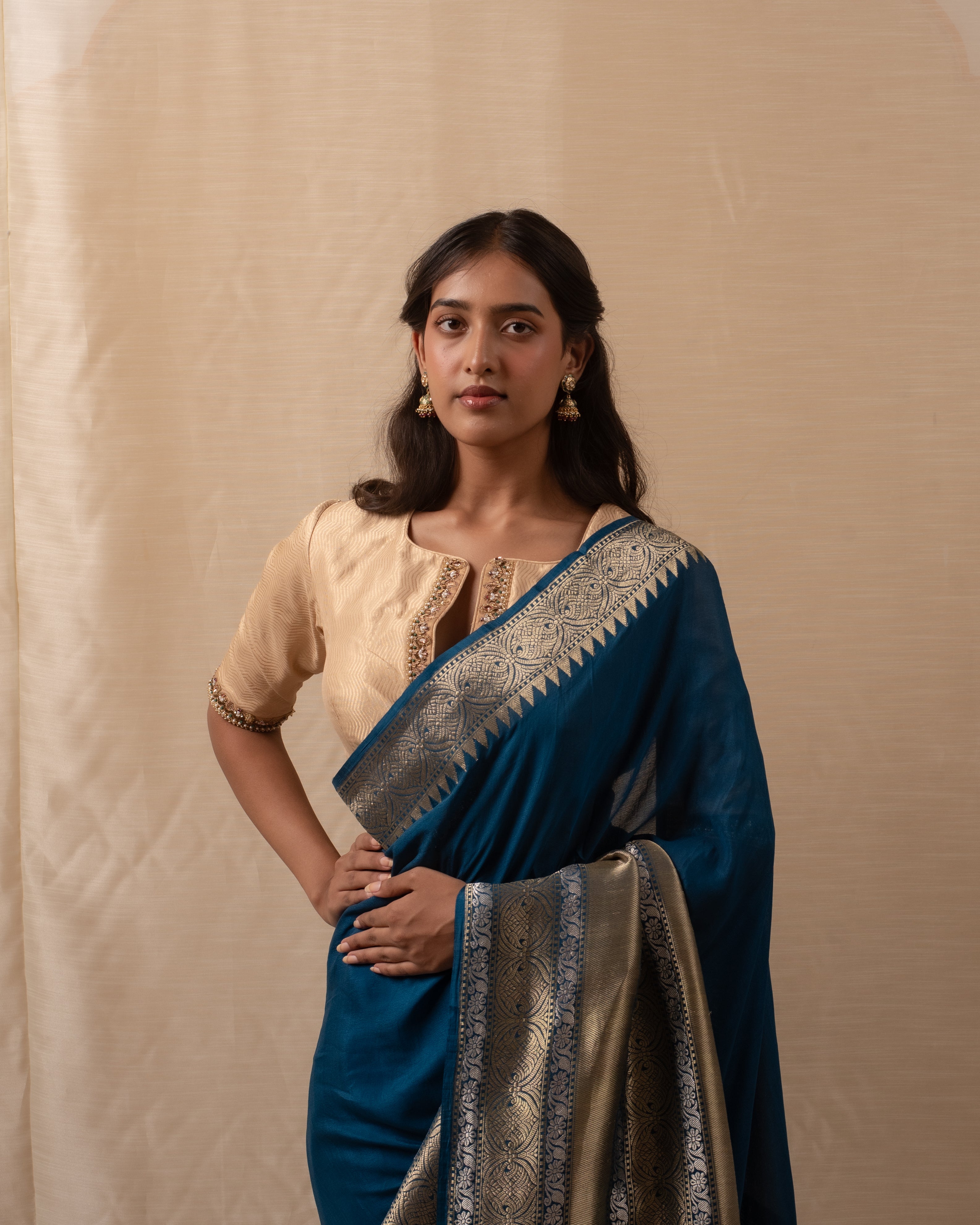
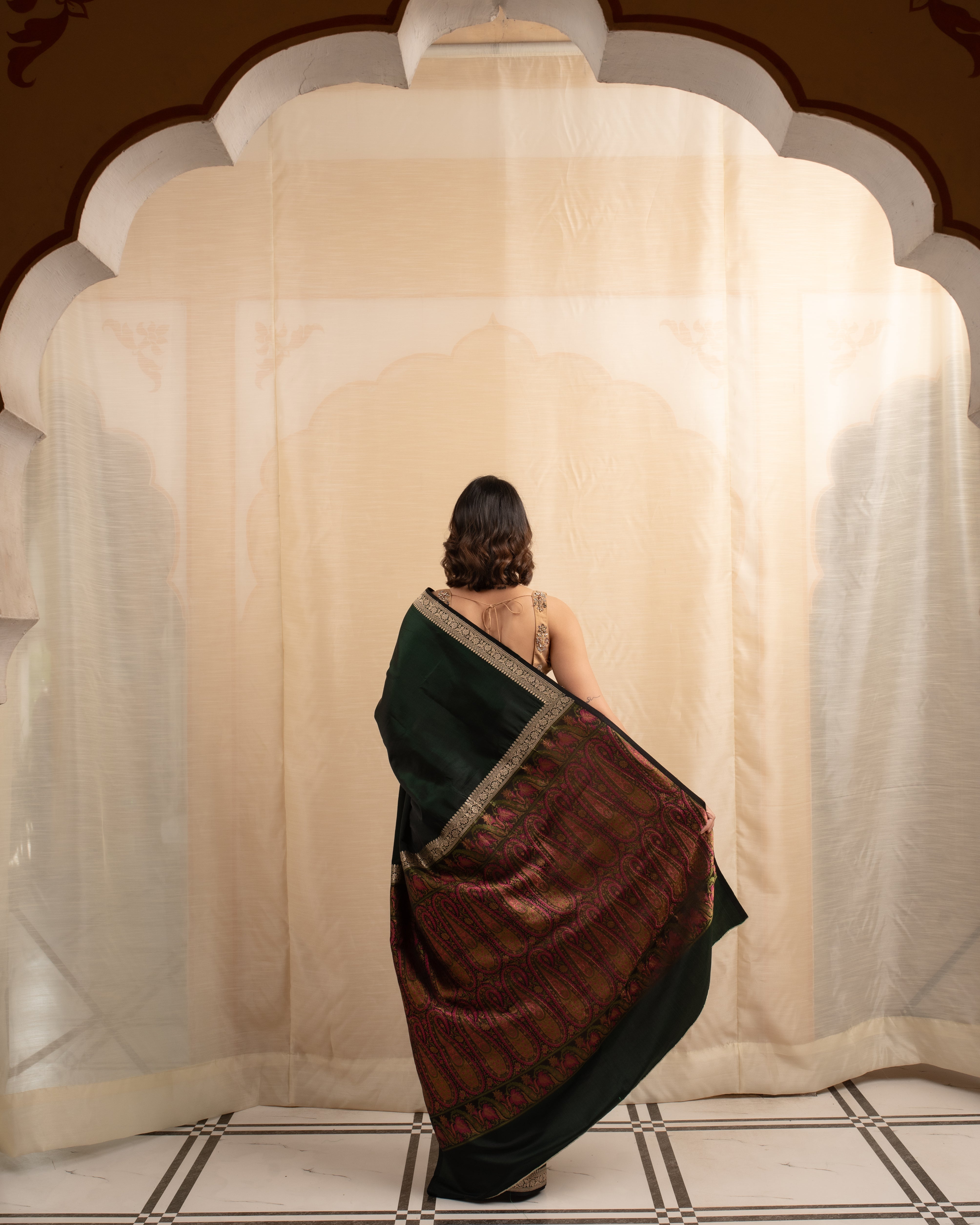
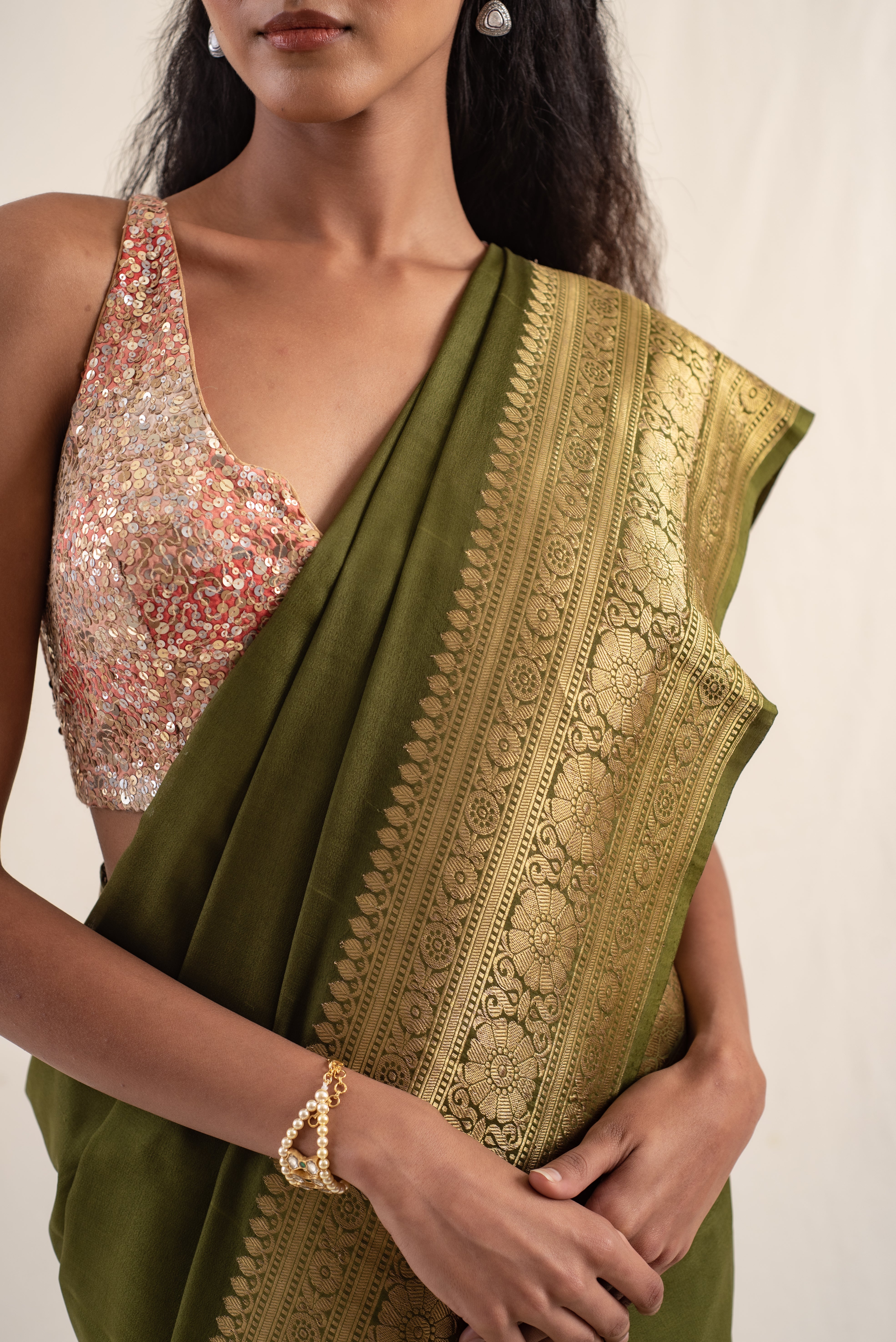
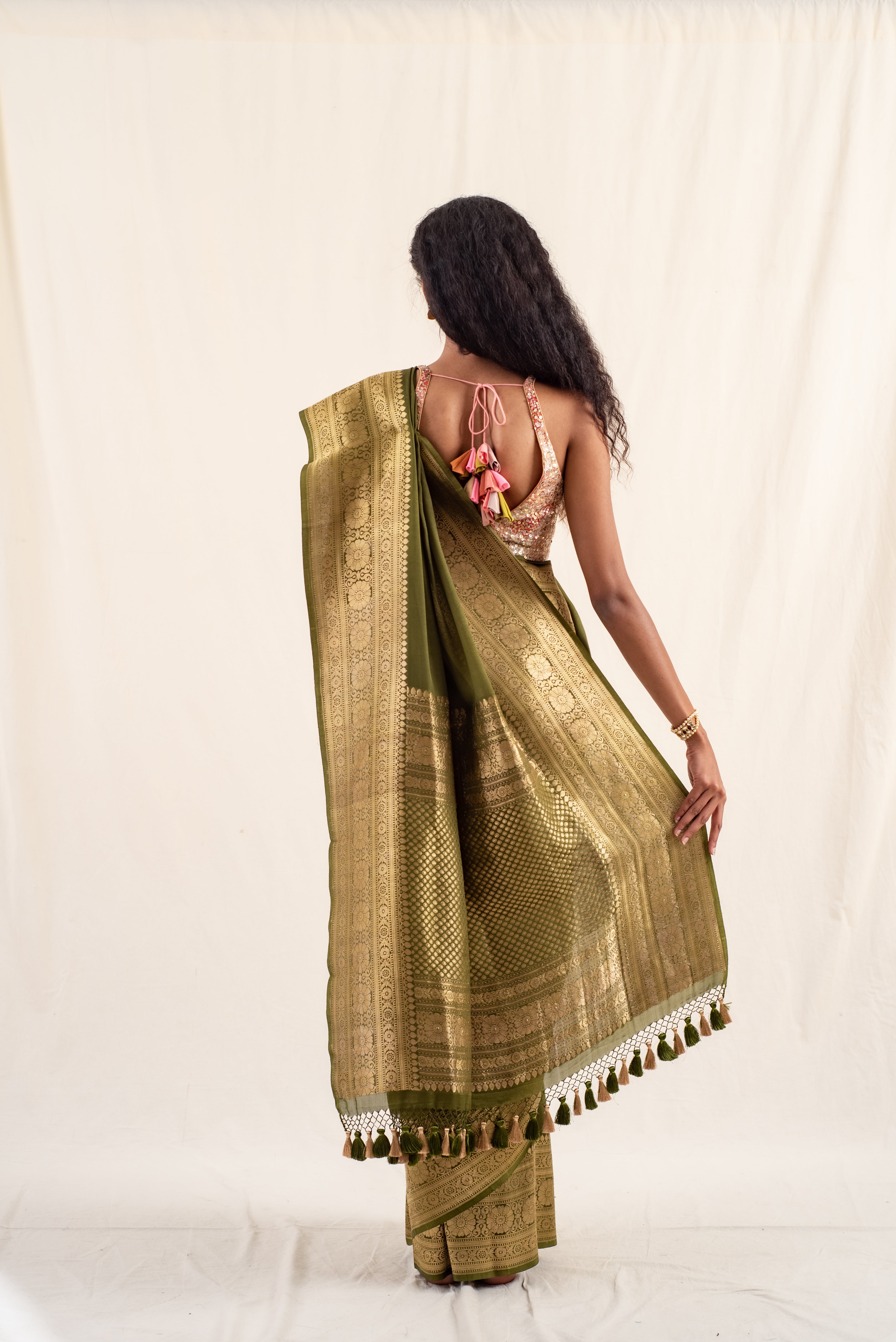
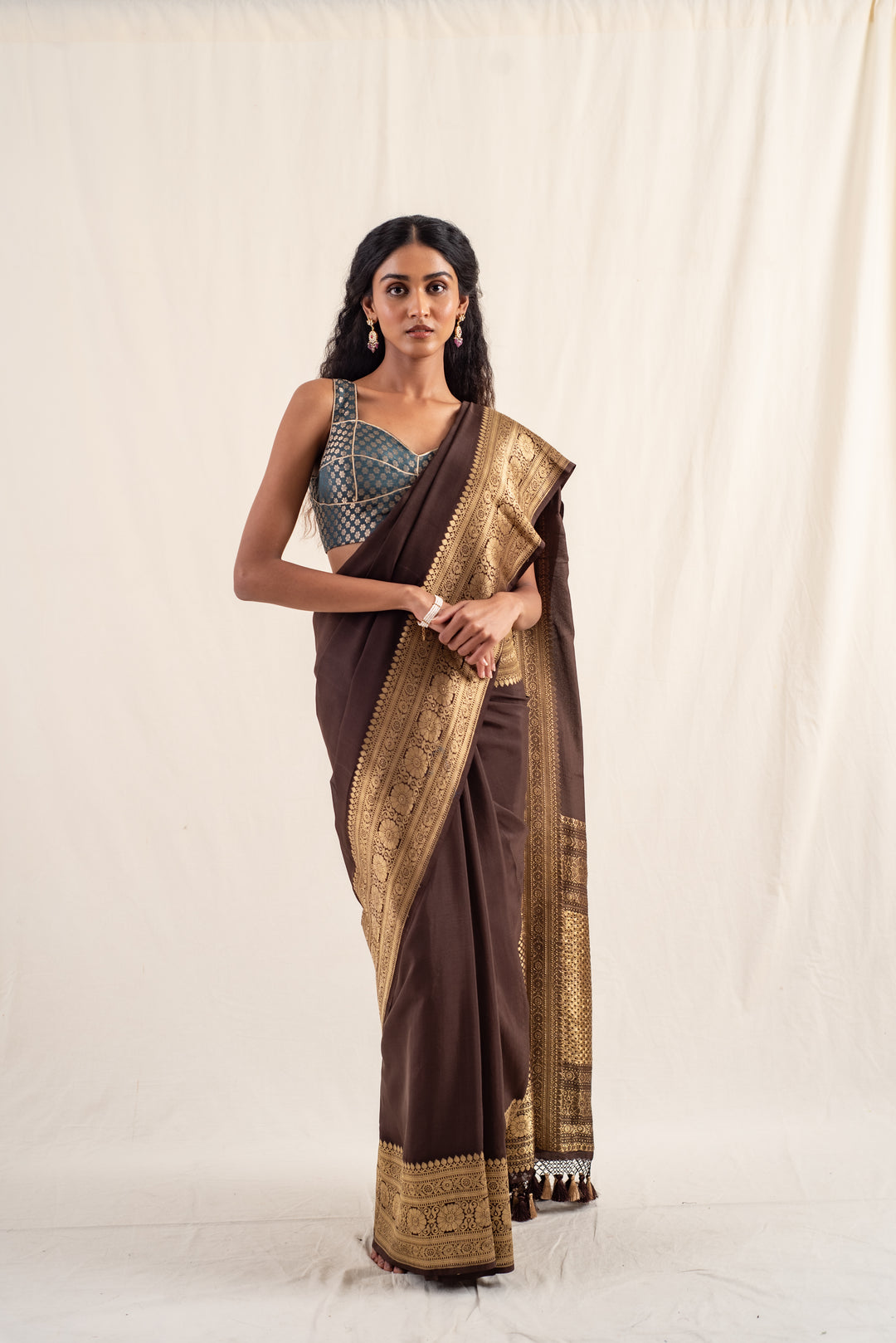
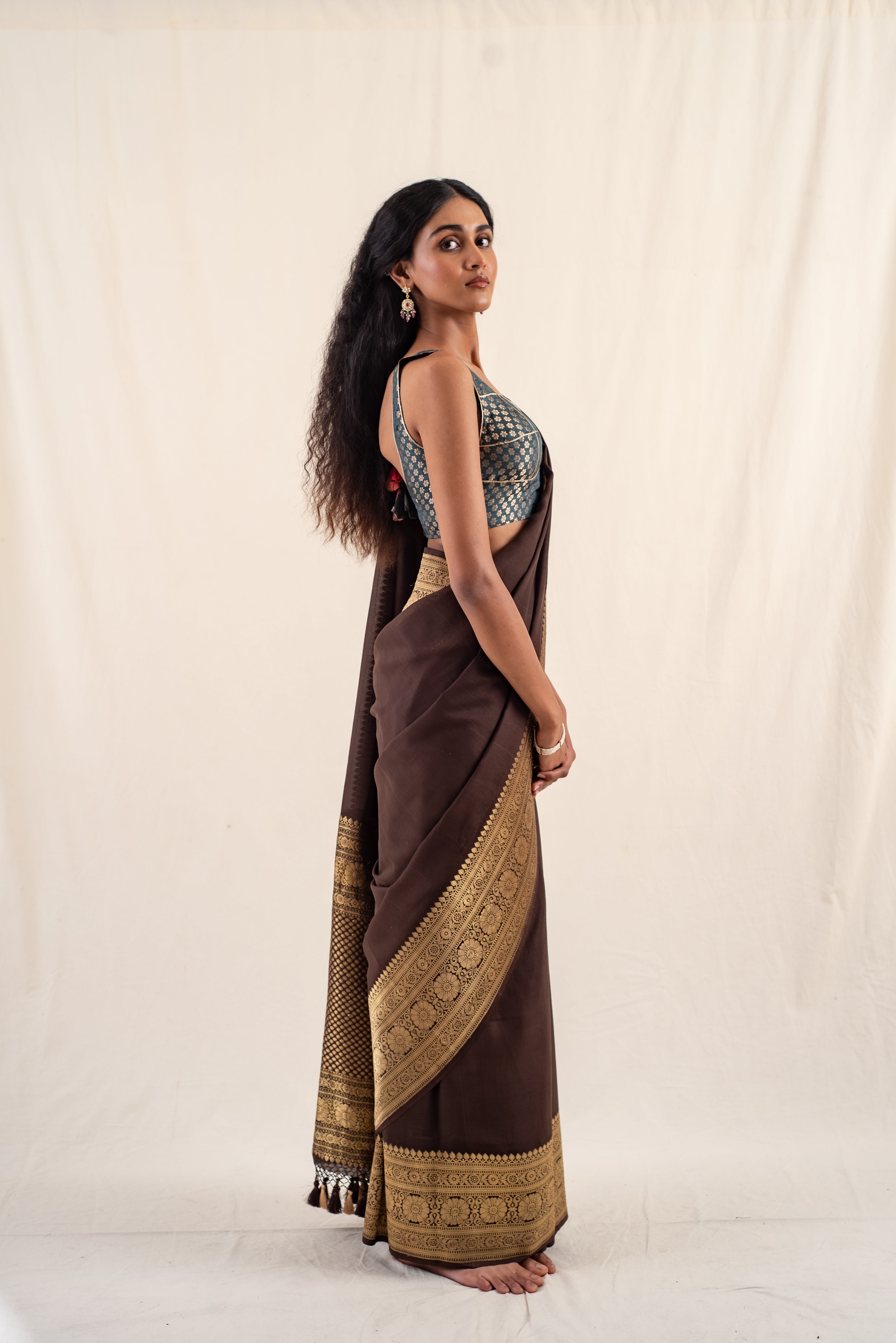
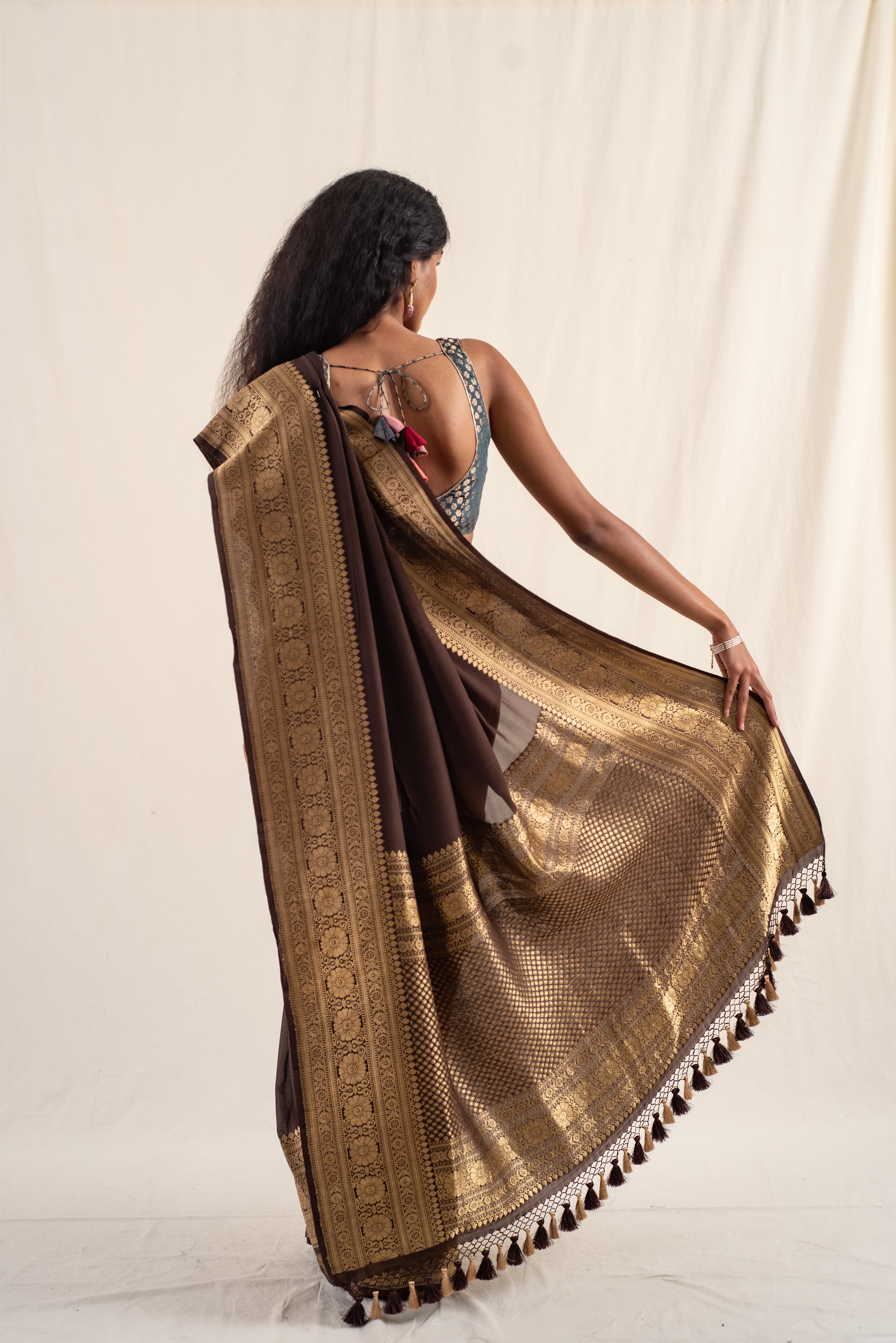
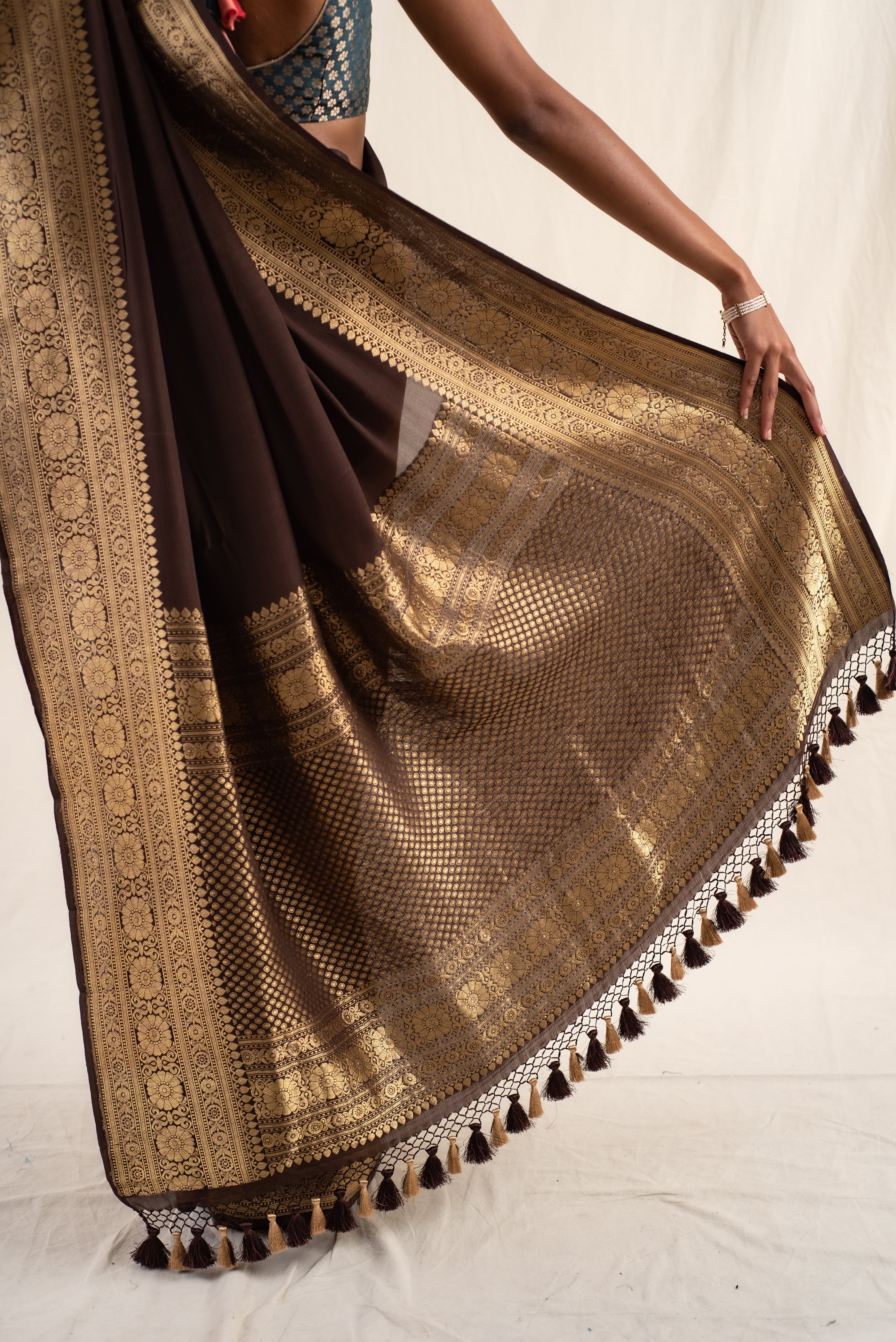
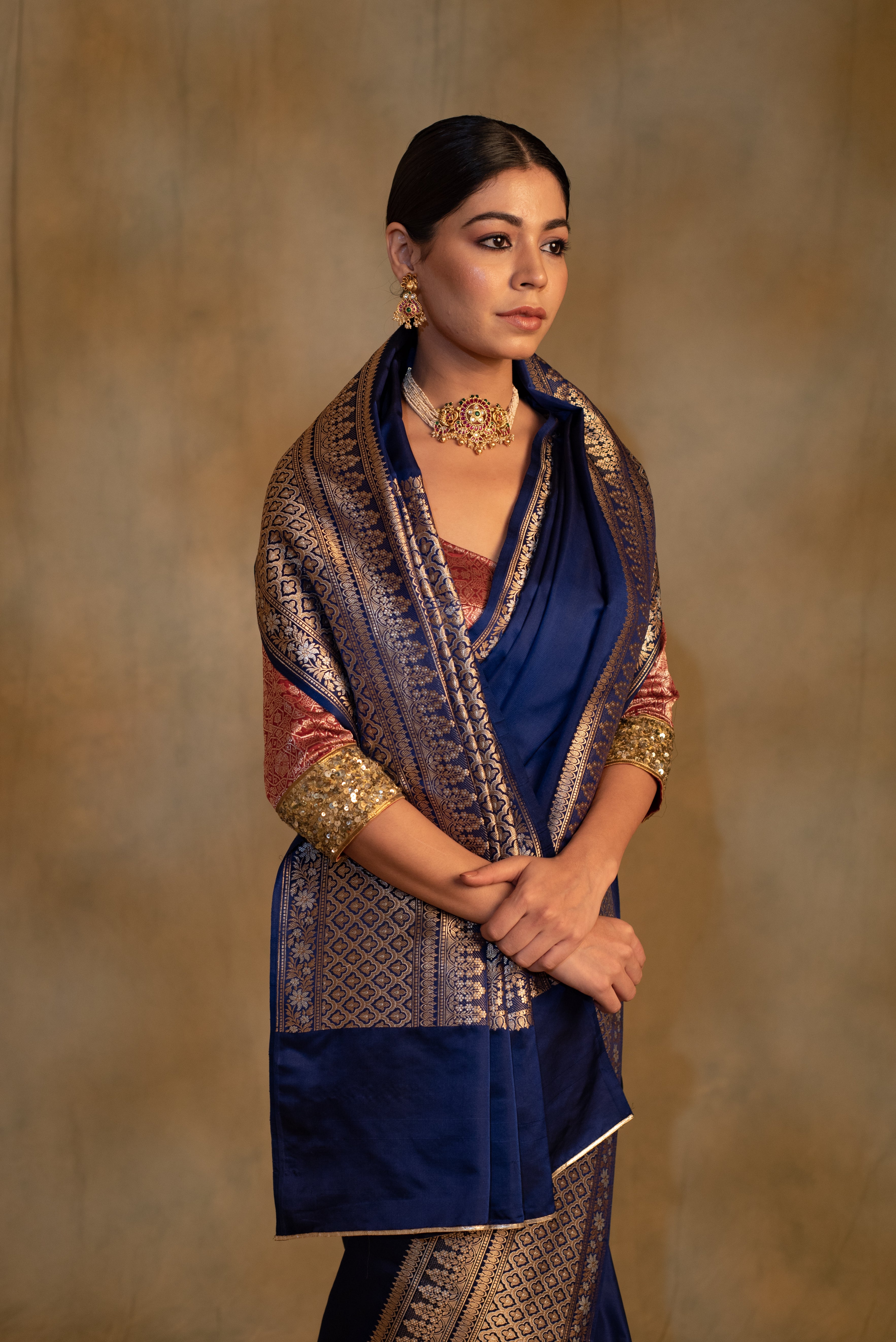
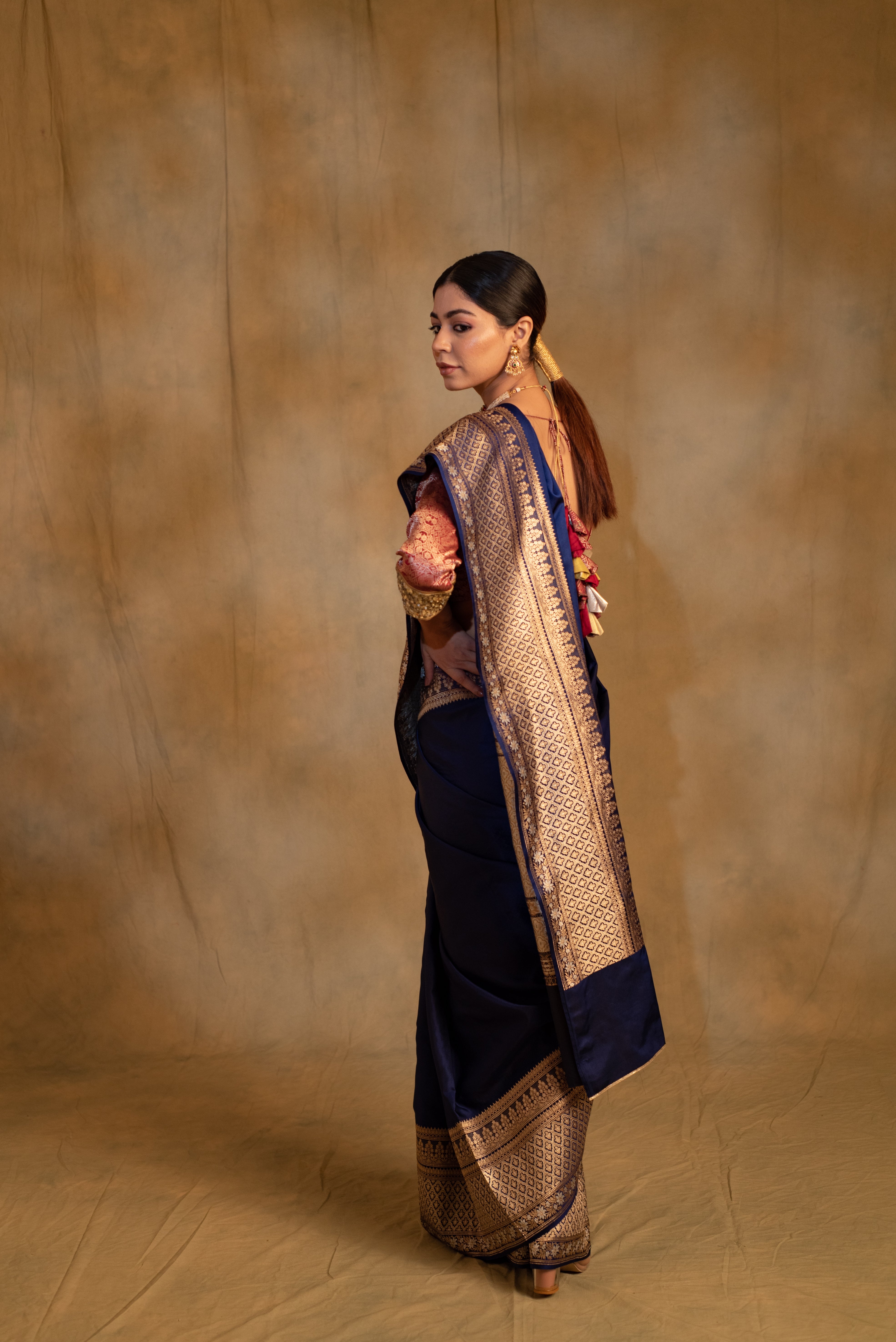
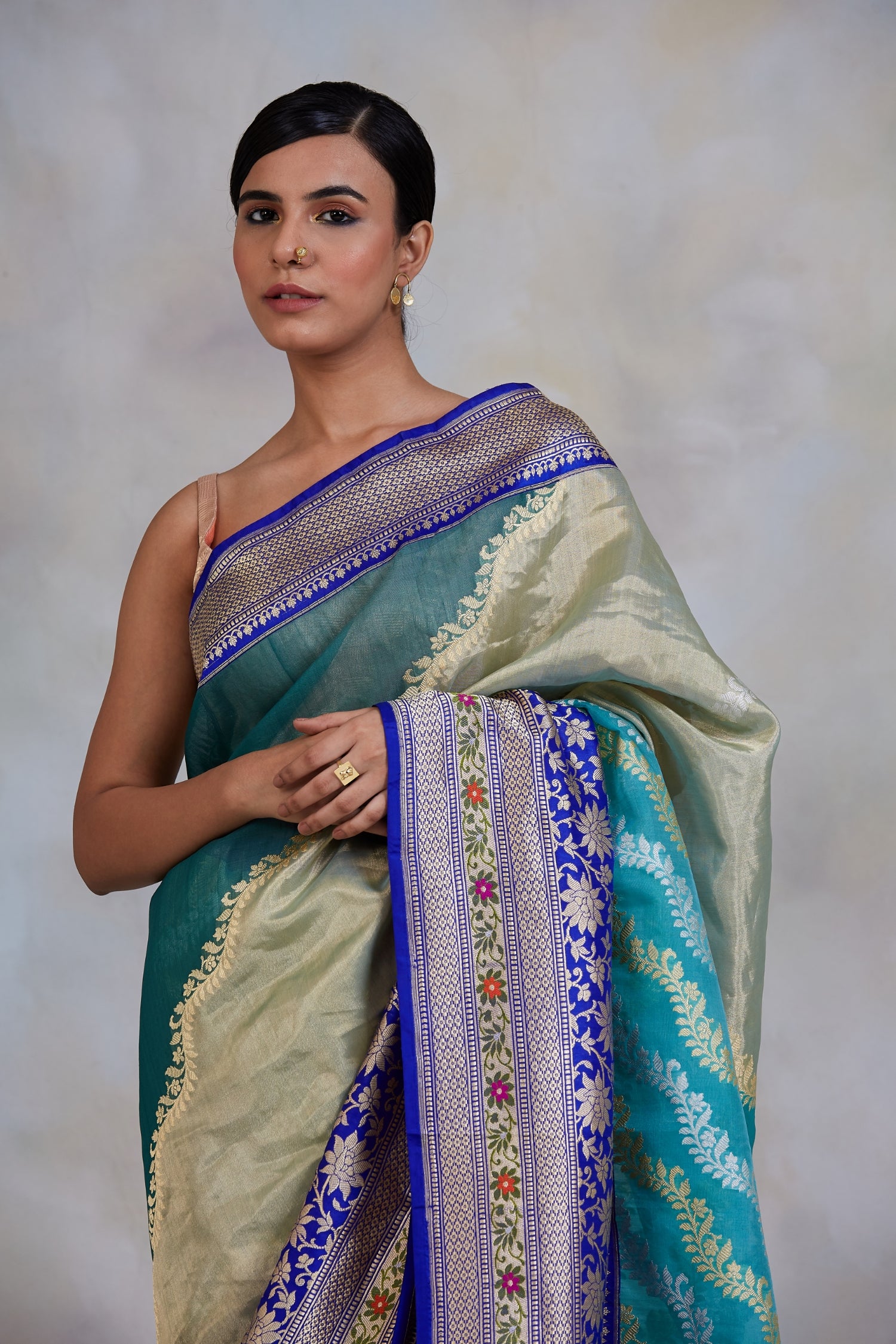
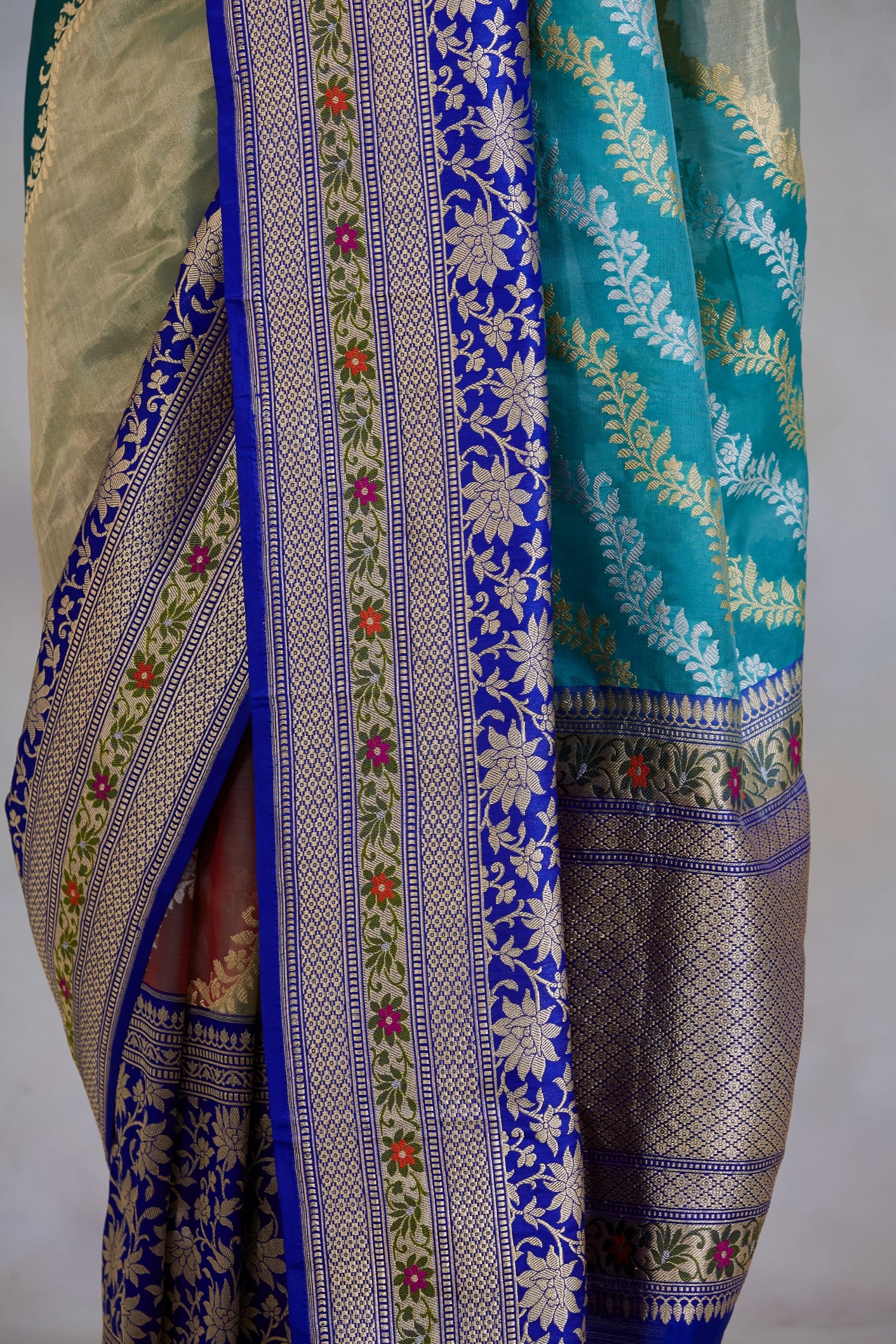
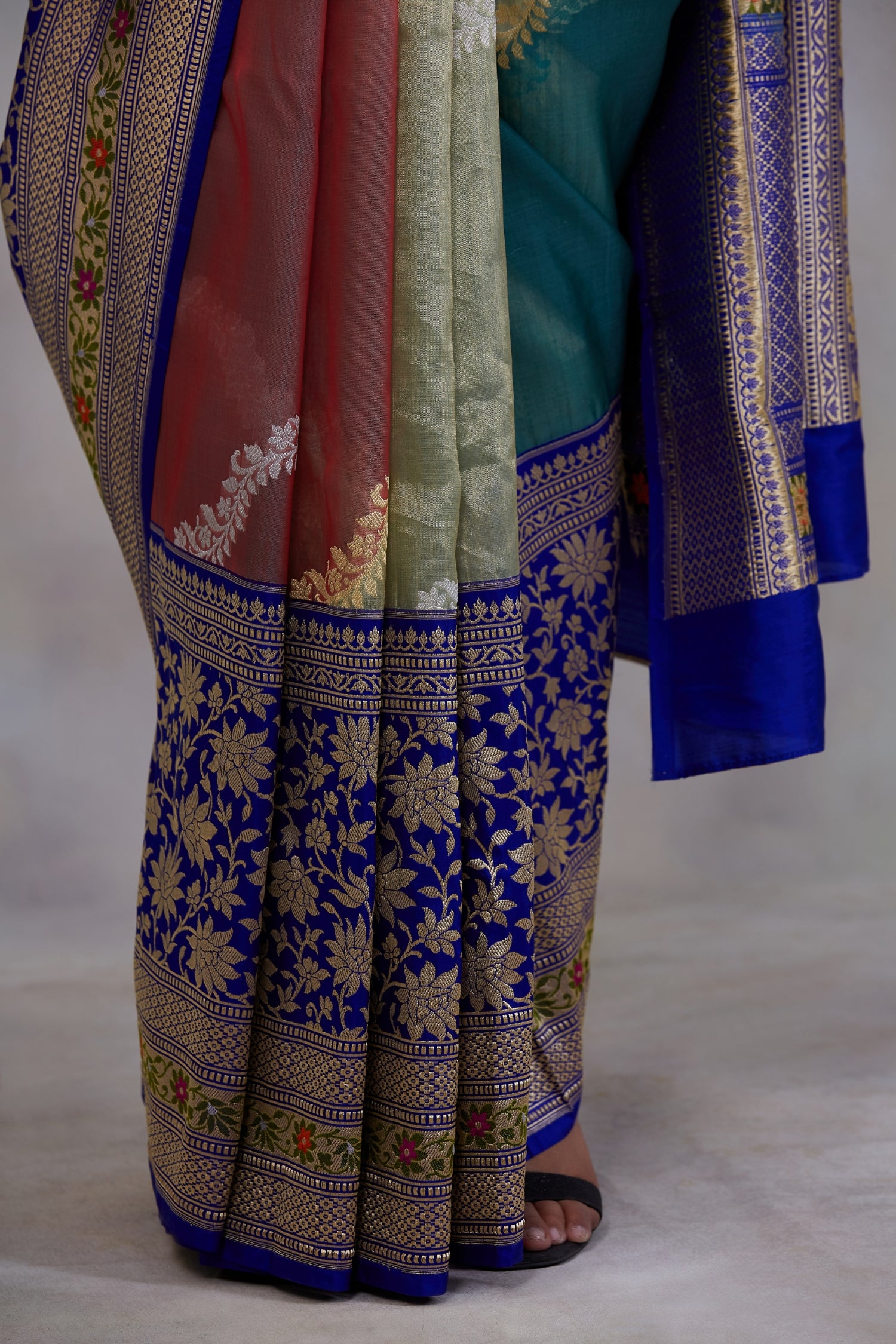
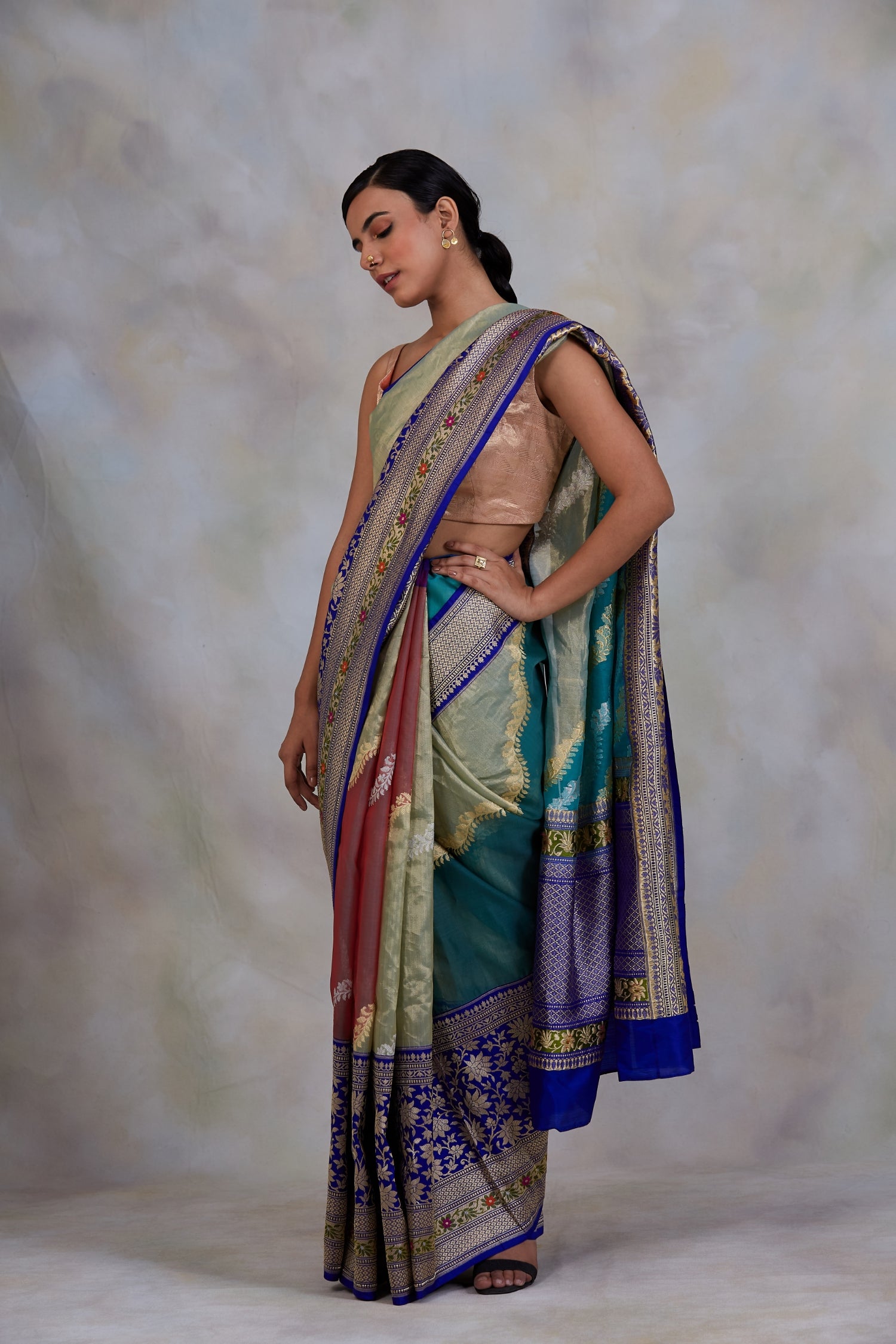
The collection is designed to celebrate diversity in tradition. It features intricate and geometric "Mughal Jaali" patterns inspired by the grandeur of Mughal architecture. These designs are often combined with traditional Indian silk sarees, such as Banarasi sarees. Additionally, the use of kadua and meenakari techniques in bridal and festive apparel showcases the richness of Indian artistry to the fore.Neelam- Teal Blue Georgette Silk Banarasi Saree
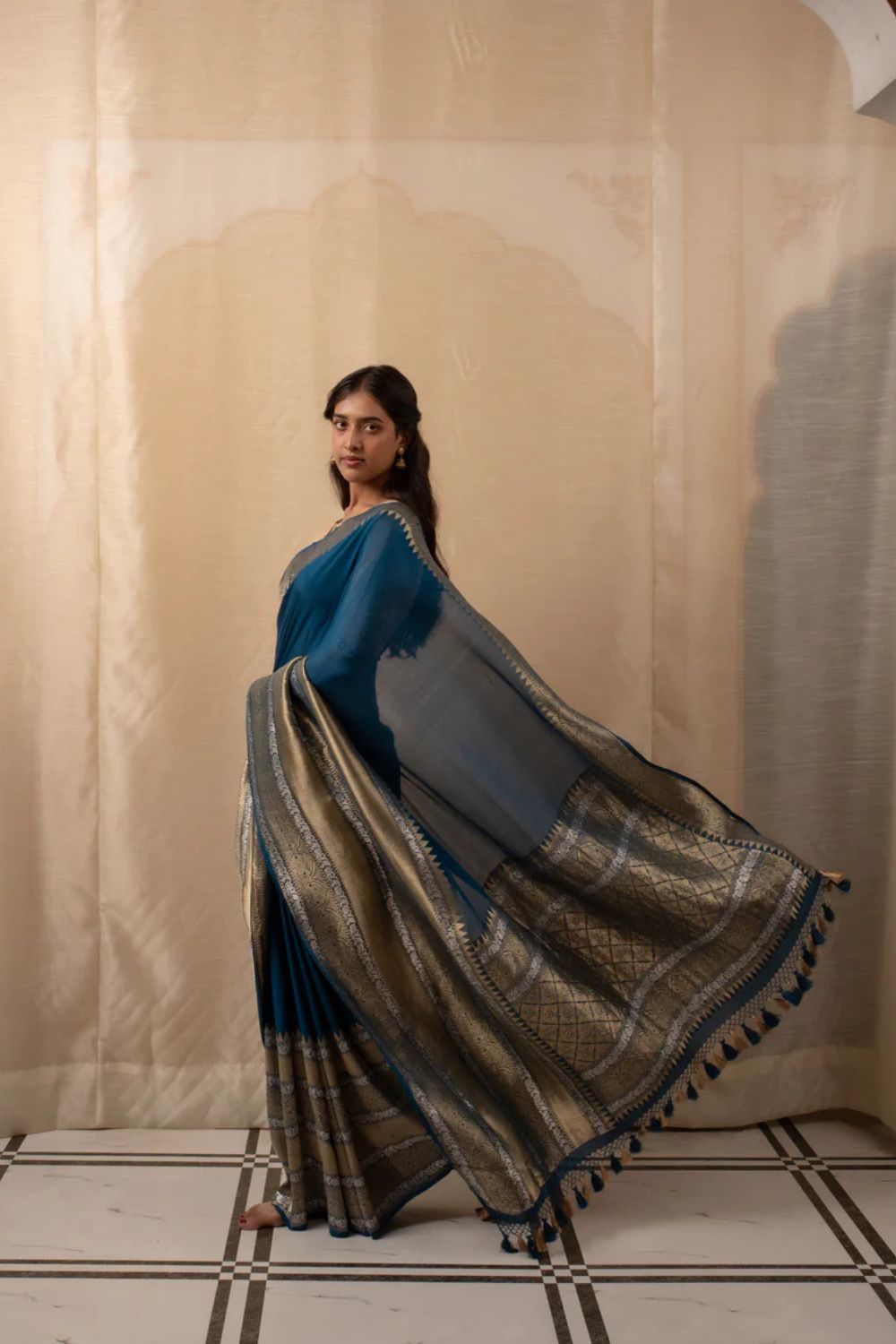
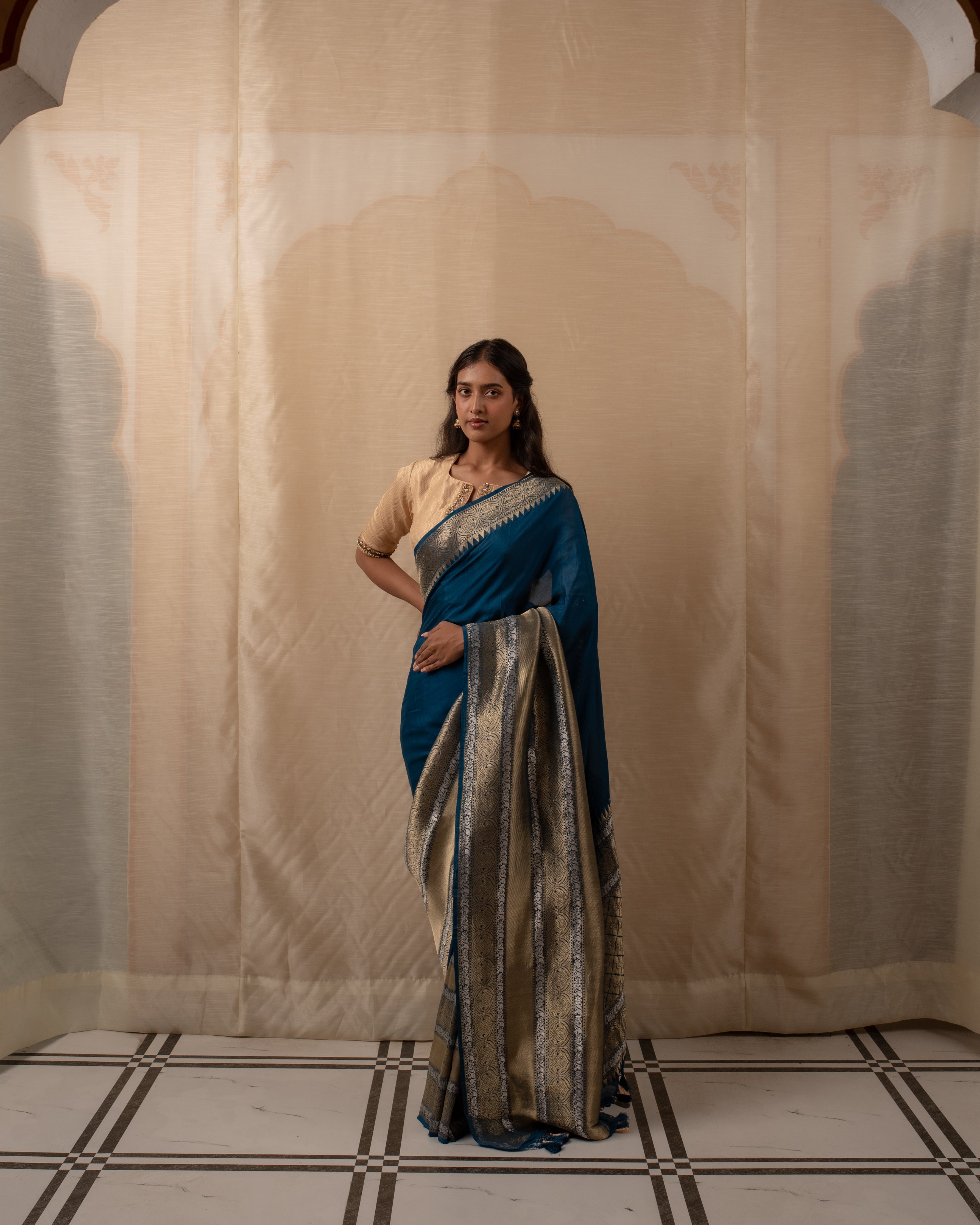
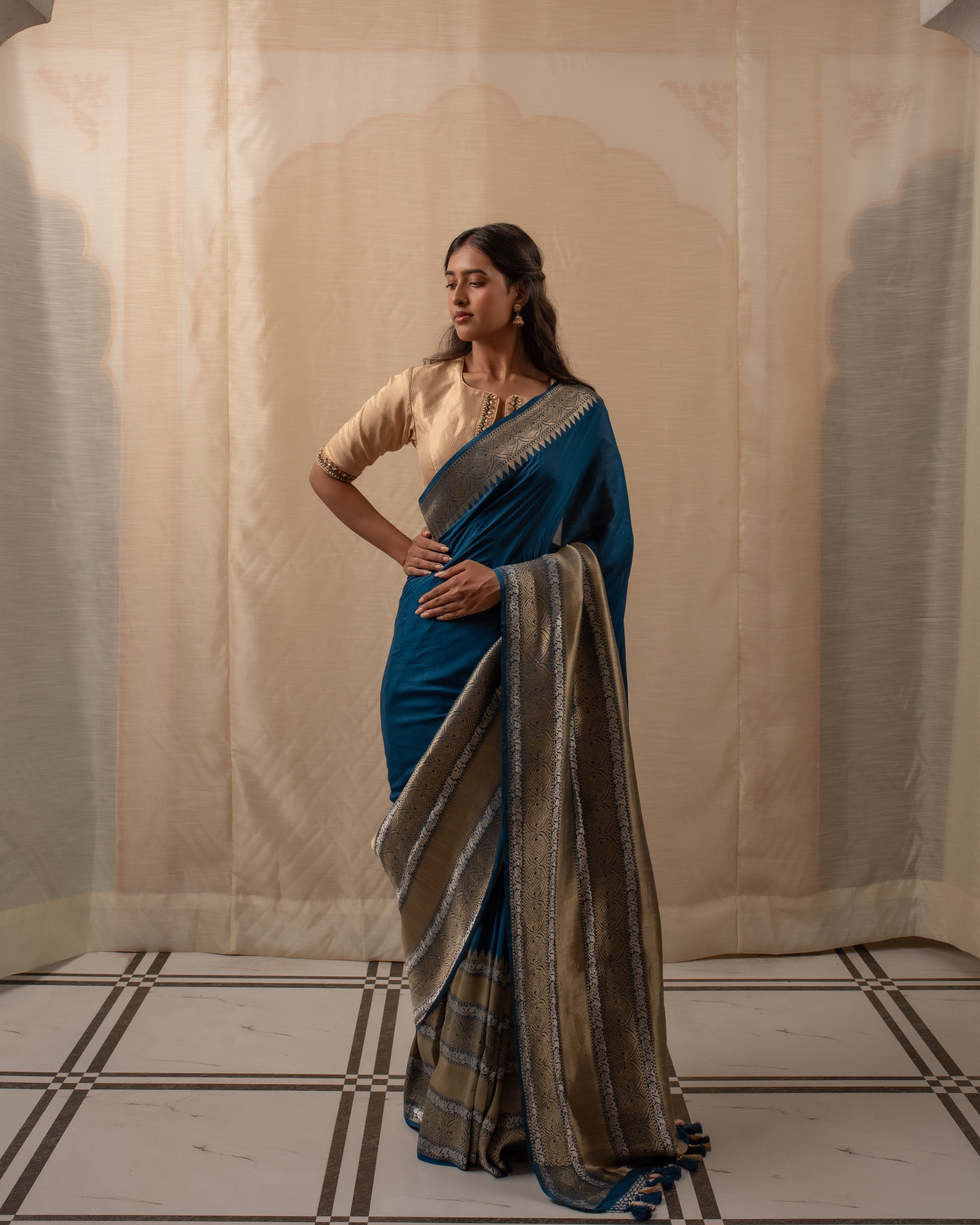
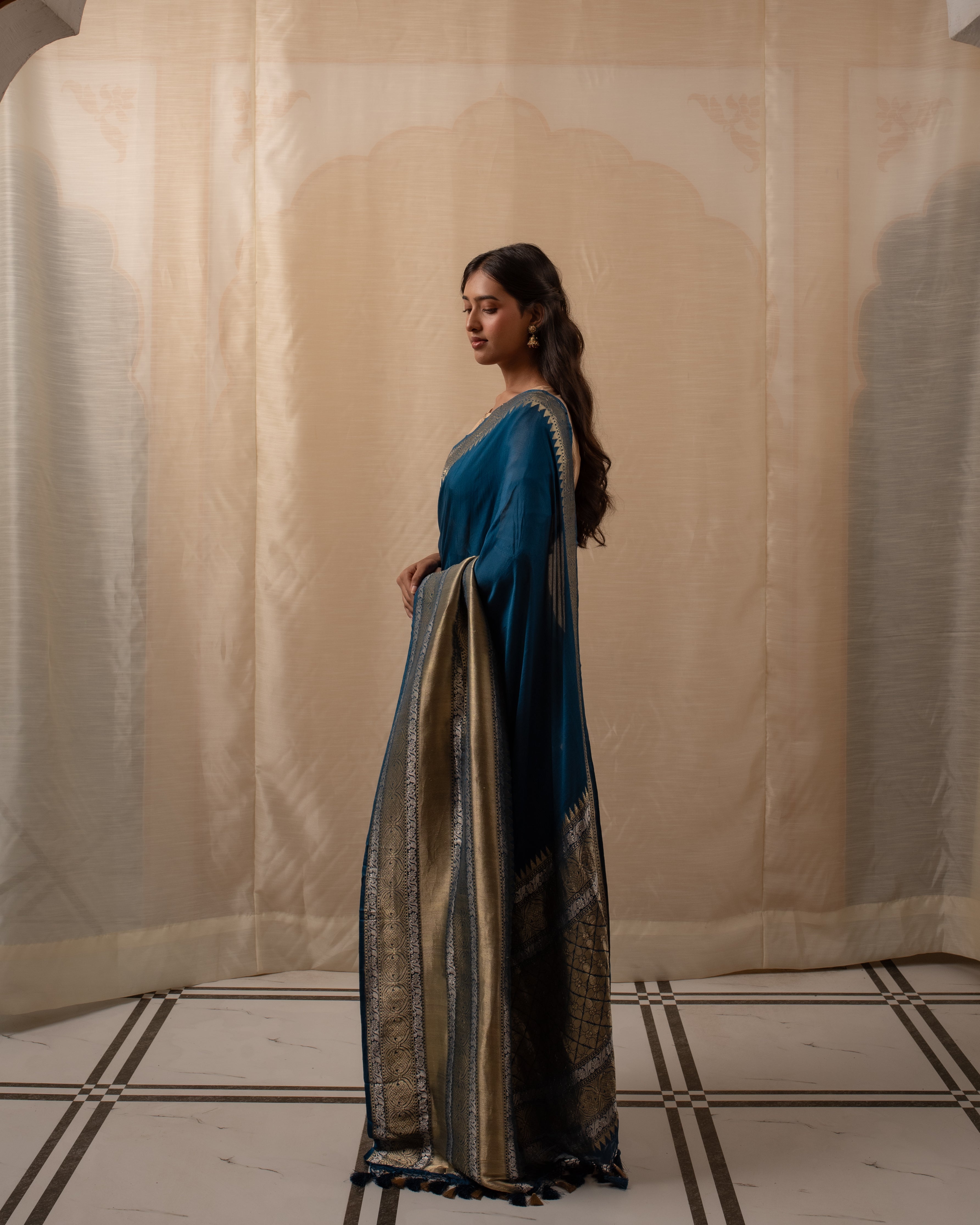
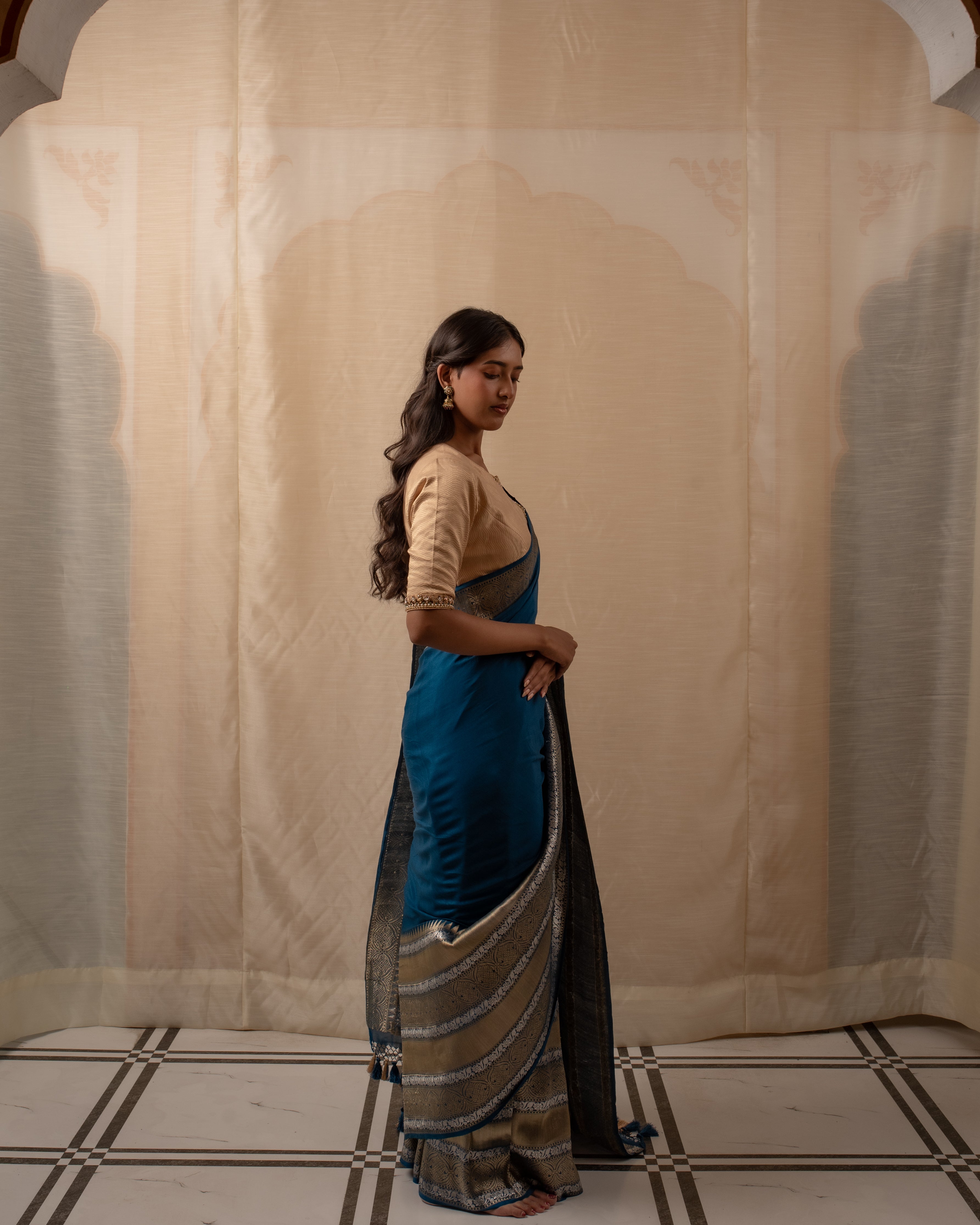
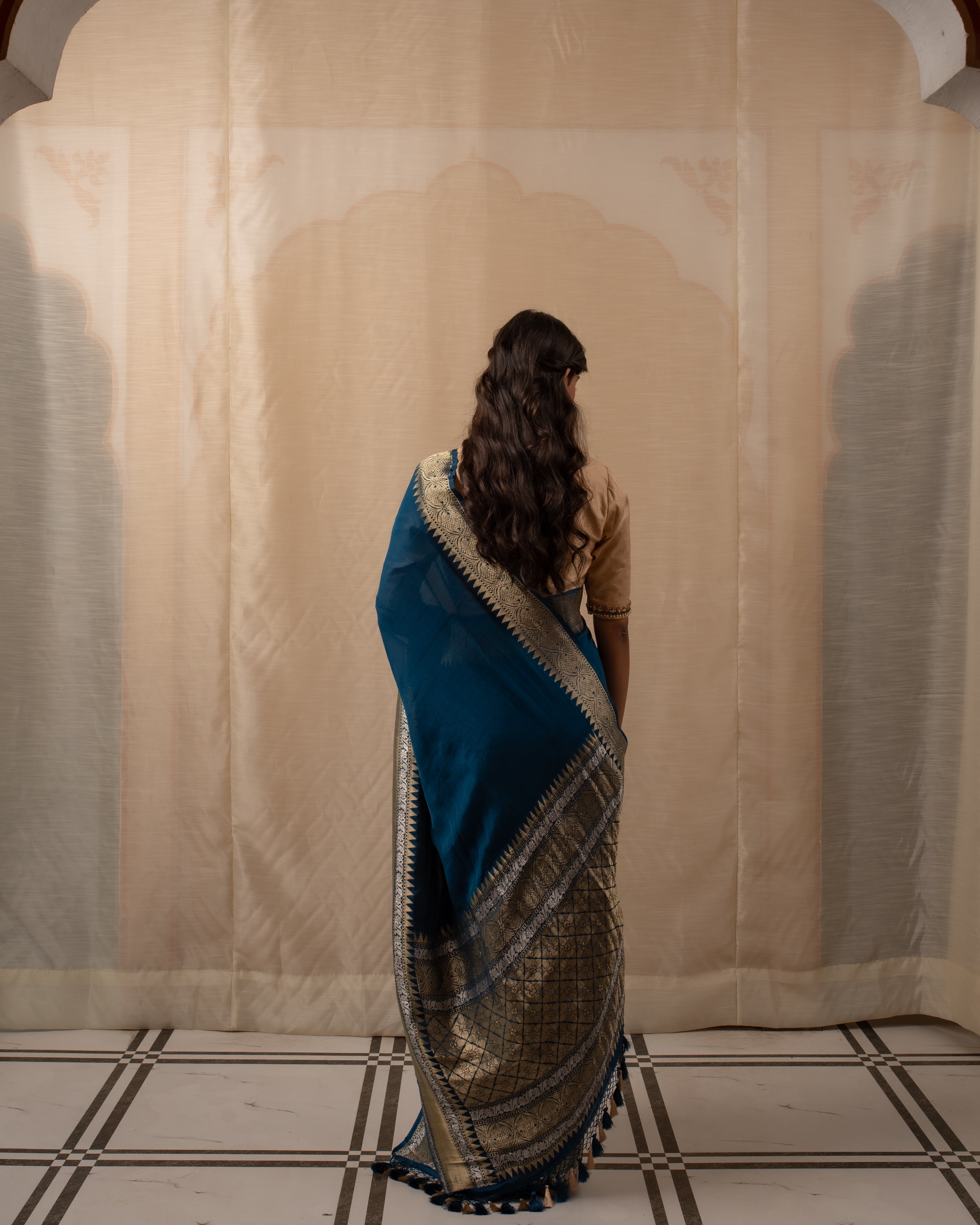
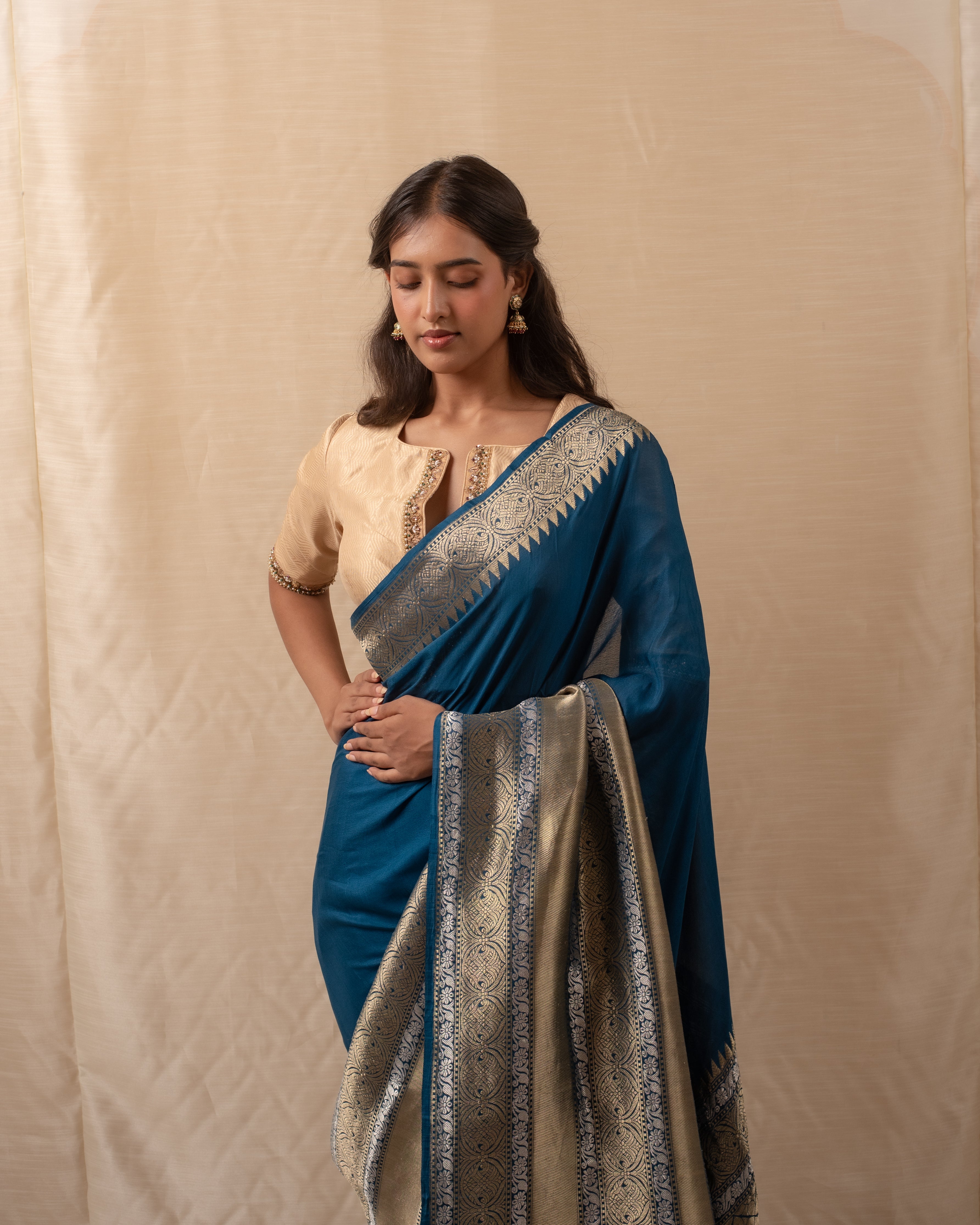
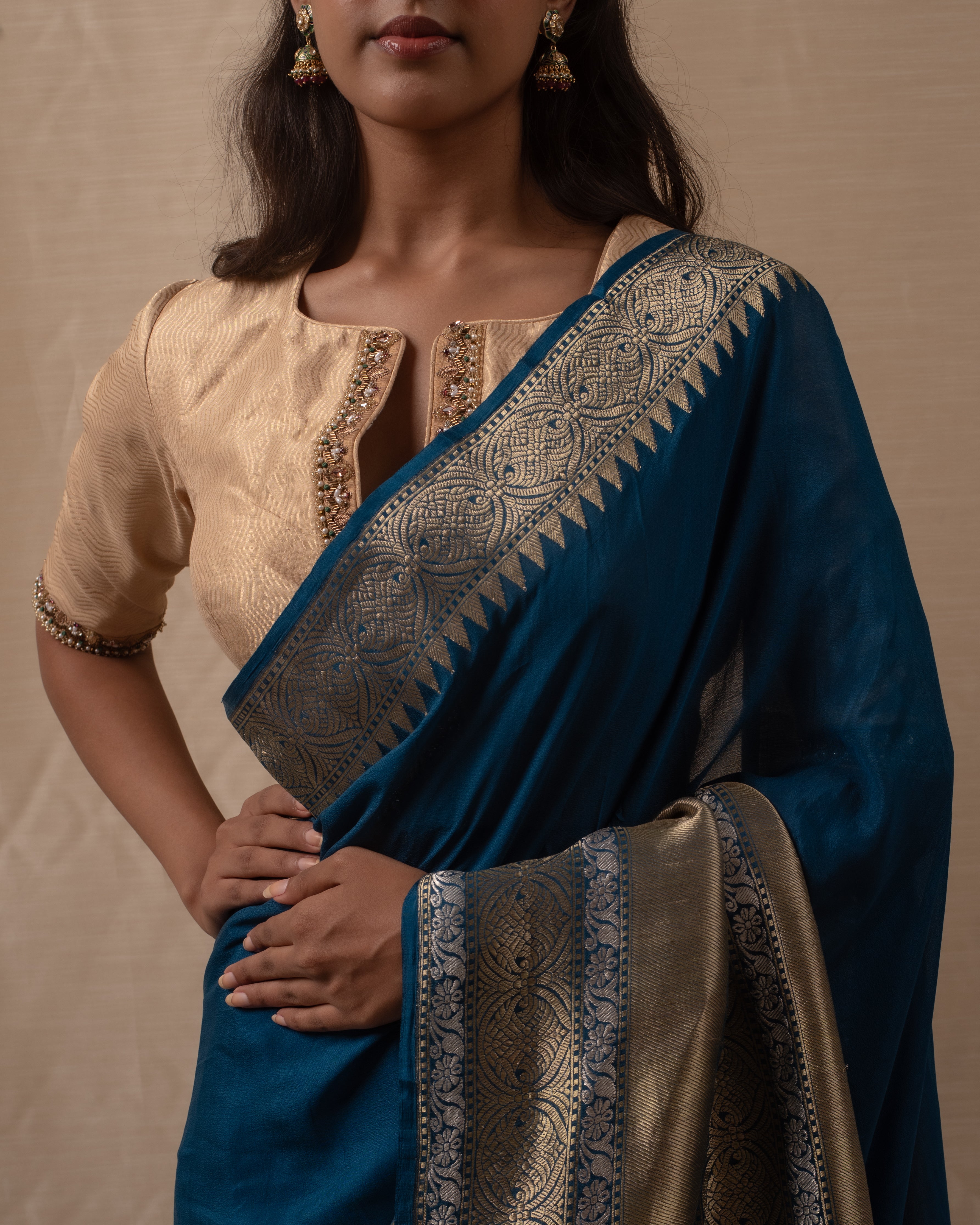
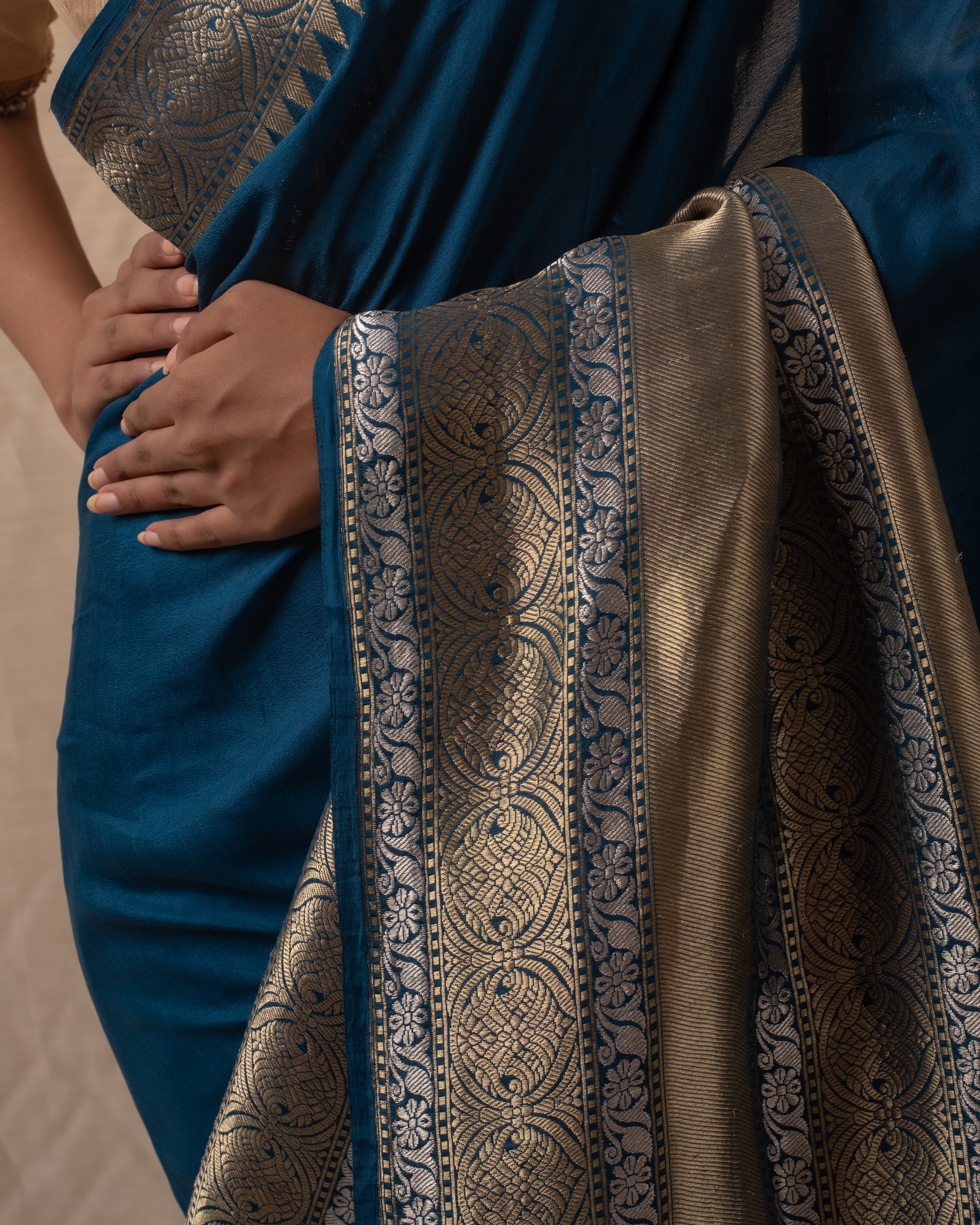
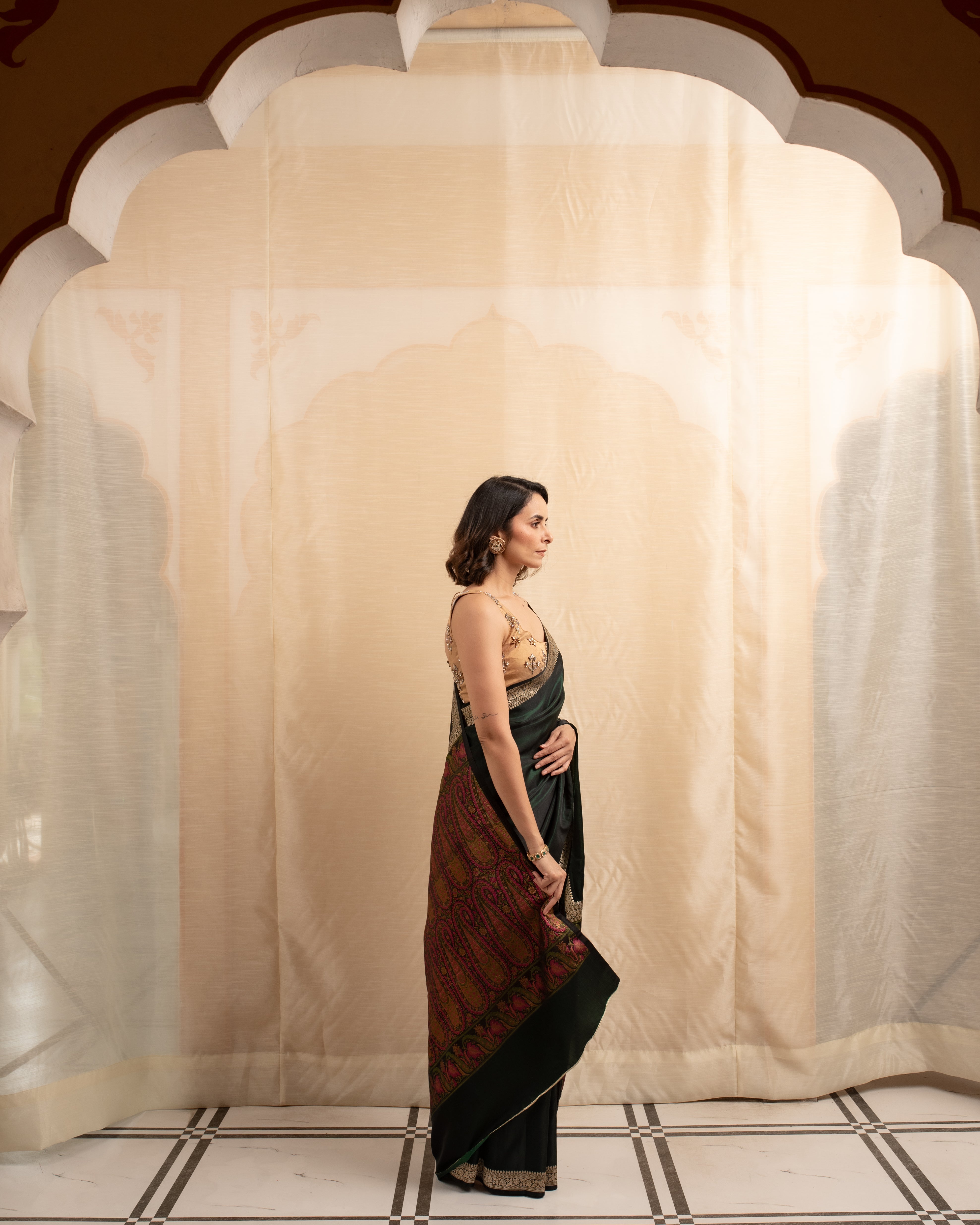
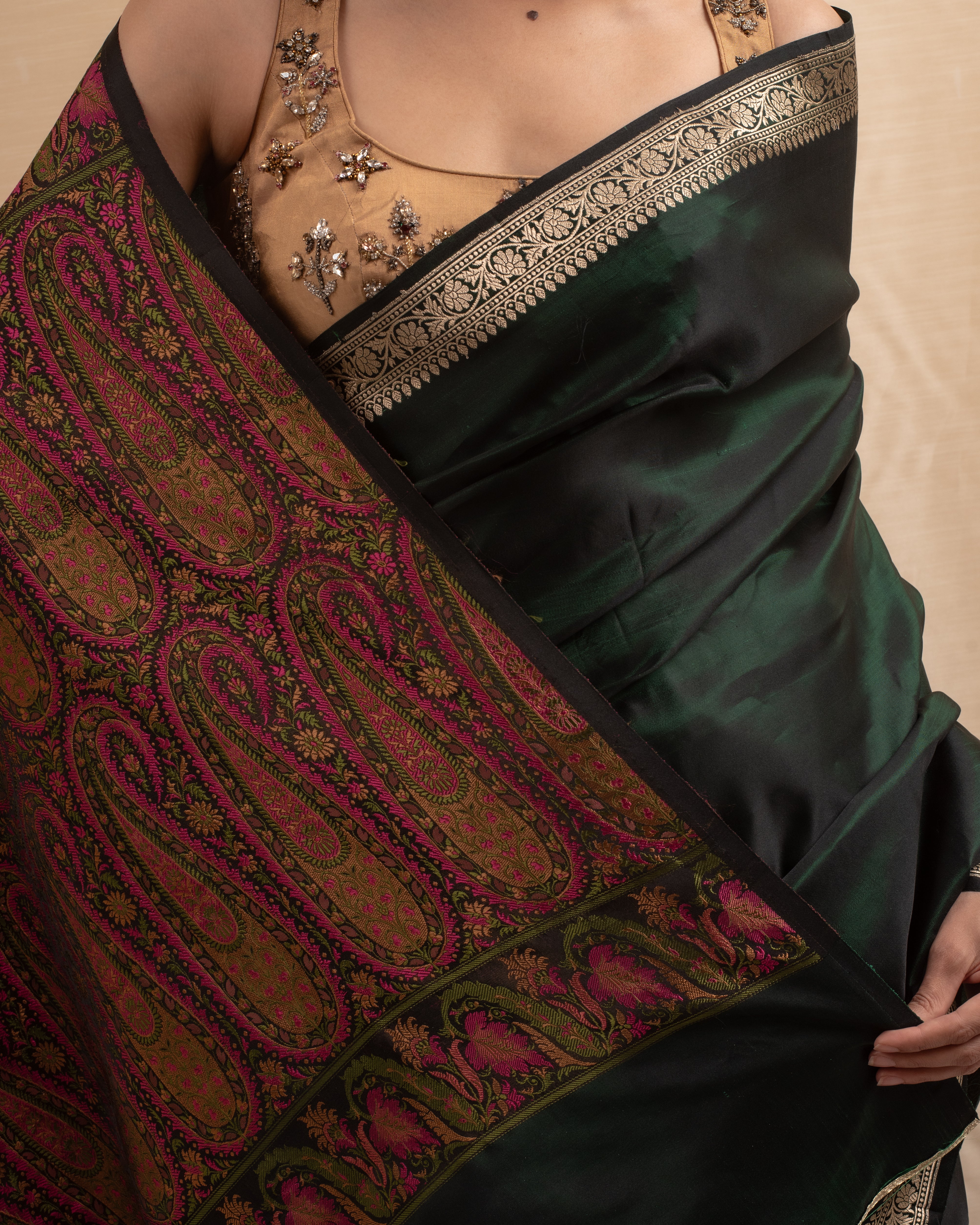
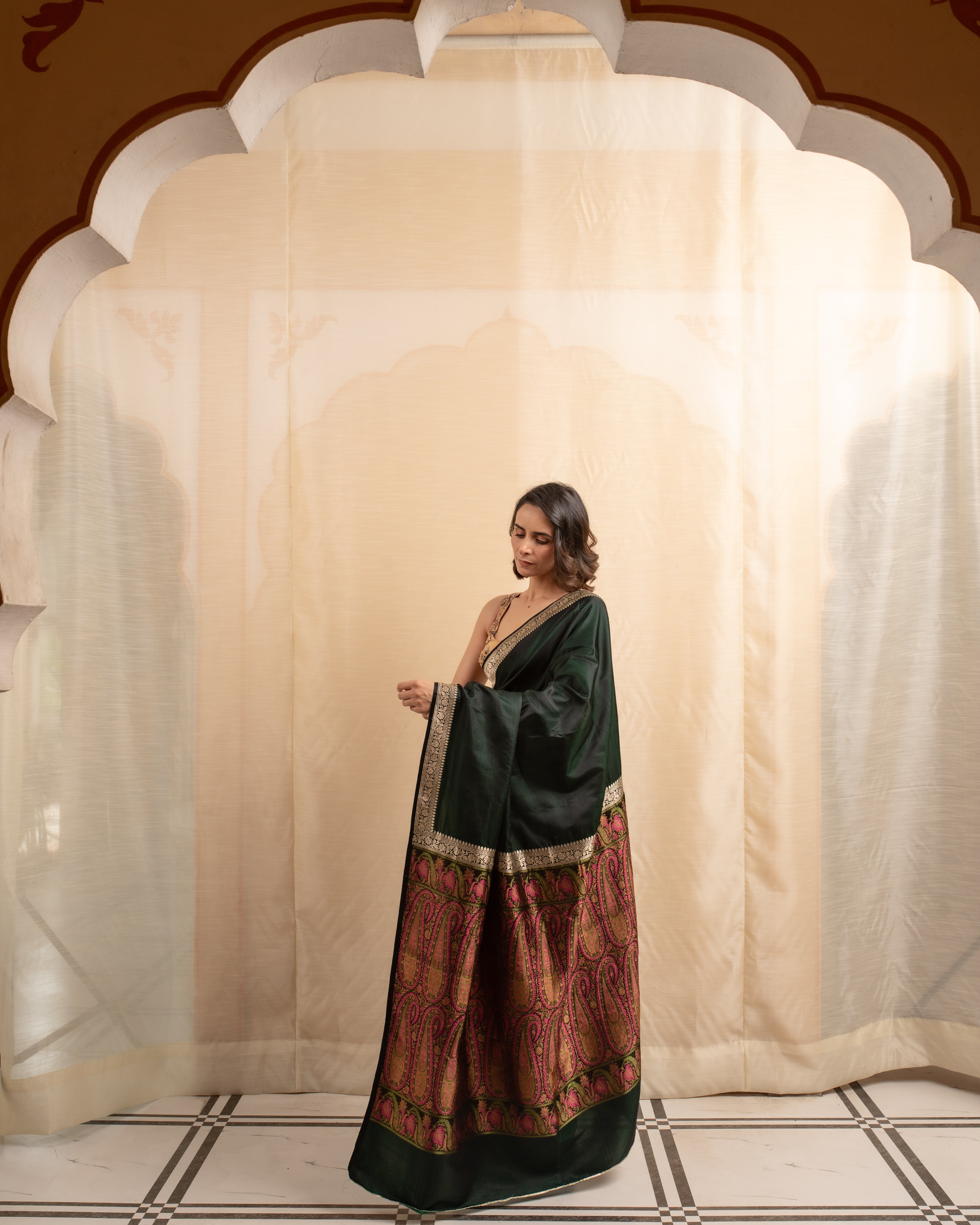
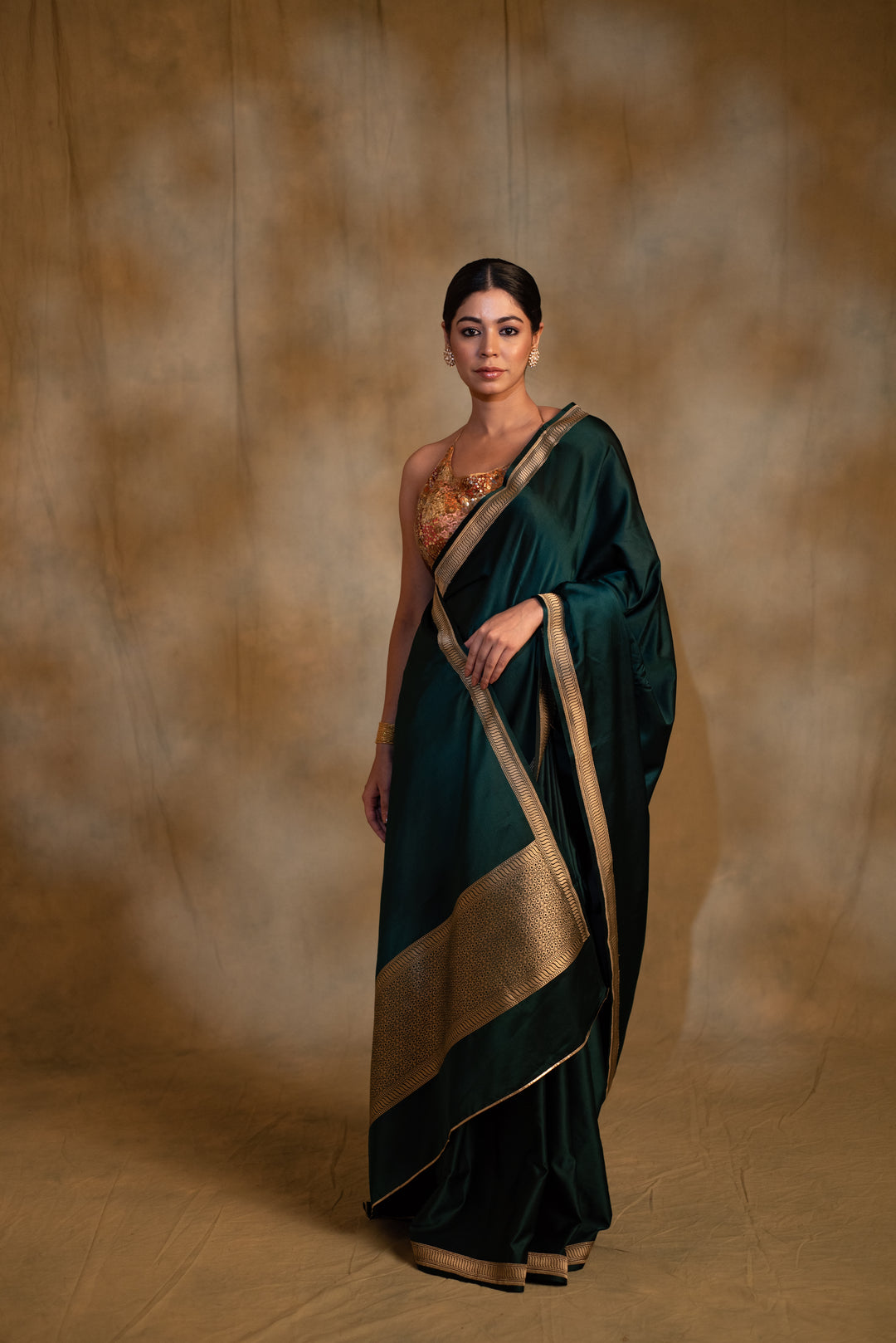
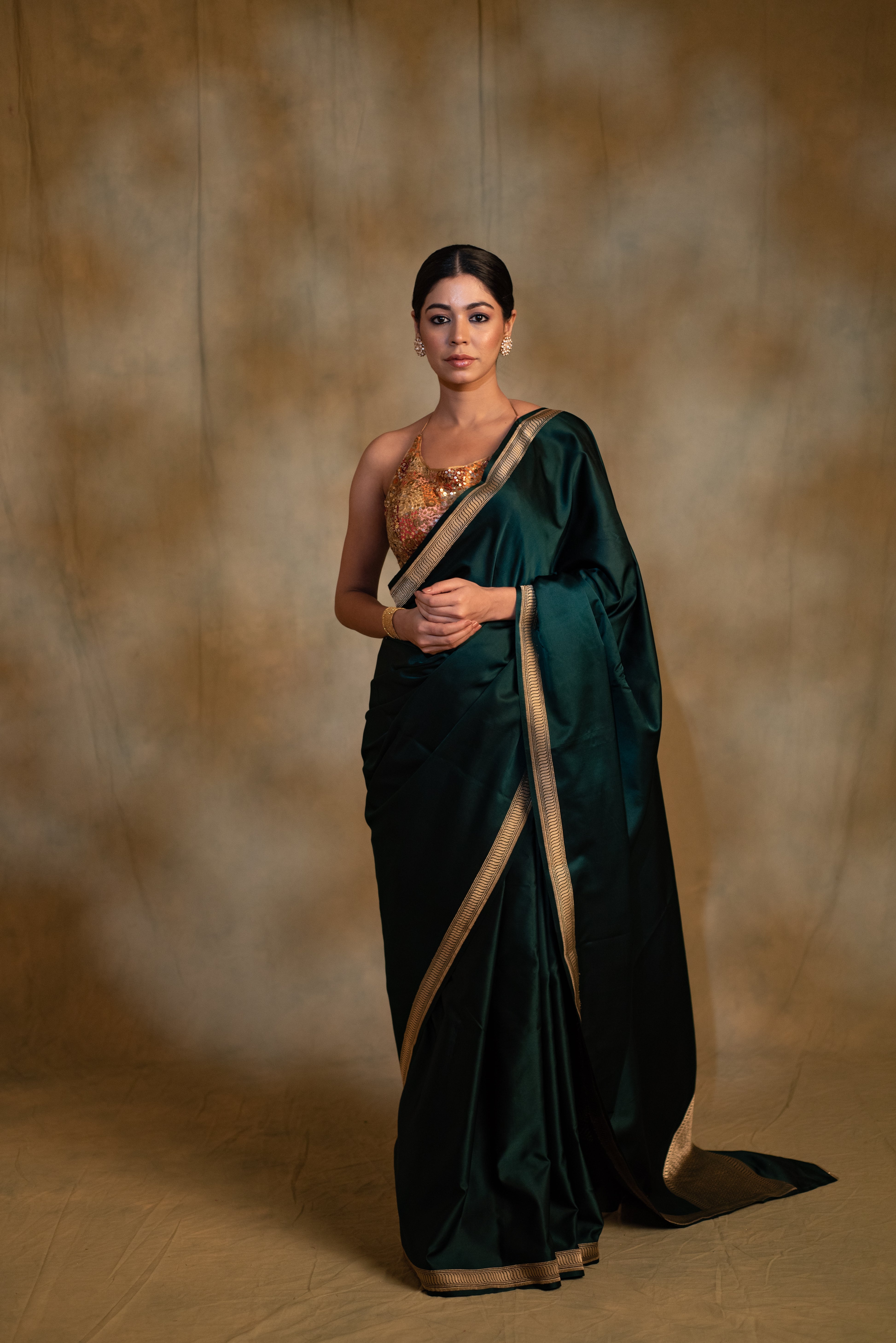
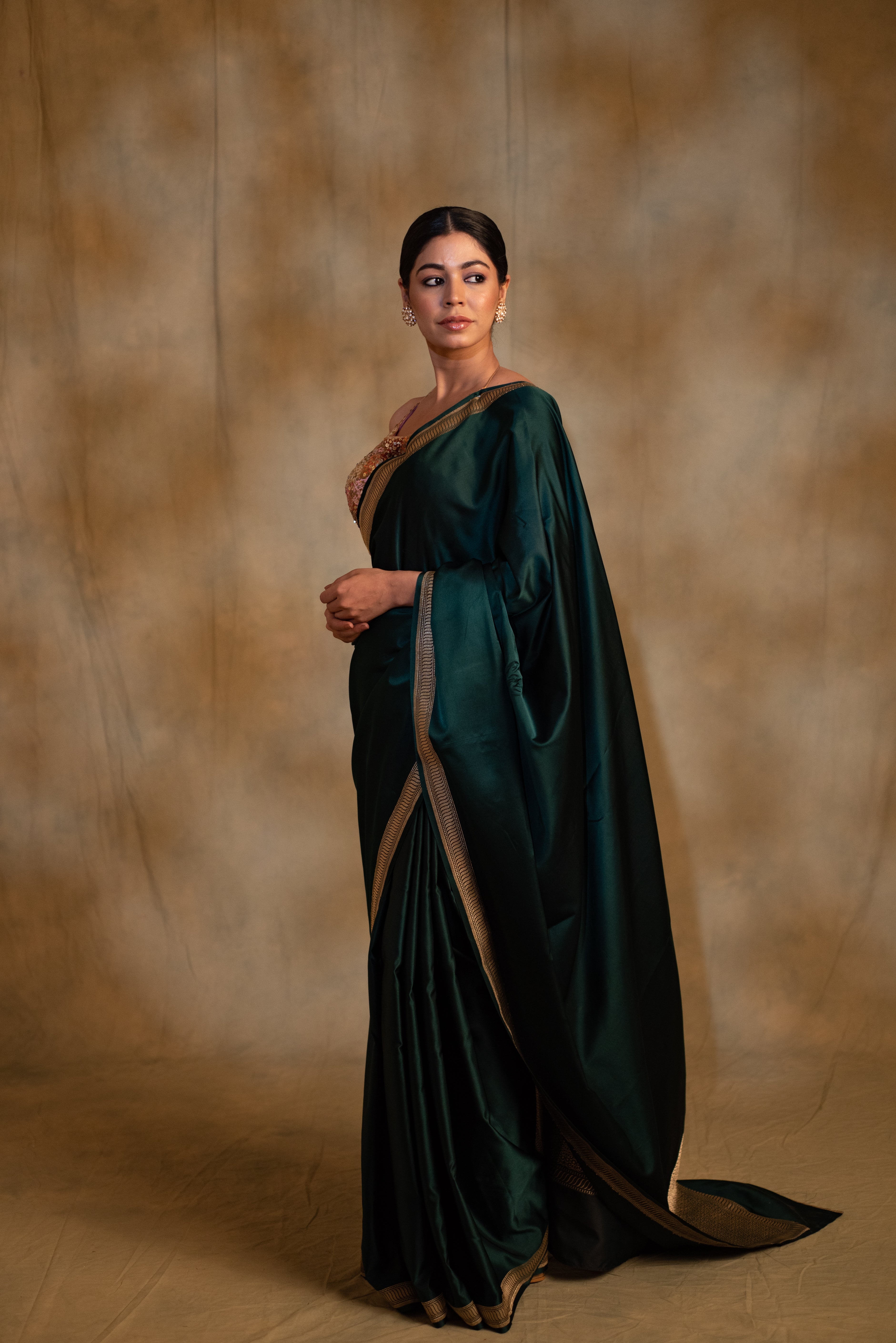
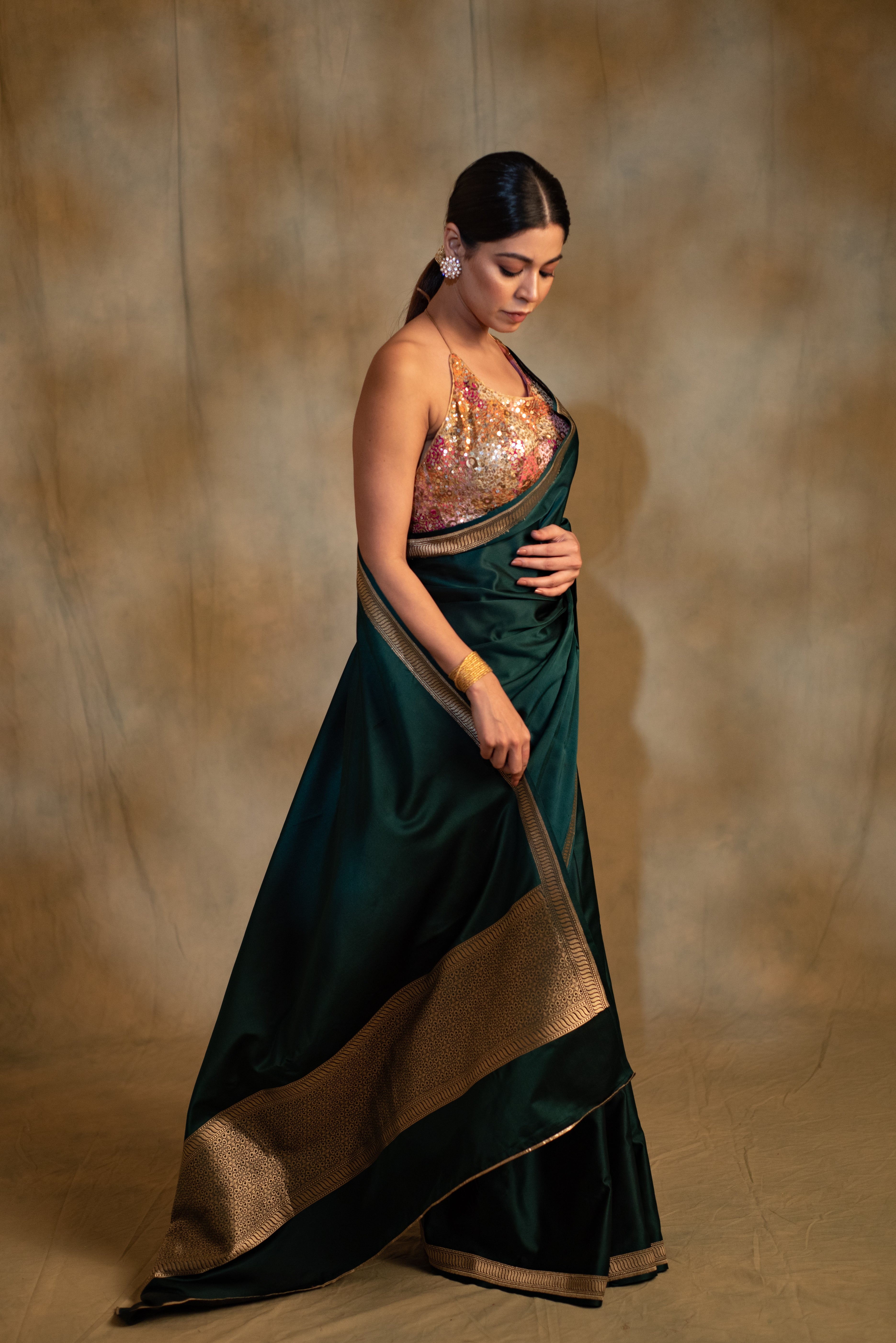
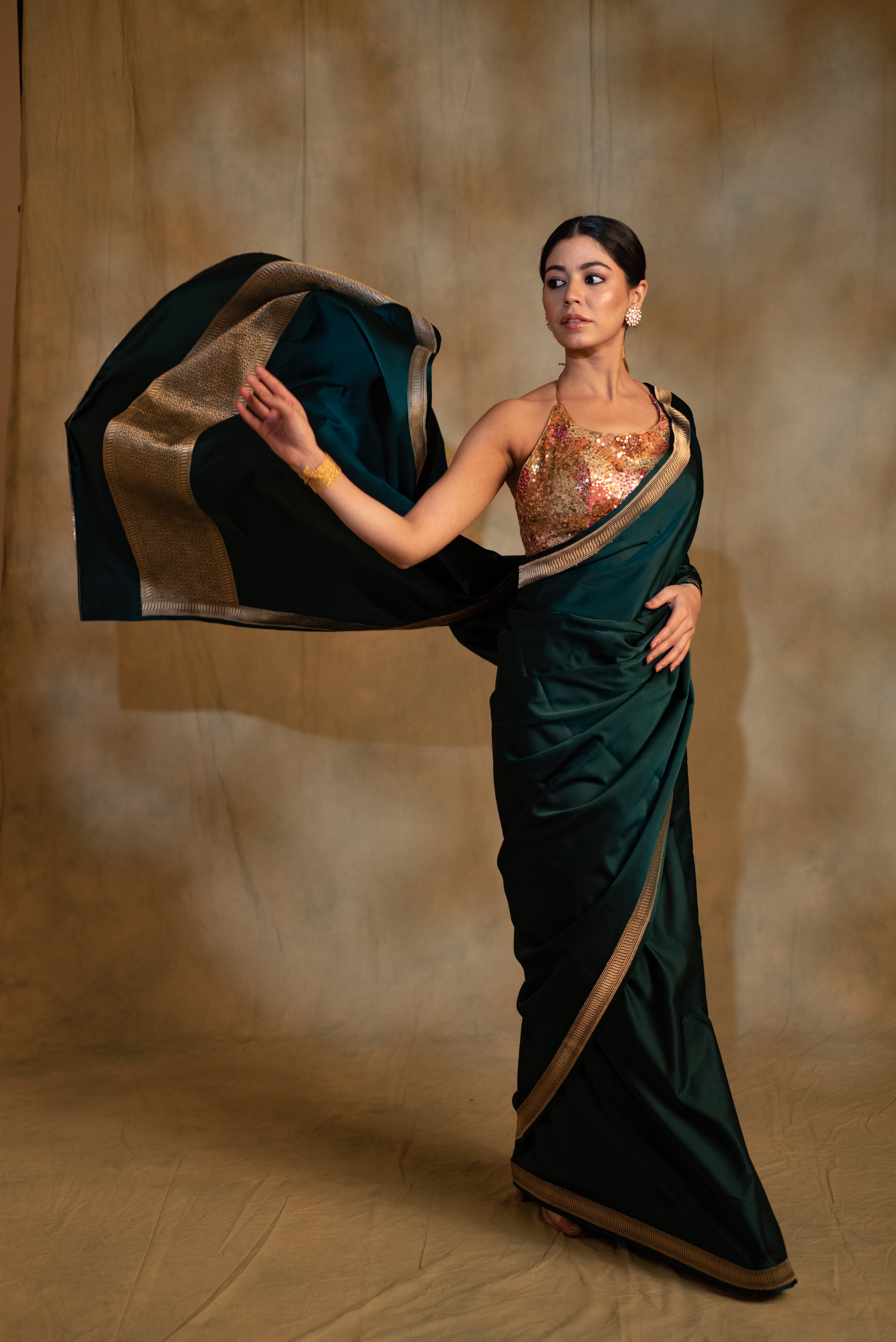
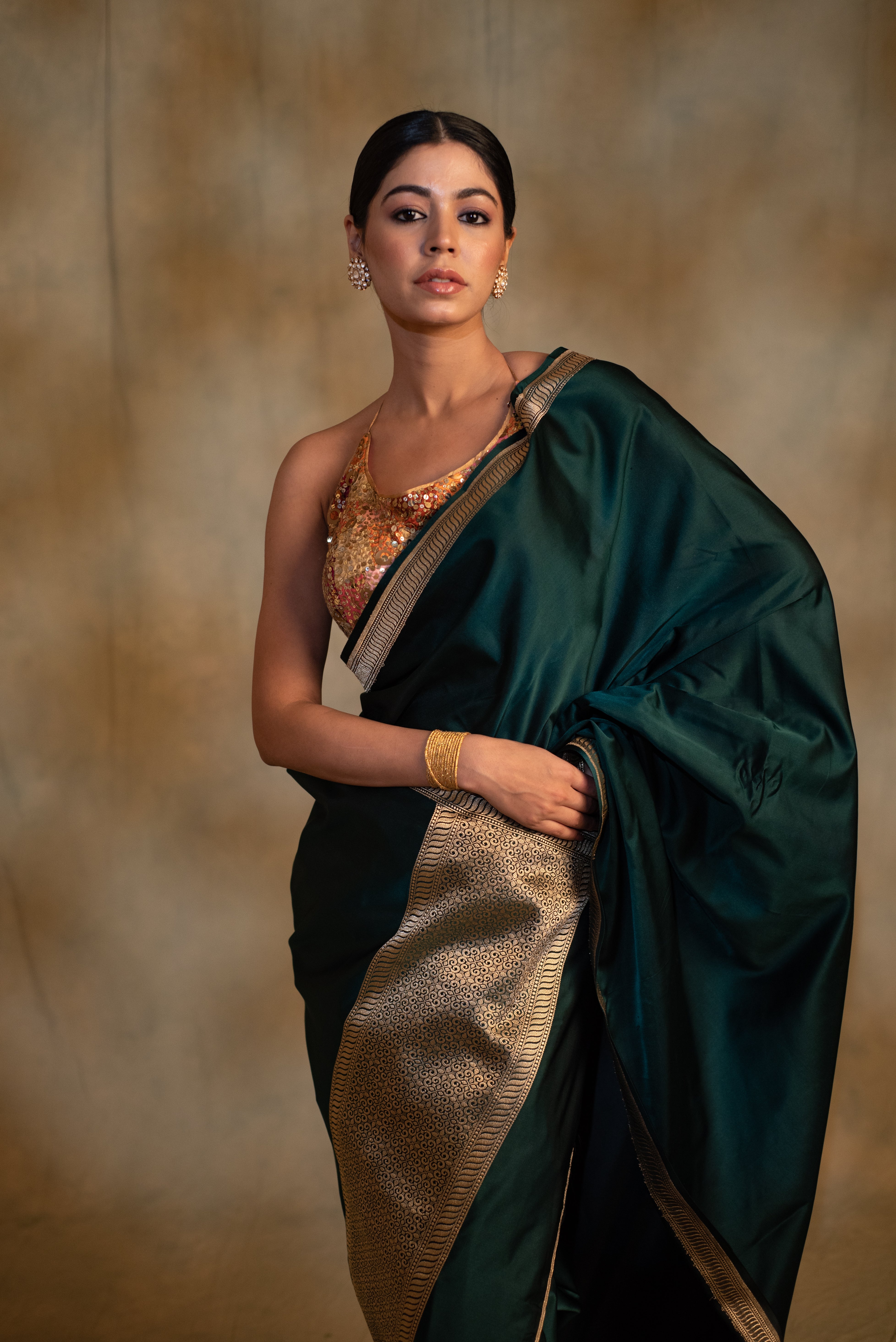
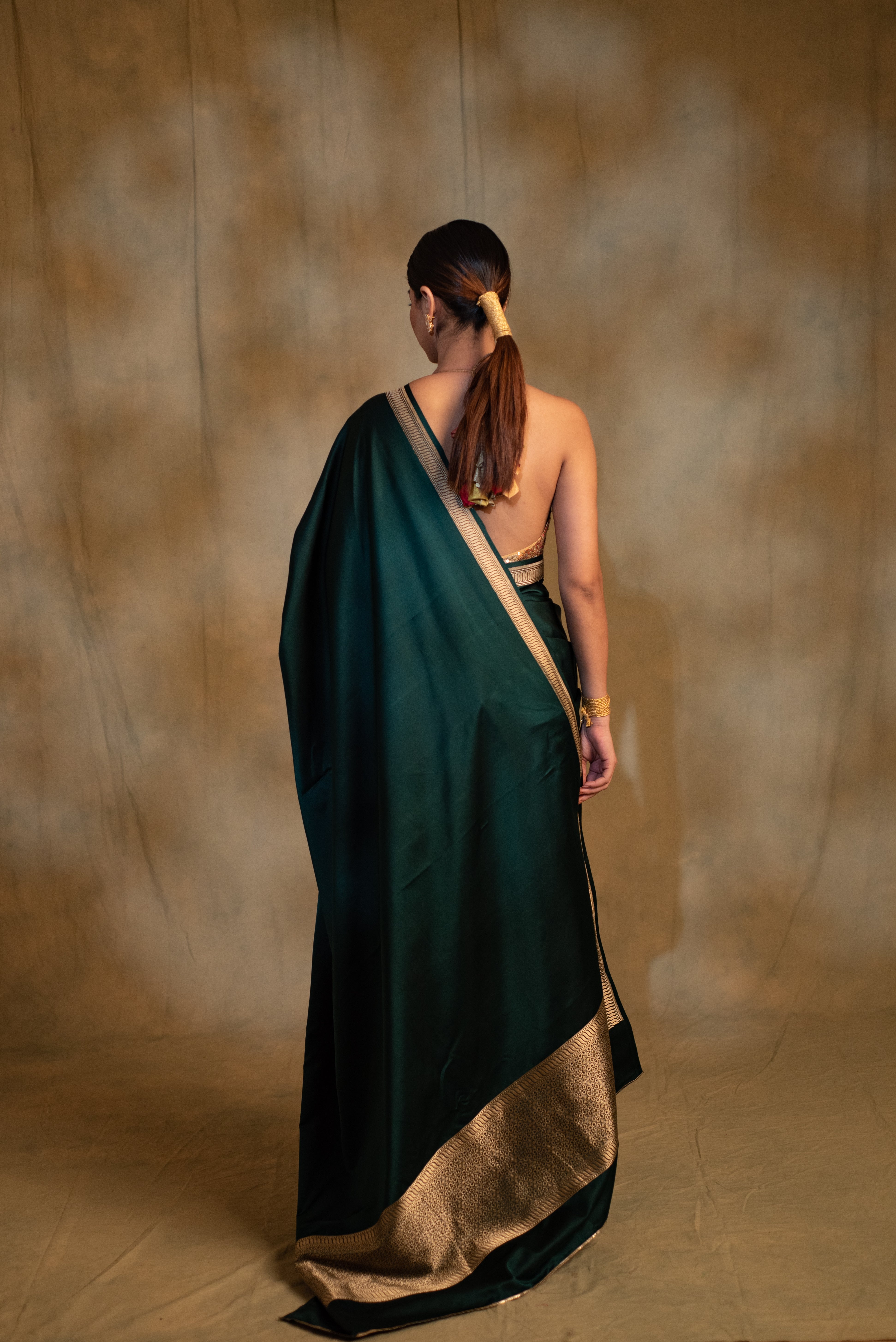
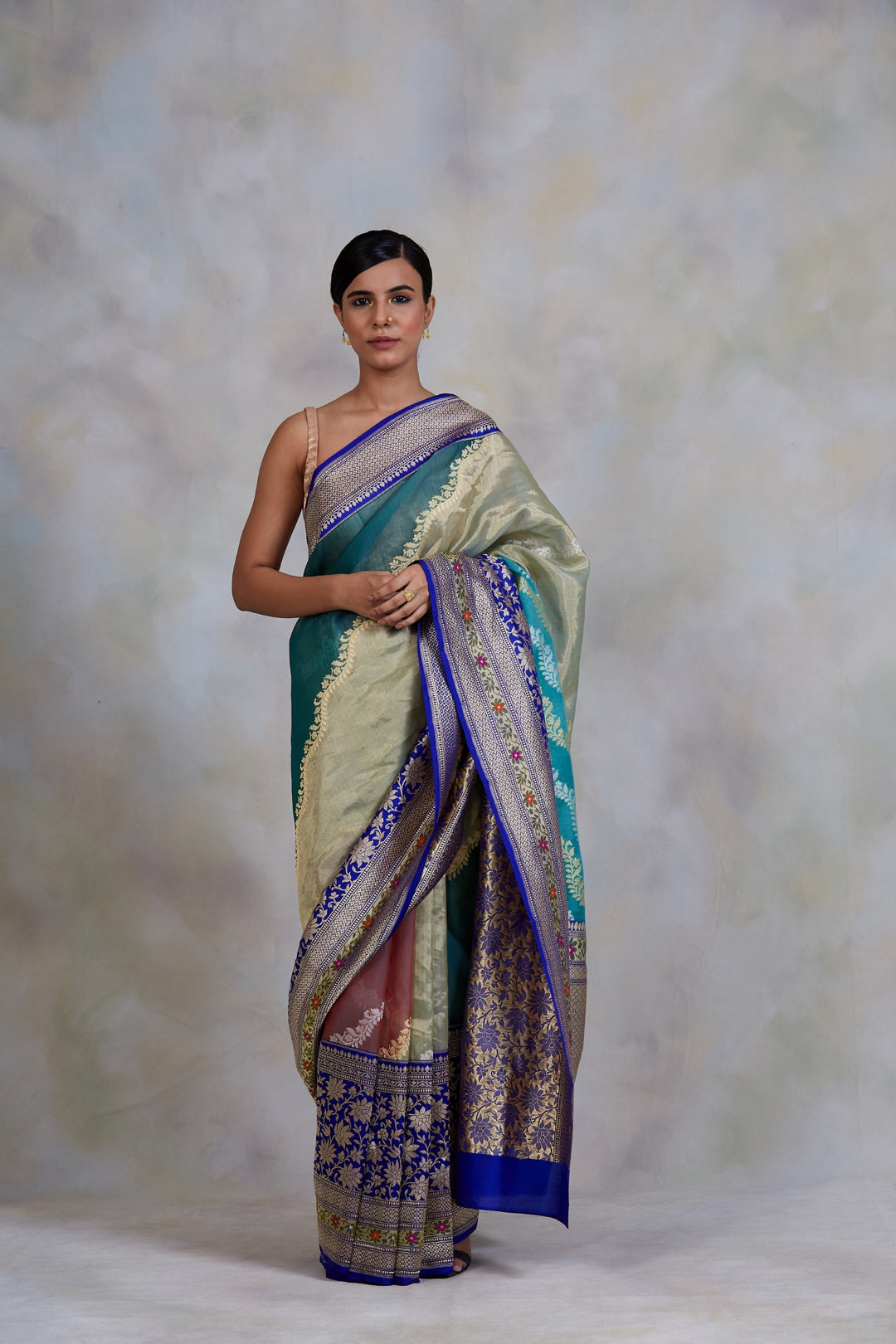
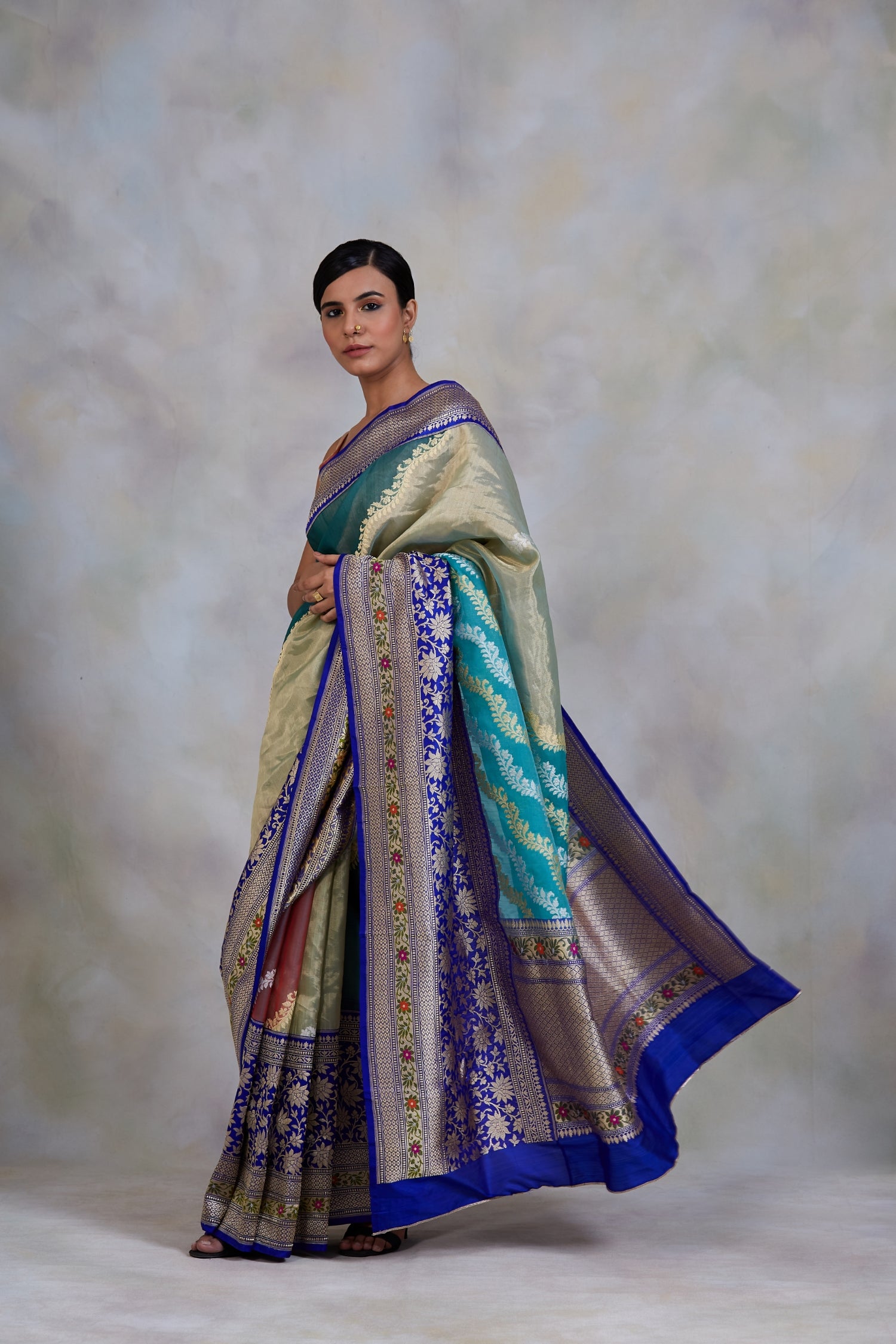
A striking teal blue Banarasi silk saree adorned with an elegant gold and silver zari border, complemented by a richly woven palla featuring intricate Mughal jaali-inspired geometric motifs in gold. The richness of Banarasi weaving lends the saree a graceful drape and subtle sheen, making it perfect for special occasions and celebrations.Sarveshvari - Teal Silk Katan Banarasi Saree
Teal Banarasi saree woven in Katan silk using traditional Ikatara and Kadua techniques. The saree features a Mughal jaali across the body, detailed with floral Sonarupa motifs. Gold and silver zari threads are used in the weaving to create contrast and definition within the pattern.Manikya- Burgundy Silk Brocade Banarasi Saree
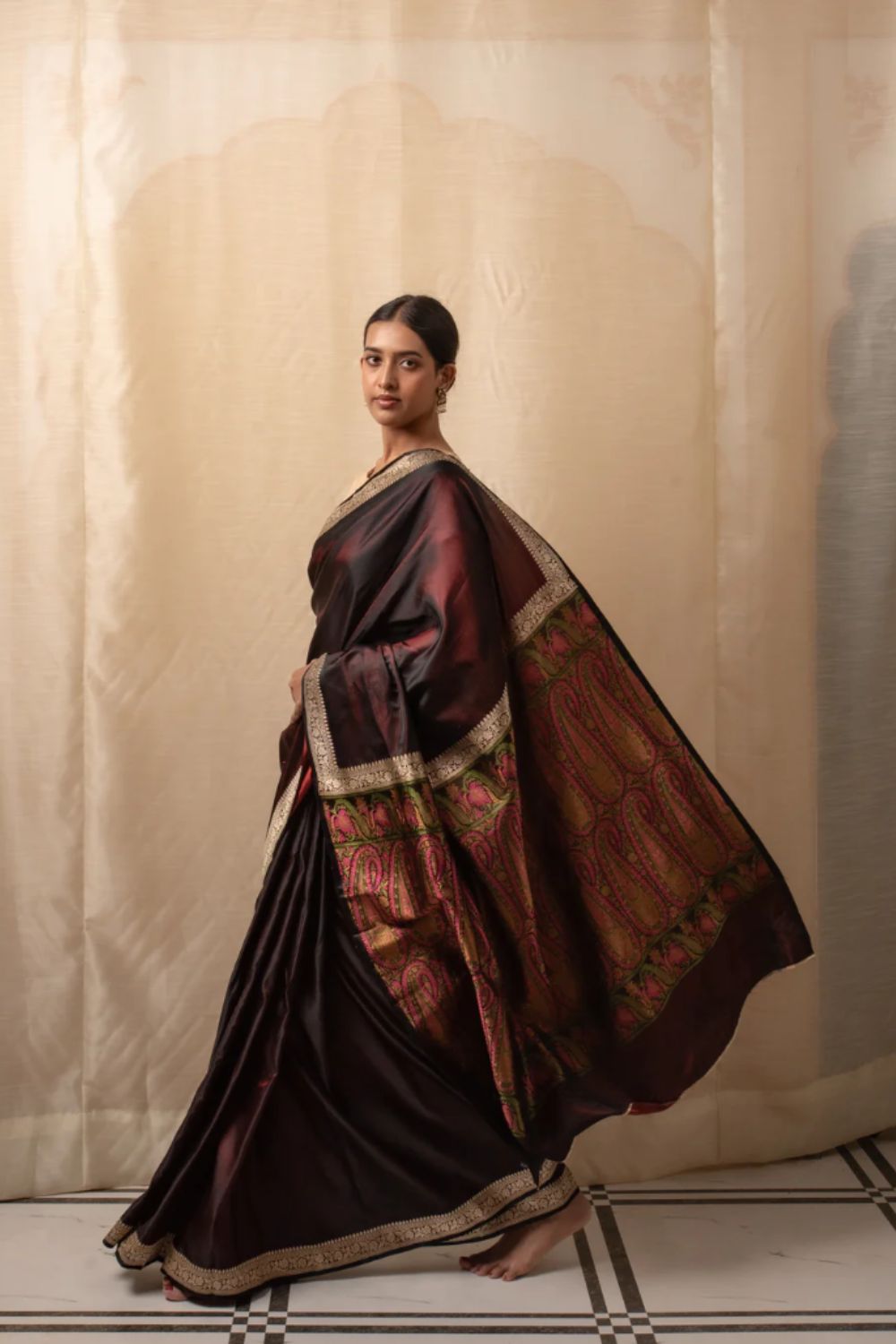
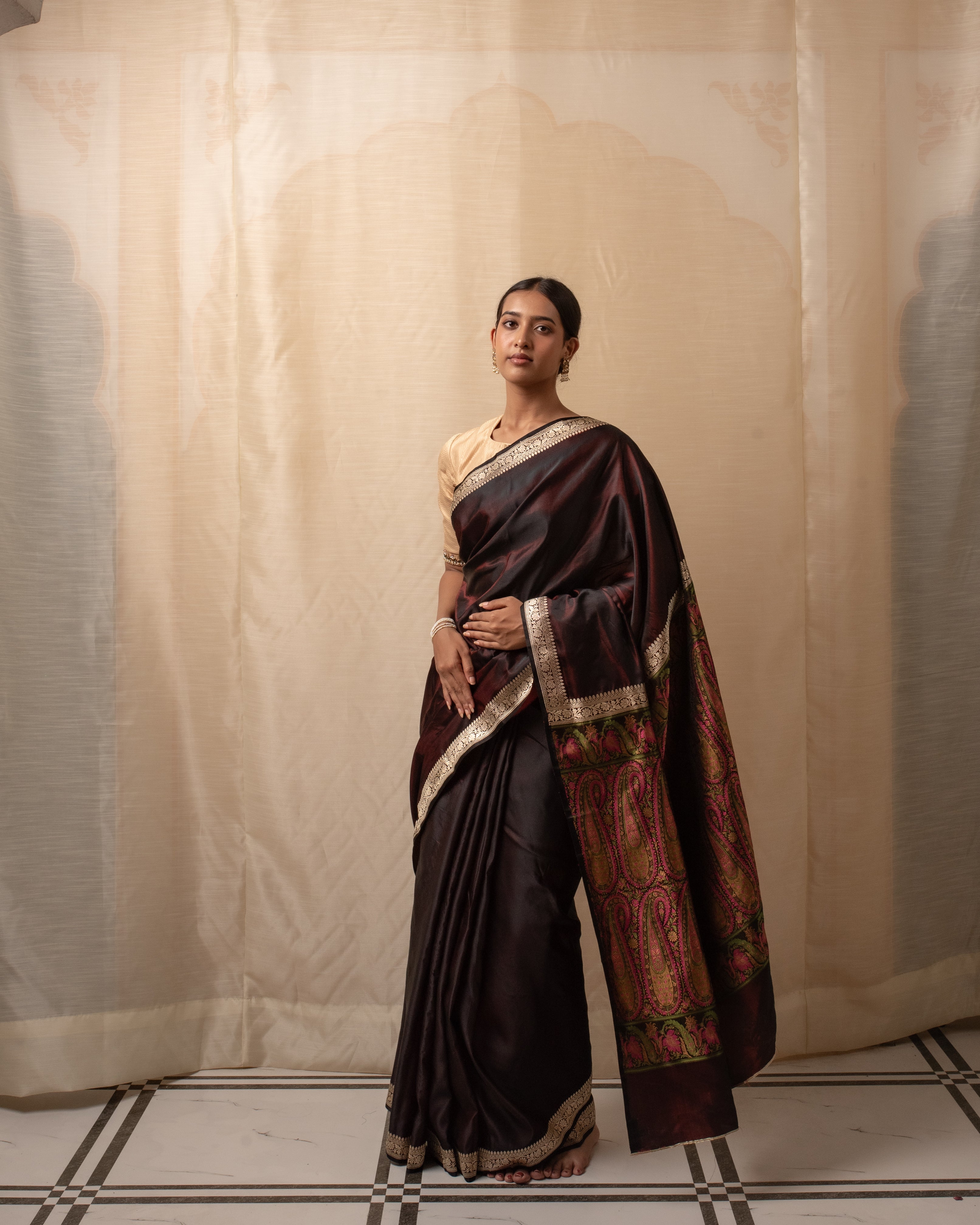
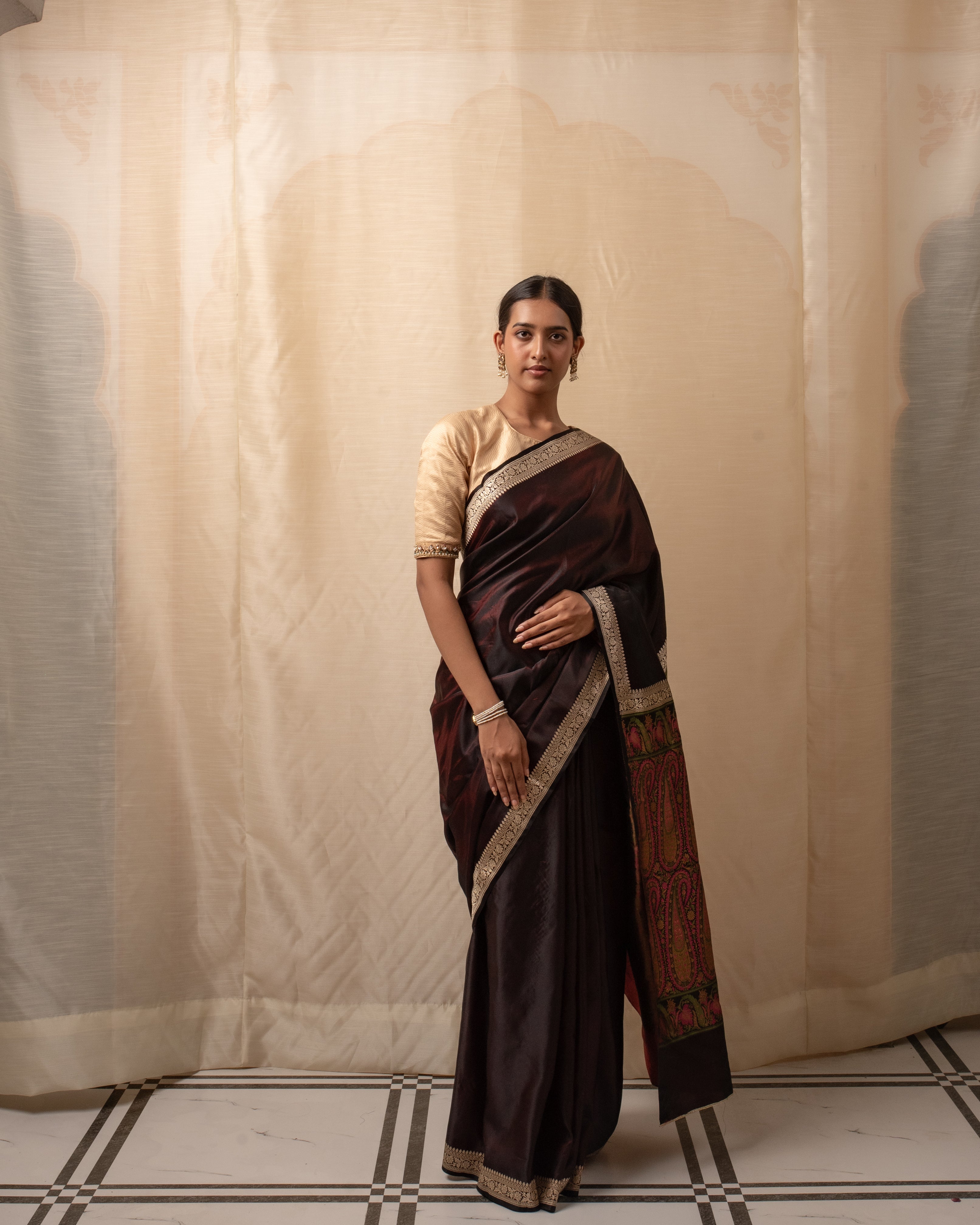
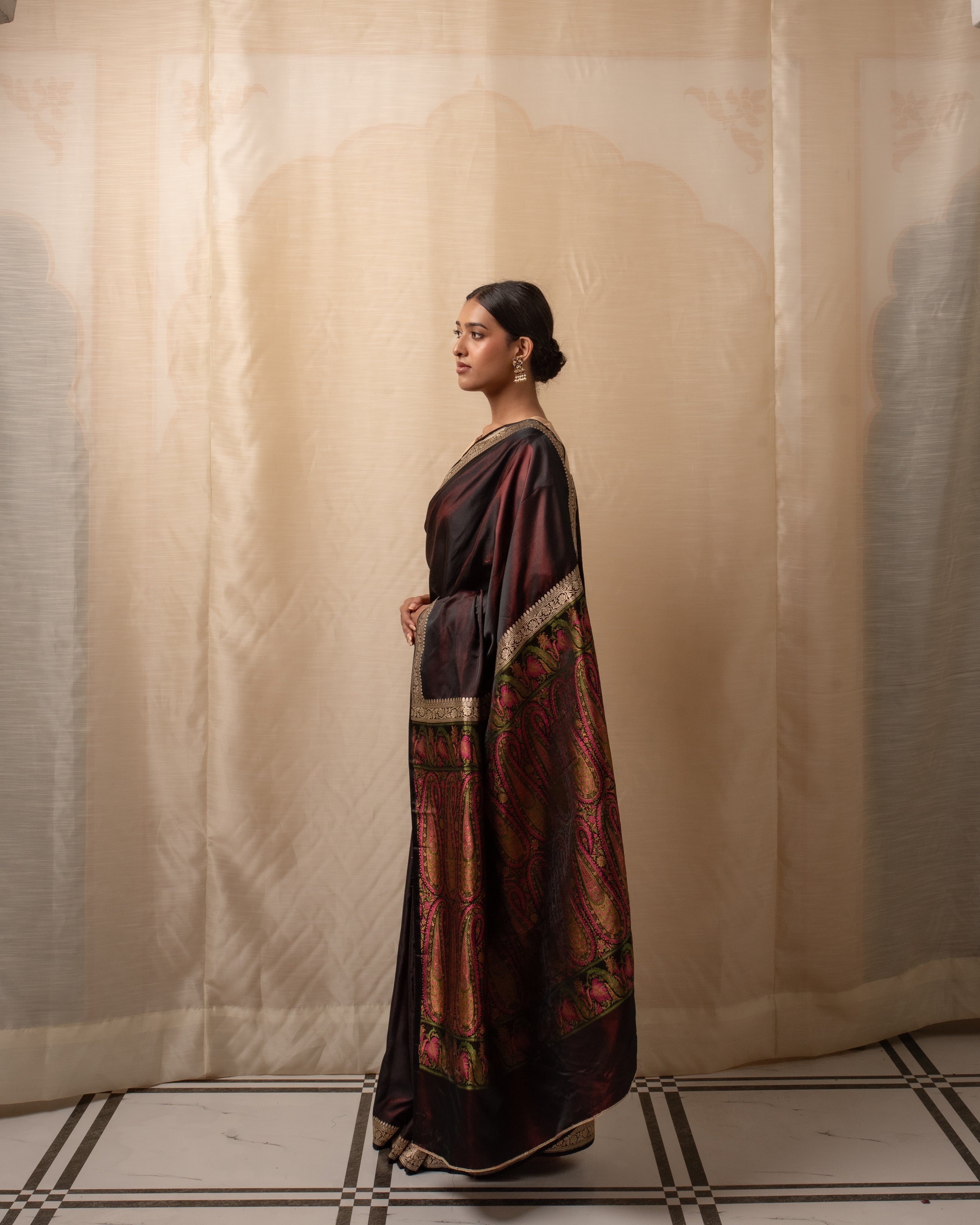
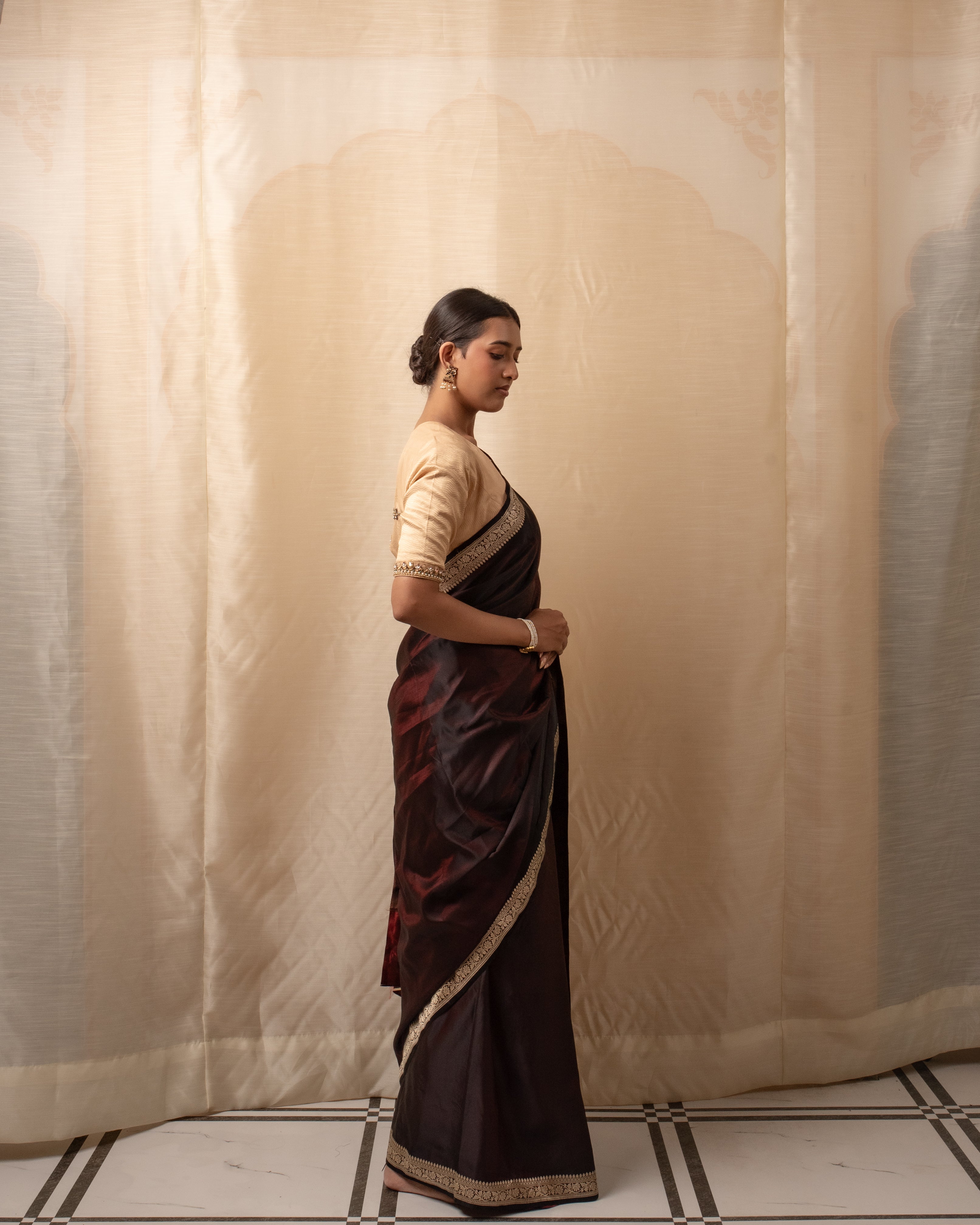
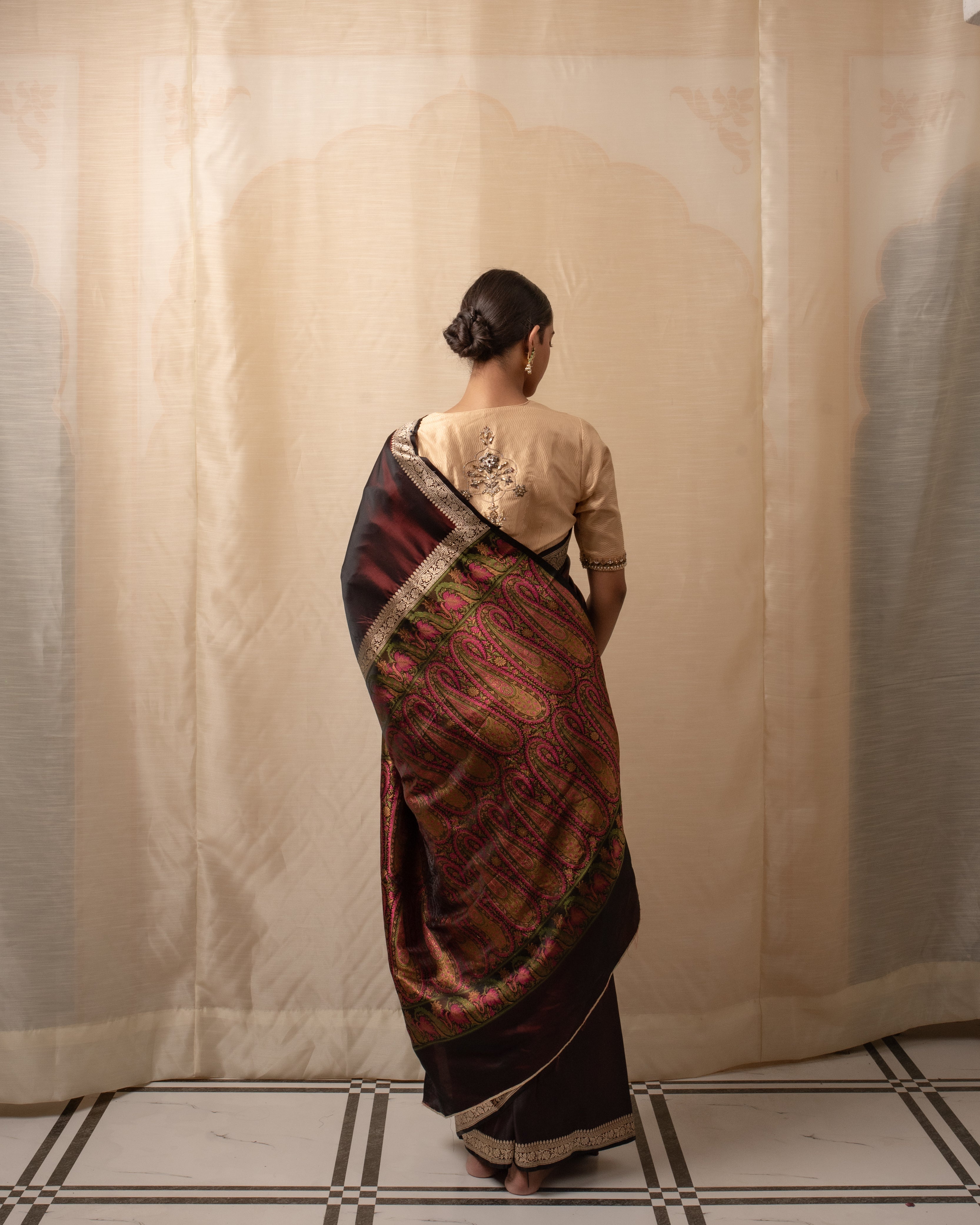
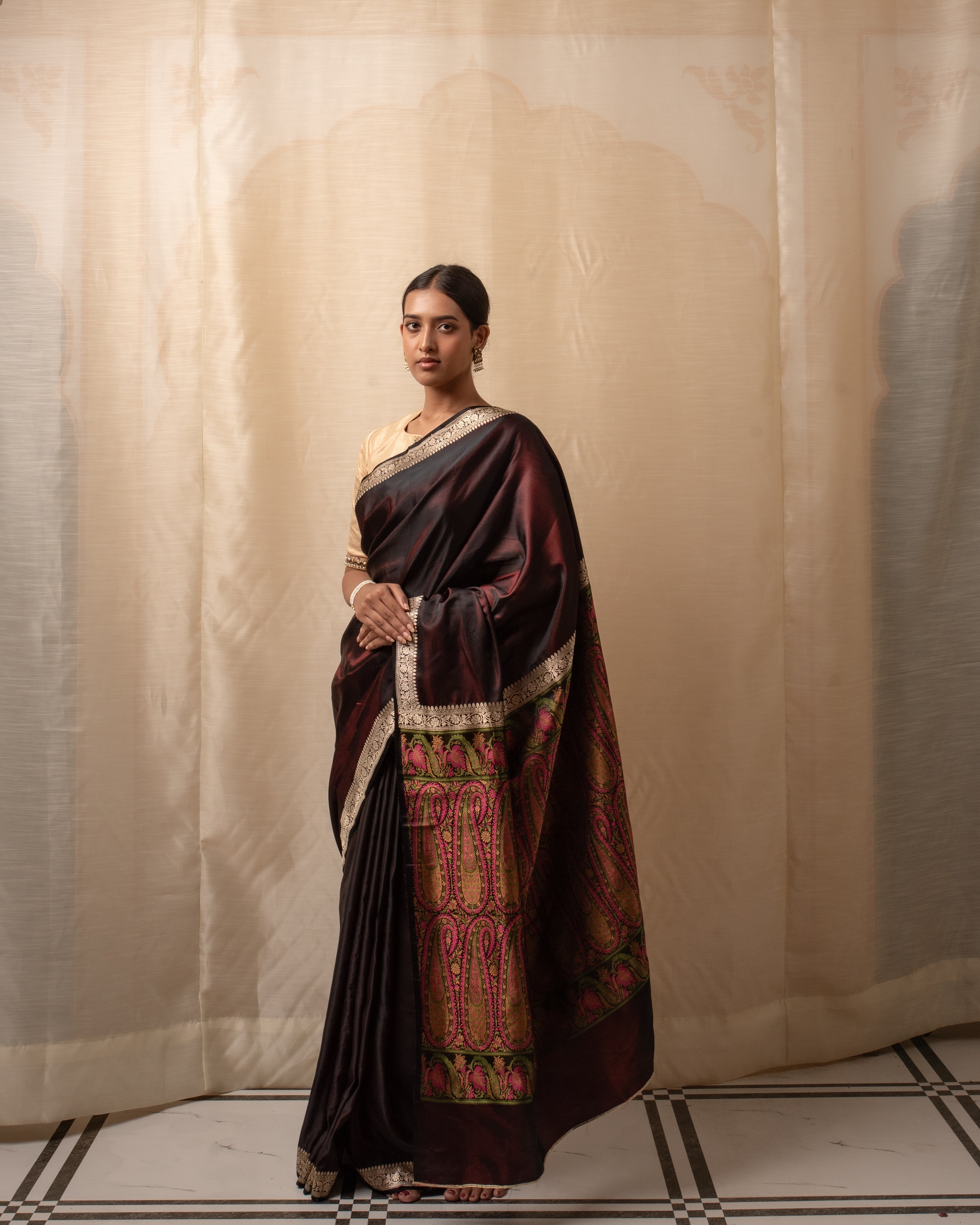
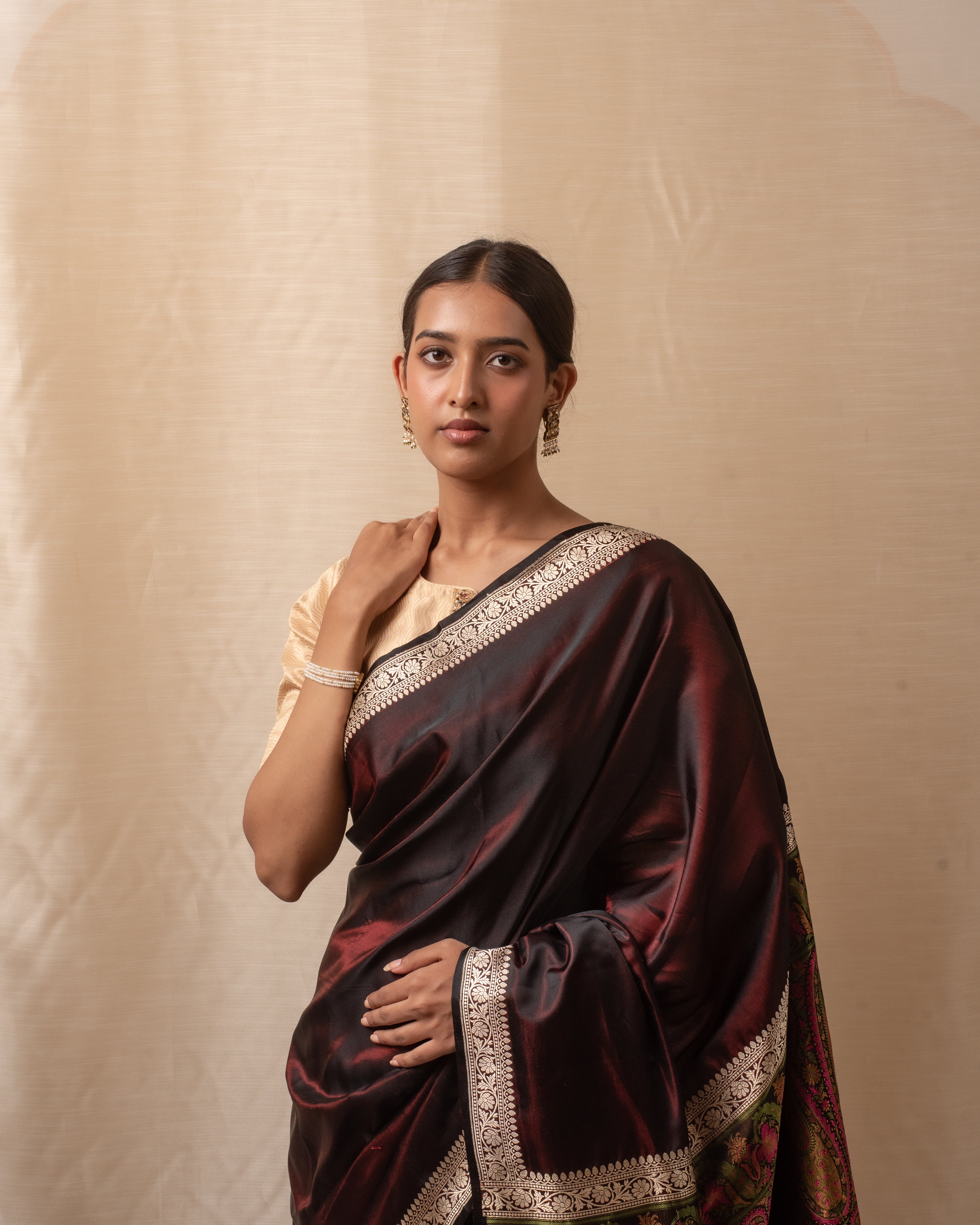
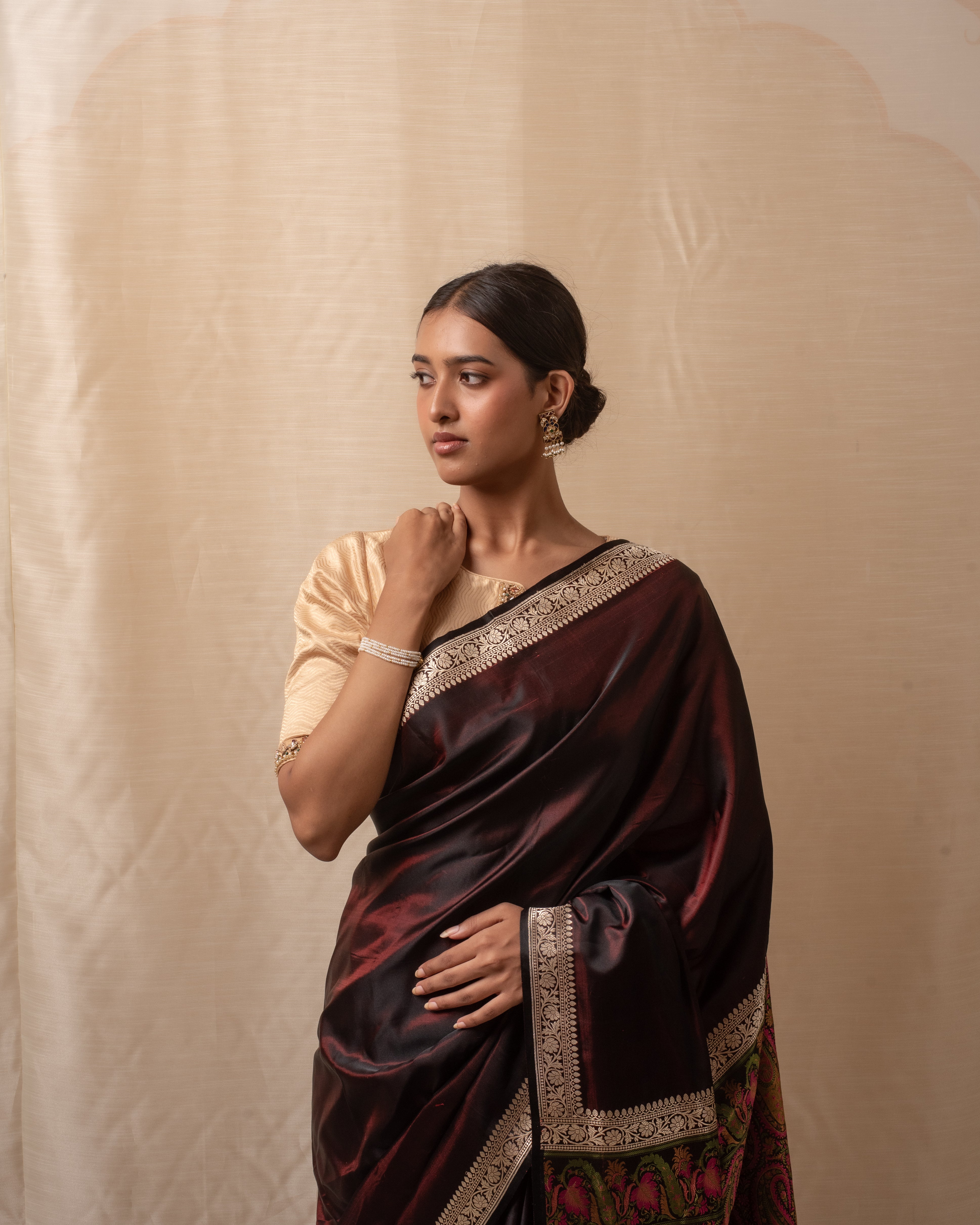
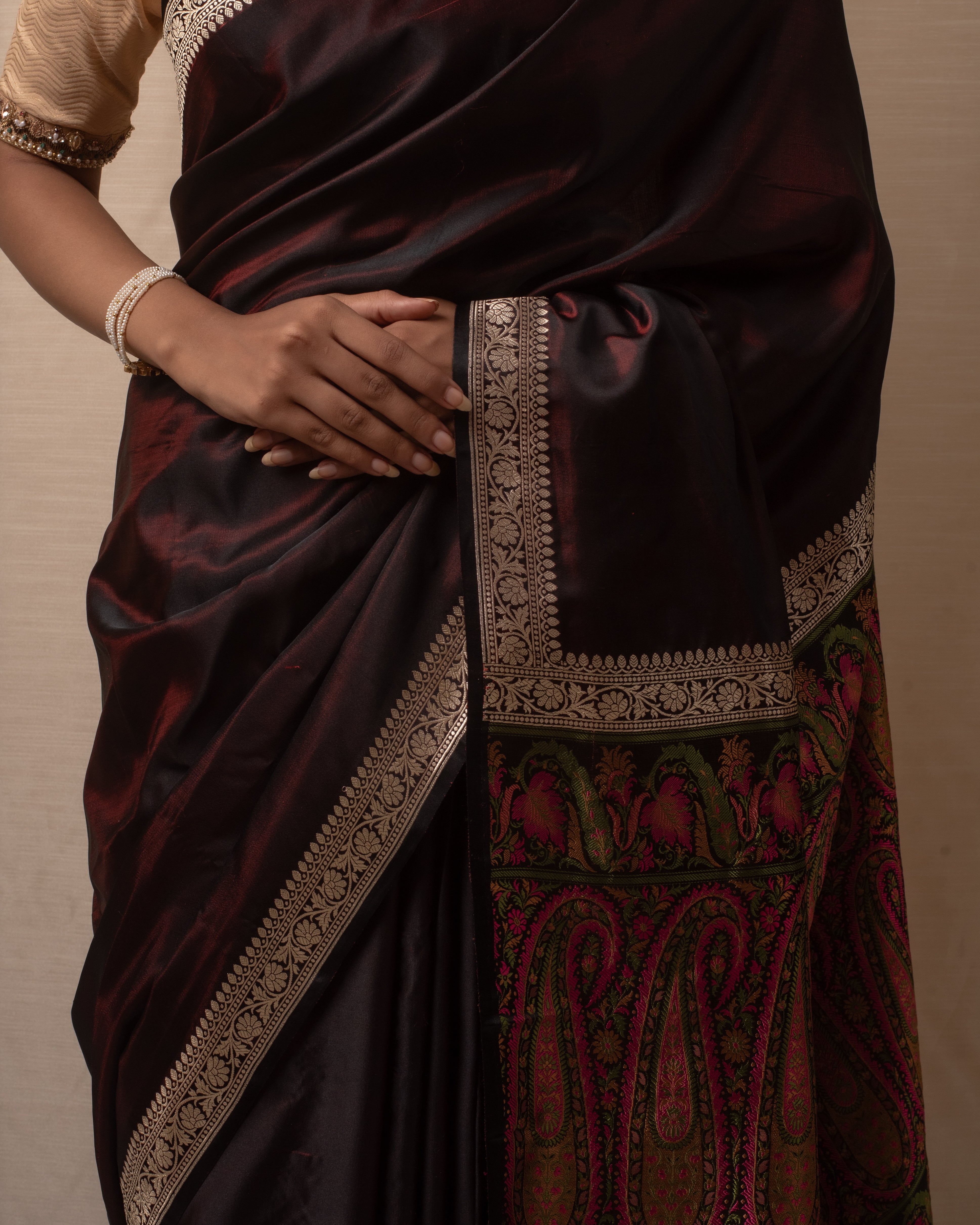
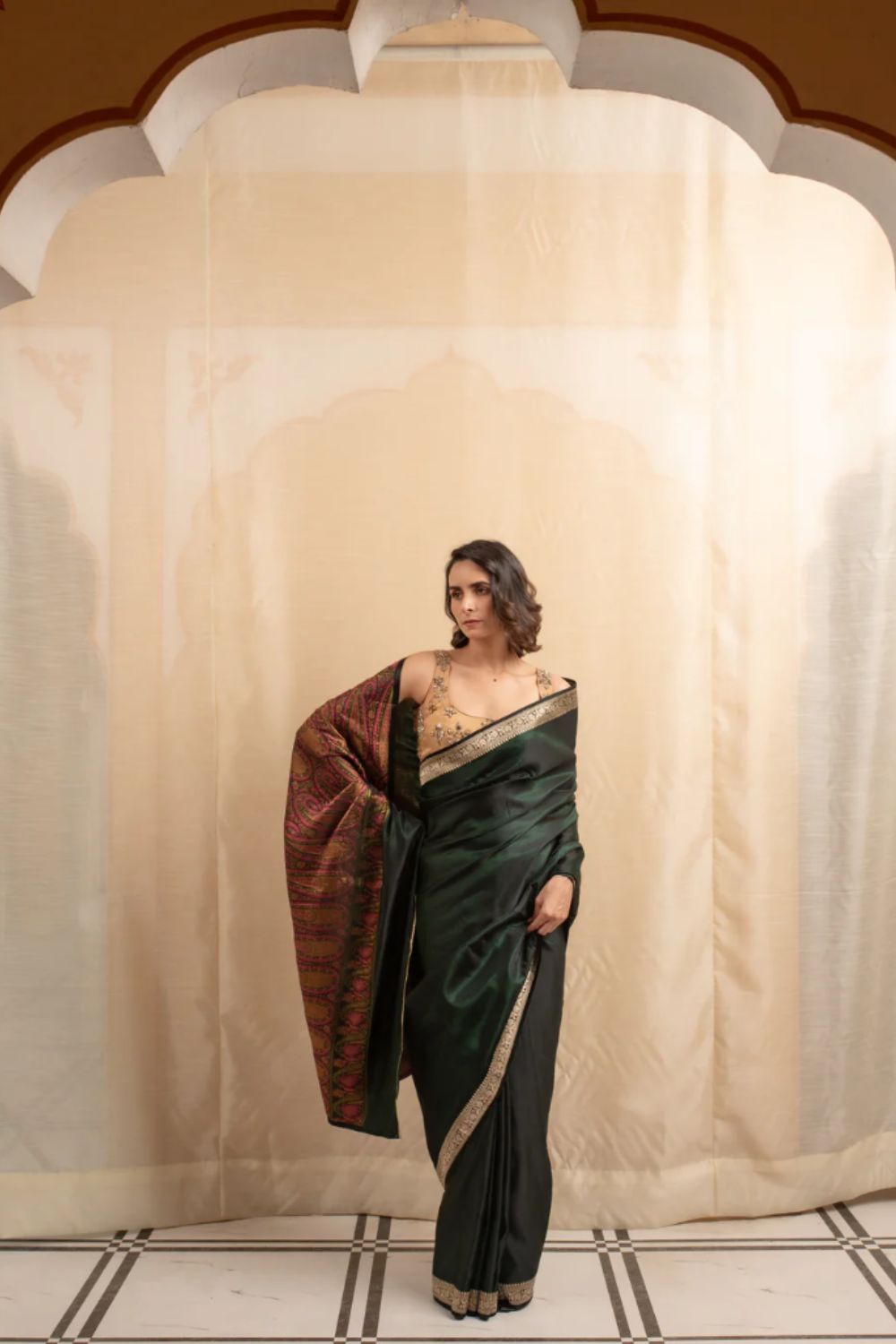
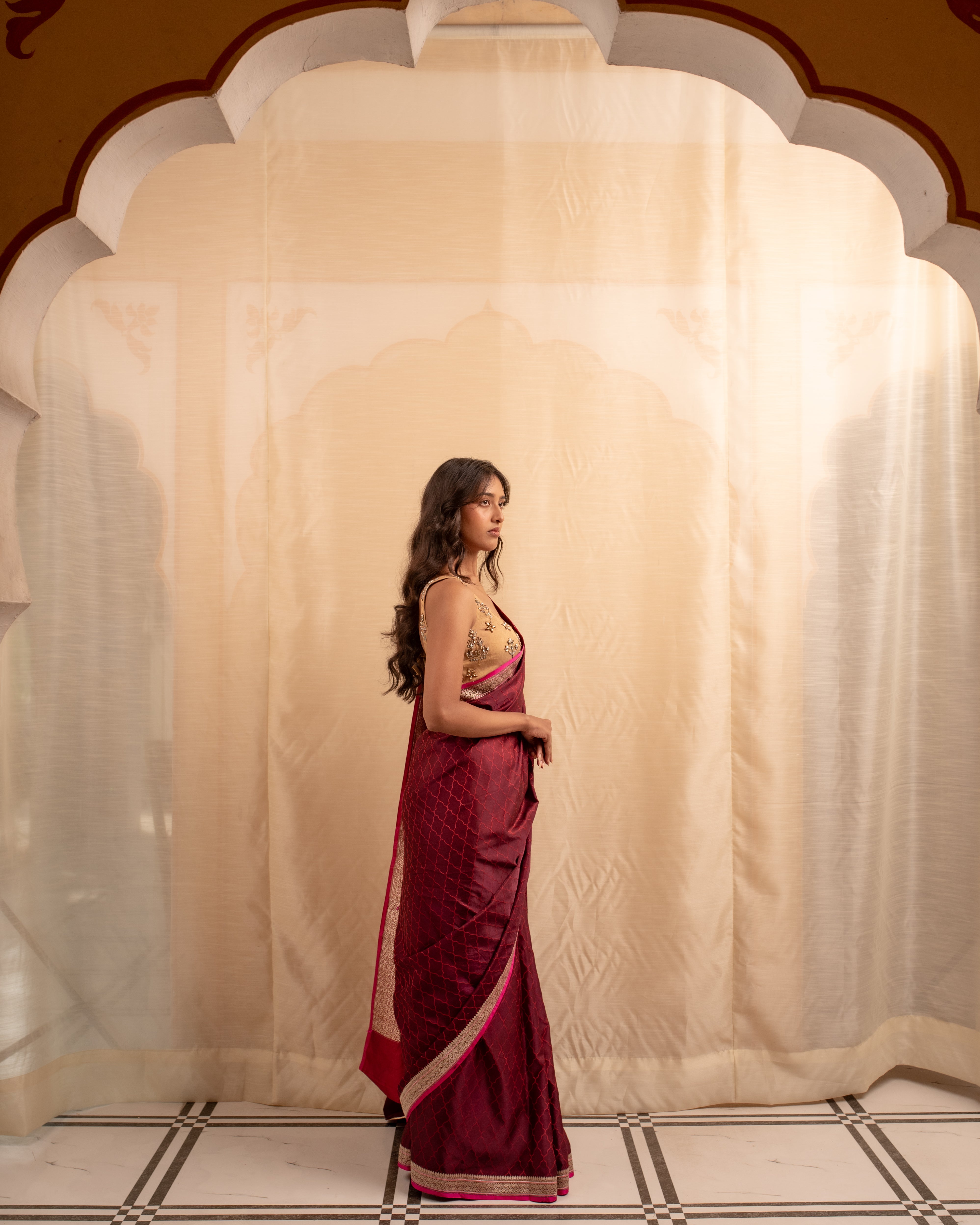
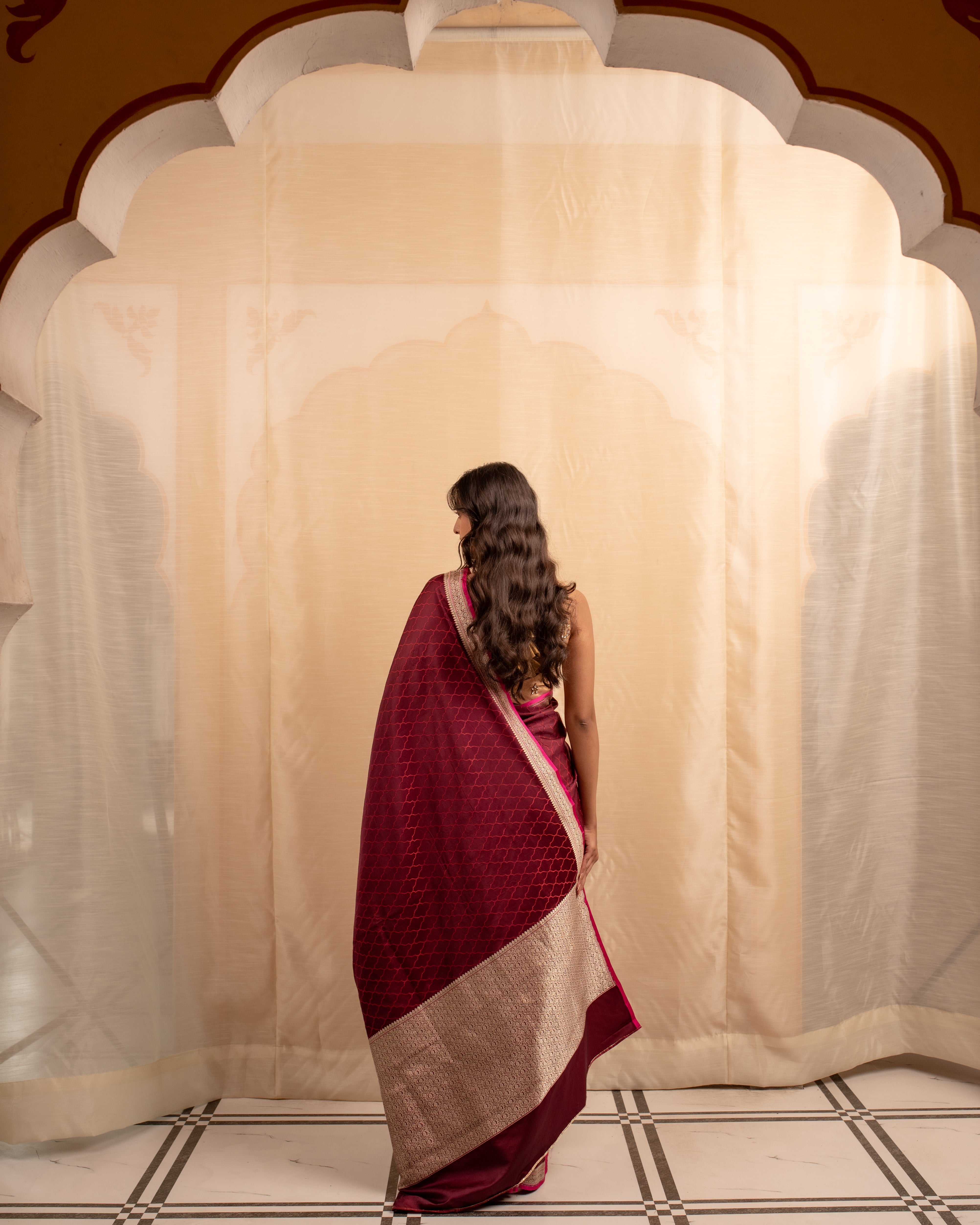
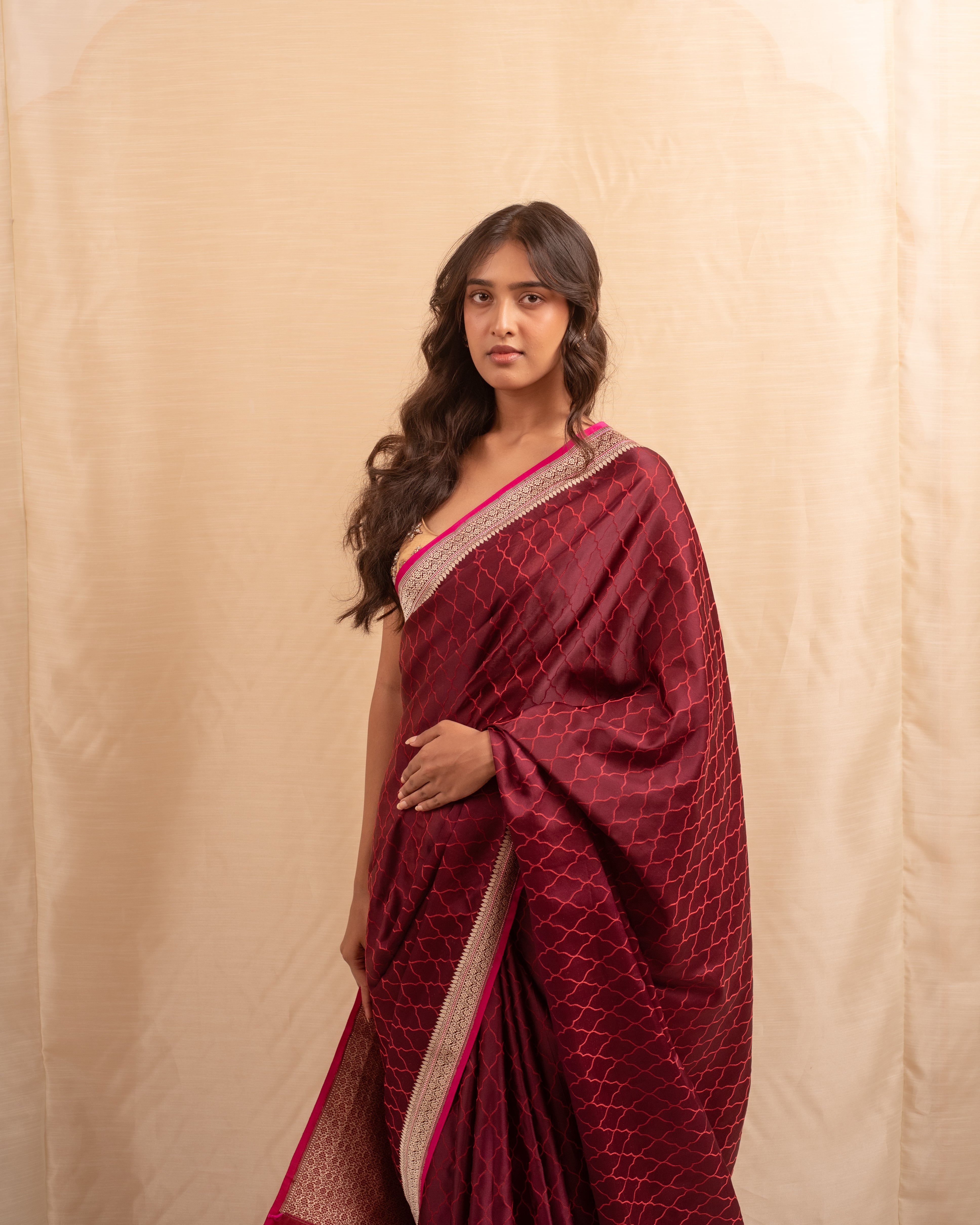
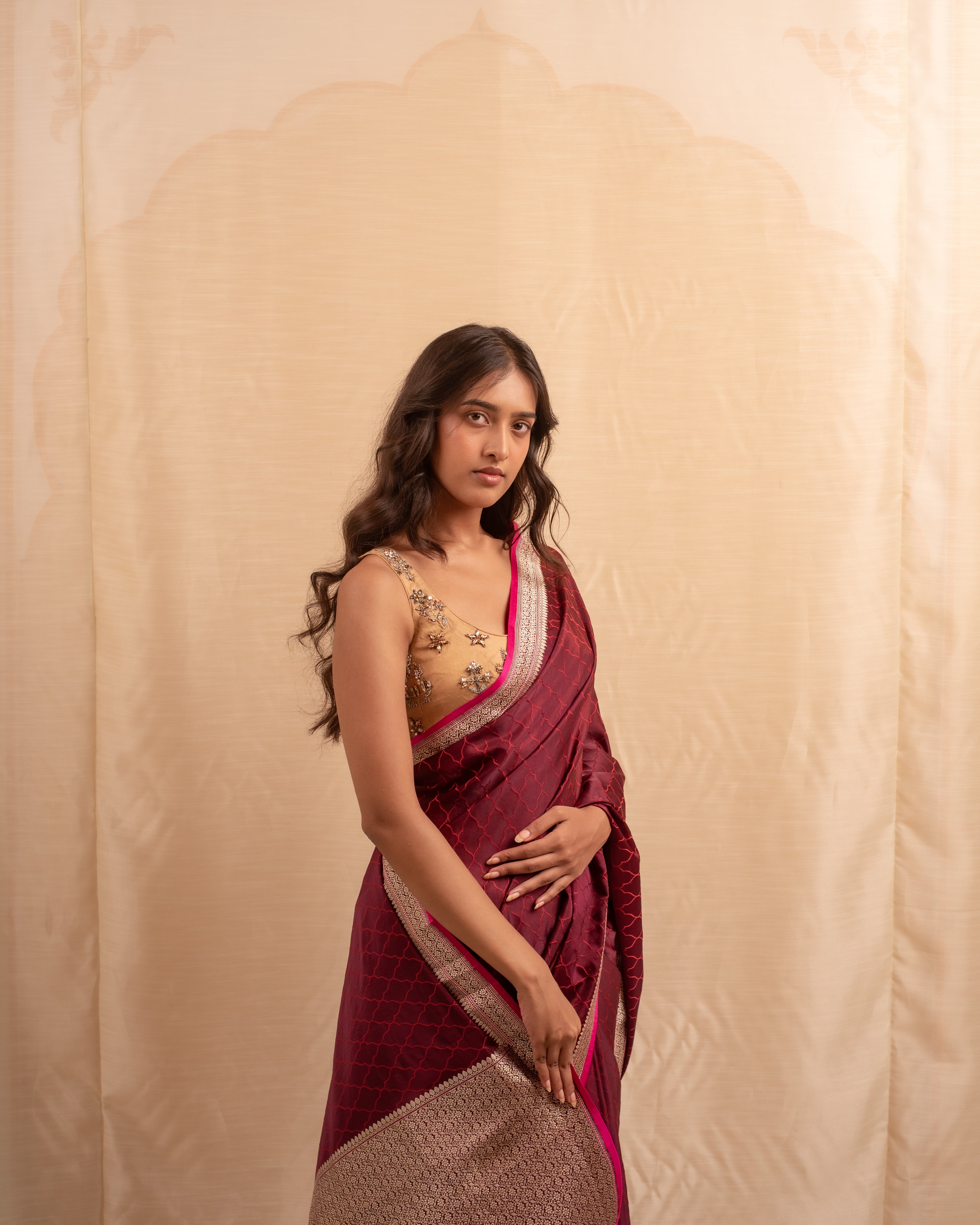
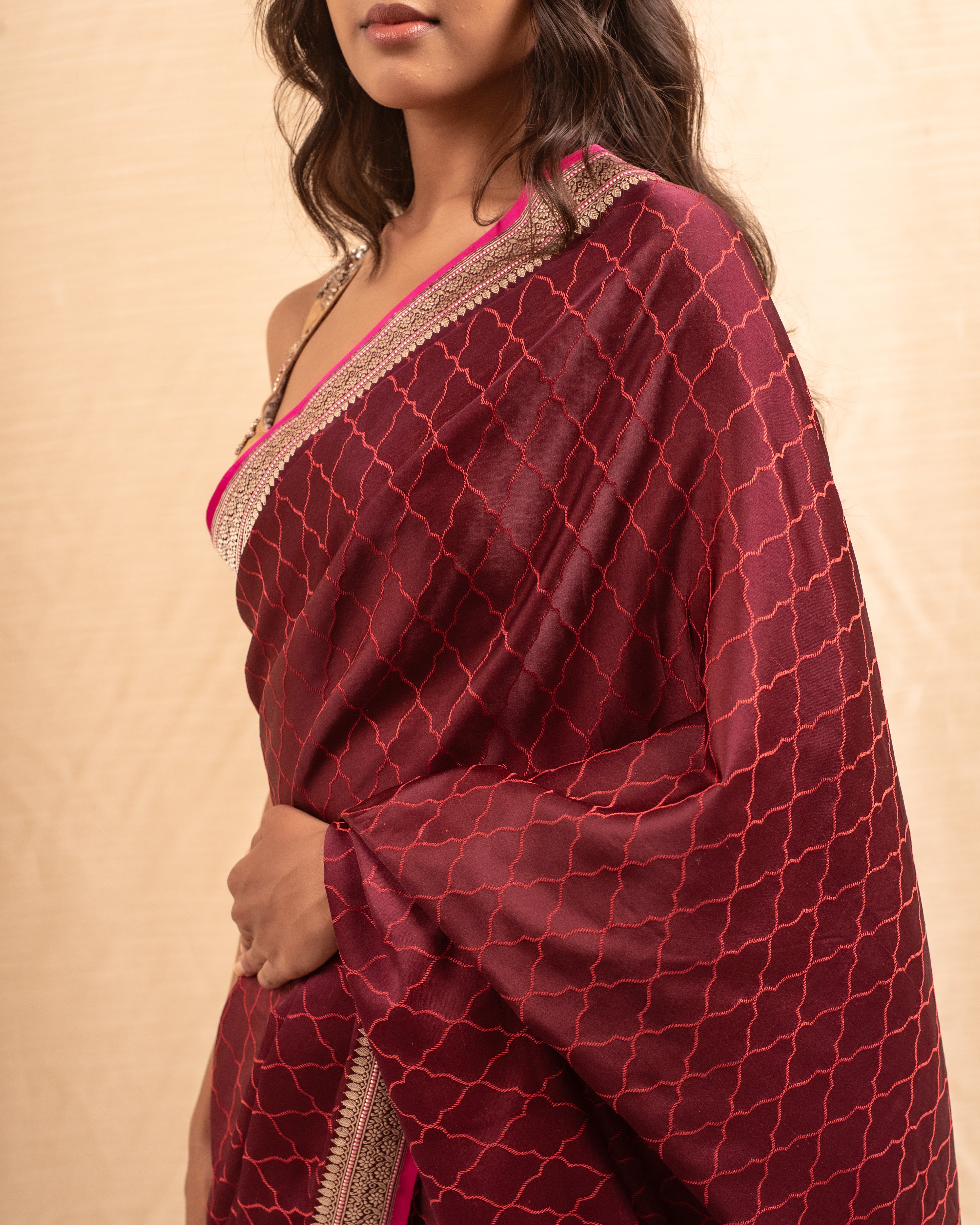
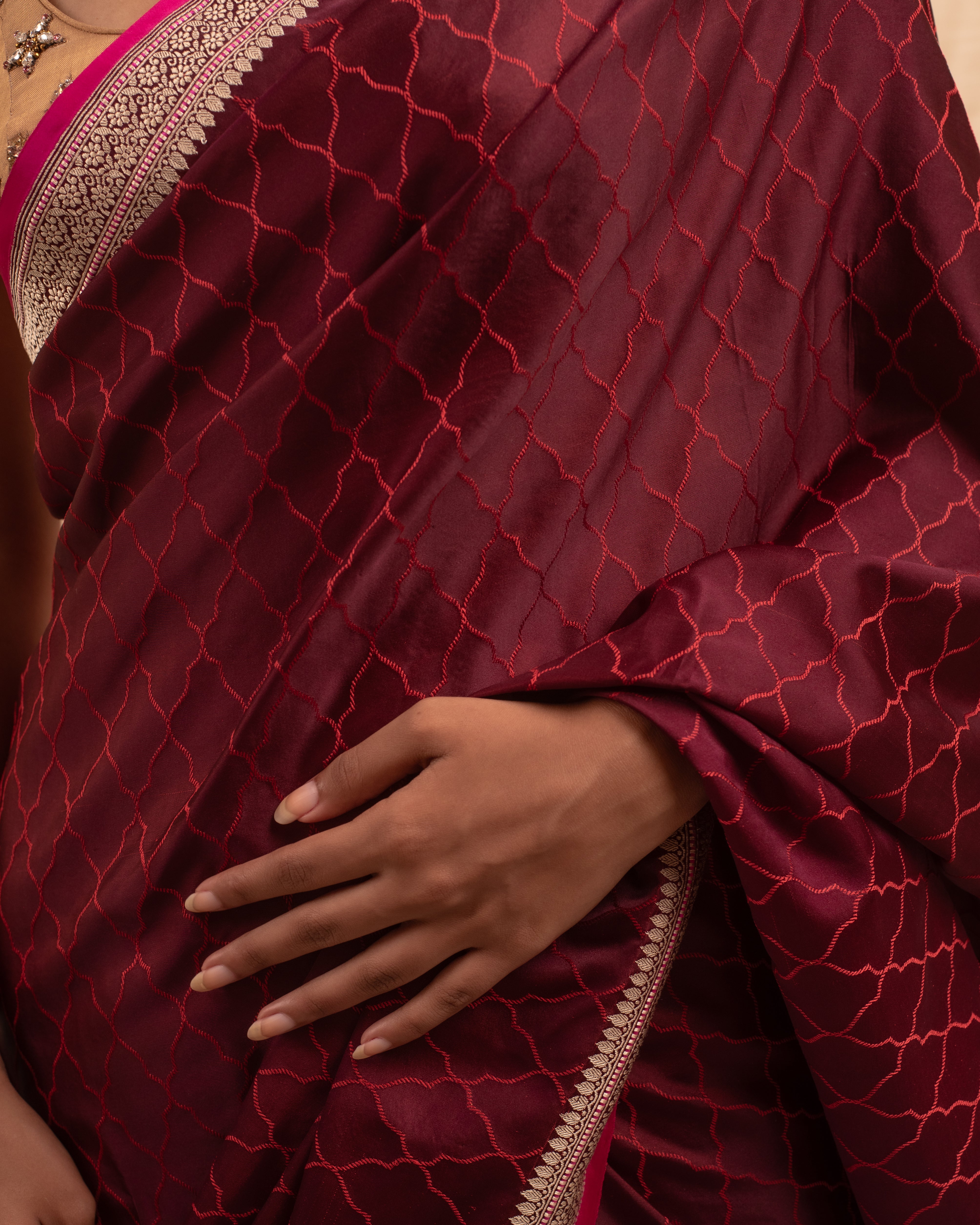
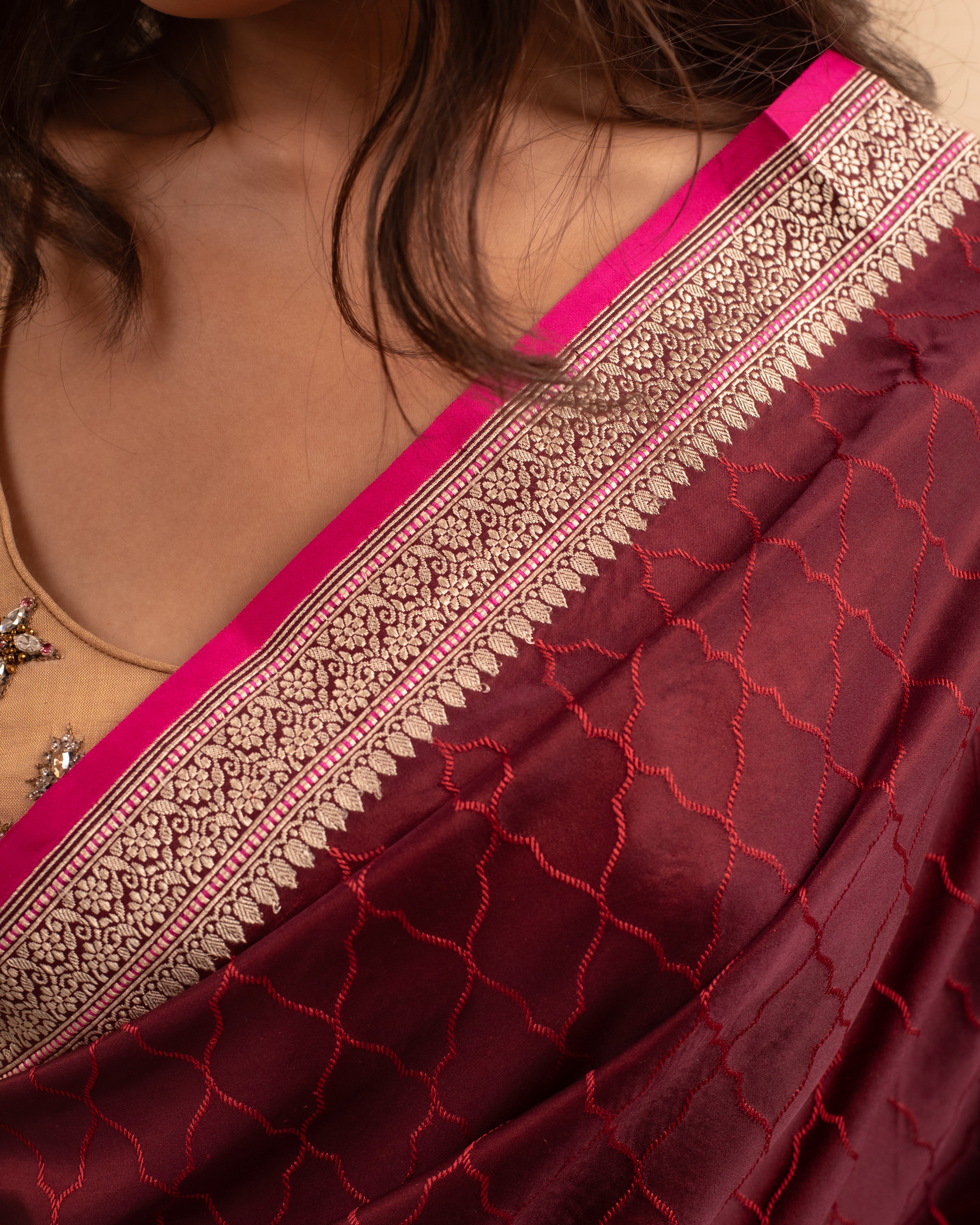
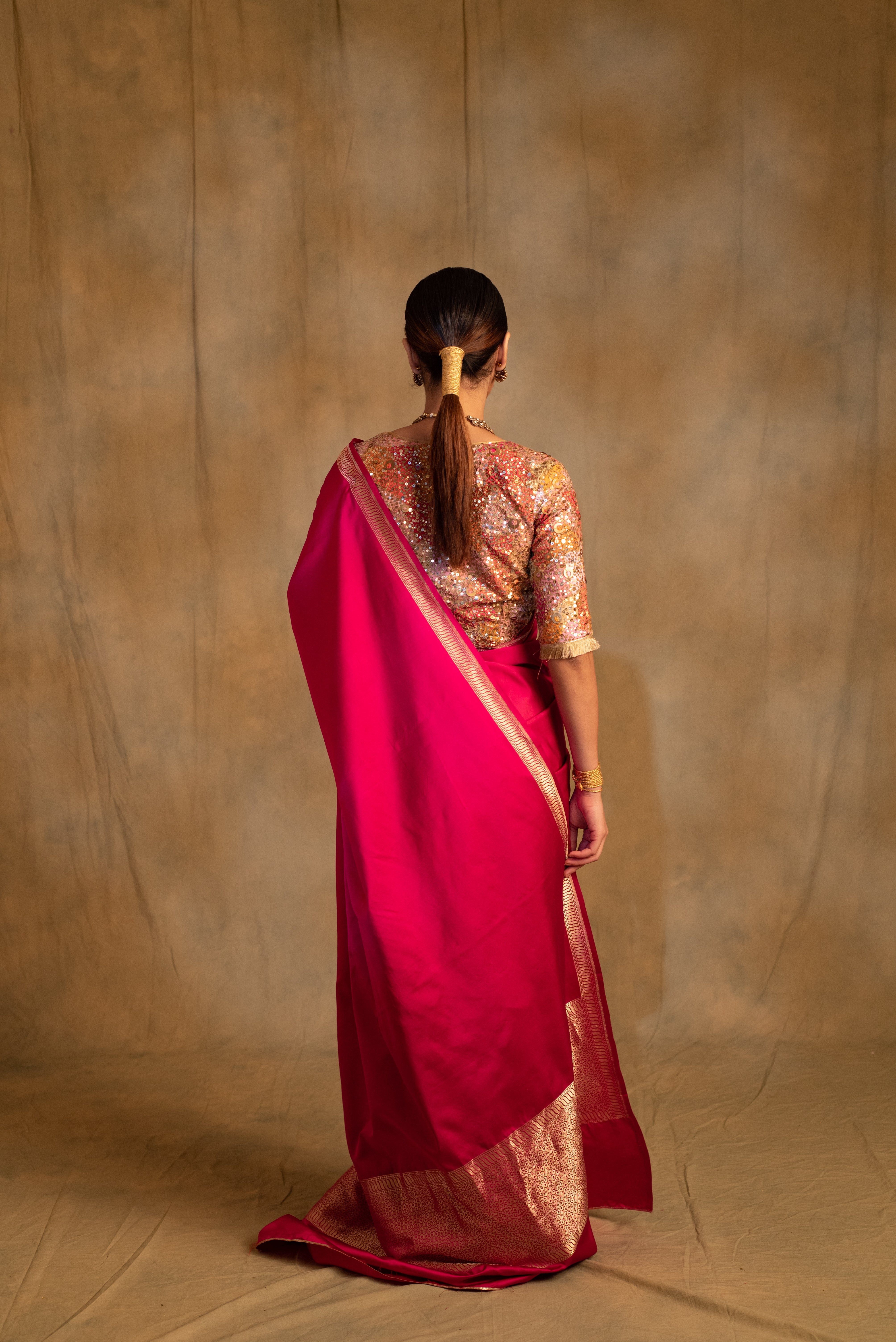
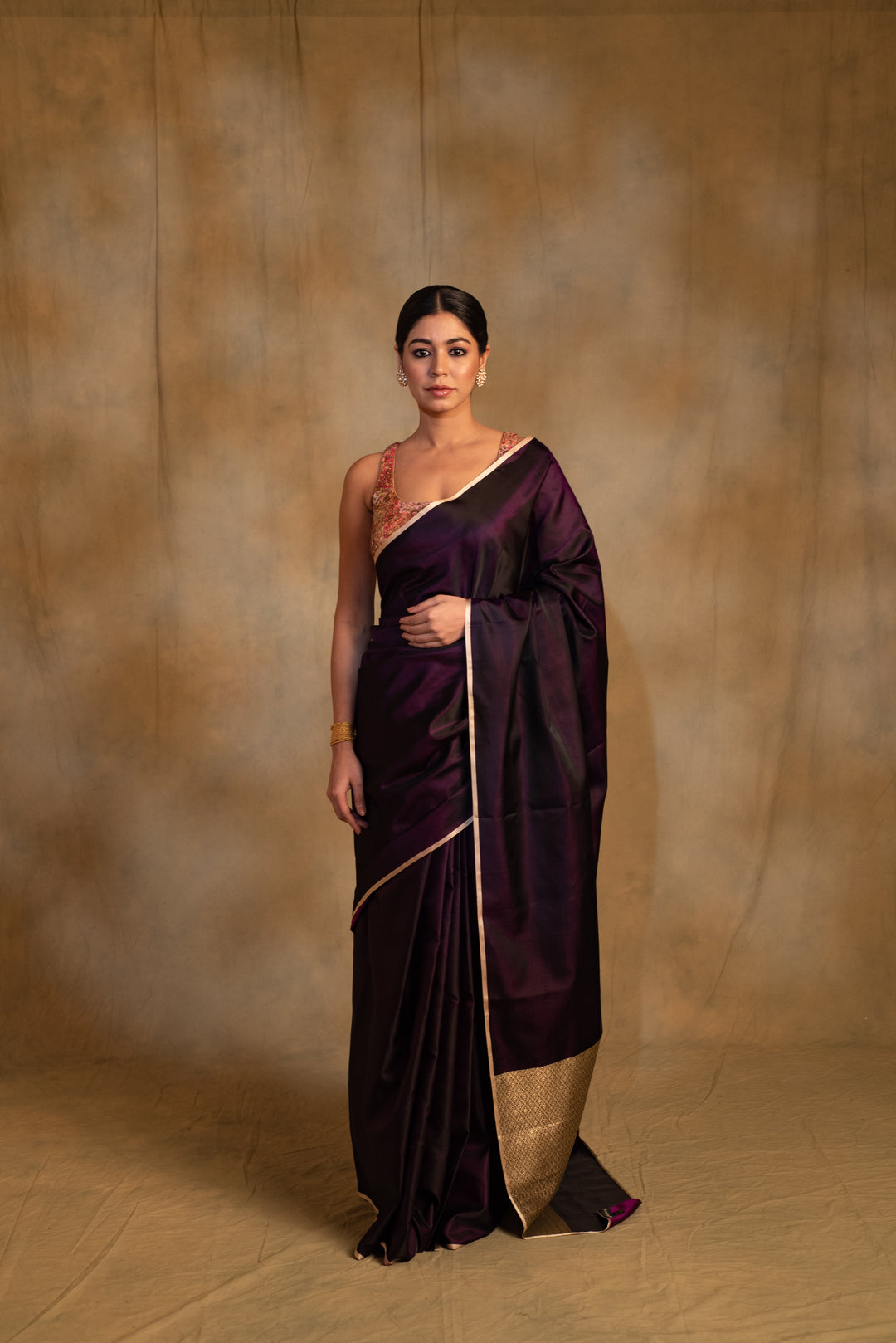
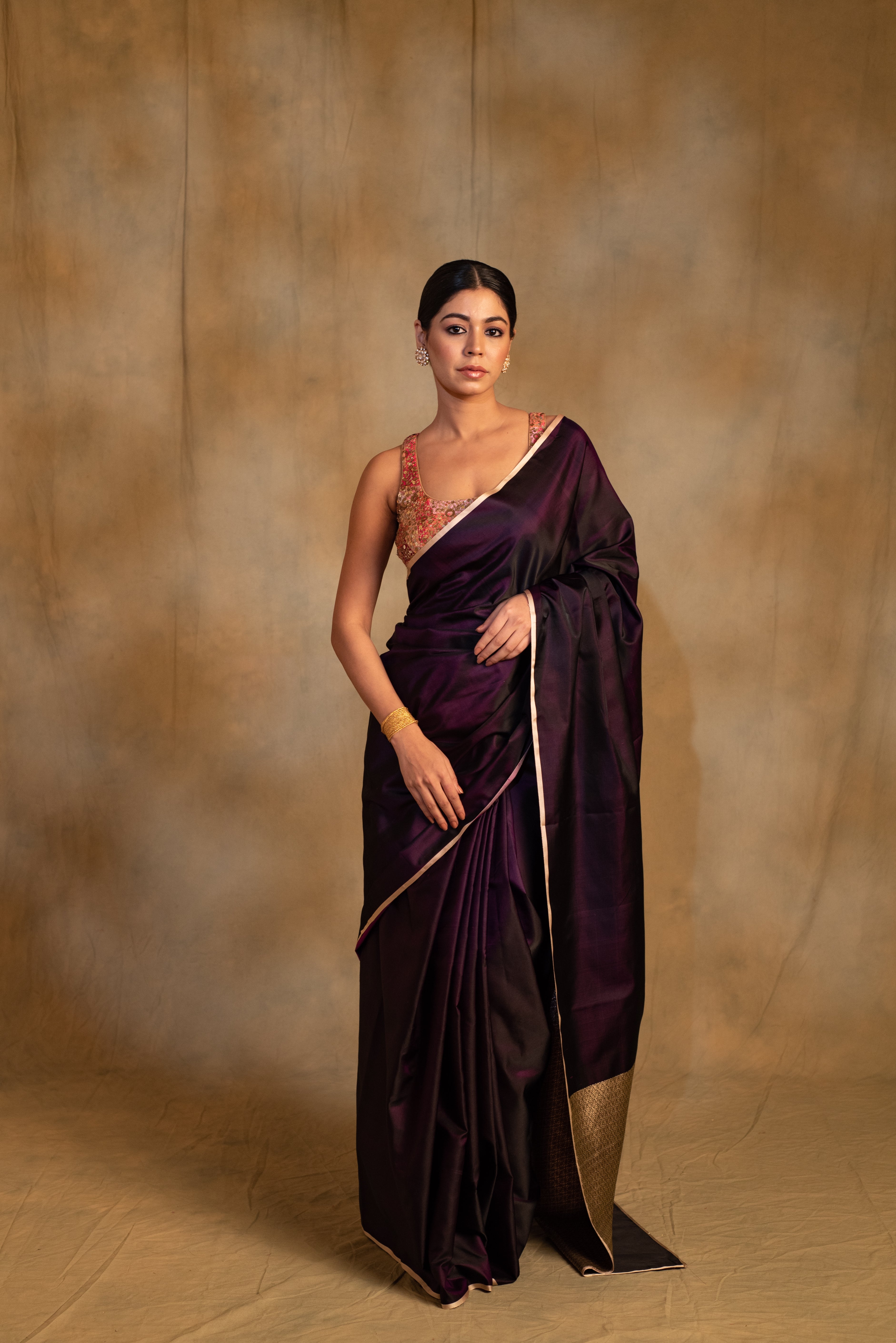
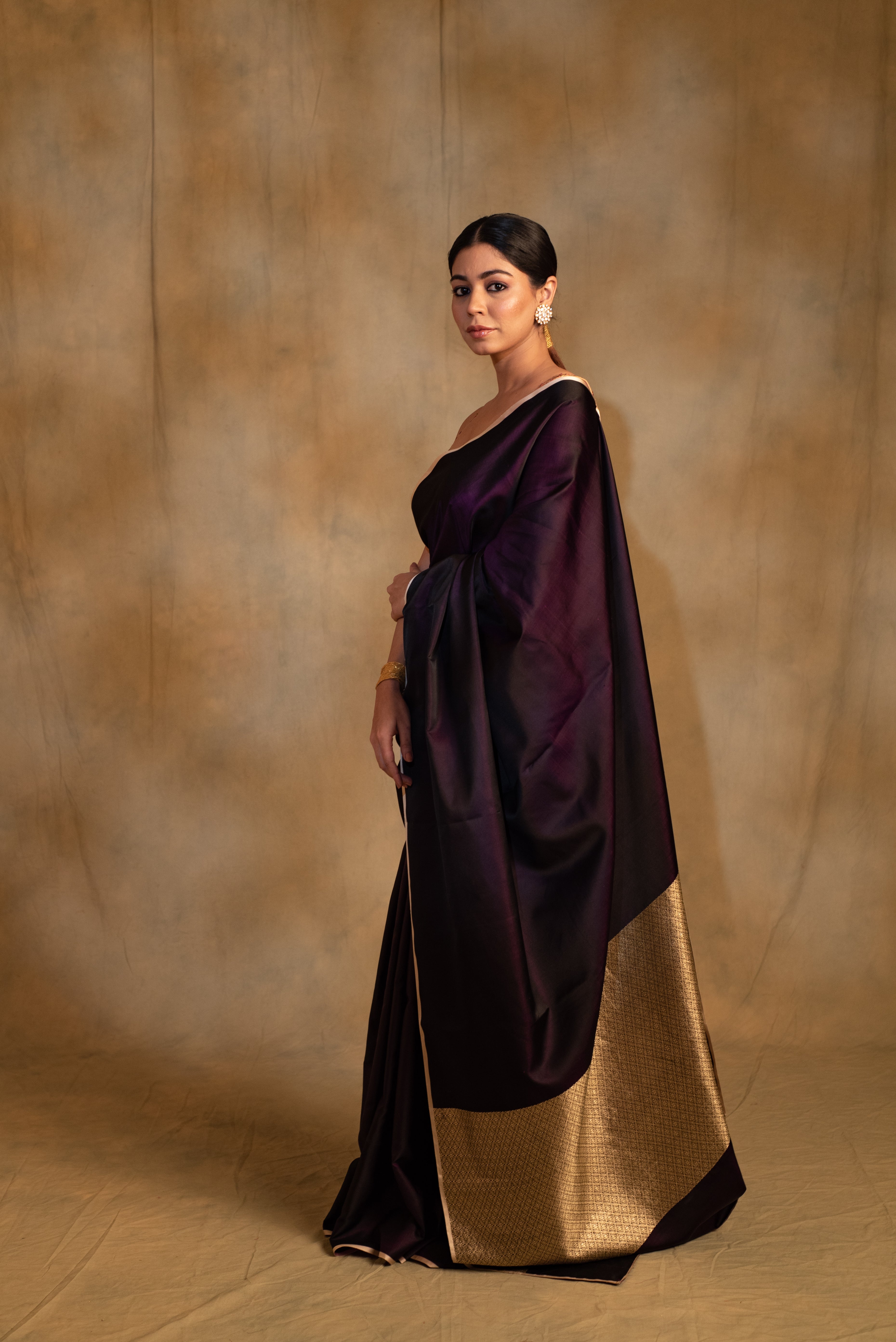
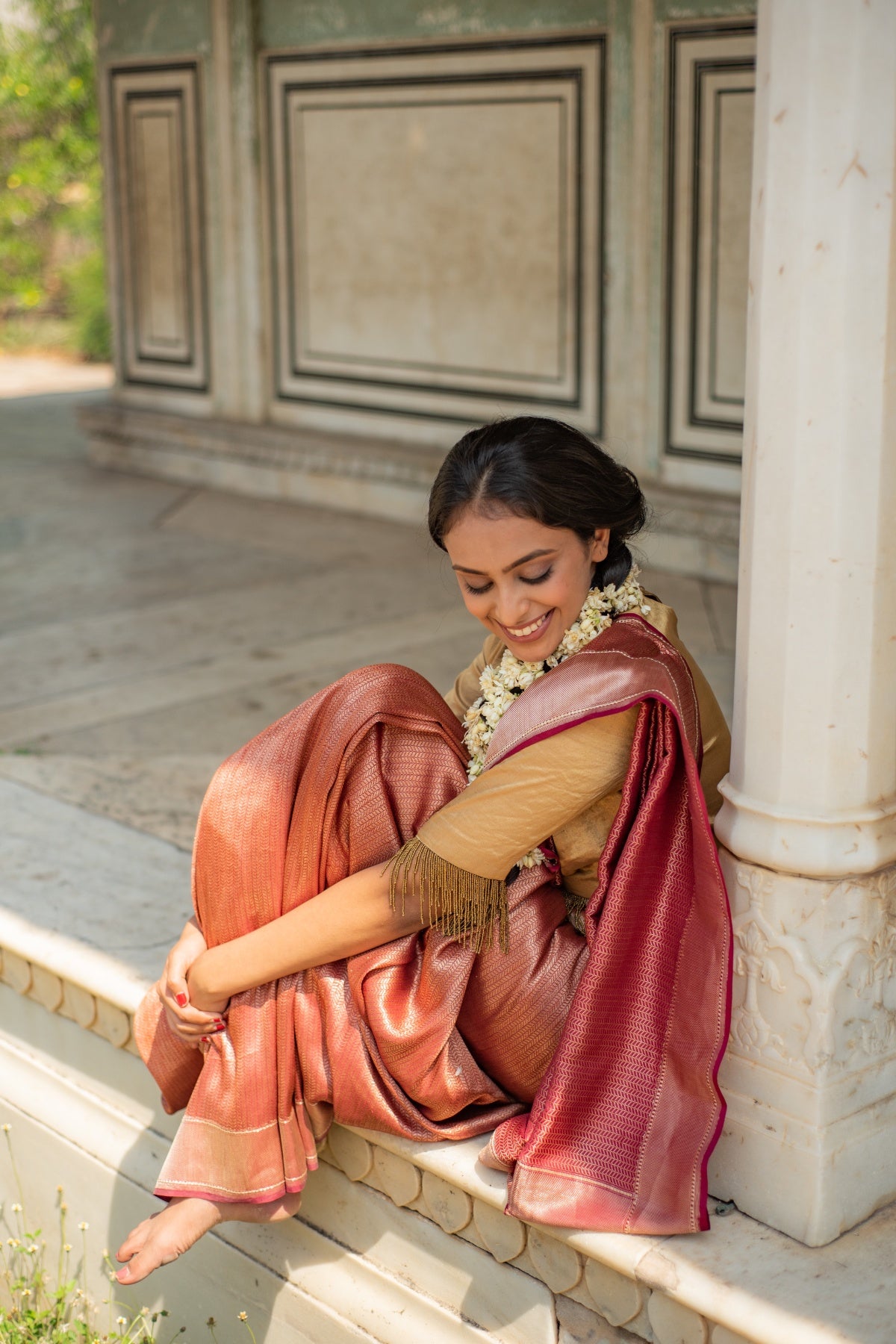
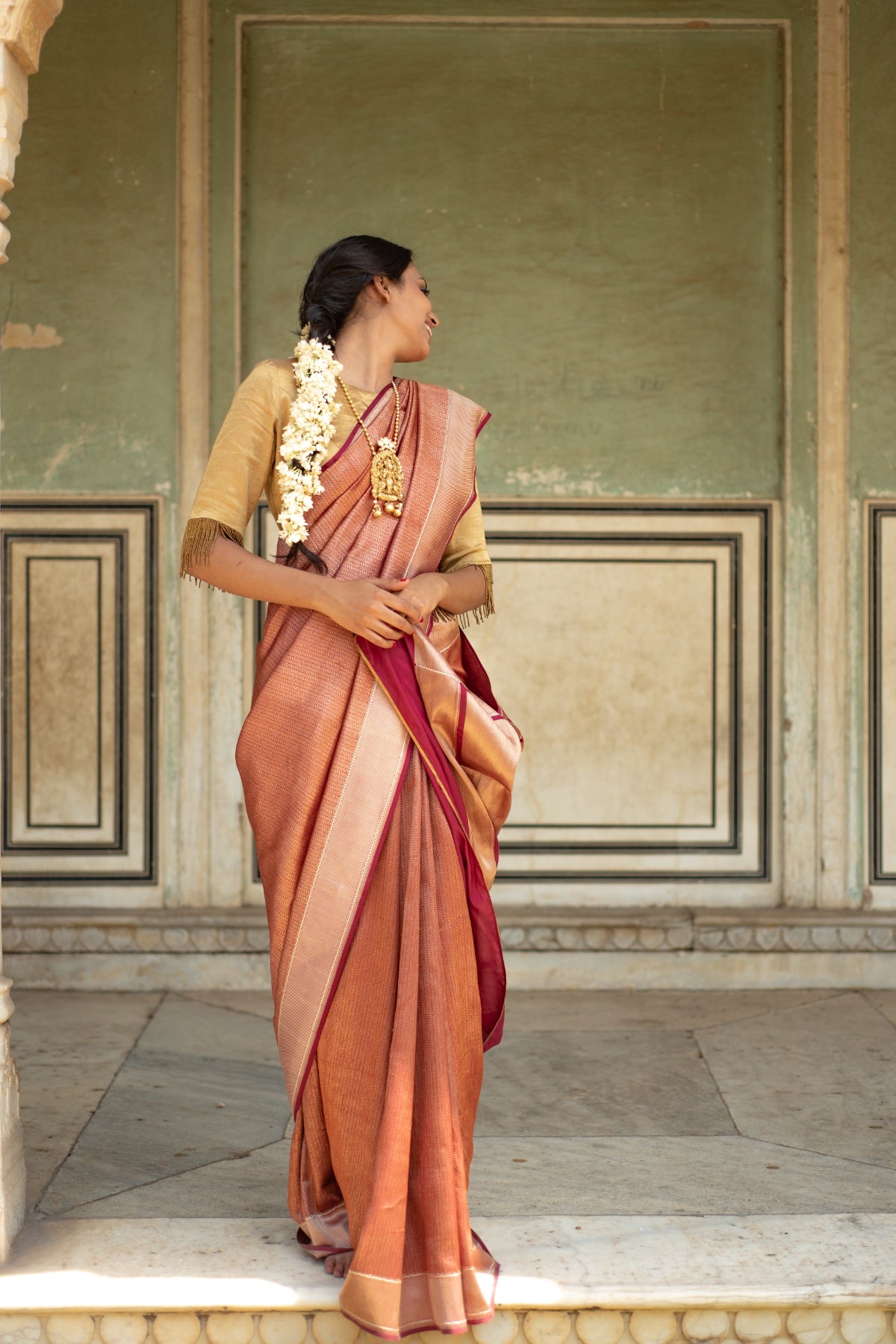
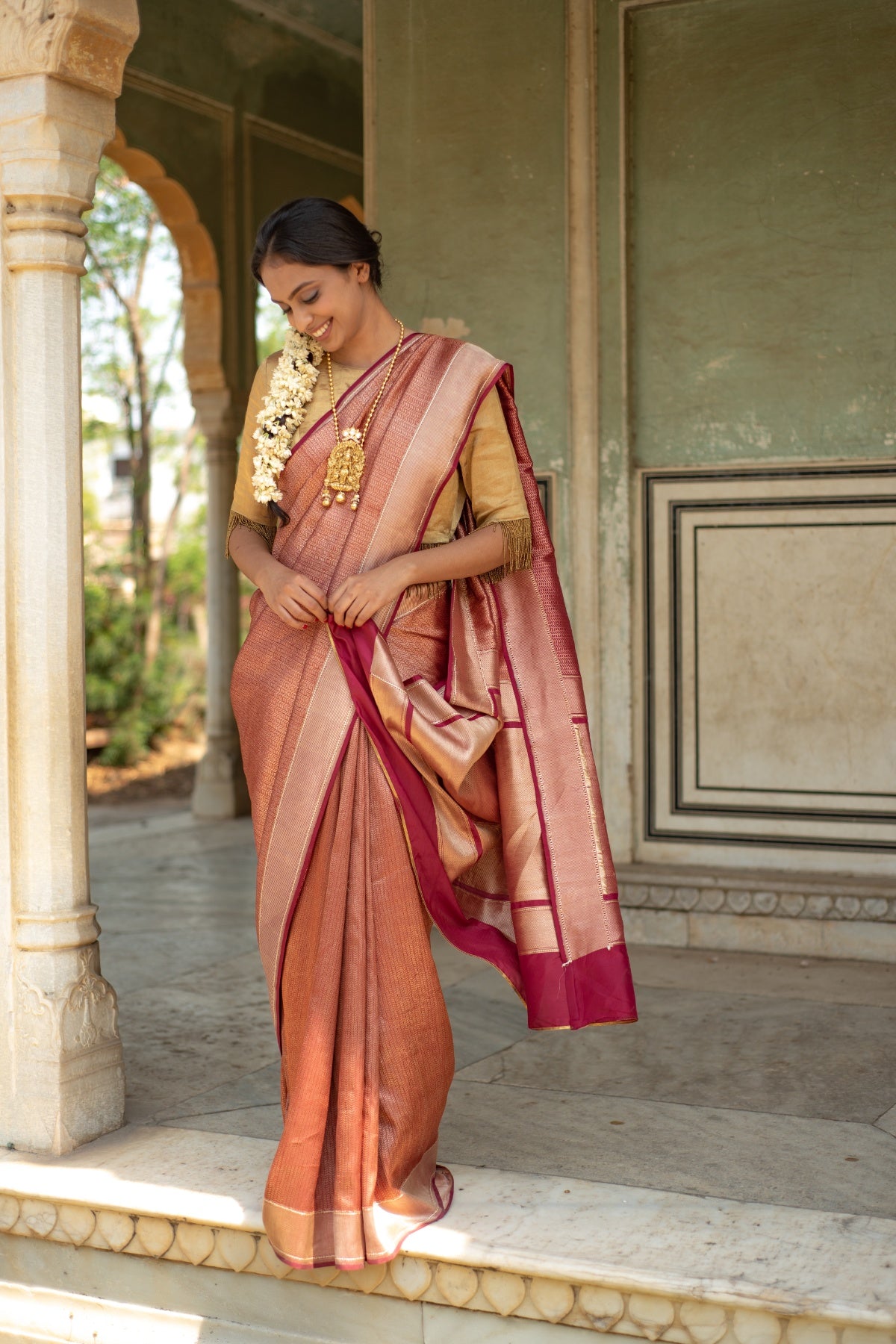
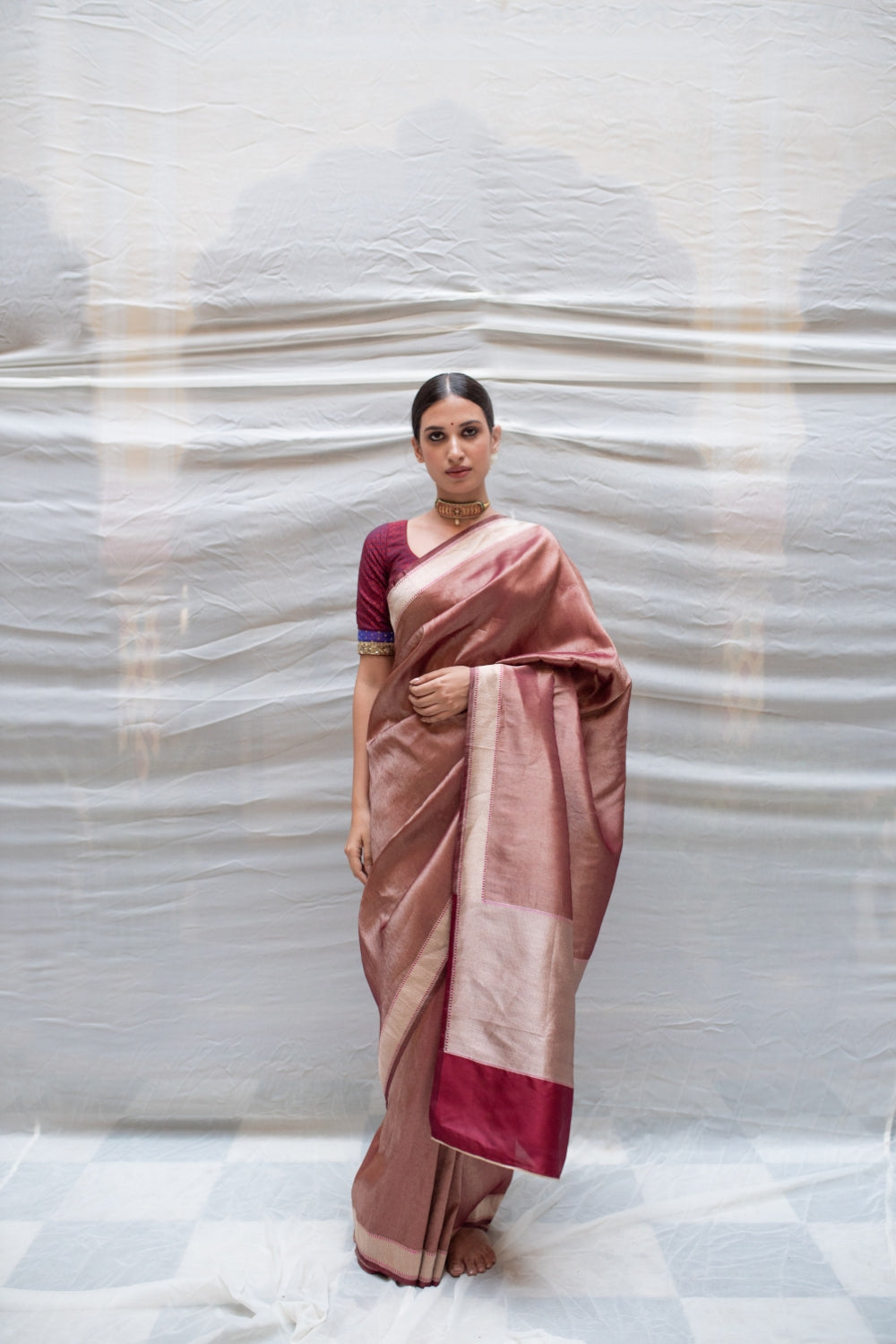
Burgundy Banarasi saree woven in silk brocade with a Mughal jaali pattern across the body. The saree features a Kadua-woven border and palla with meenakari detailing. Traditional Banarasi weaving techniques are used to create the motifs and structure of the fabric.How to Drape and Style a Mughal Jaali Saree
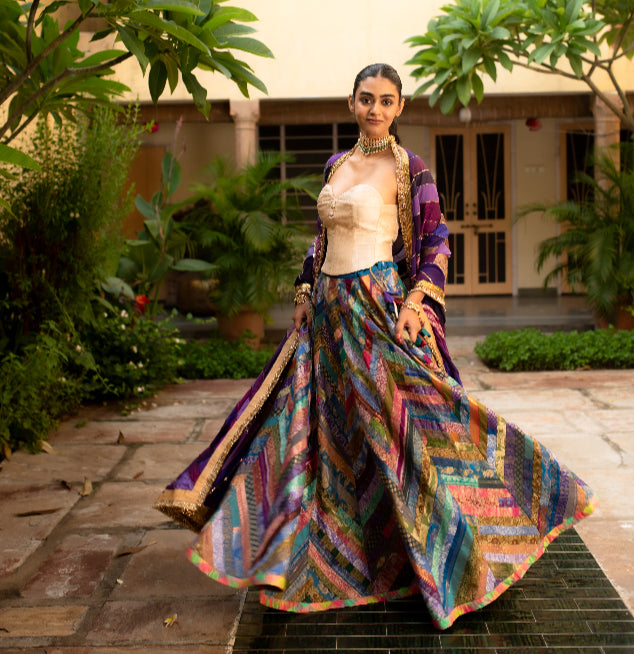
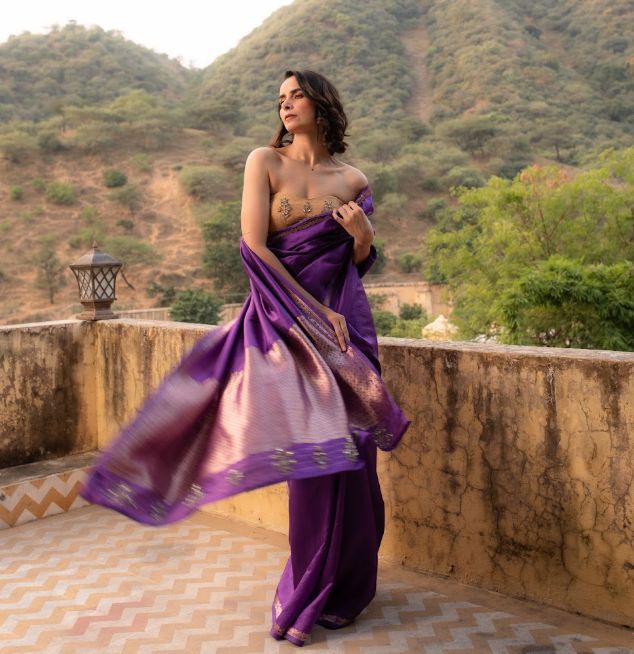
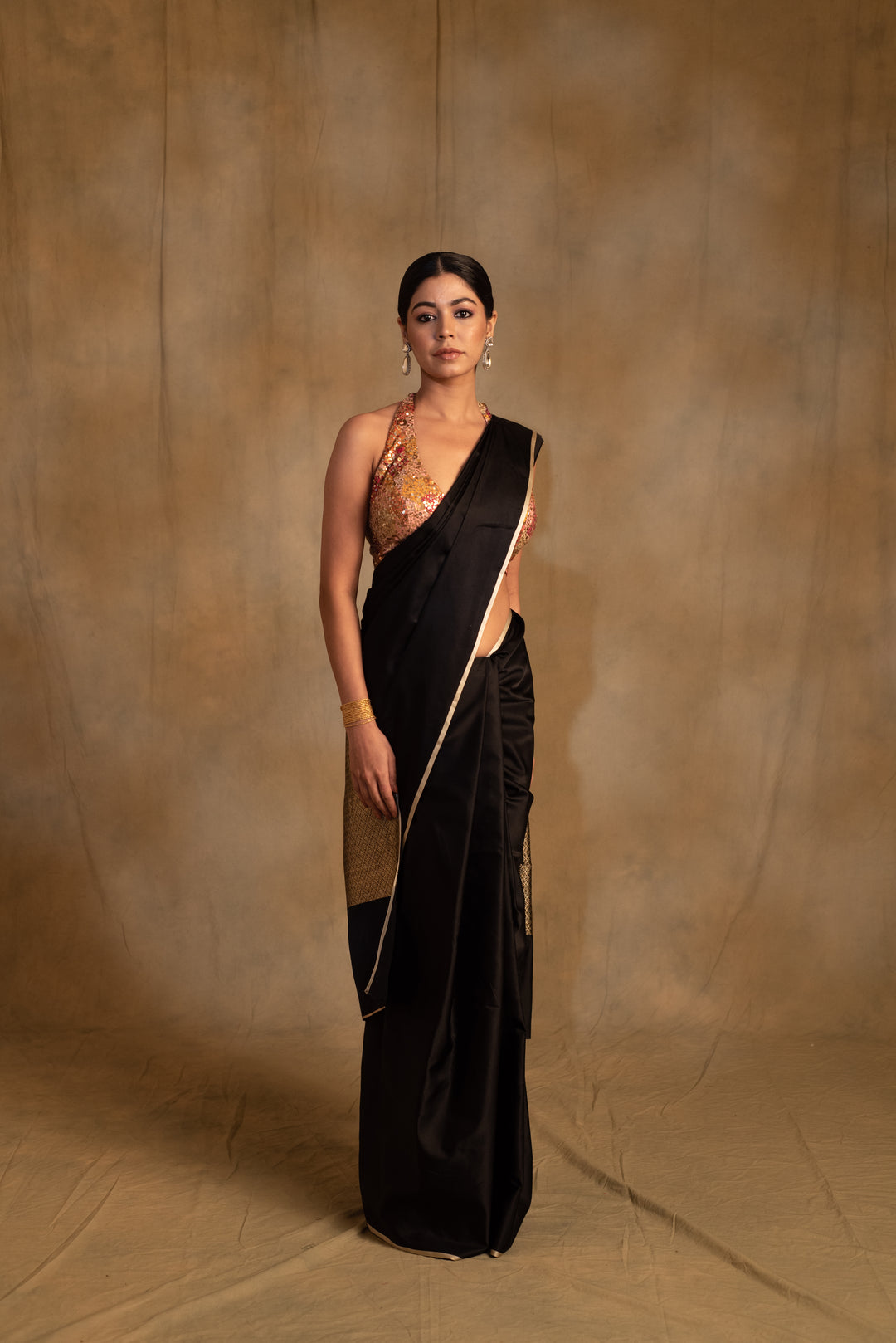
The Mughal Jaali saree can be styled in both modern and traditional ways, thanks to the strong geometric patterns and architectural designs it features, allowing the wearer to express themselves through its styling. The Jaali saree must remain at the forefront of the style, since it is an important part of it, but the style will reveal who you are.- One possible modern way of wearing this saree would be to wear it with a cropped blouse and a jacket.
- On the other hand, for those who like to wear modern pieces along with their traditional wear, it would be a good idea to balance out the modern piece with some more understated accessories.
How to Care and Maintain Mughal Jaali Sarees
Mughal Jaali sarees are simply works of art. The art is created by the beautiful partnership of design and artistry. The conservation of this beauty requires cautious treatment that is ever mindful of the art created through this thread.- The saree has to be wrapped in a muslin cloth, and that too in some area where sunlight does not fall.
- The saree should be unfolded and refolded at intervals to avoid the same fold lines getting even deeper.
- Dry cleaning should be resorted to only when necessary.
- Direct application of perfume on the fabric should be avoided, as it might affect the zari.