
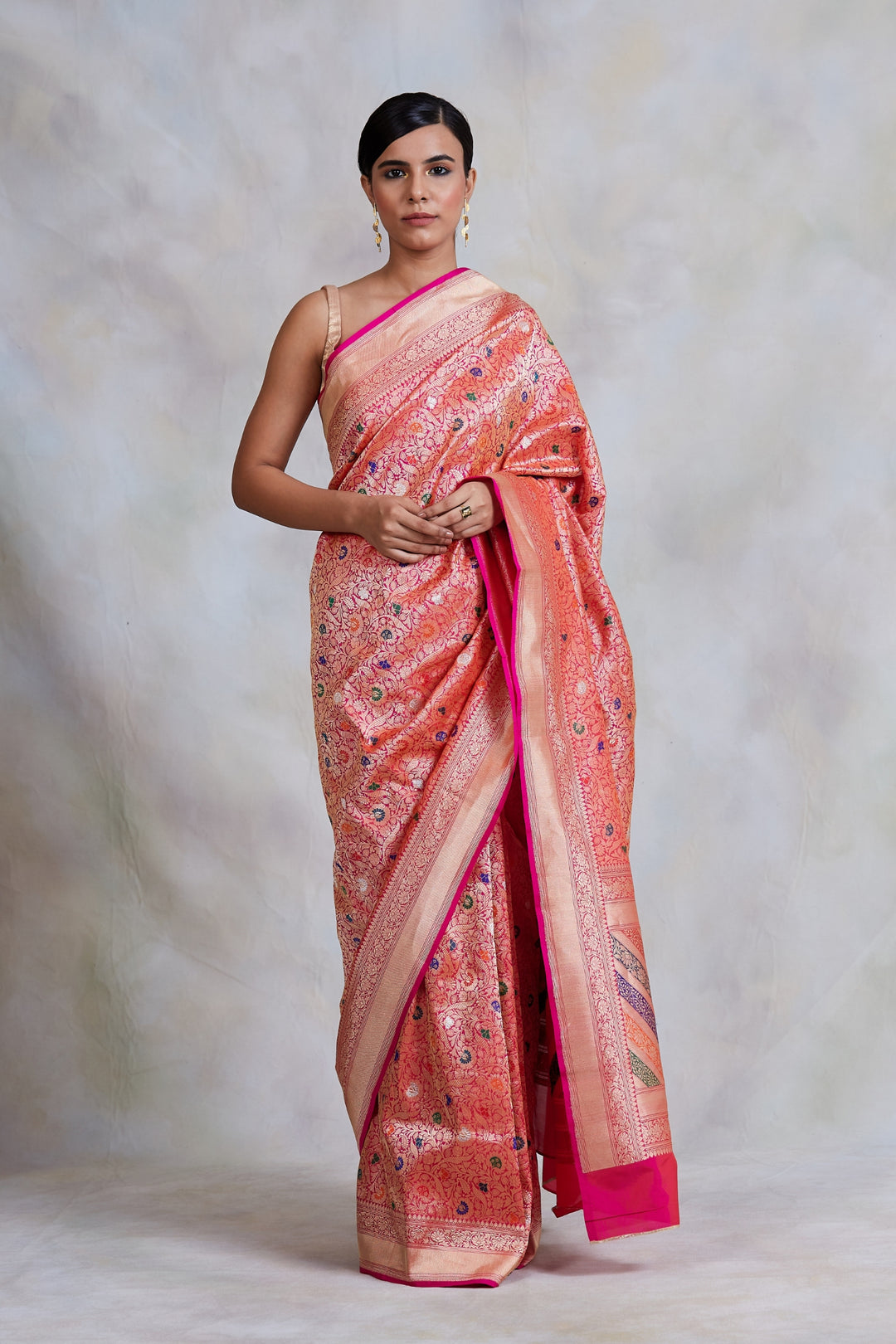
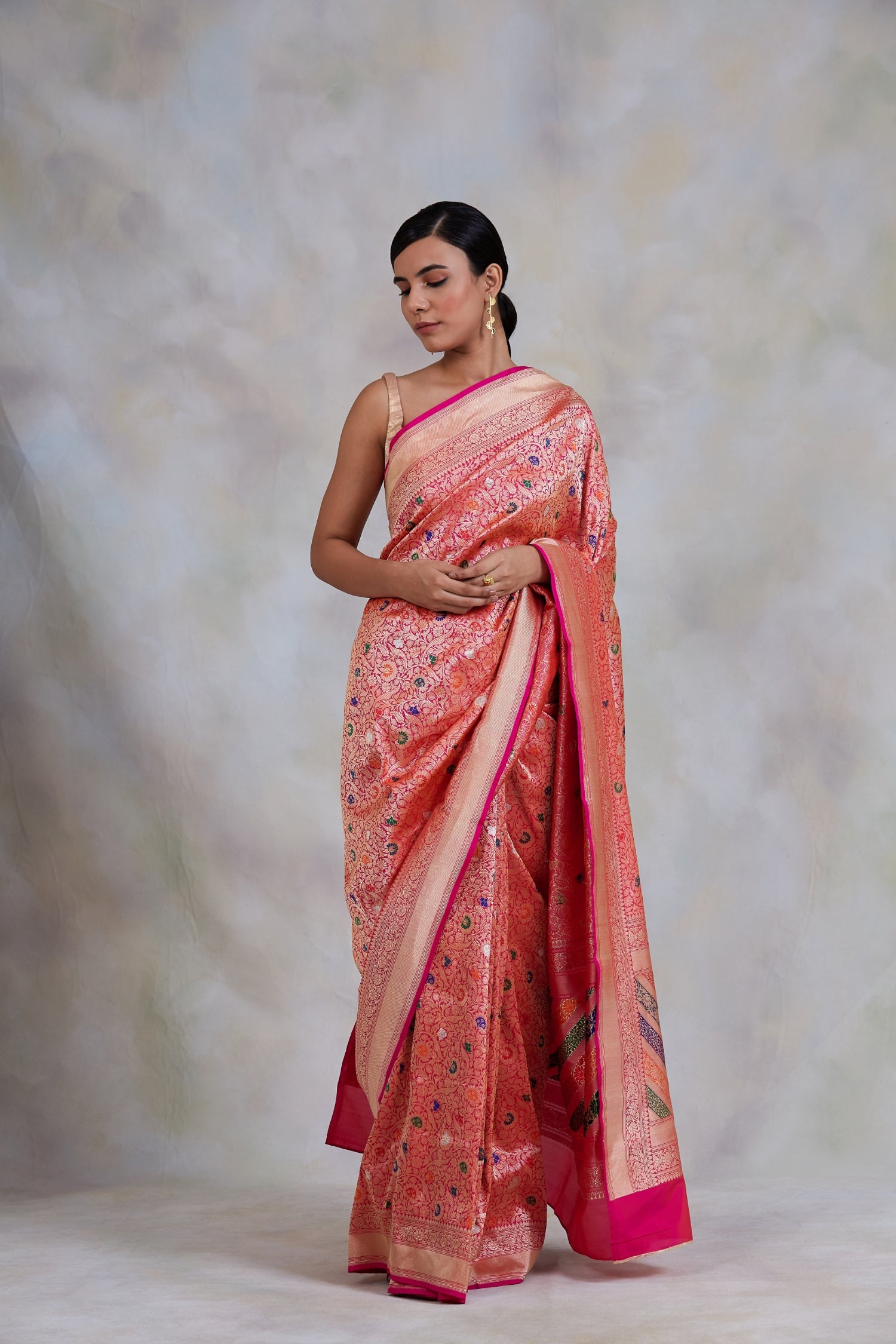
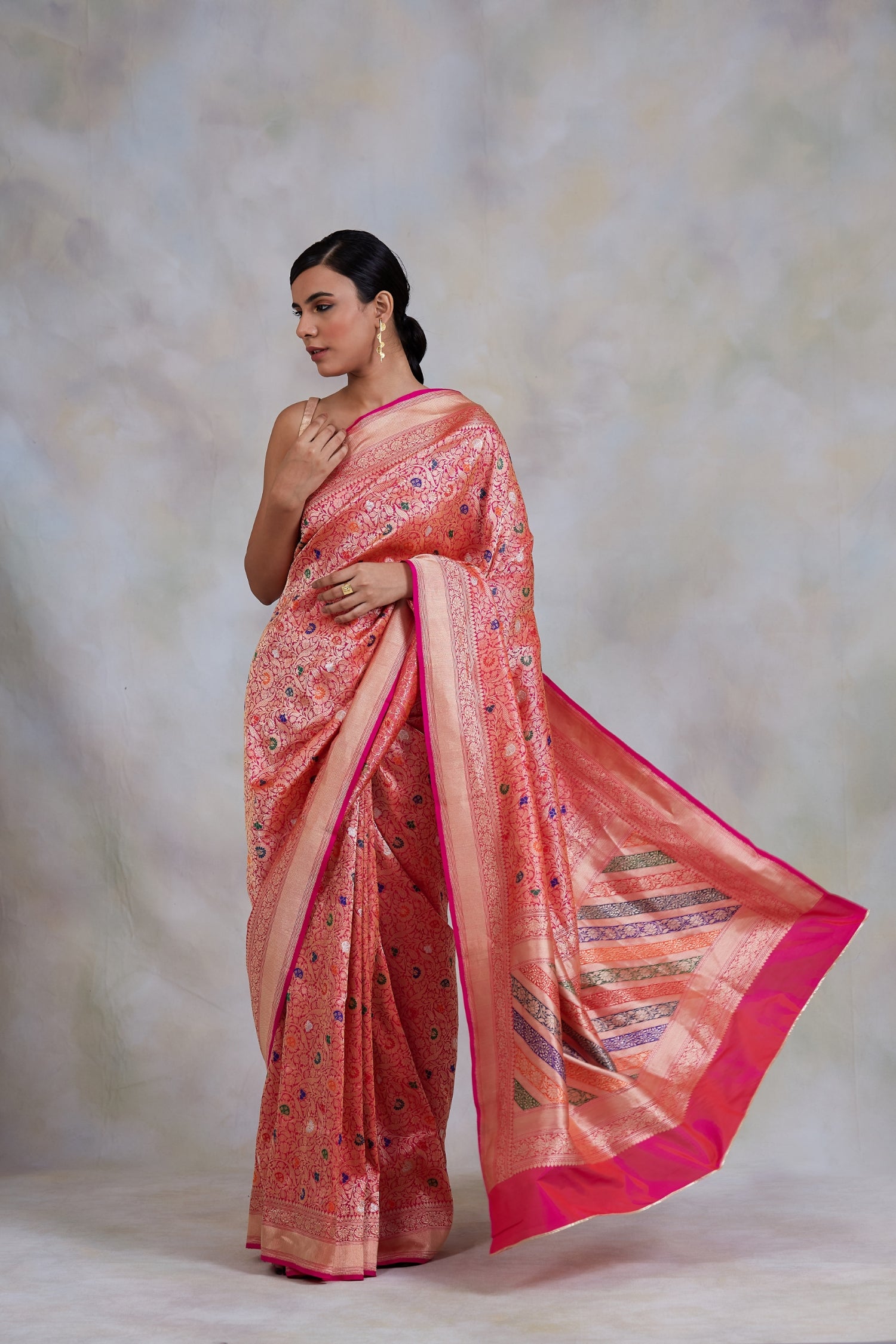
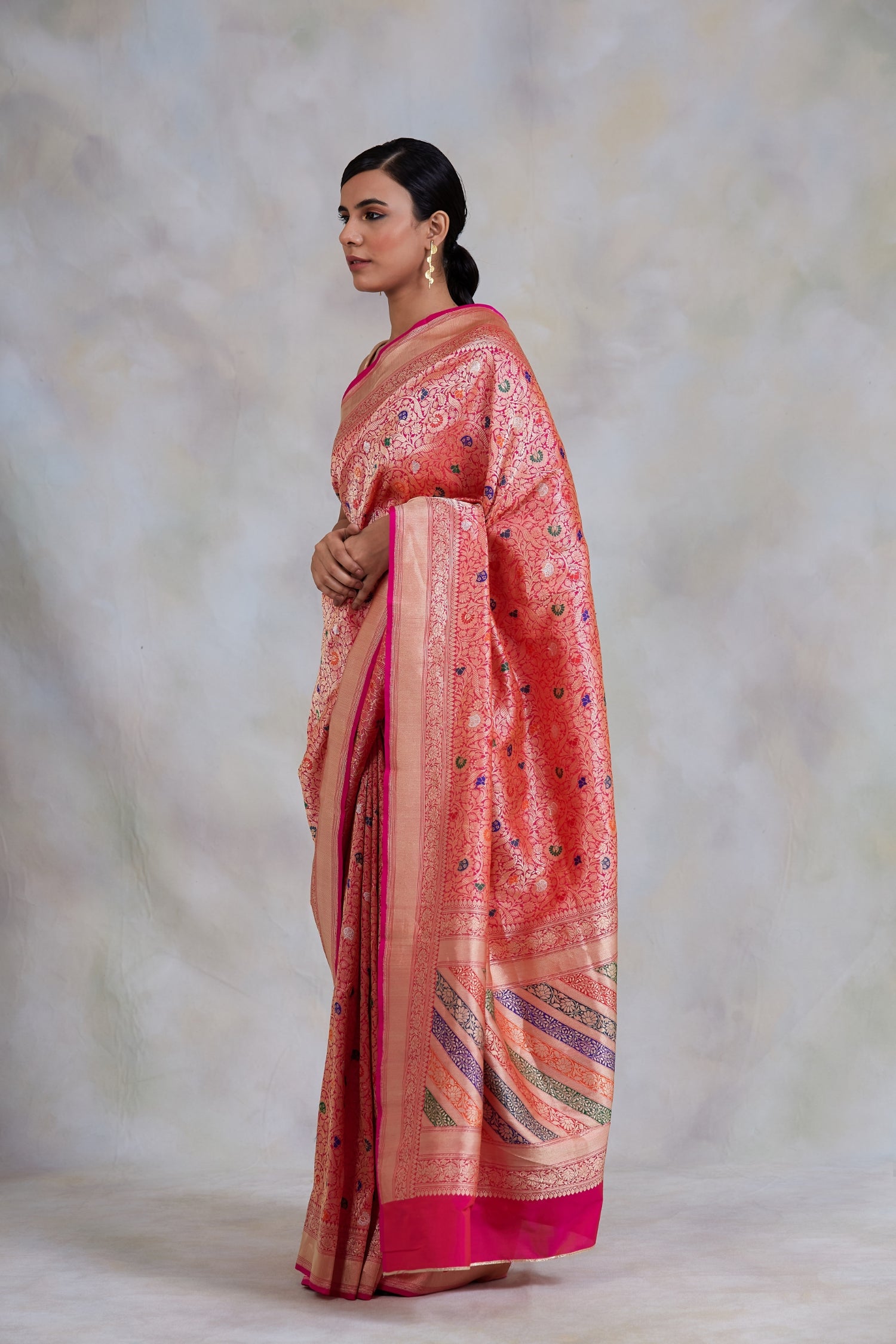
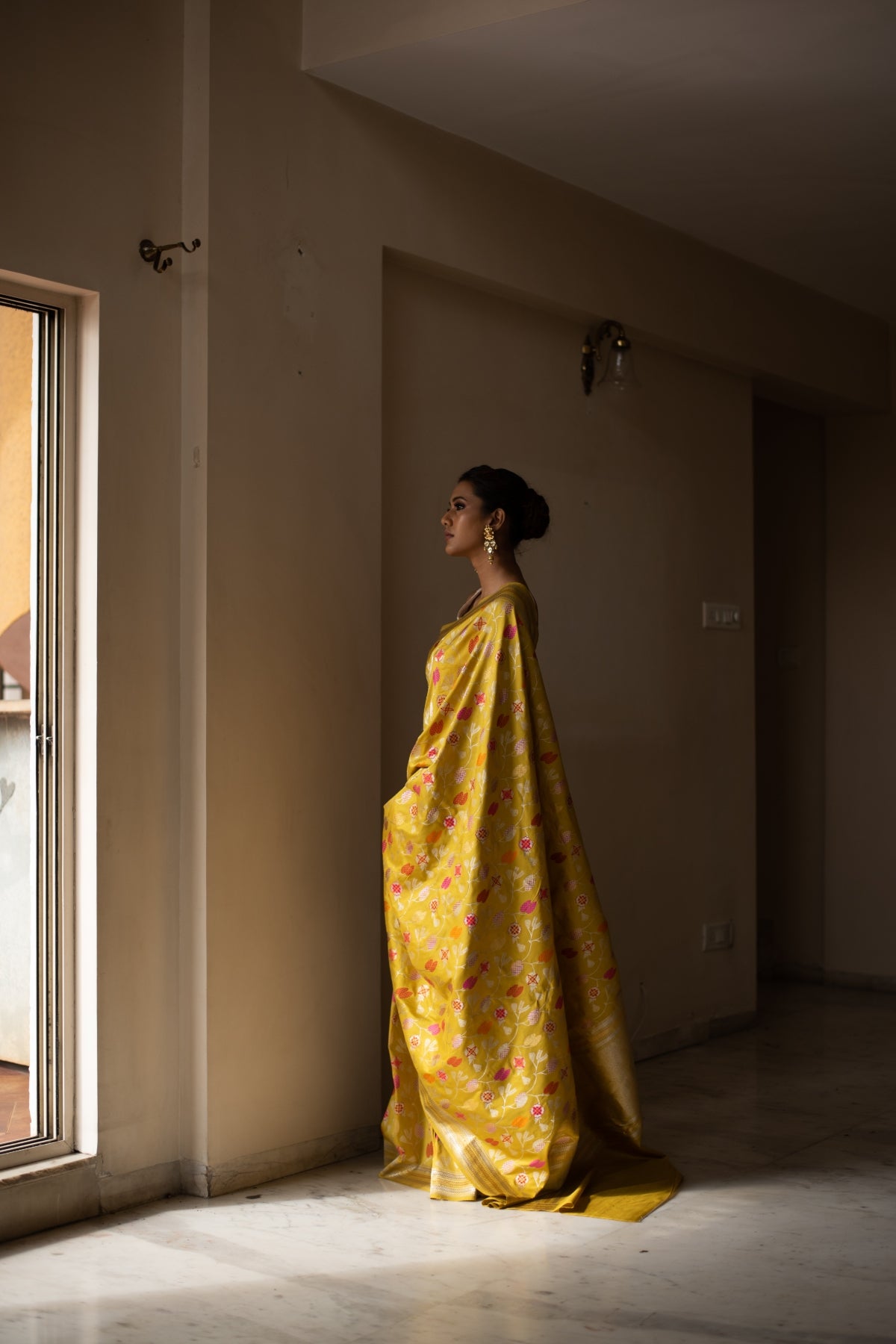
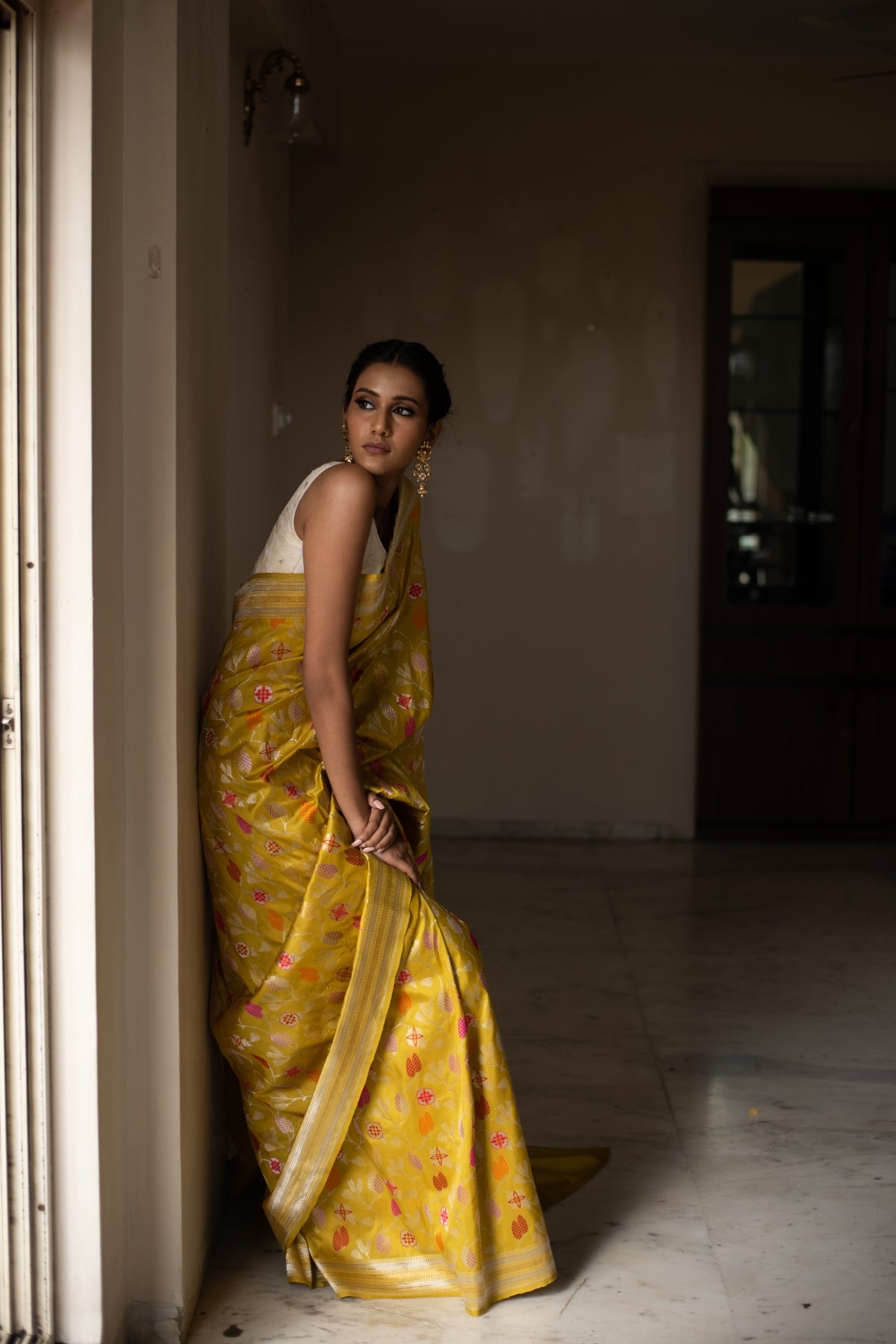
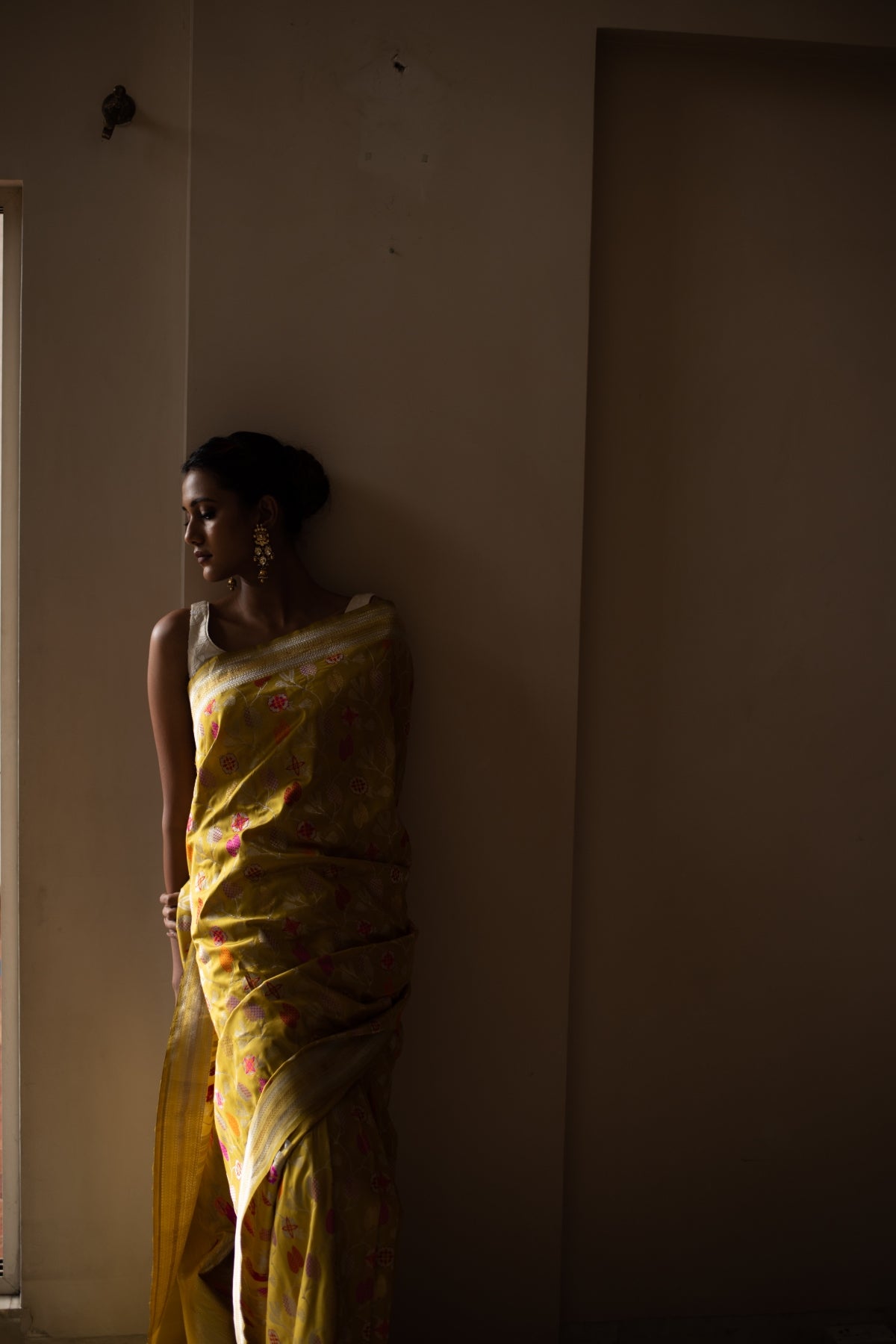
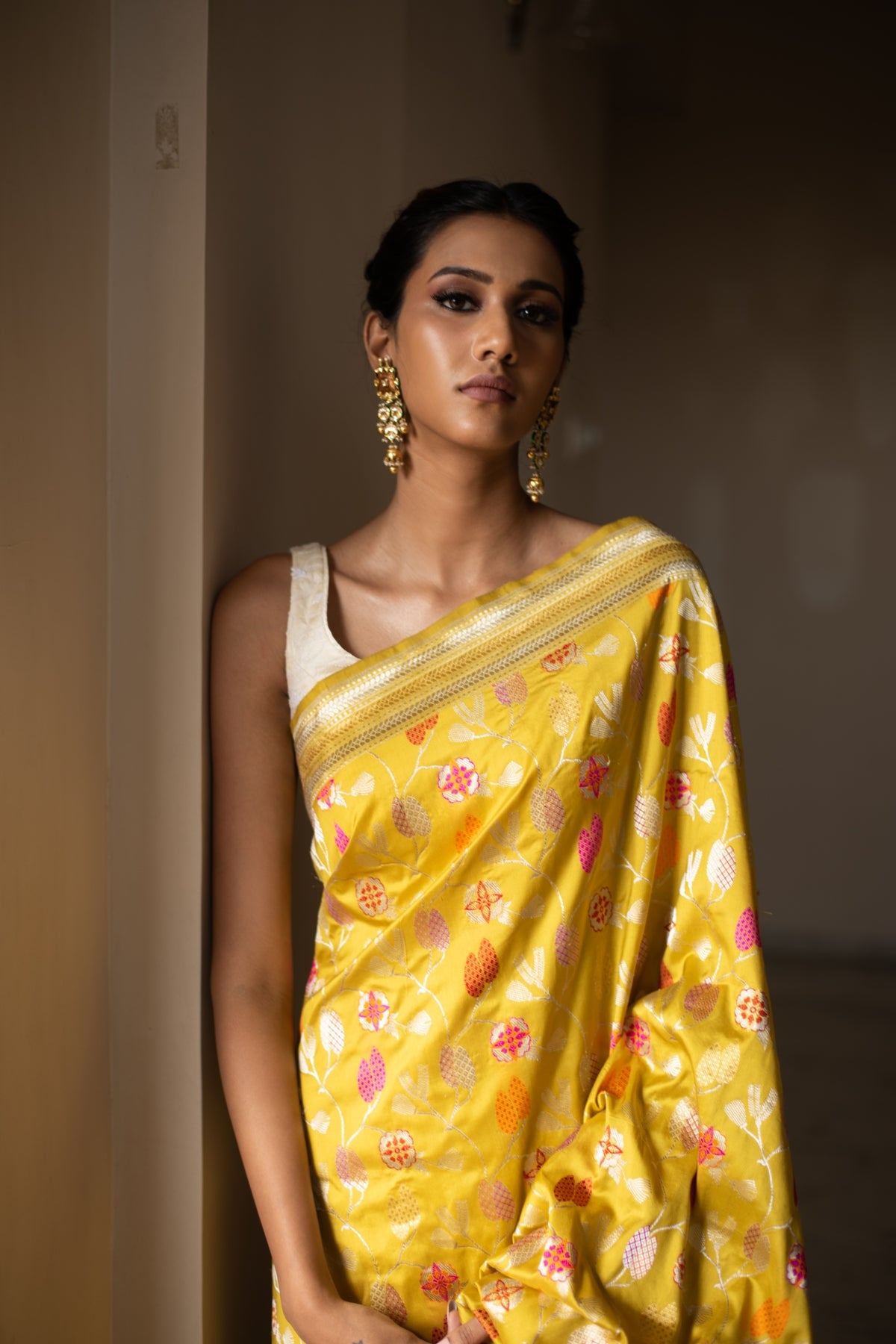
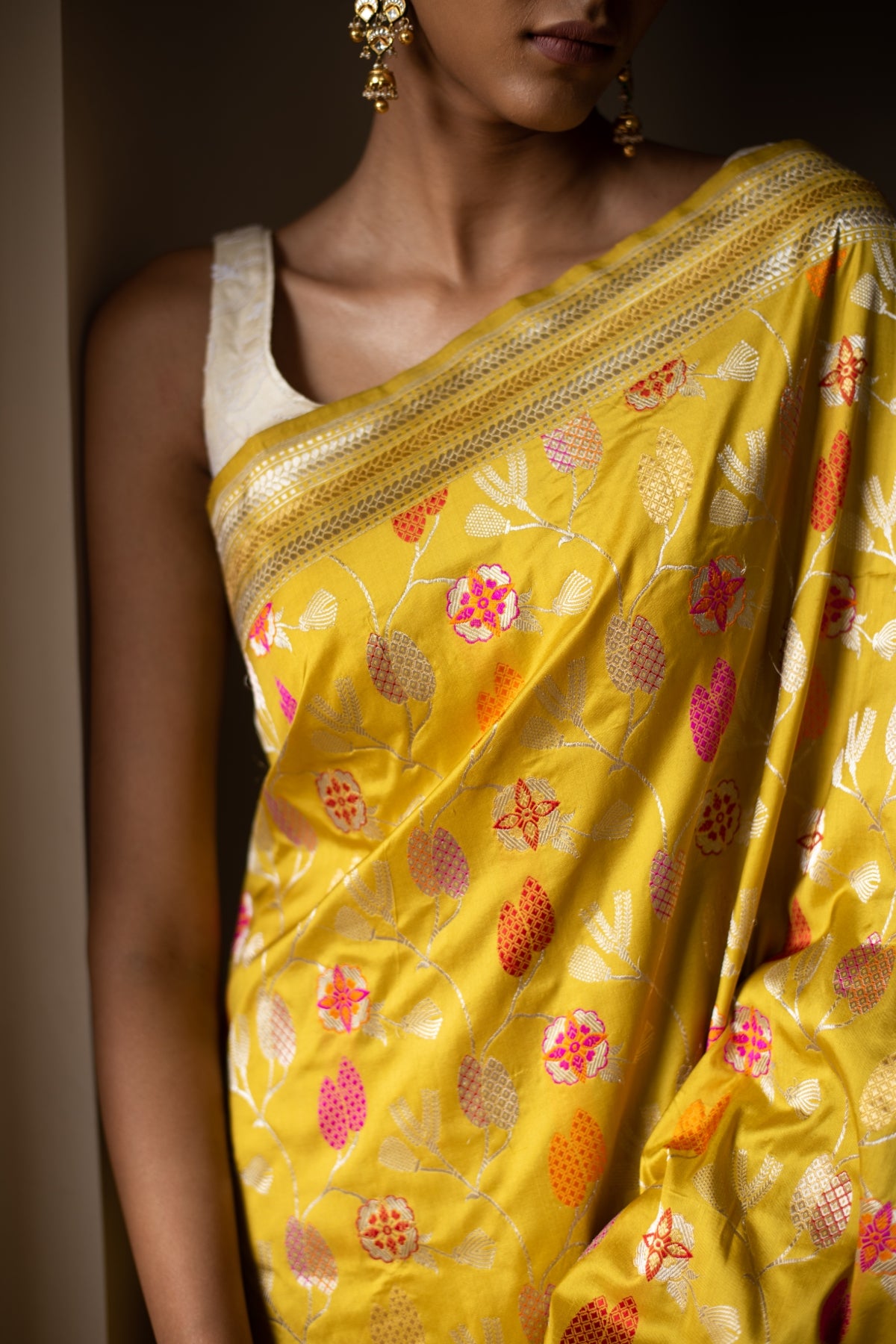
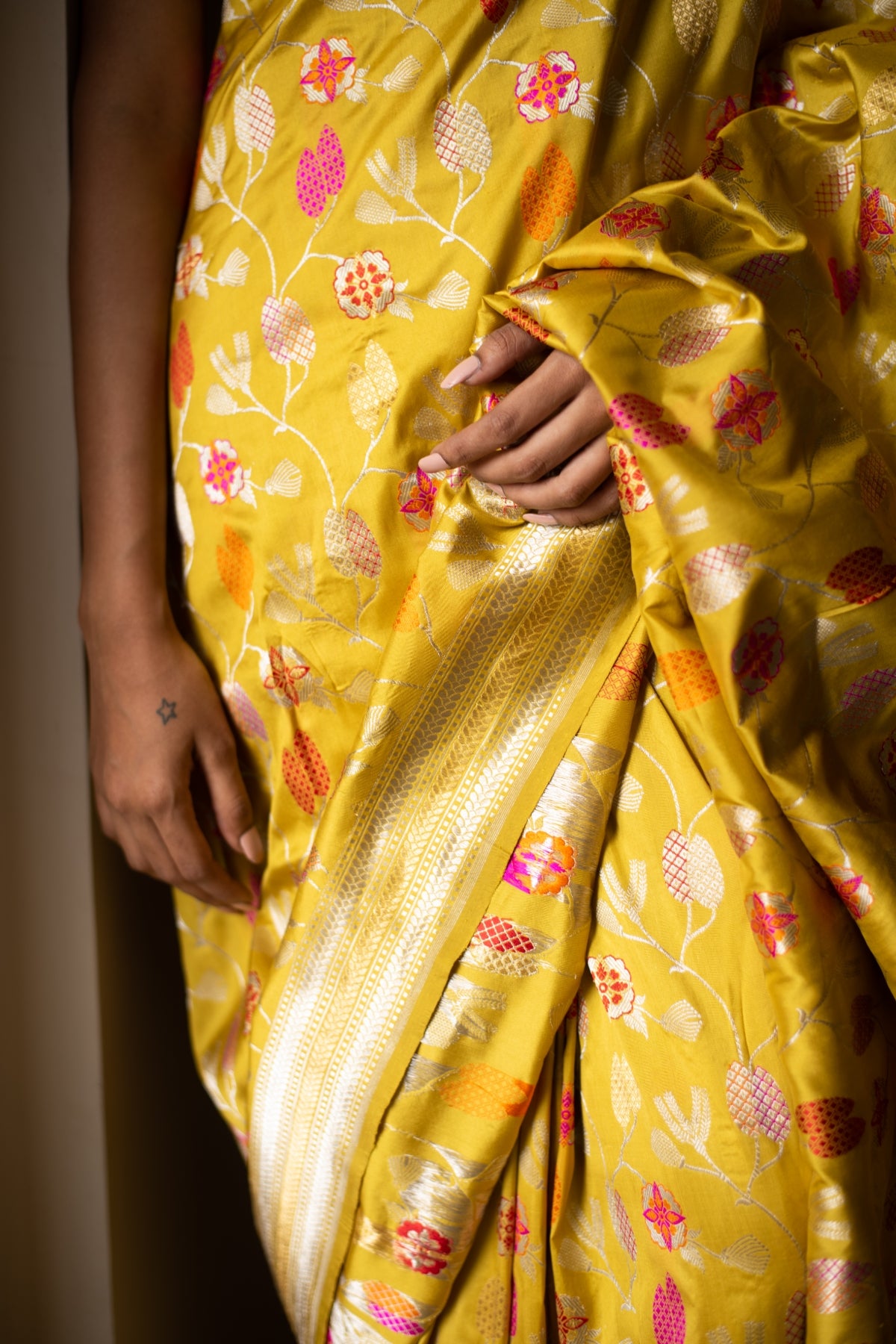
Buy Banarasi Gyasar Sarees
Buy Banarasi Gyasar Sarees
Gyasar and the Ancient Silk Route Legacy
Originating in ancient China, the Silk Route was a vast network of trade routes that carried silk, gold threads, dyes, and weaving techniques across Central Asia and the Himalayan belt. As these routes passed through Tibet, Chinese silk craftsmanship merged with local traditions, giving rise to luxurious brocades like Gyasar. From Tibet, these prized textiles continued their journey into India via Himalayan trade corridors connecting Ladakh, Sikkim, and Arunachal Pradesh. In India, Gyasar and similar brocades found patronage among royalty, monasteries, and elite communities, influencing ceremonial attire and enriching the subcontinent’s textile heritage with their regal textures and symbolic grandeur.
Silk Type: This silk is made from exceptionally luxurious fibers that gain extra luster through the incorporation of gold (zari) and silver threads. The primary silk fabric not only enhances the overall quality but also accentuates the shine of the metal fibers woven throughout.
Designs: The motifs move beyond conventional floral or paisley patterns commonly seen in traditional textiles. Instead, they draw deeply from Tibetan Buddhist symbolism, featuring stylised lotus blooms representing purity, auspicious endless knots and fortunate scrolls symbolising continuity and prosperity, guardian figures that convey protection and spiritual strength, and intricate abstract line work that echoes sacred geometry. Together, these elements create layered compositions that are both visually powerful and deeply symbolic, transforming the textile into a narrative of faith, protection, and regal identity.
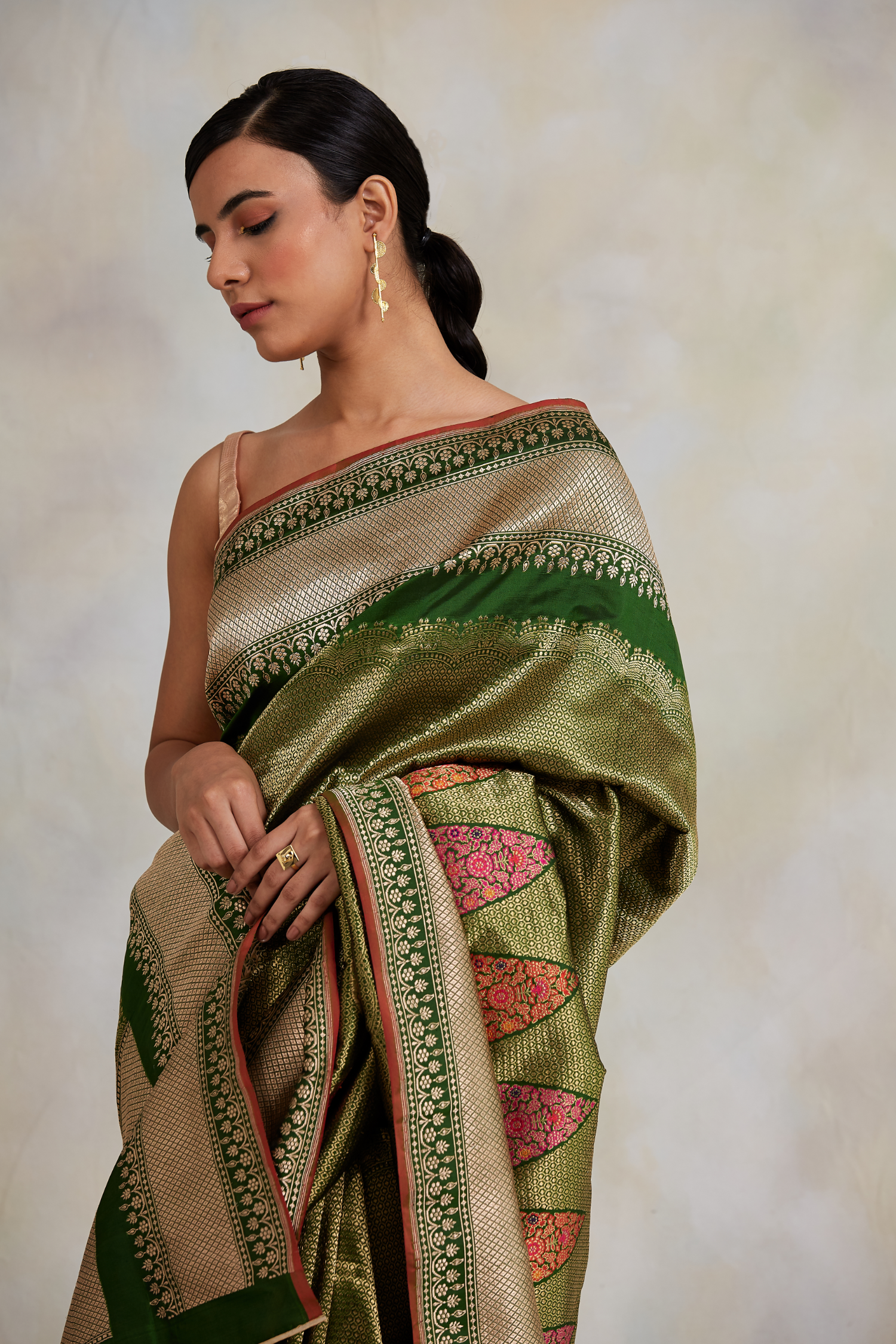
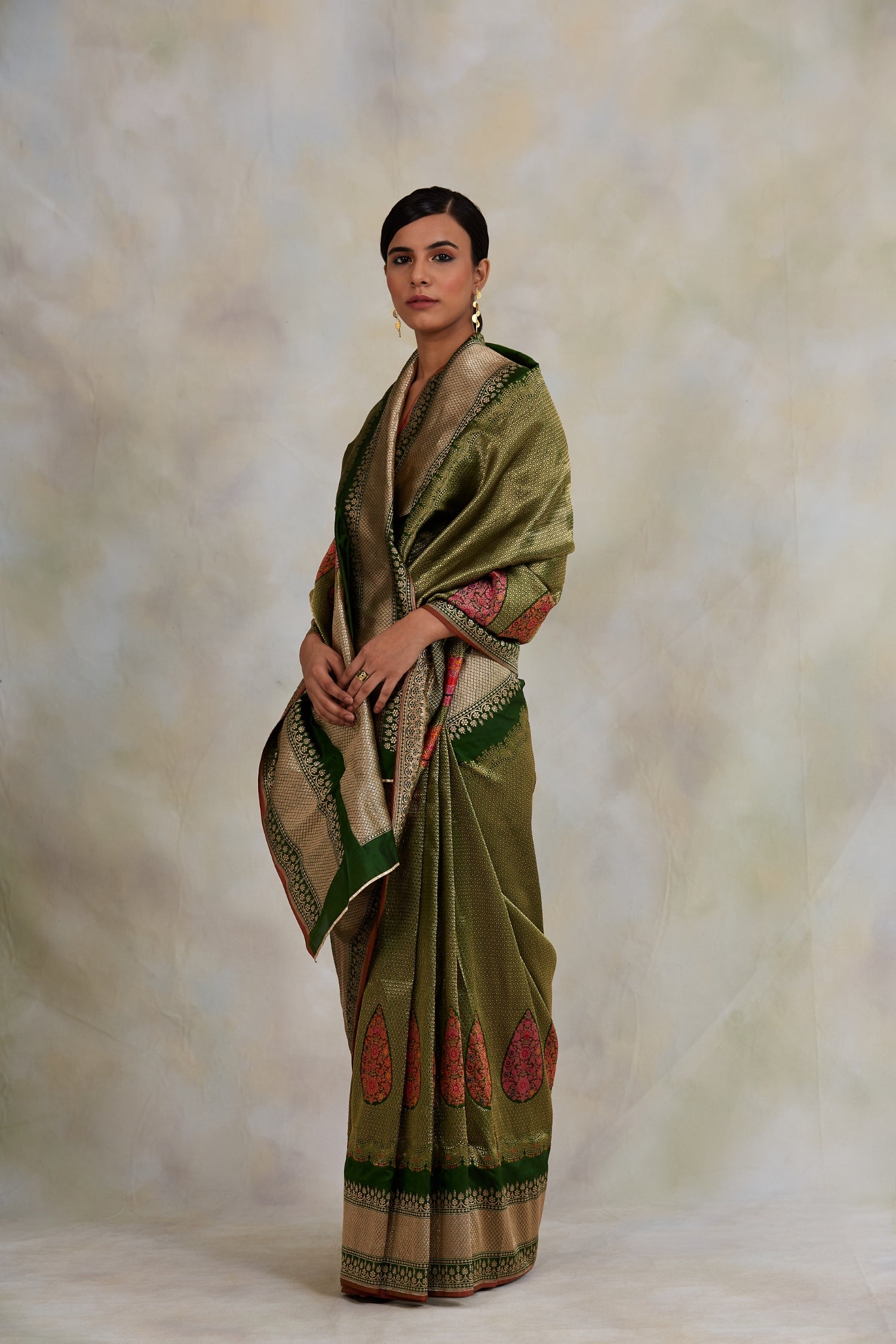
Feel & Look: A heavy, grand, and richly textured fabric due to the heavy use of zari and the way the richness of the fabric makes it appear as a sculpted three-dimensional fabric.
Cultural Importance: A highly esteemed textile of the Tibetan nobility, used for religious ceremonial events as a melding of Indian textile skills and Tibetan religious visual arts.
The design of your Banarasi Gyasar saree revolves around the structure, the finish, and the wearability; therefore, the saree will not lose its character but will rather look subtle.
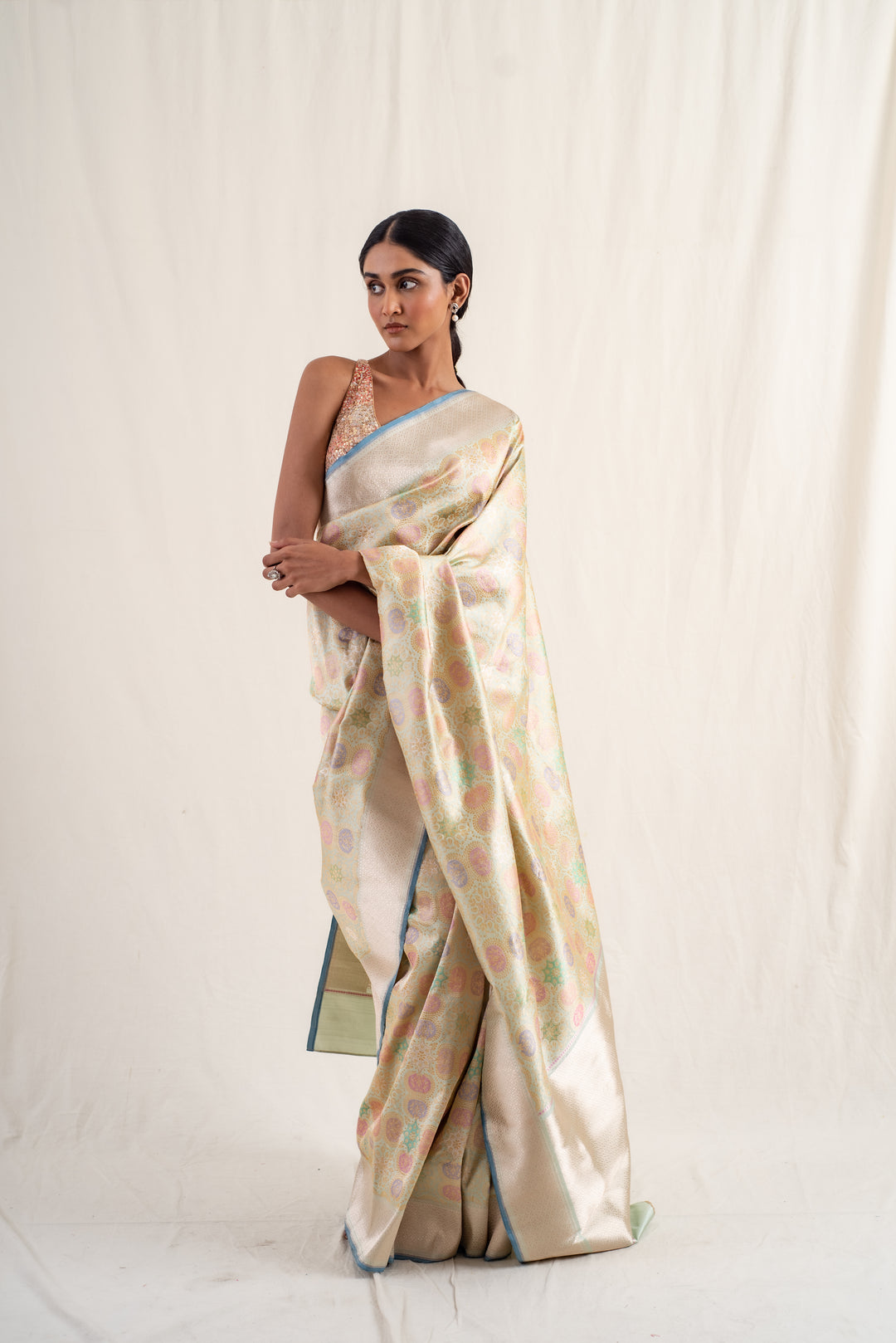
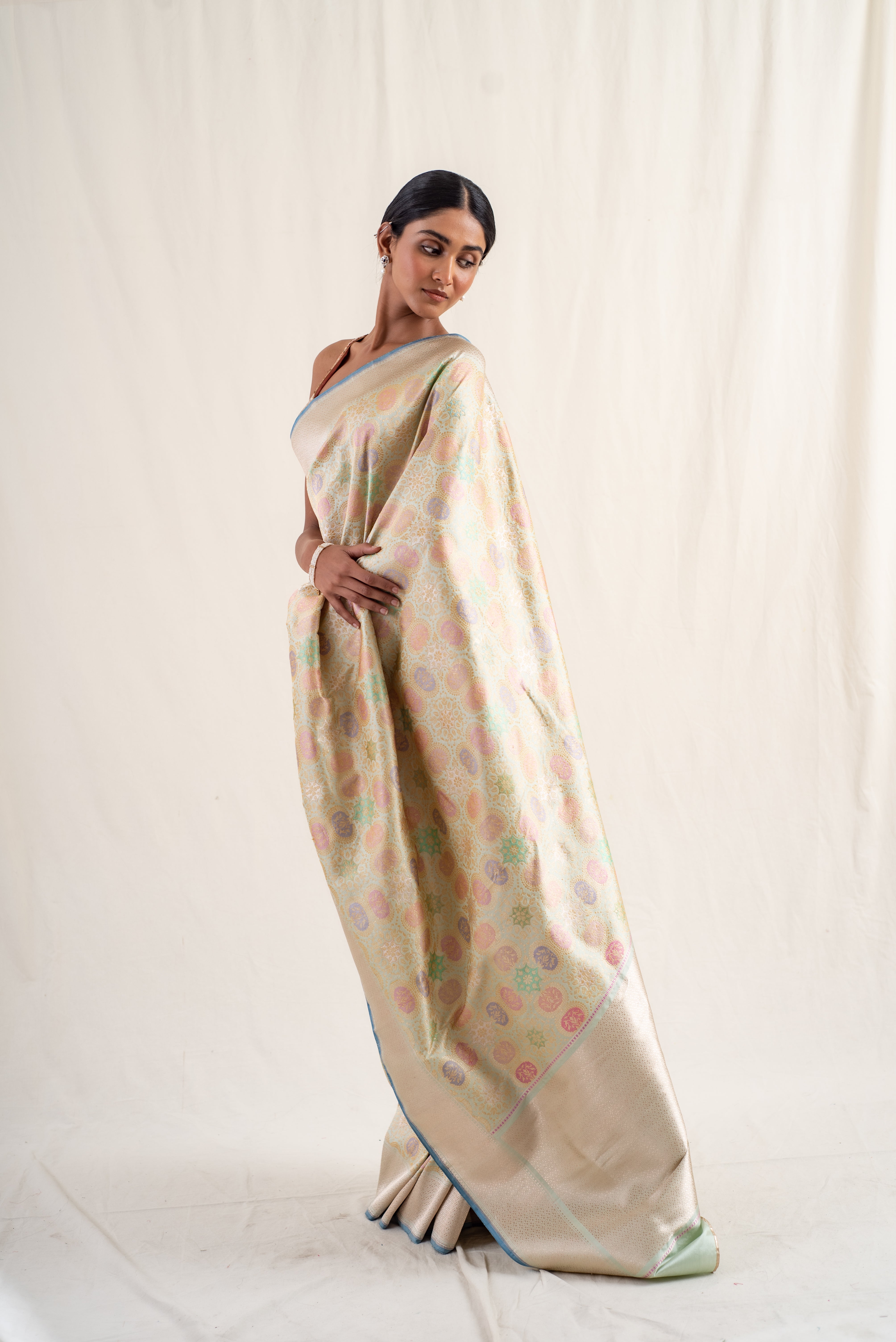
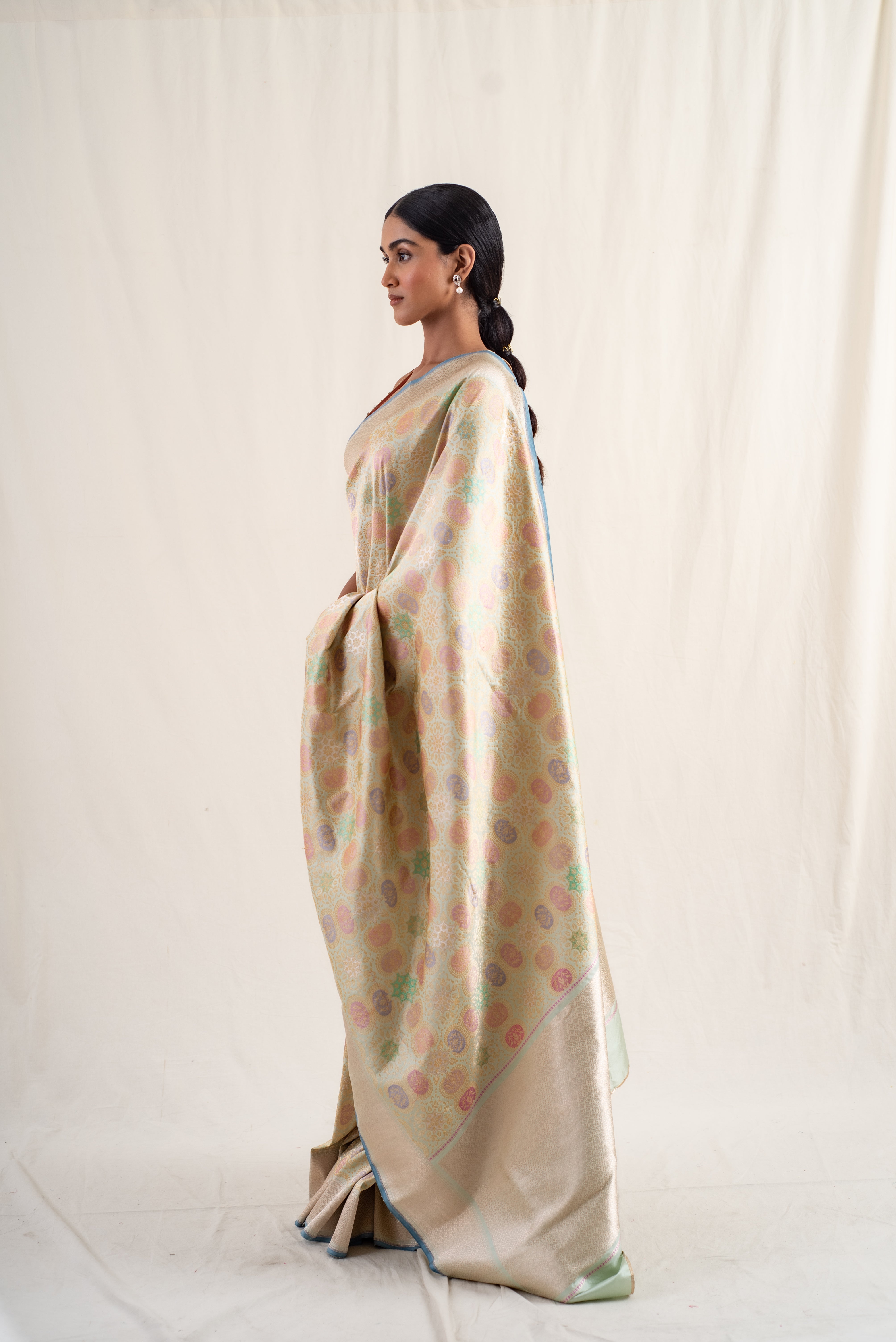
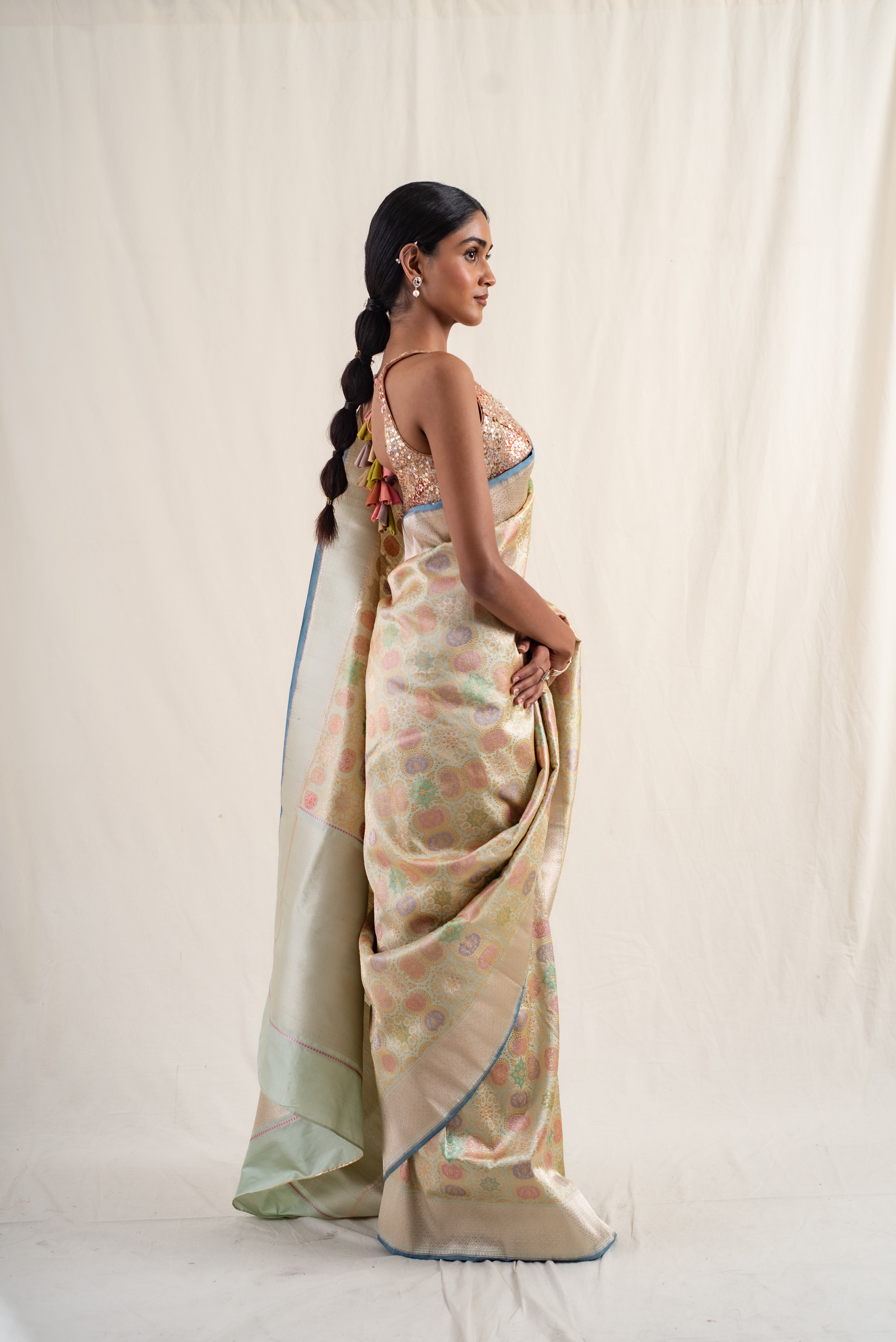
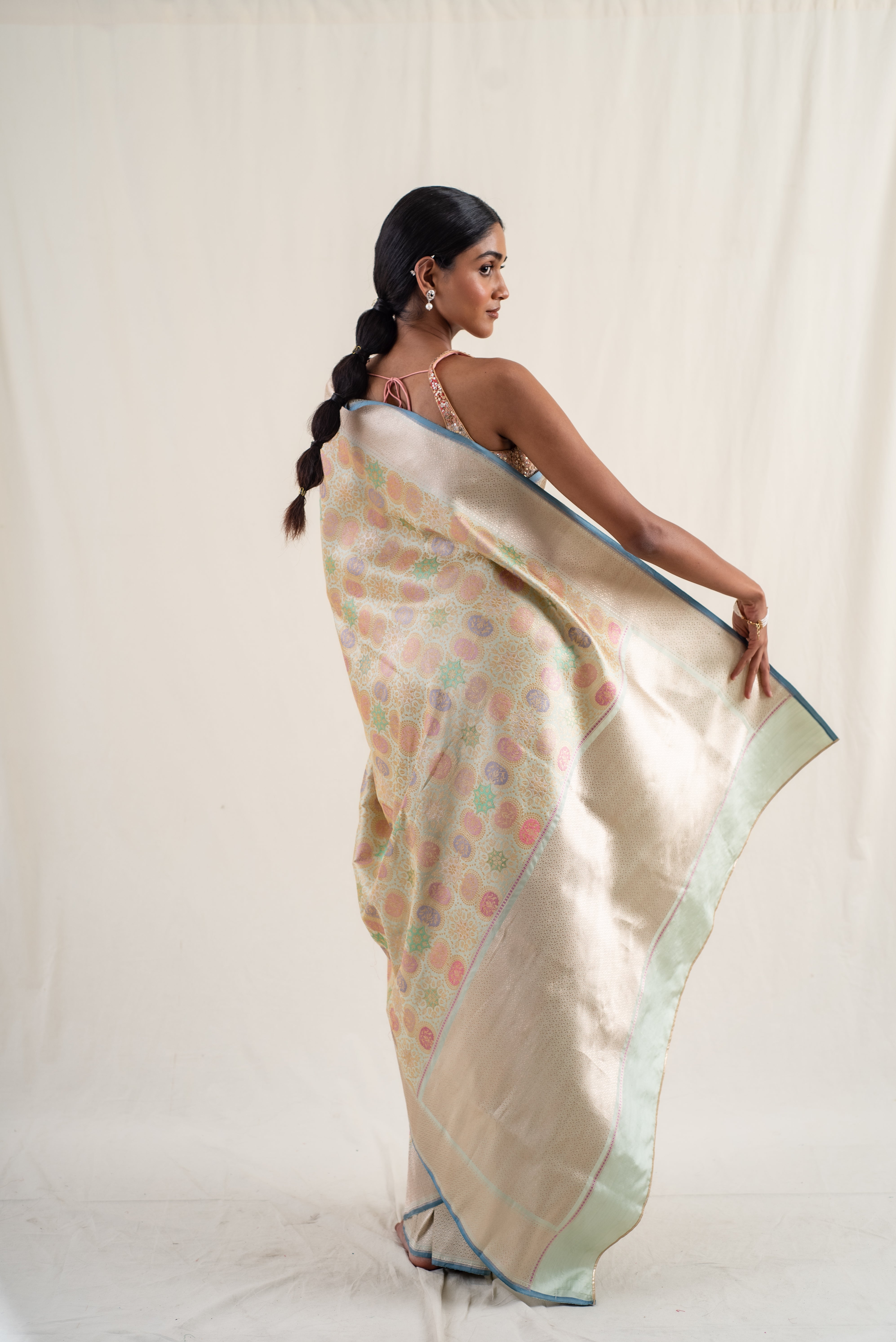
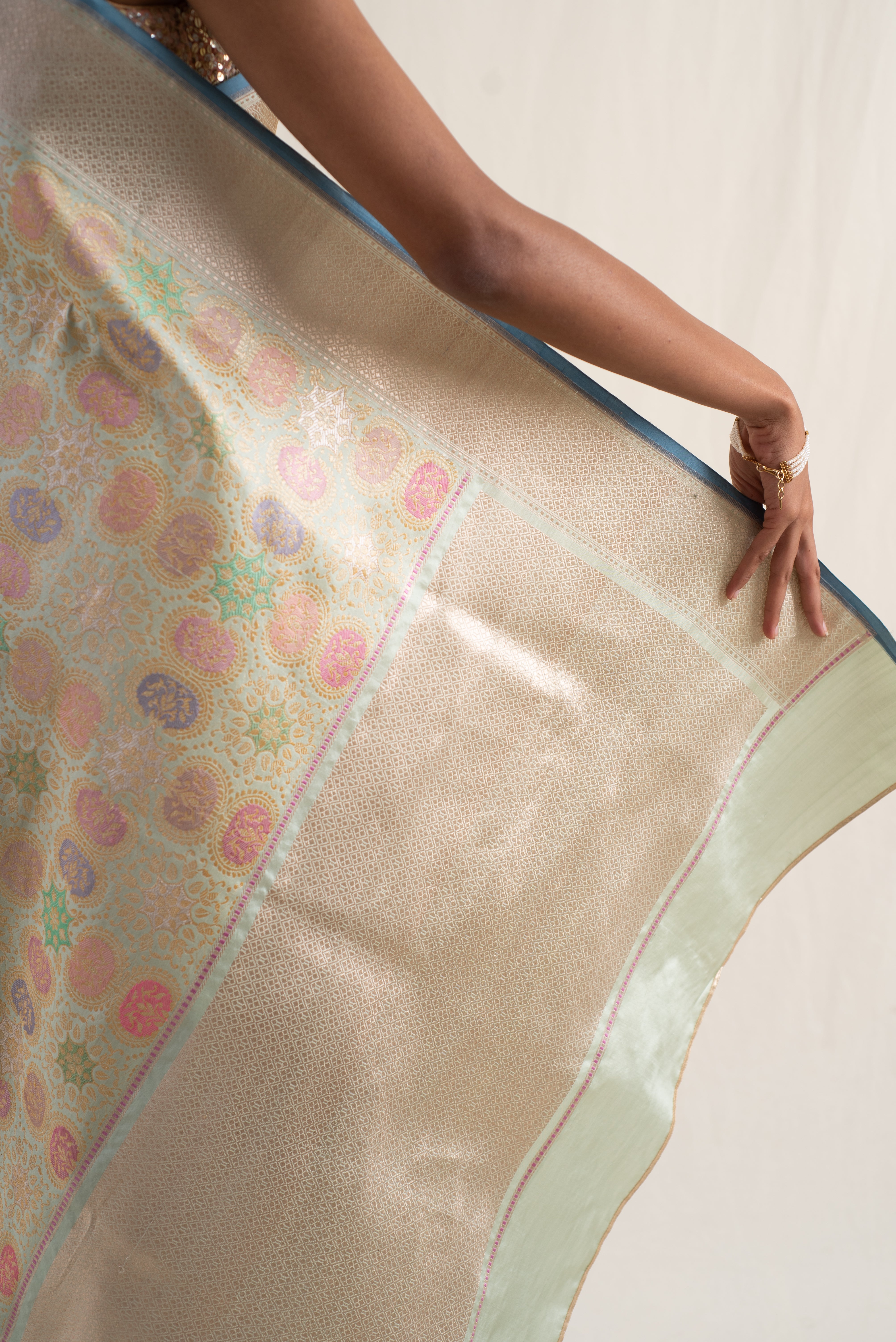
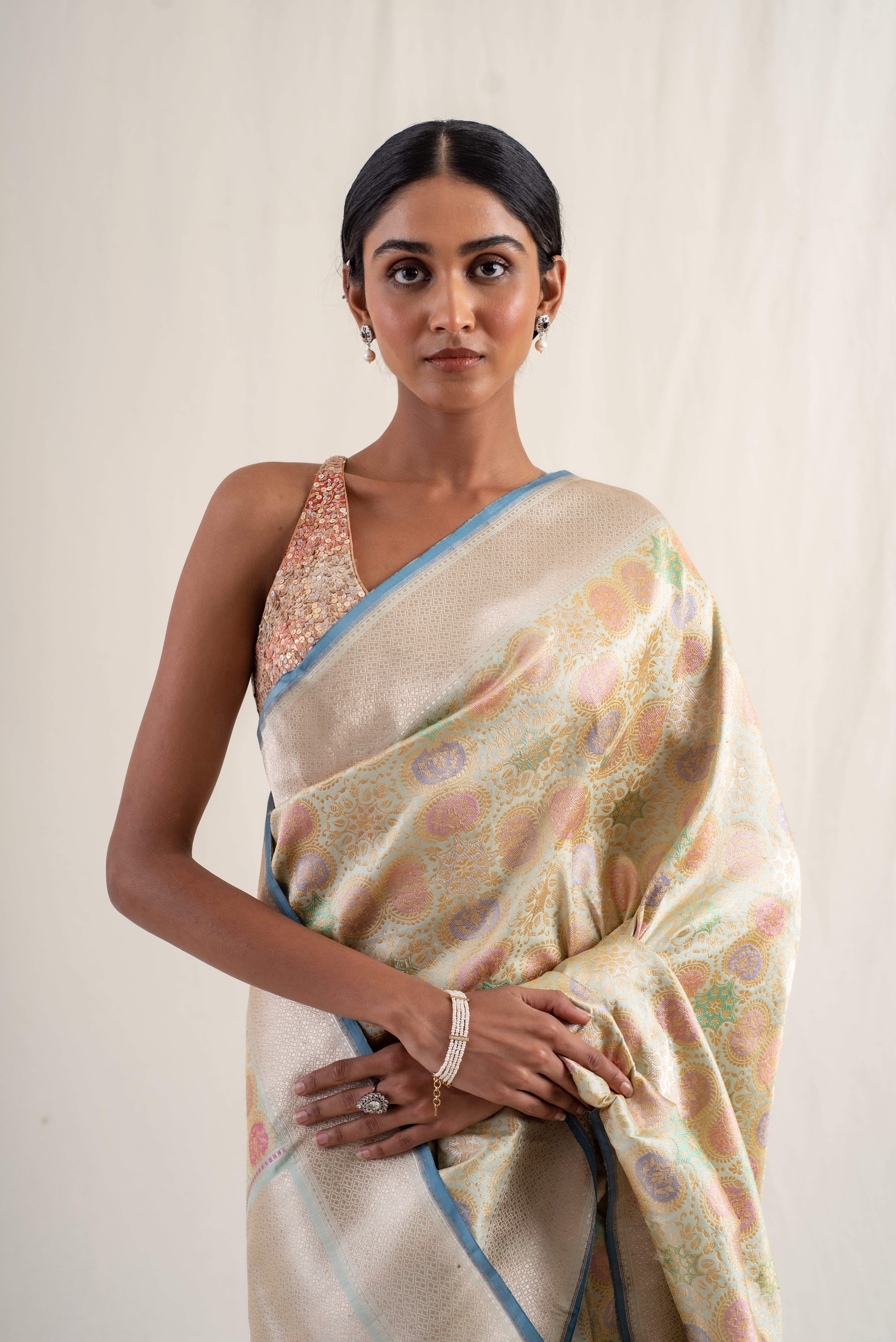
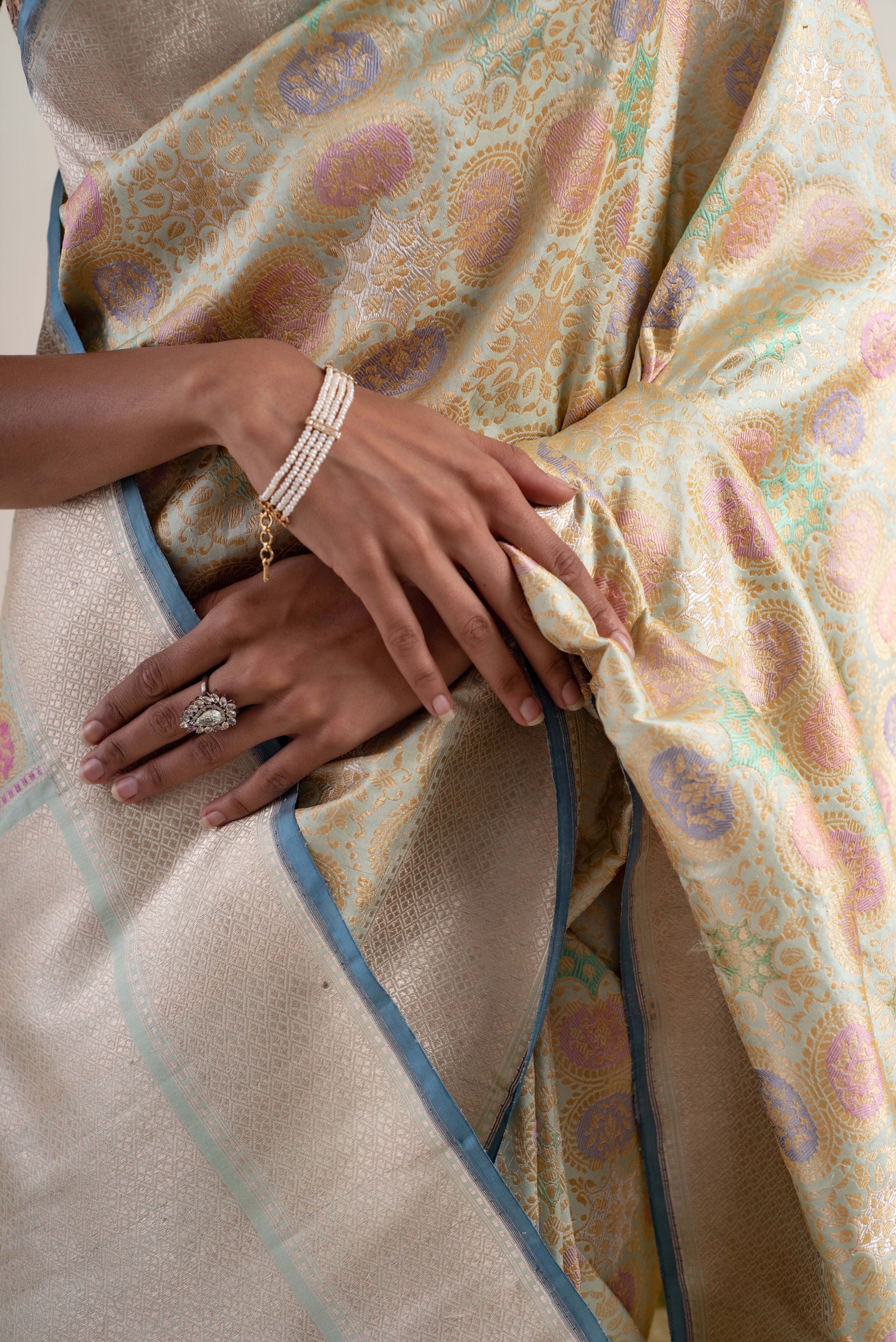
Sadar - Mint Green Silk Banarasi Saree The meenakari work of floral patterns in pale pink, lavender, and some teal on this mint green silk makes the hues come out even more. The borders of both the saree and palla are woven with kadua, showcasing the traditional Banarasi passion and skill, while the structure of the drape is suitable for many occasions of celebration, such as wedding receptions (and formal events) wherein a supreme fabric has been employed, pure silk!
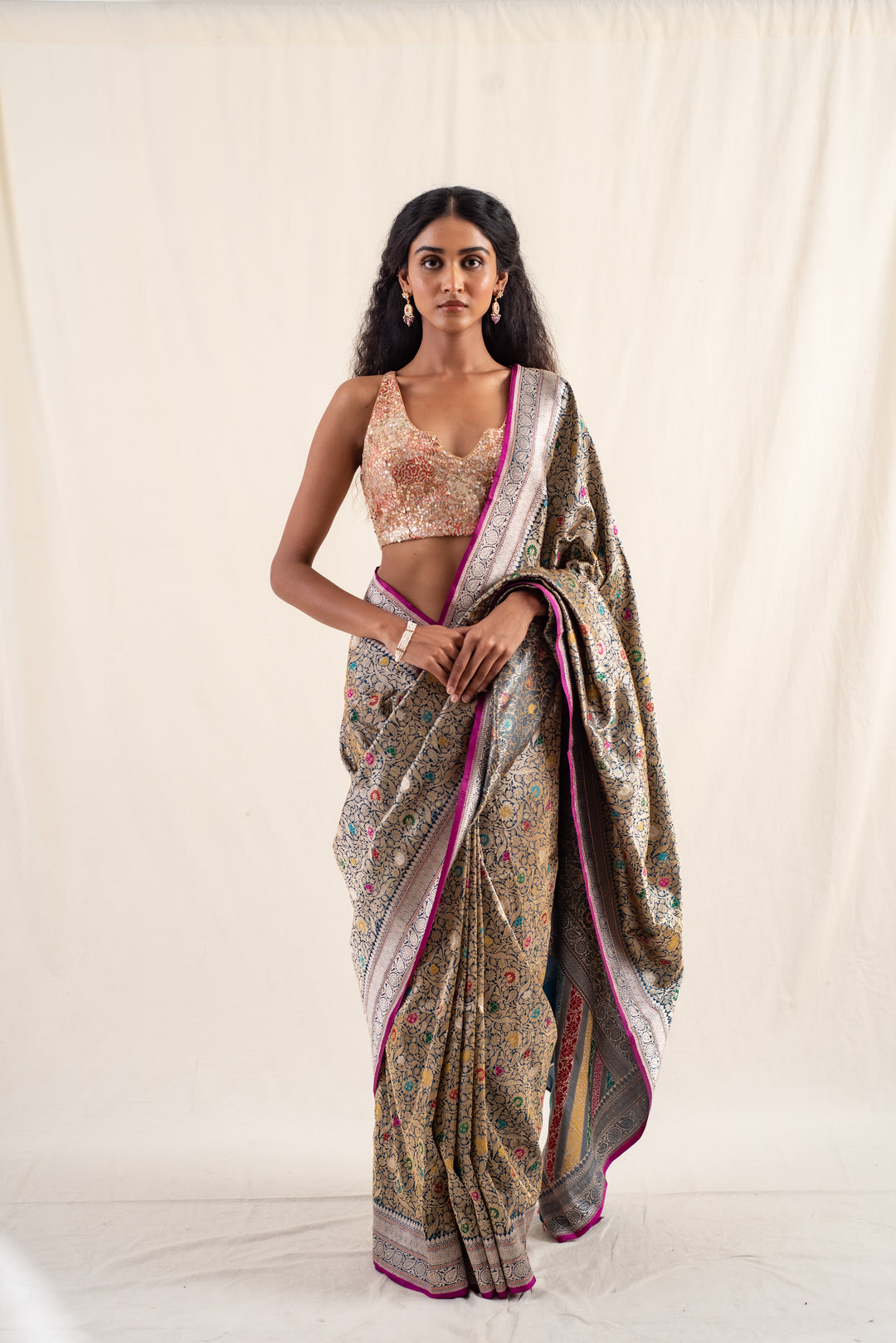
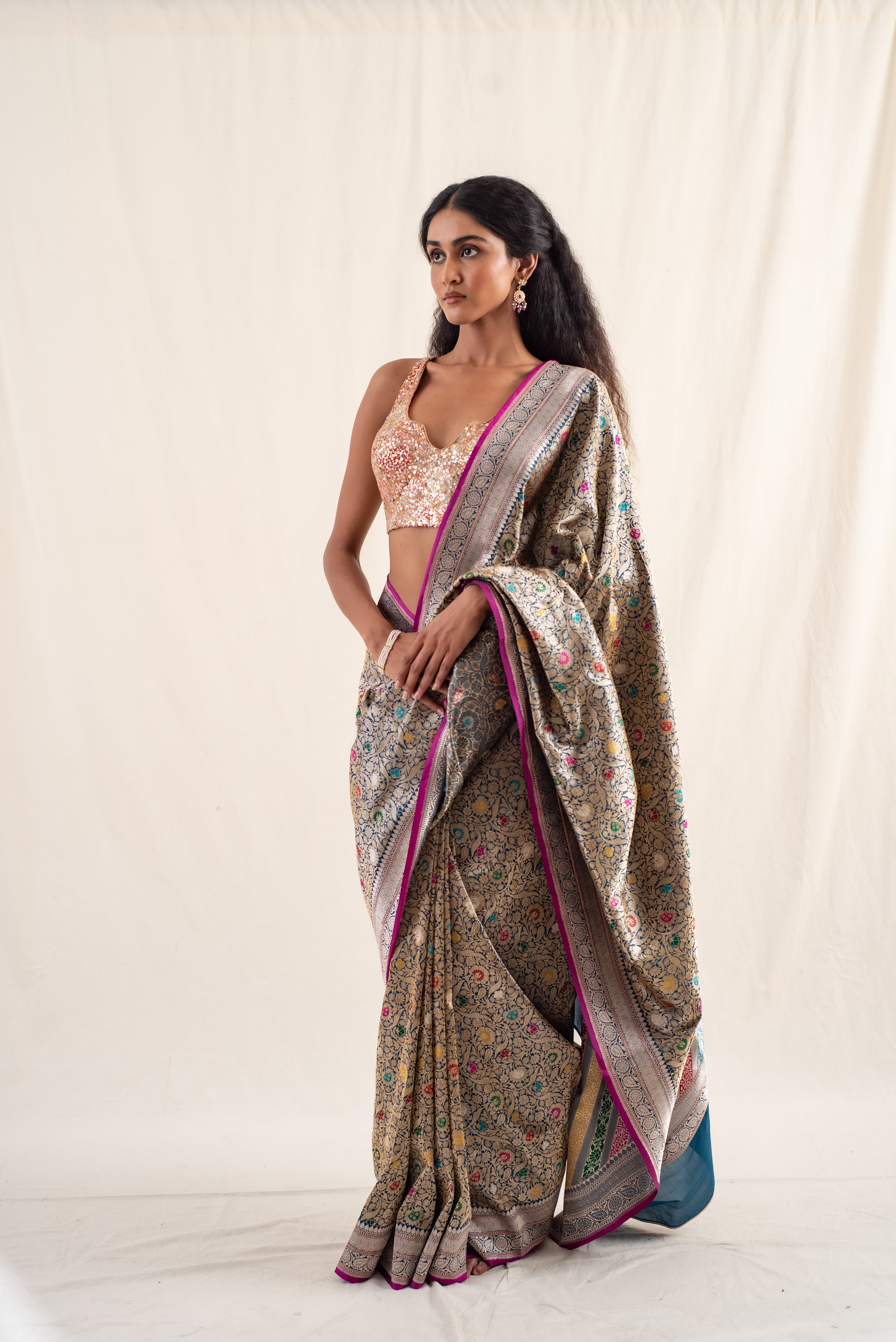
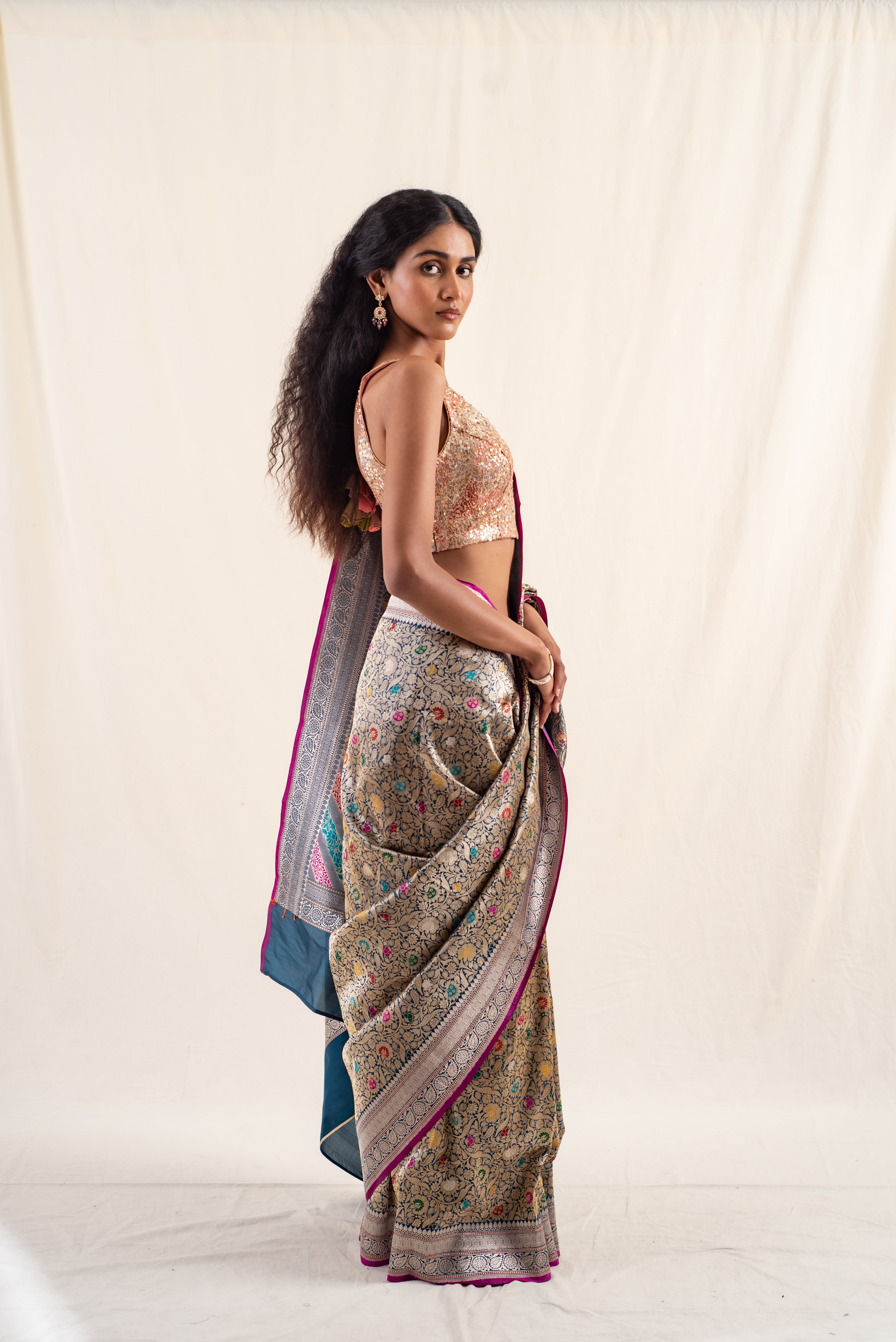
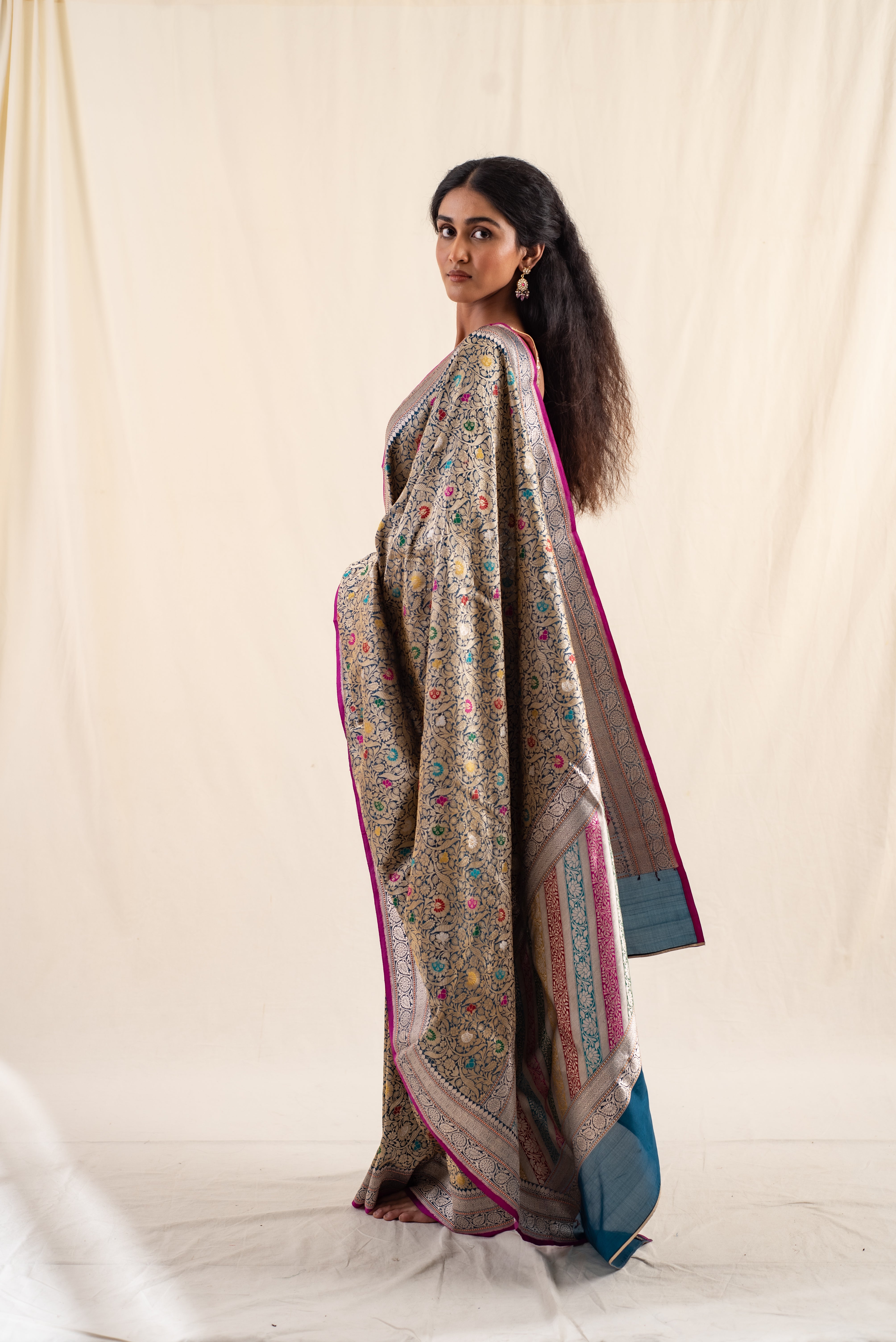
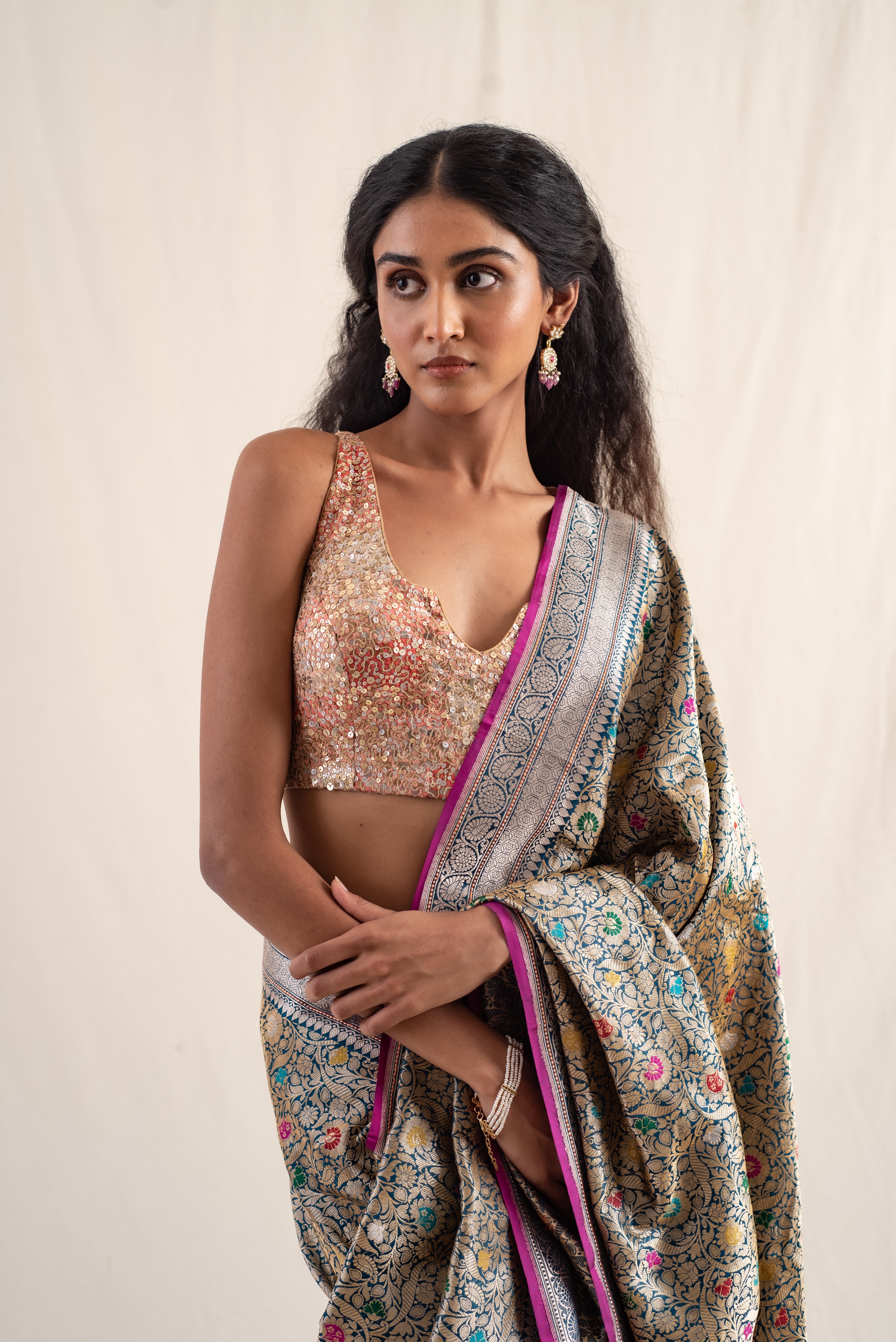
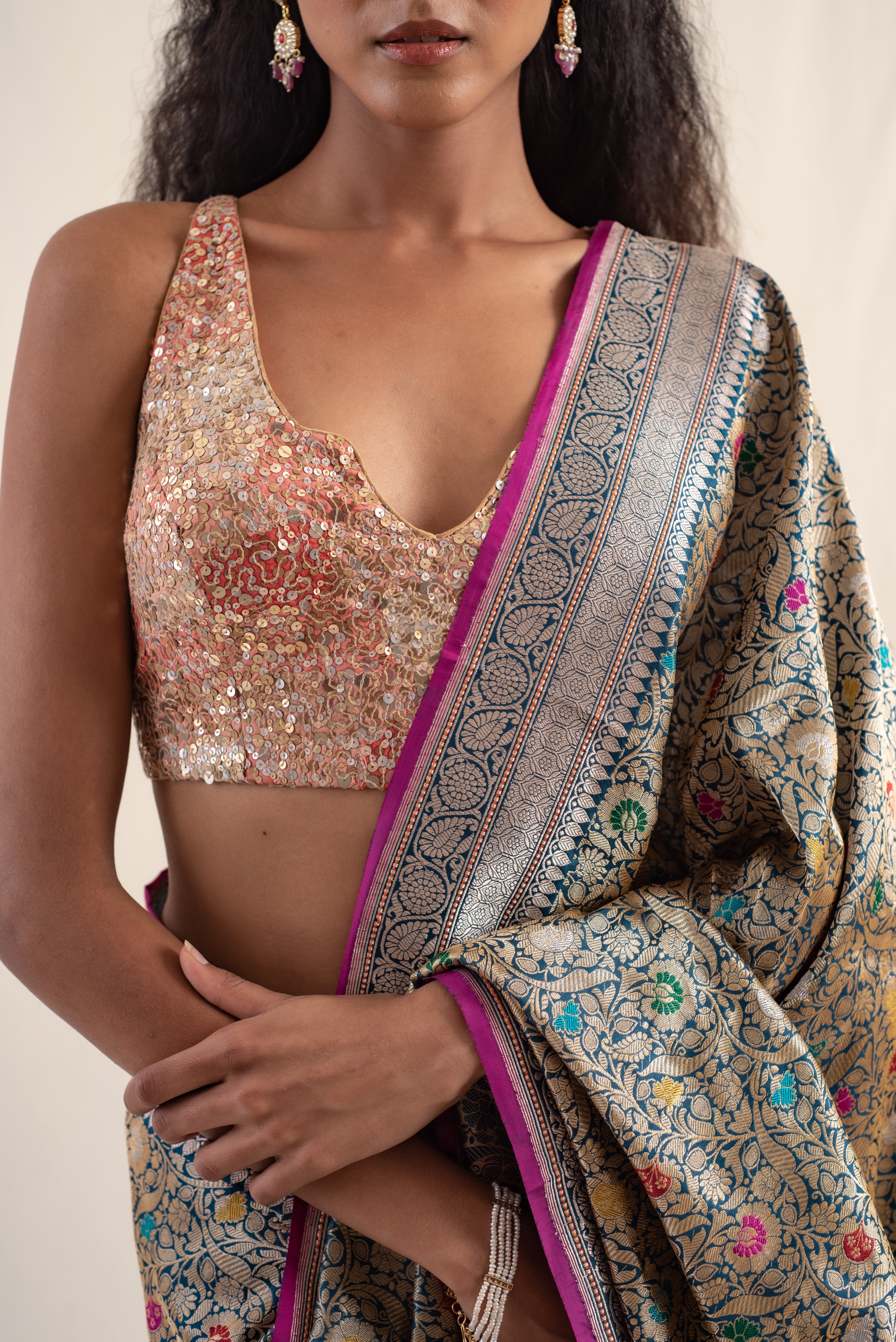
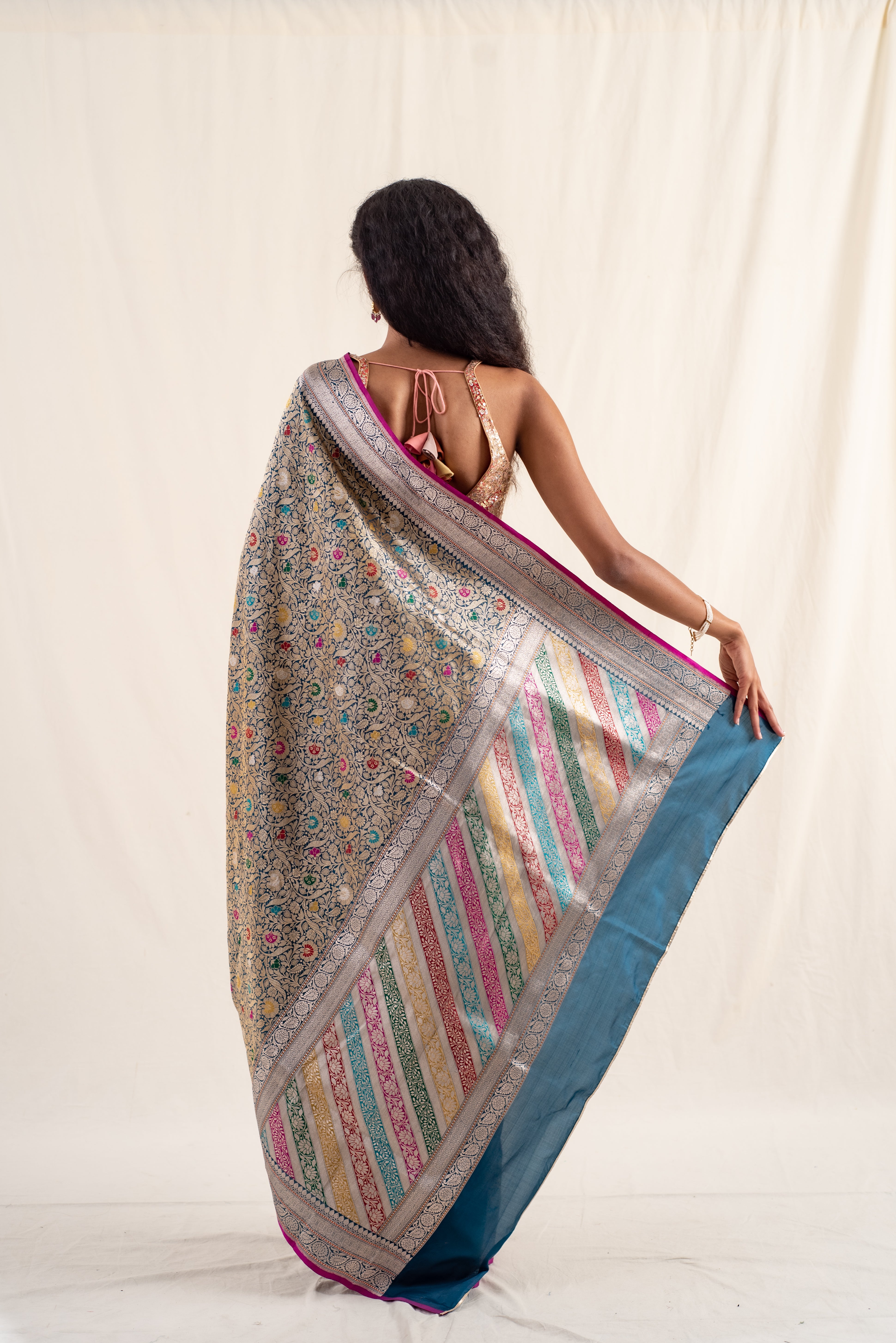
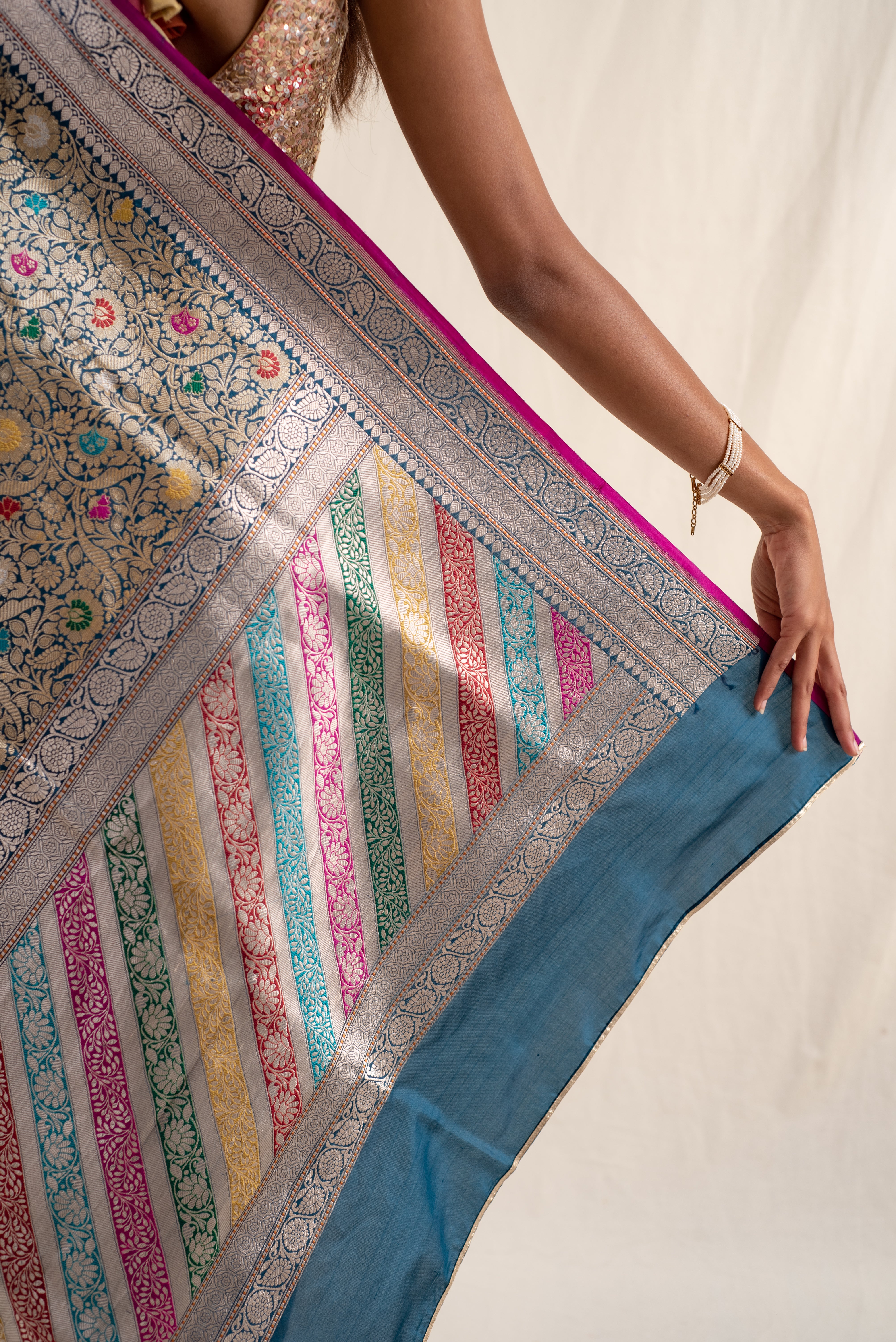
Rythu – Deep Blue Silk Banarasi Saree Rythu creatively combines the eye-catching appeal of deep teal with the sophistication of an artistically woven fabric and does a great job in combining both classical and modern approaches to Banarasi sarees. This beautiful masterpiece is created with top-notch silk that emulates the floral design of the bygone era. The same fine quality silk is used to create the metallic shamrak of the sarees—the palla doubles as an accessory and is stunning in the right ambient light—it retains its elegance of subtle sophistication.
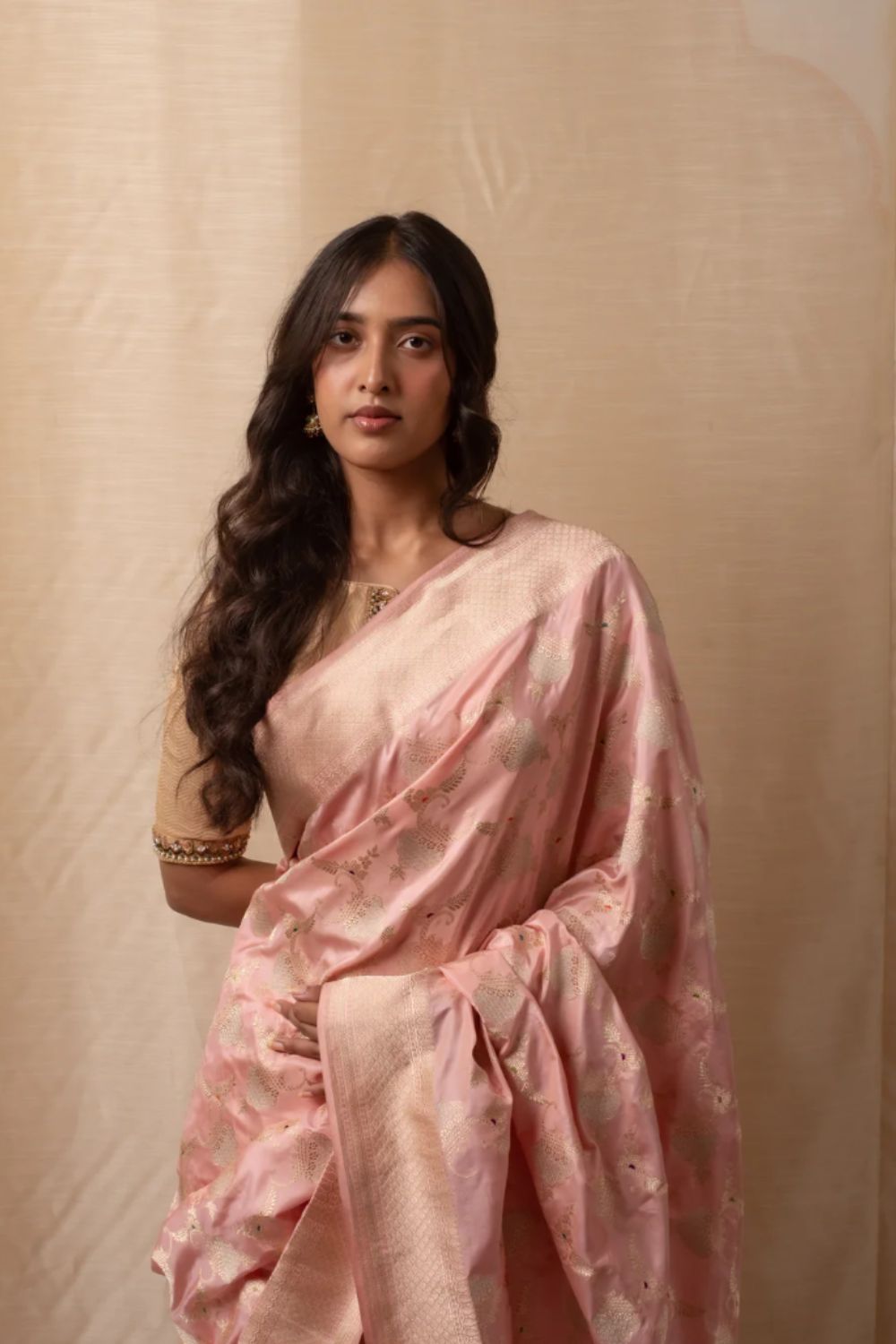
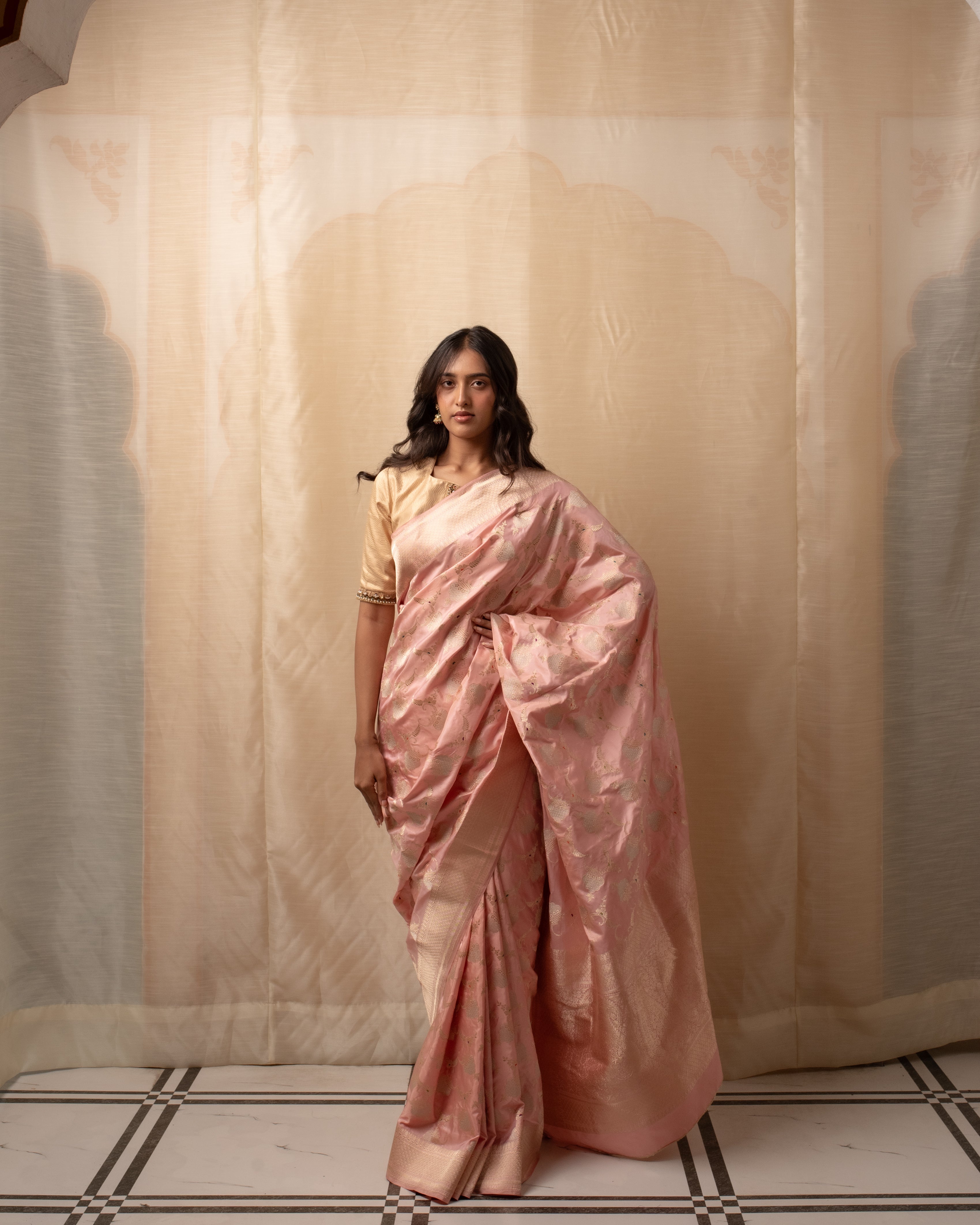
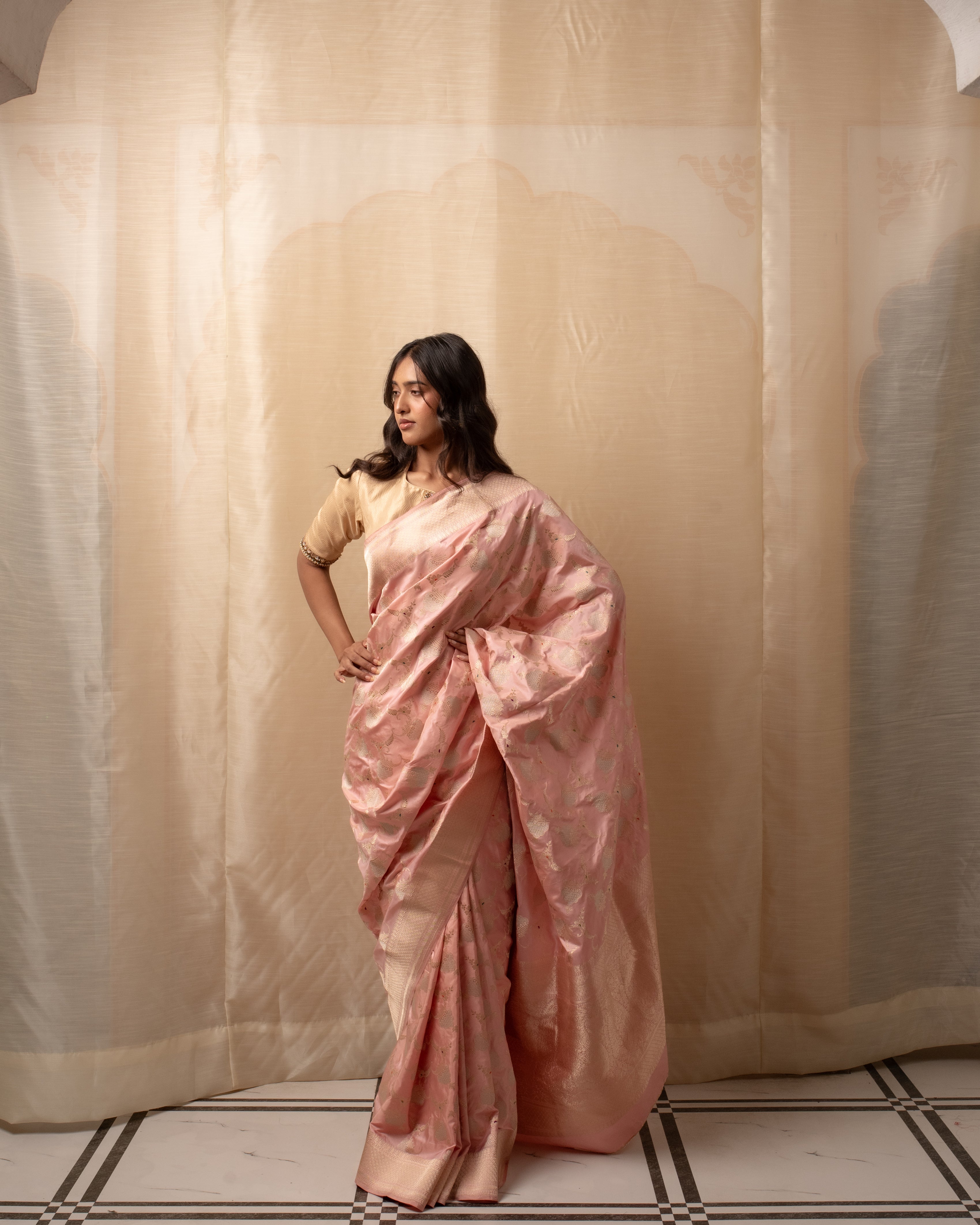
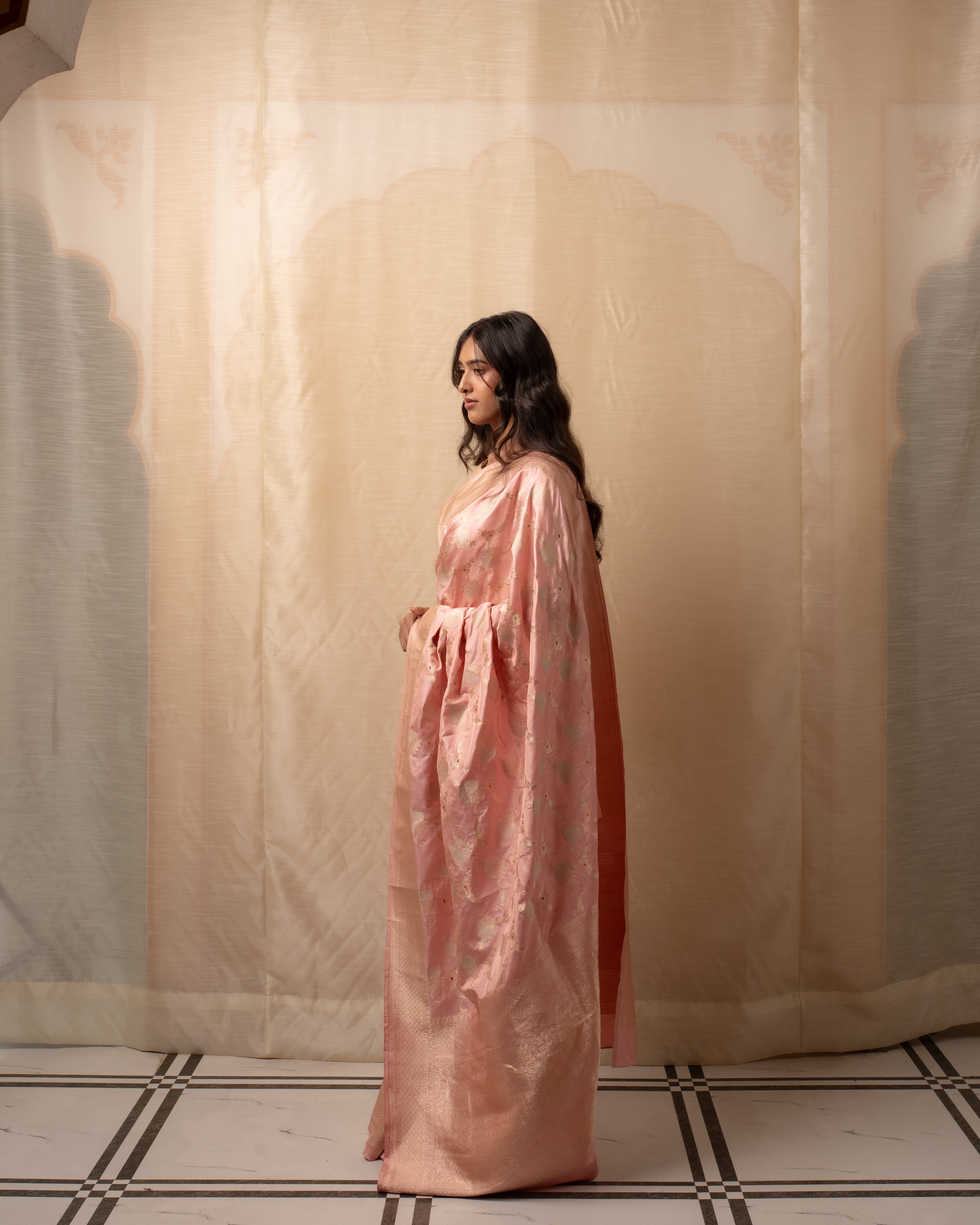
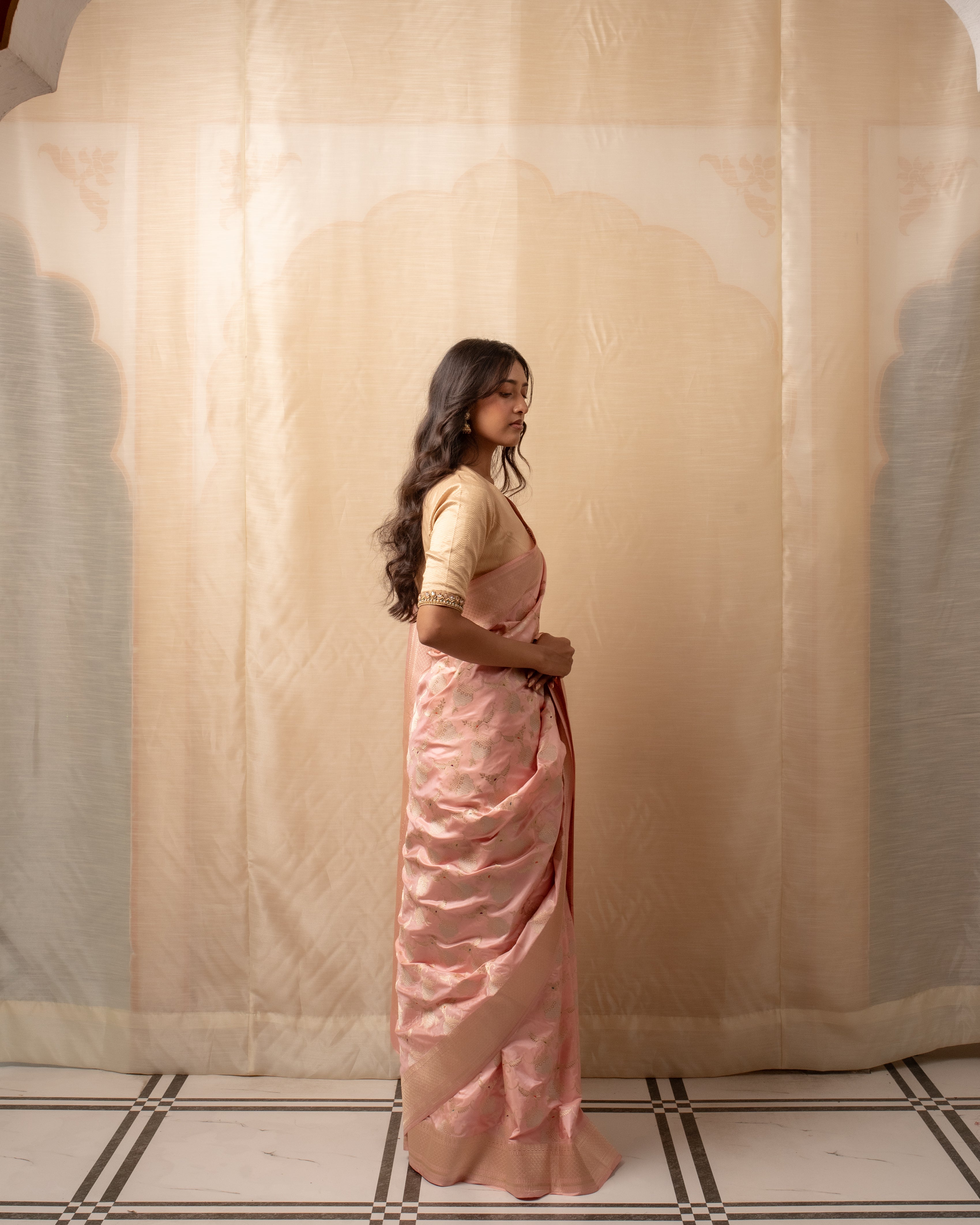
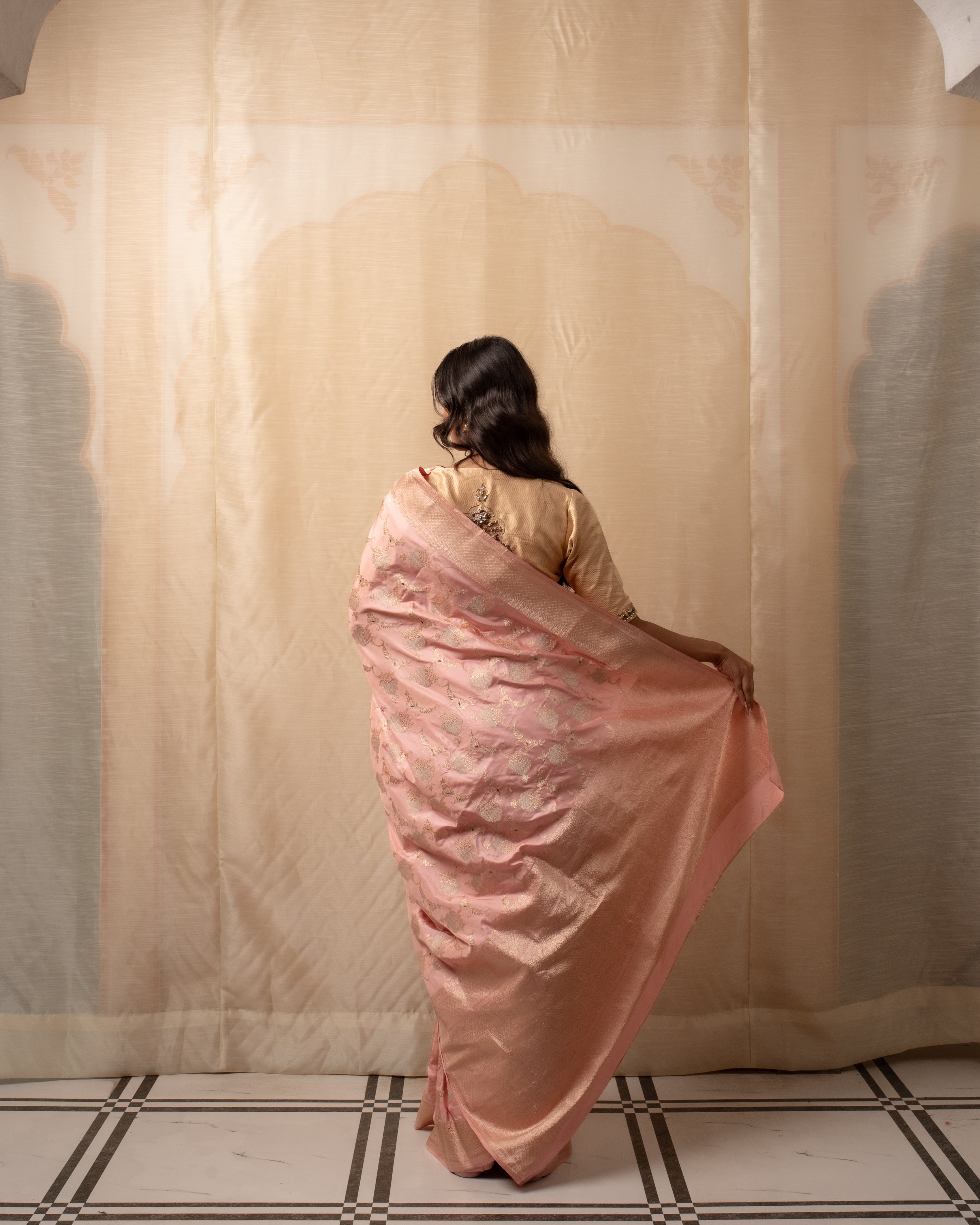
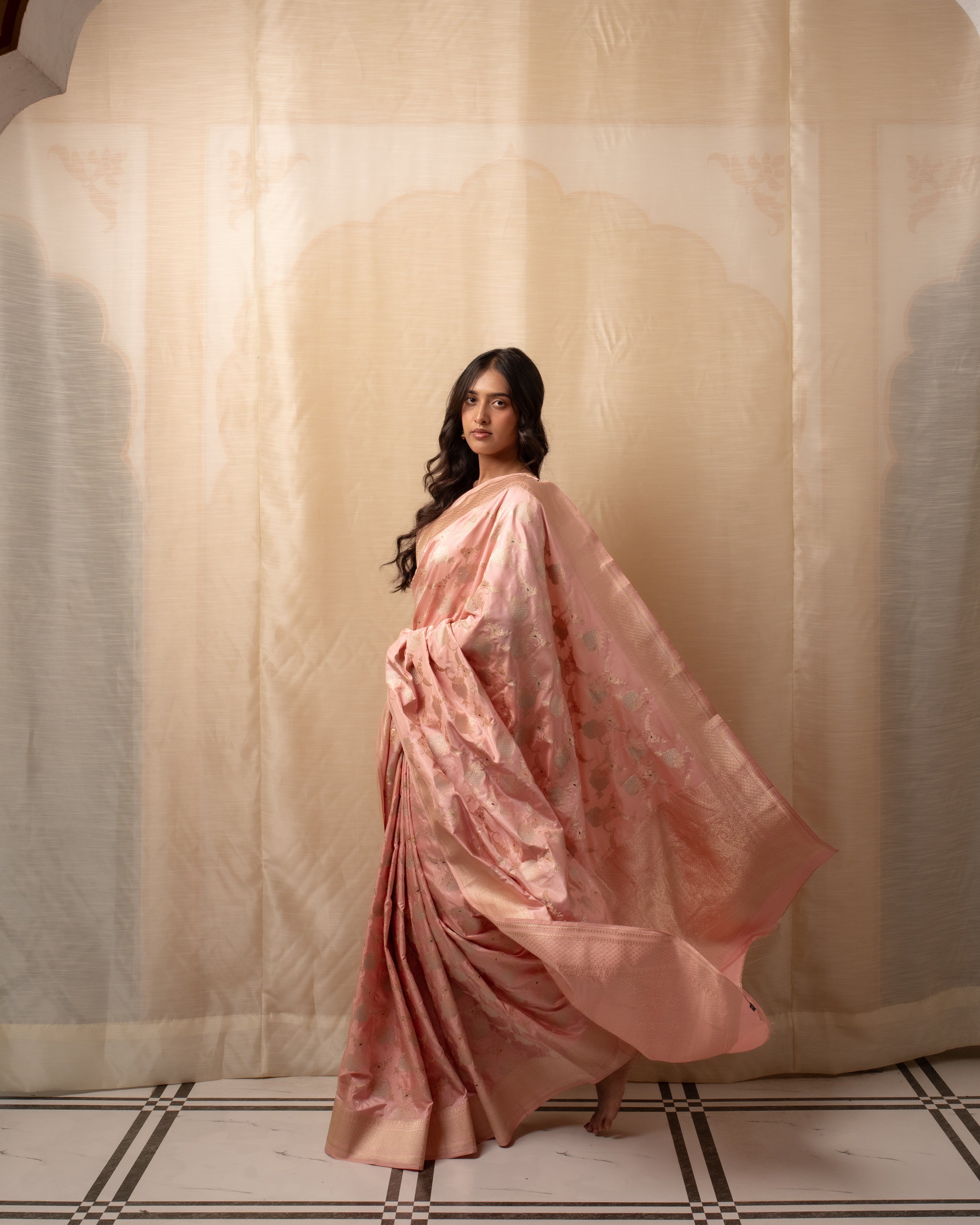
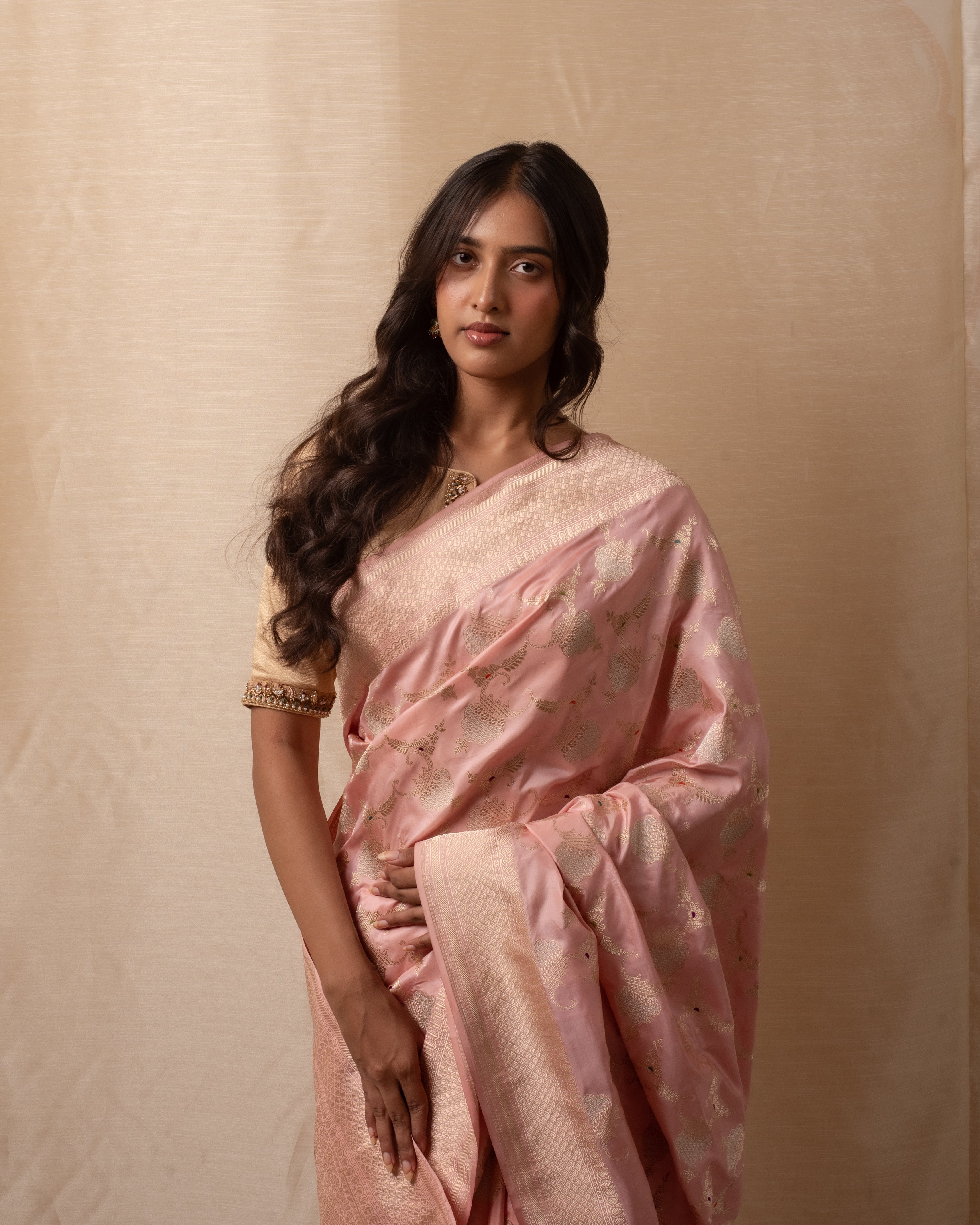
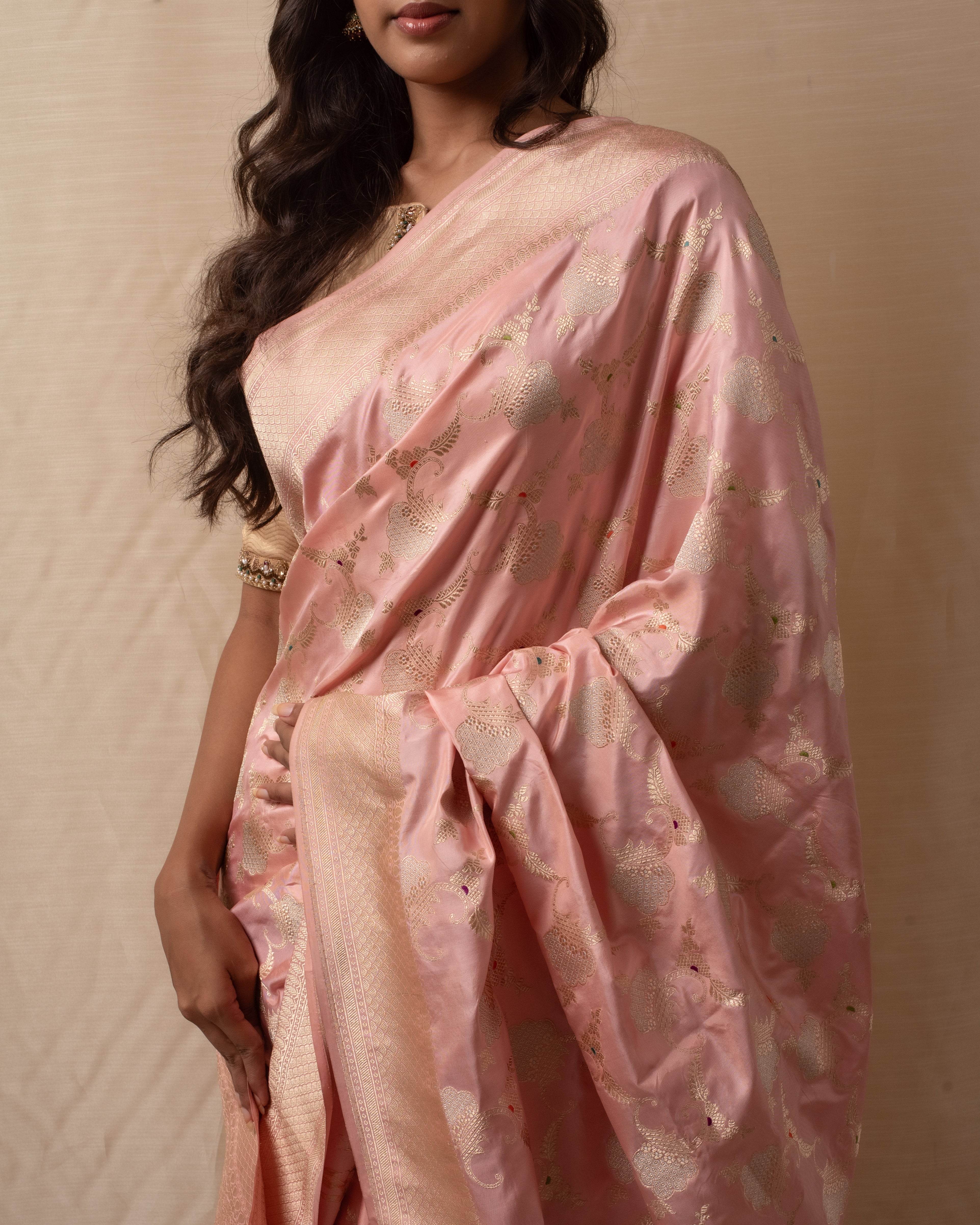
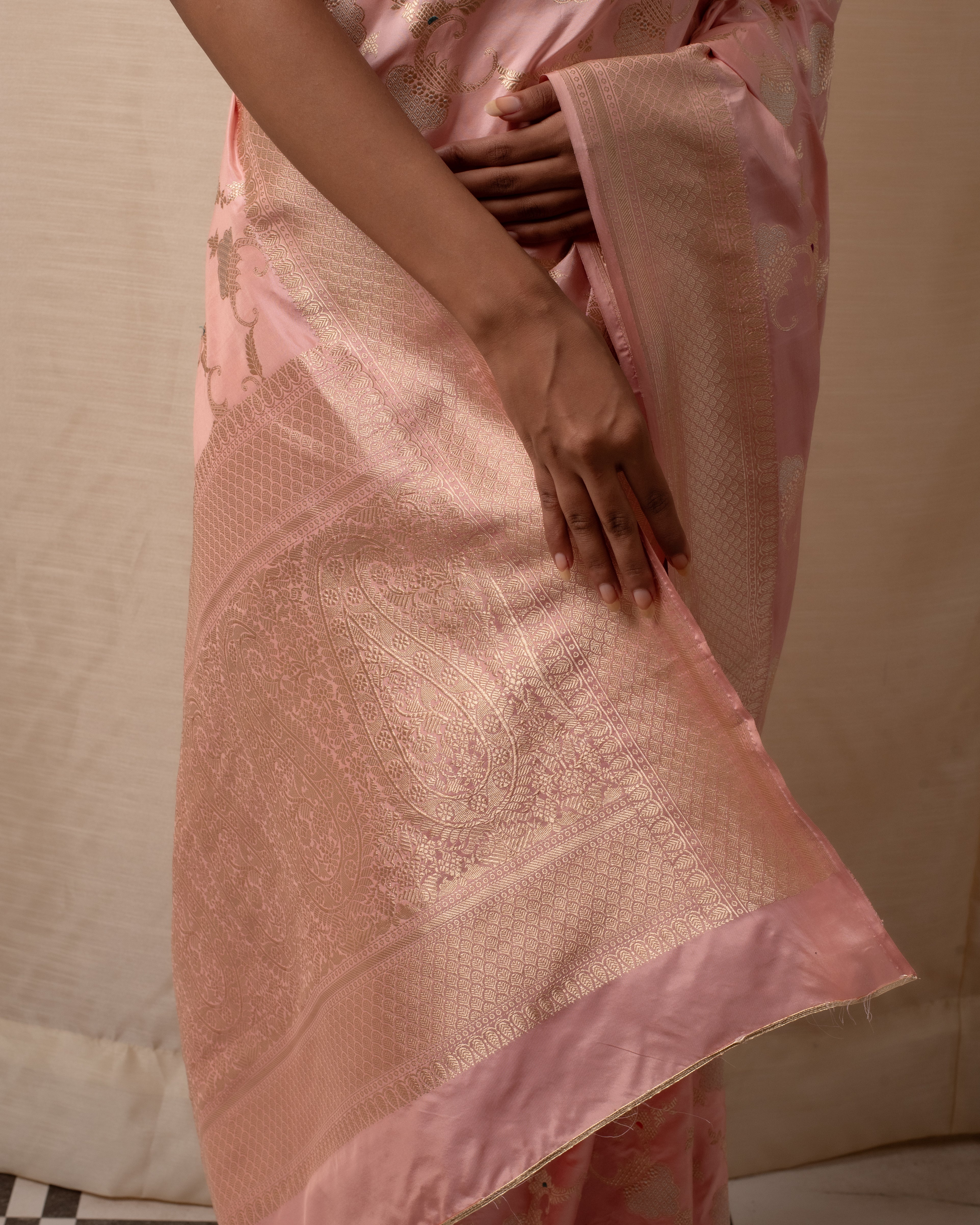
Gulabi Chandi- Nude Pink Silk Brocade Banarasi Saree The Gyasar Banaras saree of nude pink silk brocade utilizes the ancient techniques of Kadua weaving, and it also features an all-over gold and silver zari meenakari jaal as part of the design. It is made from pure Banarasi Silk, which gives major structure to its drape, and is also finished to be of a quality level appropriate for weddings, formal special occasions, and heirloom-style wardrobes.
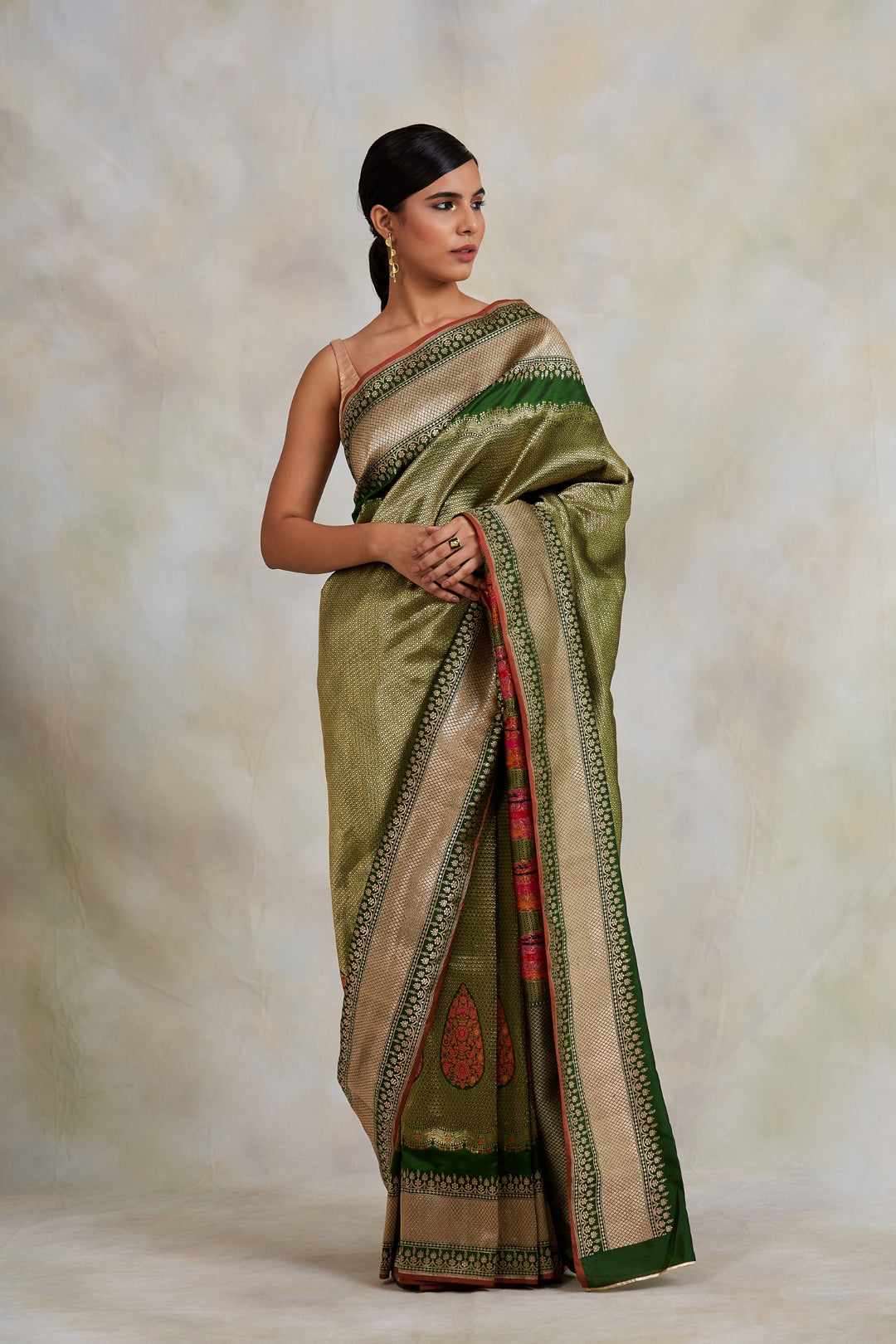
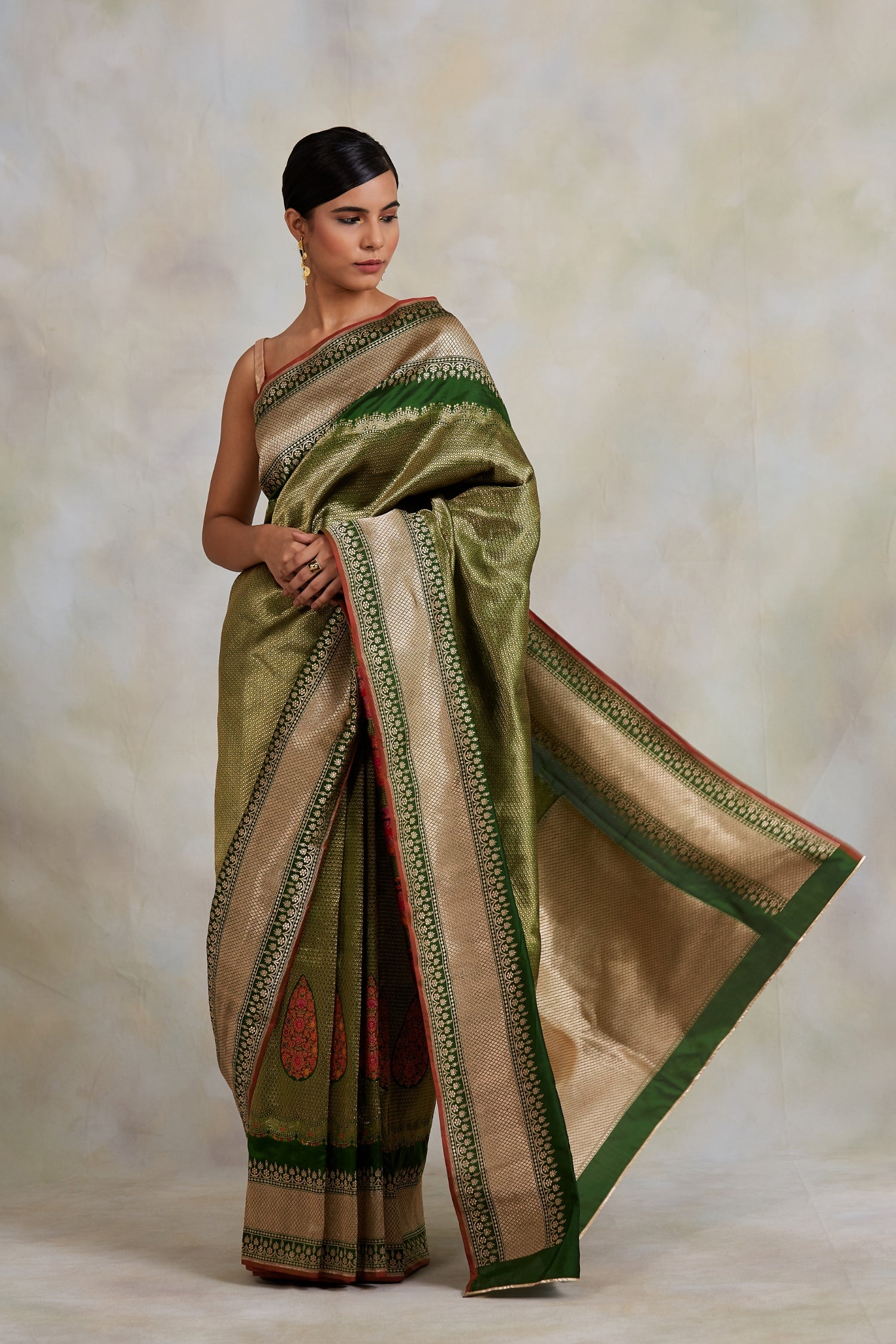
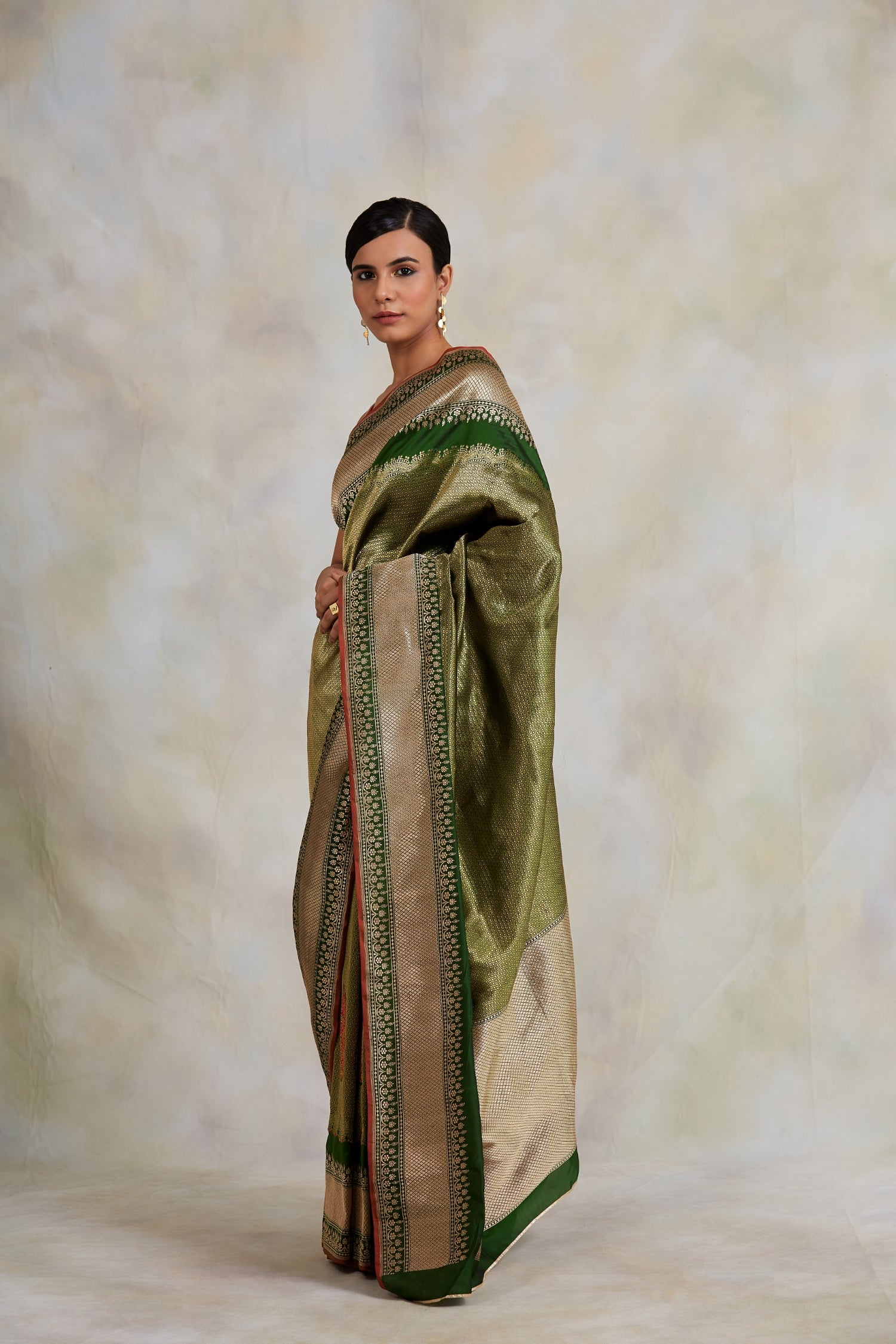
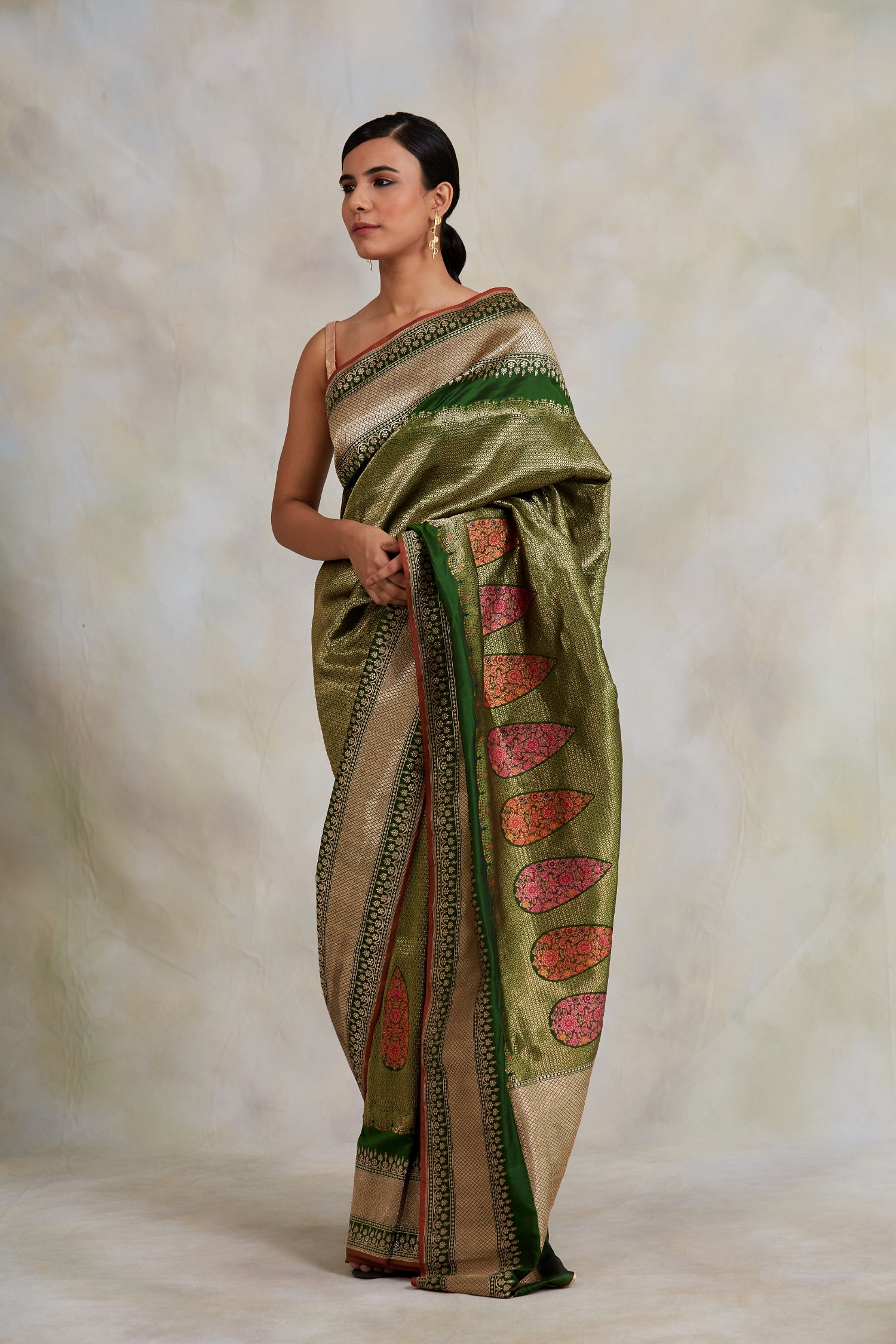
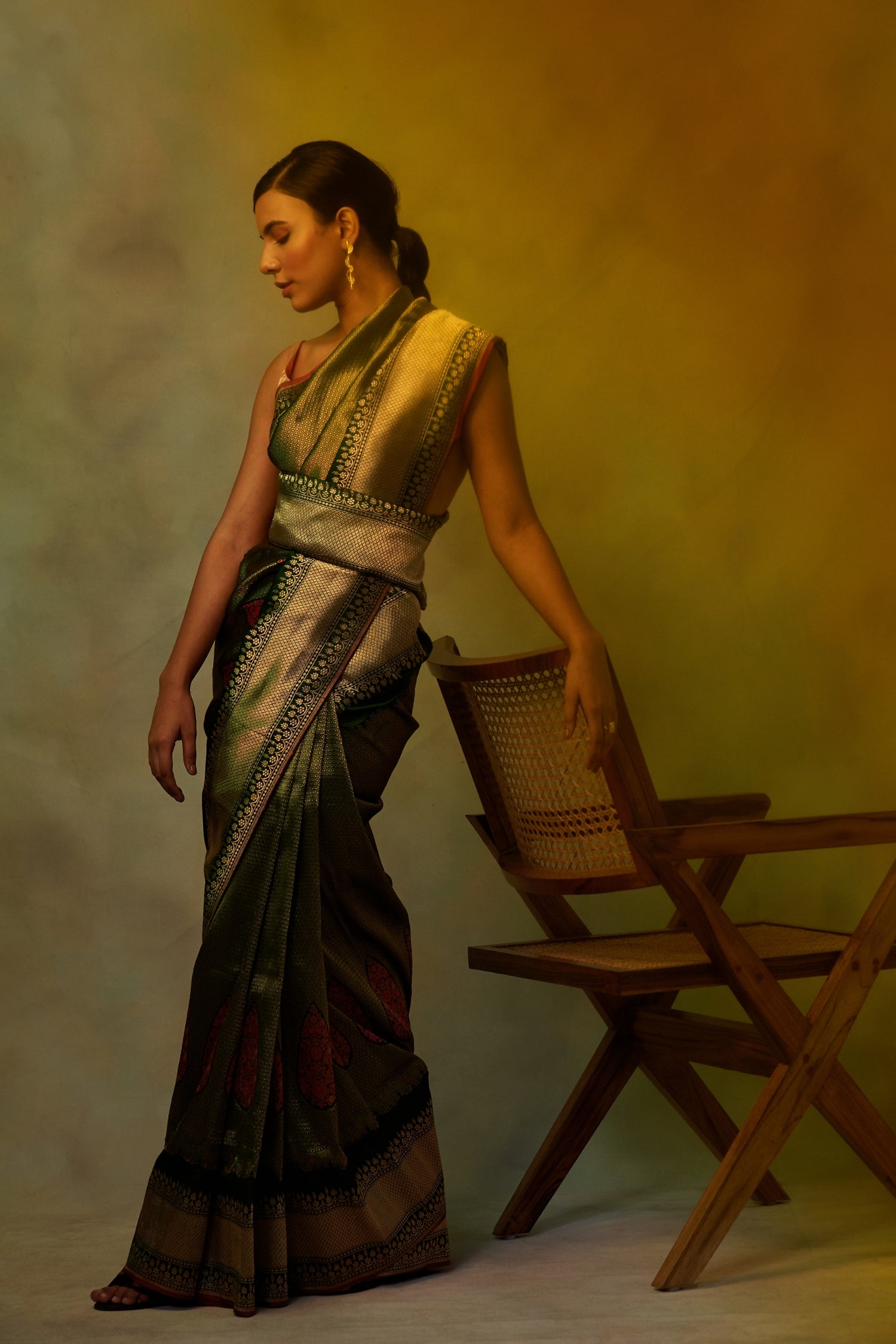
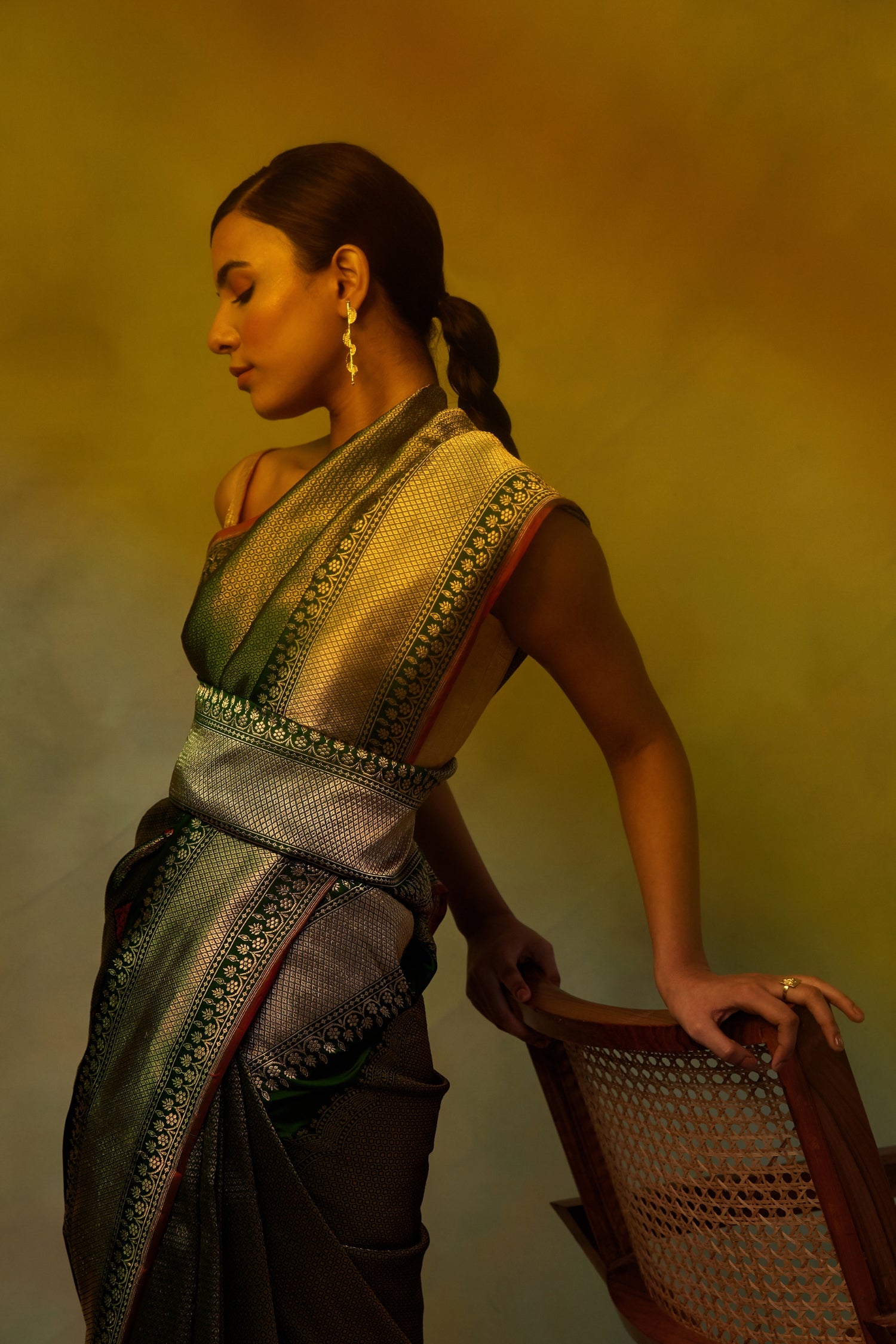
Chaman- Green Silk Brocade Banarasi Saree The emerald green Banarasi saree was produced using the kadua silk weaving method and features an all-over Jaal design with both zari and meenakari motifs in a paisley pattern. The palla and border feature zari, providing an ornamental appearance that combines with structure and balance. The Banarasi Kadua procedure is employed to create the fabric from high-quality silk, thus providing a luxurious and voluminous design that is suitable for elegant weddings and religious occasions.
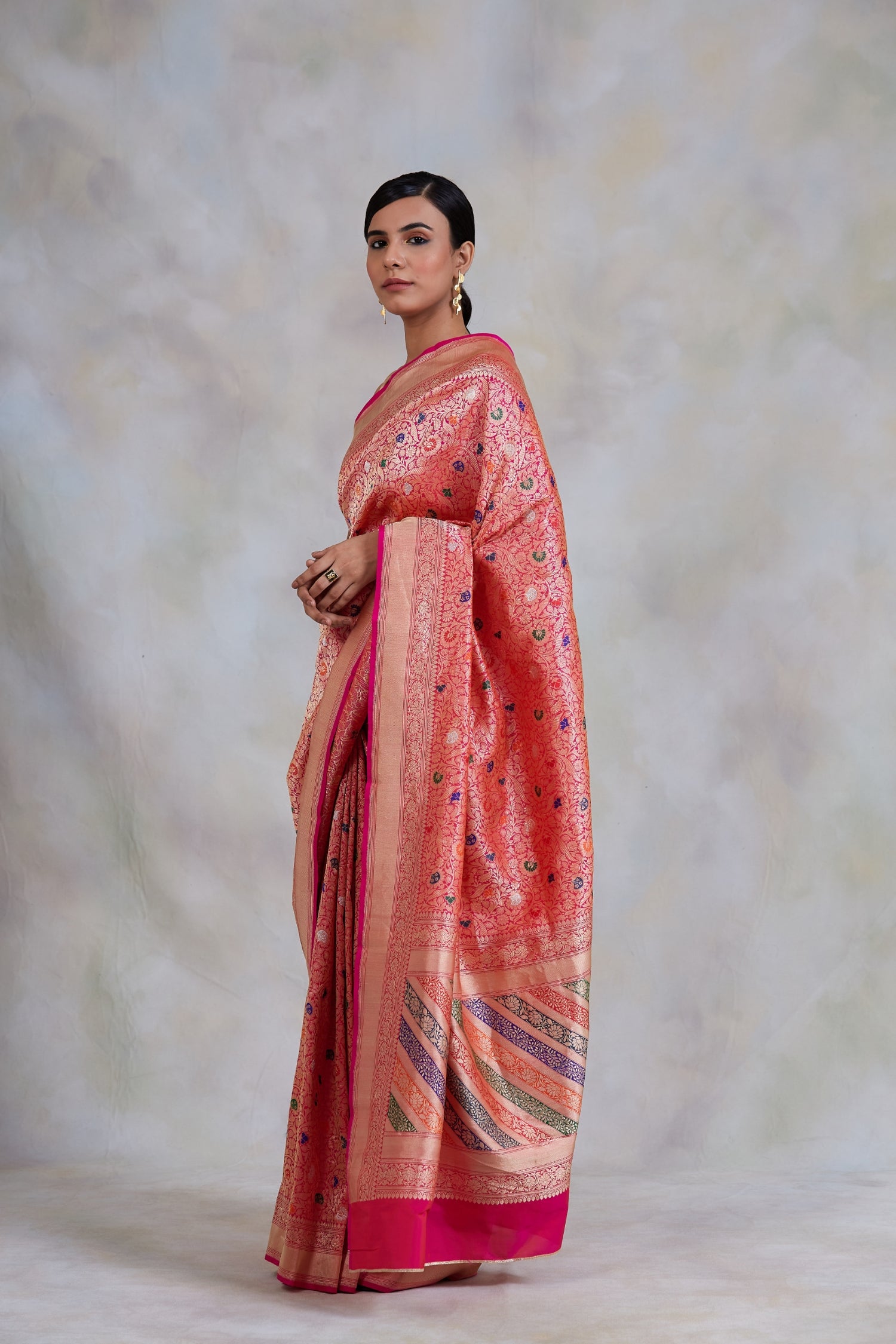
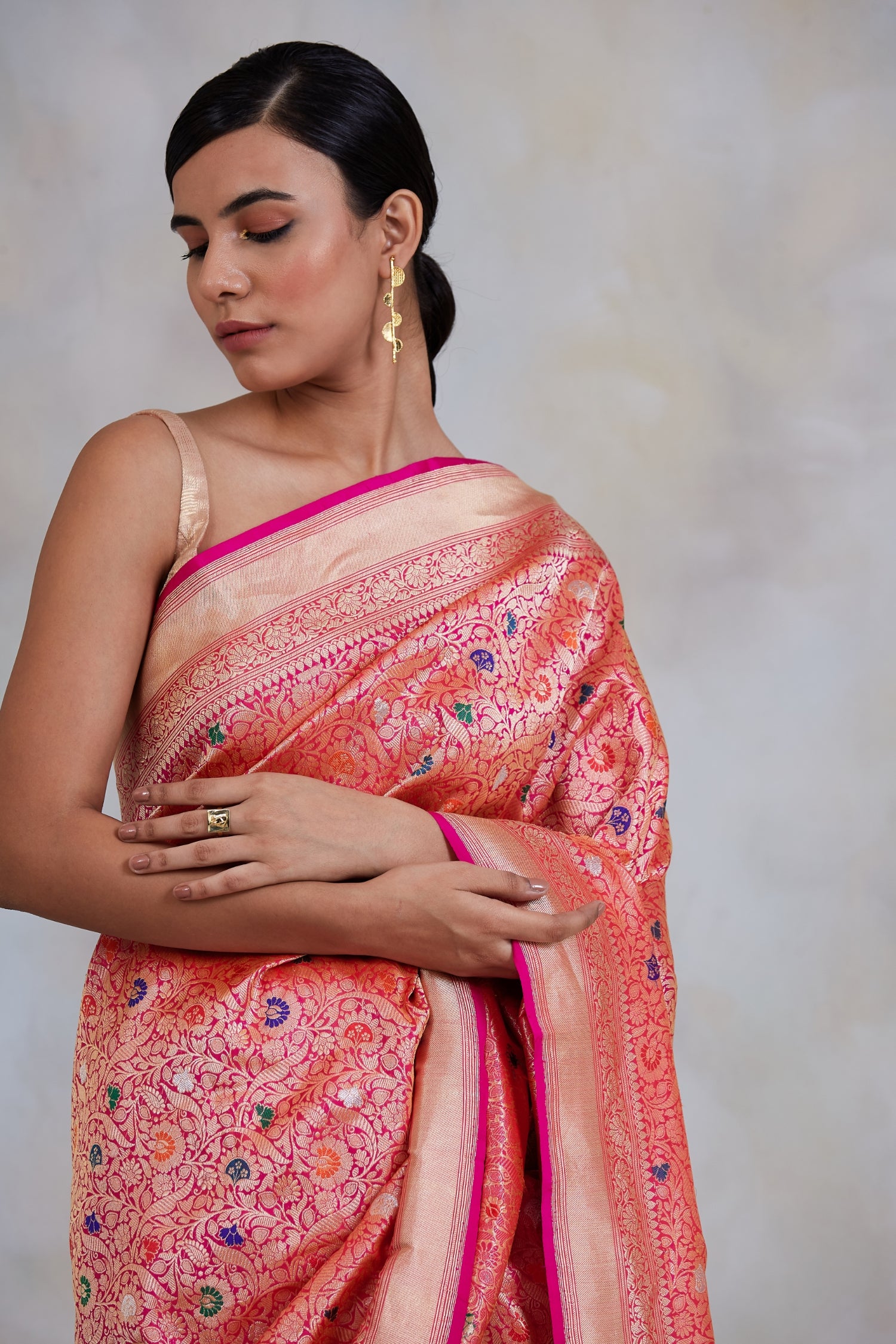
Sadabahaar- Pink Silk Brocade Banarasi Saree A timeless expression of Banarasi craftsmanship, this pink Banarasi Kadua silk saree features an exquisite all-over floral meenakari jaal woven with precision and artistry. Crafted in rich silk, the kadua technique lends depth, durability, and a beautifully structured weave to the saree. The soft pink hue enhances the intricate floral patterns, making it a perfect choice for weddings, festive occasions, and traditional celebrations. A statement of heritage and grace, this saree effortlessly blends classic artistry with refined elegance.
The key to successful styling of Gyasars is to ensure all components of their outfit serve a purpose and are complementary to the actual design aspect of the saree. The design of a Gyasar saree is often so intricate that one may consider a more understated approach to styling.
USP of the Banarasi Gyasar Sarees
Unlike lighter Banarasi tissue or those with simpler zari, Gyasar is defined by its extreme heaviness and intricate, narrative patterns. There are several varieties of brocade; yet, it stands out from other brocades, such as Tanchoi and Baluchari, due to its distinctive Tibetan Buddhist iconography and very thick appliqué goldwork. To put it differently, the Banarasi Gyasar saree is the textile art that represents the remarkable talents of the traditional master textile artisans of Varanasi, along with the visual beauty of the Tibetan sacred texts, thus forming a dazzlingly beautiful and meaningful royal garment.Key Features:
Weaving Technique: Richly woven in the dense and elaborate Kadwa or Kimkhab brocade style, which consists of many individual "wefts" of thread that form raised or textured designs, making it extremely labour-intensive to produce.Silk Type: This silk is made from exceptionally luxurious fibers that gain extra luster through the incorporation of gold (zari) and silver threads. The primary silk fabric not only enhances the overall quality but also accentuates the shine of the metal fibers woven throughout.
Designs: The motifs move beyond conventional floral or paisley patterns commonly seen in traditional textiles. Instead, they draw deeply from Tibetan Buddhist symbolism, featuring stylised lotus blooms representing purity, auspicious endless knots and fortunate scrolls symbolising continuity and prosperity, guardian figures that convey protection and spiritual strength, and intricate abstract line work that echoes sacred geometry. Together, these elements create layered compositions that are both visually powerful and deeply symbolic, transforming the textile into a narrative of faith, protection, and regal identity.
Feel & Look: A heavy, grand, and richly textured fabric due to the heavy use of zari and the way the richness of the fabric makes it appear as a sculpted three-dimensional fabric.
Cultural Importance: A highly esteemed textile of the Tibetan nobility, used for religious ceremonial events as a melding of Indian textile skills and Tibetan religious visual arts.
Why Choose Priyanka Raajiv's Banarasi Gyasar Sarees?
At Priyanka Raajiv, each Banarasi Gyasar saree is crafted with meticulous attention to weave quality, balance, and proportion. While these sarees are richly woven and substantial in weight due to the use of dense silk and intricate zari work, they are engineered to drape with exceptional grace. Traditional Banarasi weaving techniques ensure the perfect placement of zari and meenakari details, allowing the saree to fall fluidly without stiffness. The result is a luxurious textile that feels regal yet effortless, with a silhouette that moves beautifully and holds its form.The design of your Banarasi Gyasar saree revolves around the structure, the finish, and the wearability; therefore, the saree will not lose its character but will rather look subtle.
Explore the Richness of Banarasi Gyasar Sarees
The Gyasar sarees are identified with their weighty and dense surface and, at the same time, metallic illusion. This limited edition collection includes:- Silk base with a natural finish, which gives it the luster
- Gold and silver zari that, through perfect weaving, create an illusion of weightlessness
- Meenakari, which, without adding any weight to the saree, gives depth and richness
- Bridal, festive, and formal Wear colour palettes are suitable for each occasion
Sadar - Mint Green Silk Banarasi Saree The meenakari work of floral patterns in pale pink, lavender, and some teal on this mint green silk makes the hues come out even more. The borders of both the saree and palla are woven with kadua, showcasing the traditional Banarasi passion and skill, while the structure of the drape is suitable for many occasions of celebration, such as wedding receptions (and formal events) wherein a supreme fabric has been employed, pure silk!
Rythu – Deep Blue Silk Banarasi Saree Rythu creatively combines the eye-catching appeal of deep teal with the sophistication of an artistically woven fabric and does a great job in combining both classical and modern approaches to Banarasi sarees. This beautiful masterpiece is created with top-notch silk that emulates the floral design of the bygone era. The same fine quality silk is used to create the metallic shamrak of the sarees—the palla doubles as an accessory and is stunning in the right ambient light—it retains its elegance of subtle sophistication.
Gulabi Chandi- Nude Pink Silk Brocade Banarasi Saree The Gyasar Banaras saree of nude pink silk brocade utilizes the ancient techniques of Kadua weaving, and it also features an all-over gold and silver zari meenakari jaal as part of the design. It is made from pure Banarasi Silk, which gives major structure to its drape, and is also finished to be of a quality level appropriate for weddings, formal special occasions, and heirloom-style wardrobes.
Chaman- Green Silk Brocade Banarasi Saree The emerald green Banarasi saree was produced using the kadua silk weaving method and features an all-over Jaal design with both zari and meenakari motifs in a paisley pattern. The palla and border feature zari, providing an ornamental appearance that combines with structure and balance. The Banarasi Kadua procedure is employed to create the fabric from high-quality silk, thus providing a luxurious and voluminous design that is suitable for elegant weddings and religious occasions.
Sadabahaar- Pink Silk Brocade Banarasi Saree A timeless expression of Banarasi craftsmanship, this pink Banarasi Kadua silk saree features an exquisite all-over floral meenakari jaal woven with precision and artistry. Crafted in rich silk, the kadua technique lends depth, durability, and a beautifully structured weave to the saree. The soft pink hue enhances the intricate floral patterns, making it a perfect choice for weddings, festive occasions, and traditional celebrations. A statement of heritage and grace, this saree effortlessly blends classic artistry with refined elegance.
Styling Tips for Gyasar Banarasi Sarees
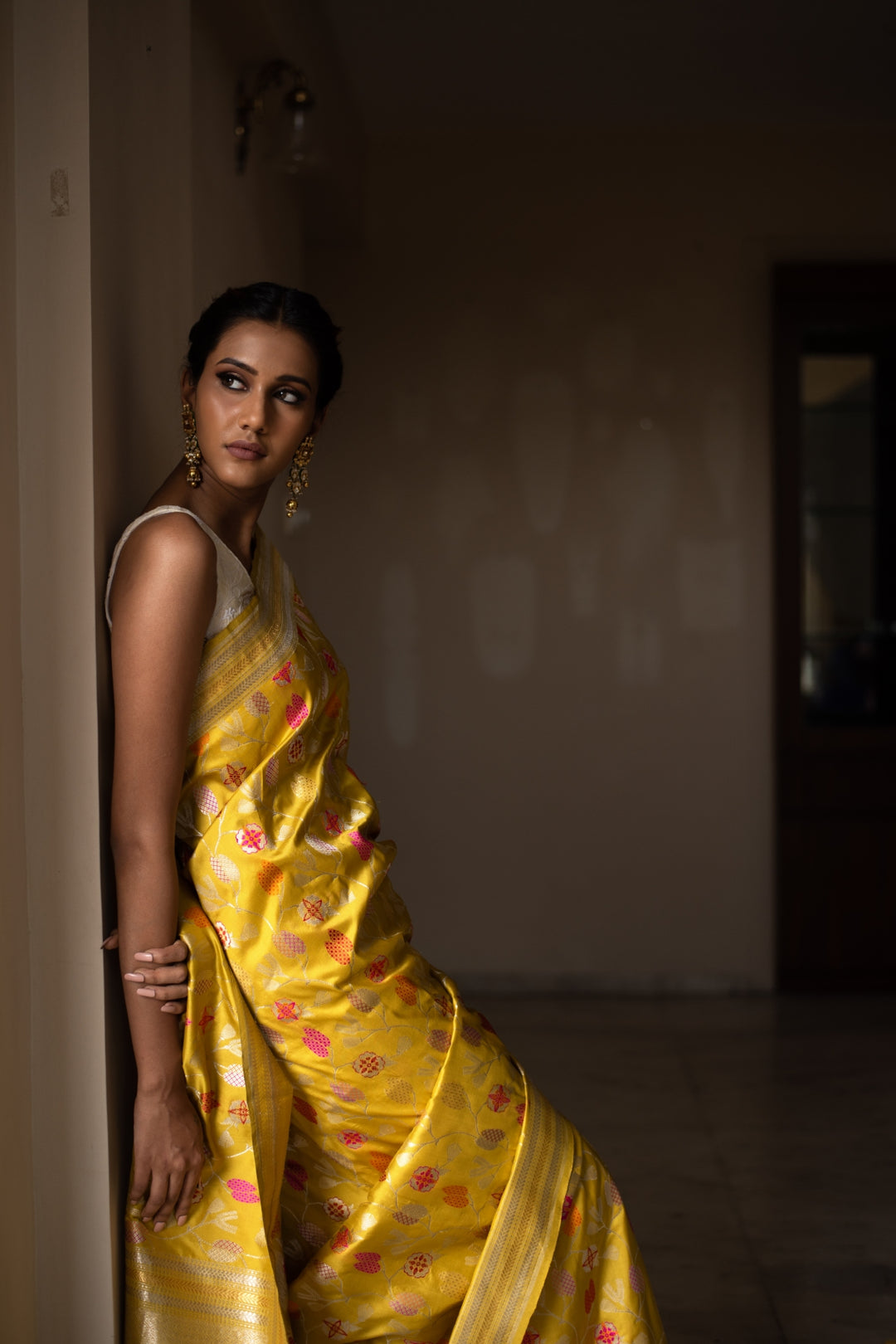
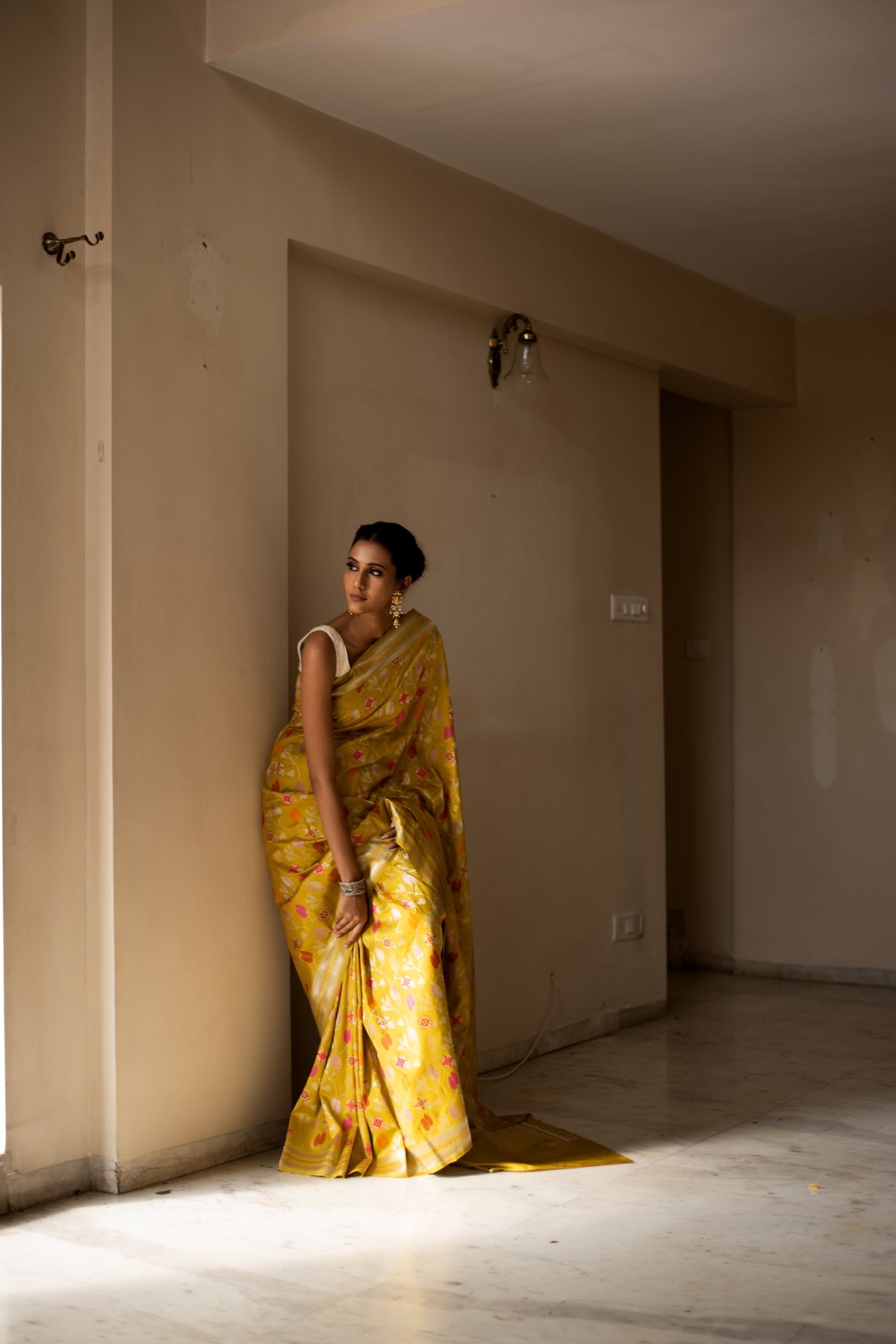
The distinctive design of the Gyasar Banarasi saree, which features tightly woven threads with a shiny sheen, provides ample opportunity for elevated styling to create balance without detracting from the overall beauty of the saree.The key to successful styling of Gyasars is to ensure all components of their outfit serve a purpose and are complementary to the actual design aspect of the saree. The design of a Gyasar saree is often so intricate that one may consider a more understated approach to styling.
- Match your beautiful Gyasar saree with an elegant fitted silk blouse or a raw silk blouse so that a sense of proportion and balance is created in the overall look of the saree.
- Accessories speak in whispering tones rather than shout with the case of your Gyasar saree.
- It is highly recommended to opt for the personal ornaments that mean the most to you—this will ensure that the saree’s design details are not overpowered.
Caring Tips for Banarasi Gyasar Sarees
Gyasar sarees are required to be handled with mindful care due to their silk base and intricate zari detailing. With proper care, the texture and finish are preserved beautifully over time.- Dry cleaning is recommended exclusively
- Storage is advised in soft cotton or muslin, in a folded form
- Prolonged exposure to direct sunlight should be avoided
- Hanging is not recommended, as strain may be caused to the weave