


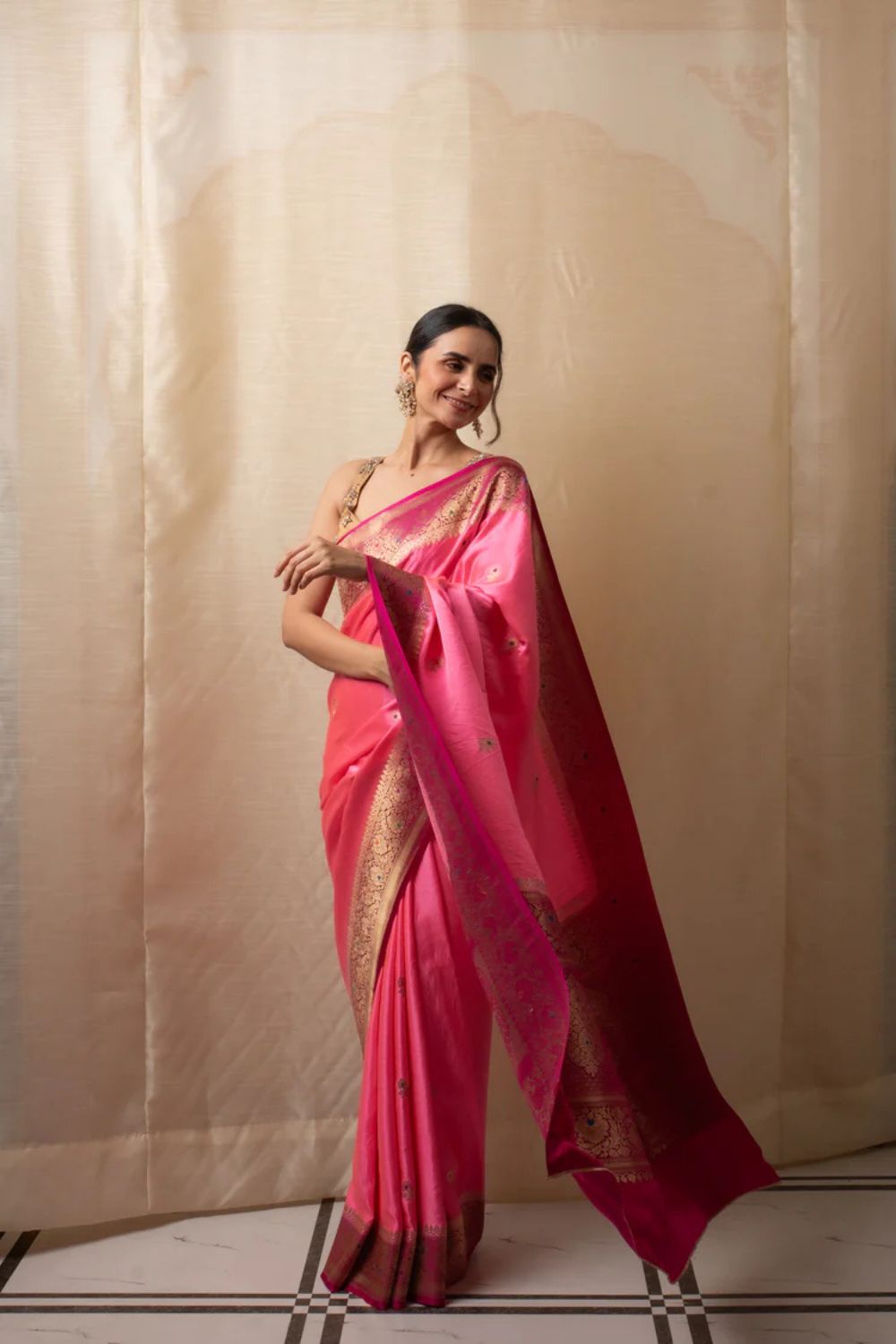
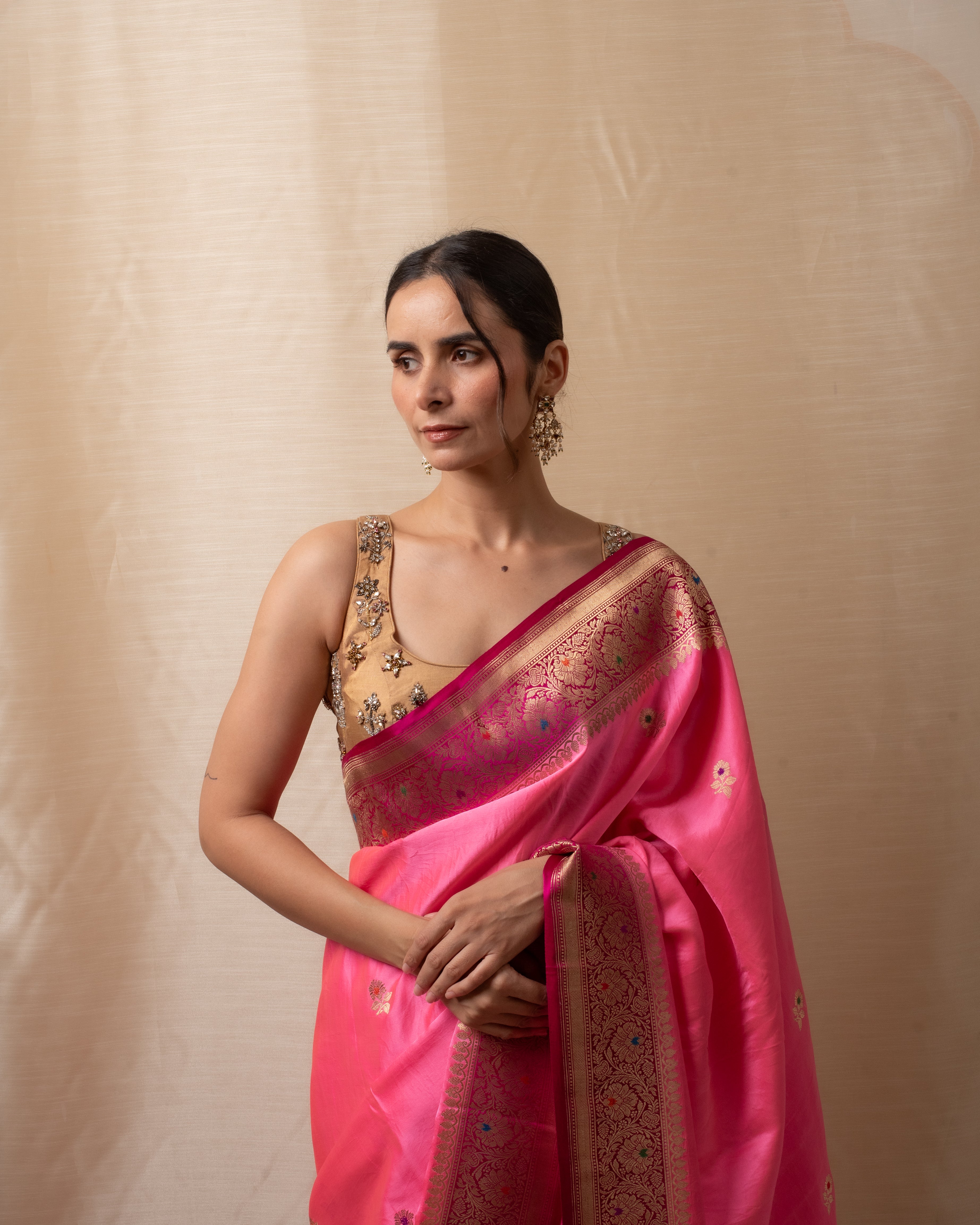
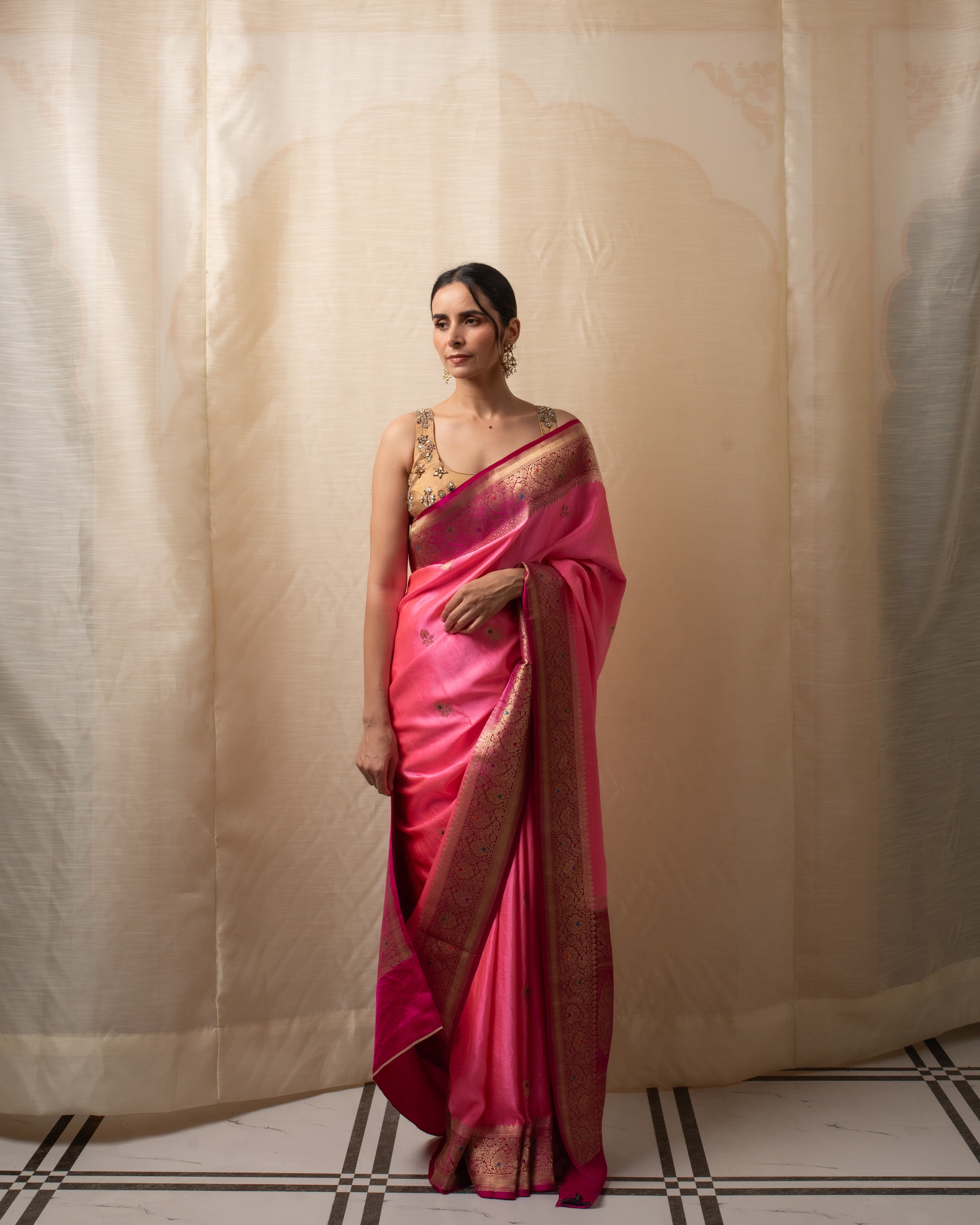
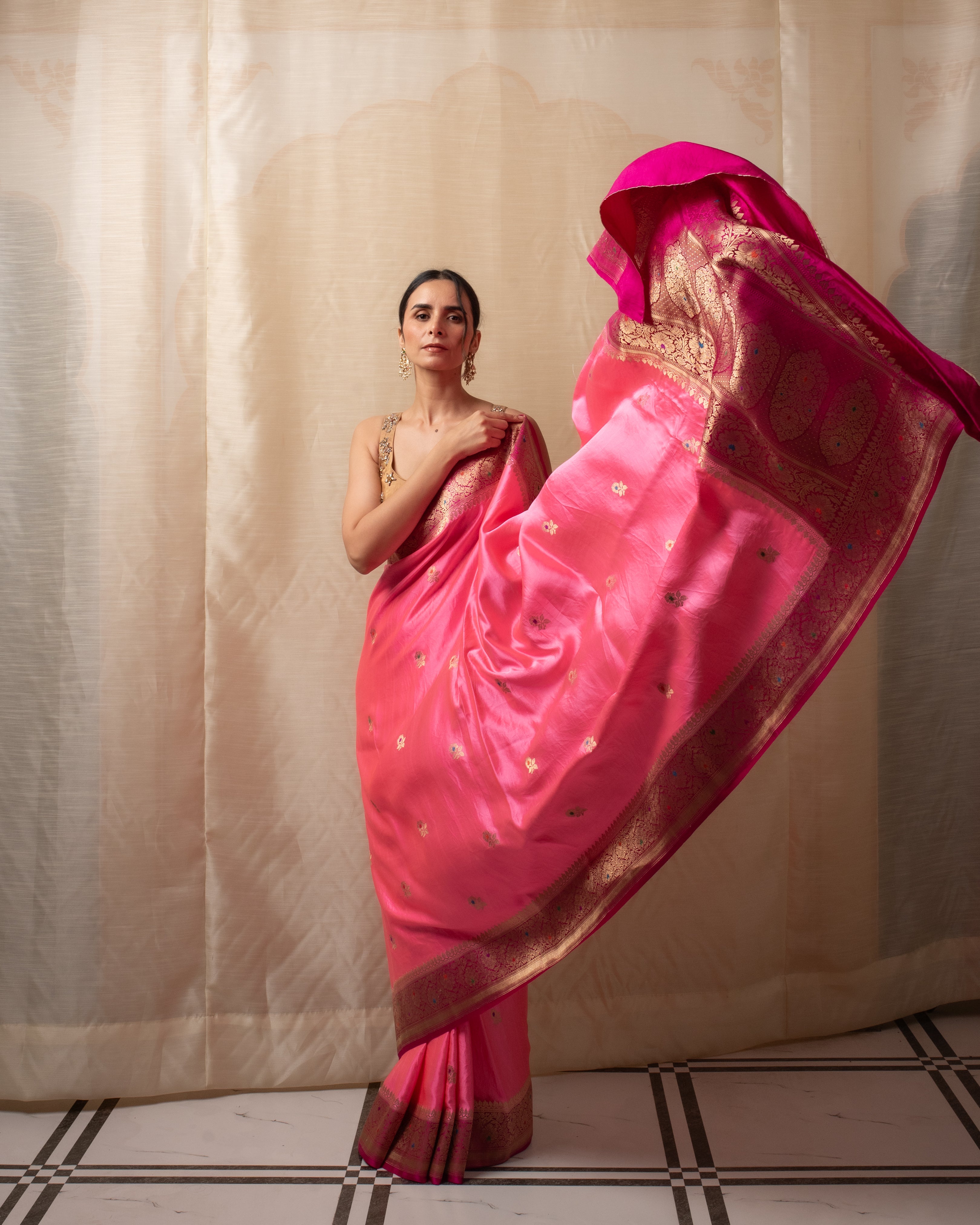

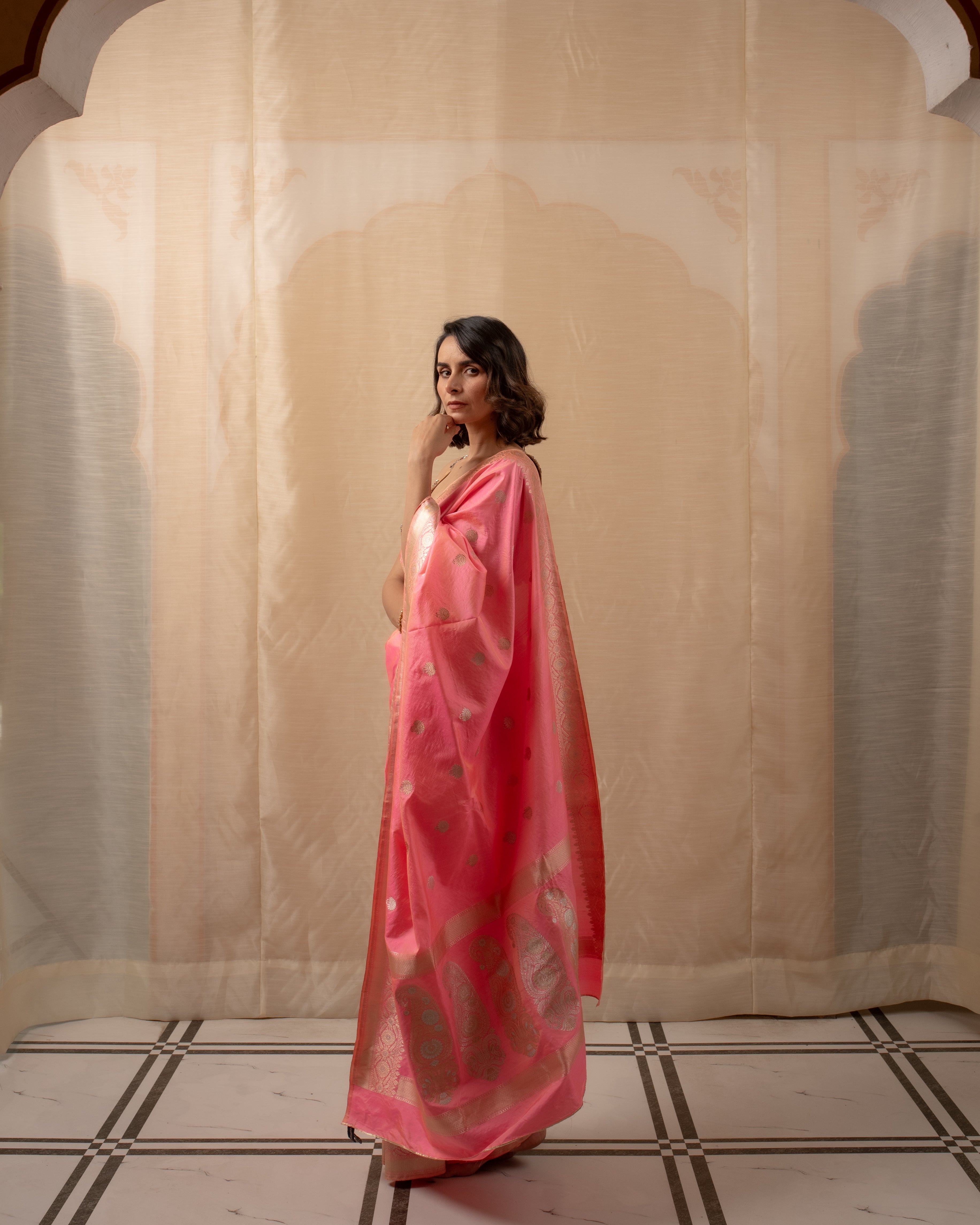
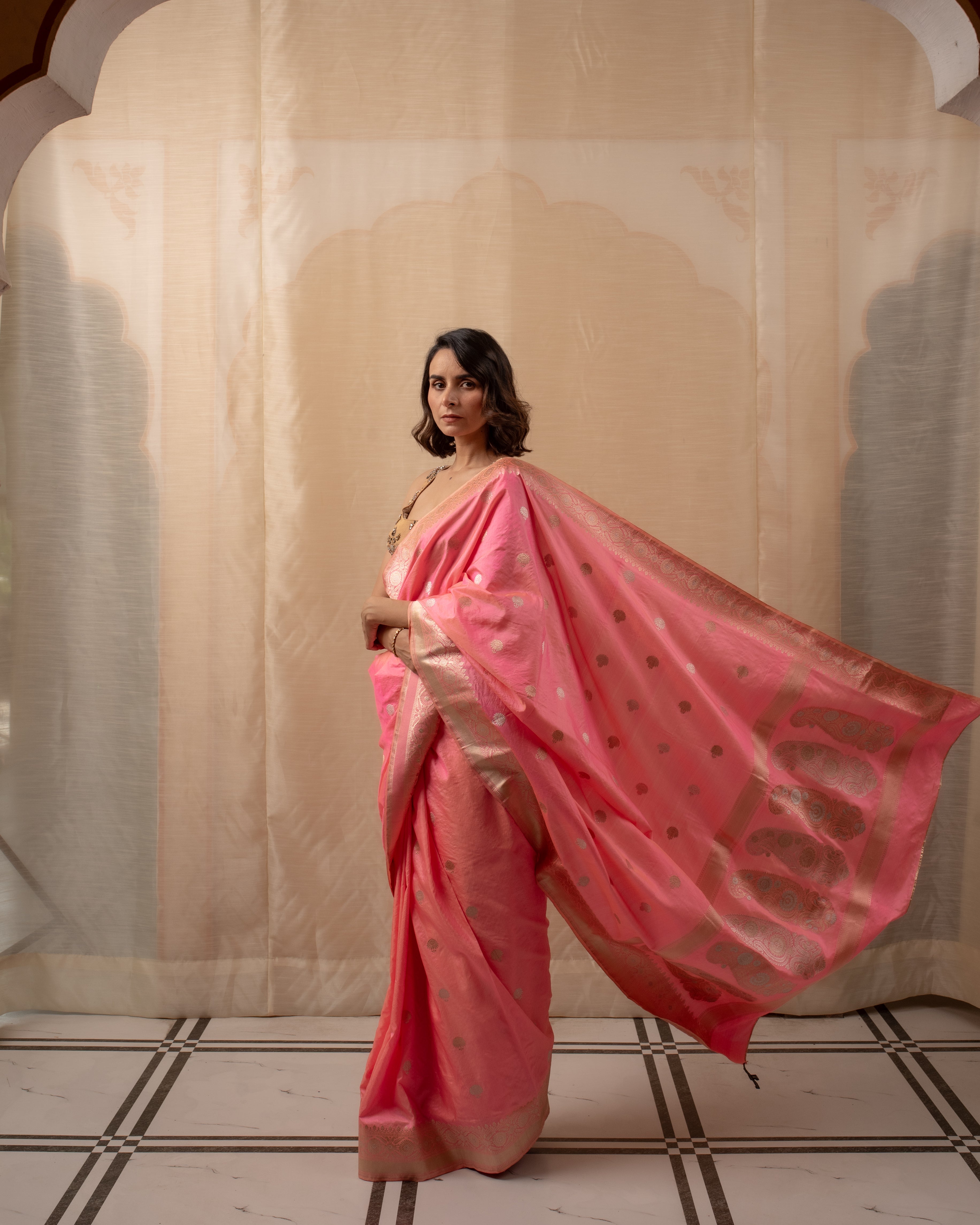
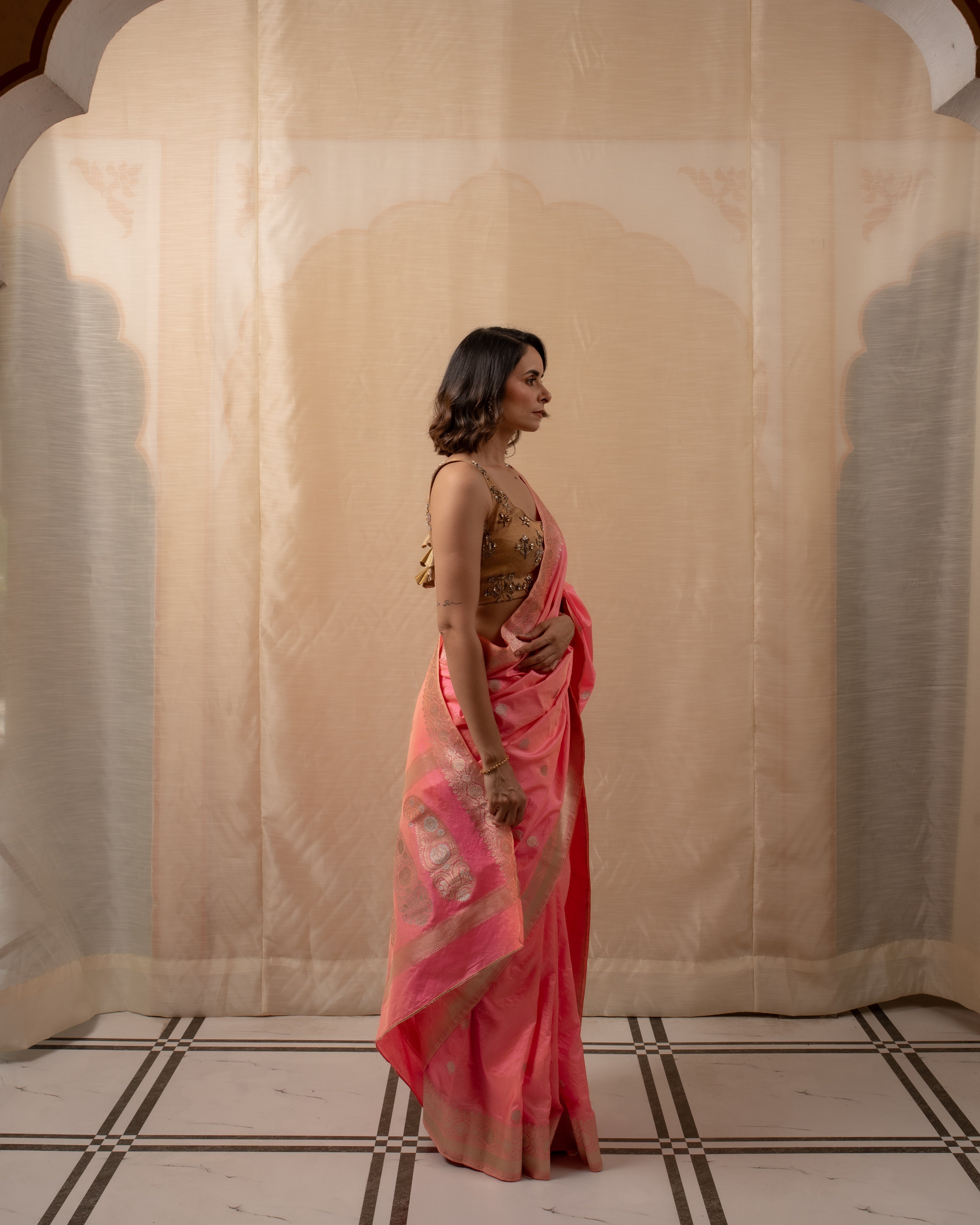
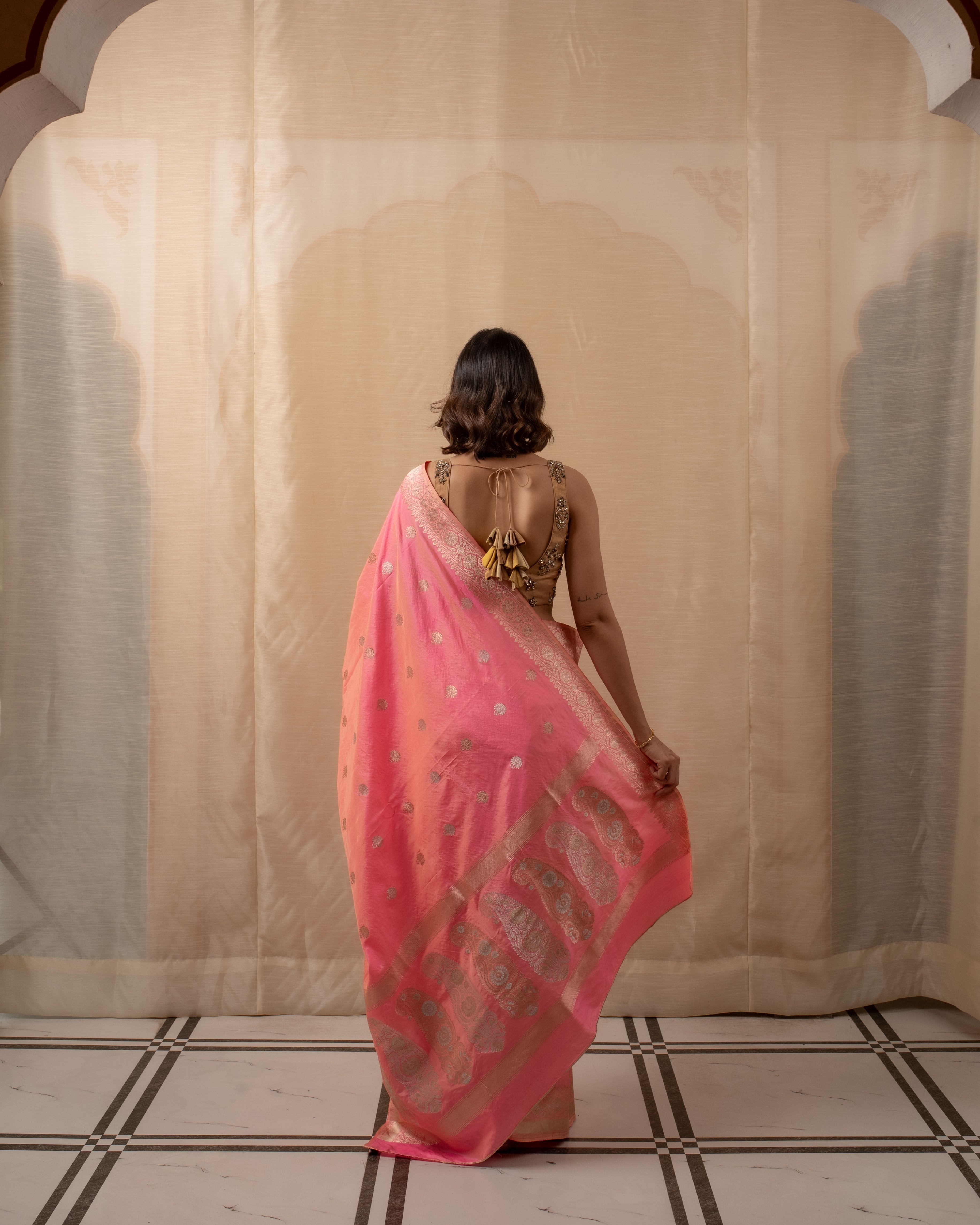
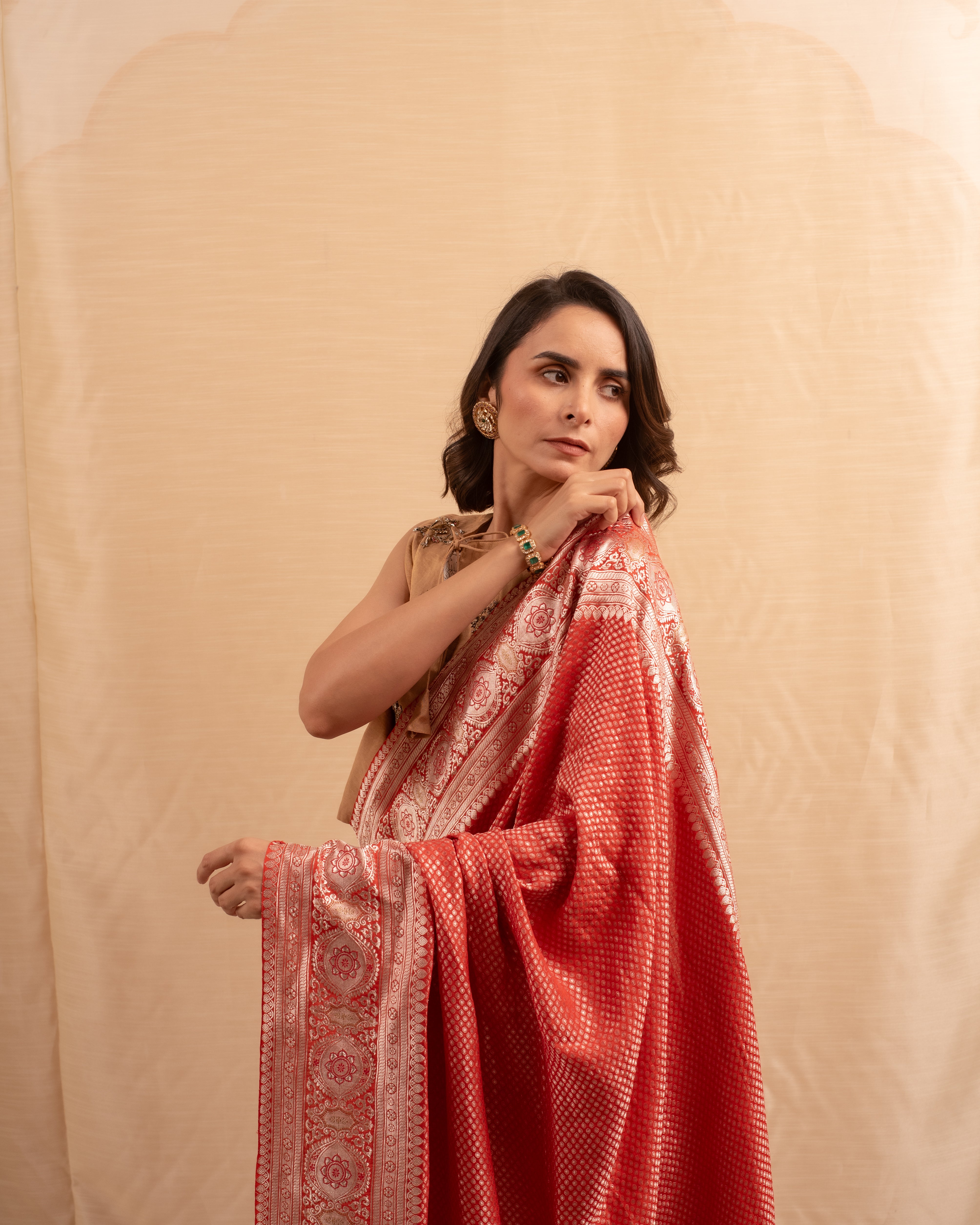
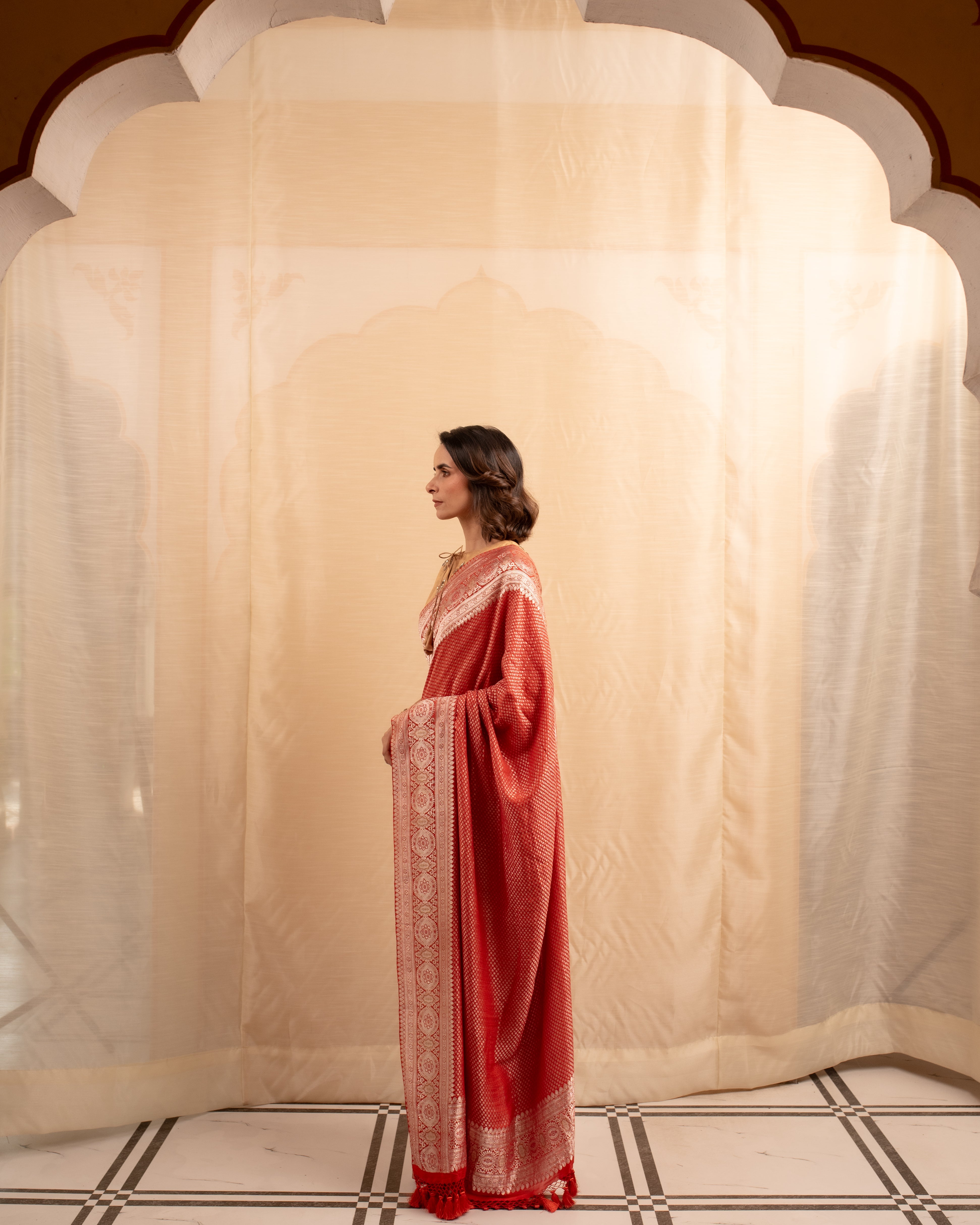
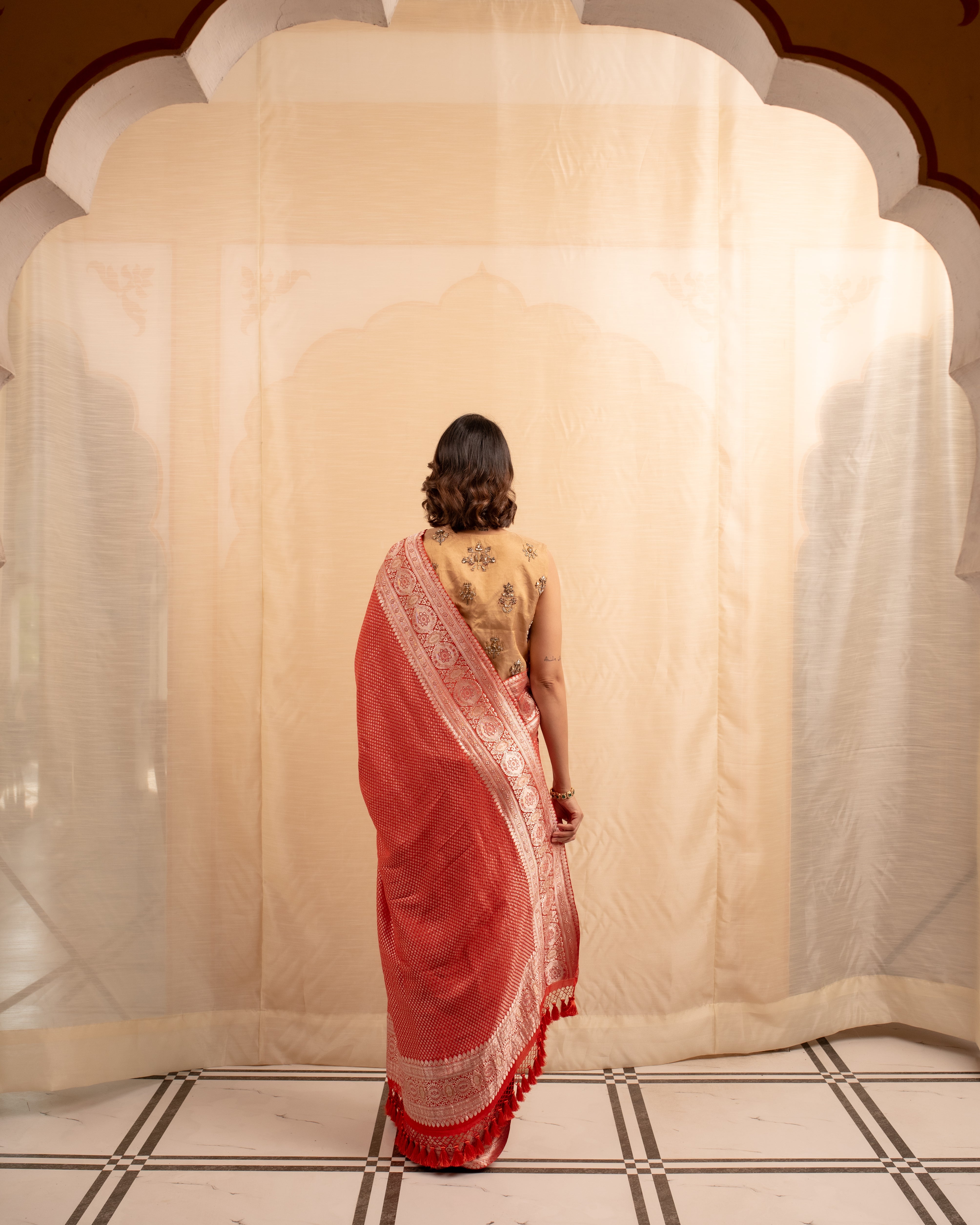
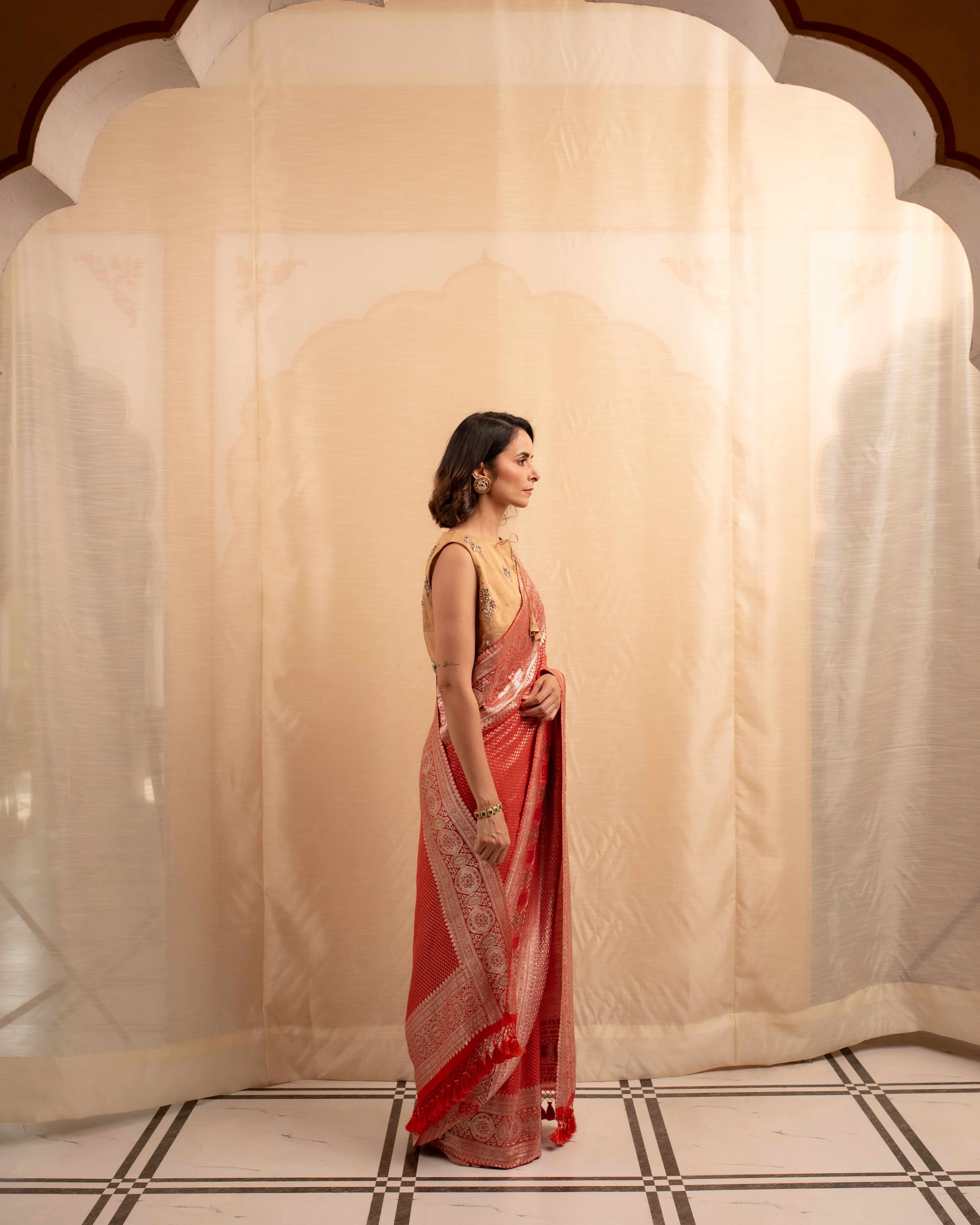


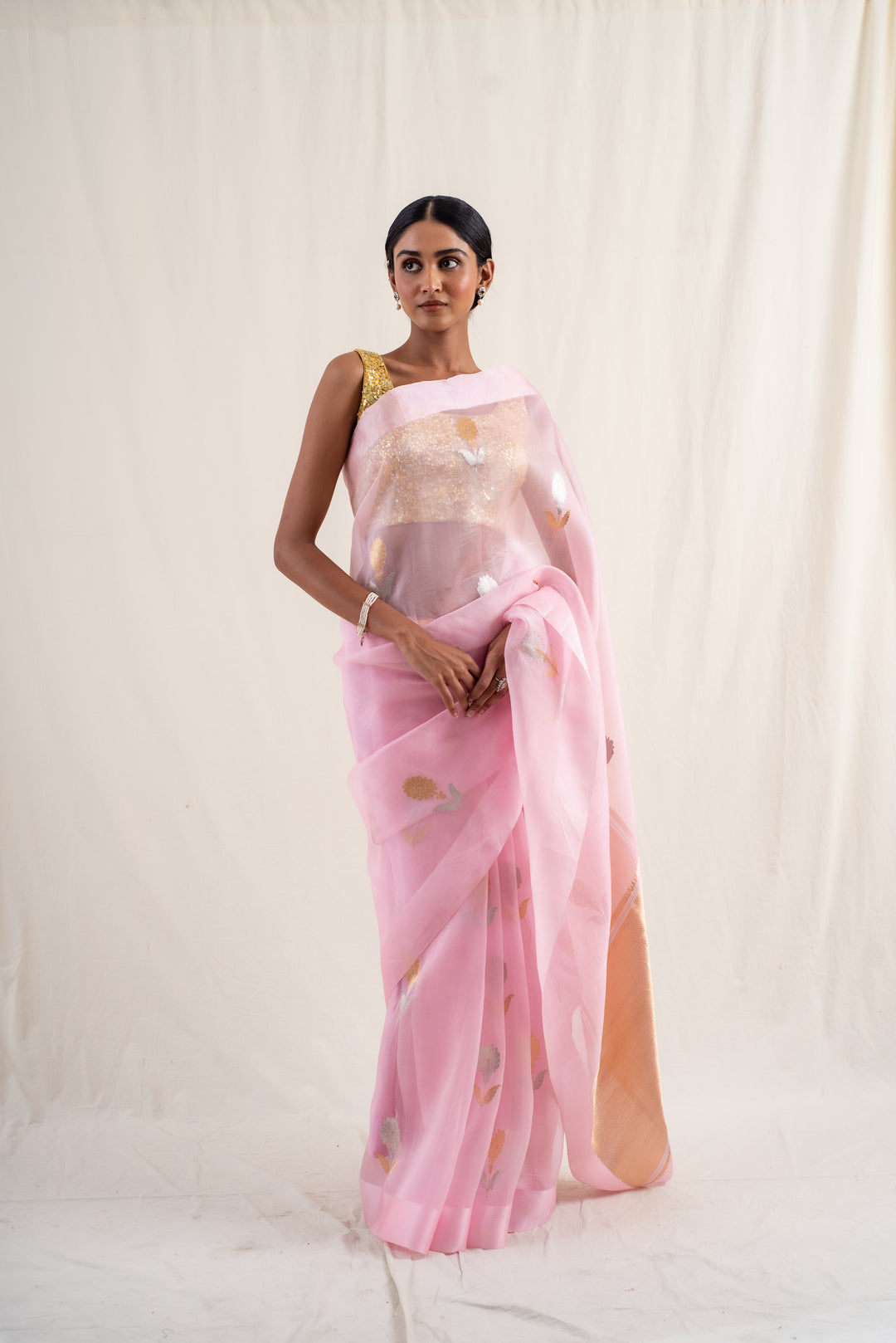
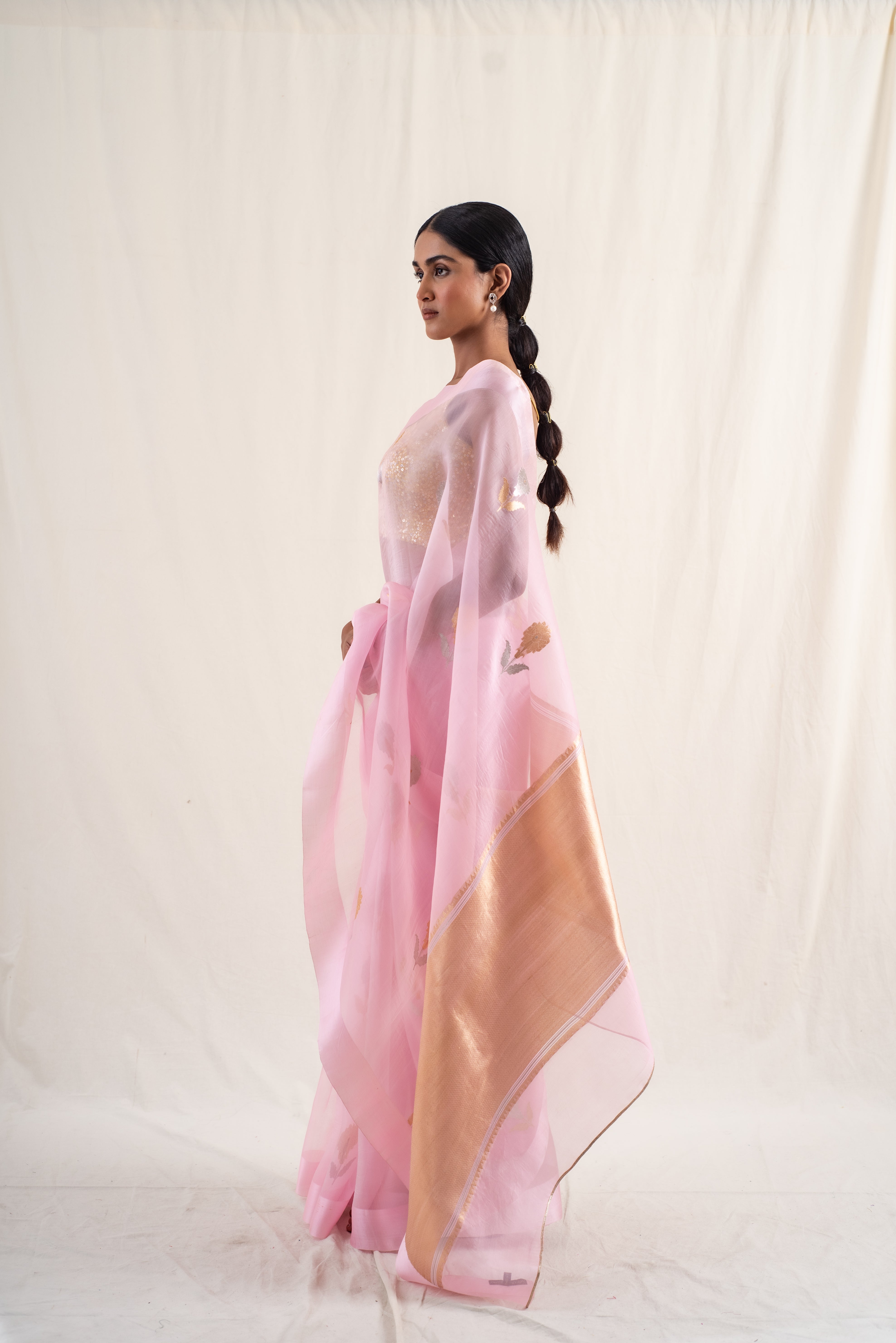
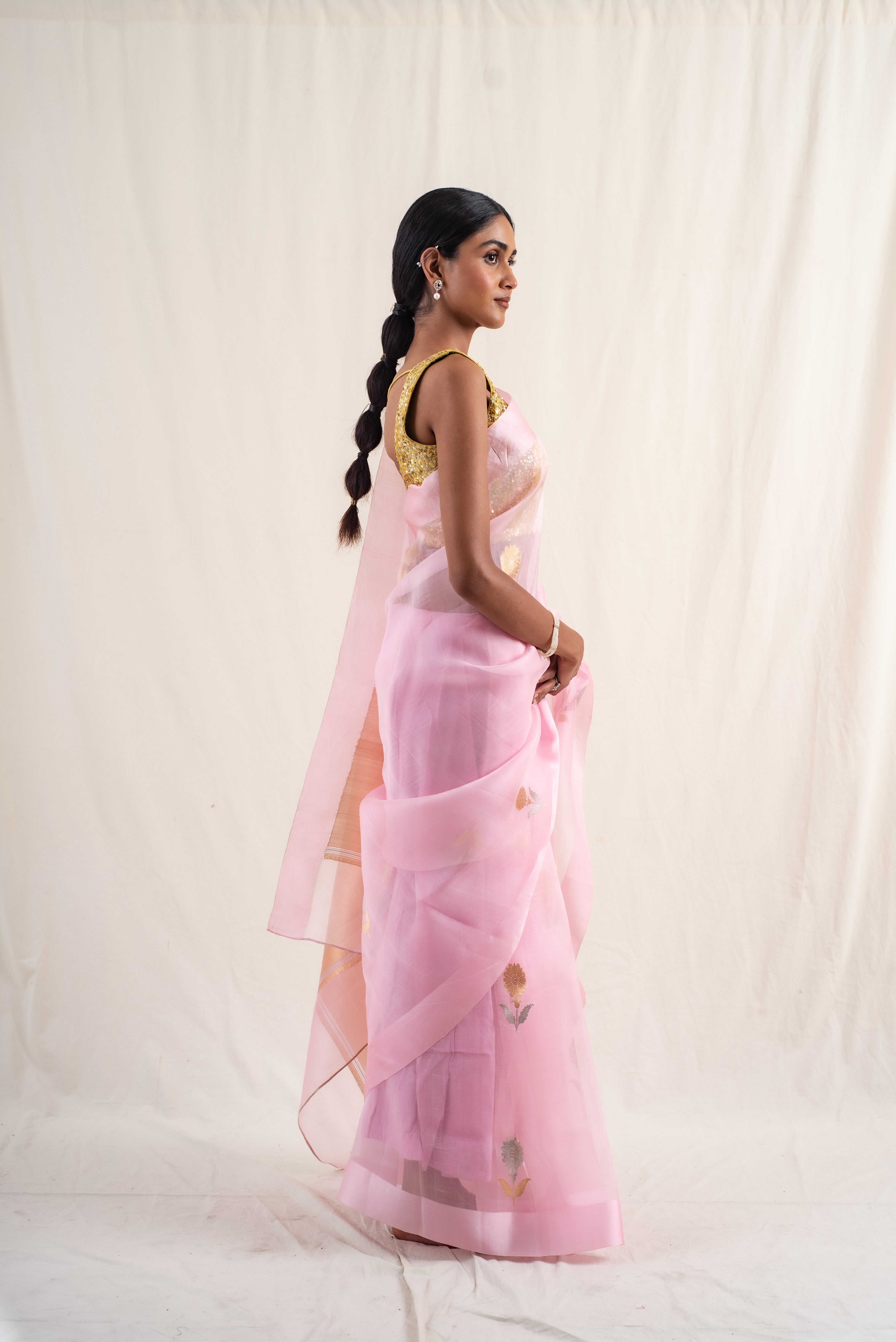
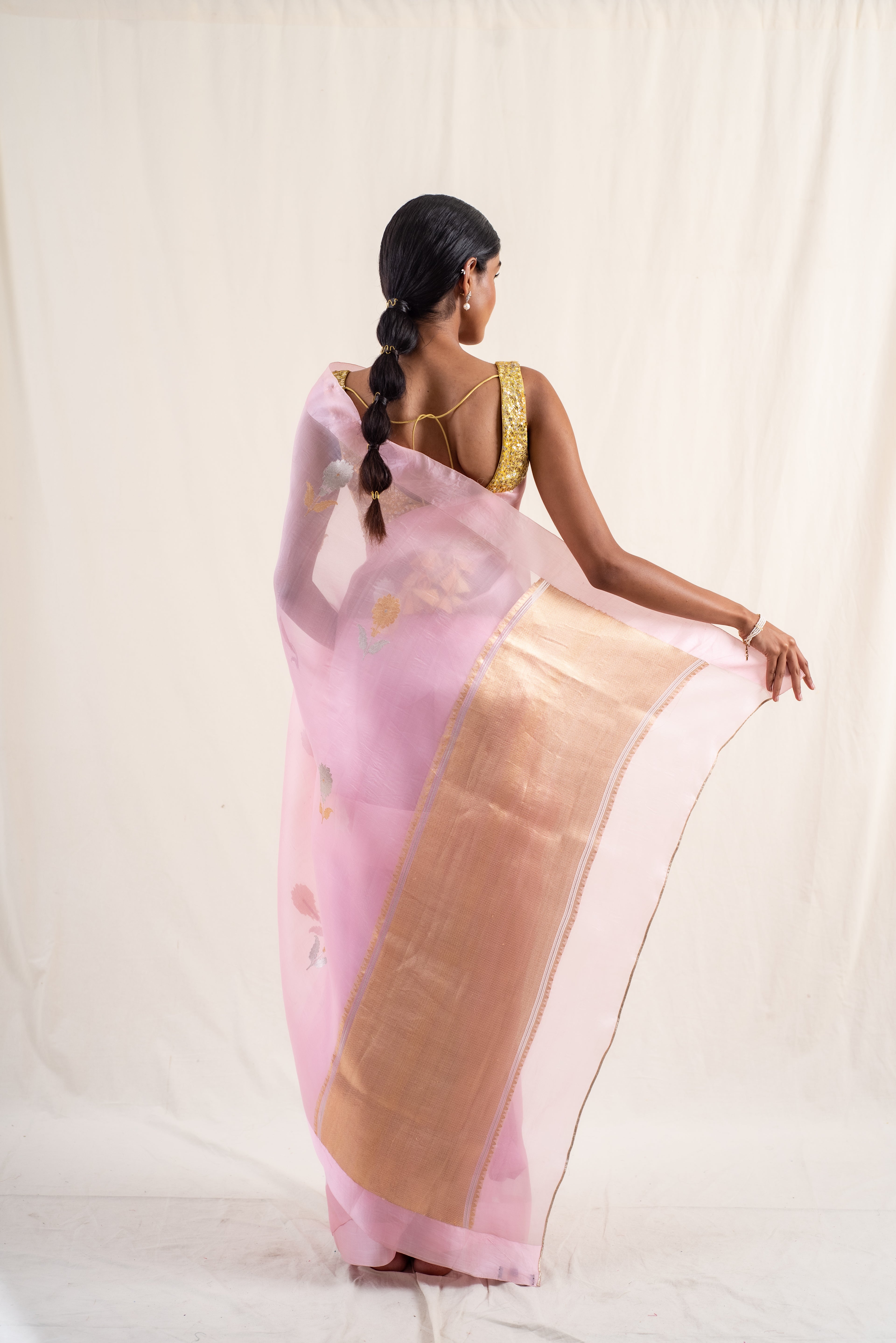
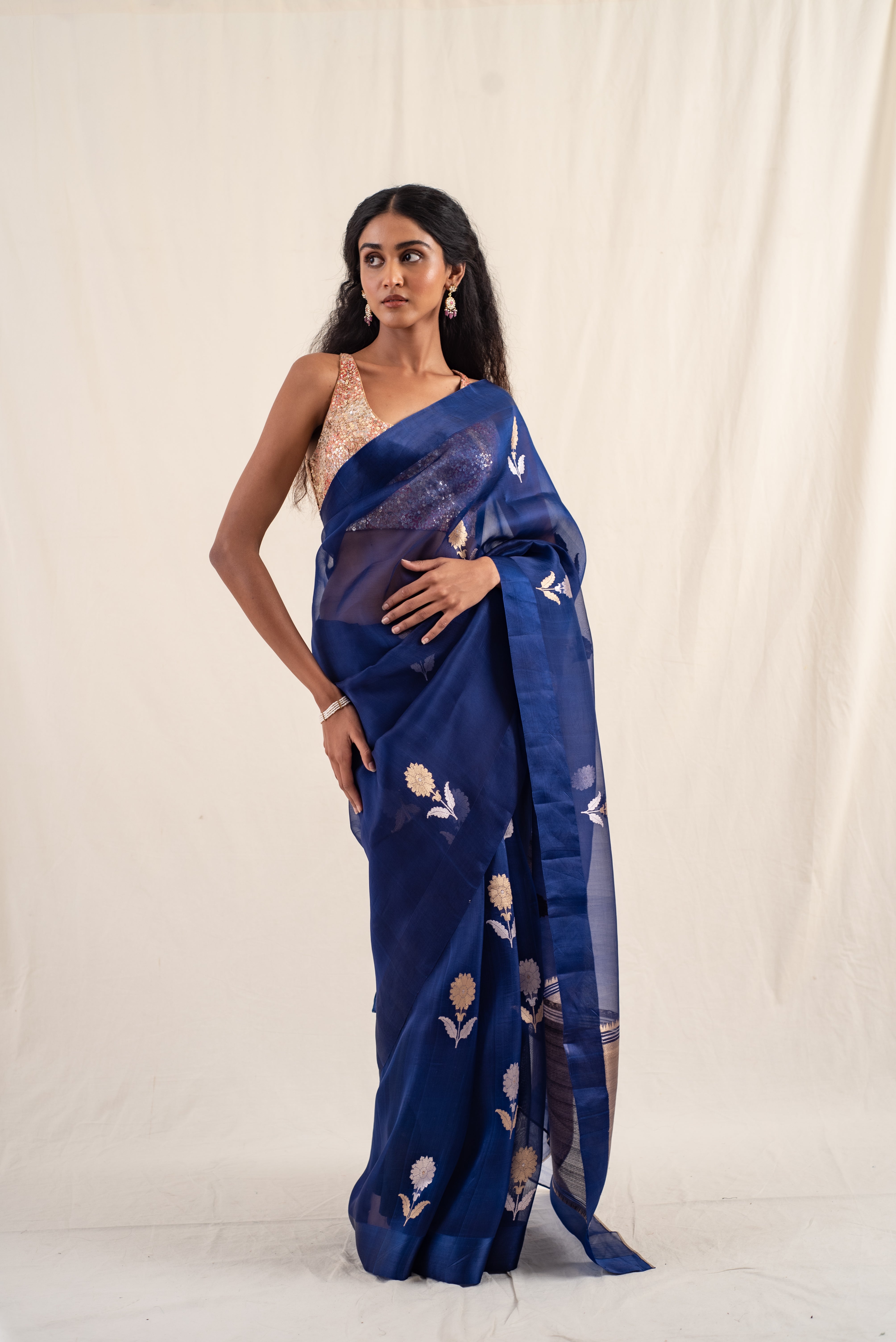
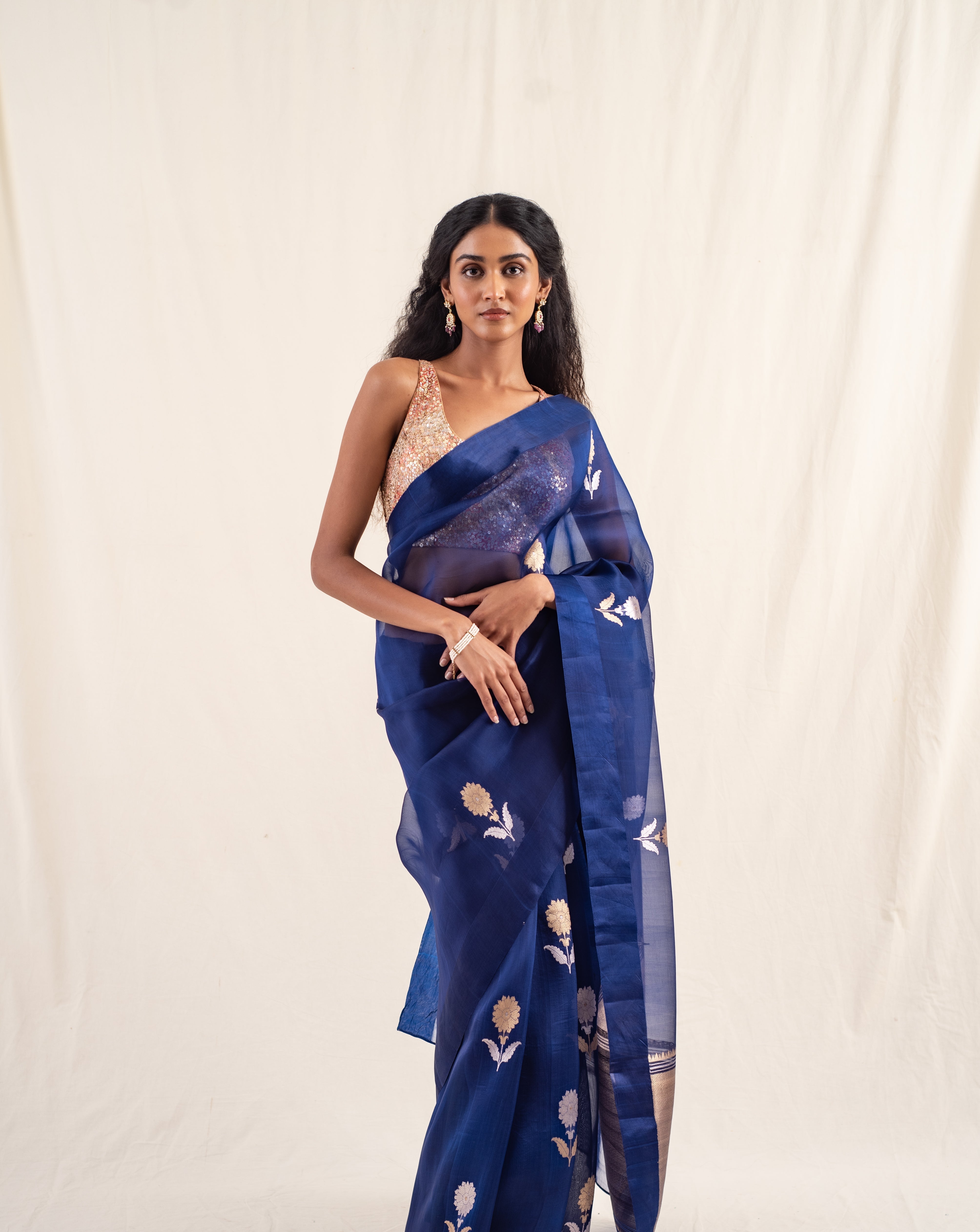
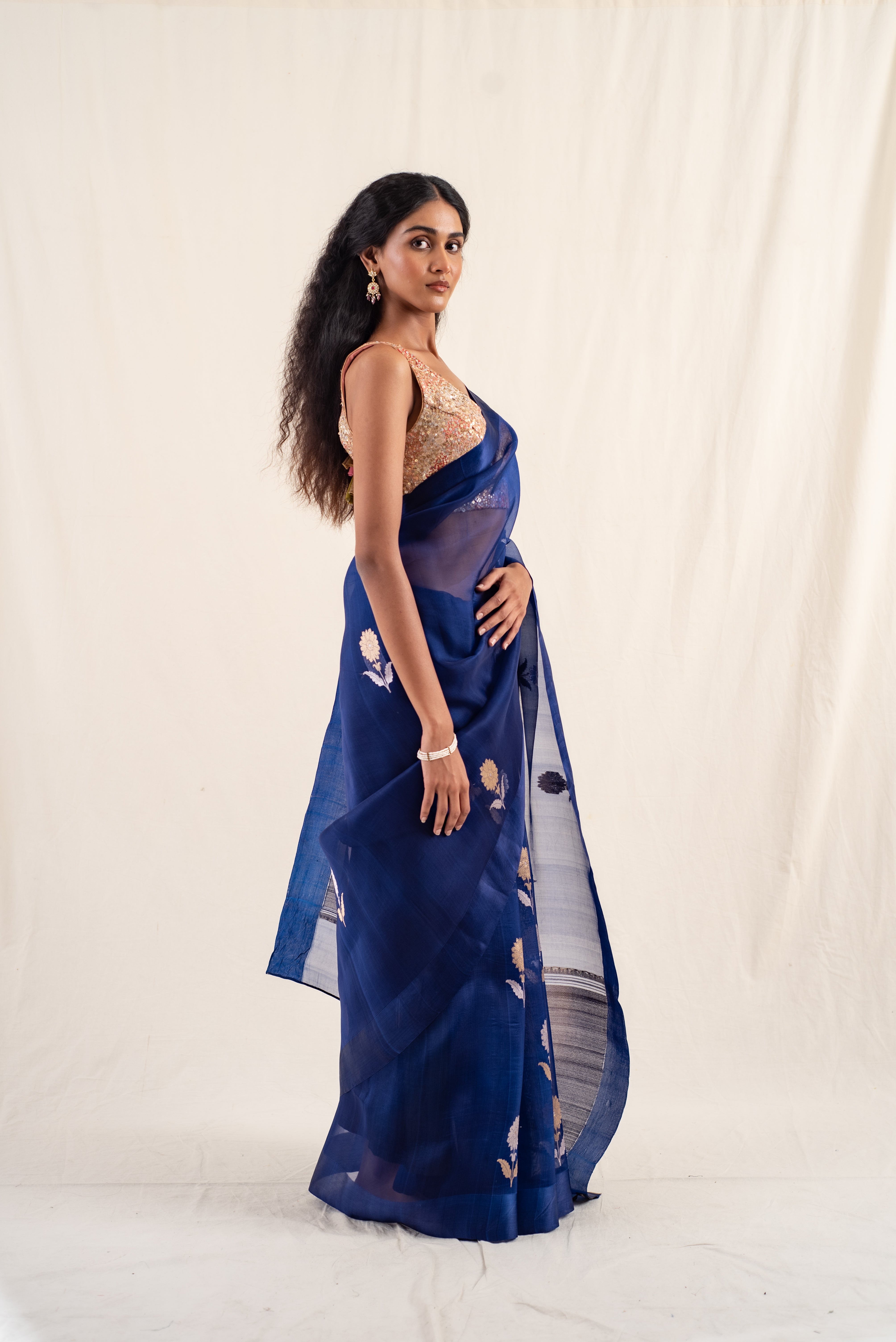
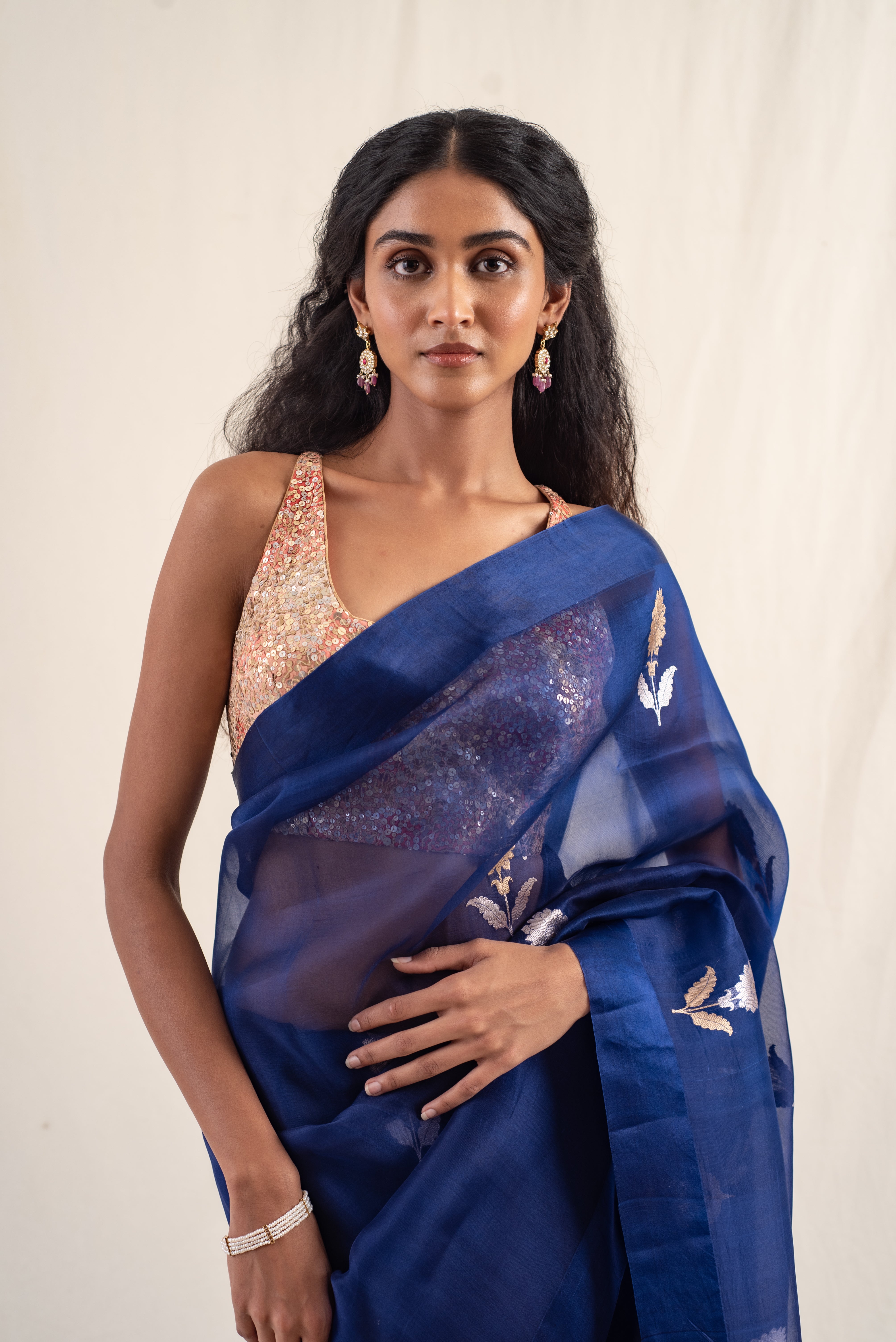
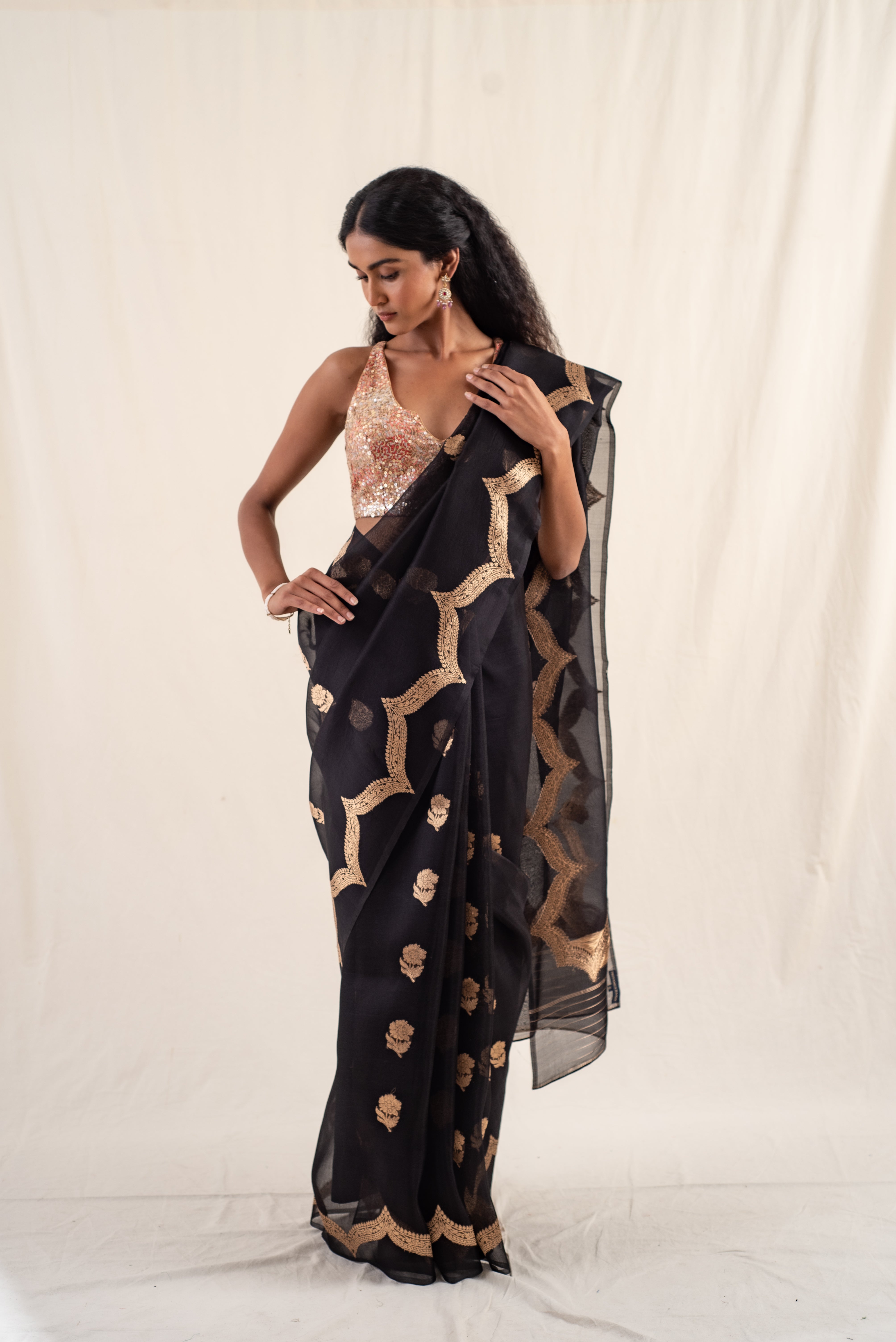
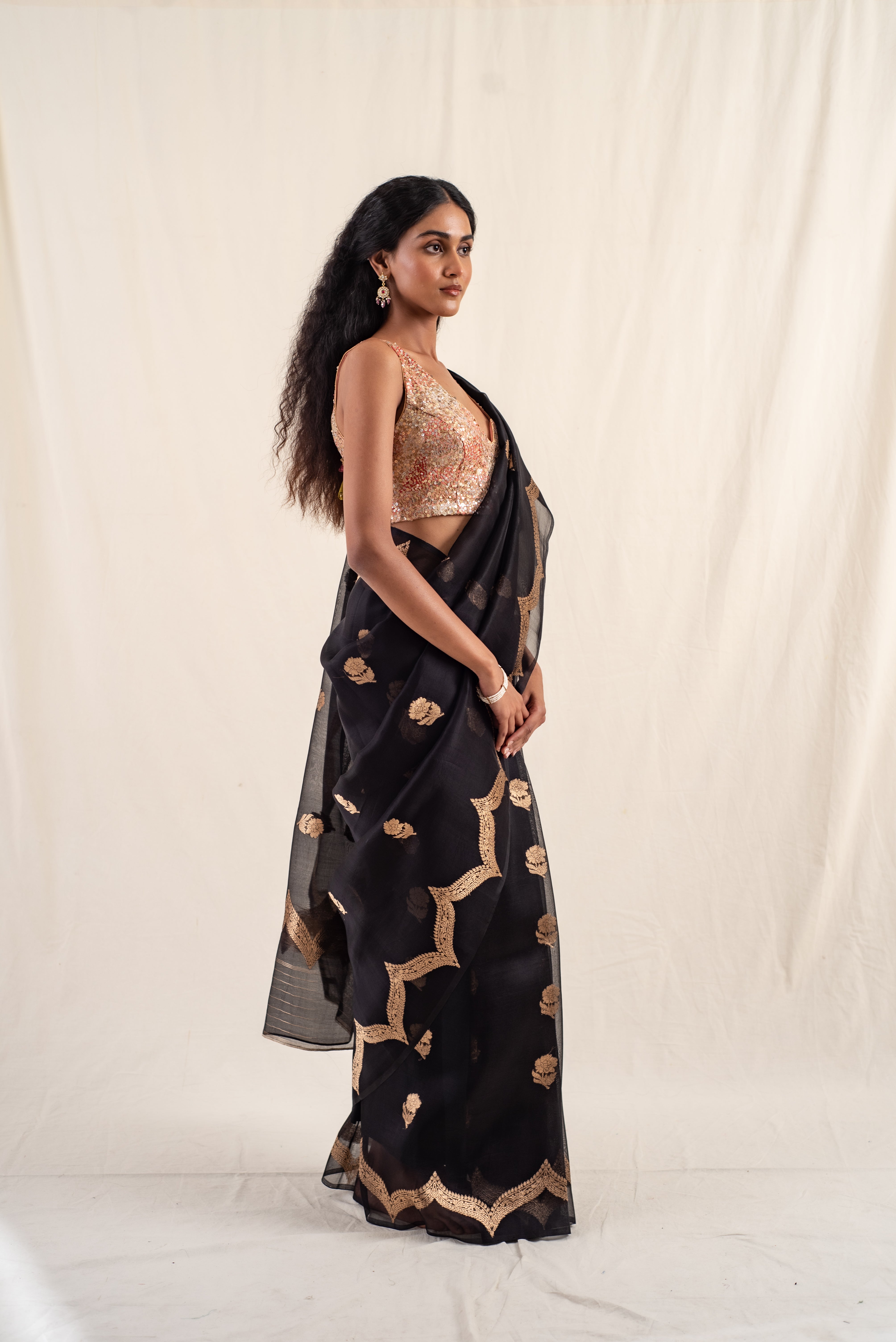
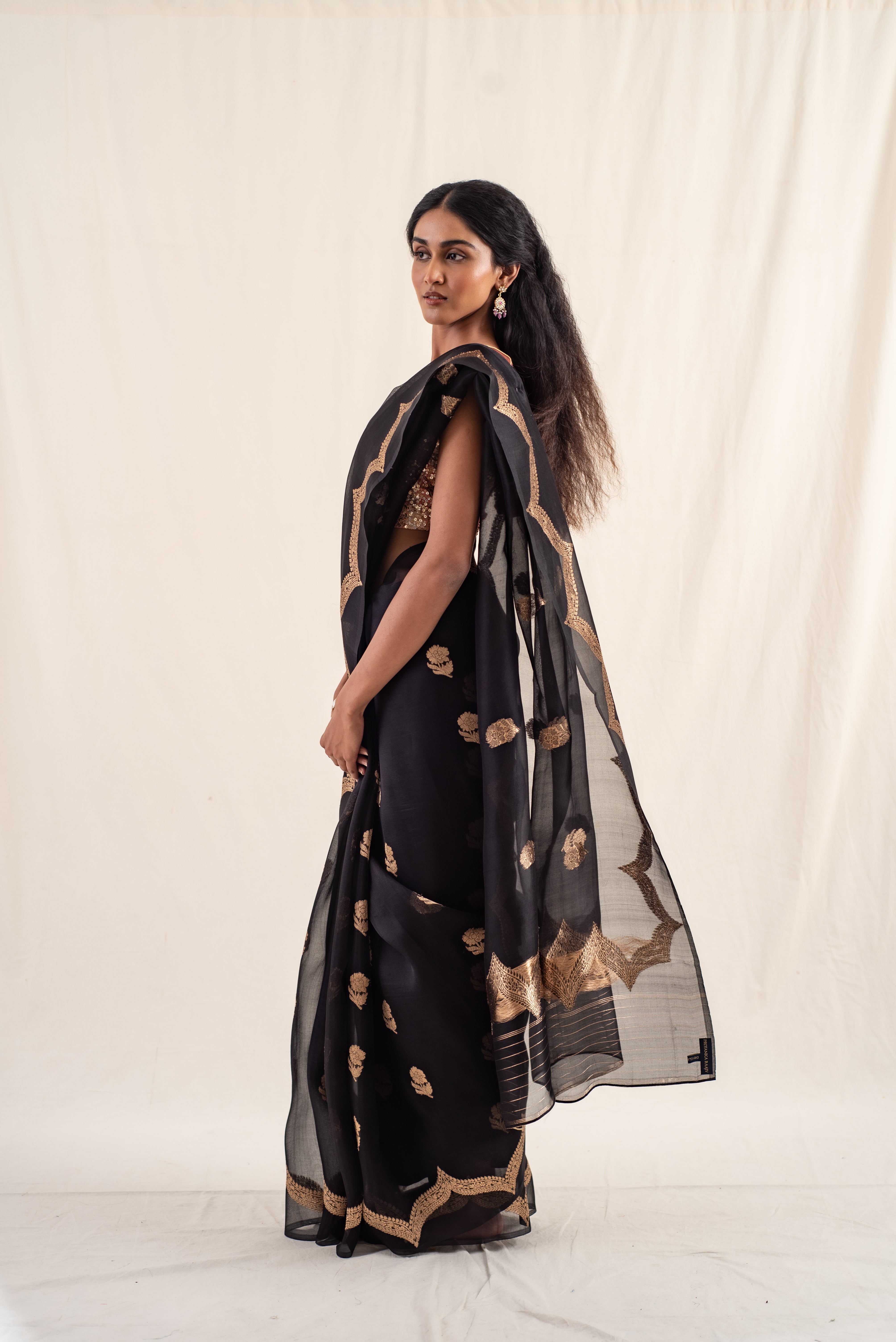
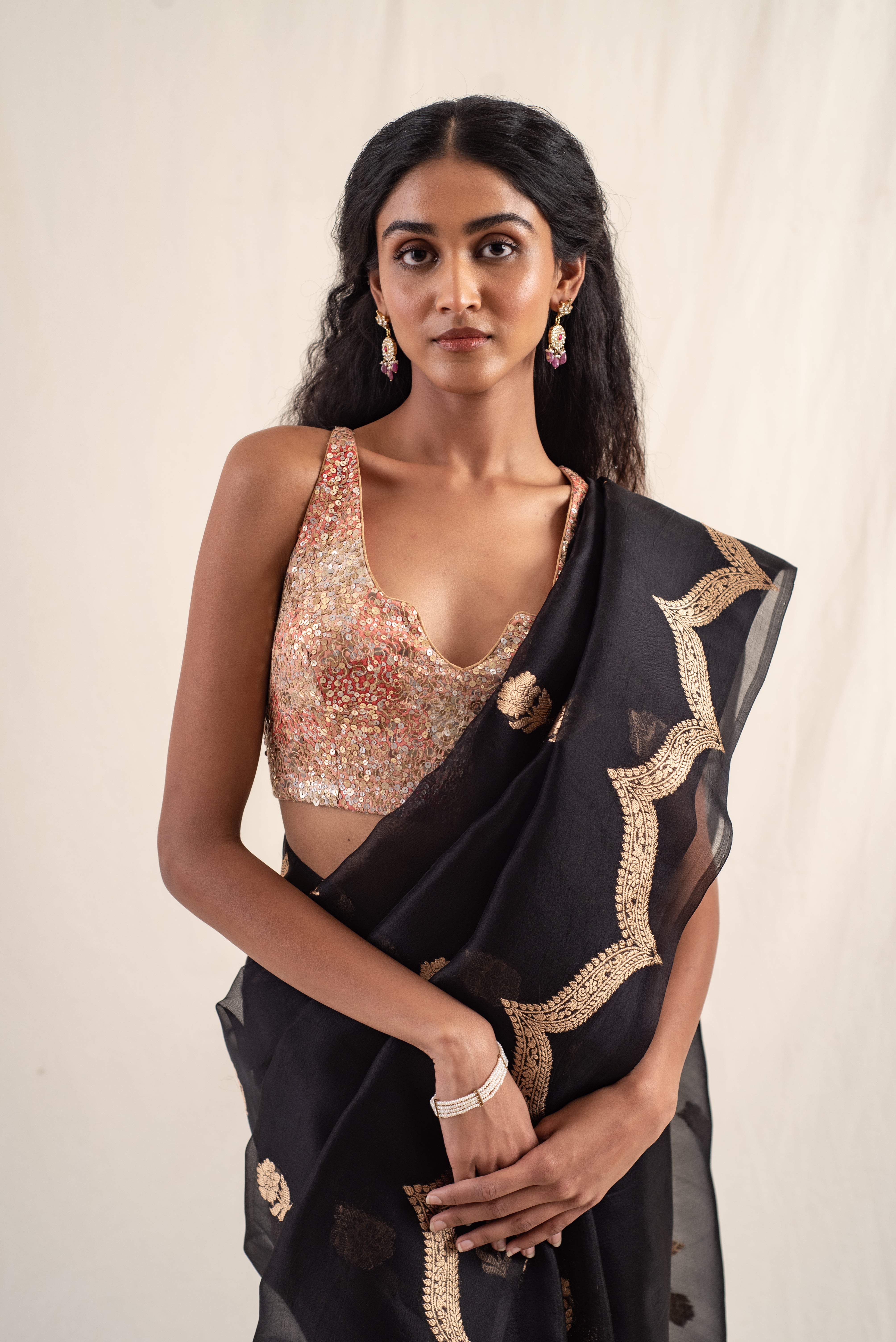
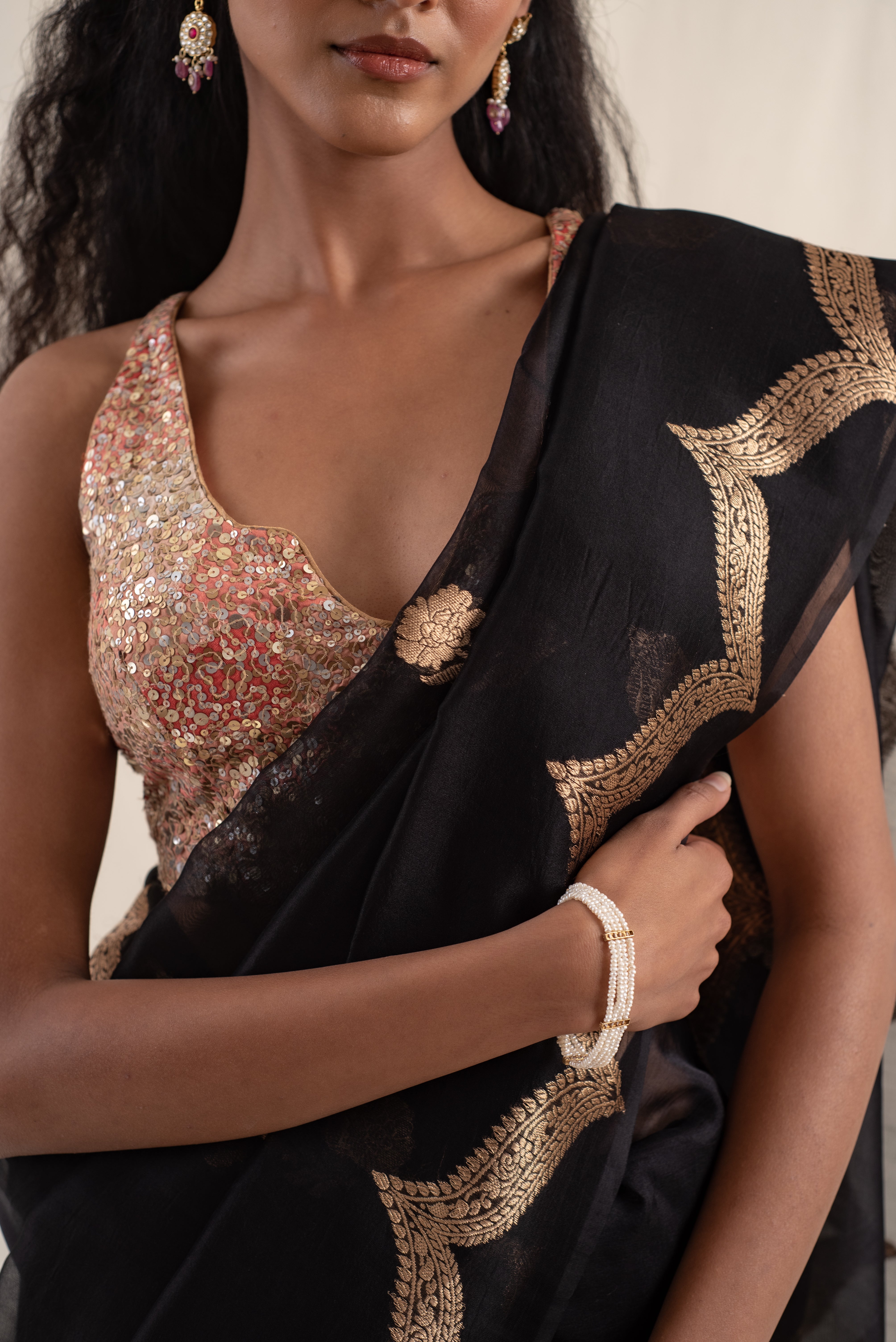
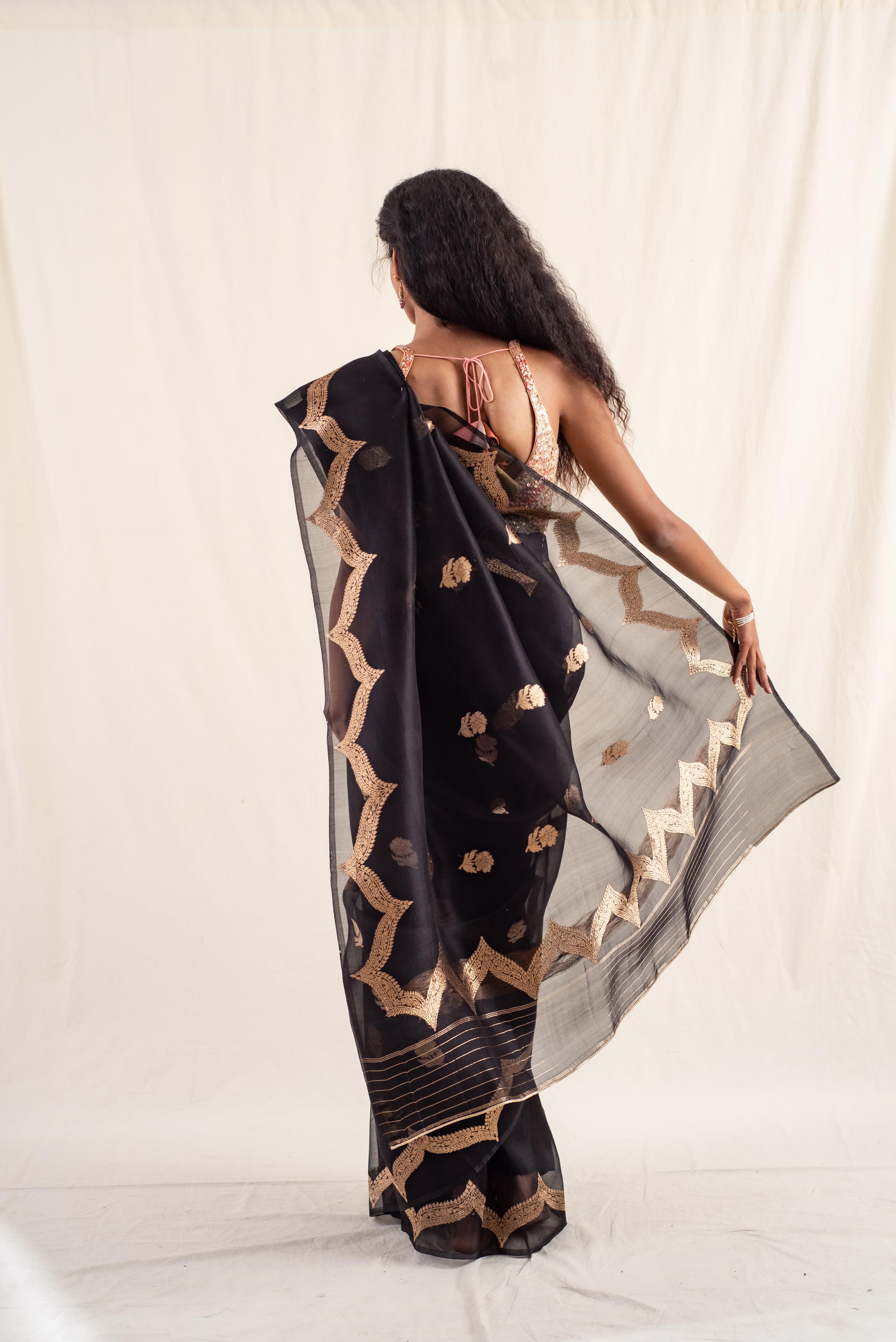
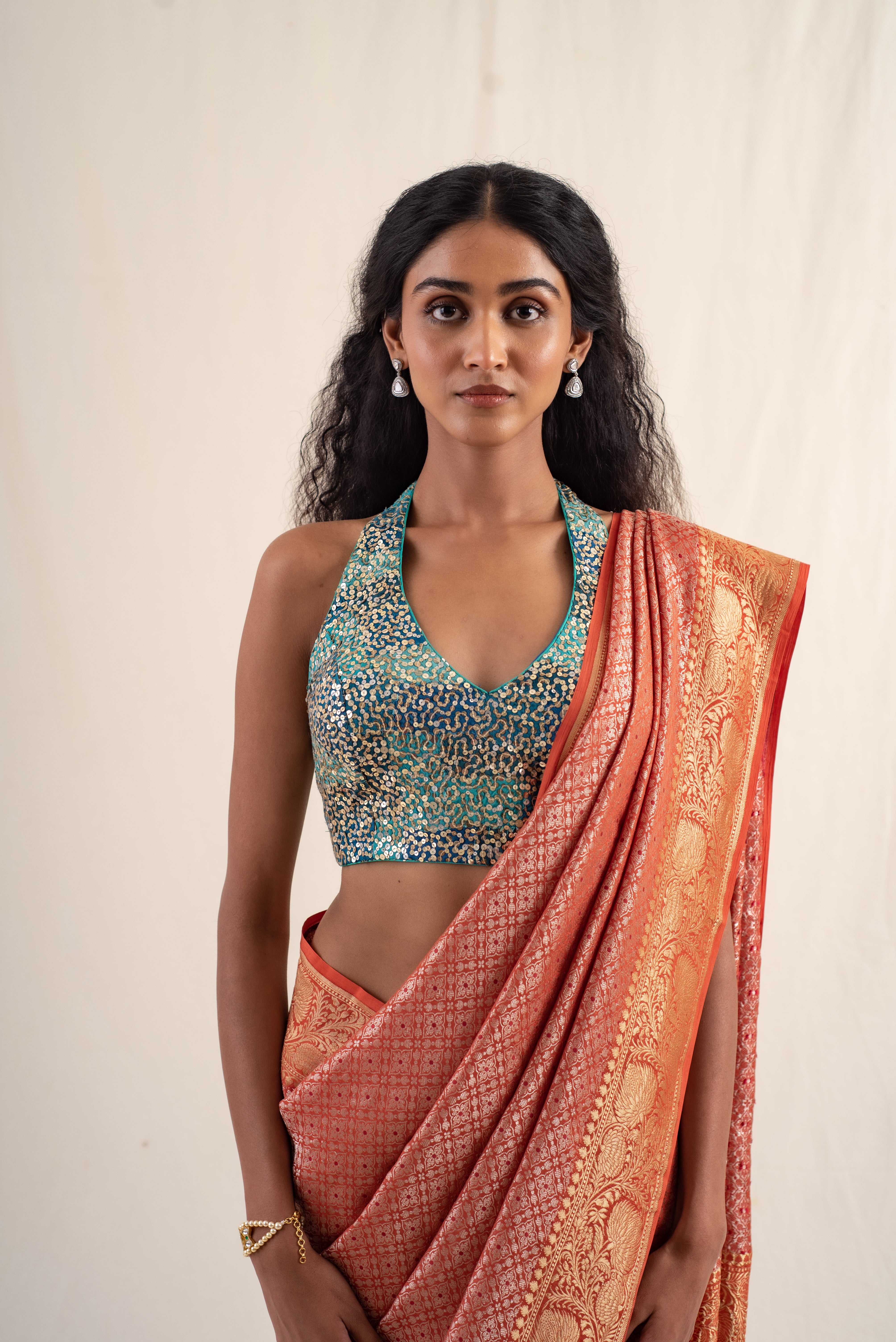
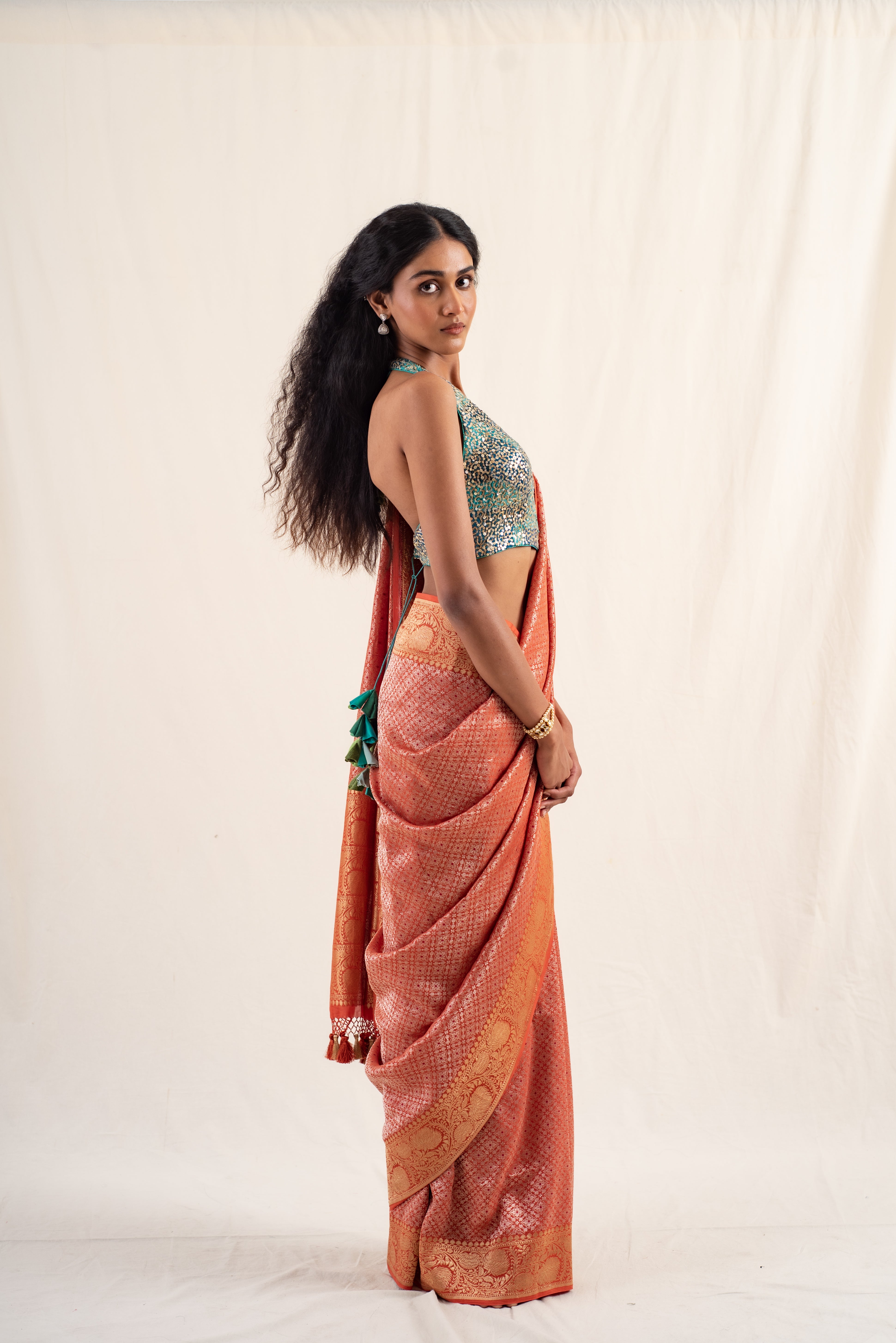
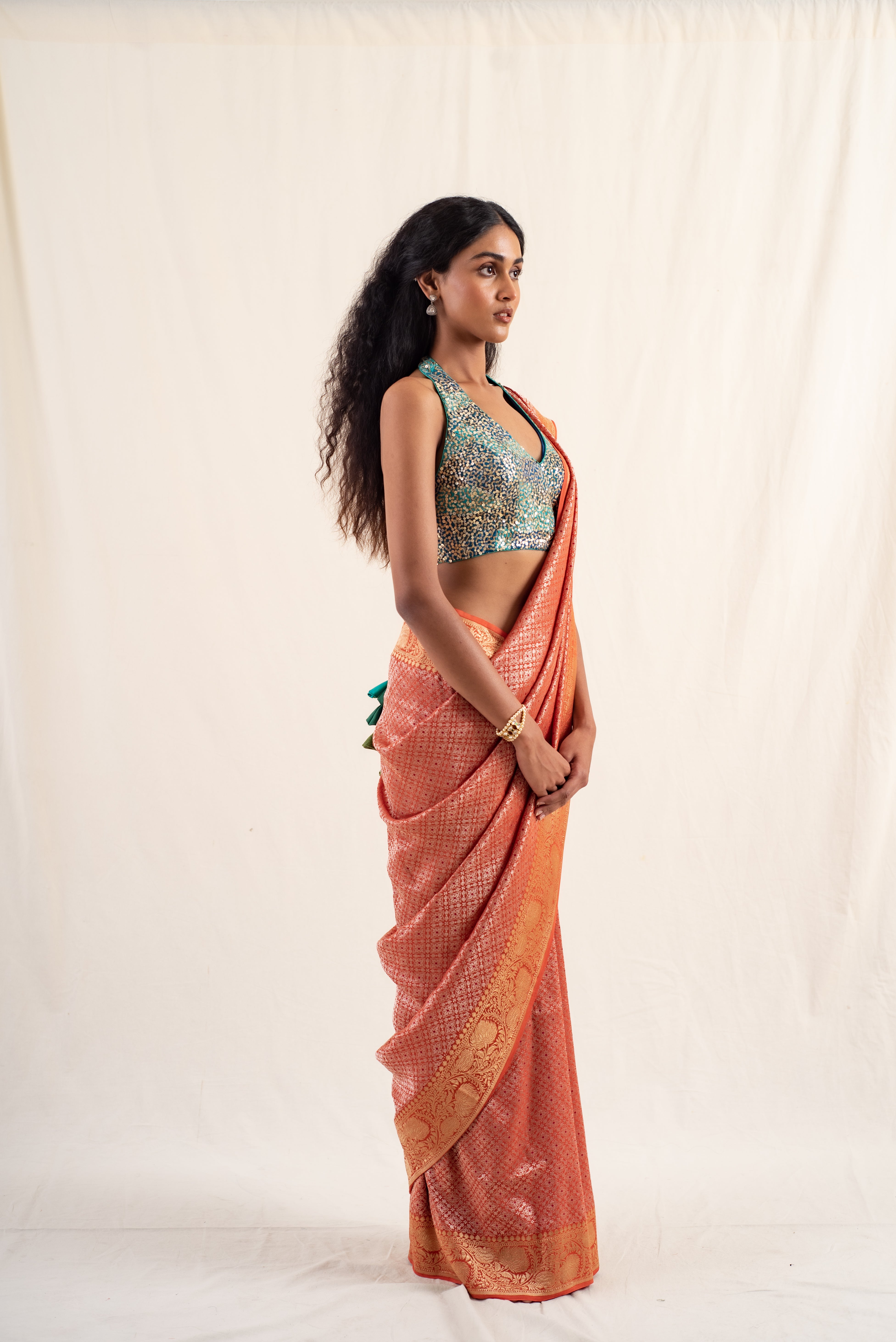
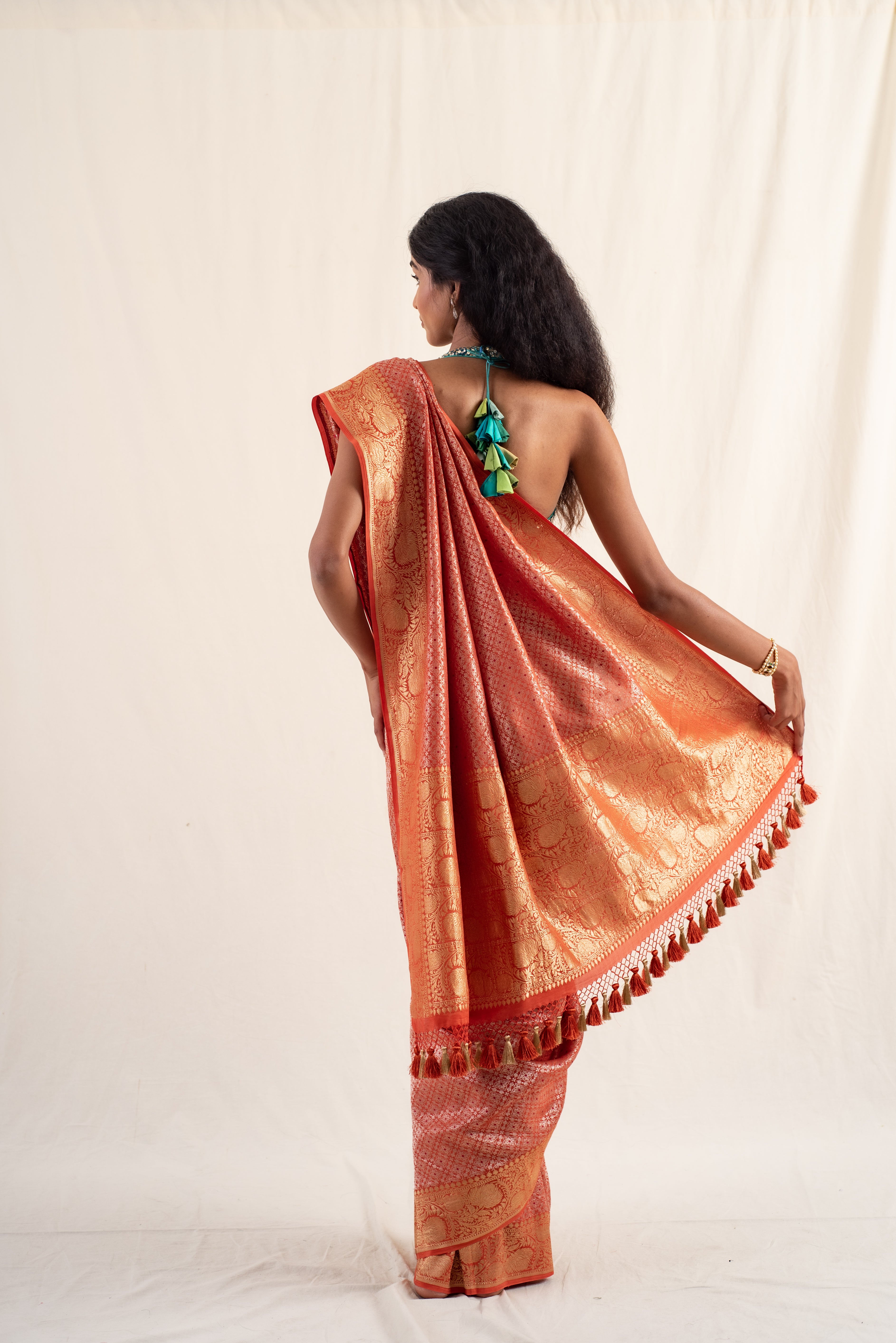
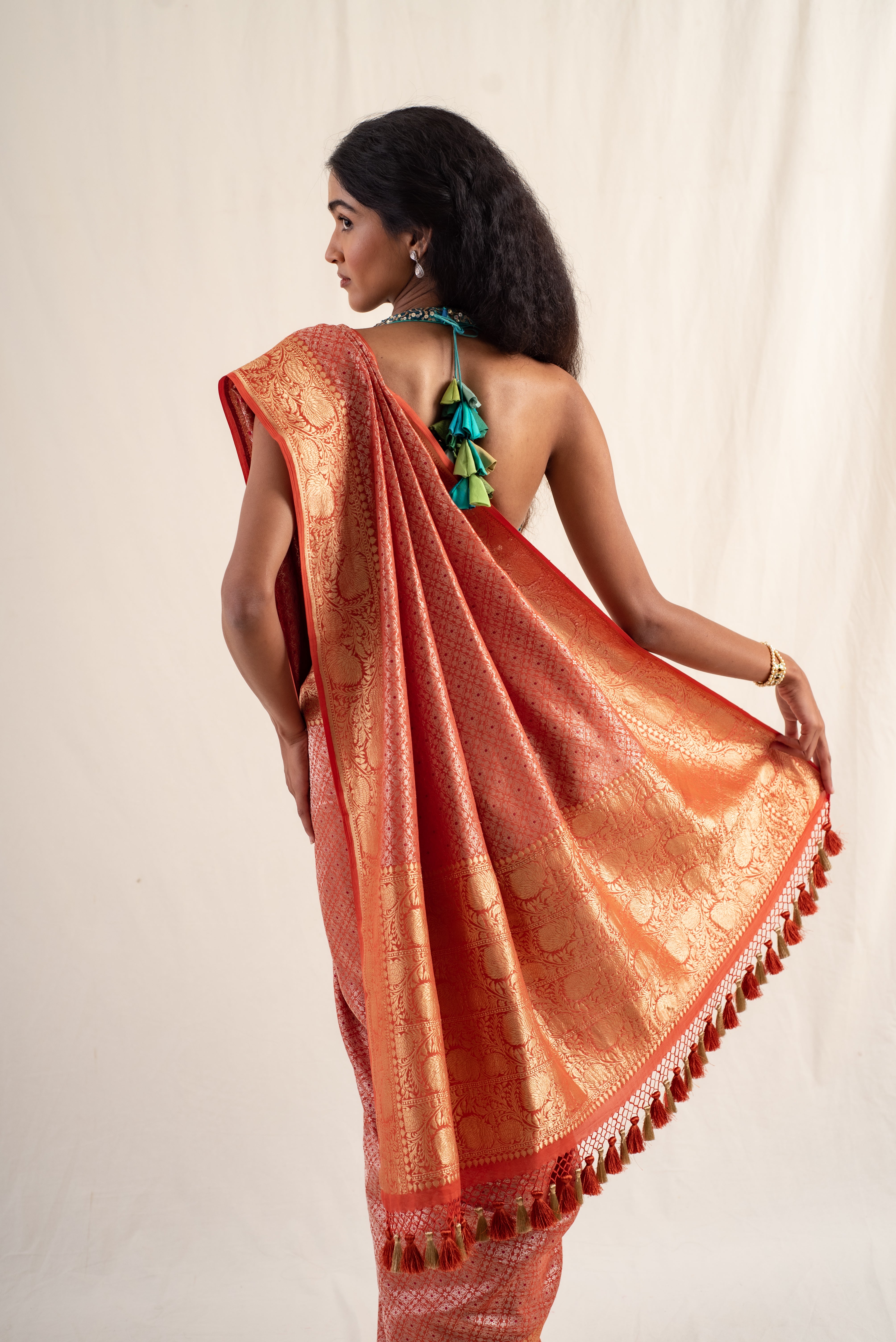
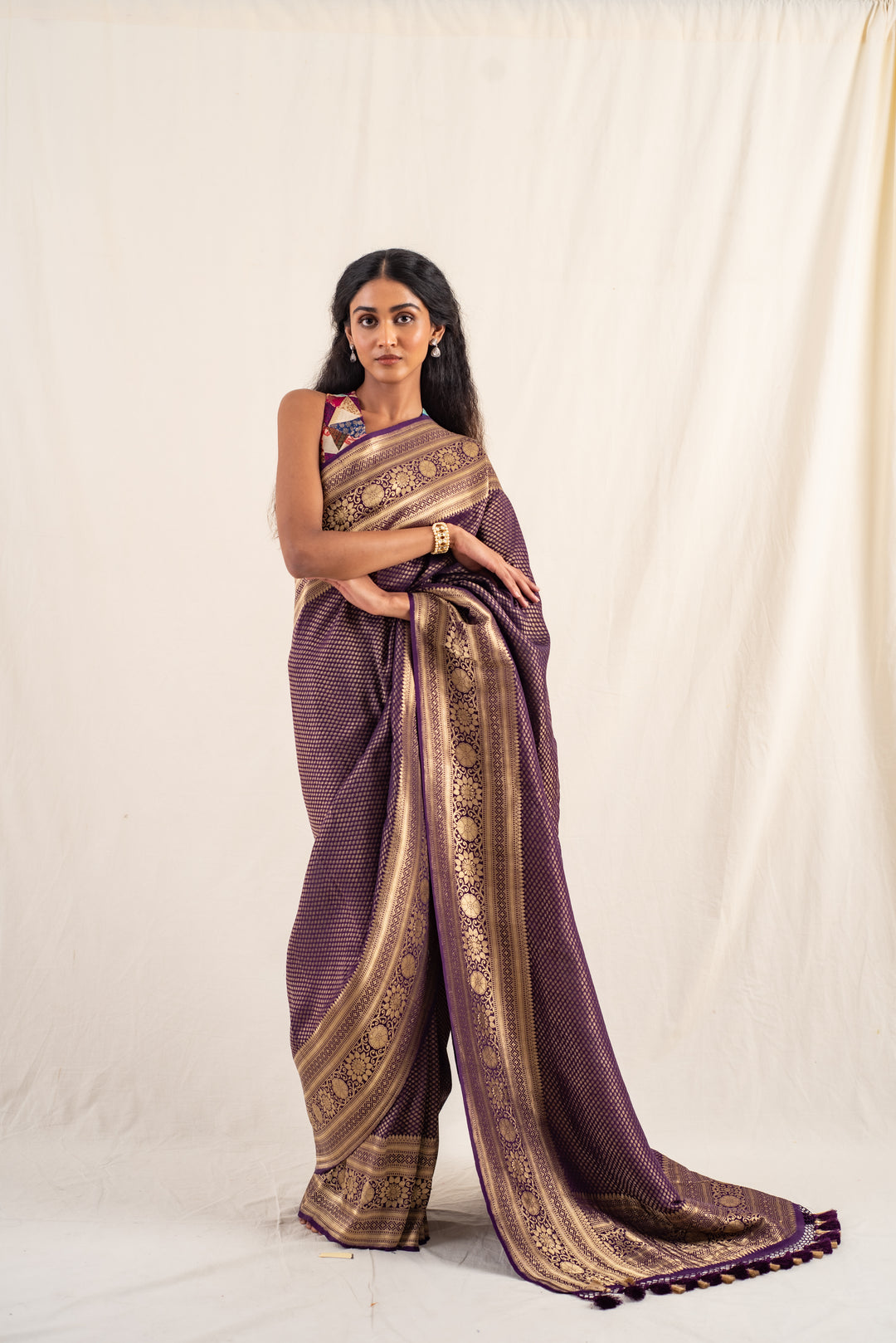
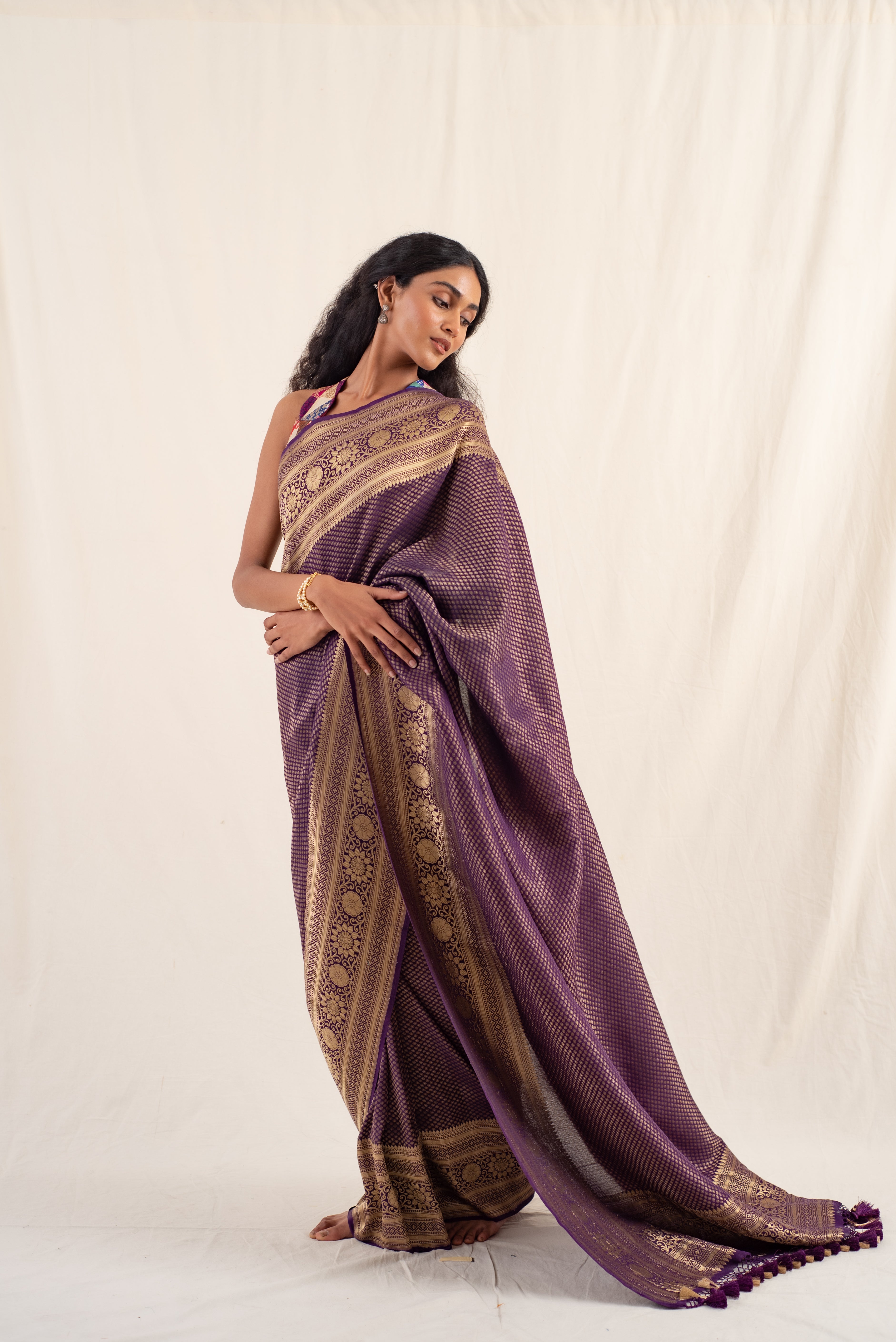
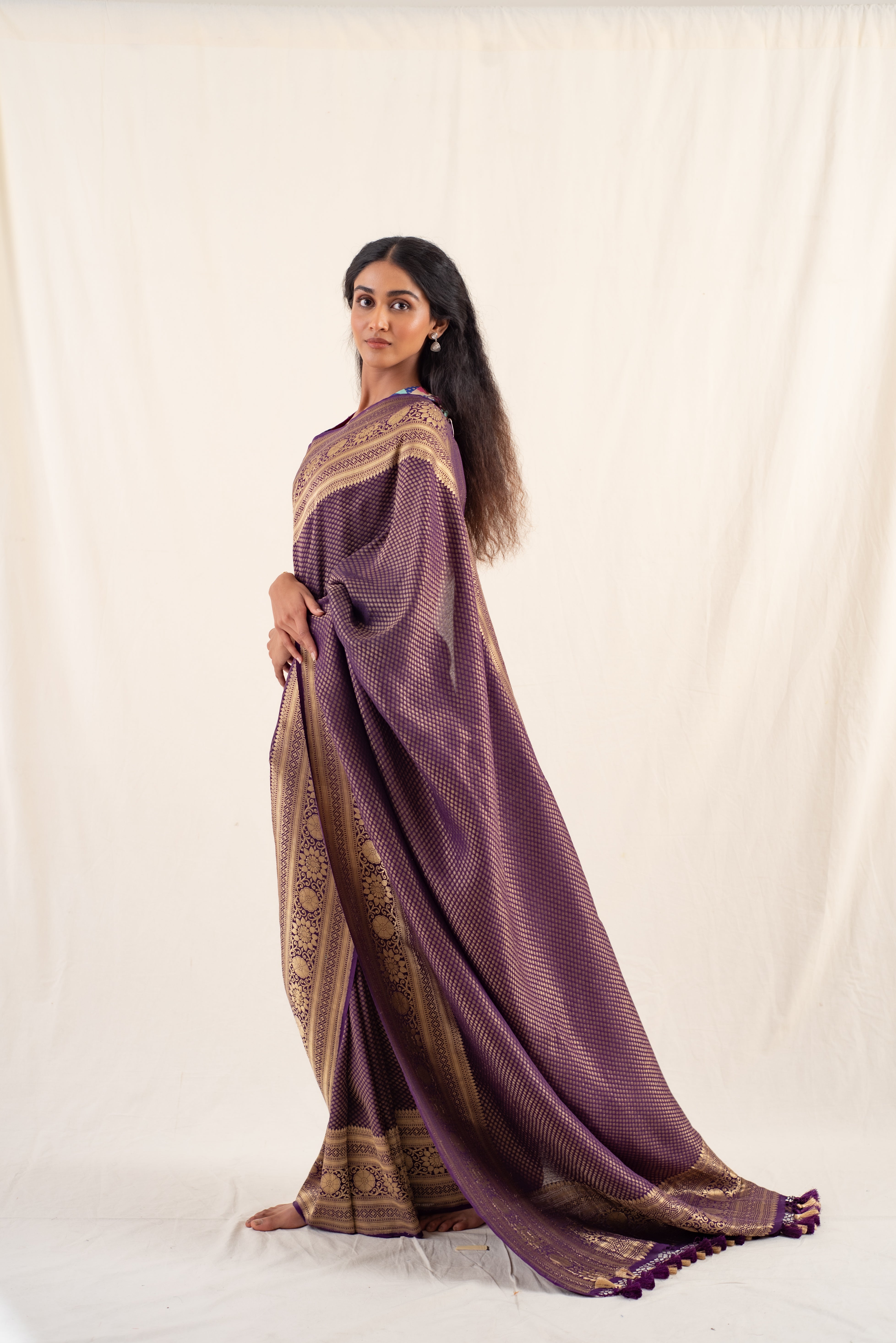

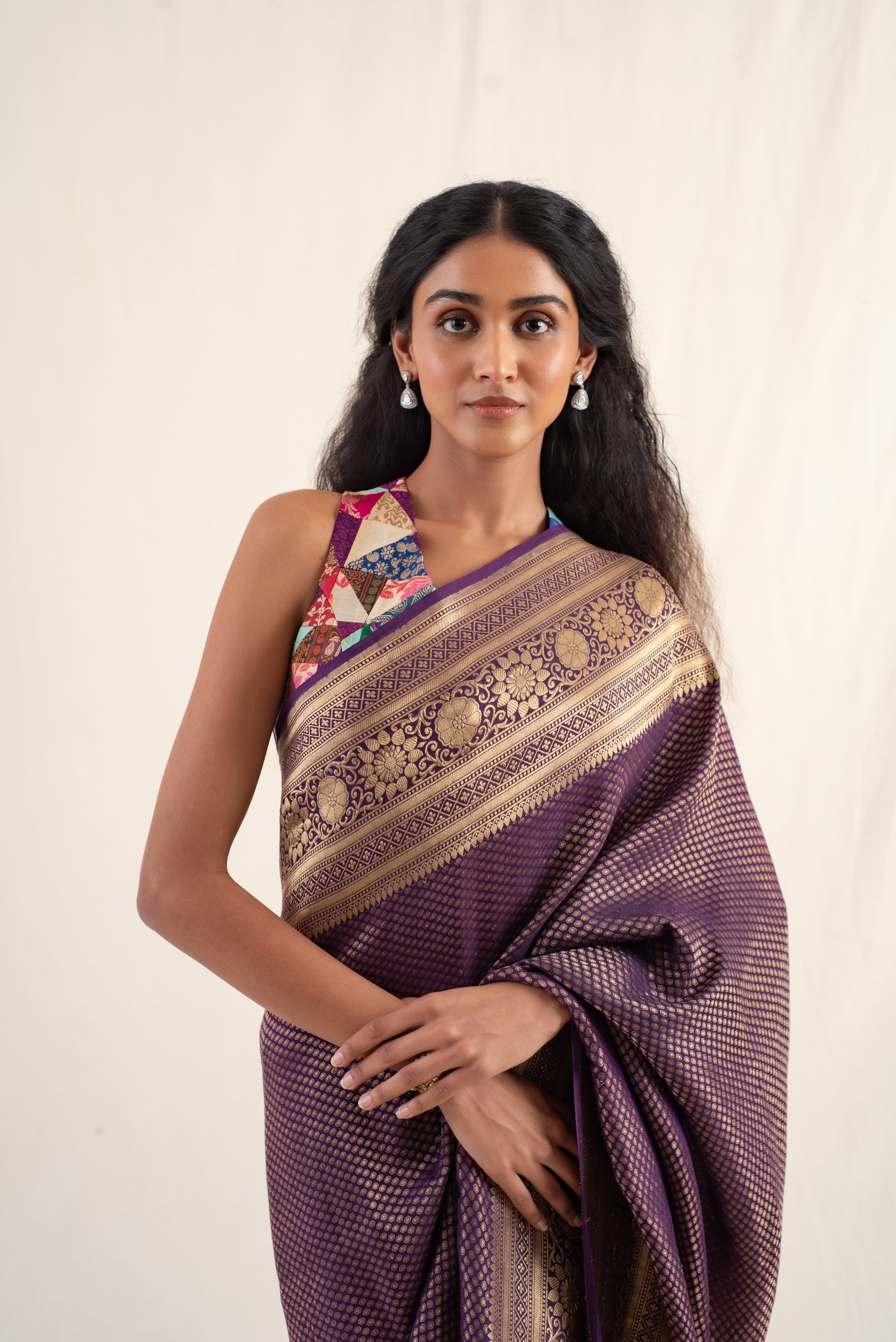
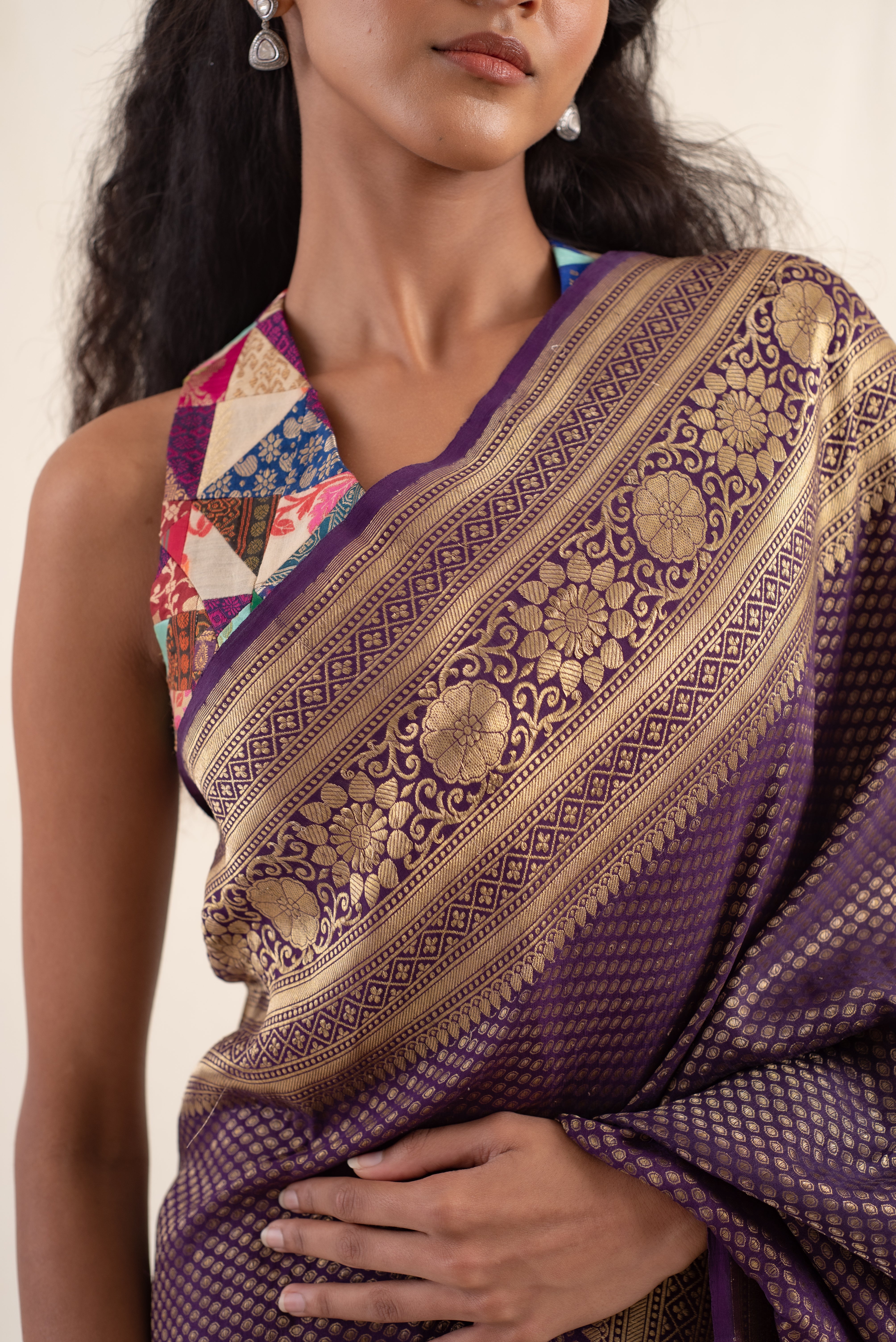
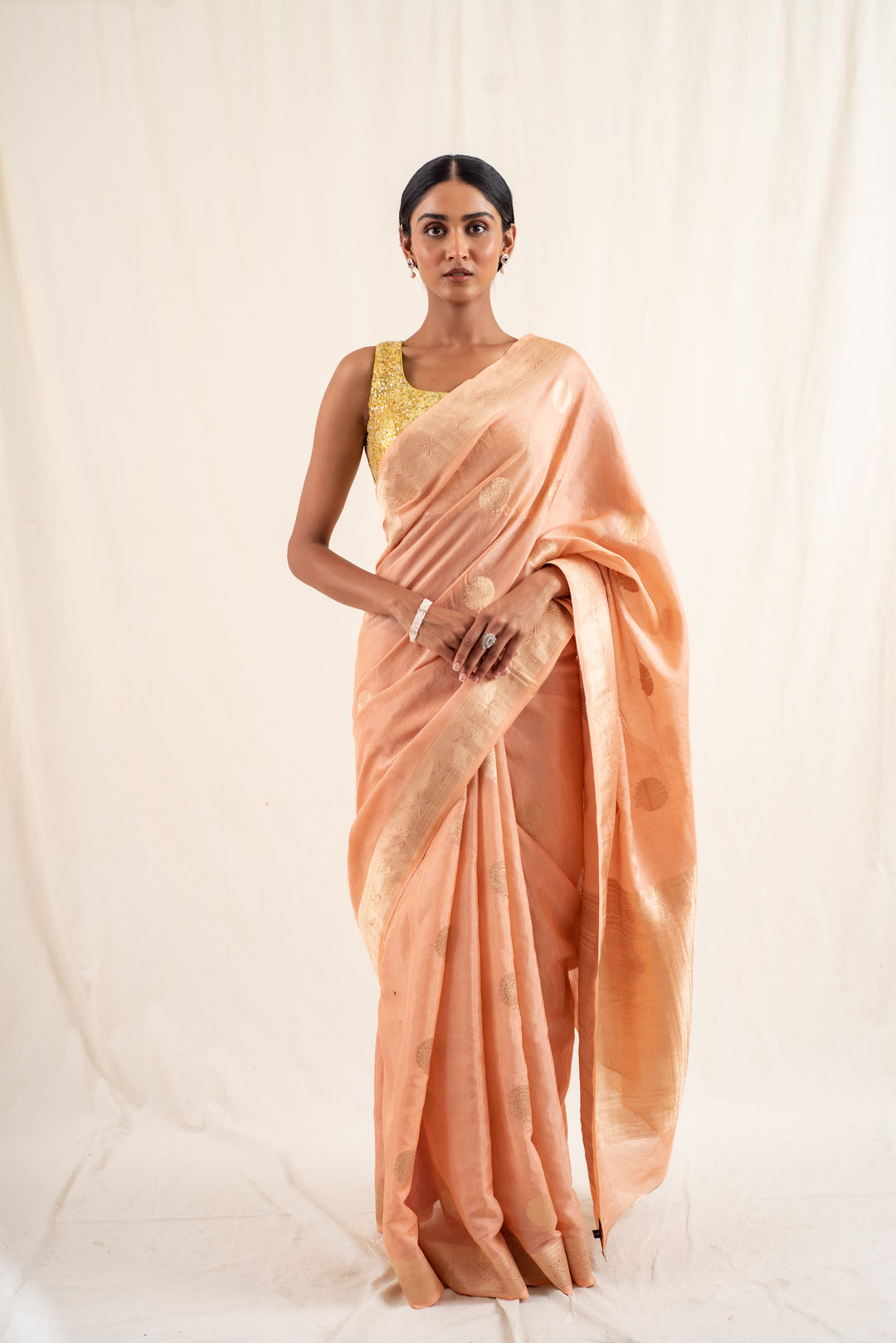
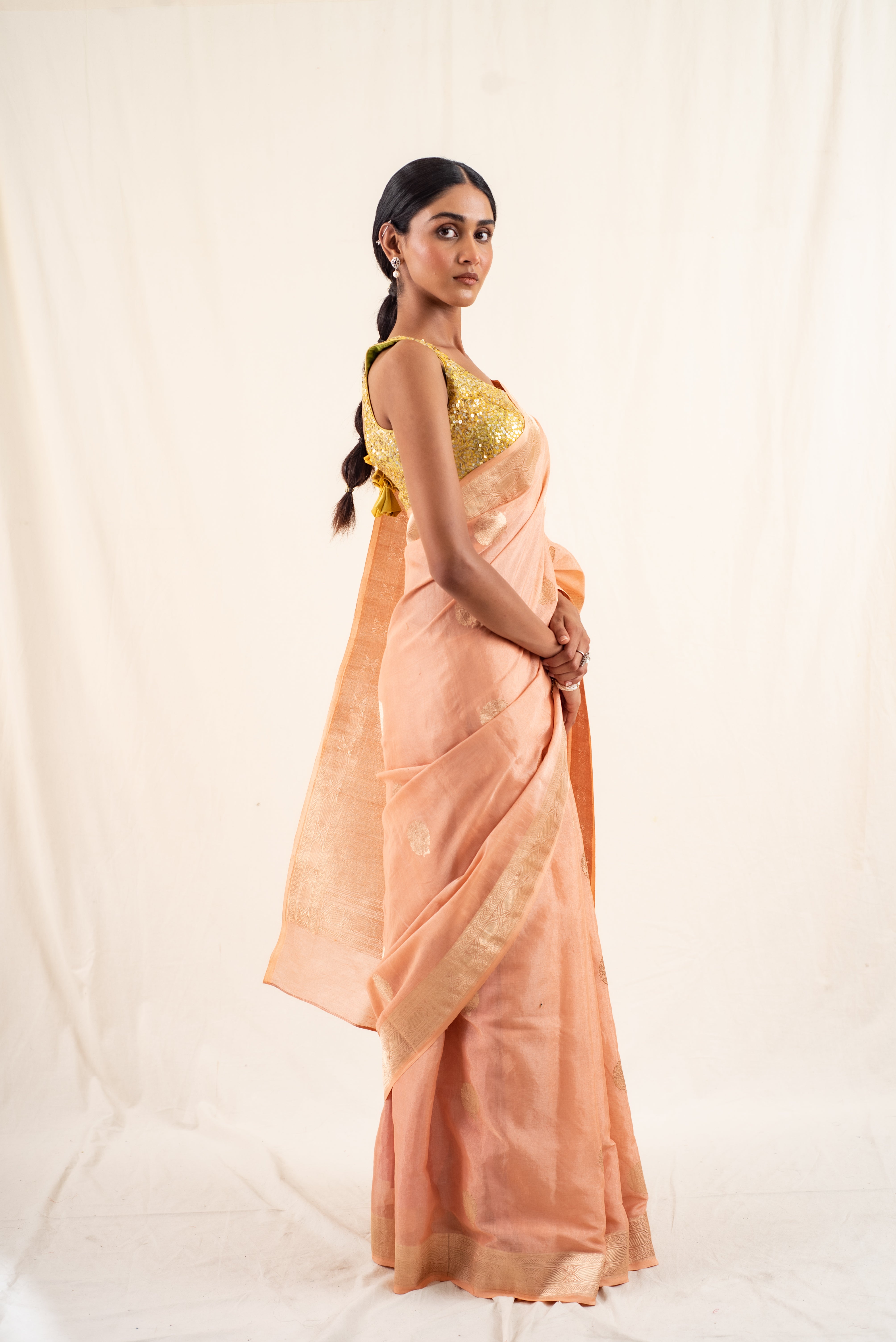
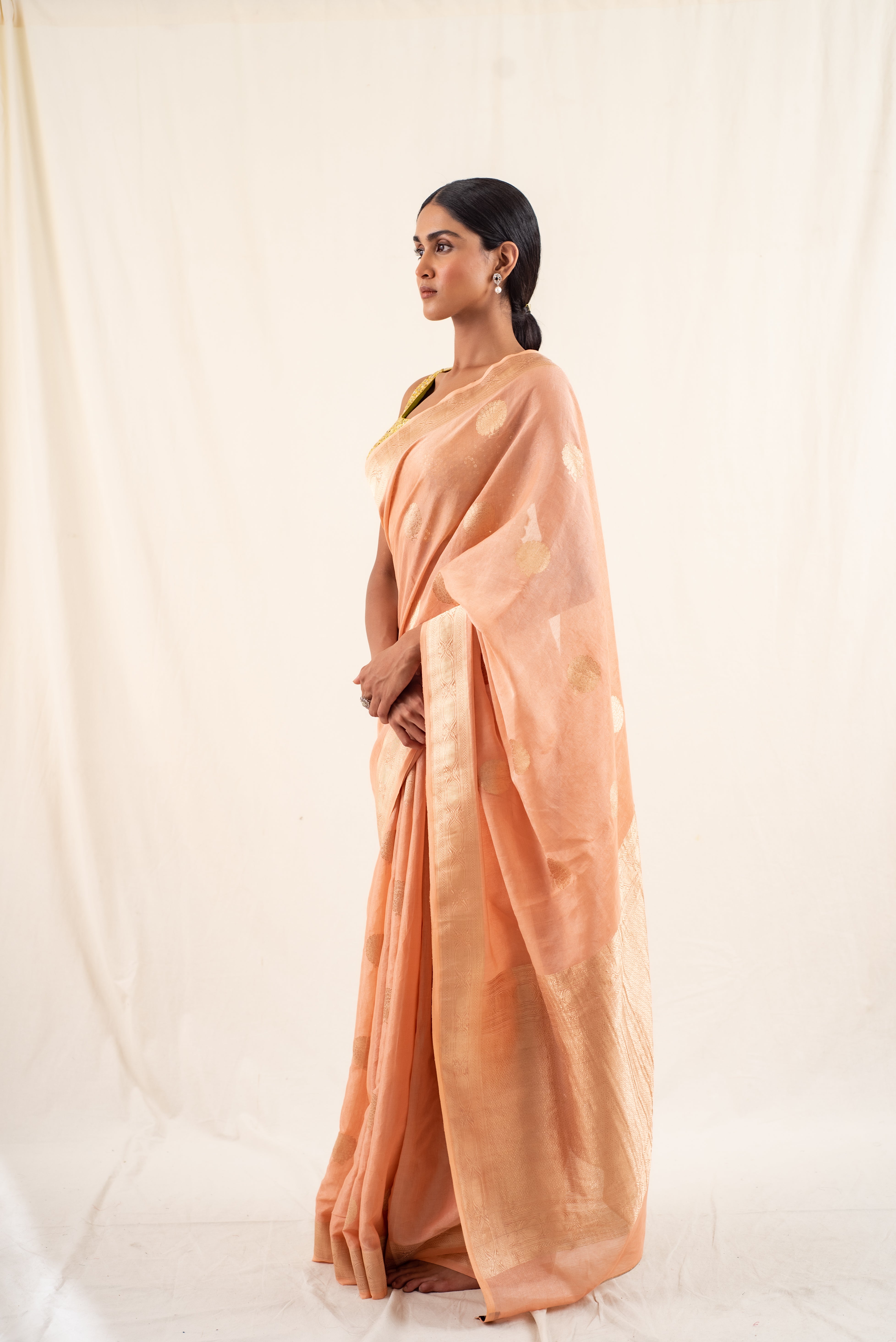
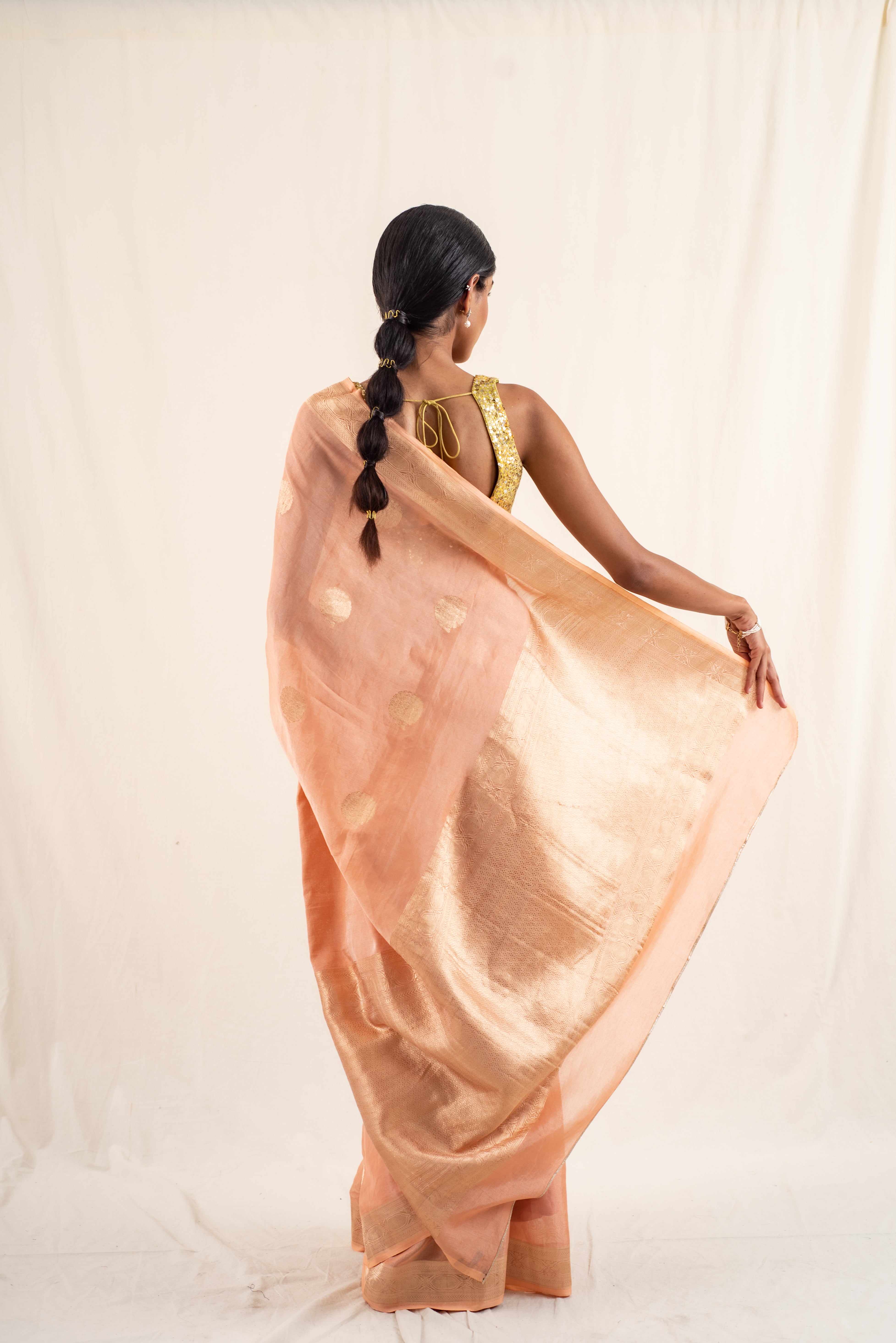
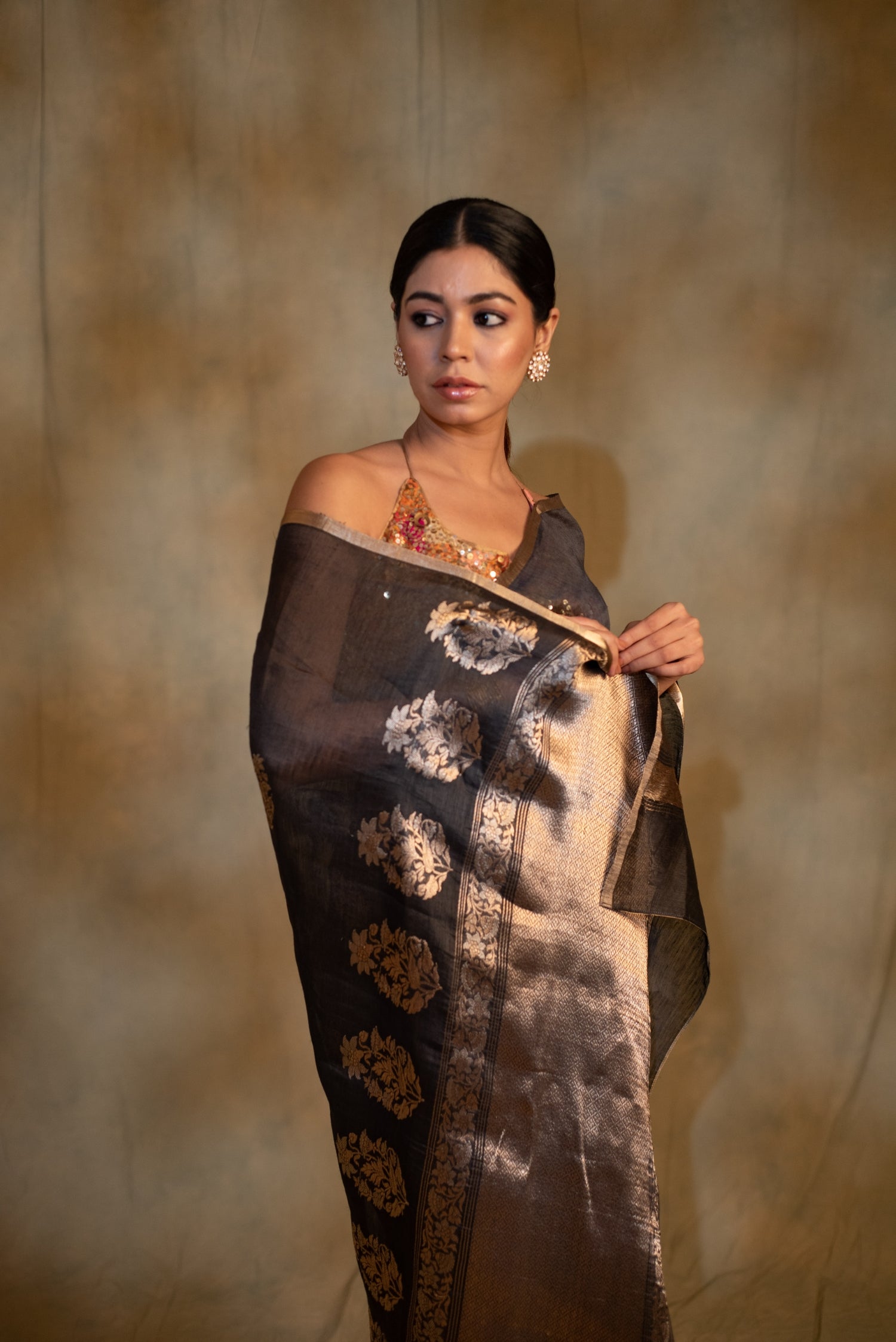
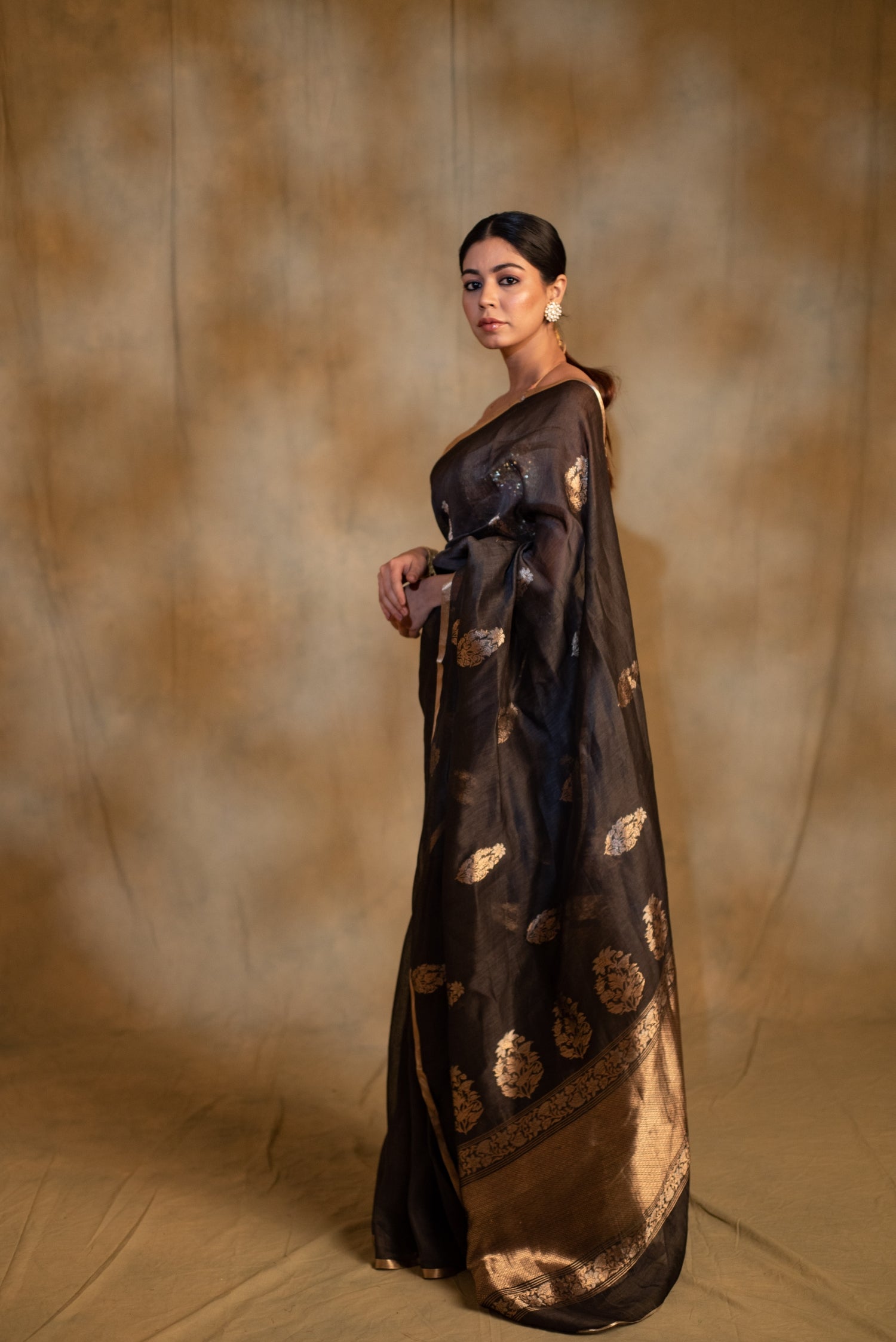
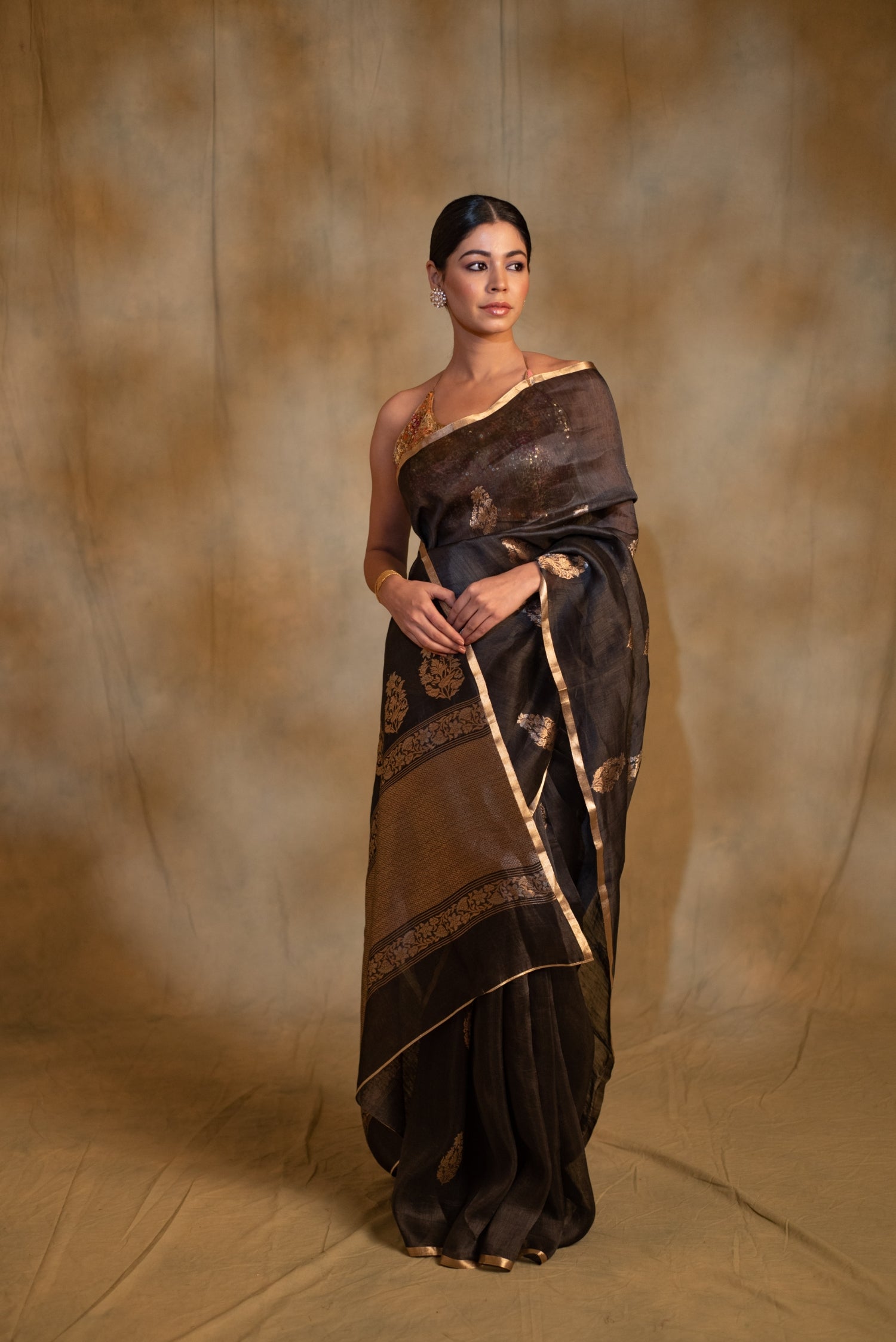
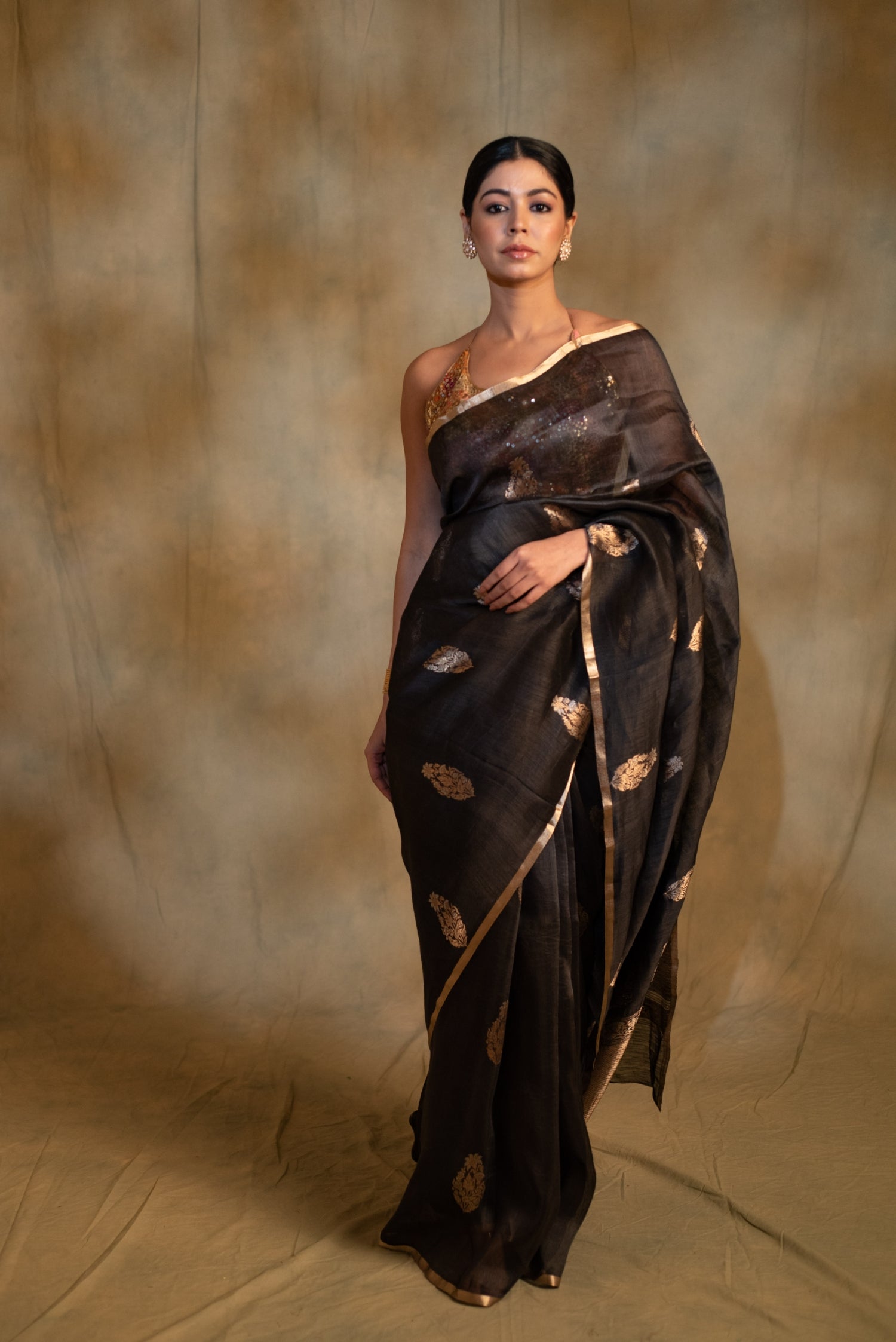
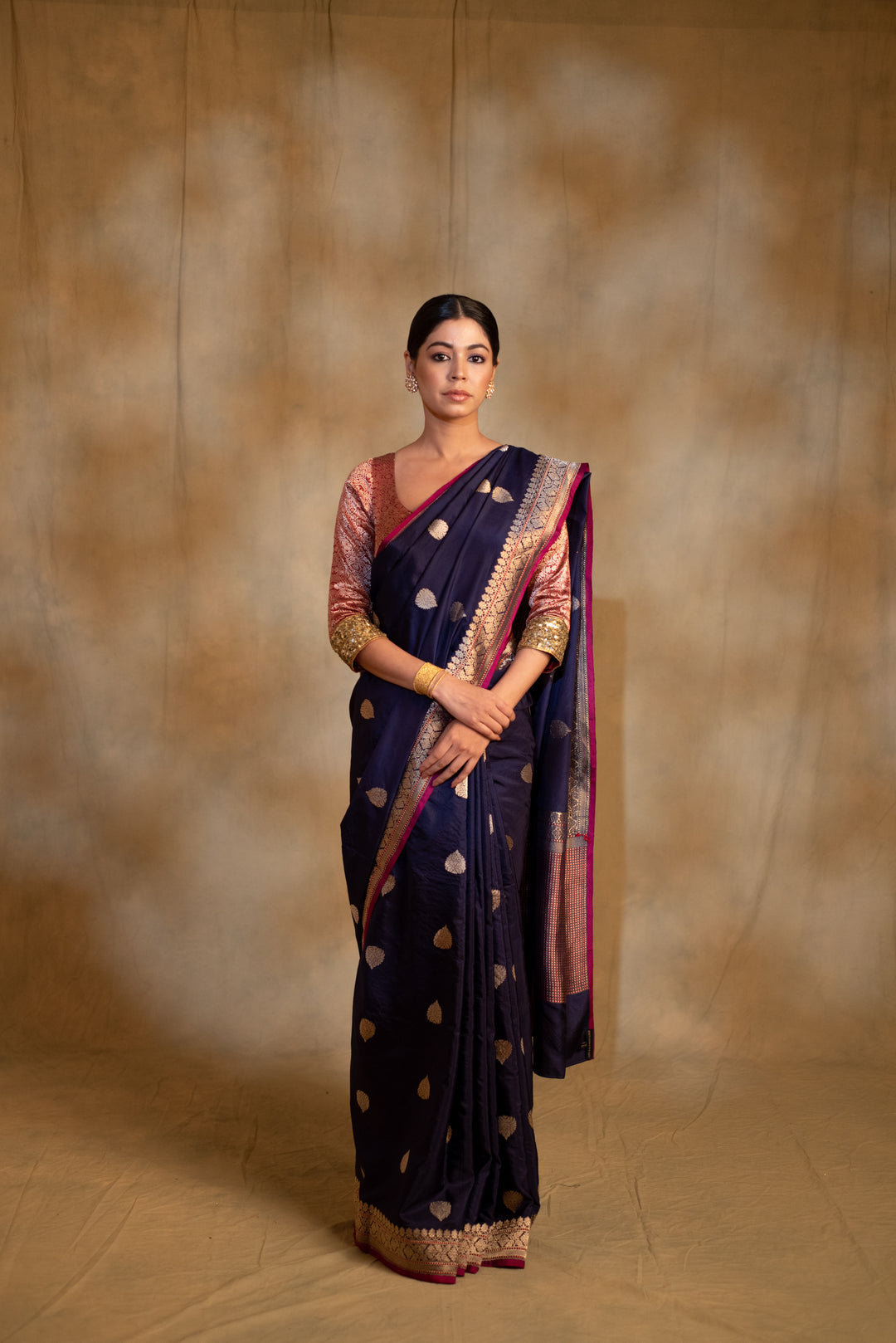
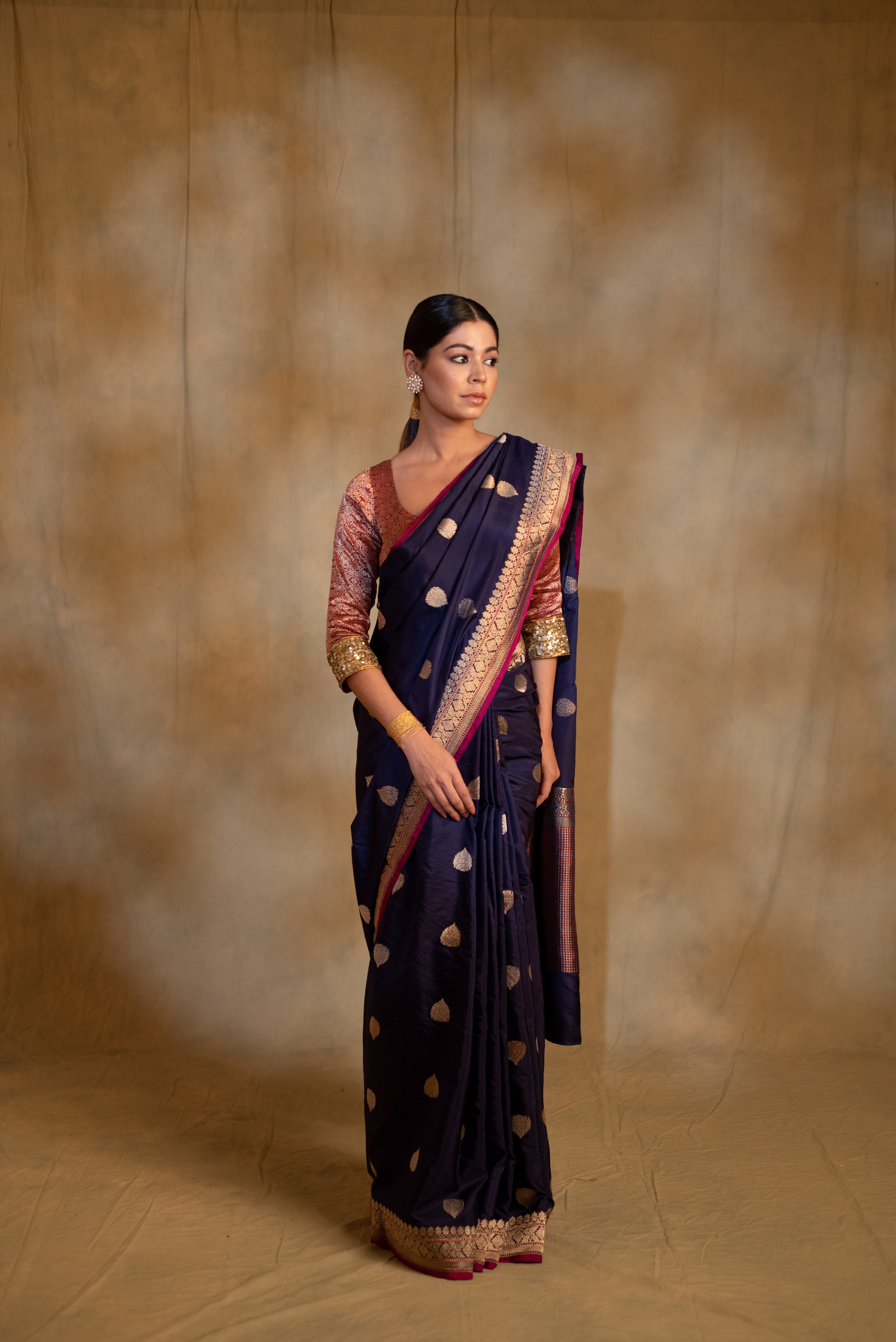
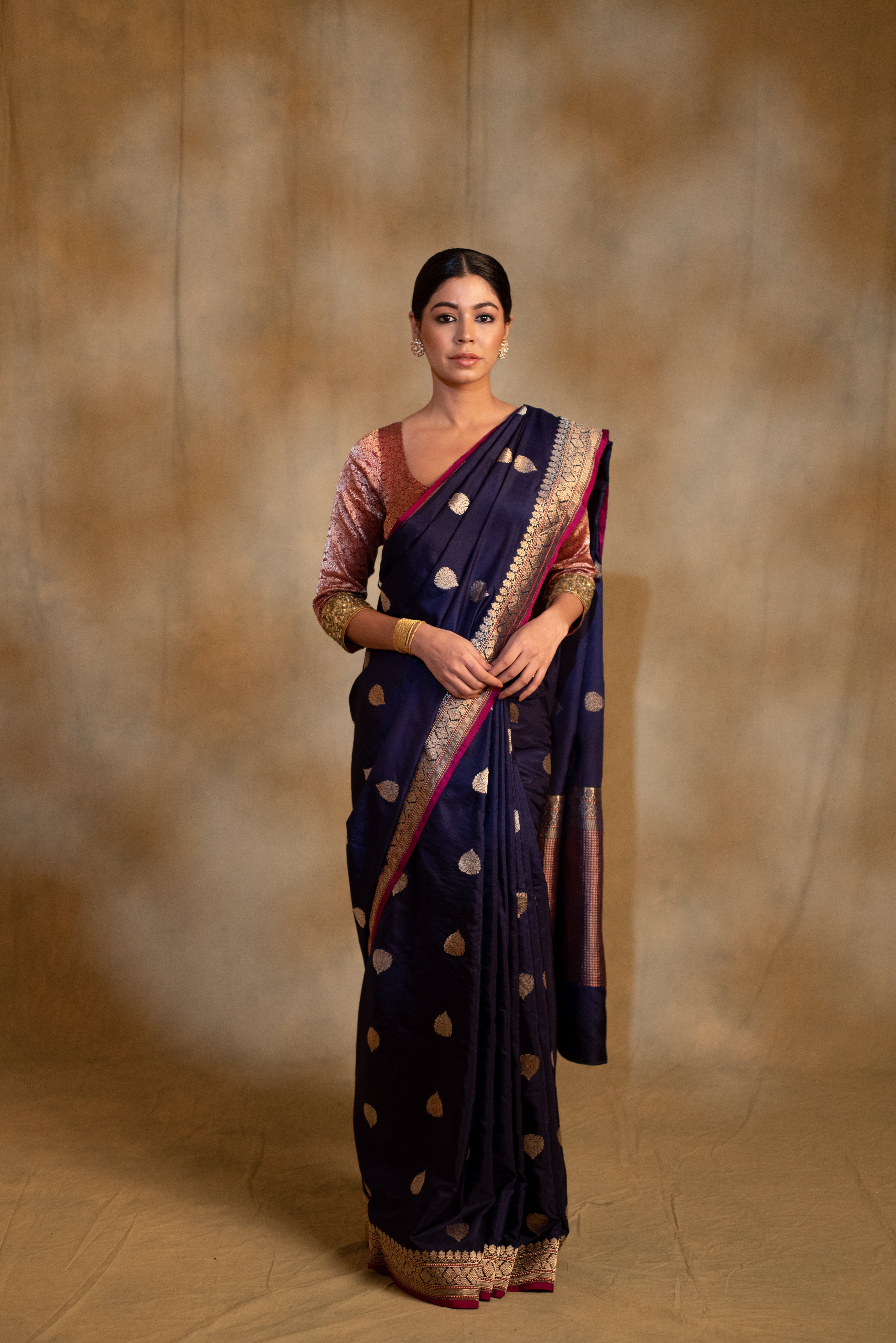
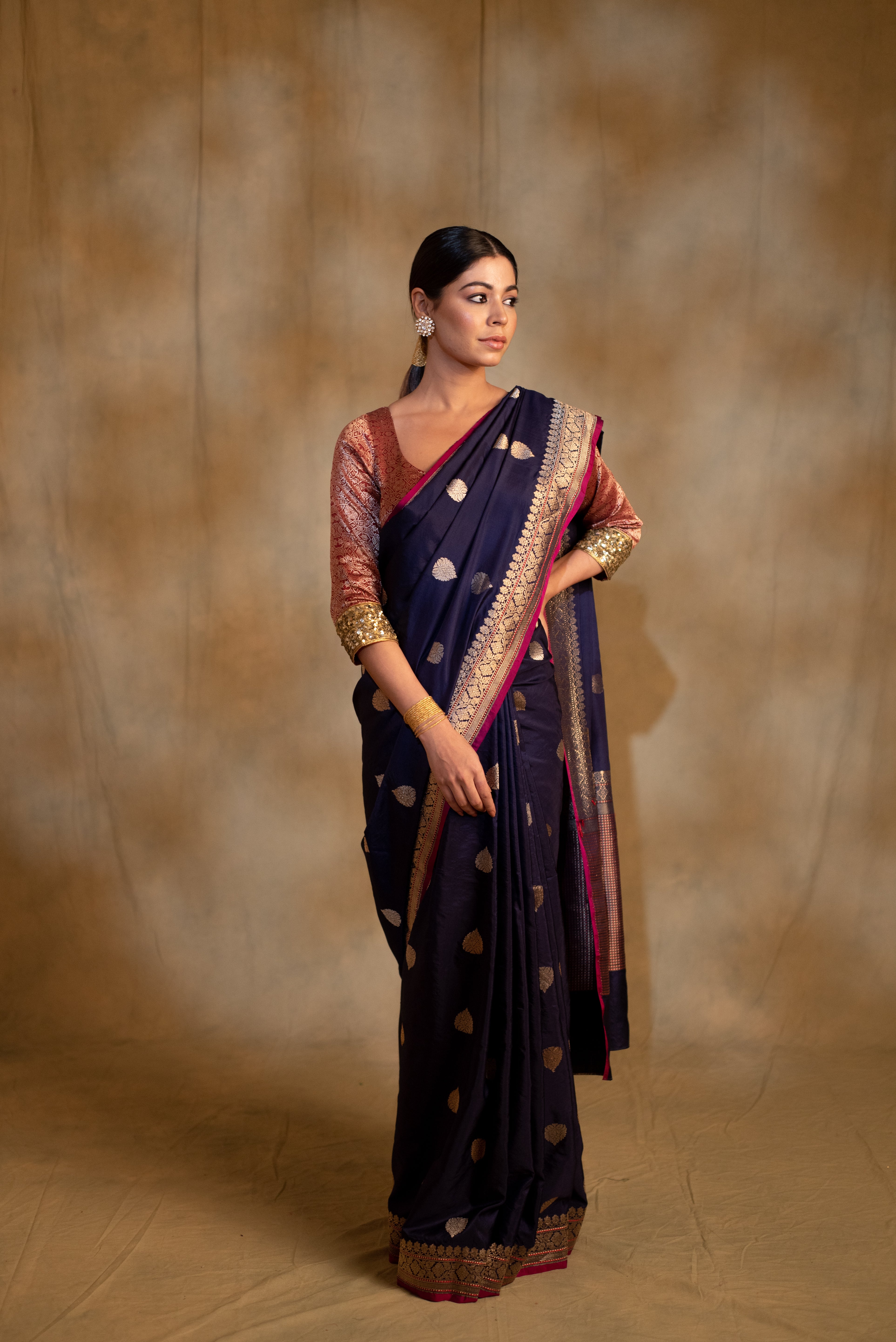
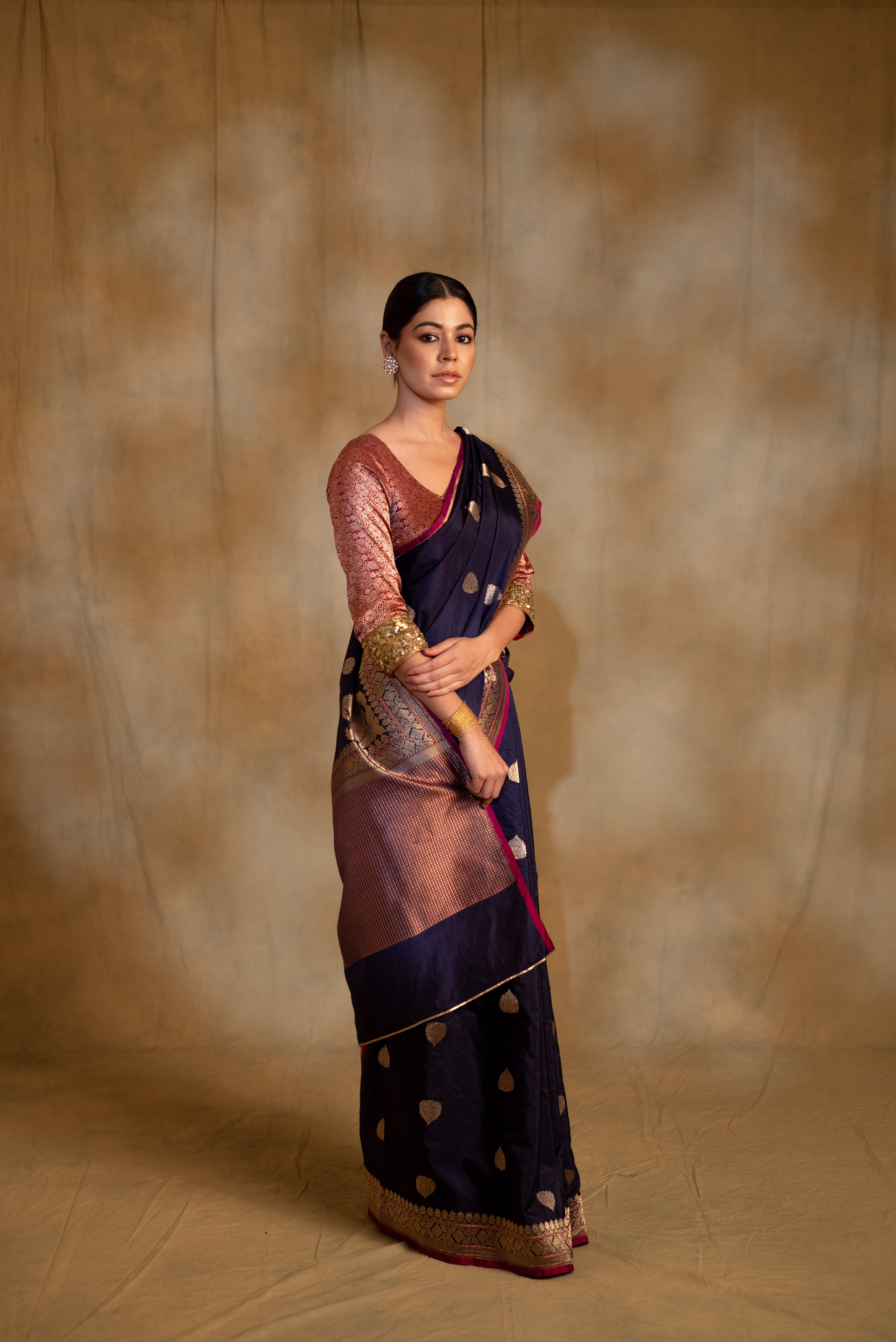
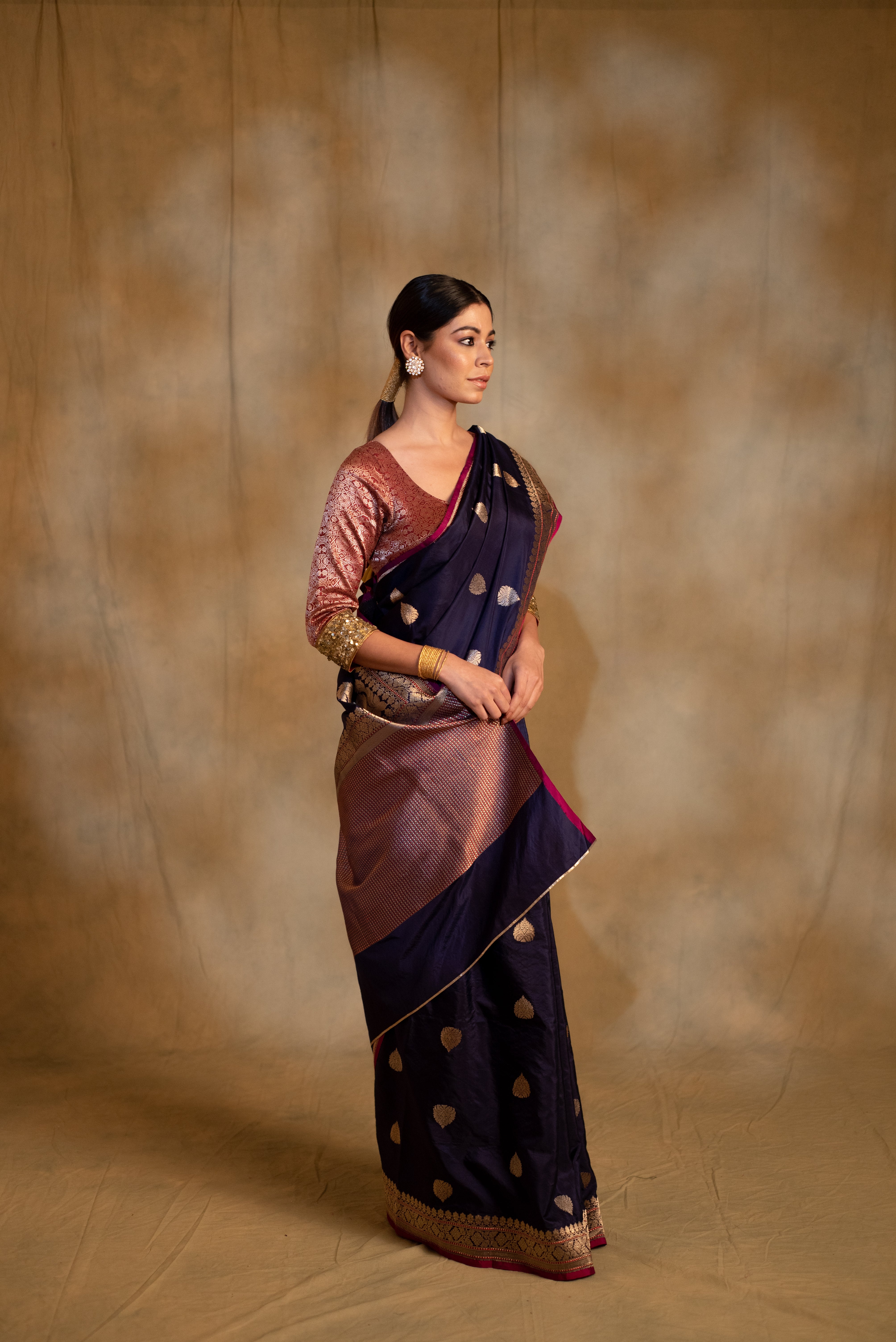
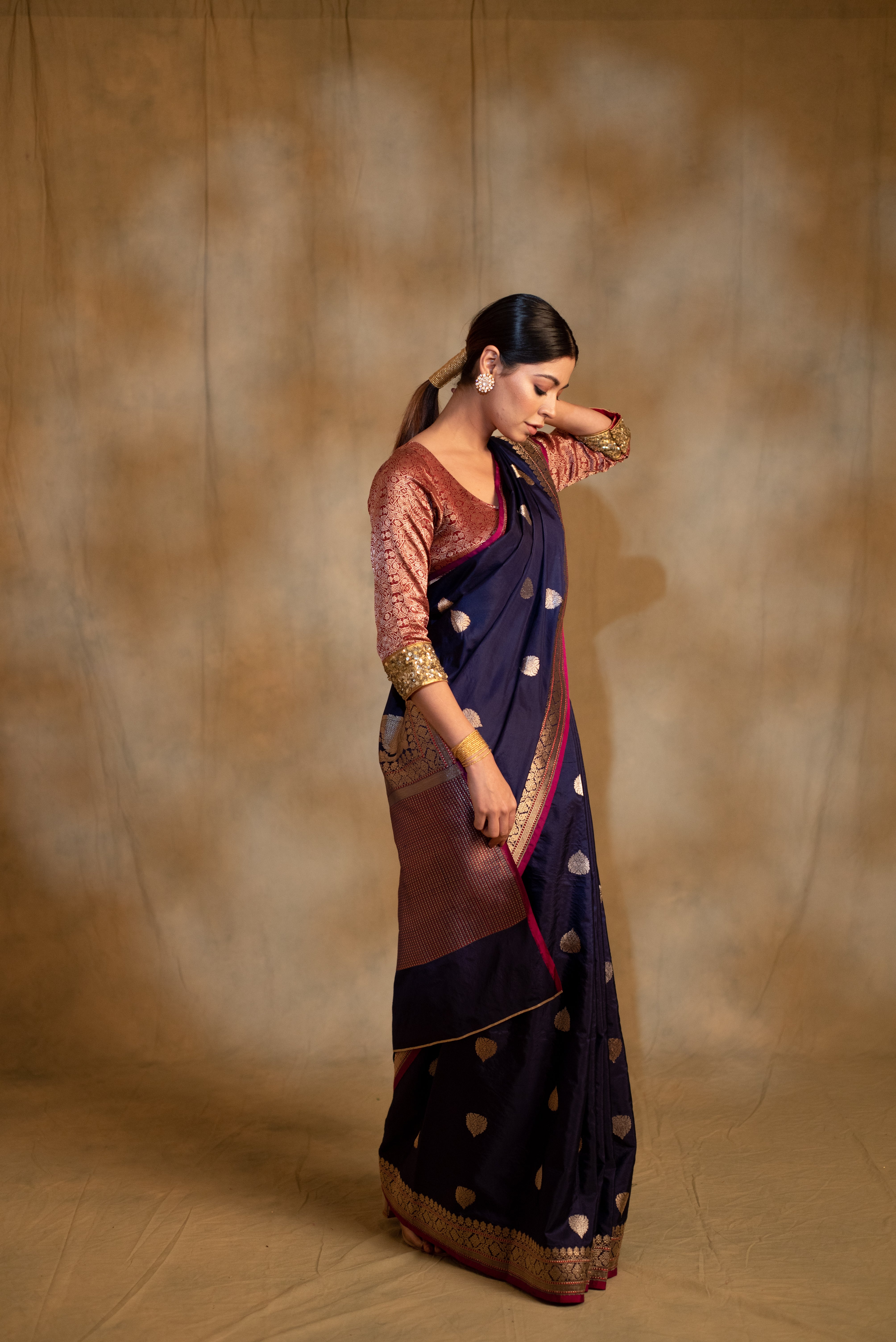
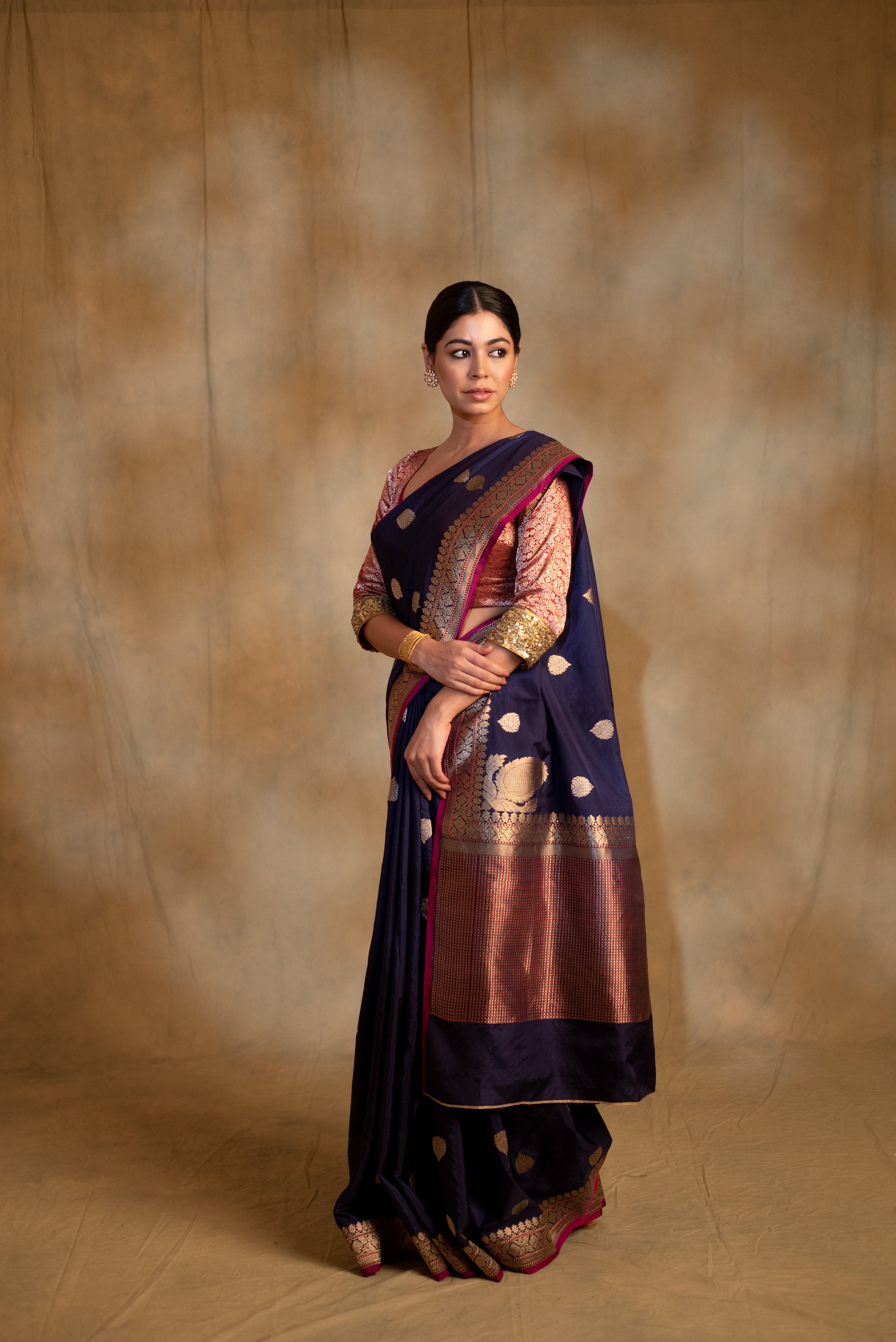
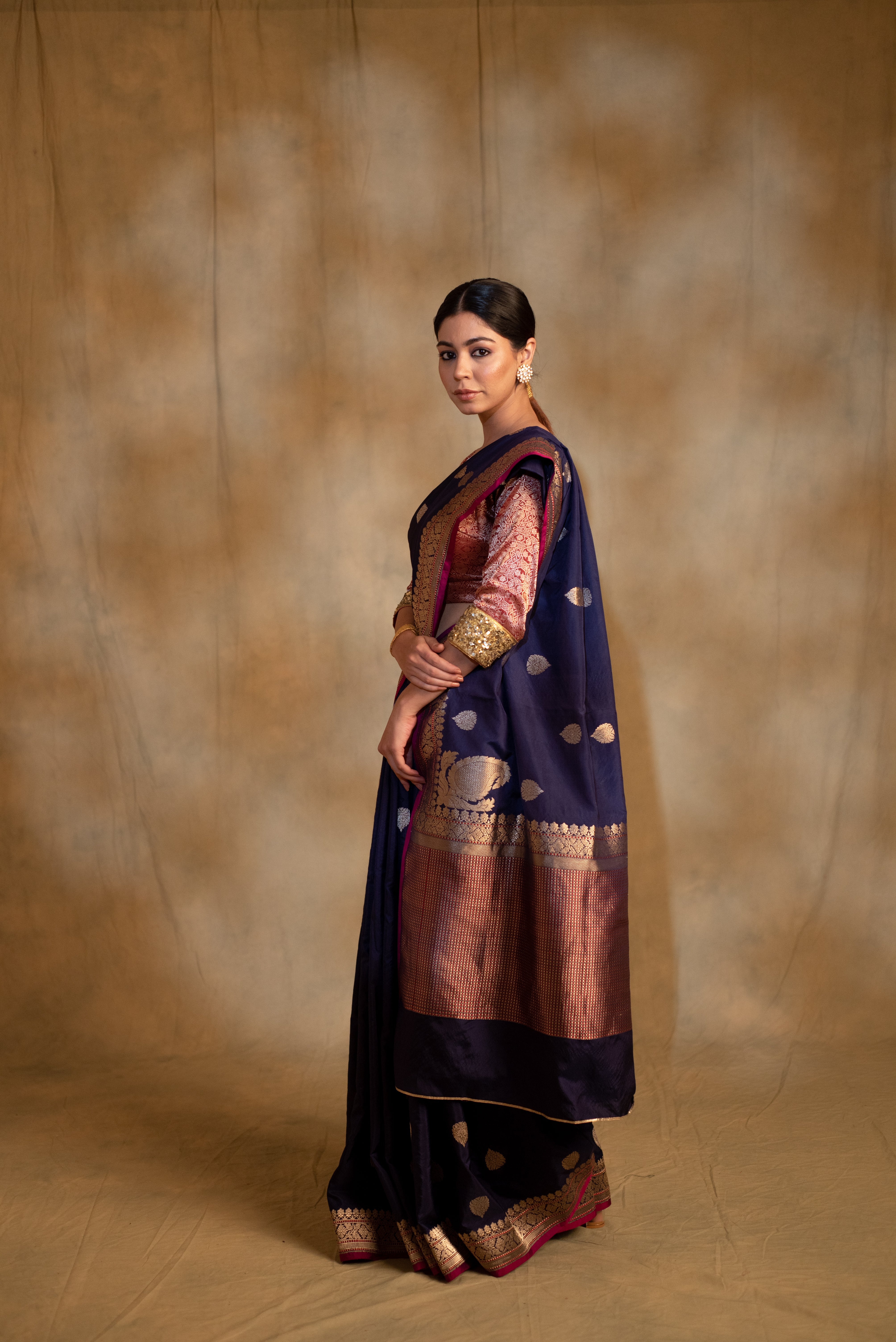
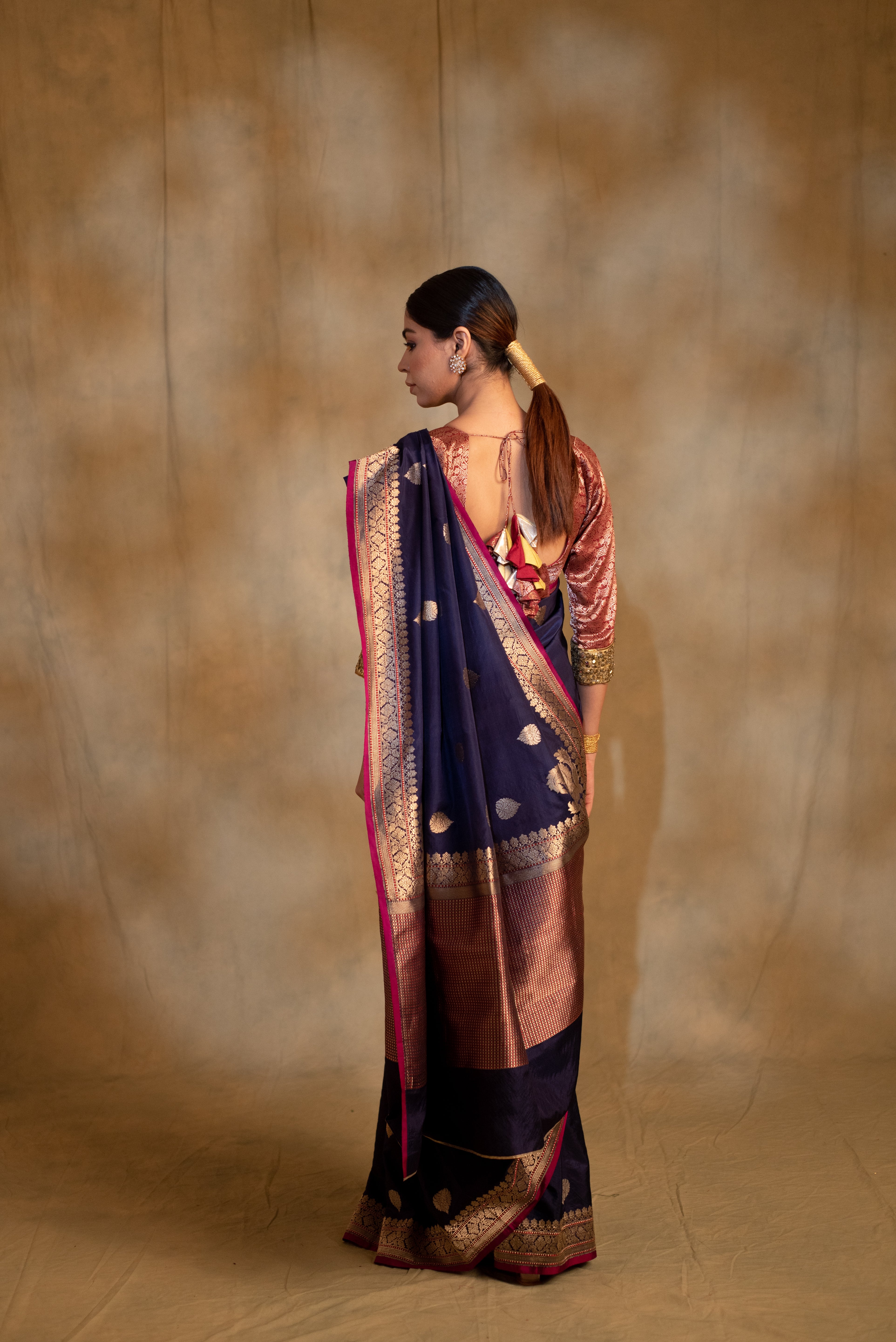
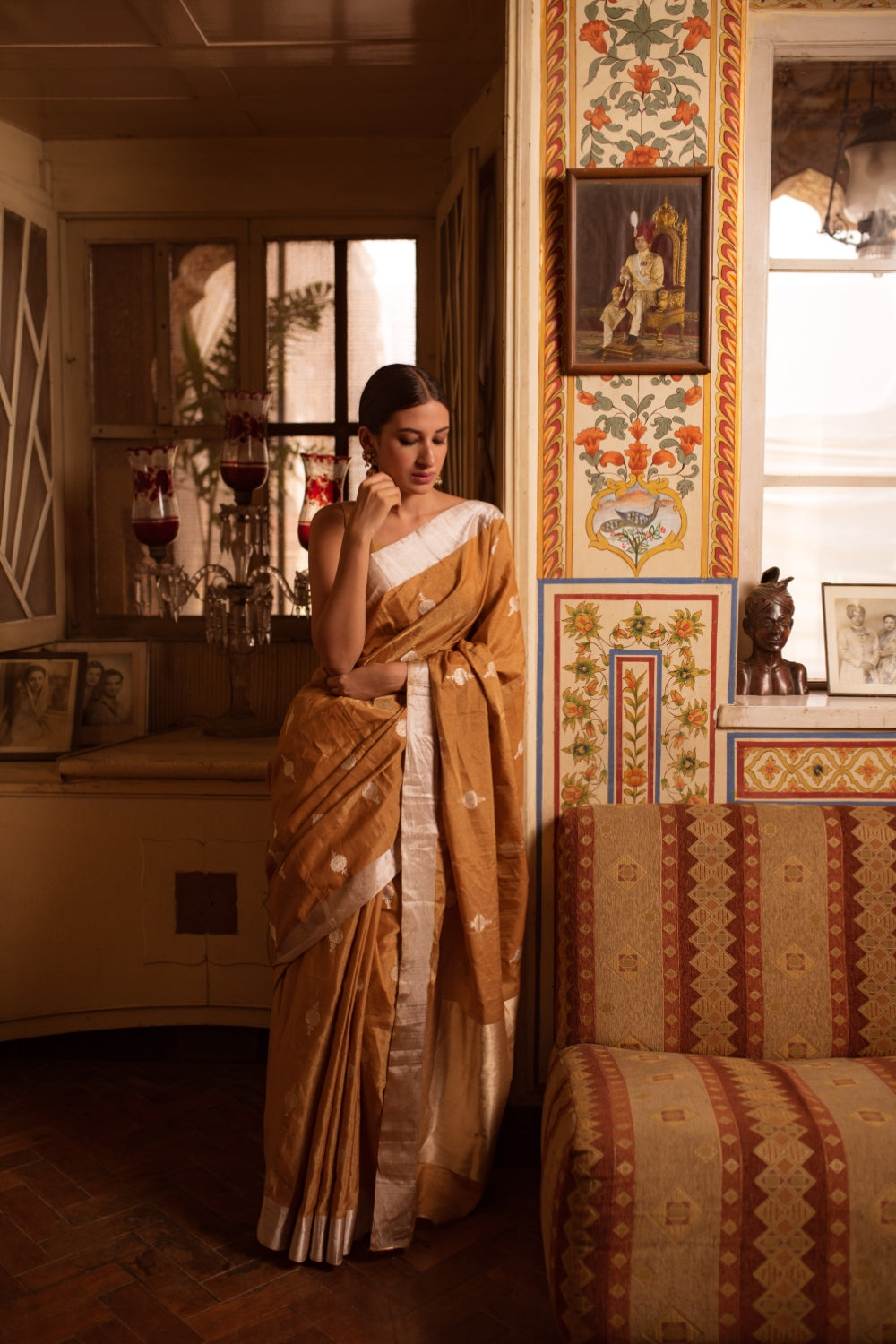
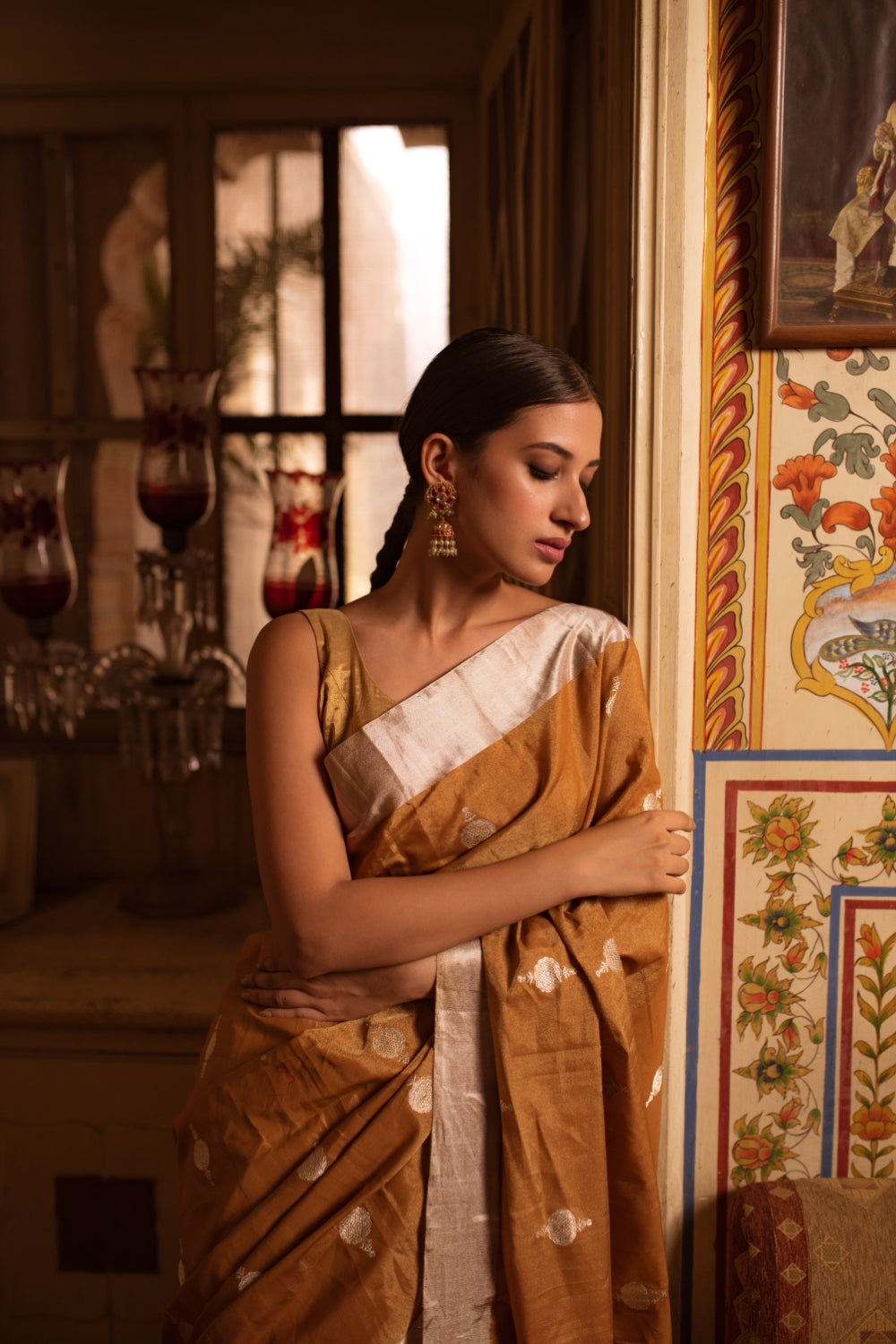
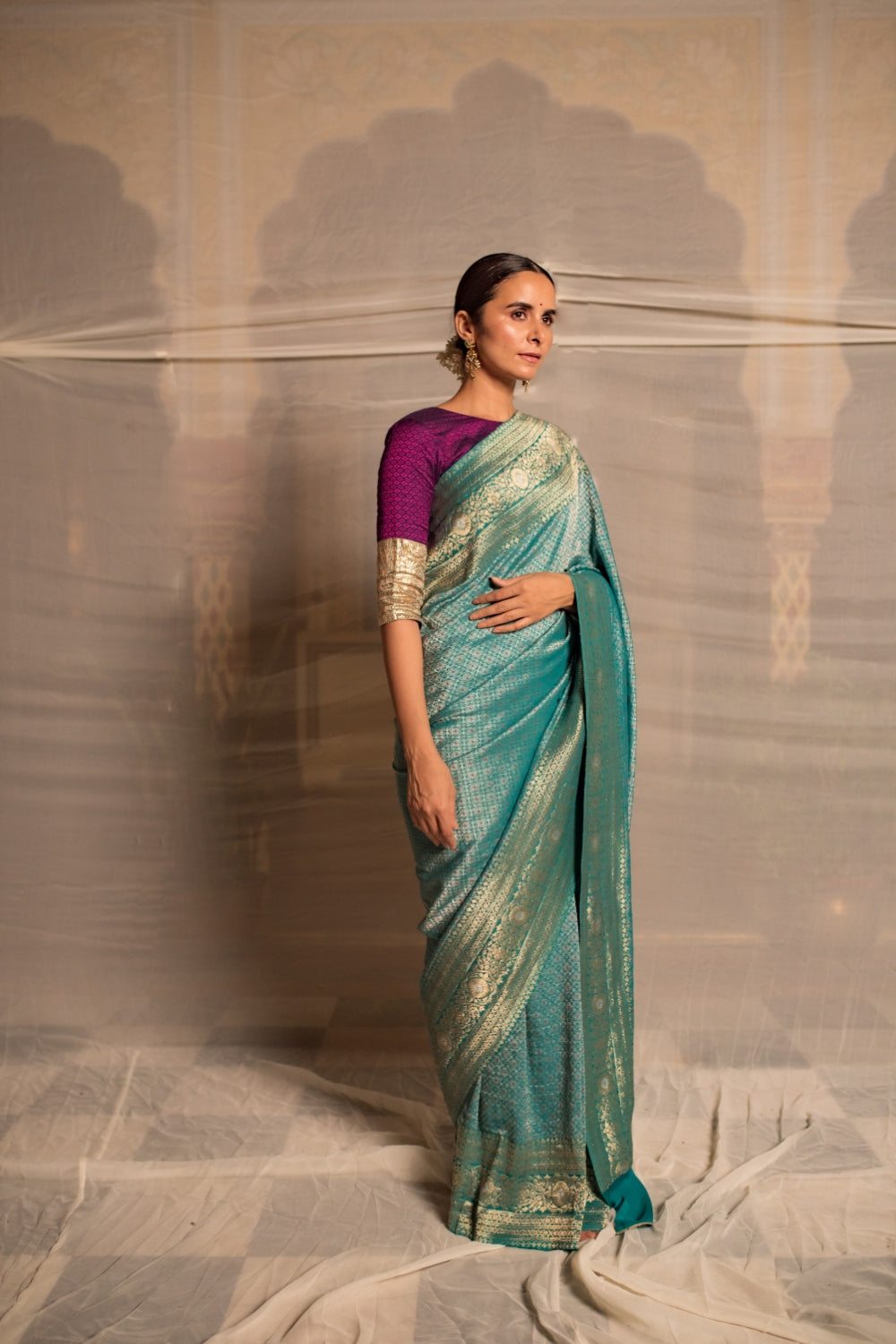
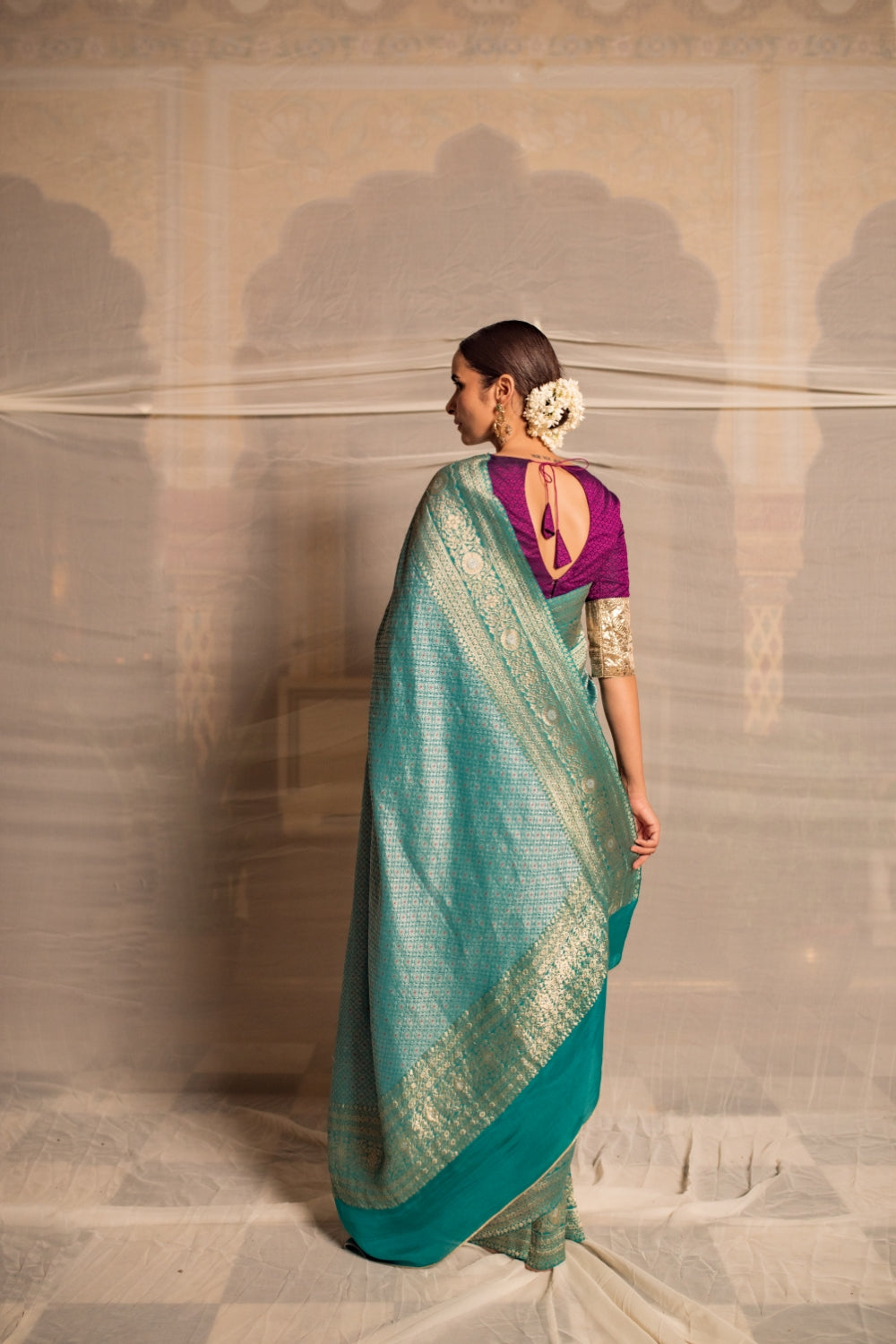
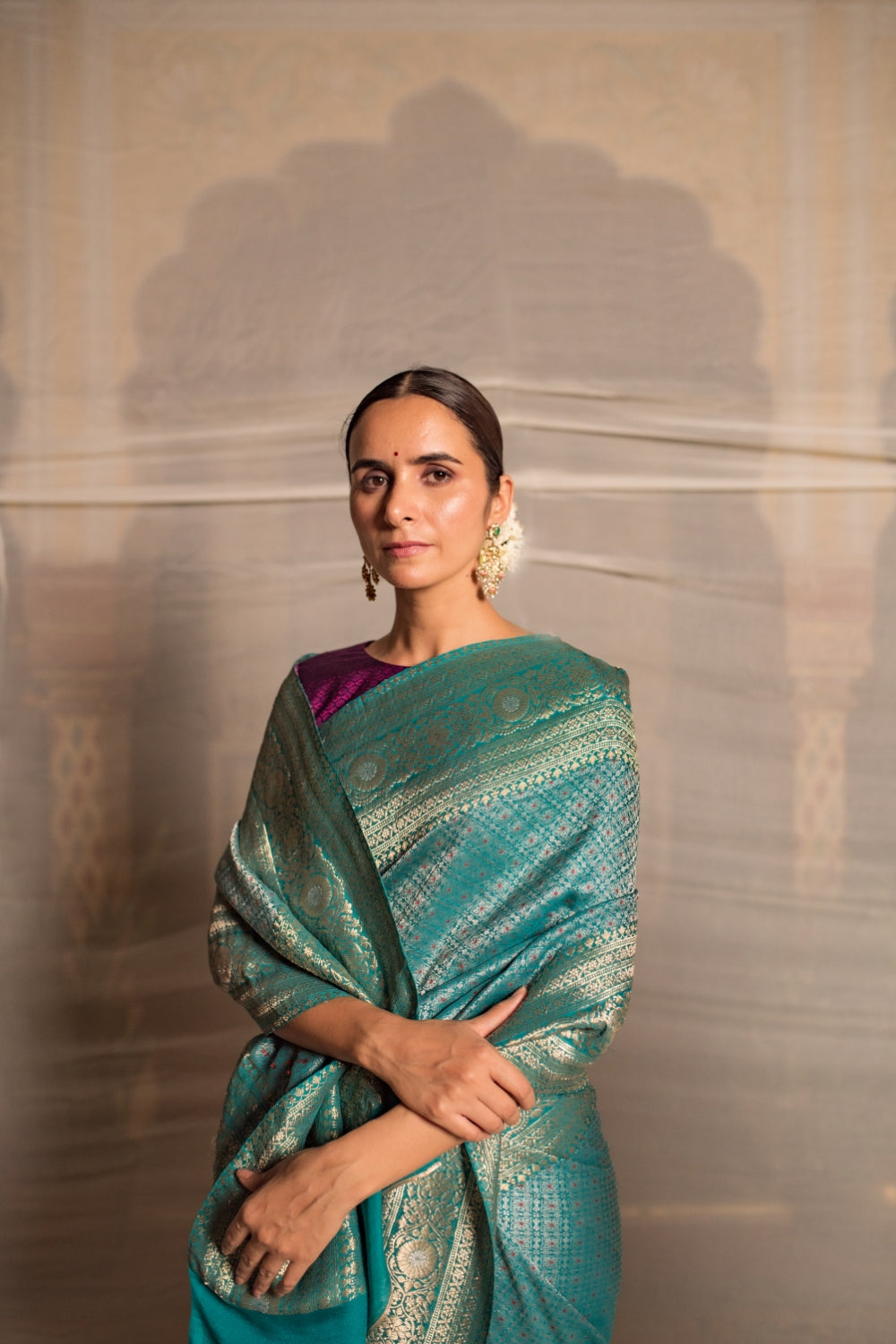
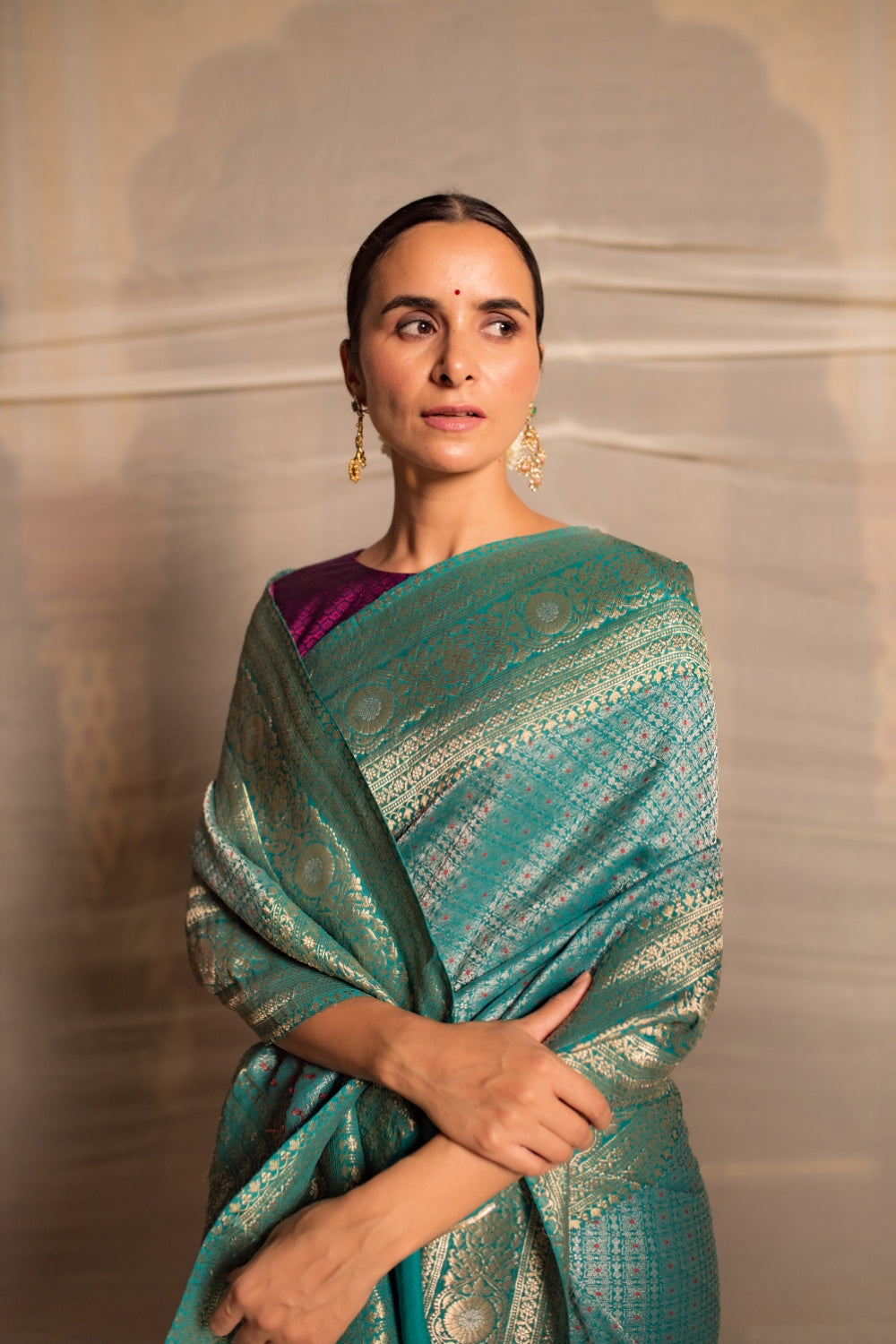
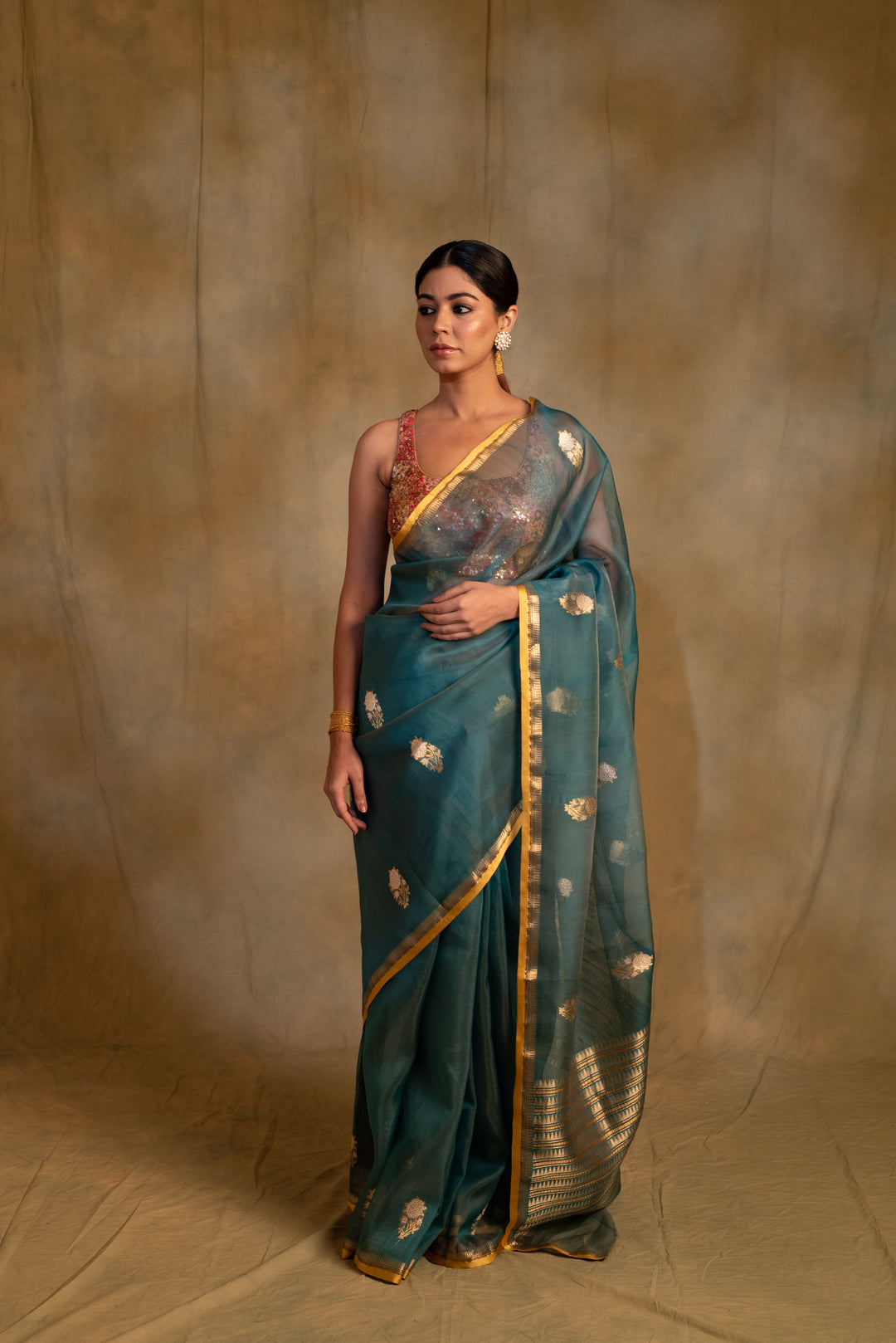
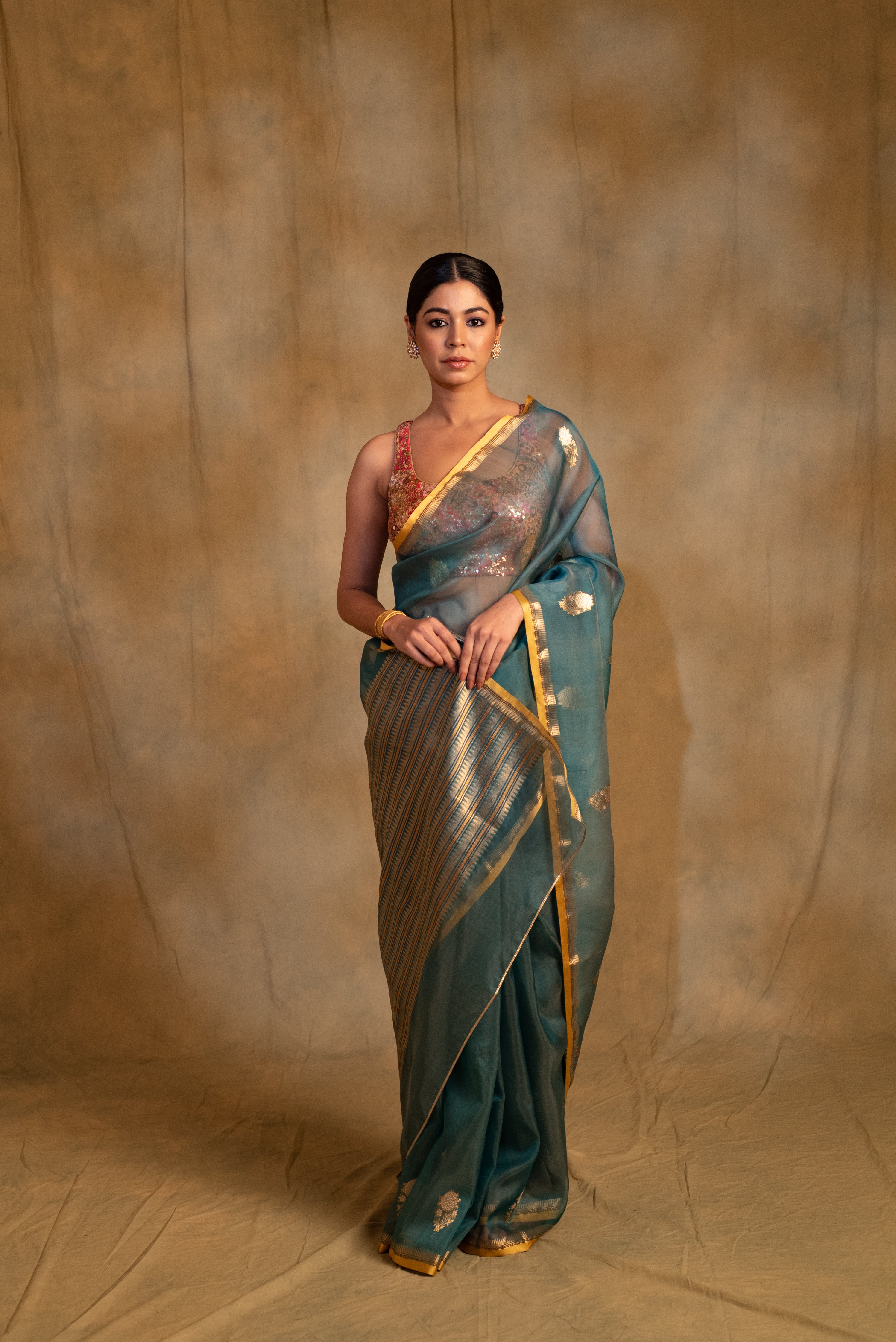
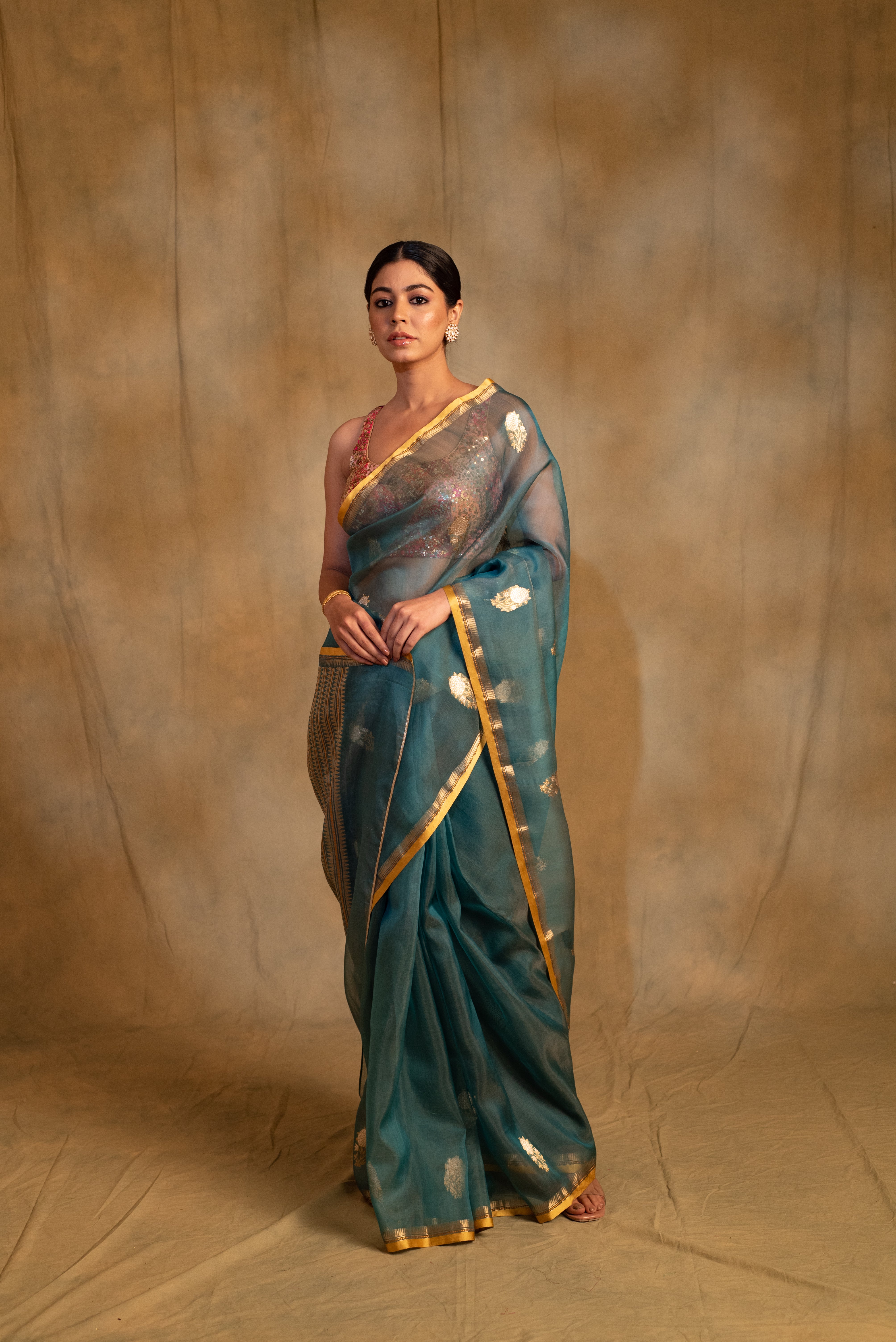
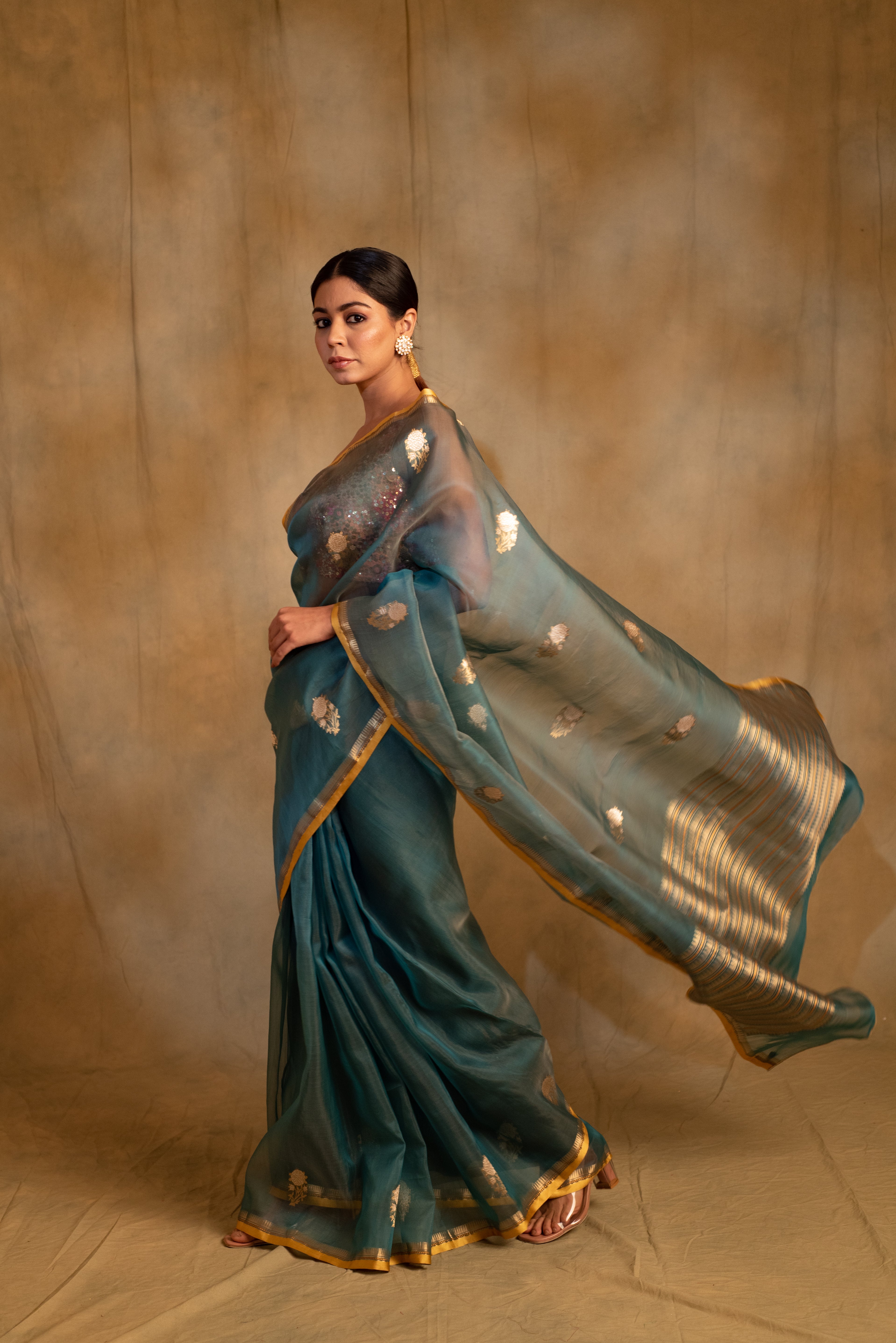
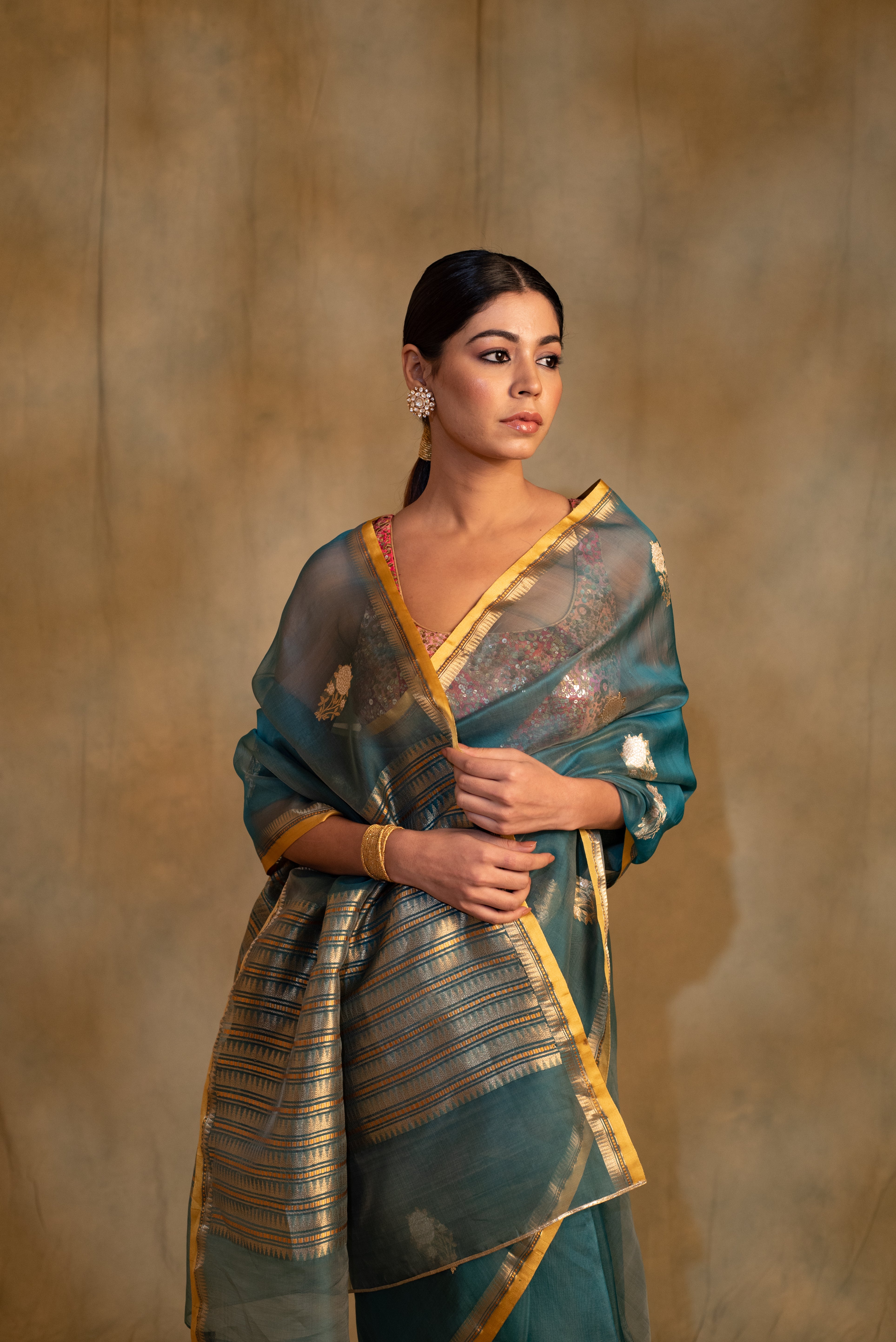
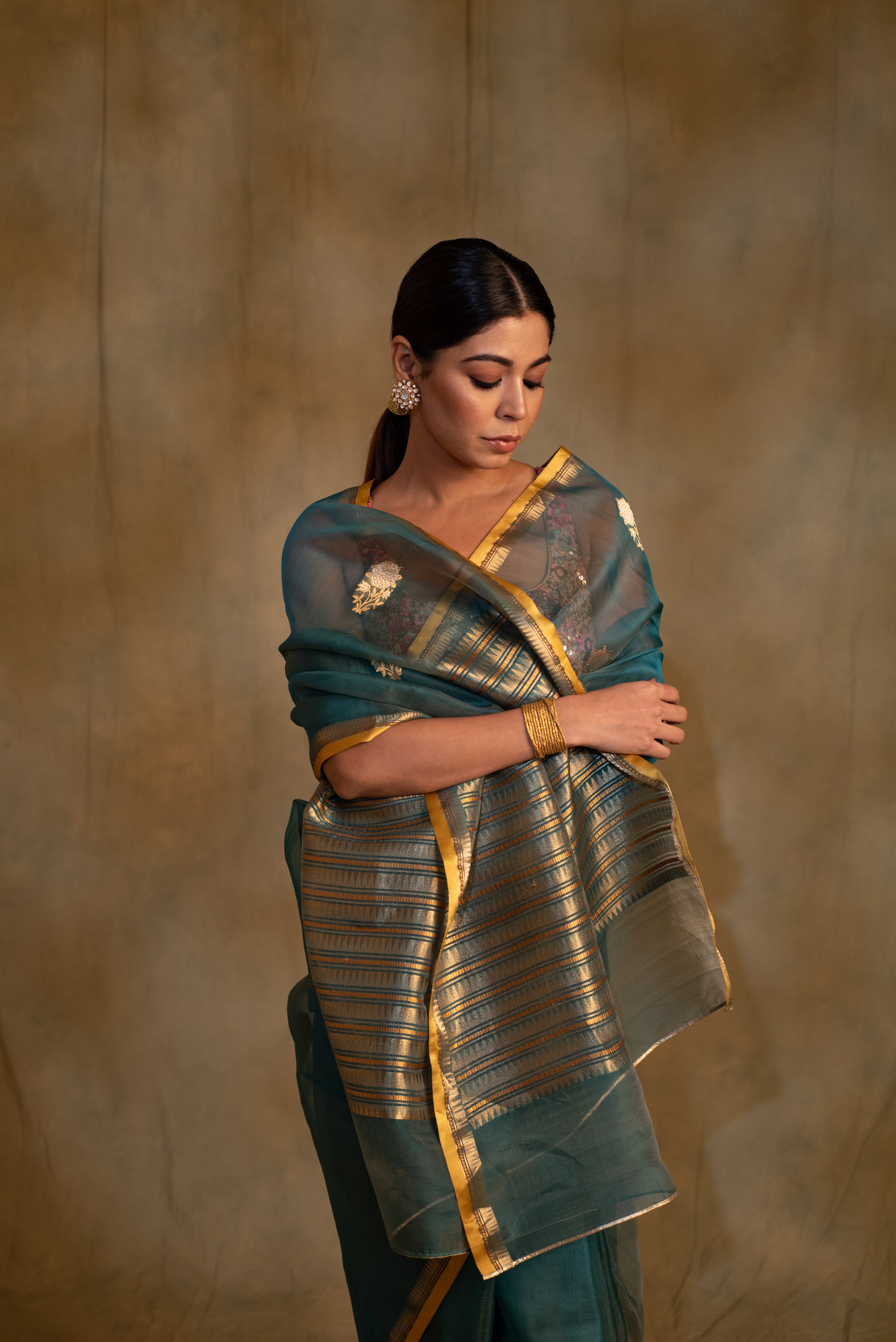
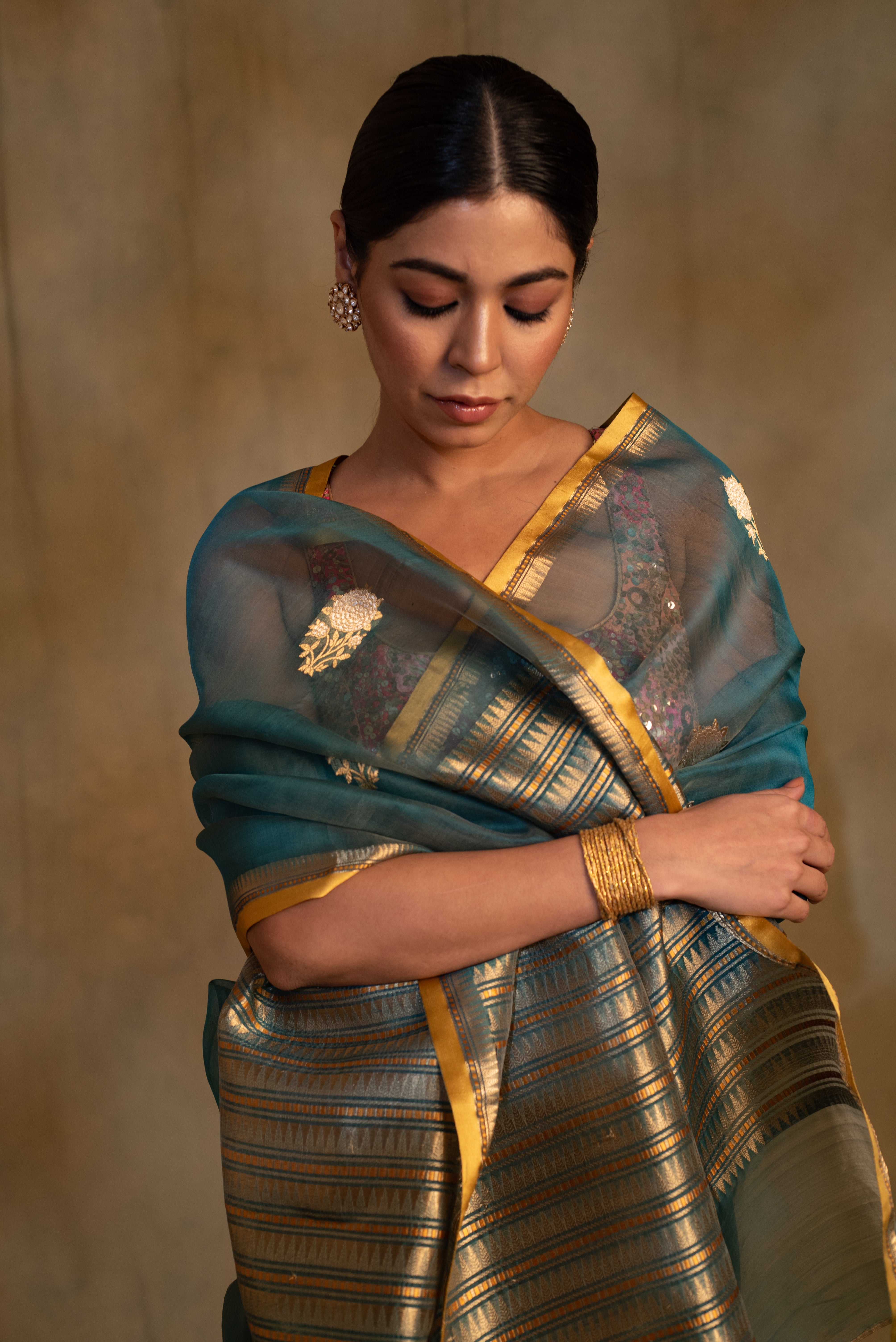
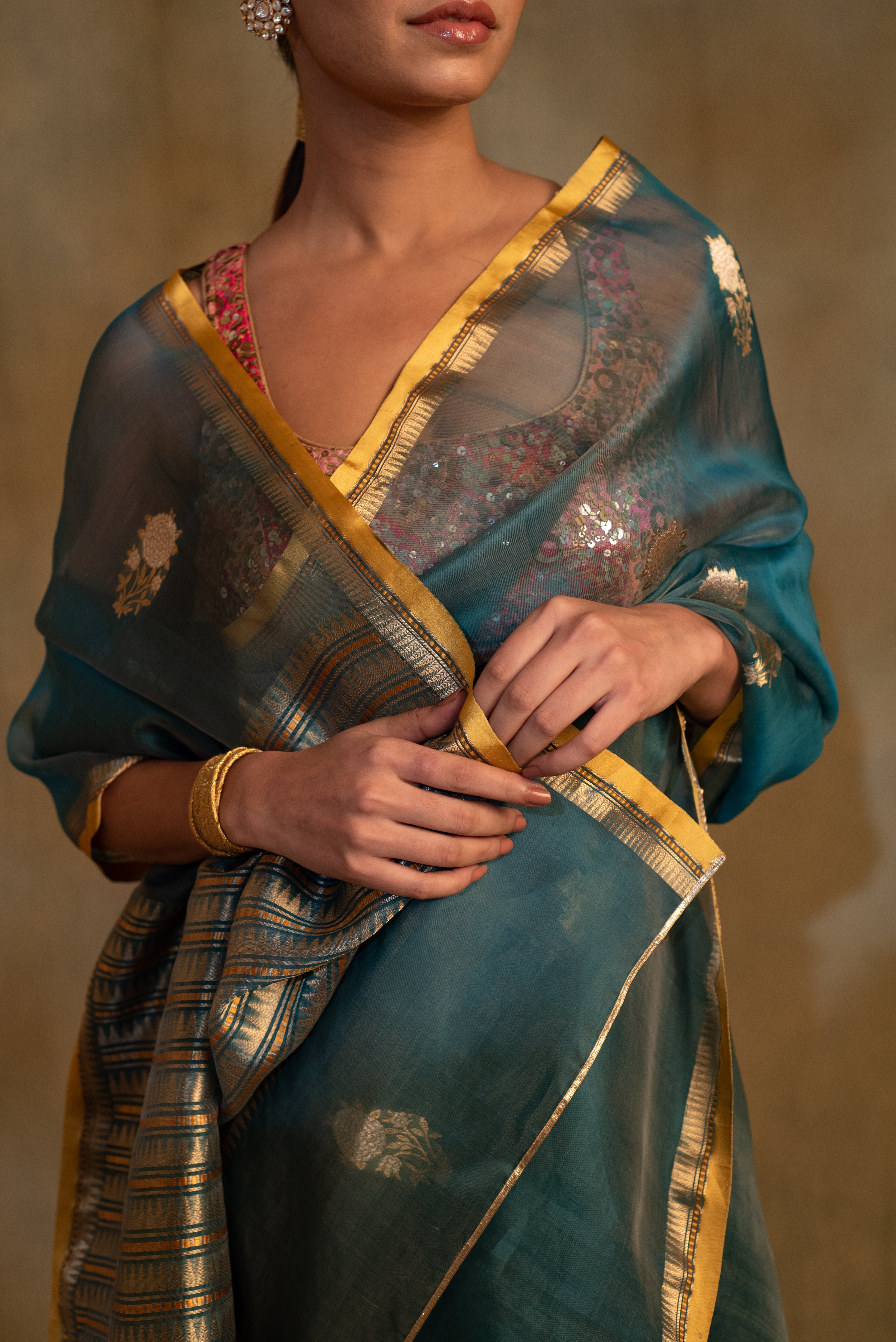
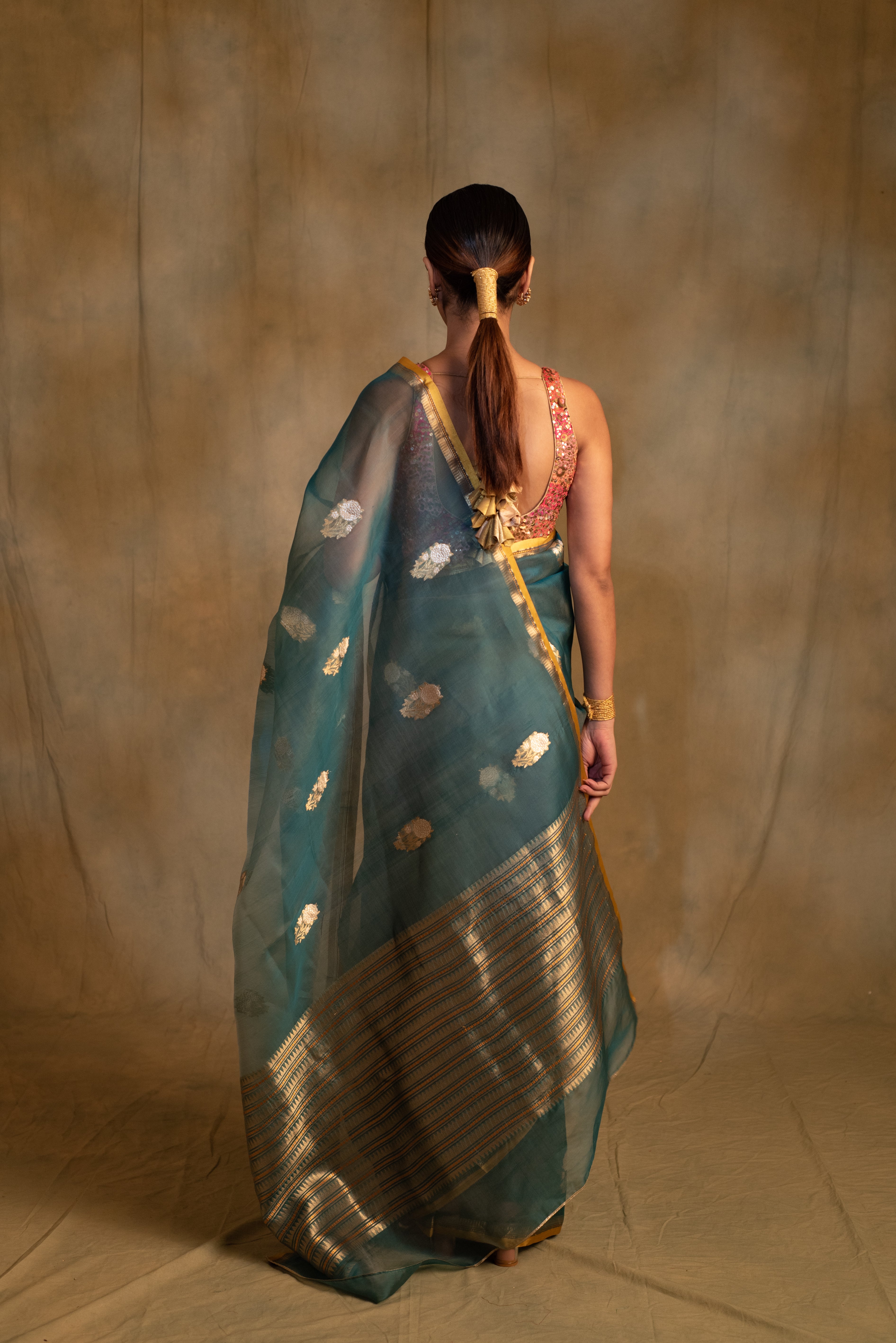
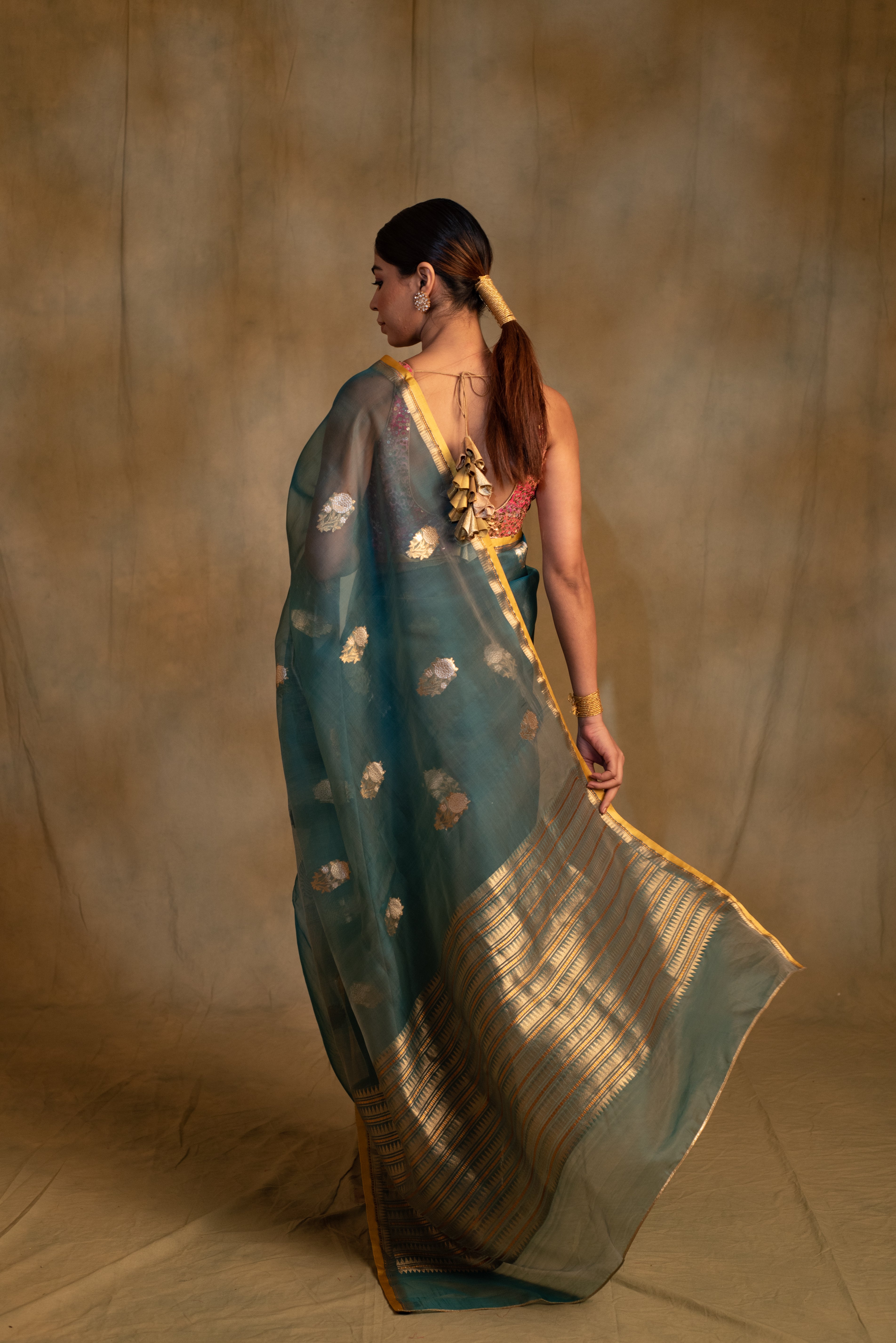
Buy Banarasi Butidar Sarees
Buy Banarasi Butidar Sarees
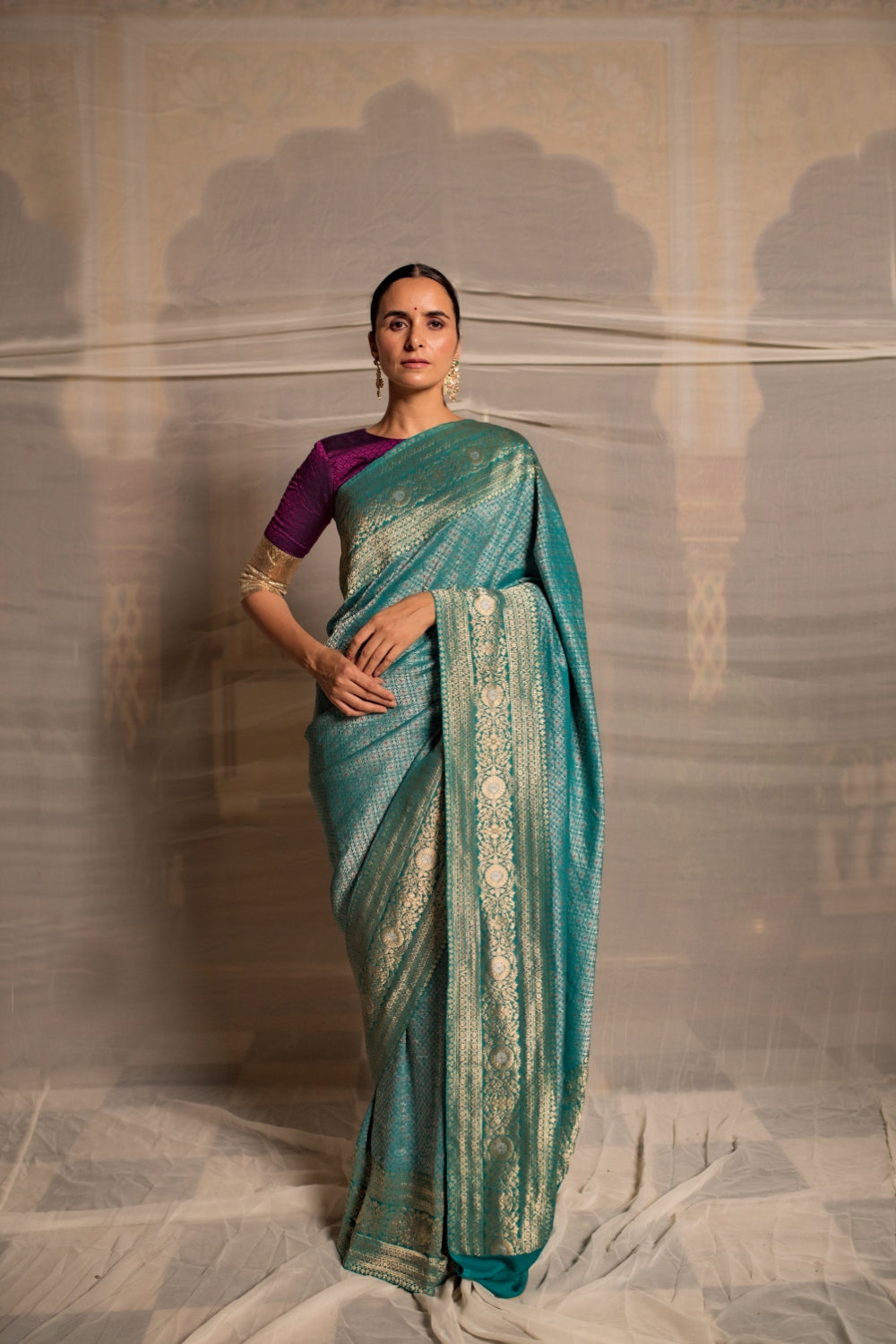
It is important to note that in Banarasi design terminology, buttis are distinct from bail (vine) patterns. While buttis are isolated, repeated motifs, bail designs form continuous, flowing compositions across the fabric. For instance, Angoor Bail, inspired by grapevine trails, is typically seen within the elaborate Jangla pattern tradition, characterised by its dense and interconnected layout. Similarly, what is often referred to as Mehrab Bail is more accurately understood as the Mughal Jali pattern, derived from the intricate lattice screens of Mughal architecture and translated into woven form as a structured, geometric network.
Timeless in its appeal, the Banarasi Butidar saree continues to be valued not merely as bridal wear but as a textile that embodies enduring craftsmanship, cultural continuity, and evolving design sensibilities.
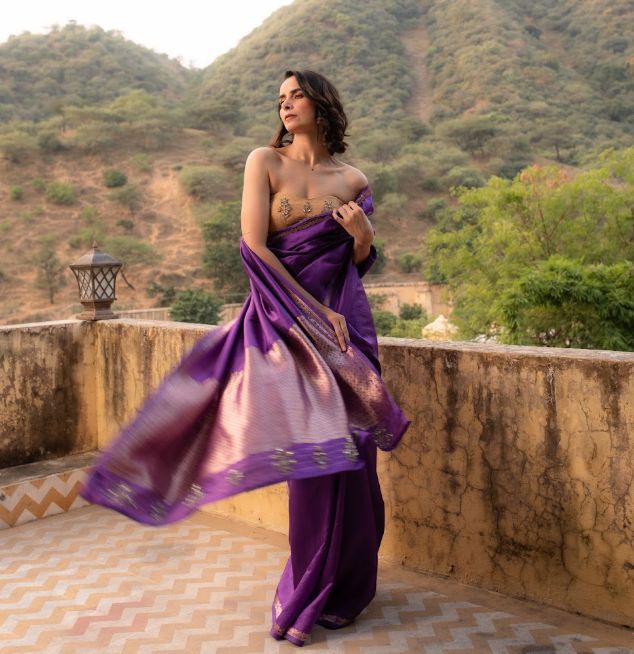
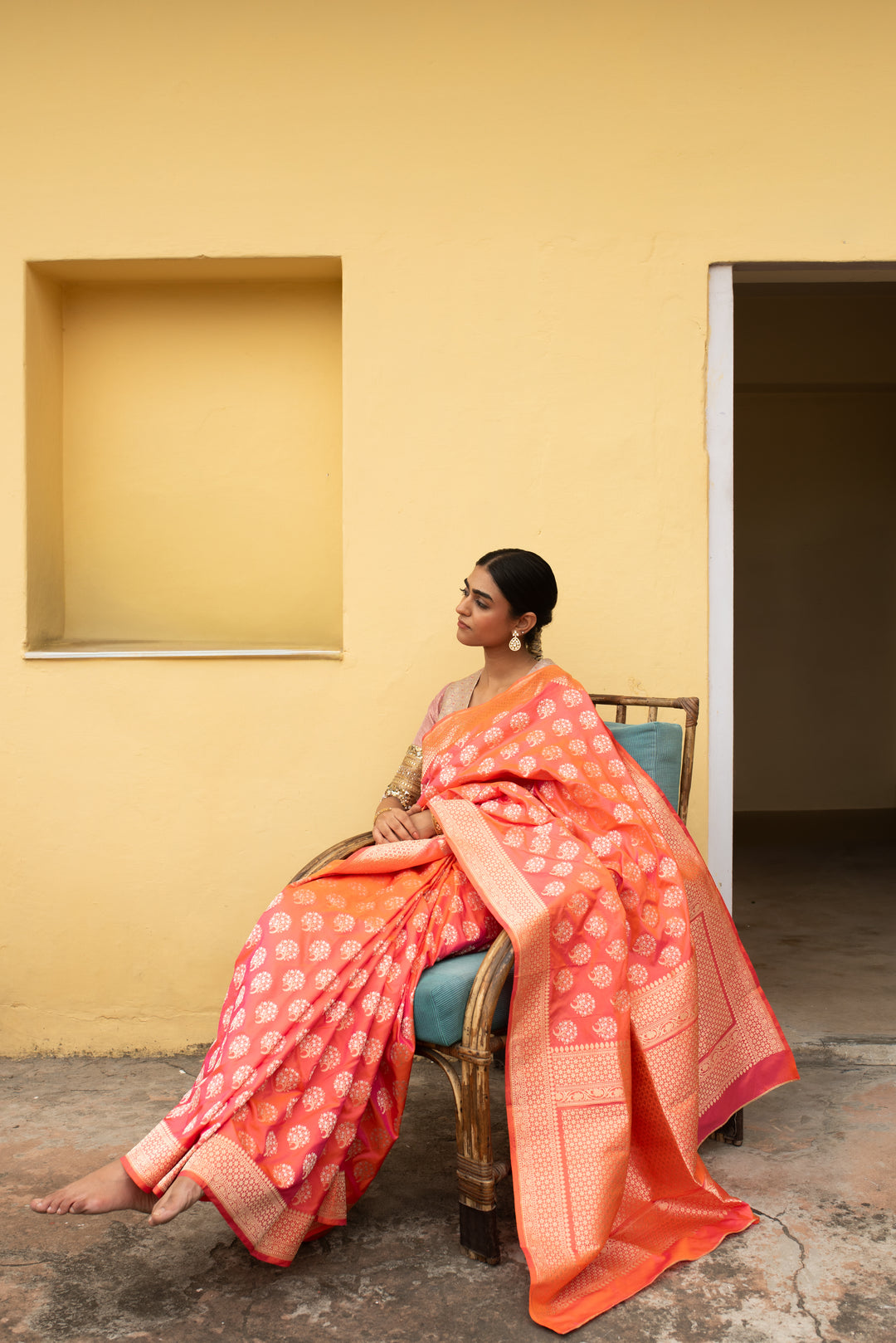
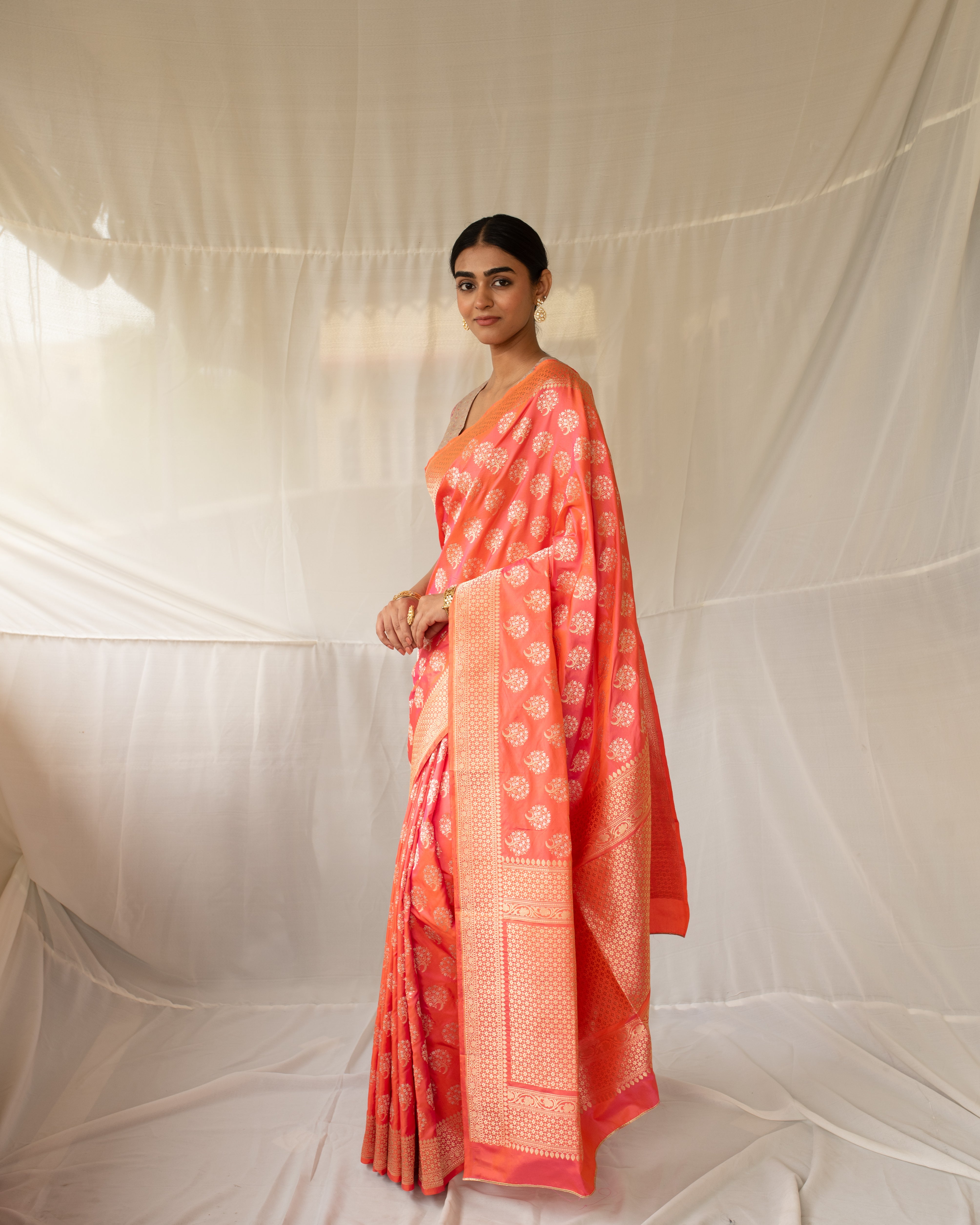
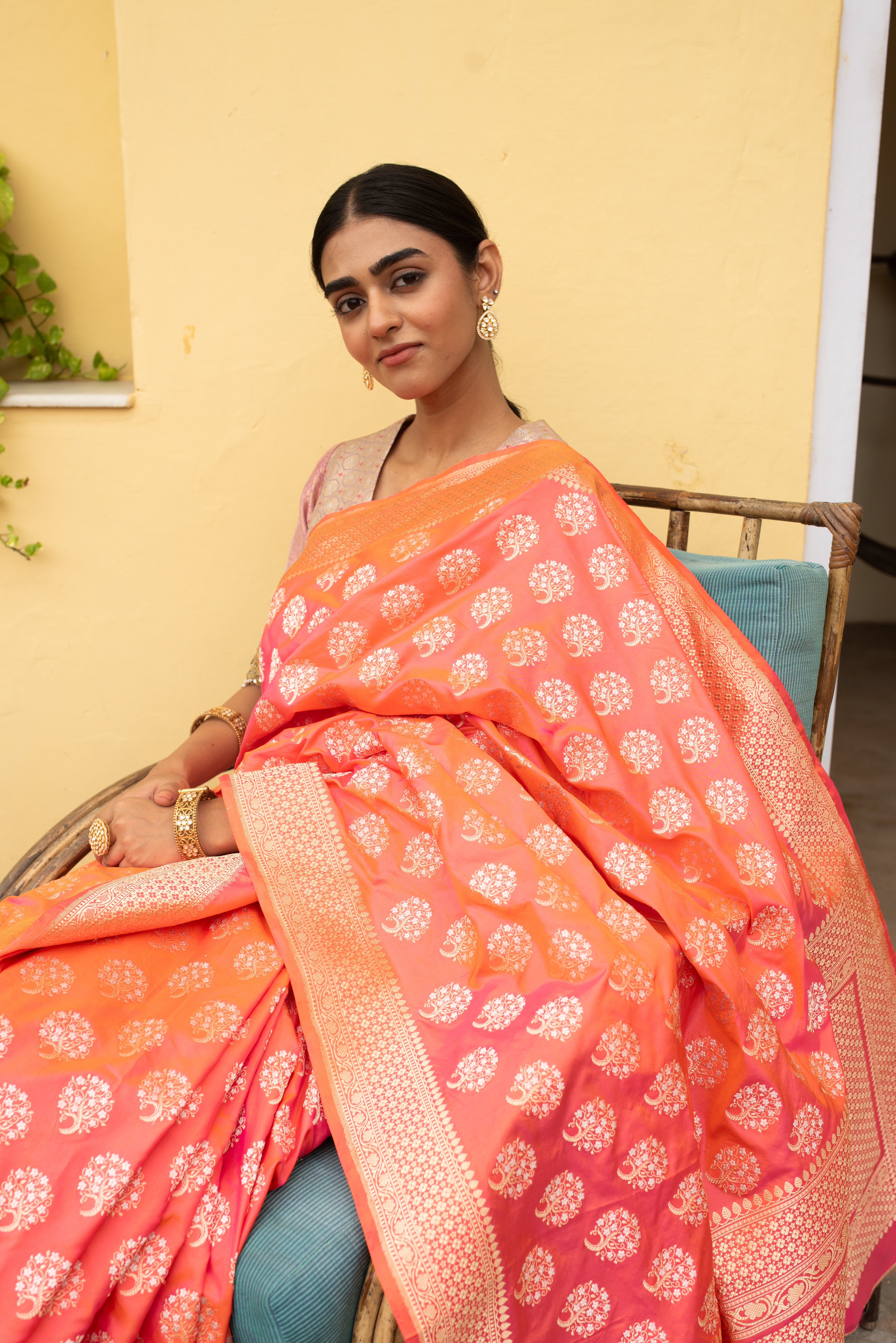
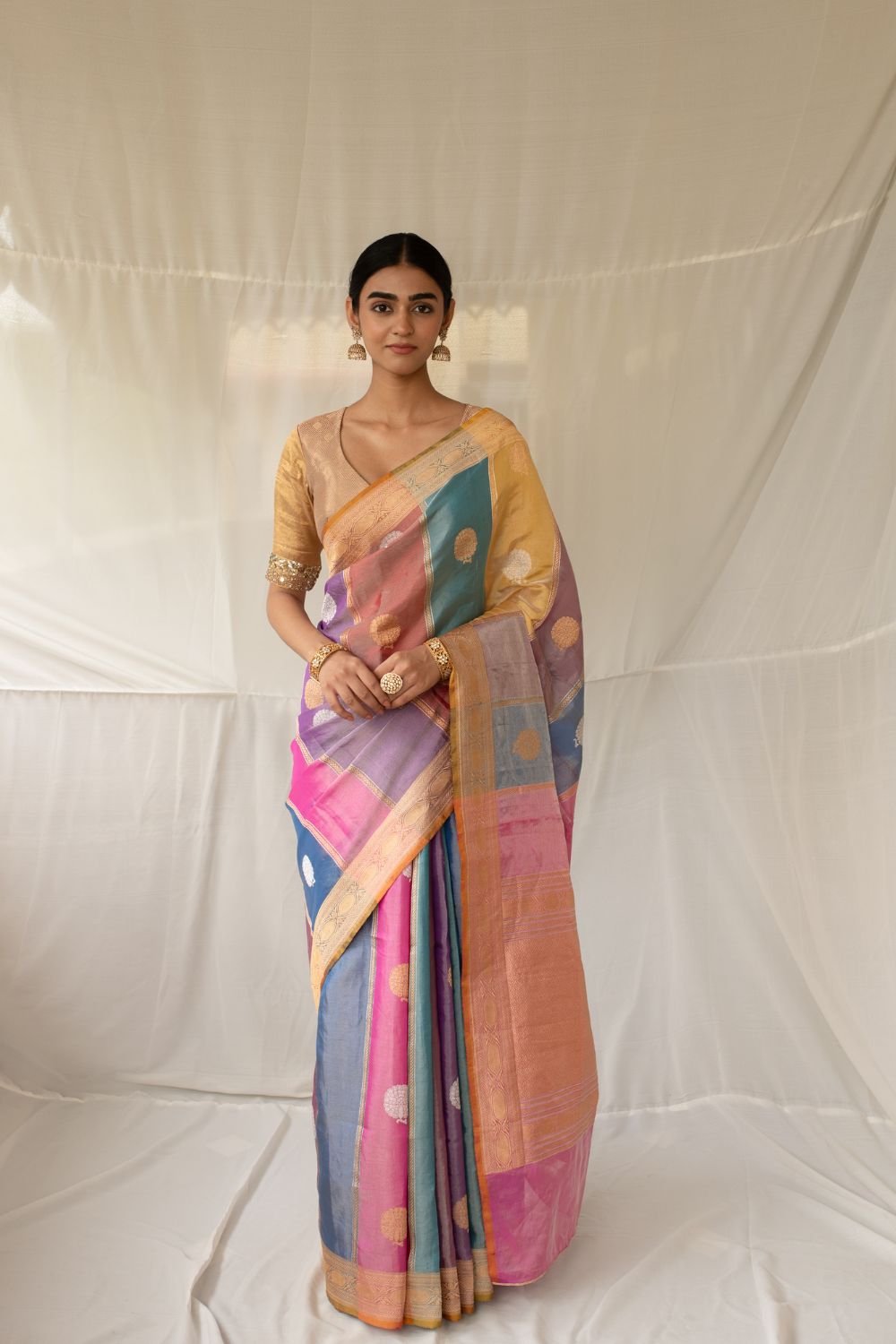
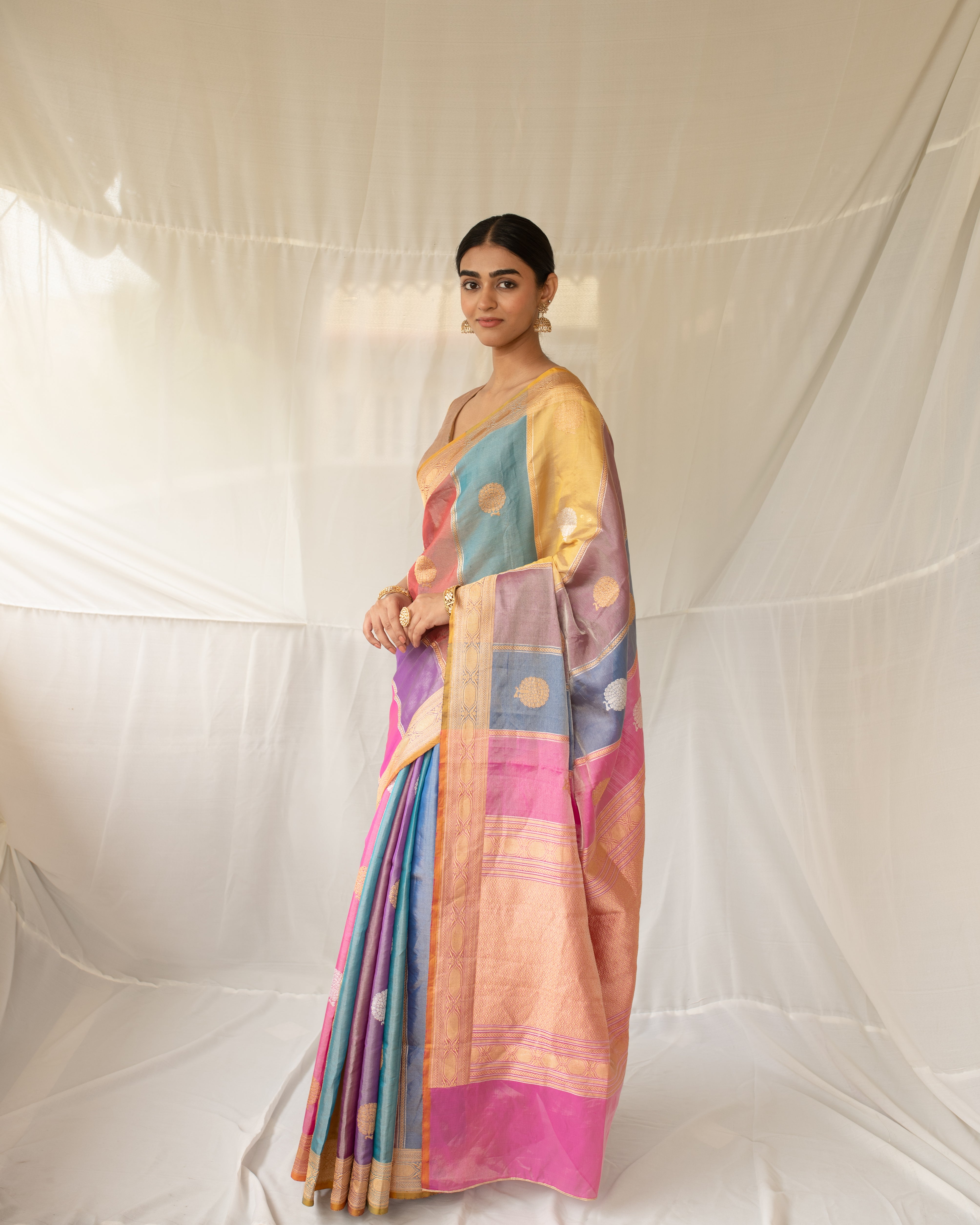
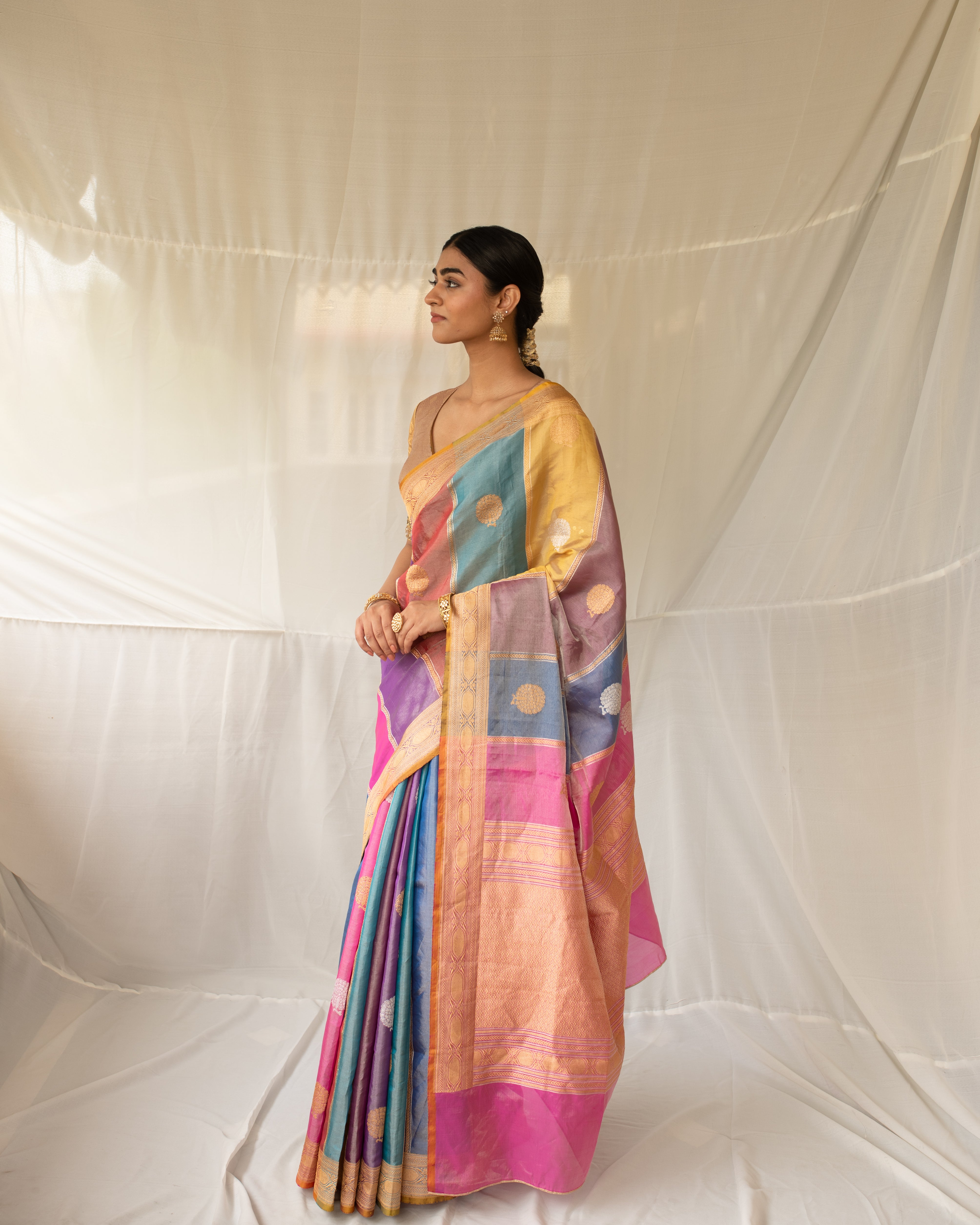
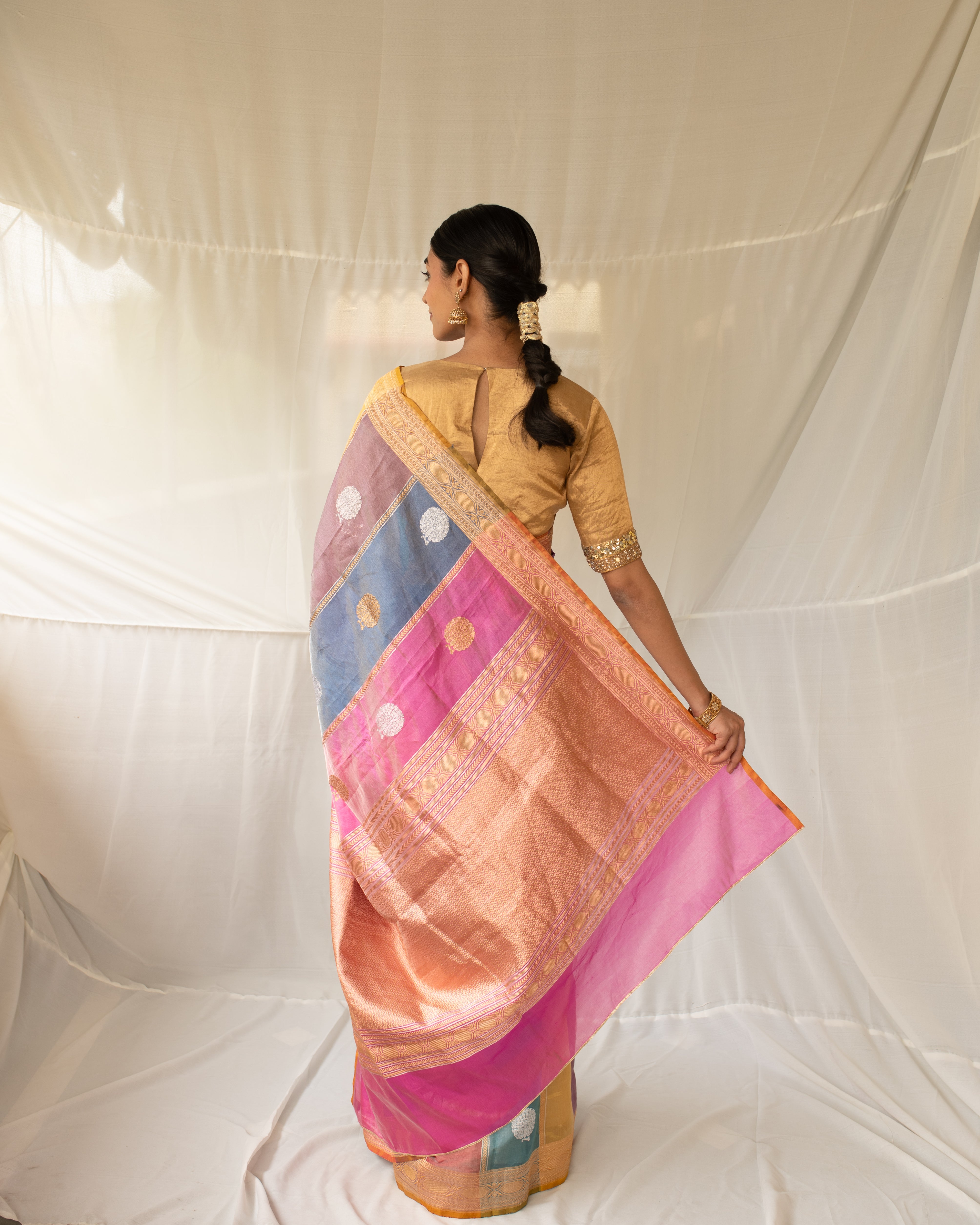
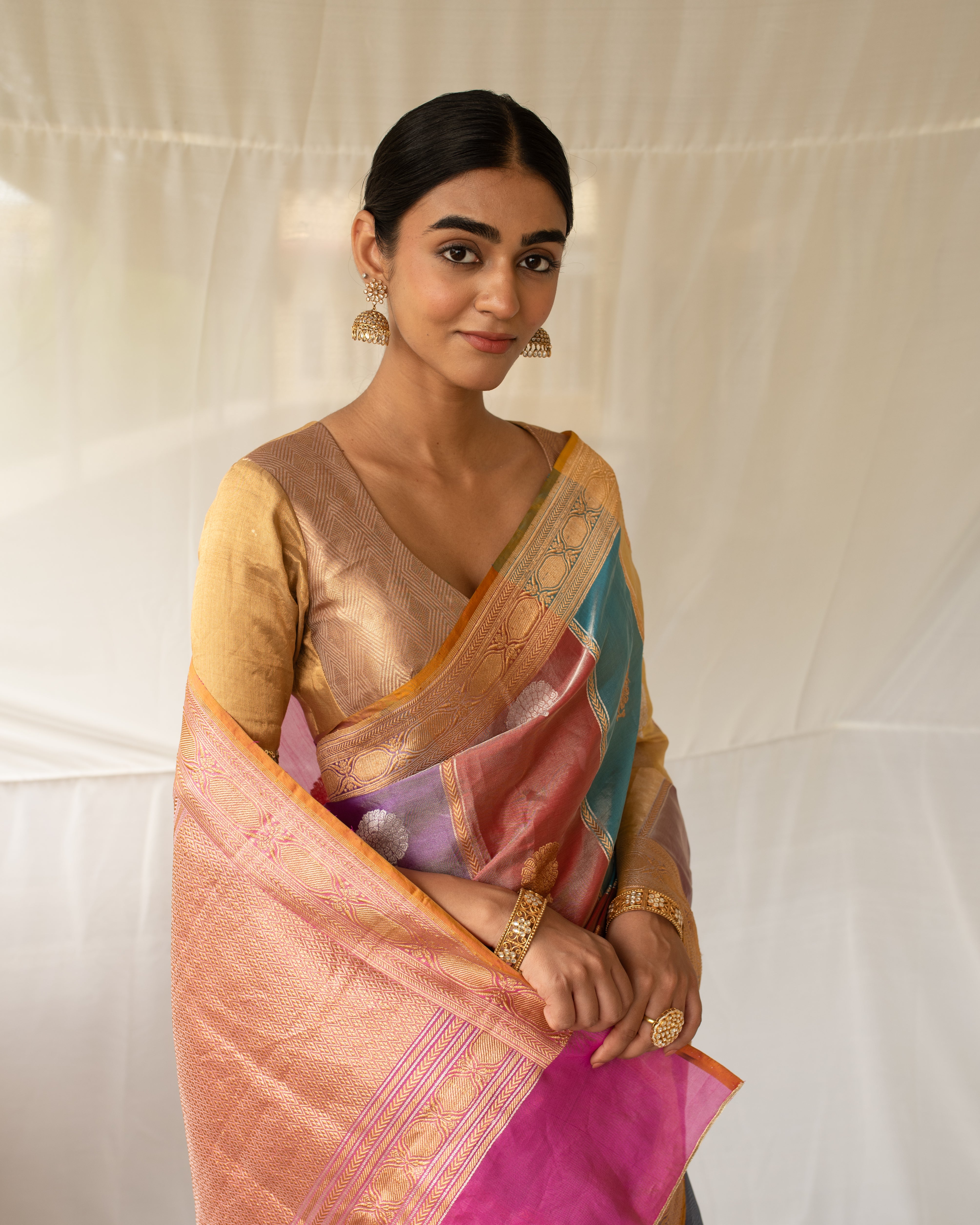
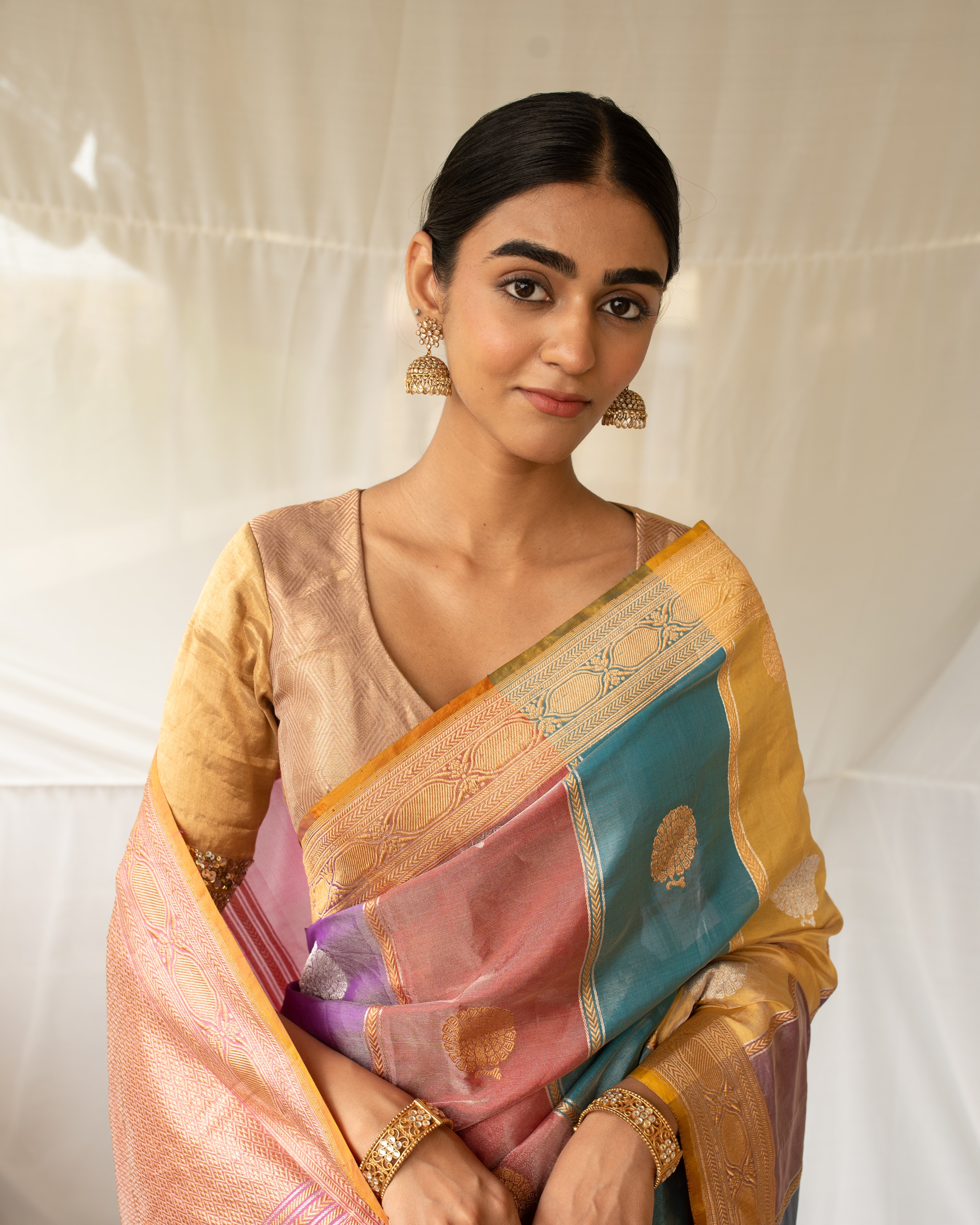
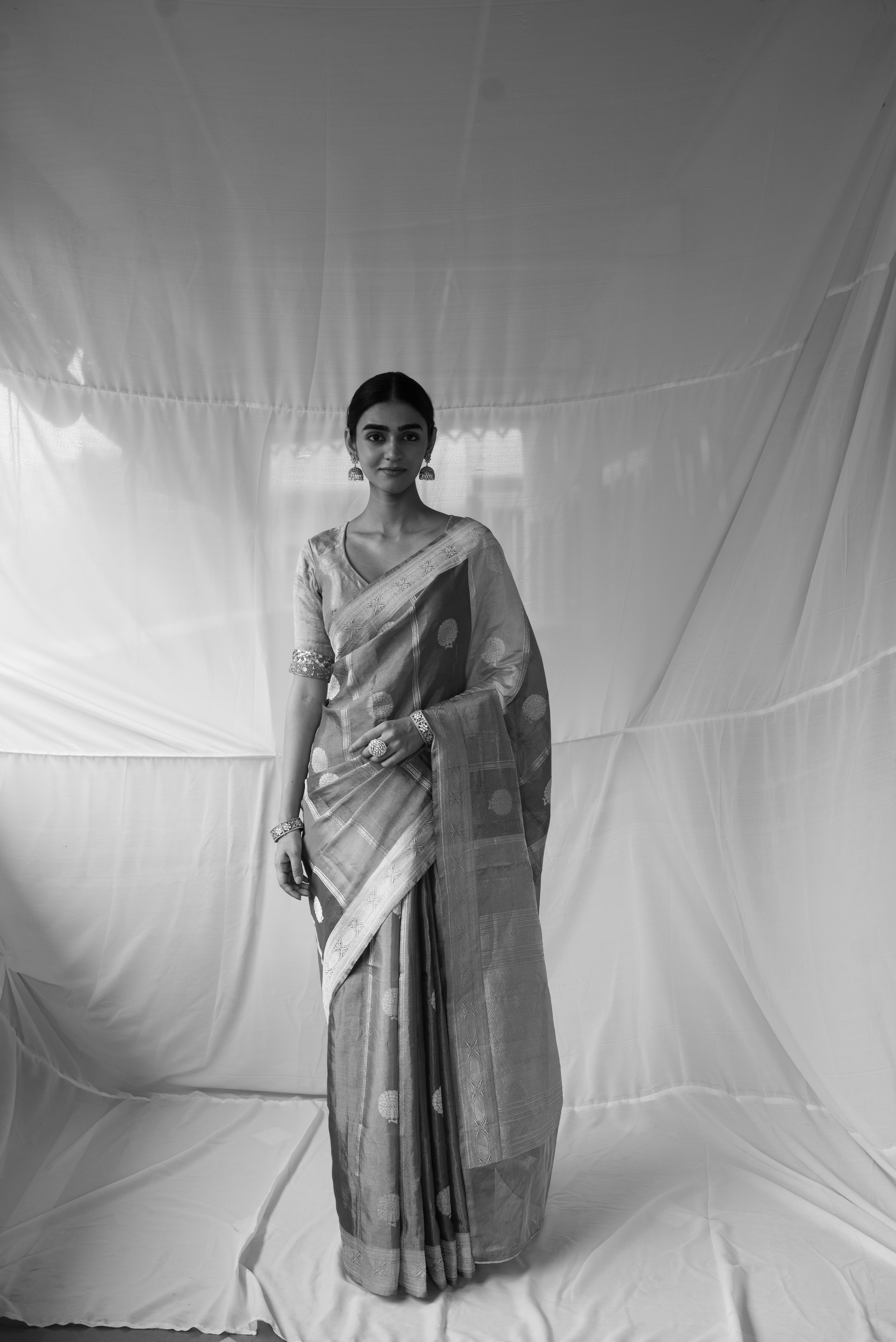
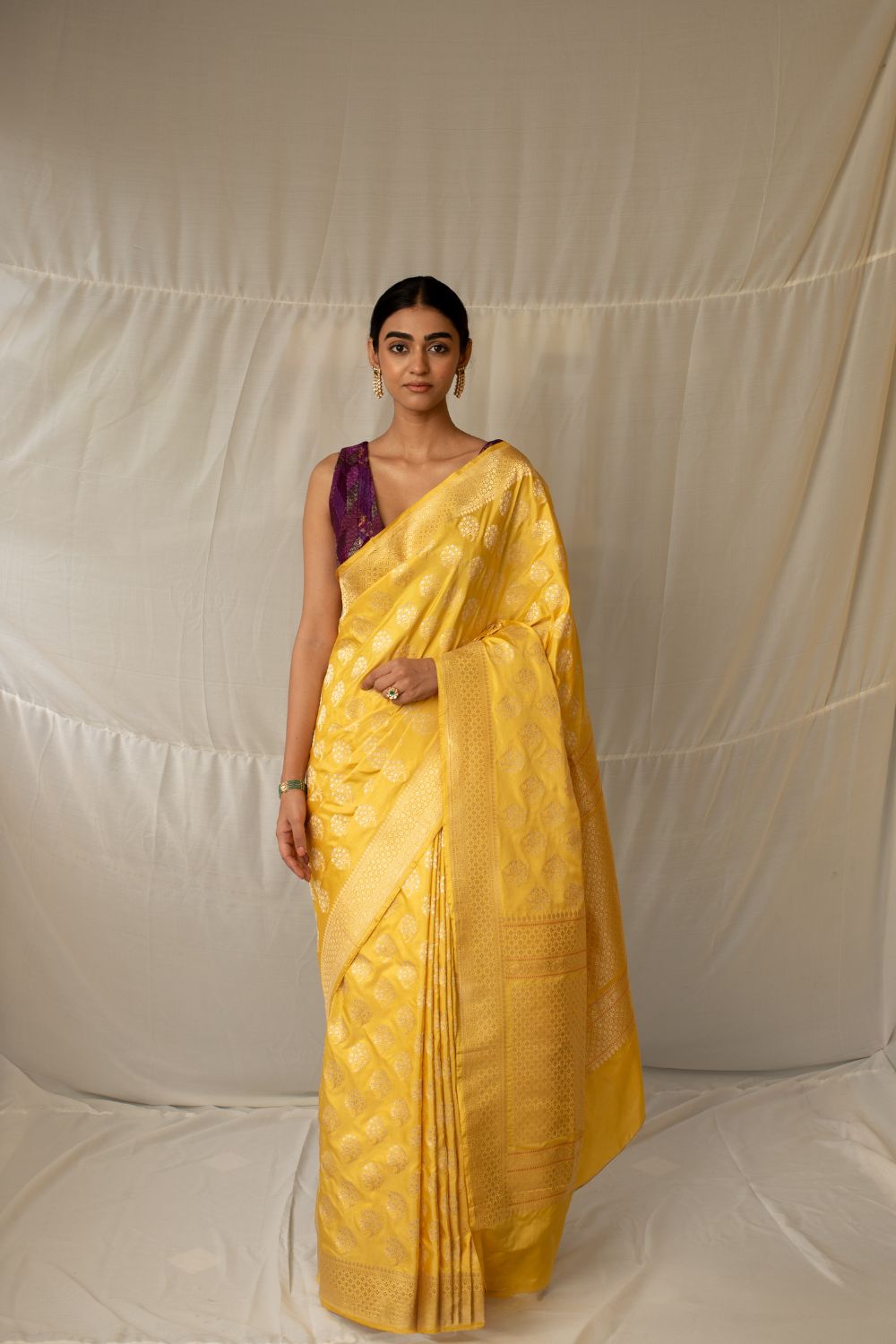
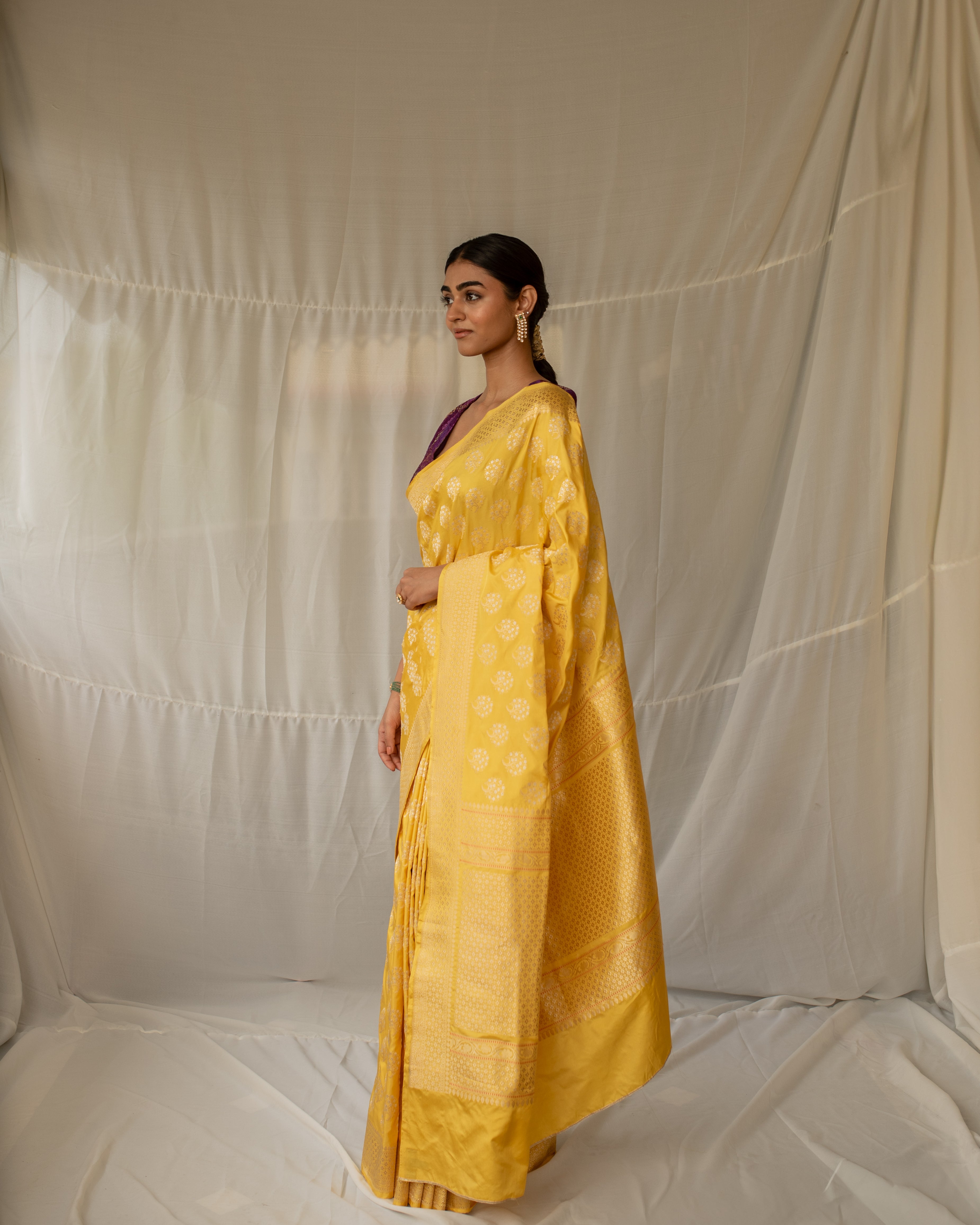
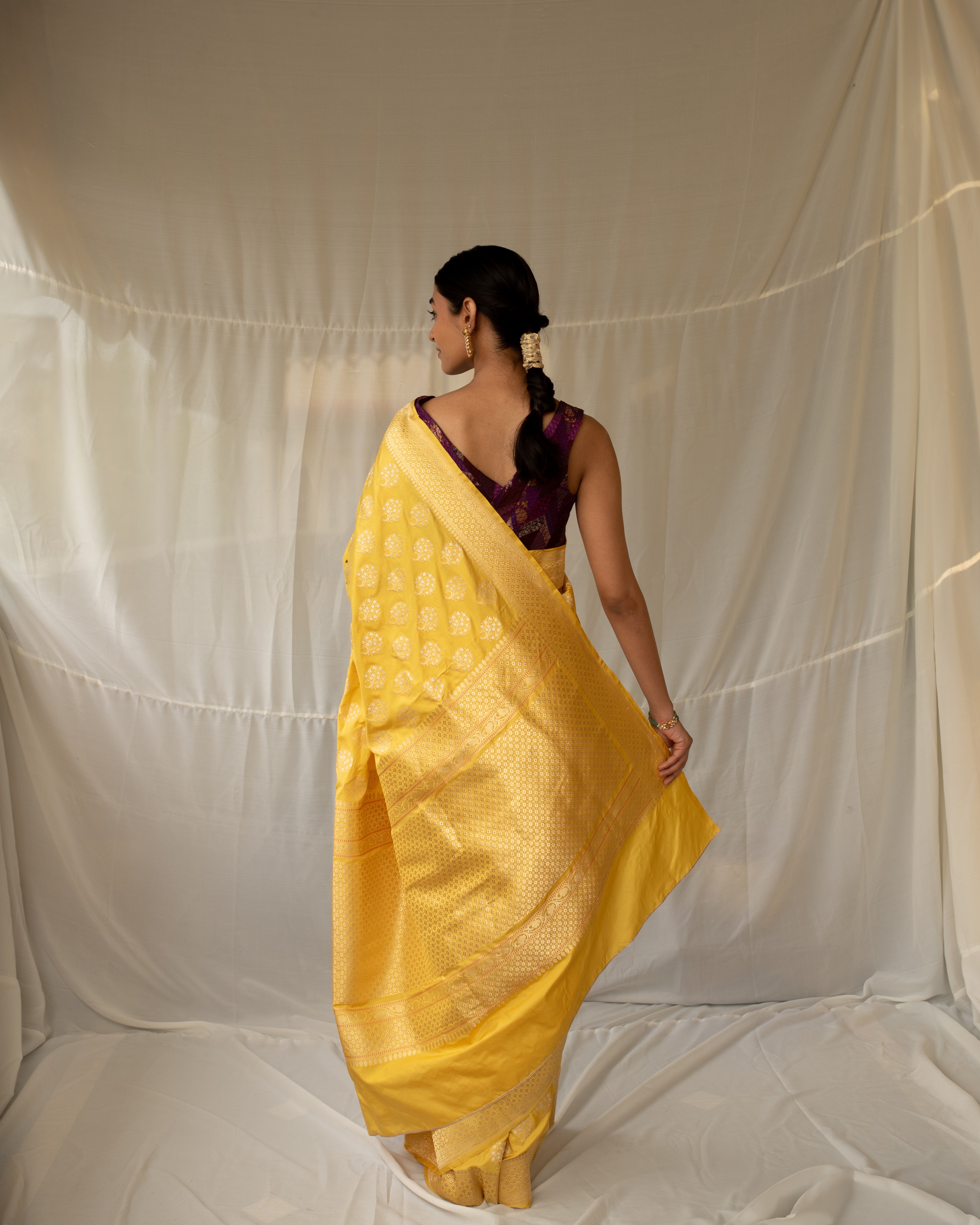
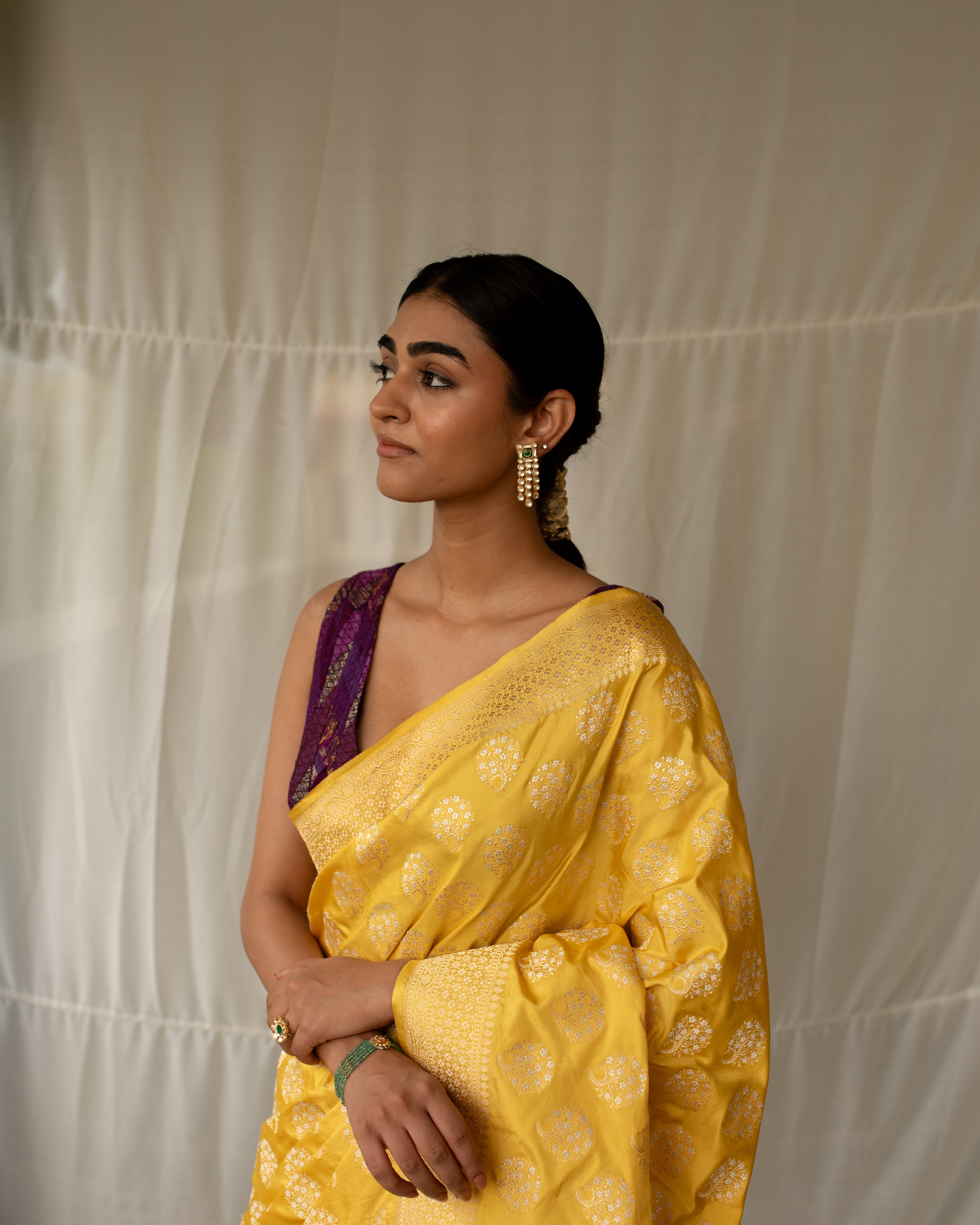
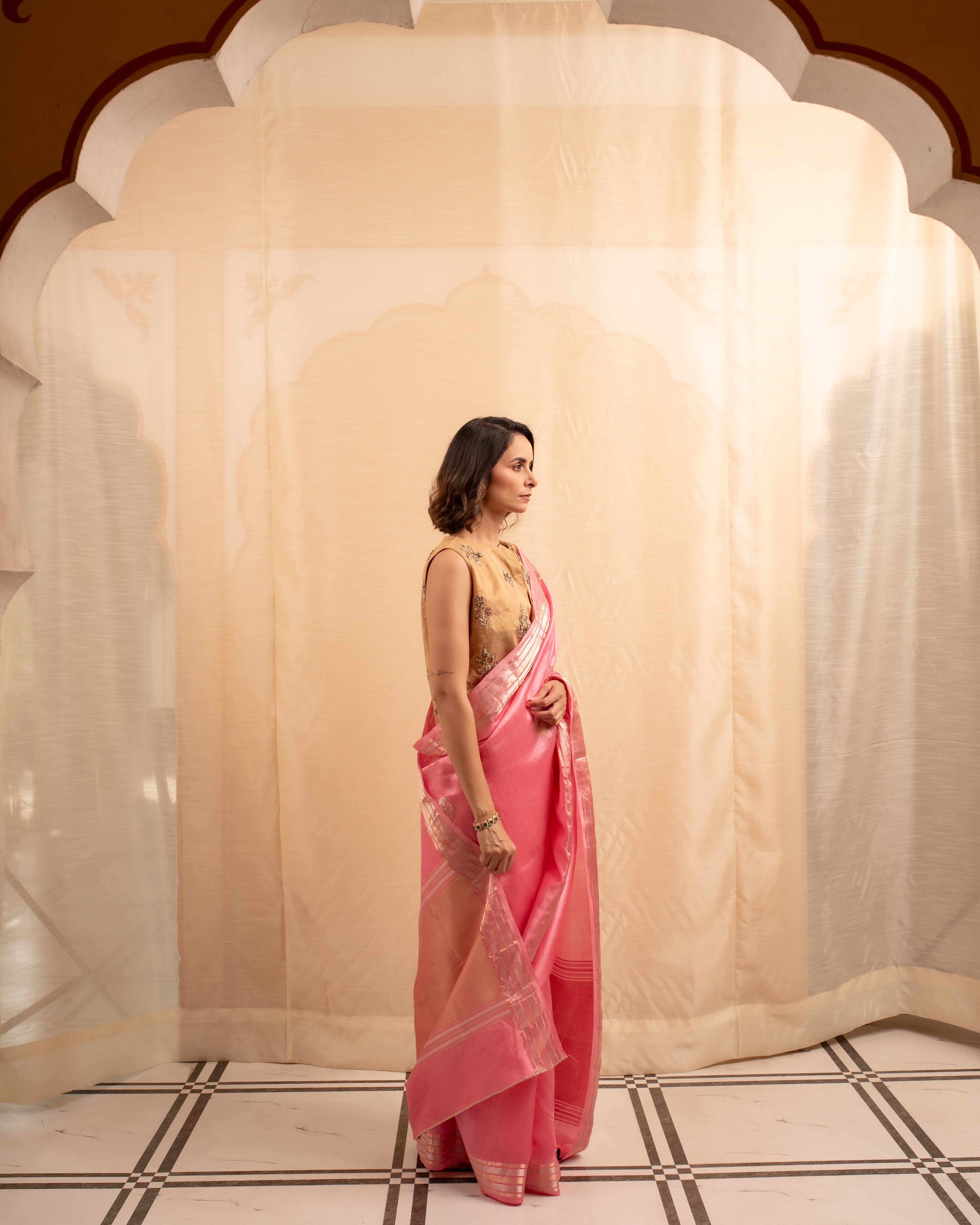
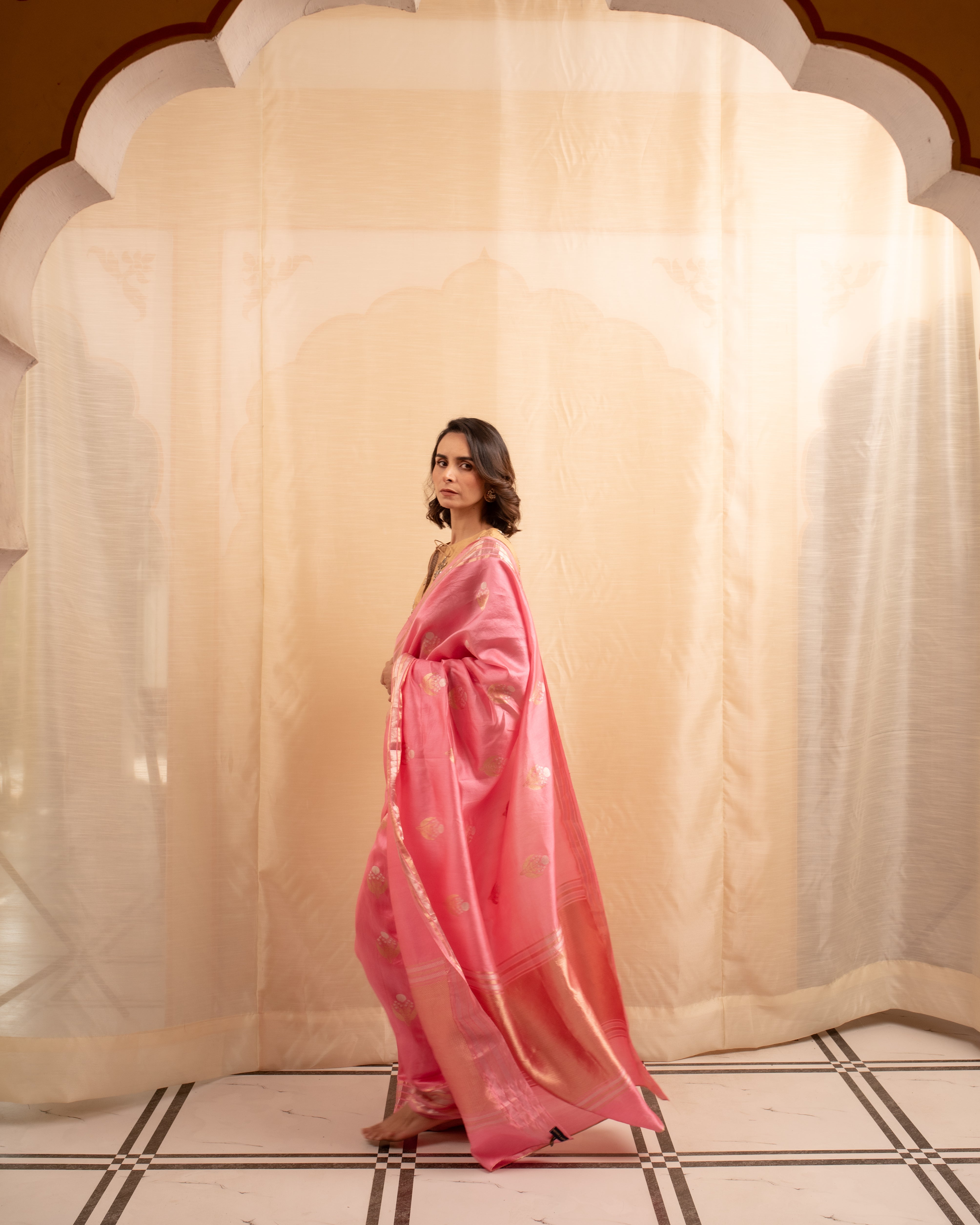
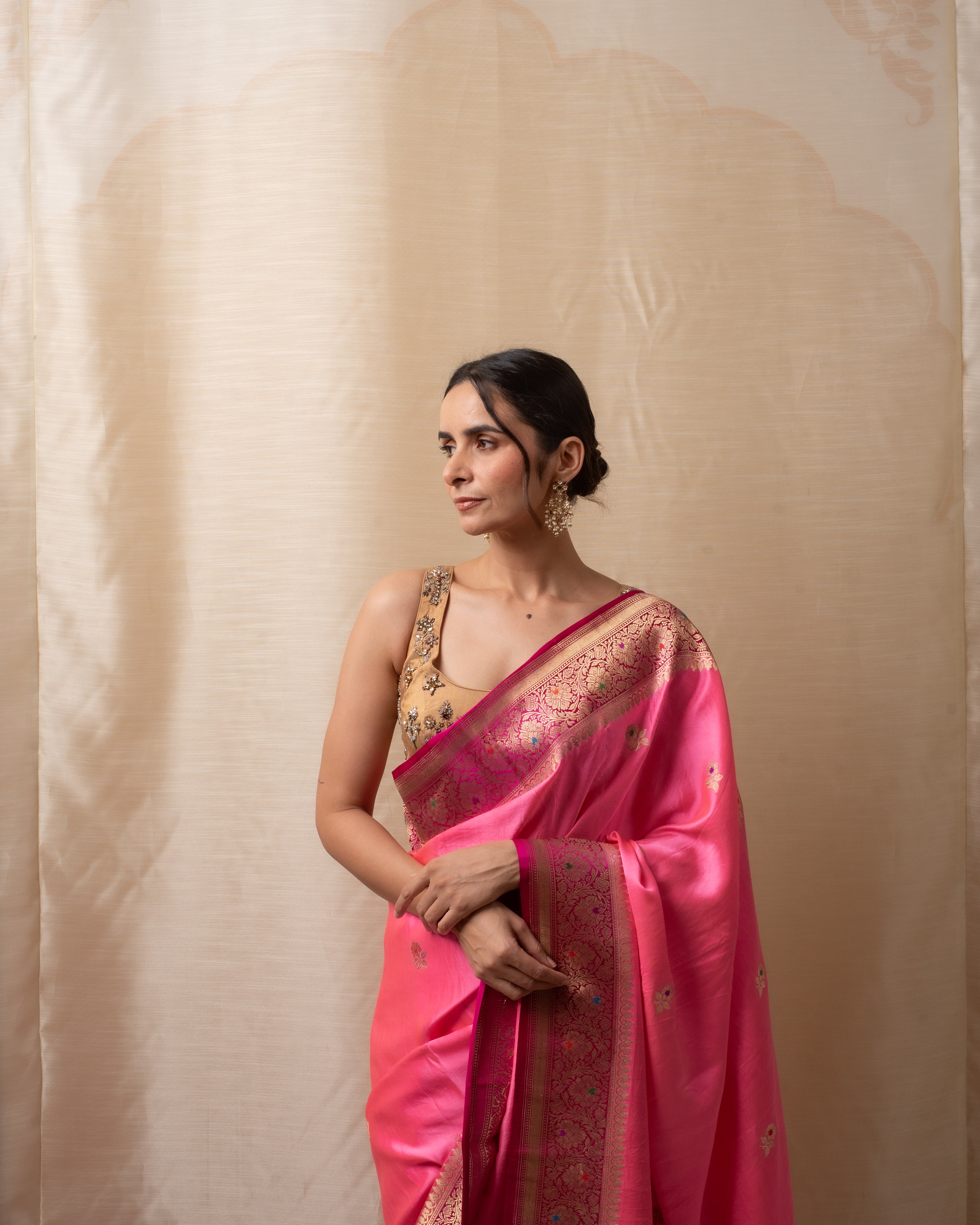
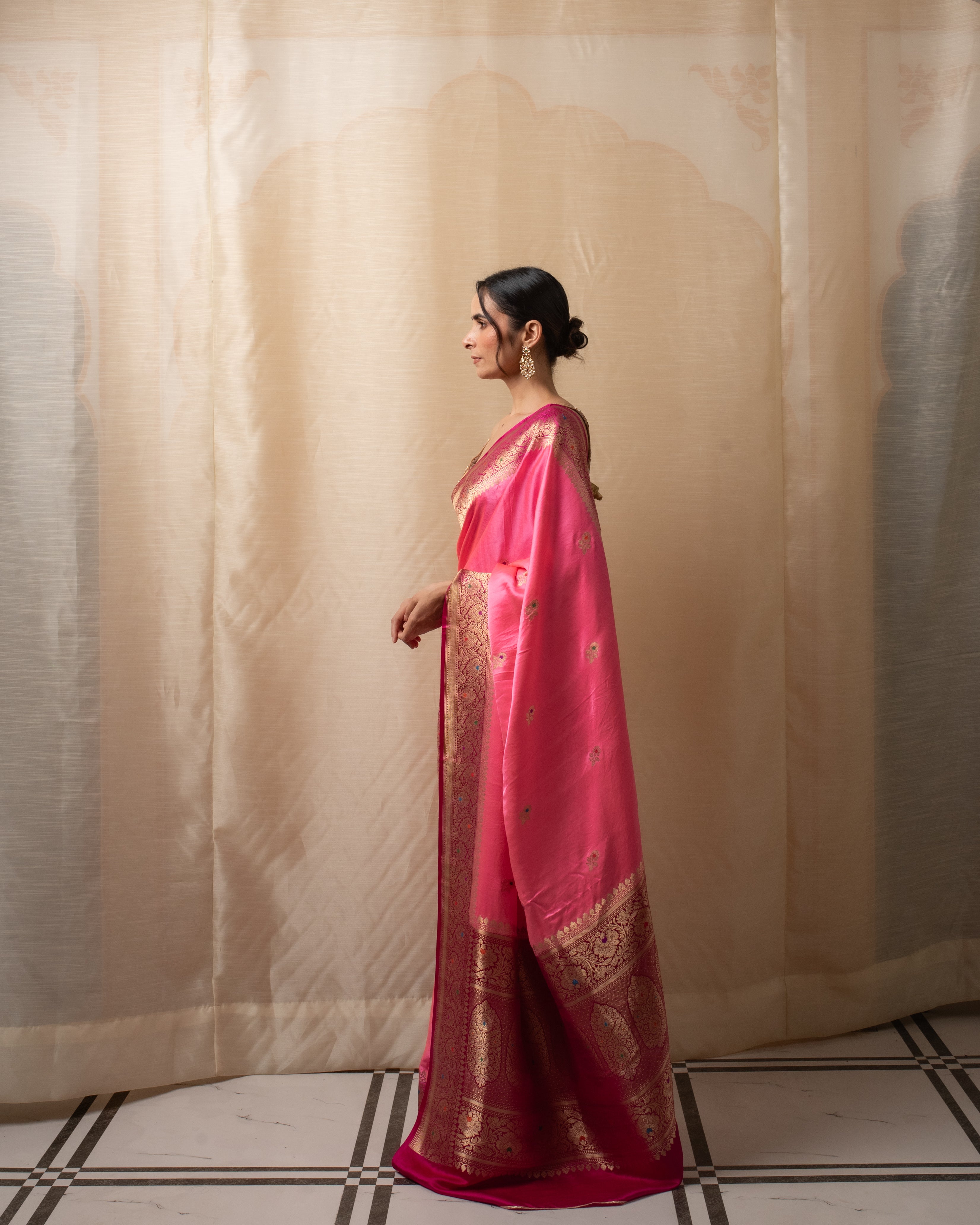
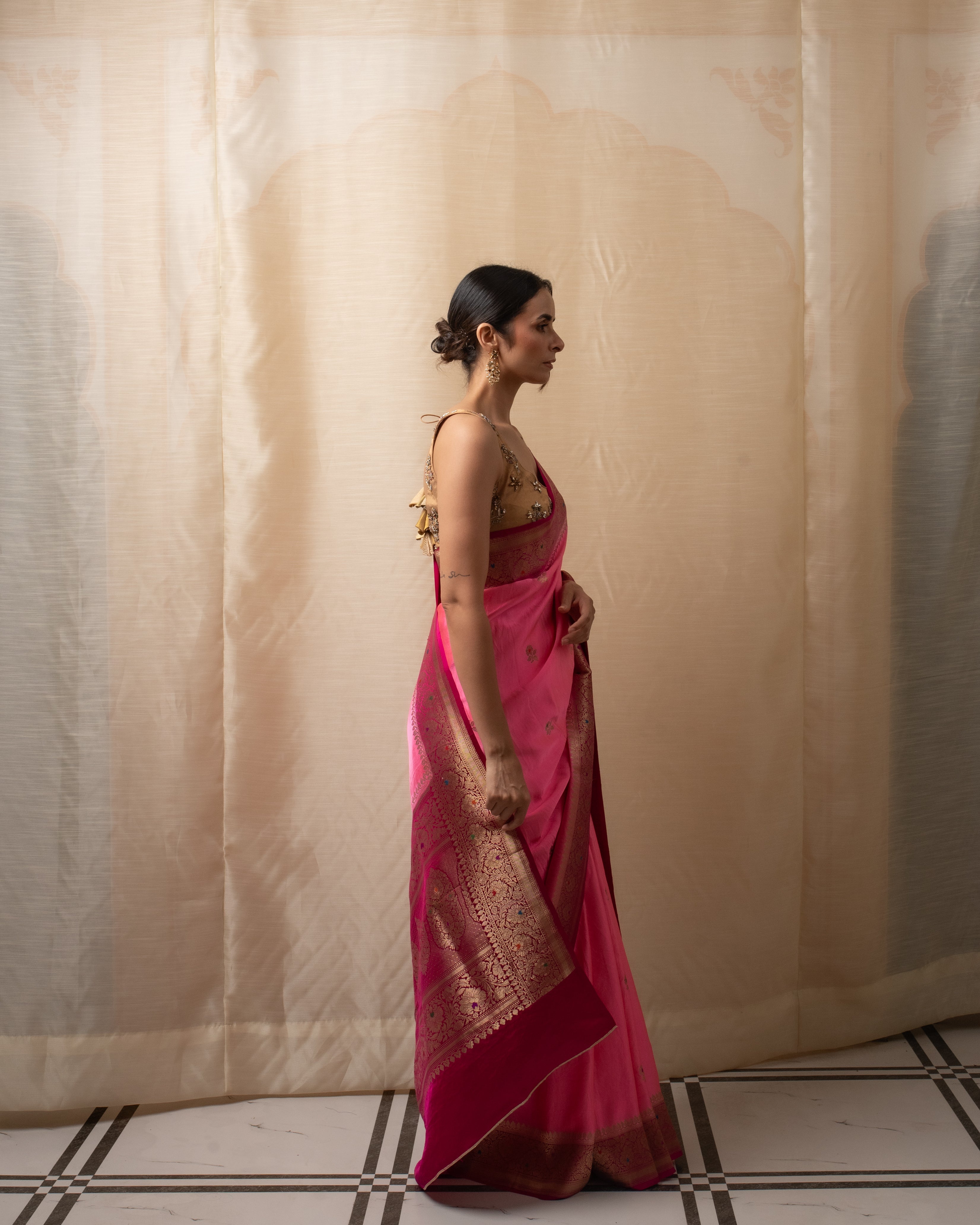
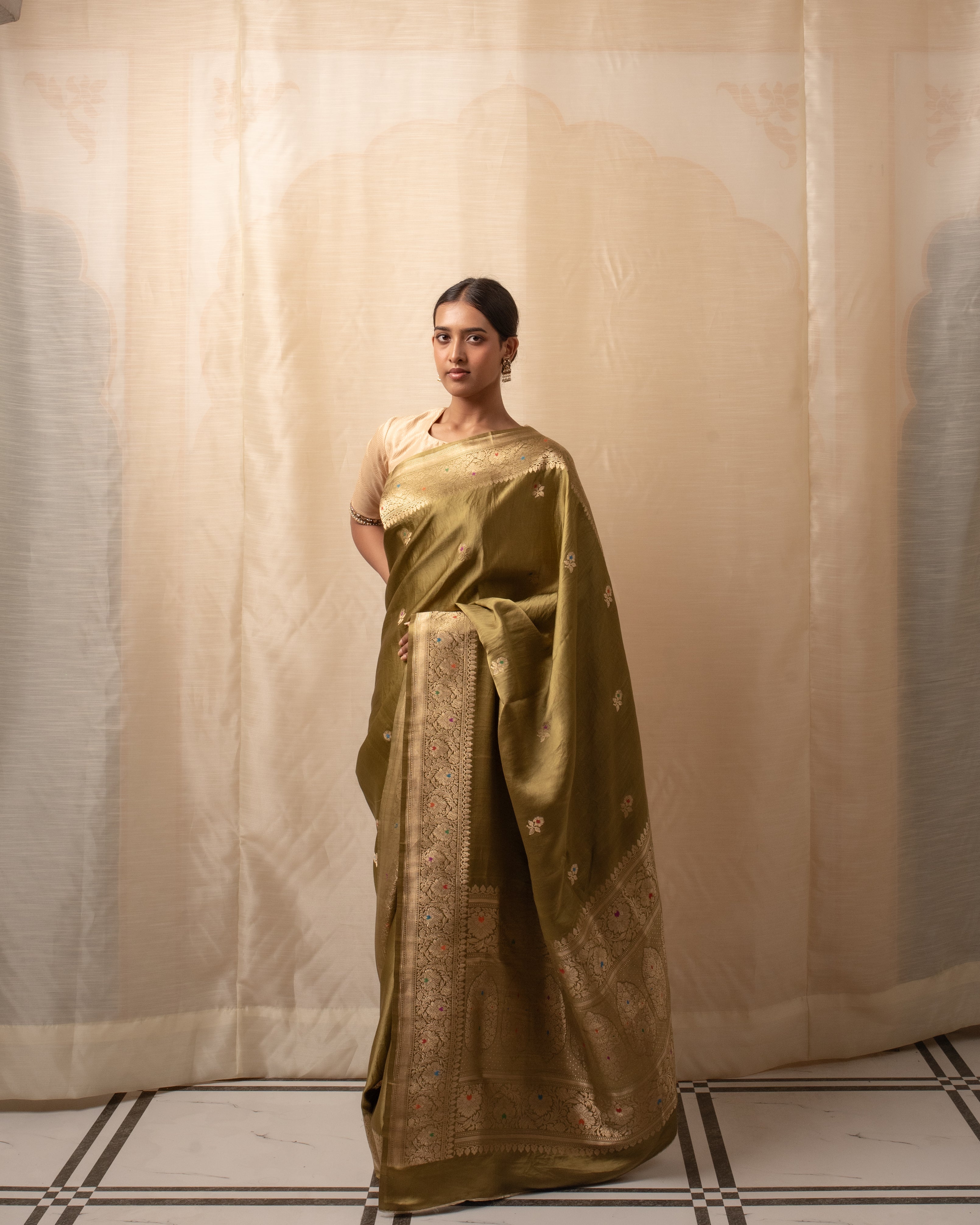
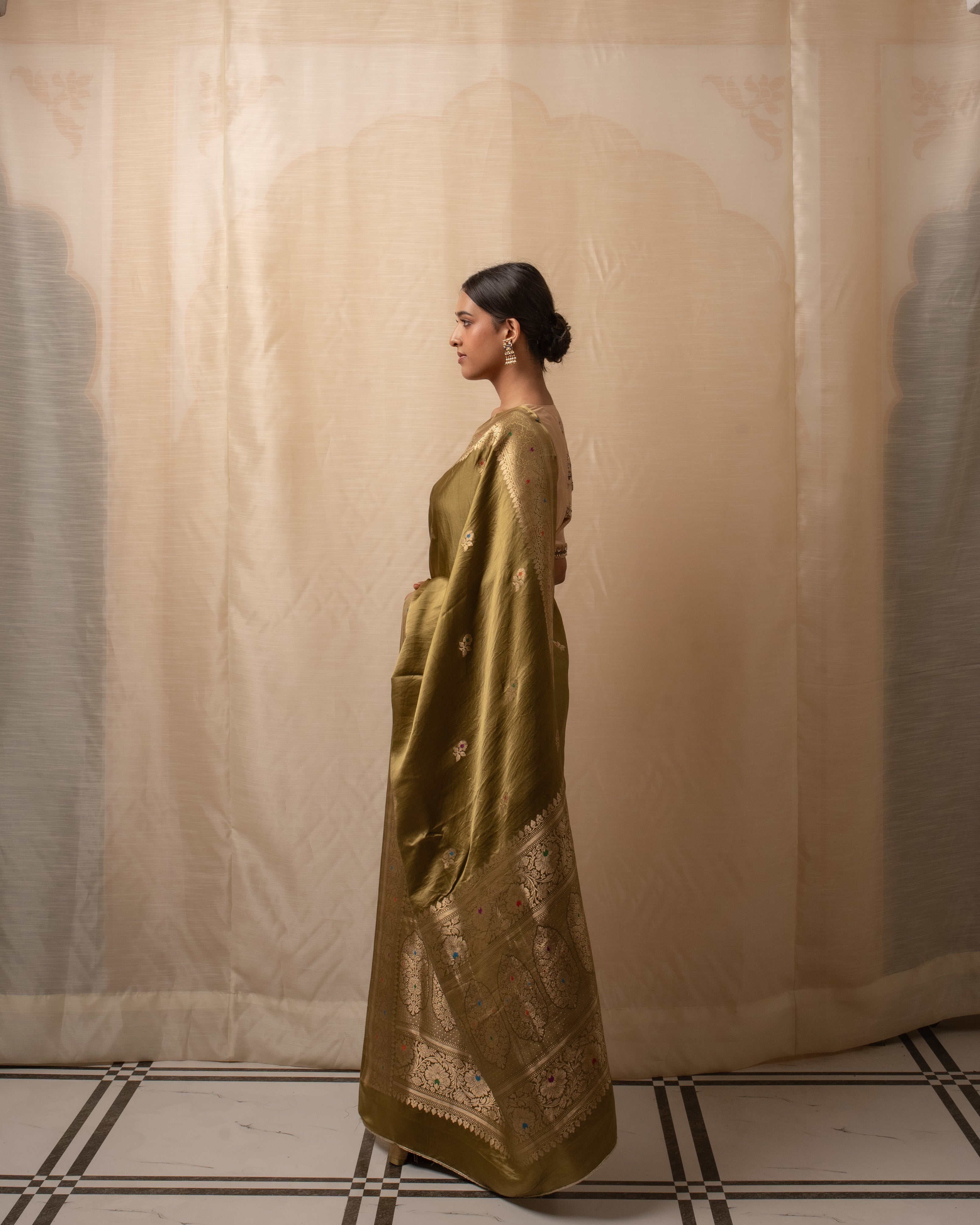
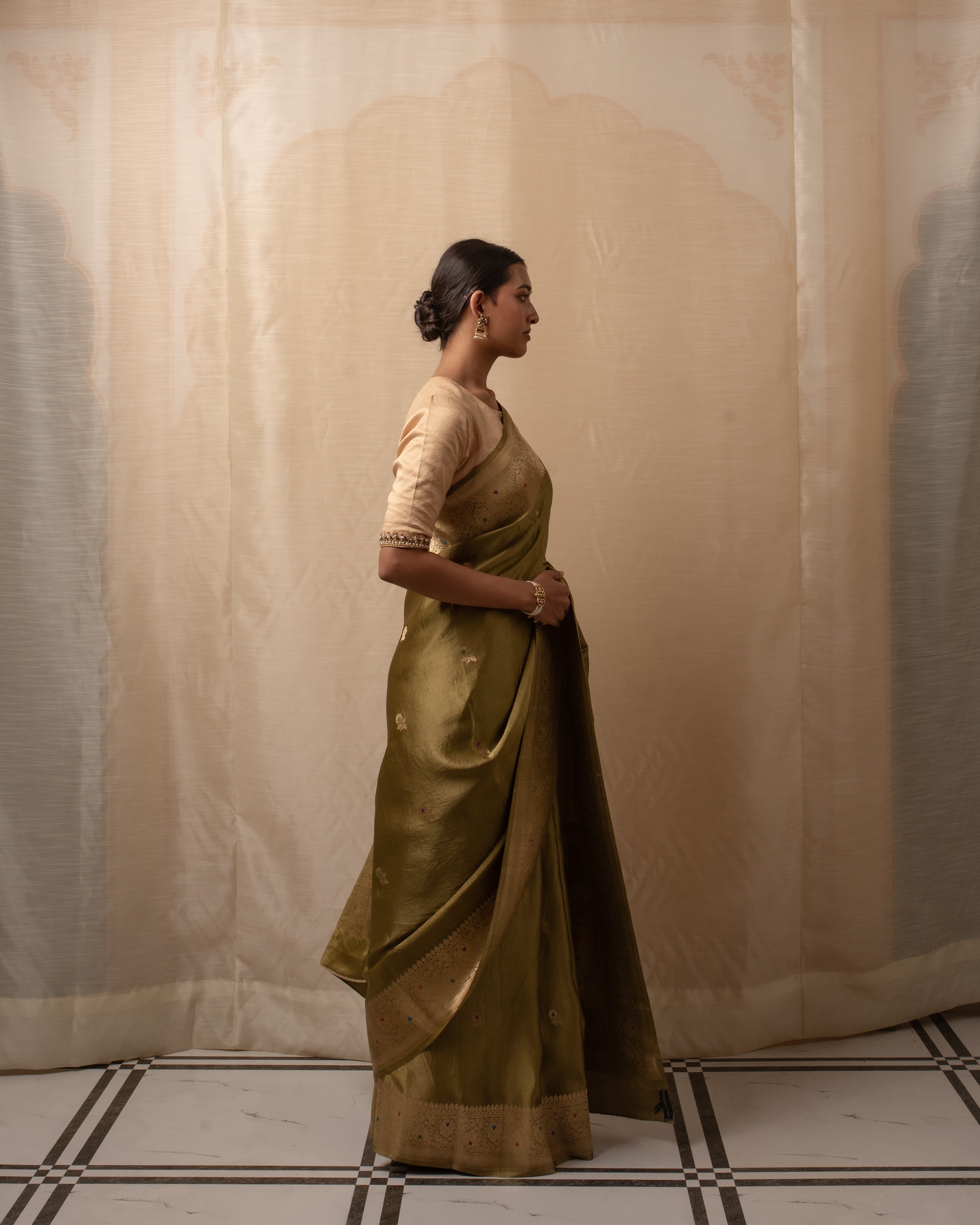
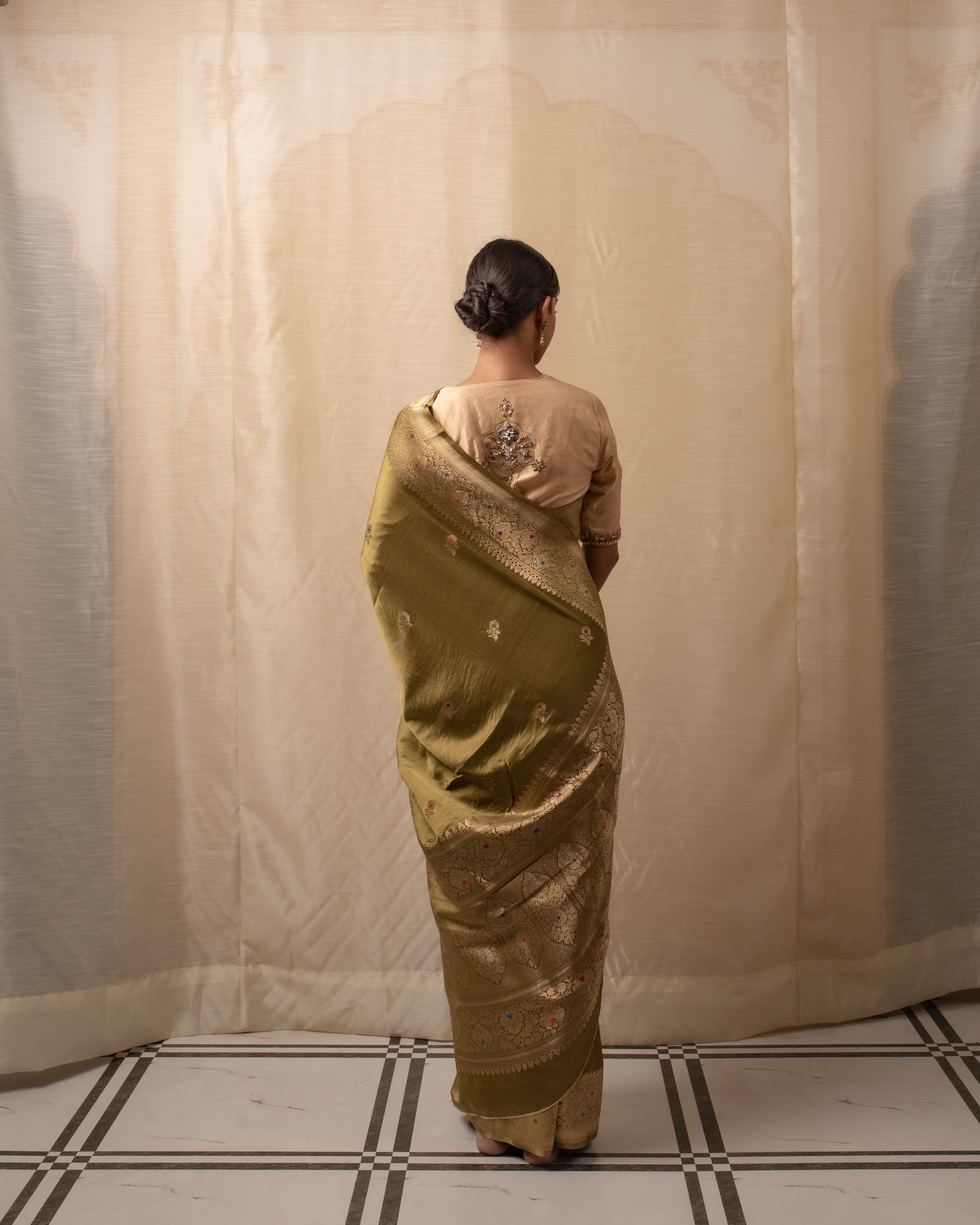
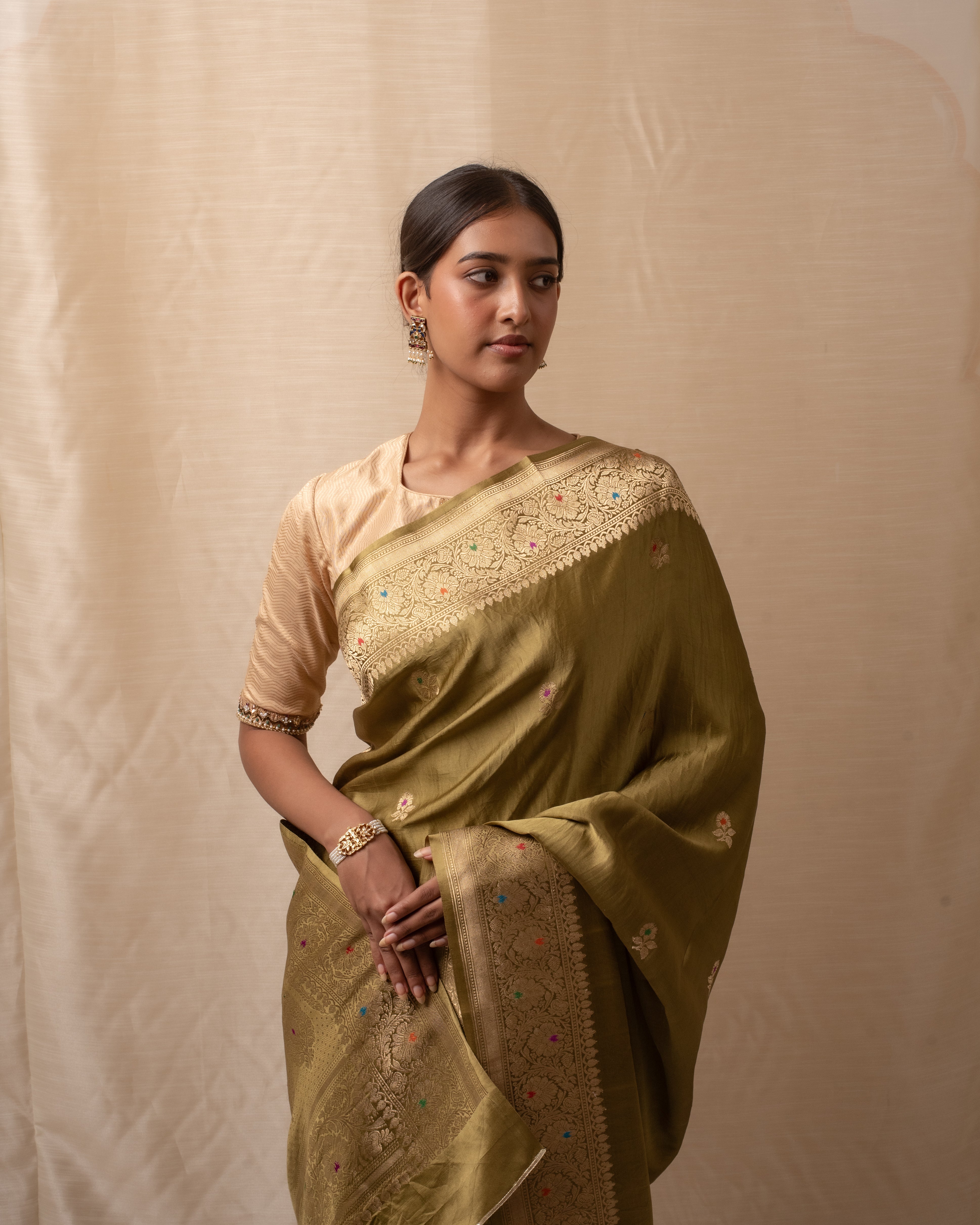
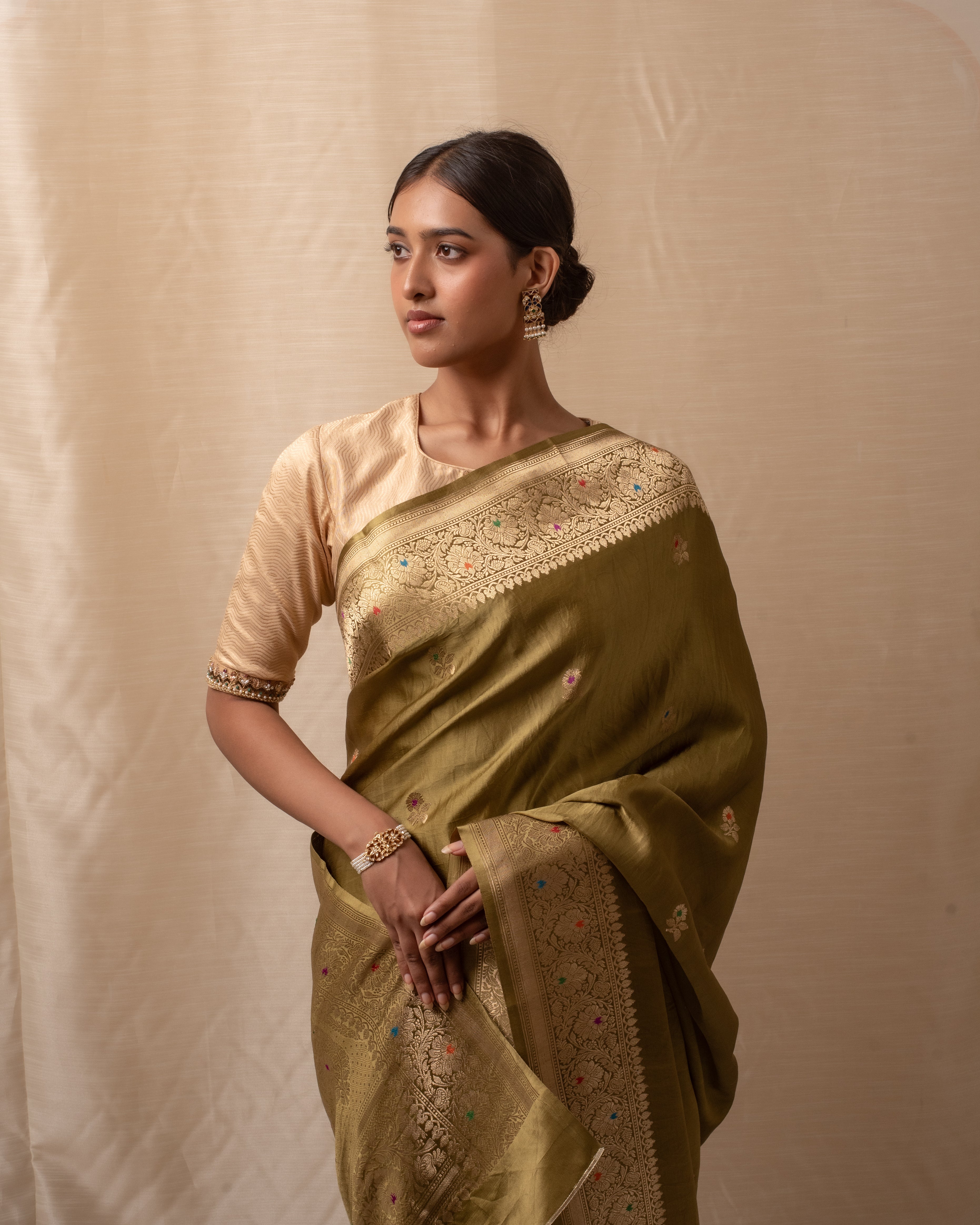
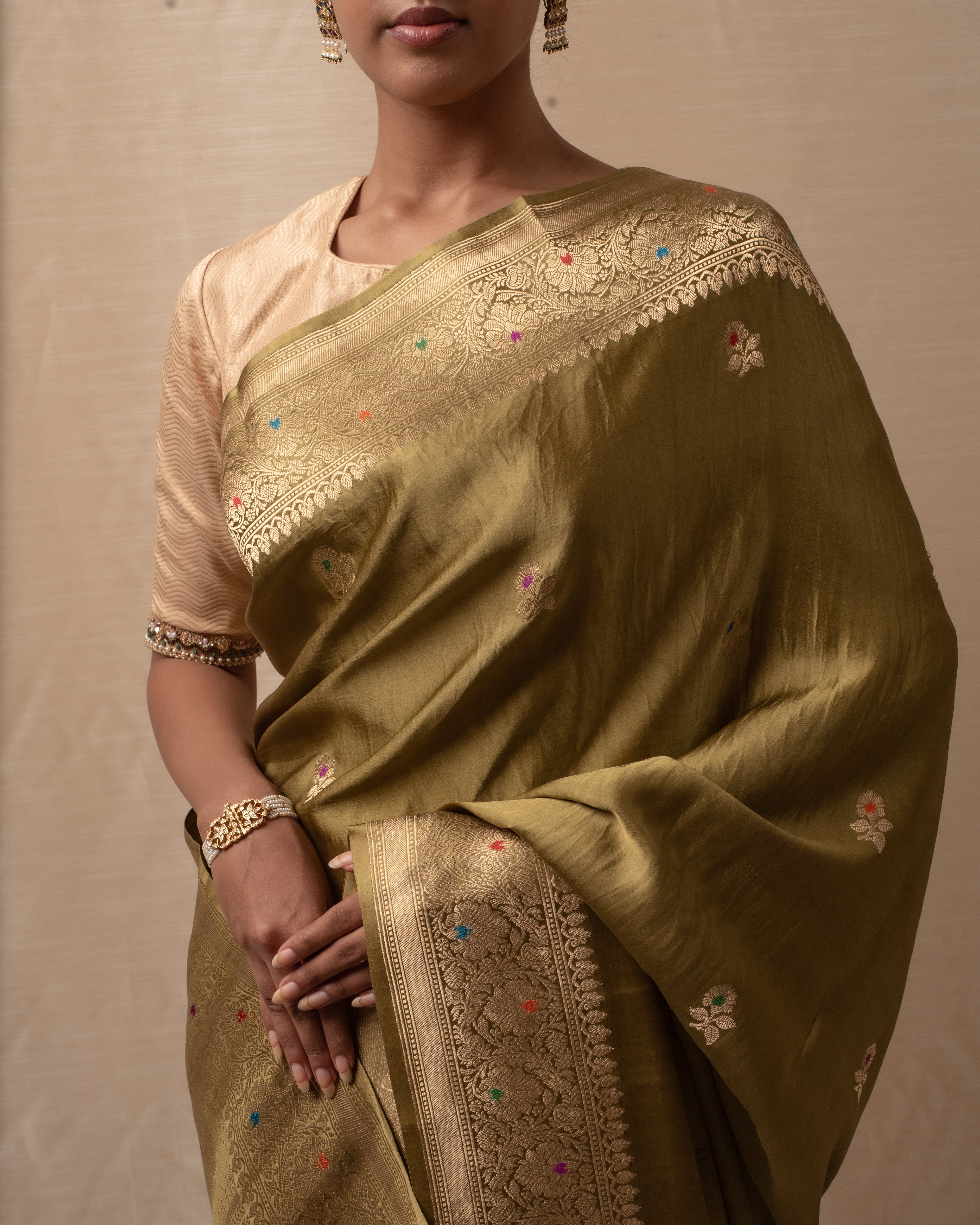
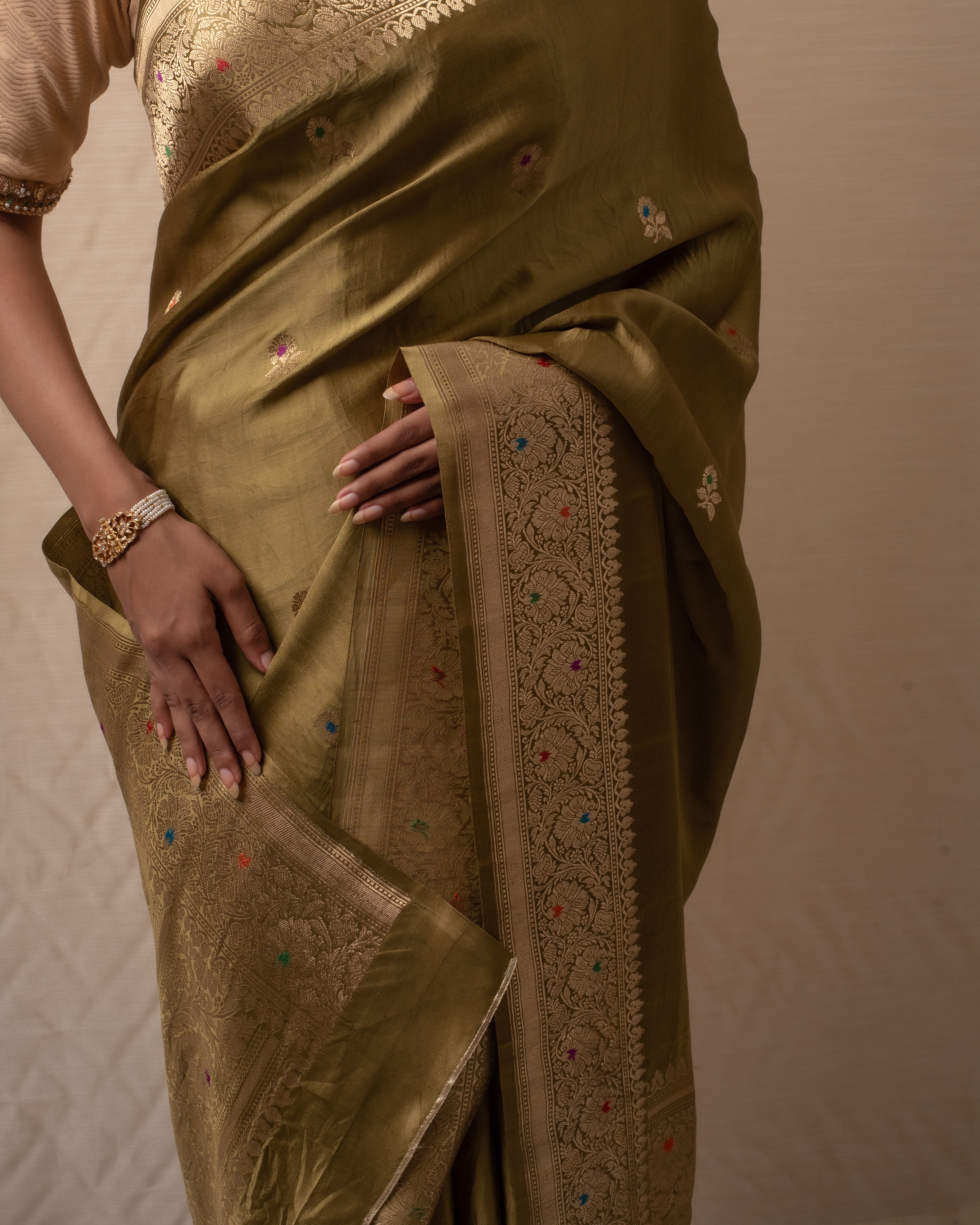
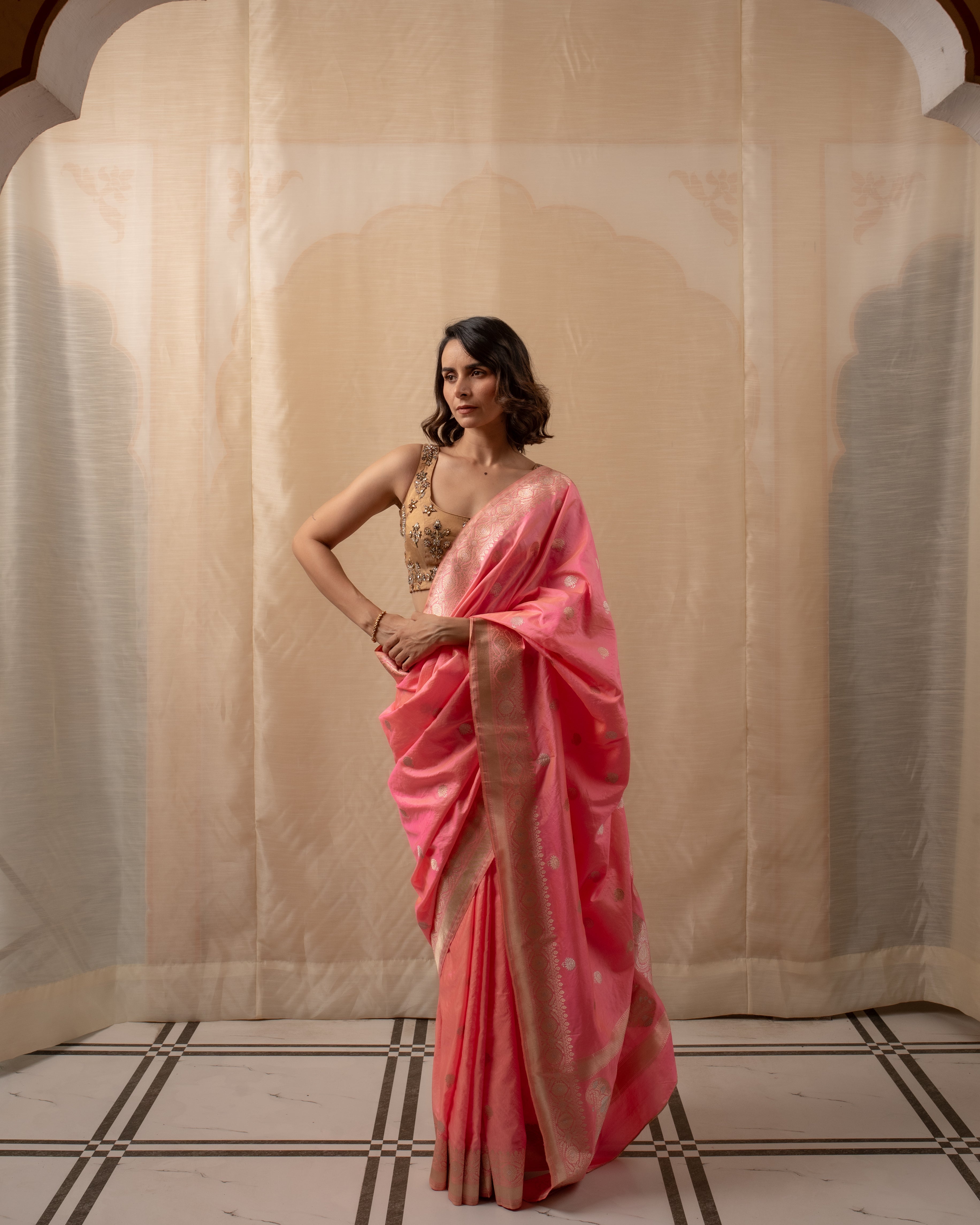
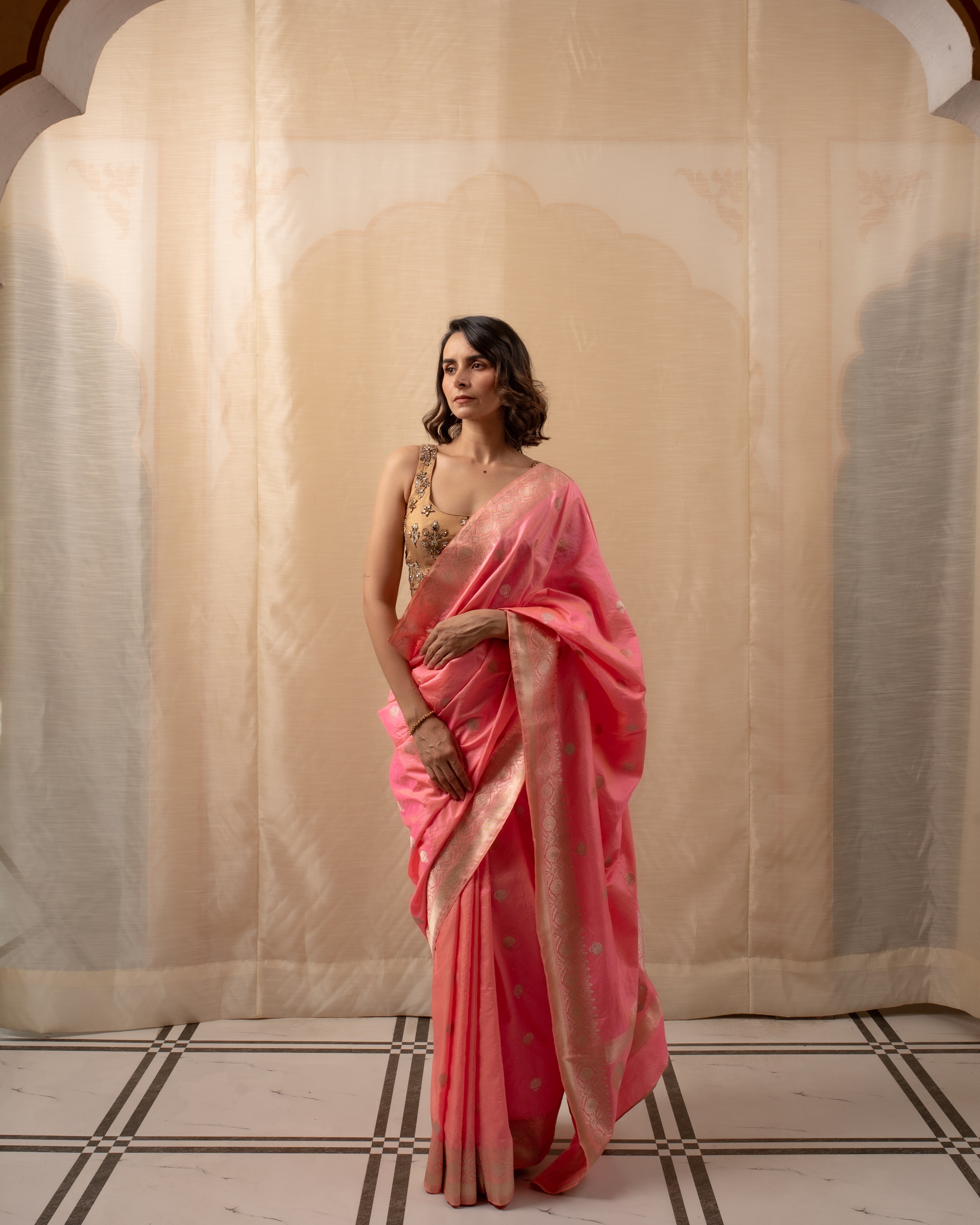
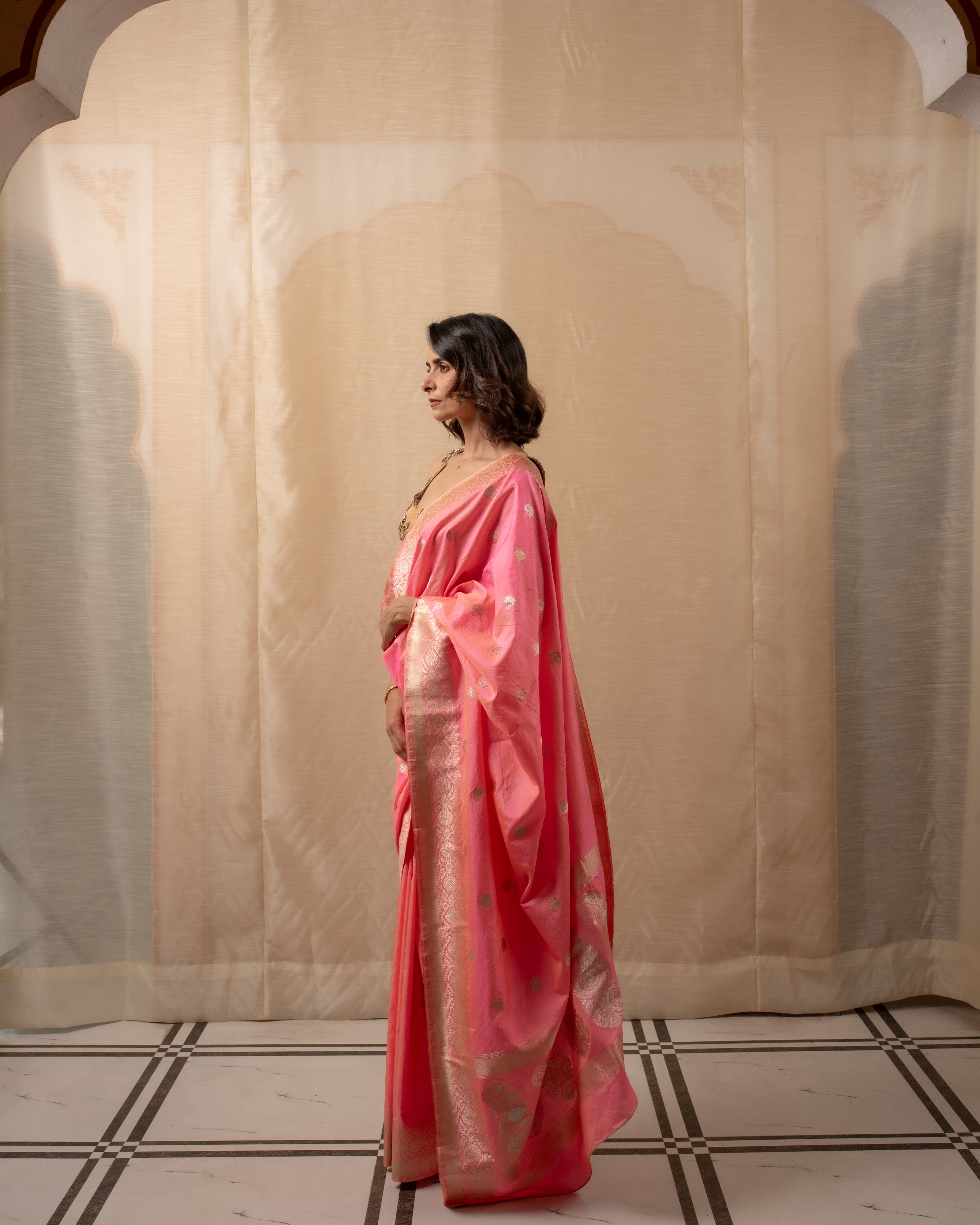
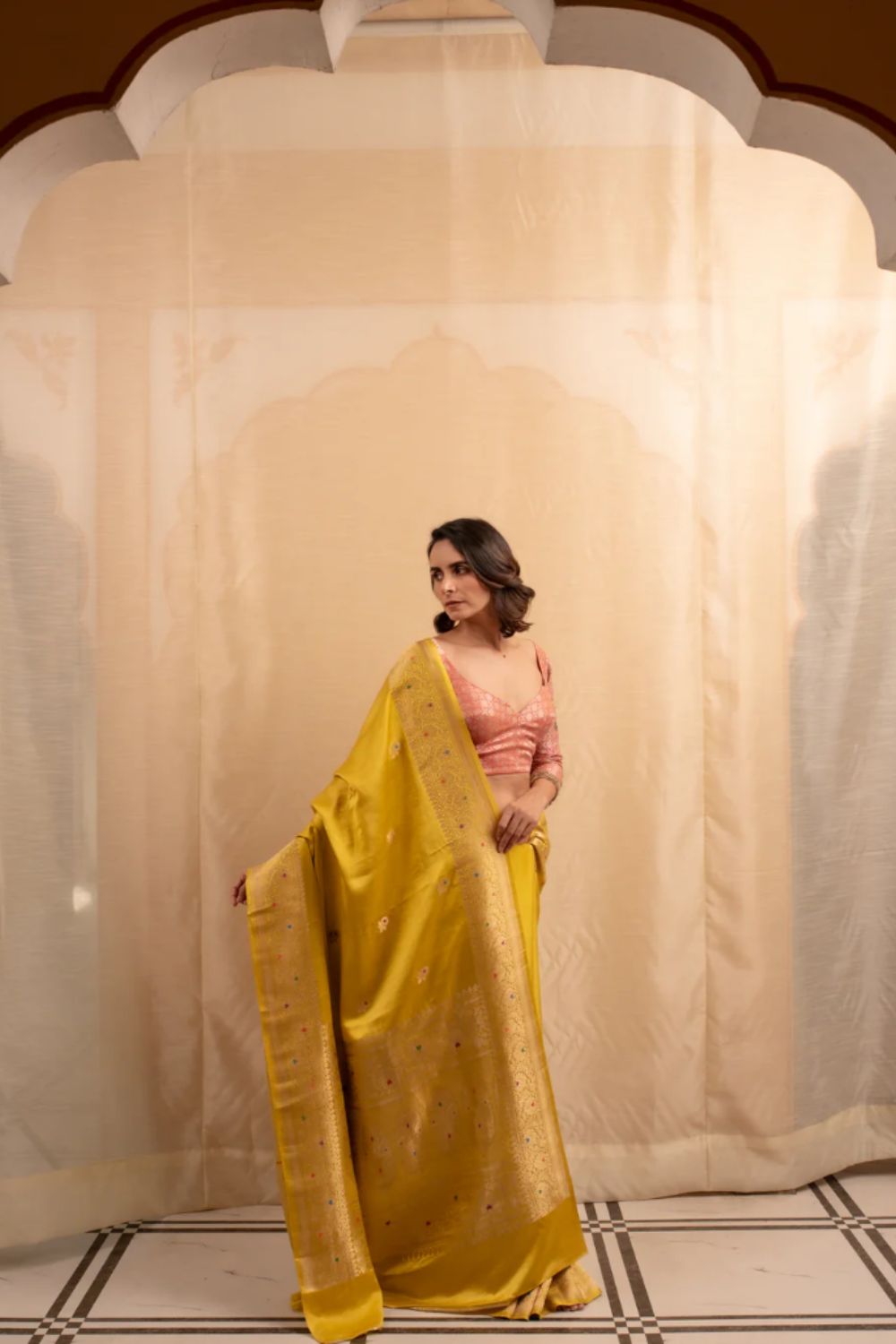
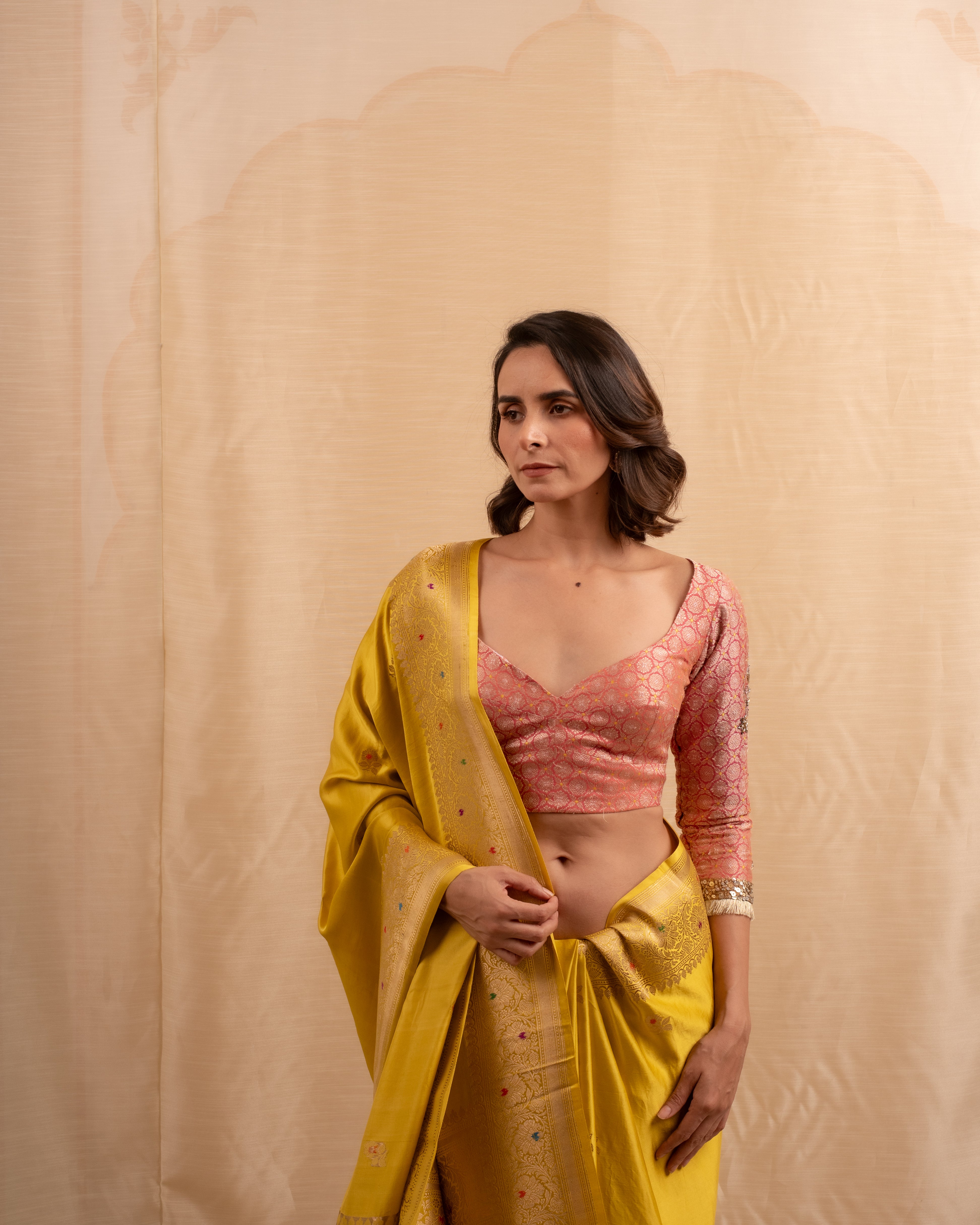
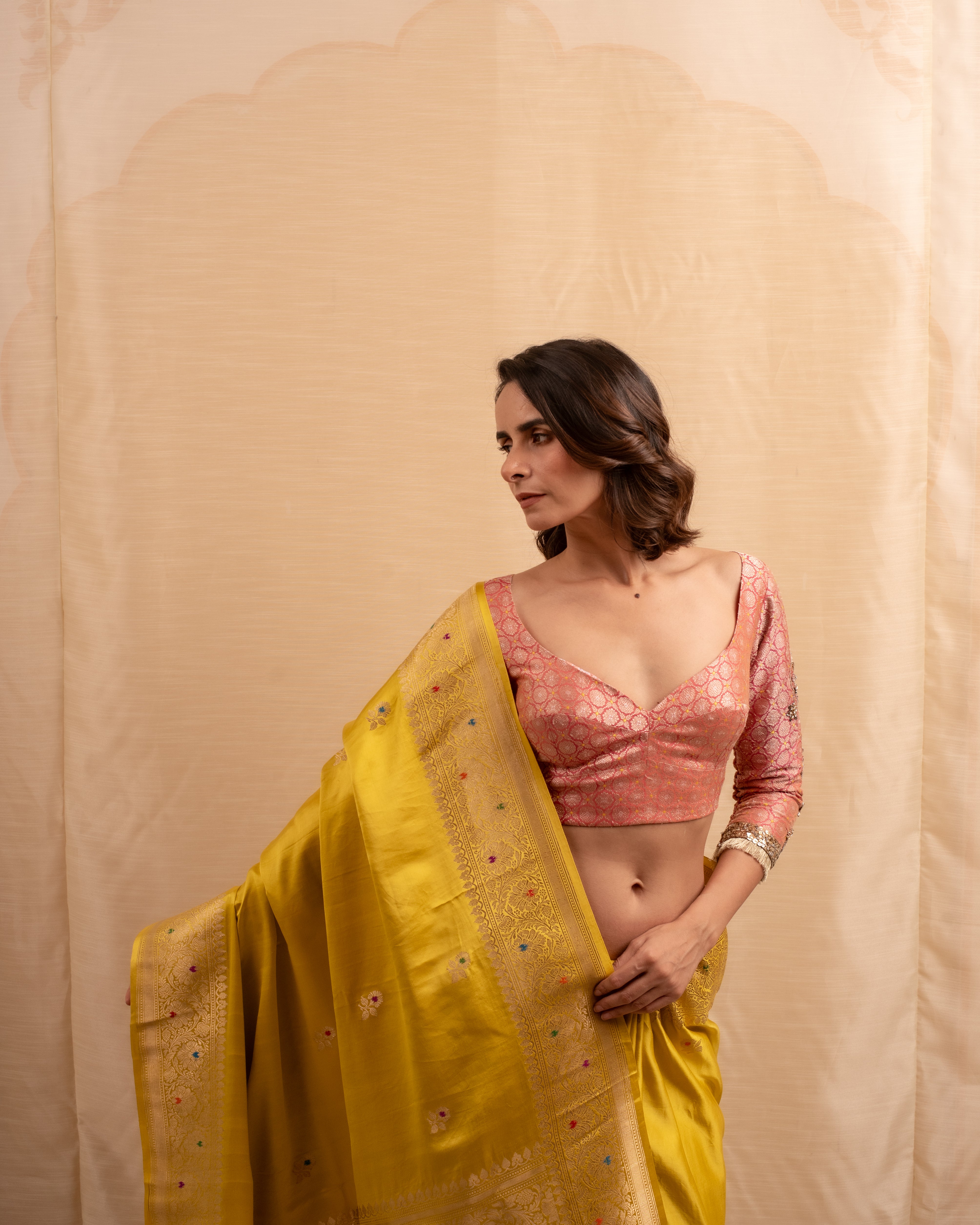
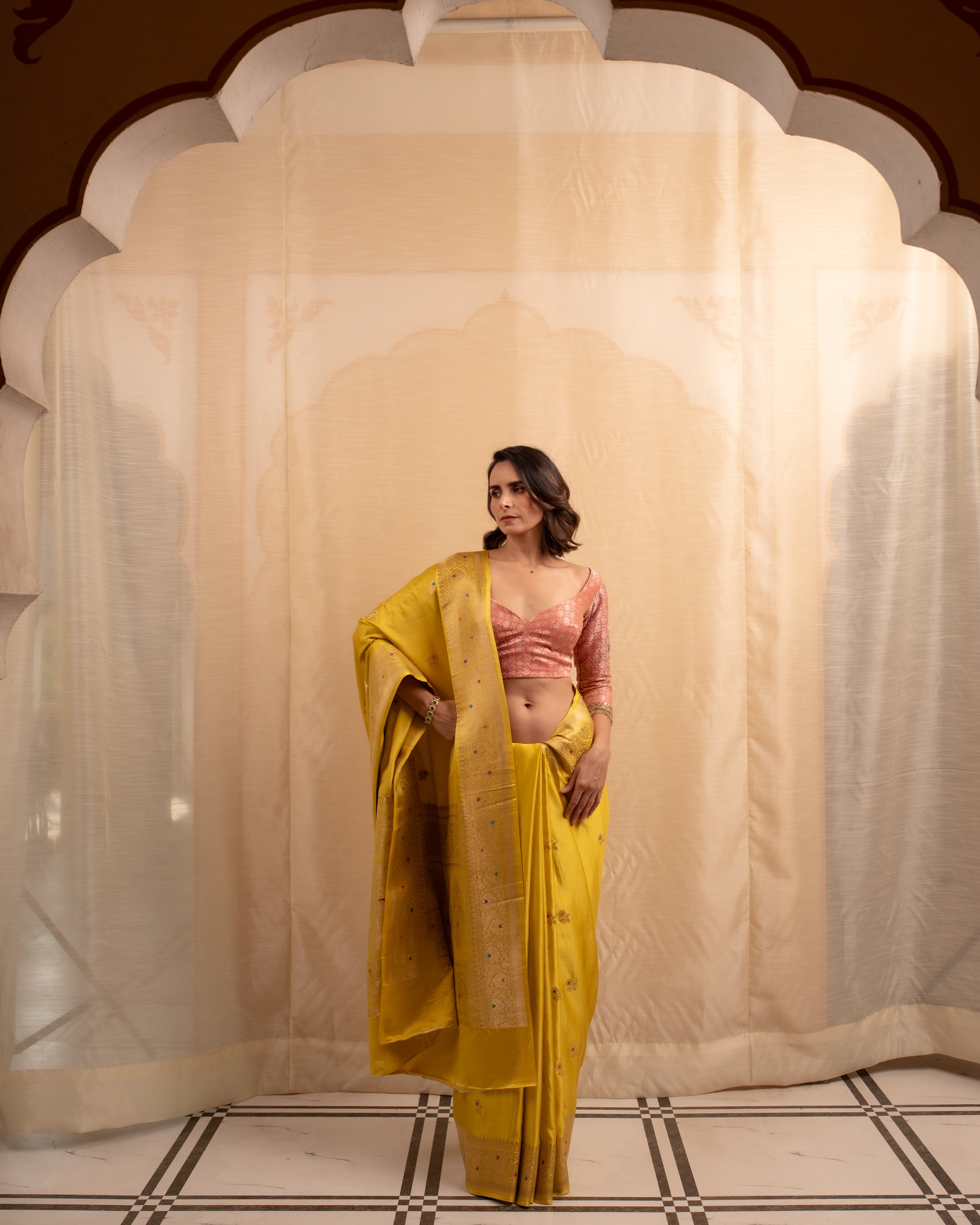
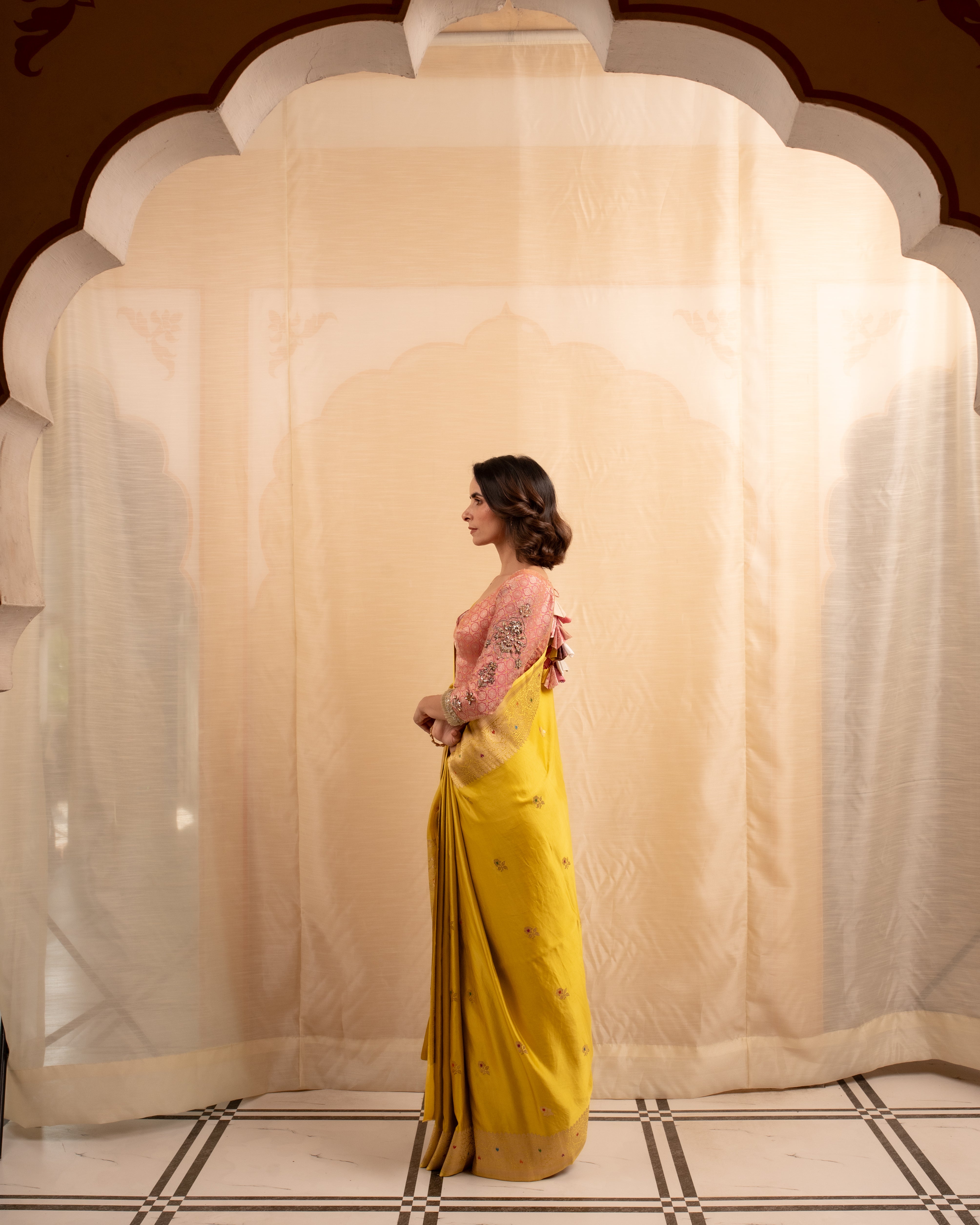
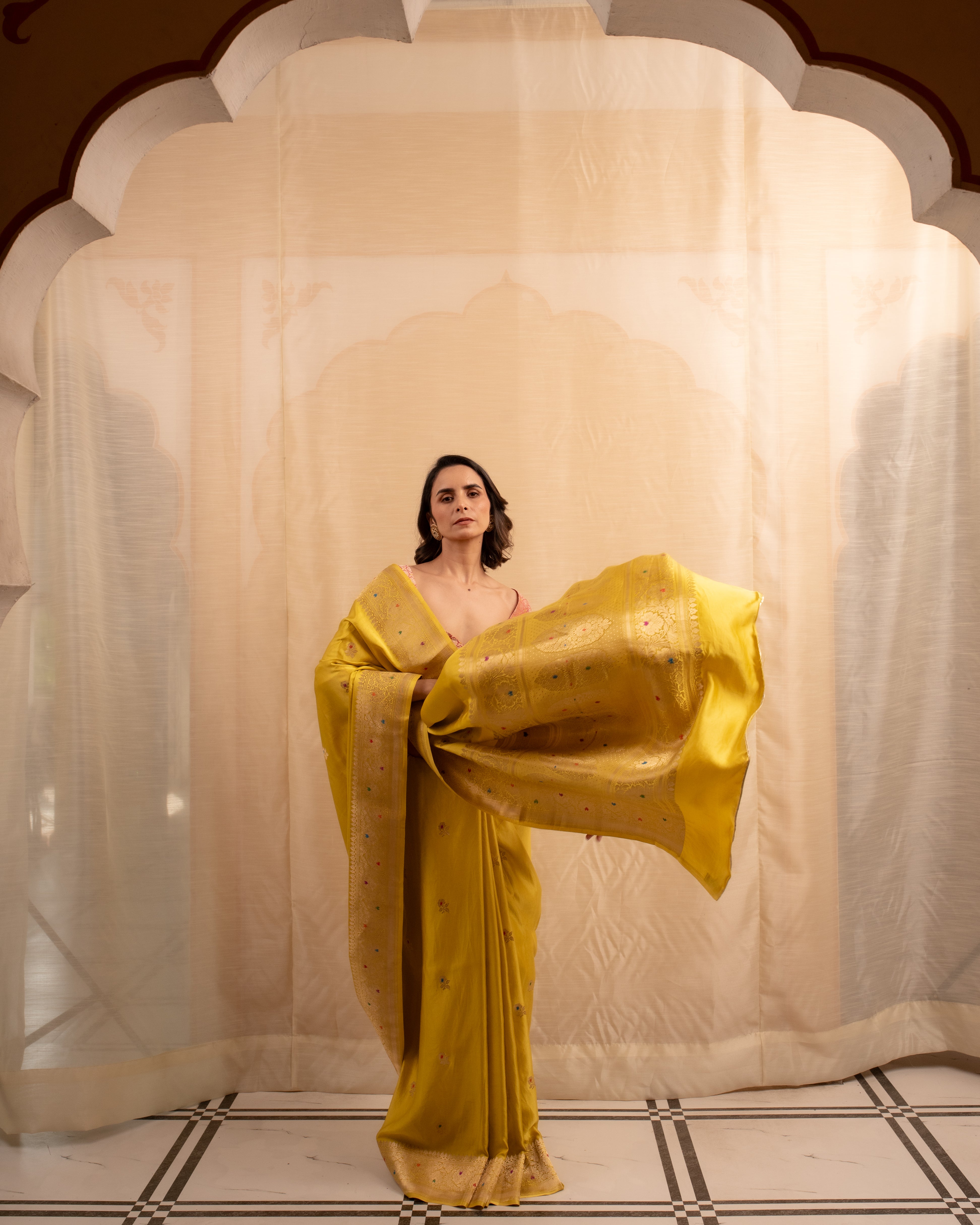
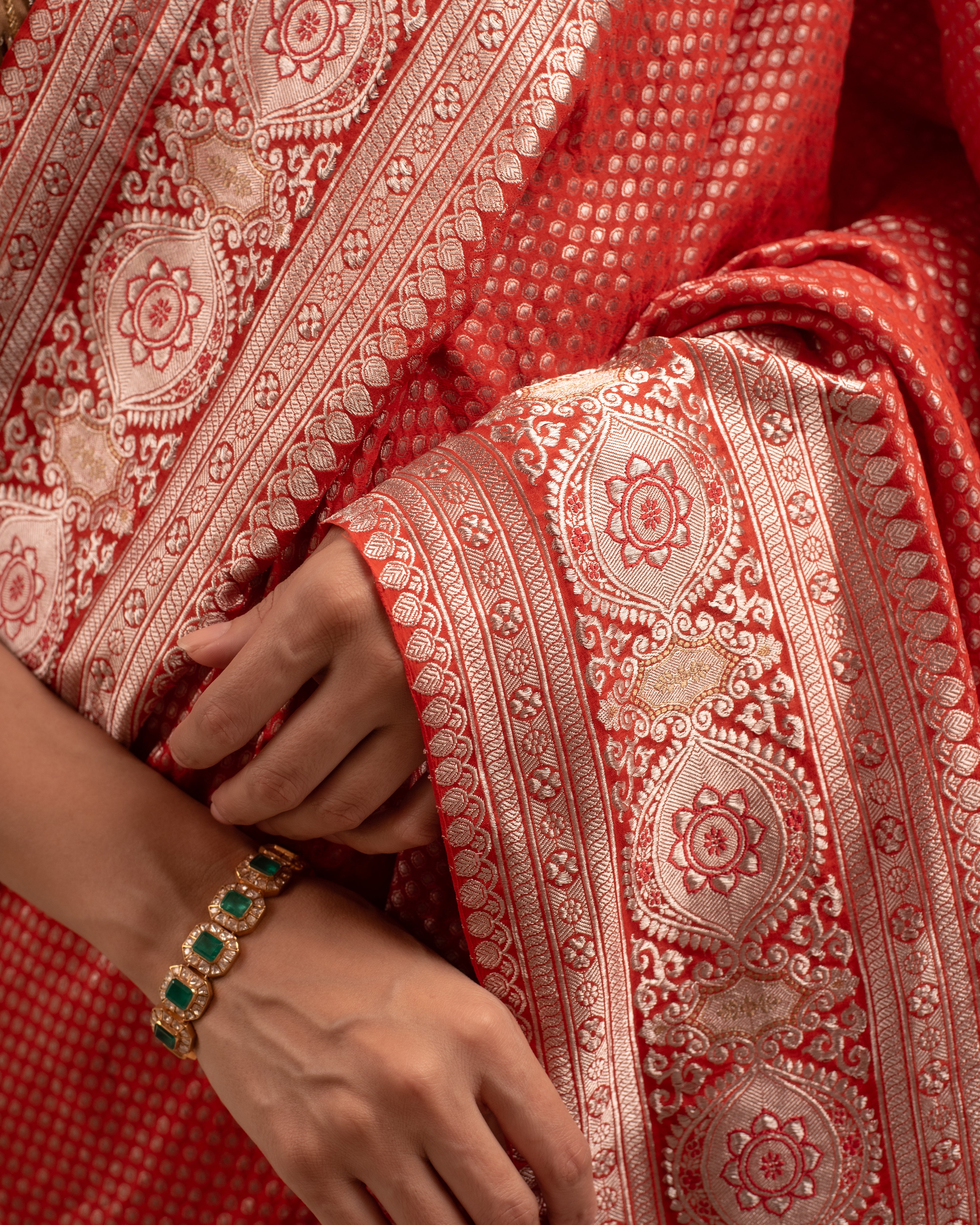
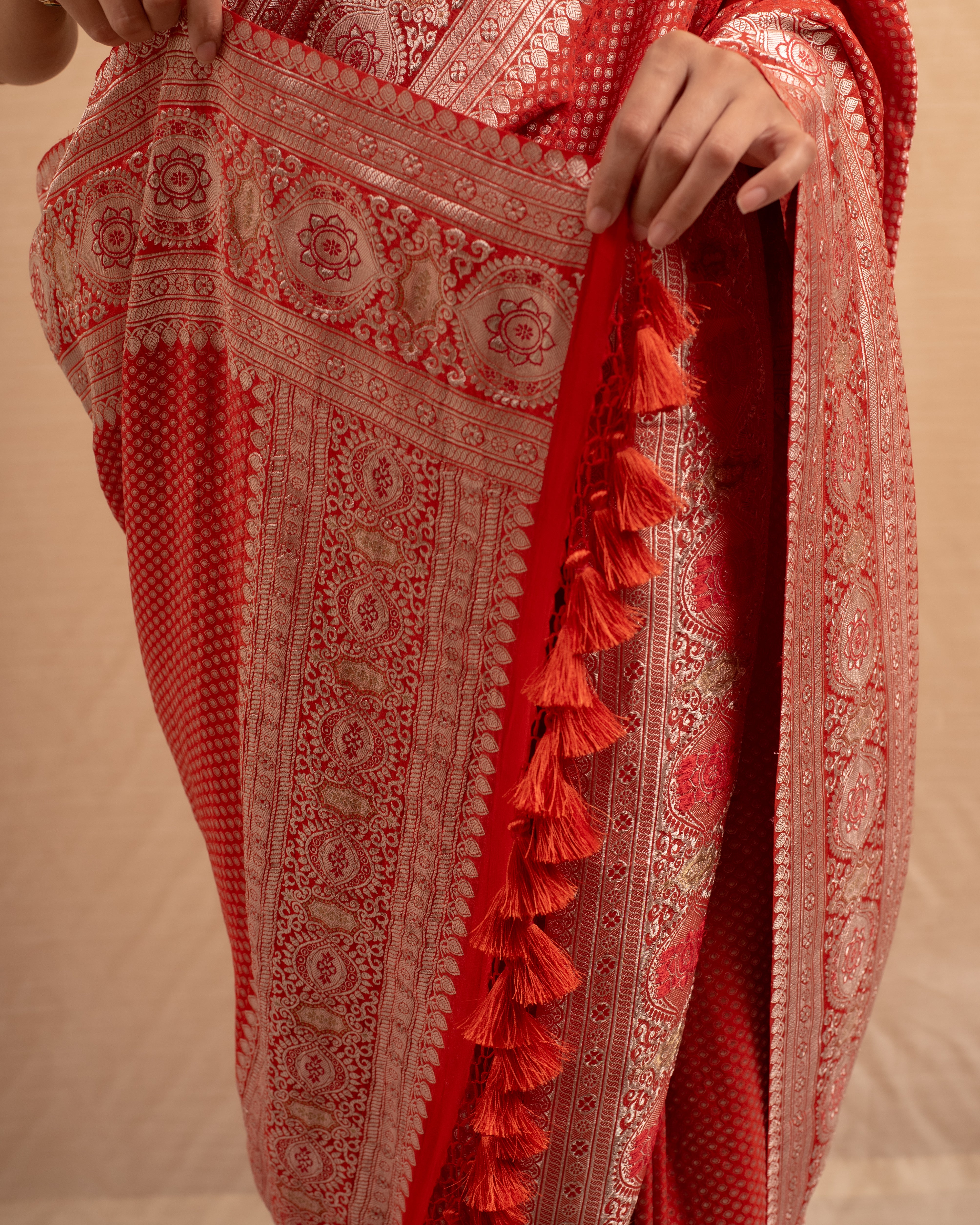
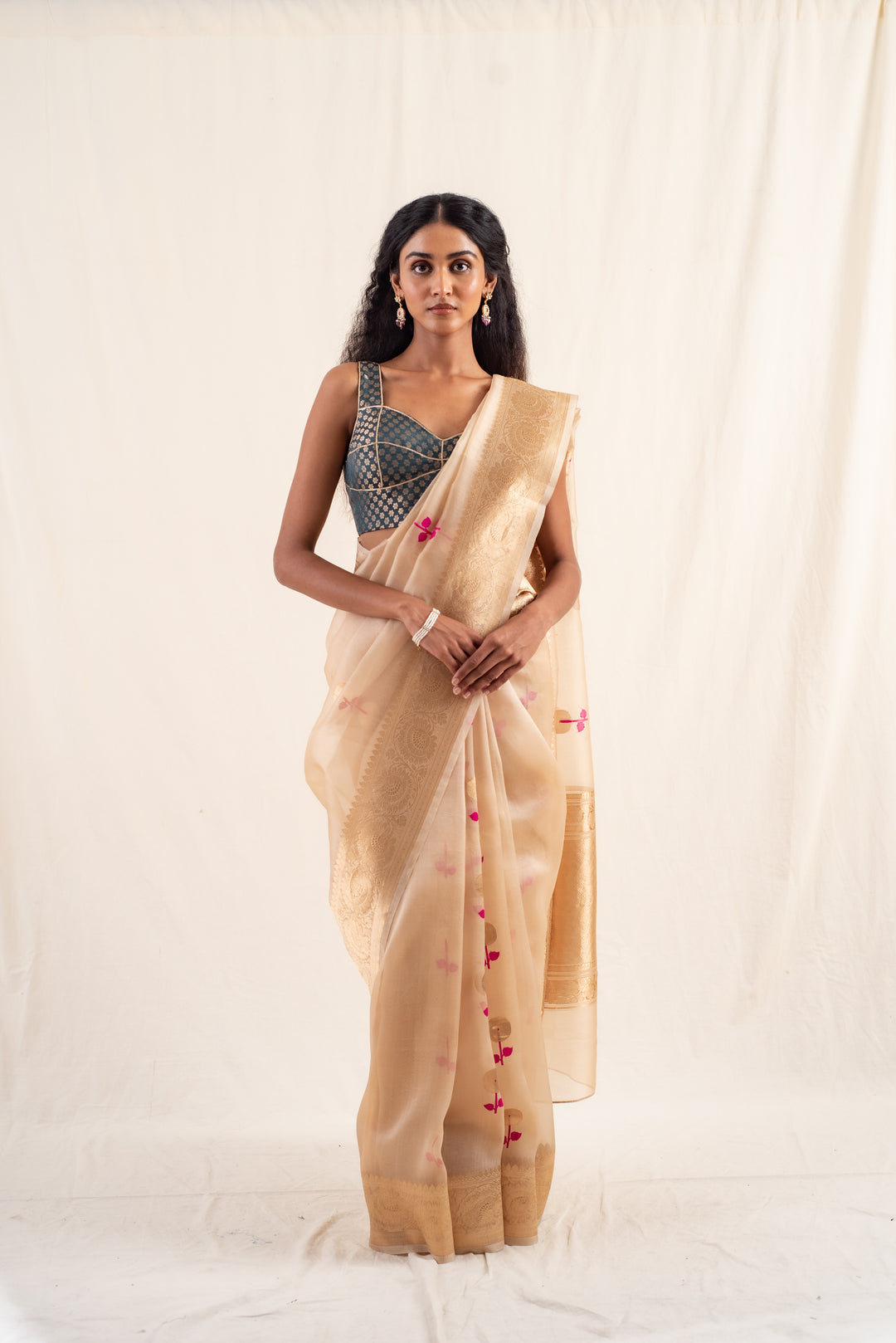
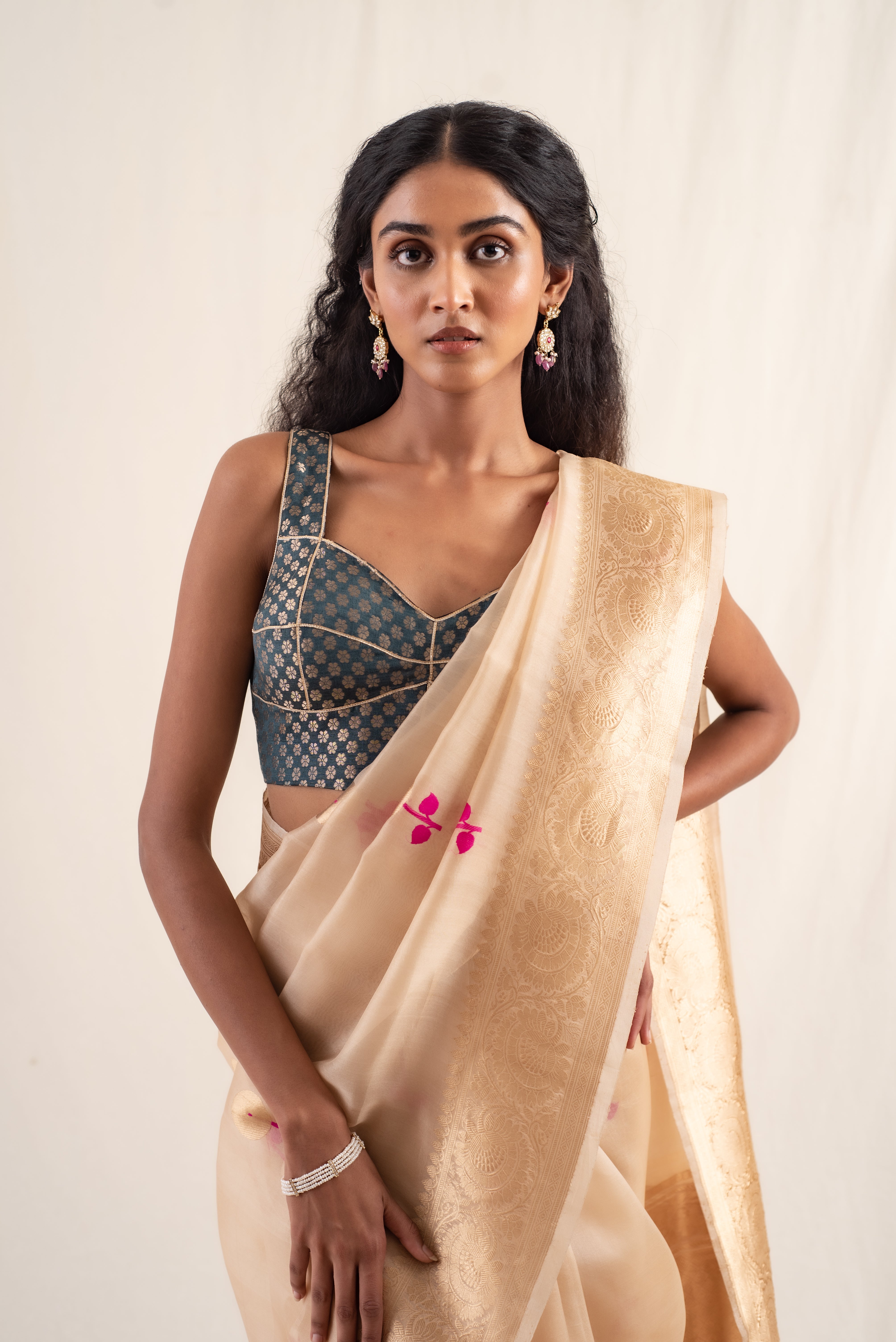
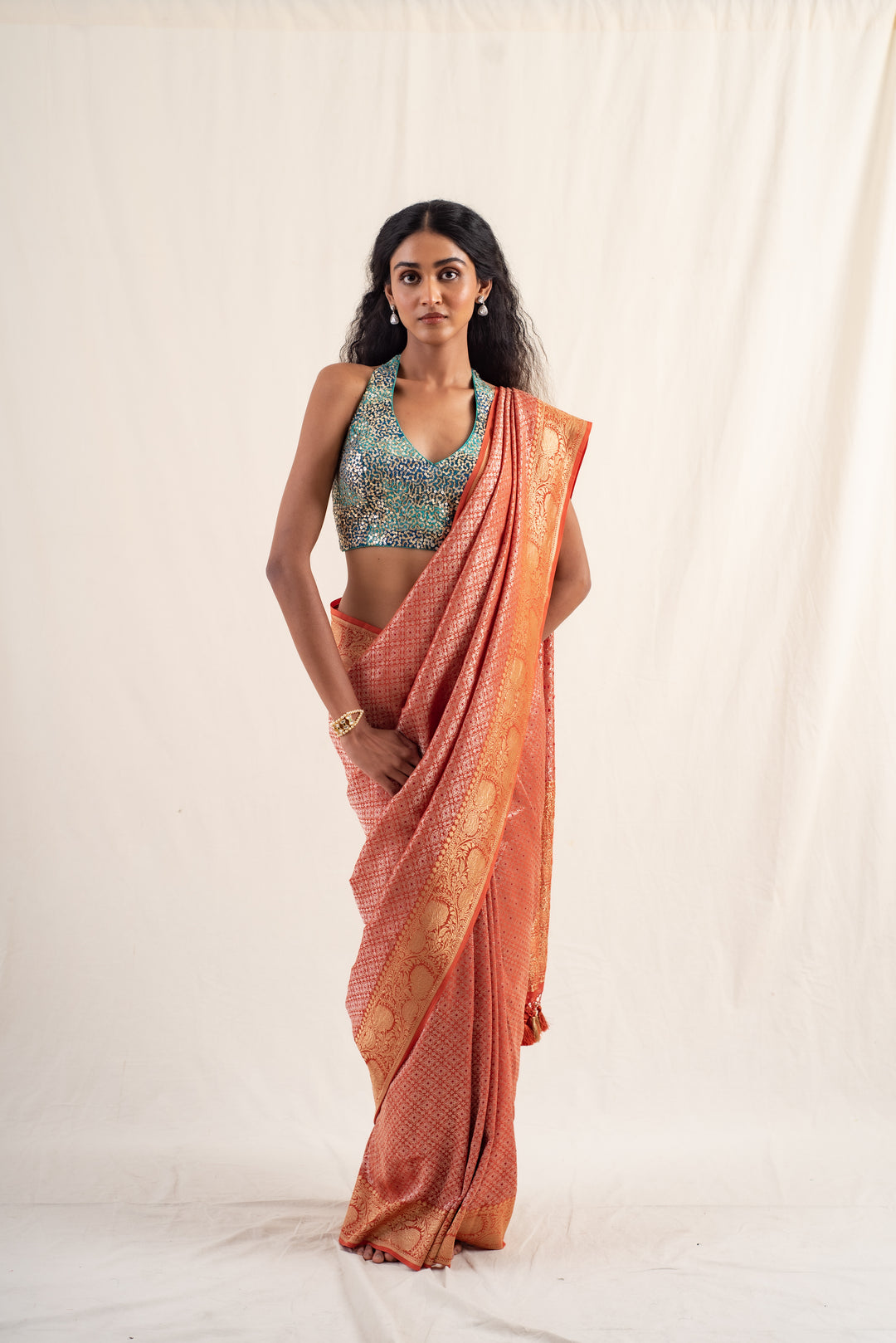
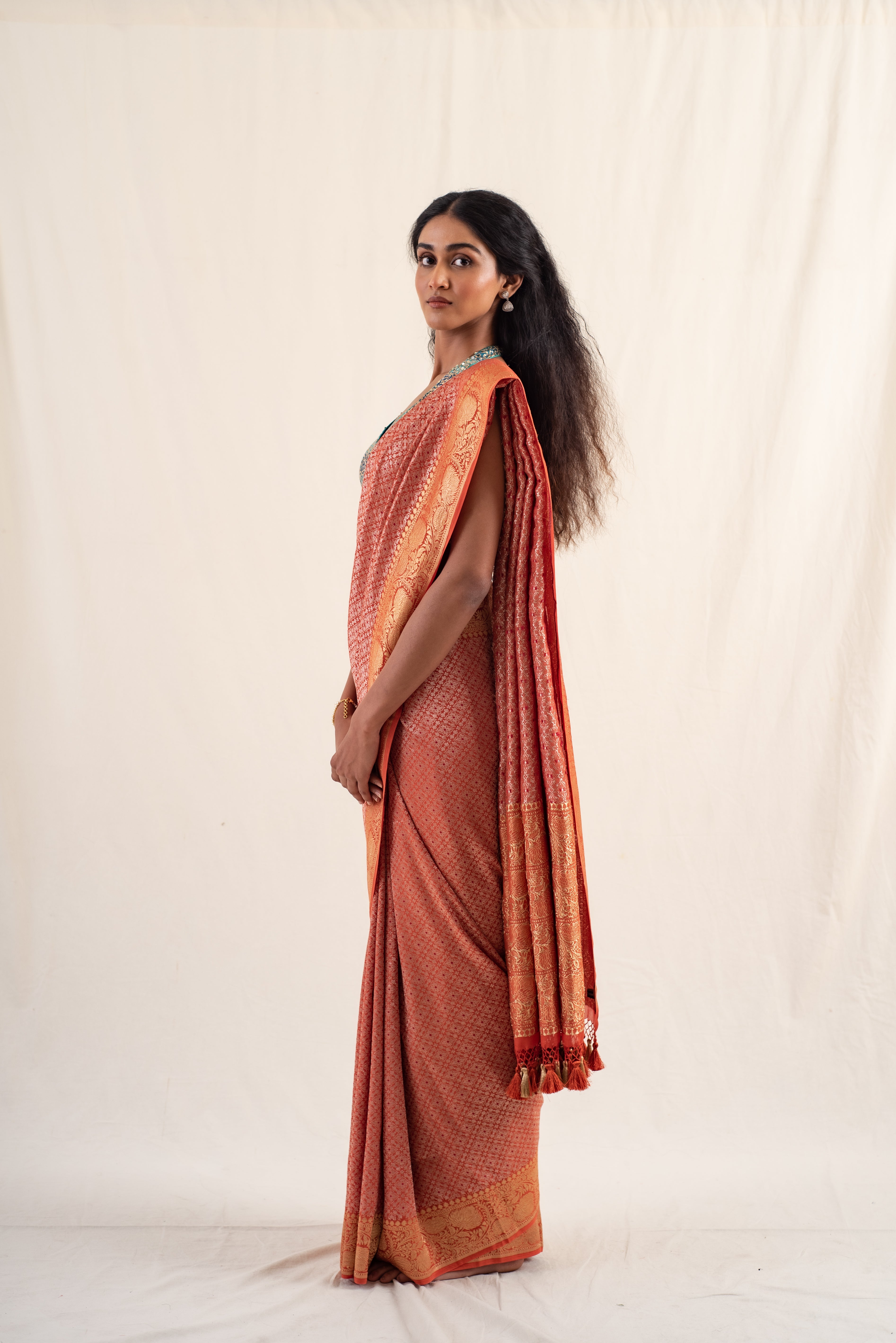
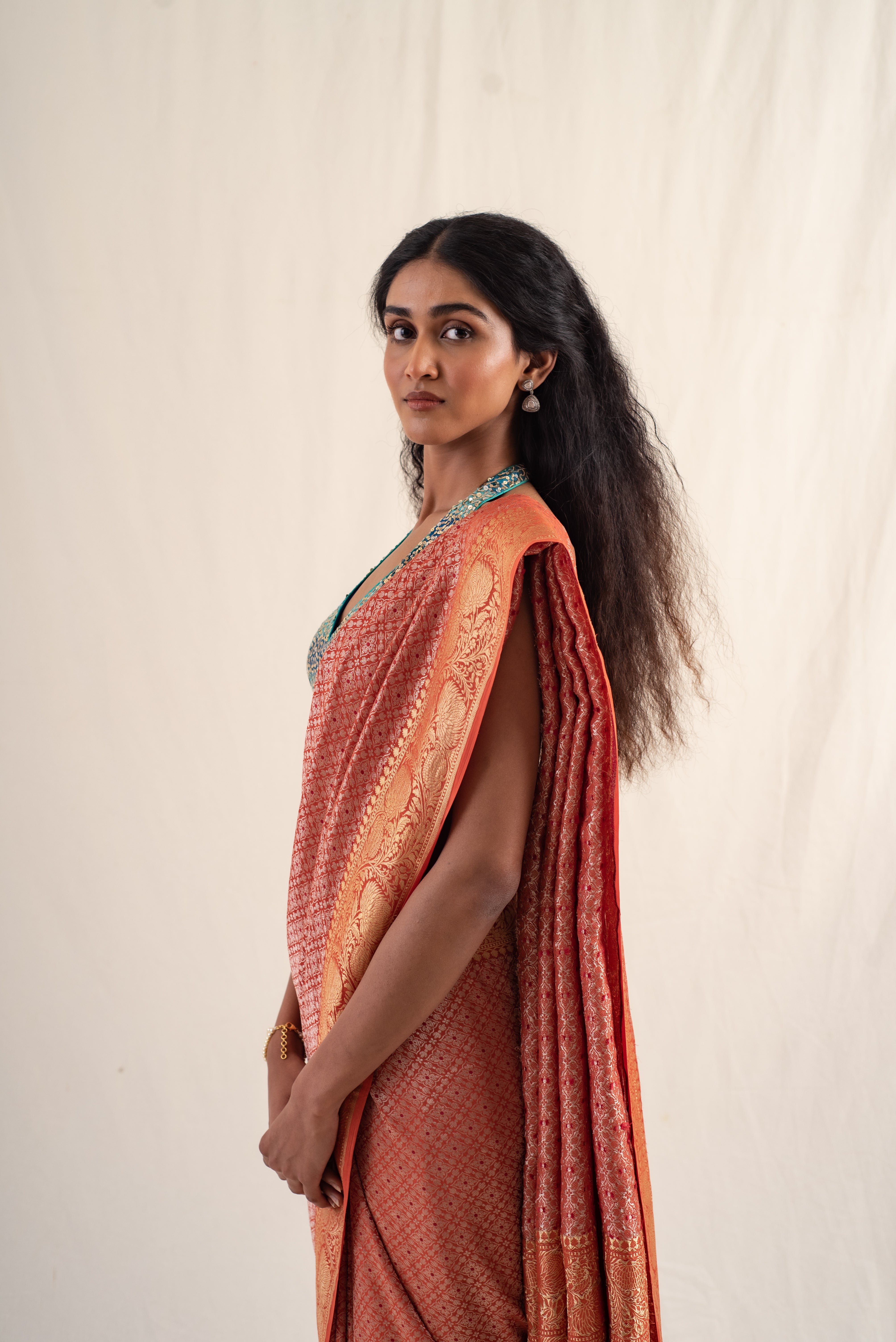
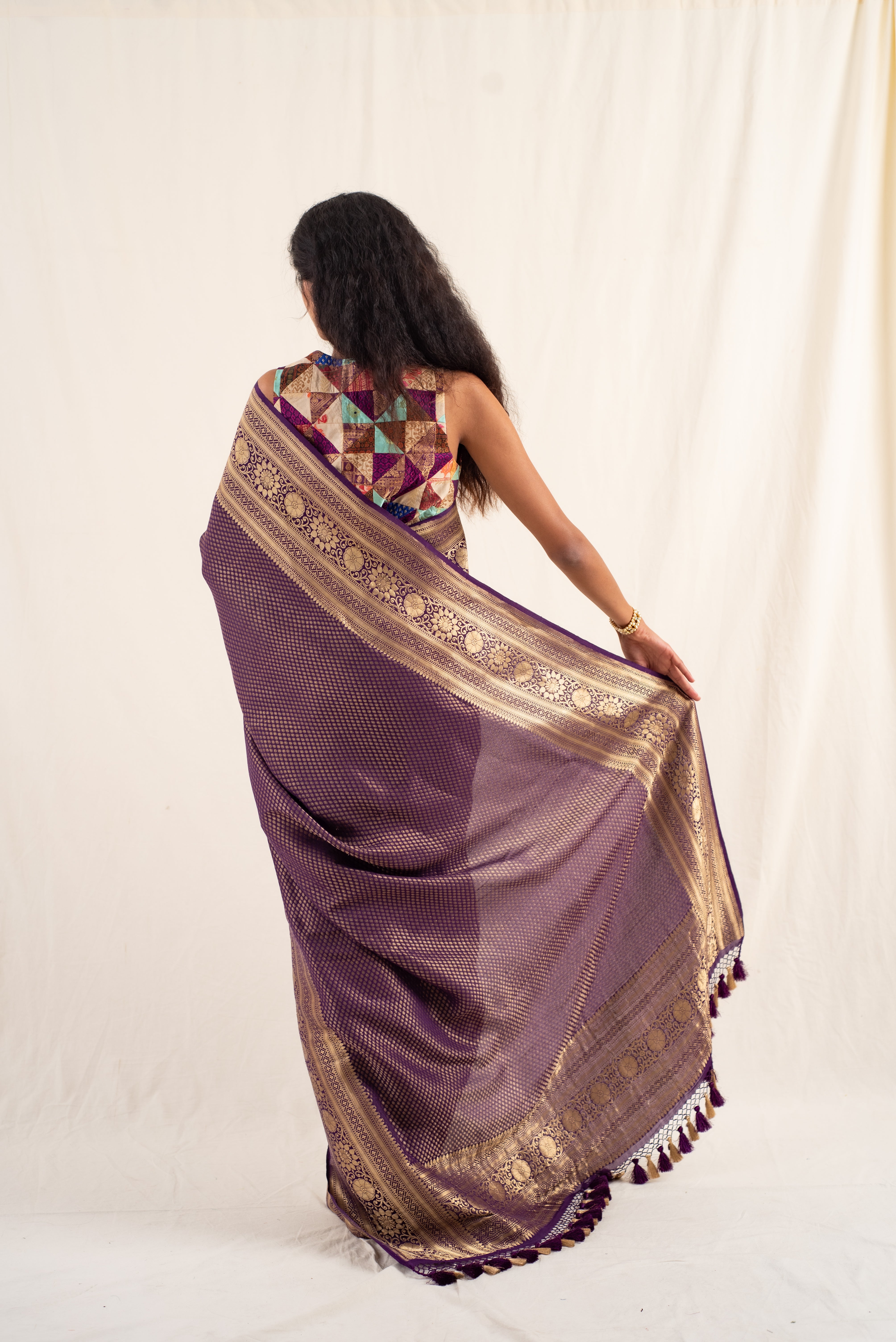
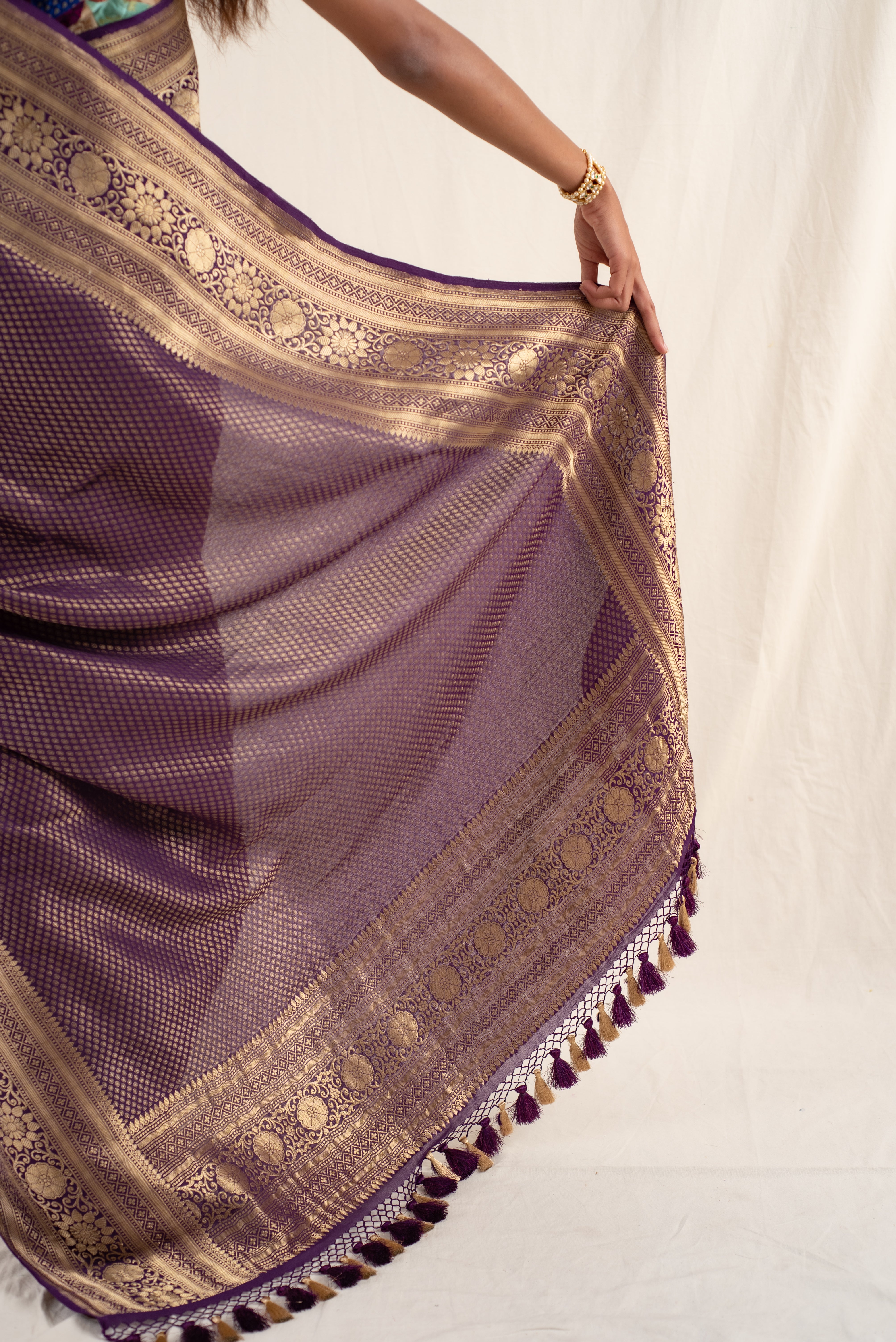
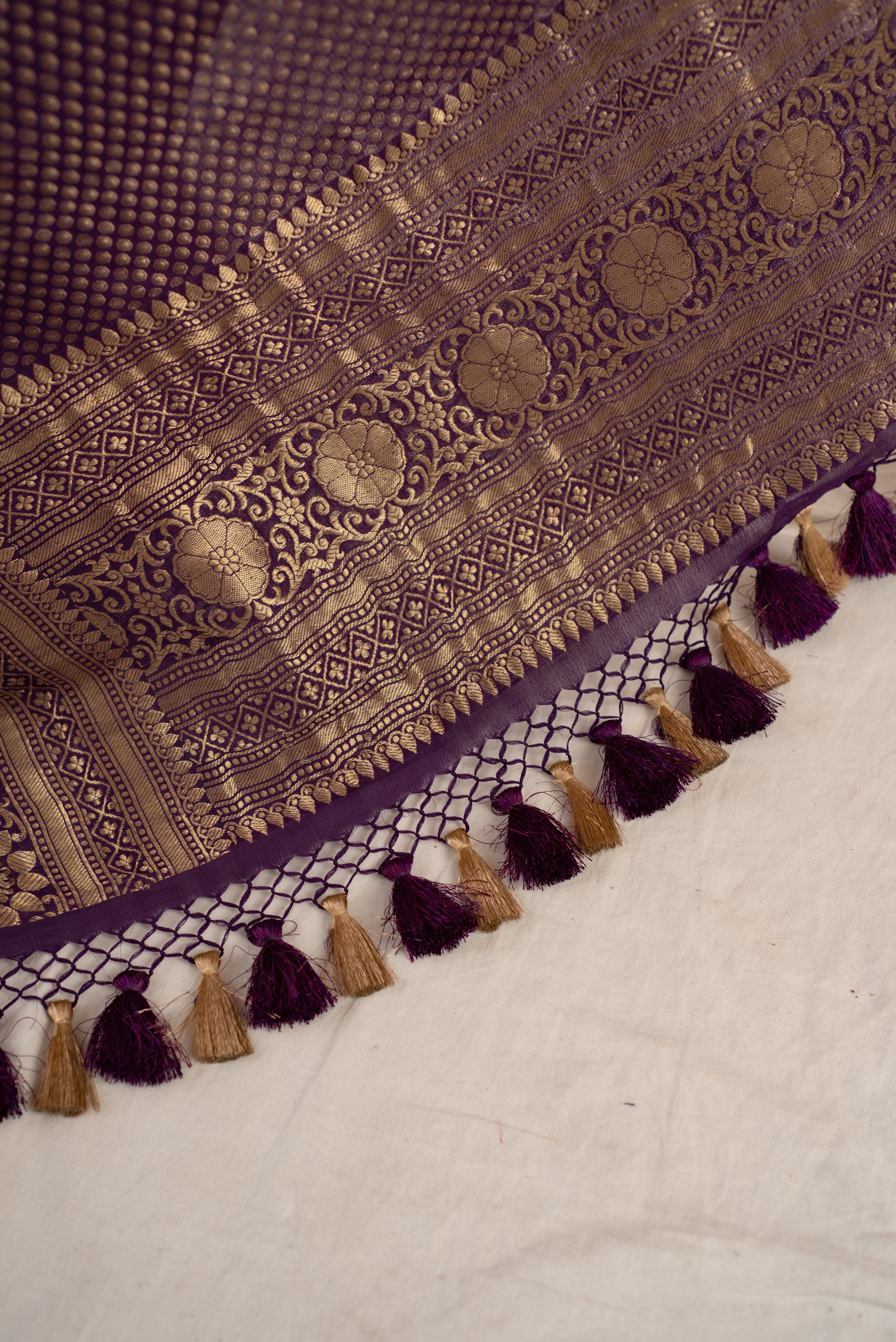
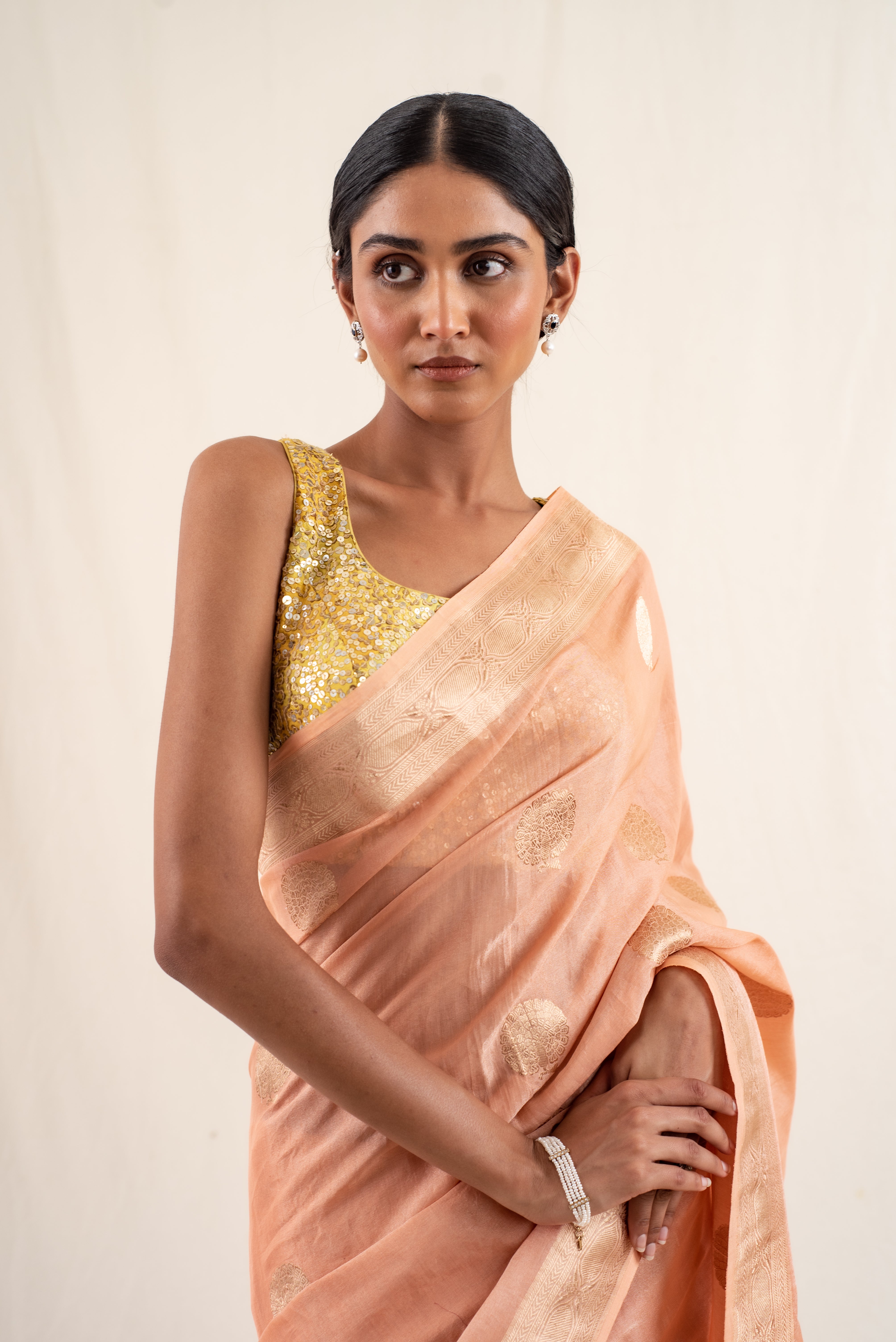
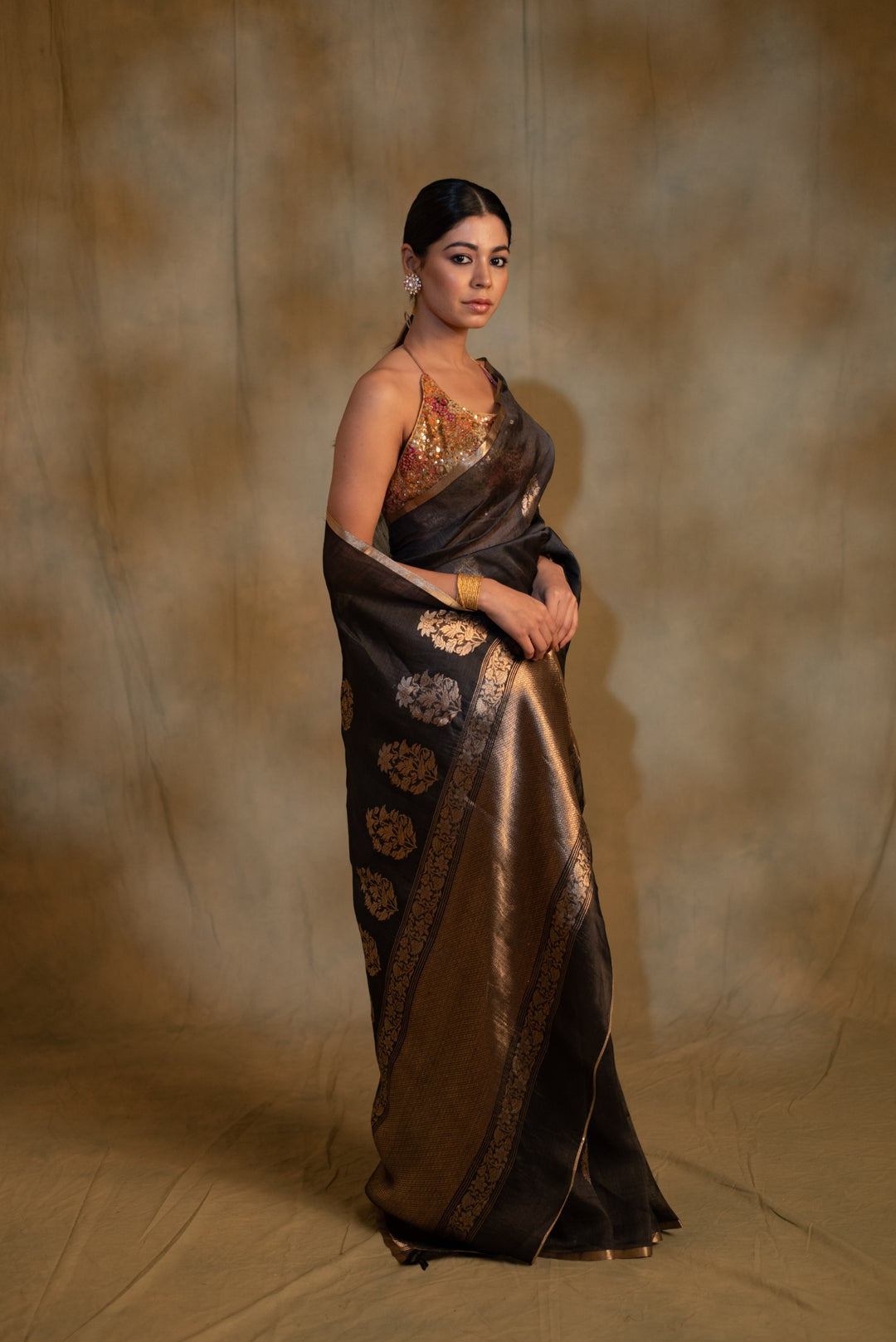
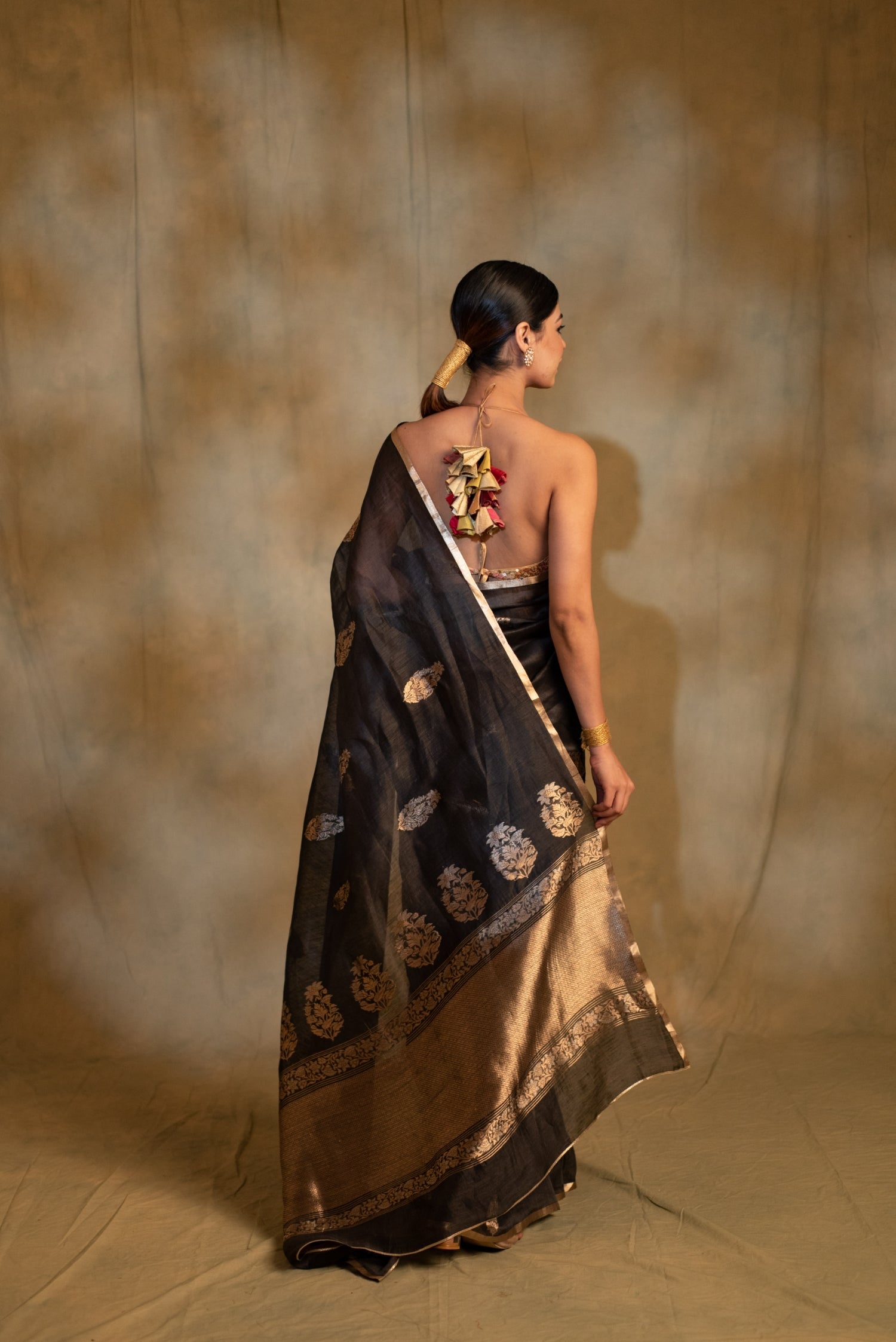
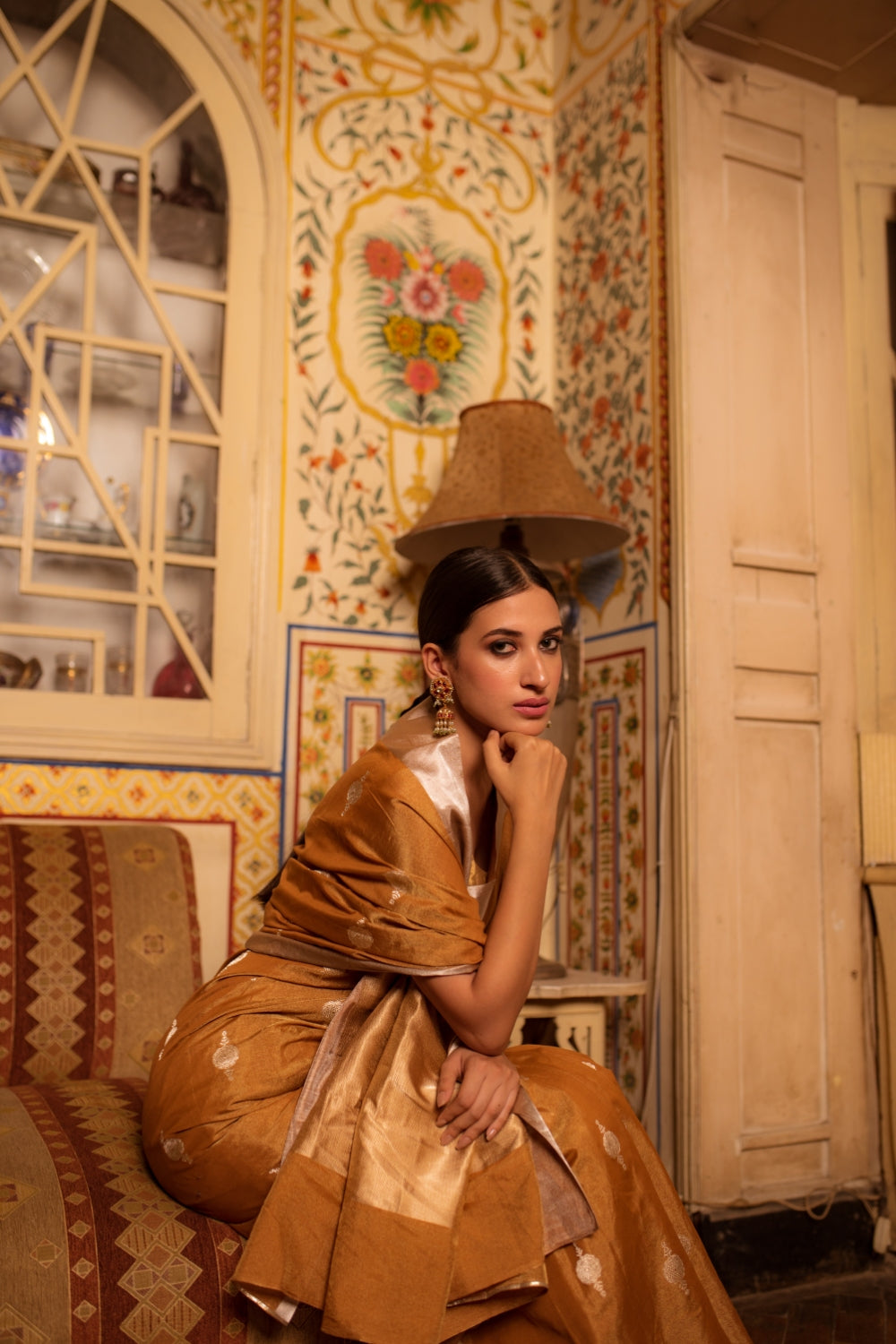
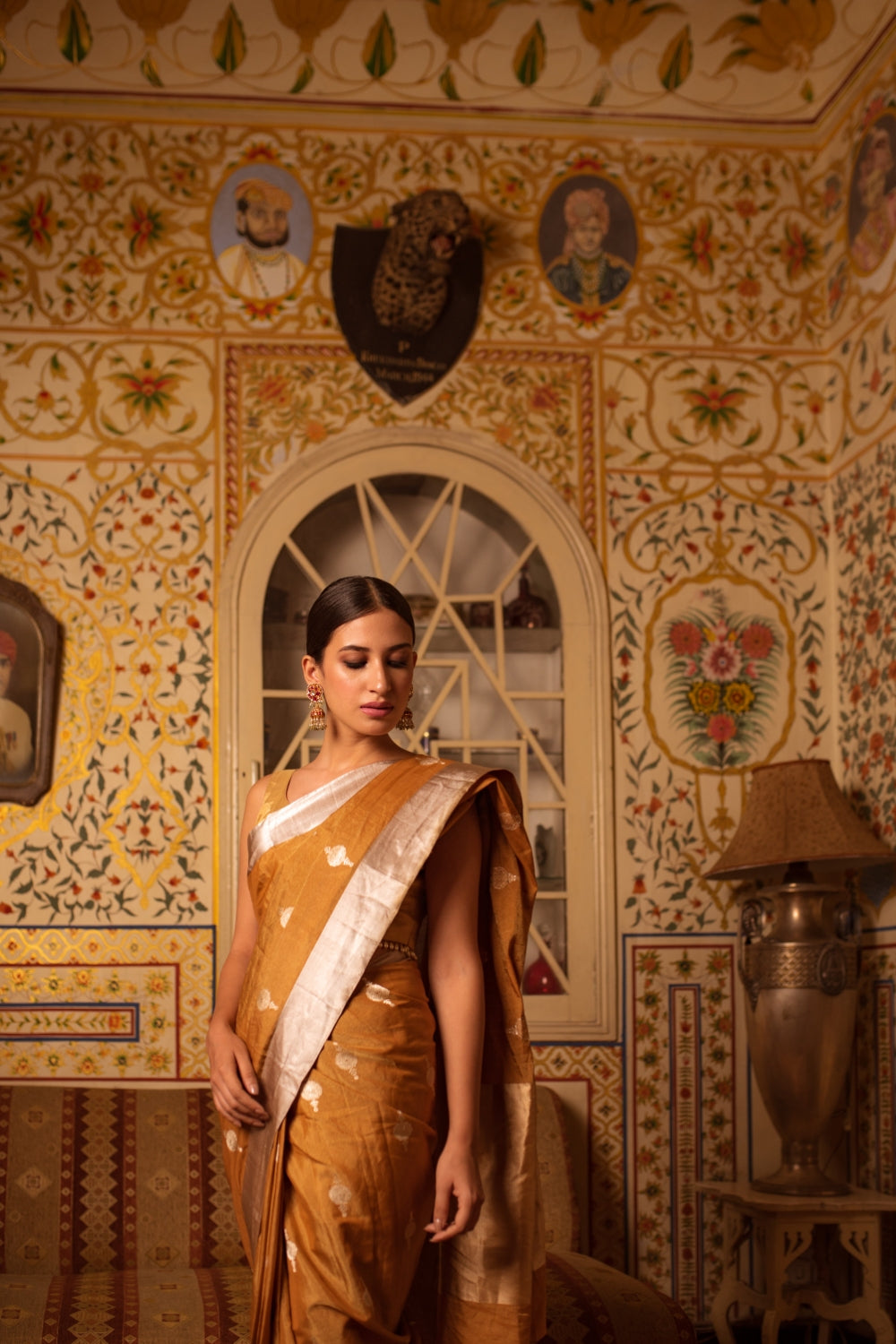
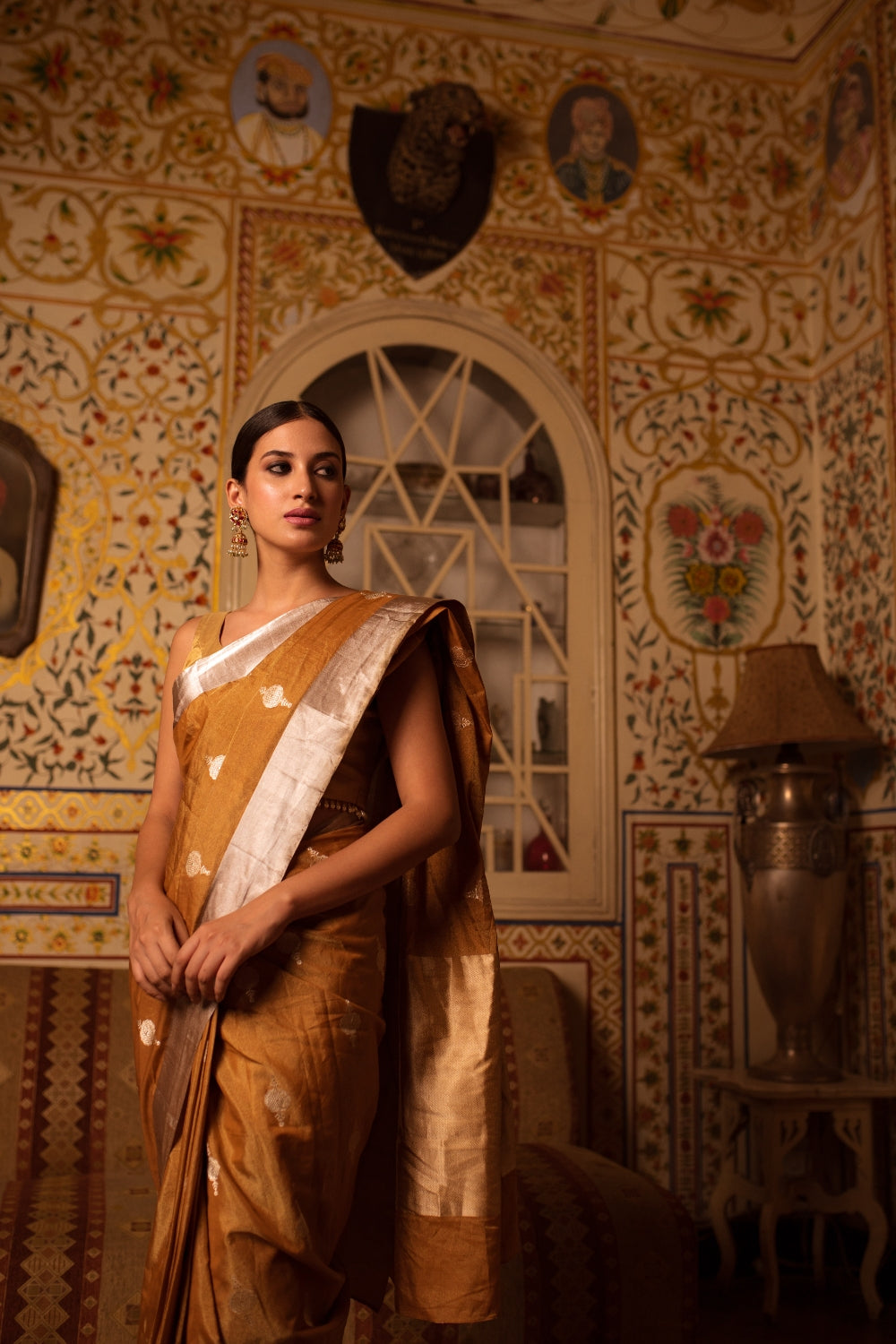
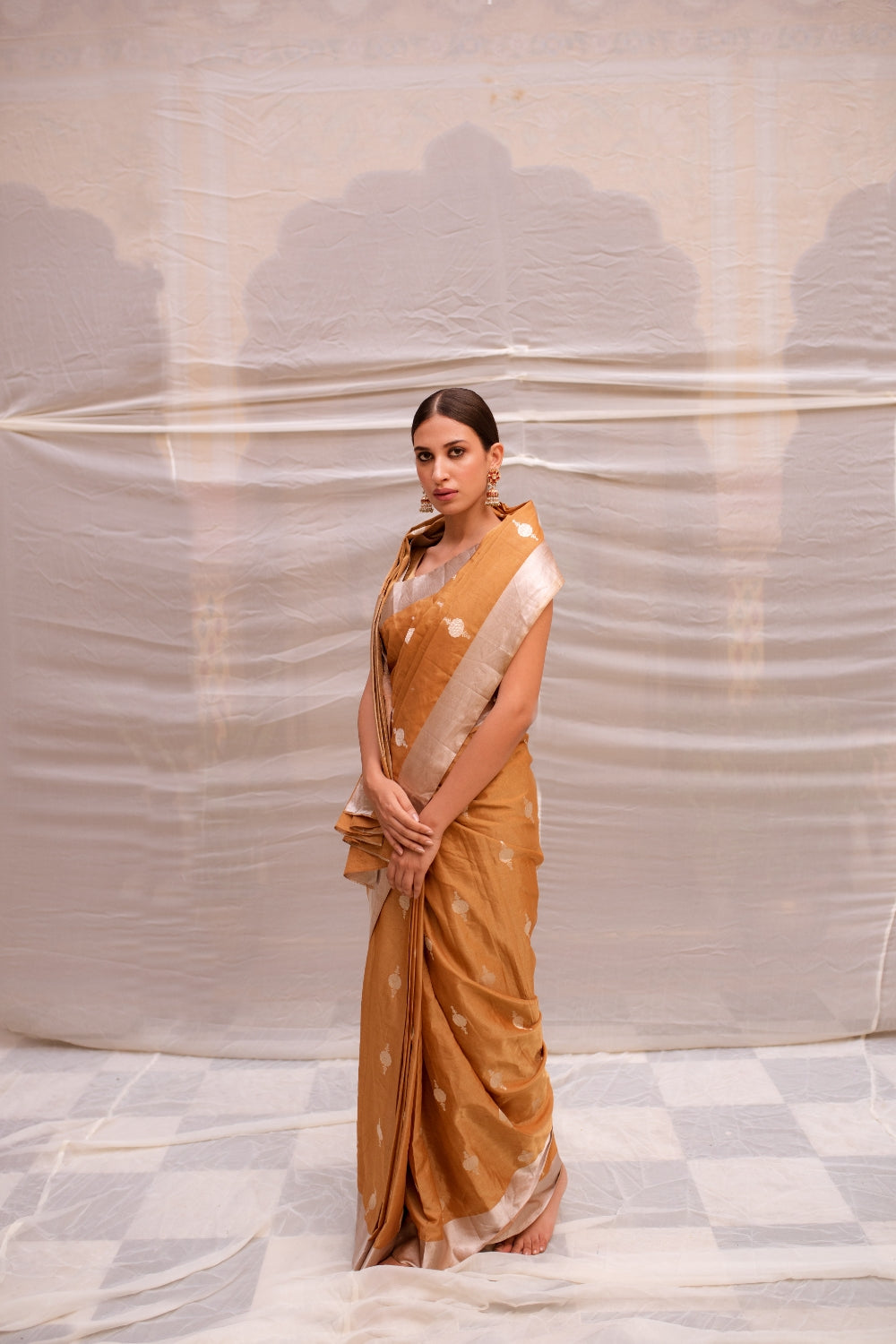
In Indian couture circles, particularly in bridal trousseaus and ceremonial wardrobes, the Butidar Banarasi saree is regarded as a symbol of heritage. Its small, intricate buttis are created with the craftsmanship that embodies a piece of history. The exquisite gold and silver zari work is skillfully woven on the loom, resulting in a beautifully antiqued surface. This saree remains a vital piece of attire in modern fashion, suitable for weddings, receptions, temple visits, and special occasions, offering a touch of luxury for quiet moments.
Timeless in its appeal, the Banarasi Butidar saree continues to be valued not merely as bridal wear but as a textile that embodies enduring craftsmanship, cultural continuity, and evolving design sensibilities.
In Indian couture circles, particularly in bridal trousseaus and ceremonial wardrobes, the Butidar Banarasi saree is regarded as a symbol of heritage. Its small, intricate buttis are created with the craftsmanship that embodies a piece of history. The exquisite gold and silver zari work is skillfully woven on the loom, resulting in a beautifully antiqued surface. This saree remains a vital piece of attire in modern fashion, suitable for weddings, receptions, temple visits, and special occasions, offering a touch of luxury for quiet moments.
Understanding Butidar Weaving
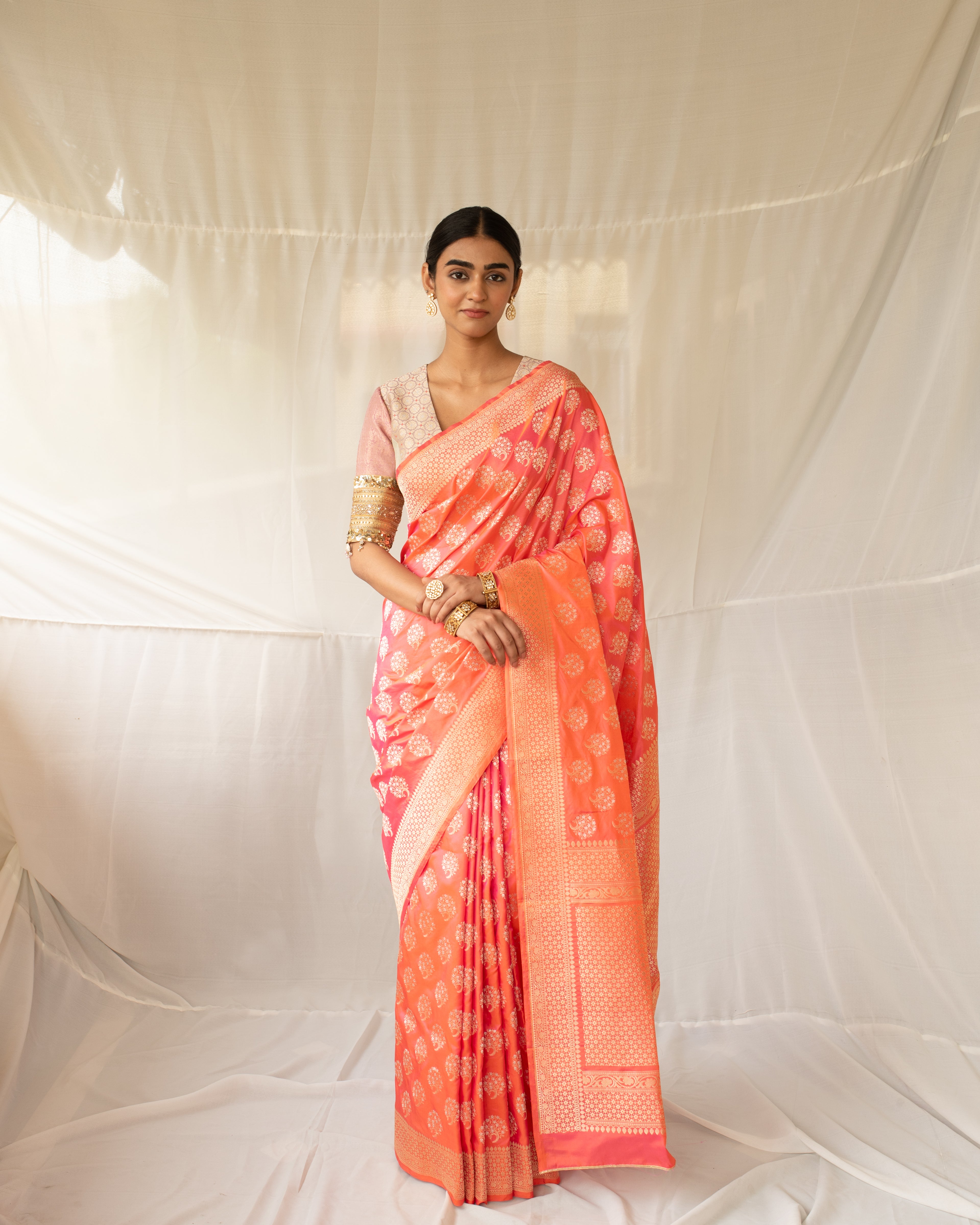
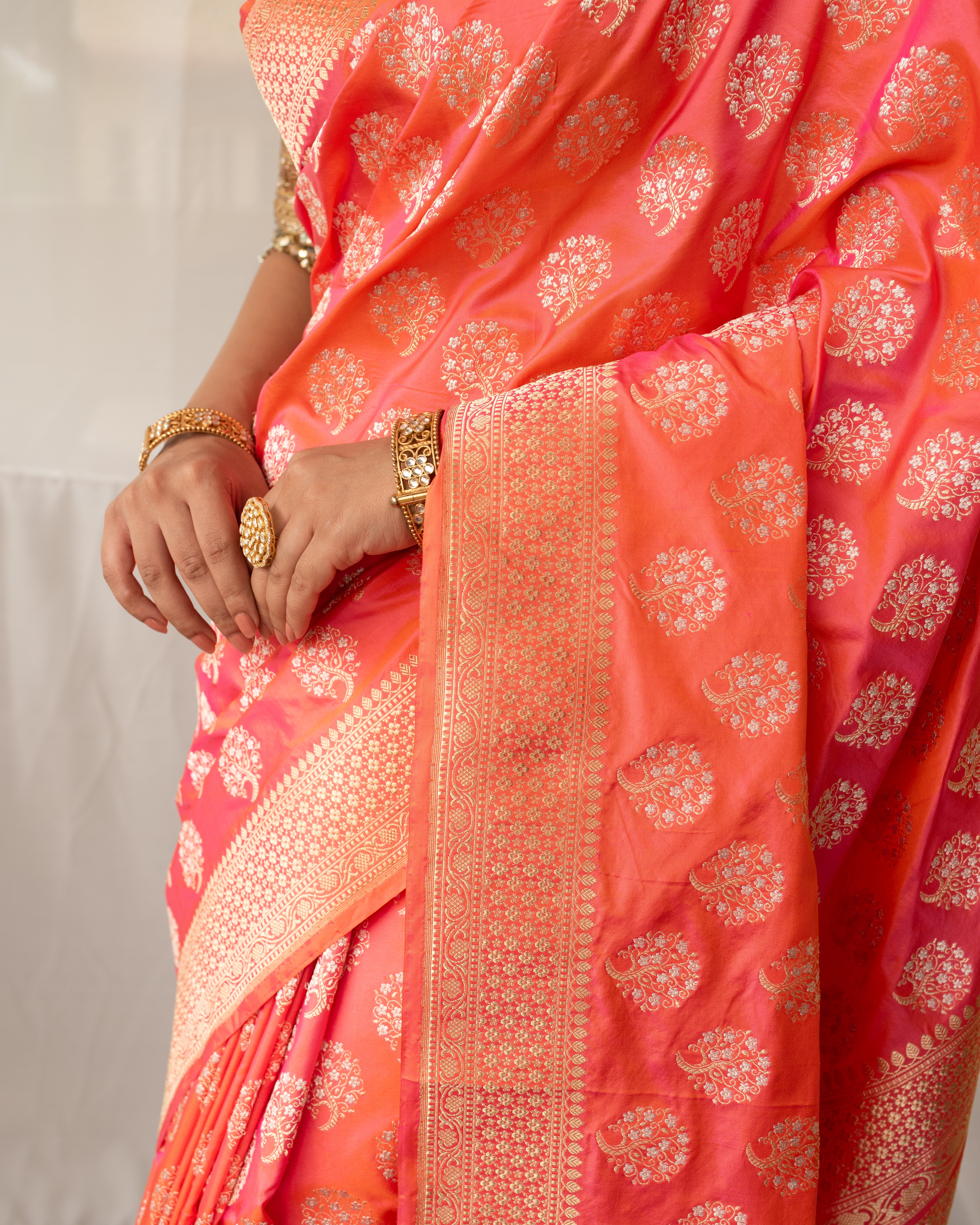
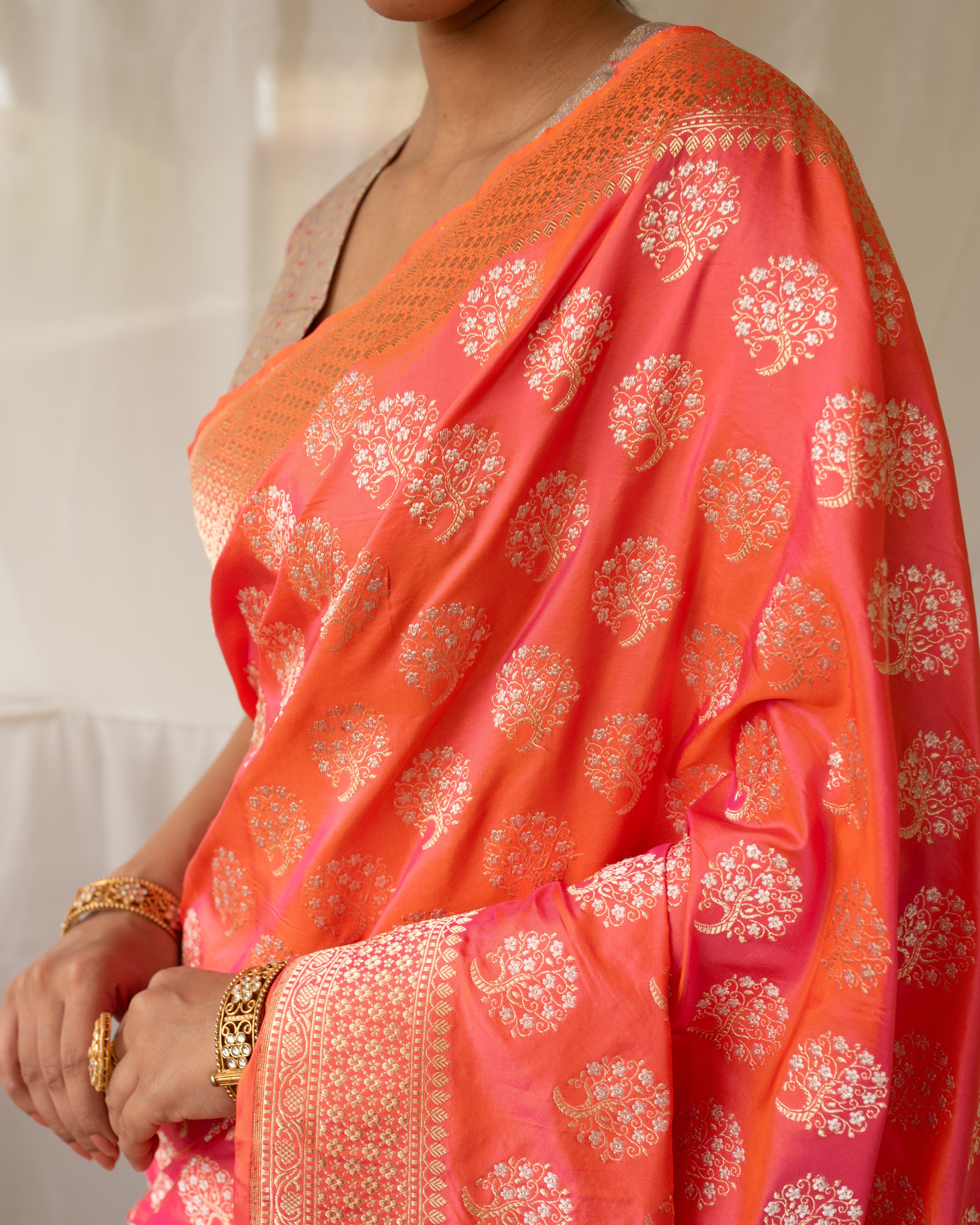
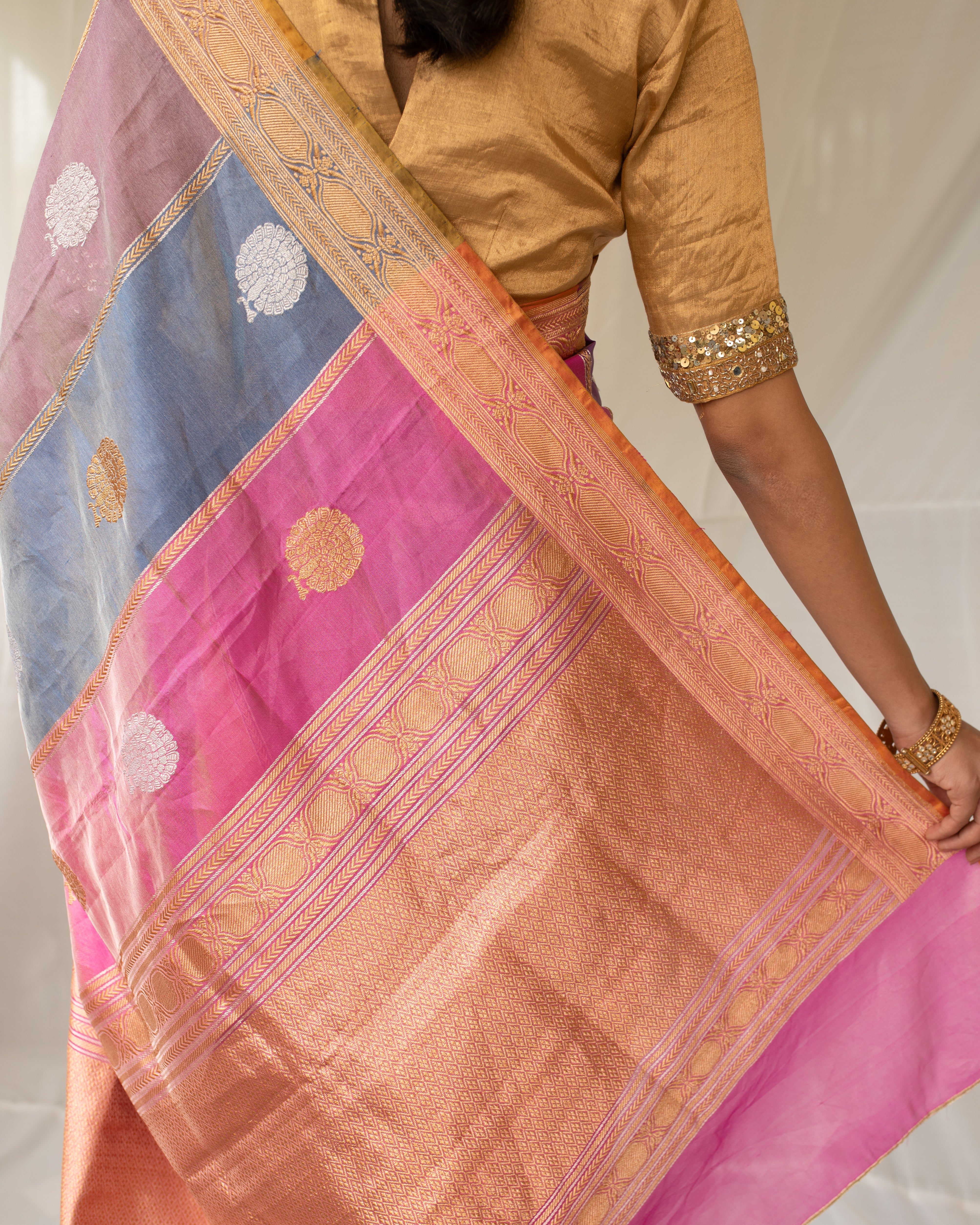
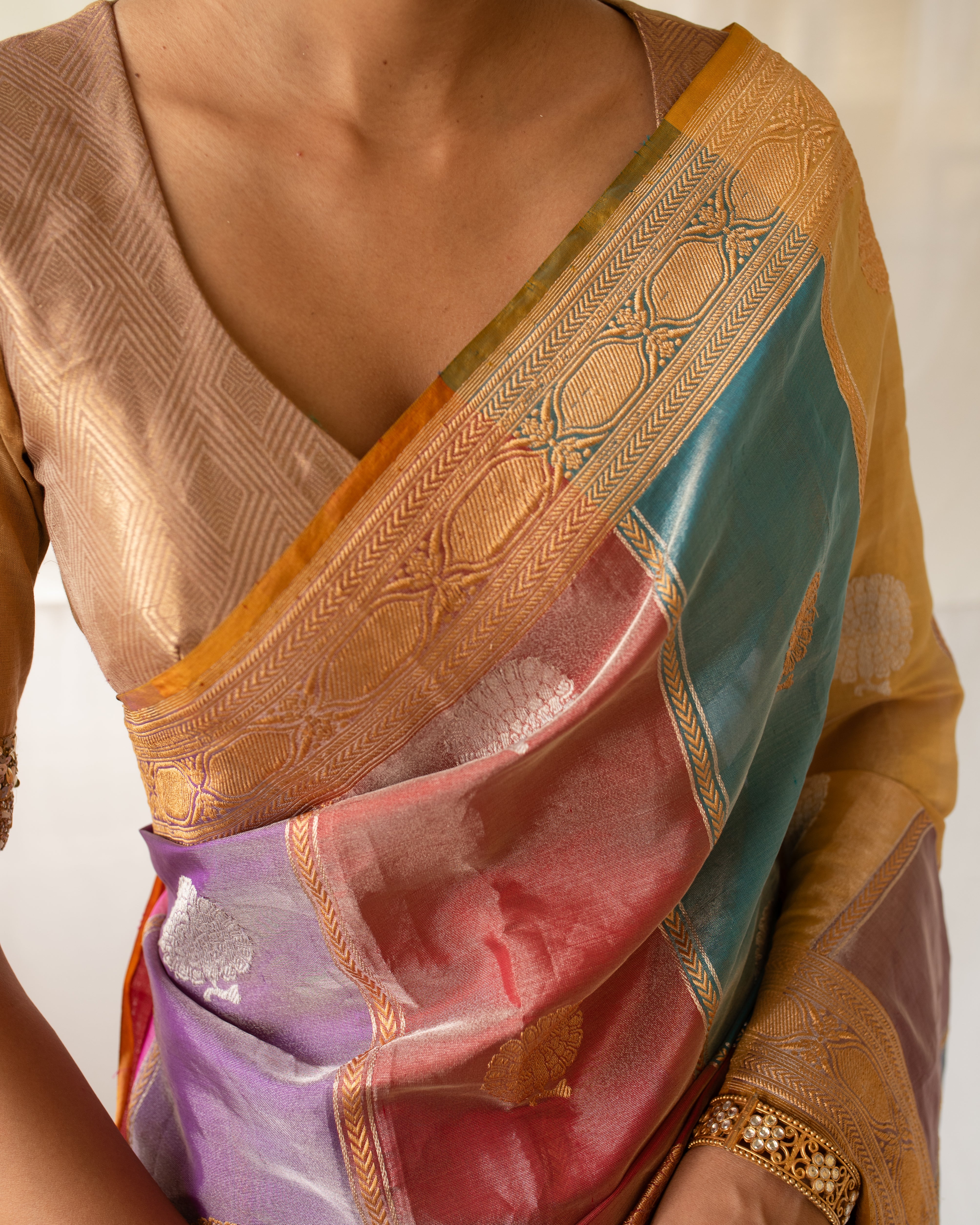
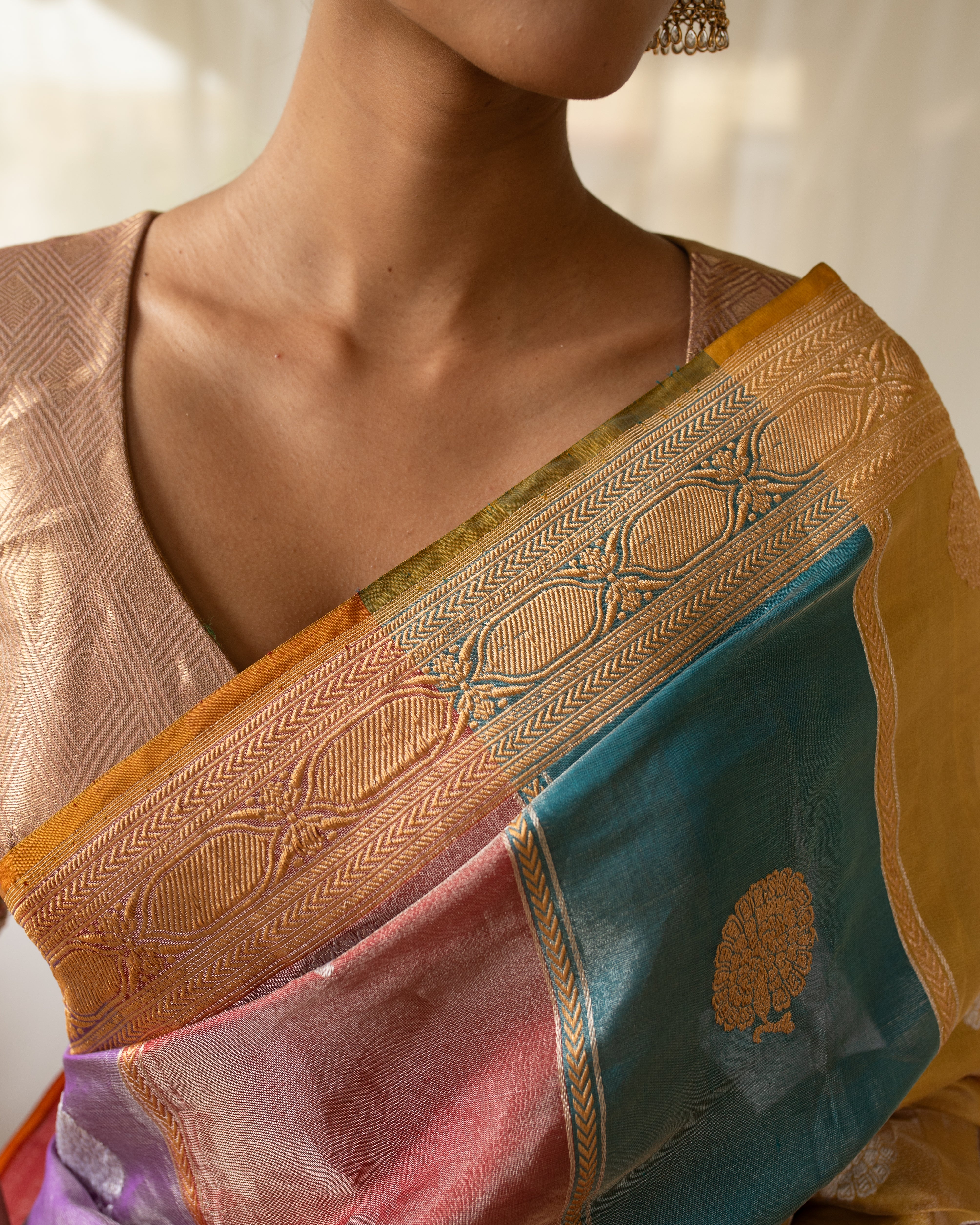
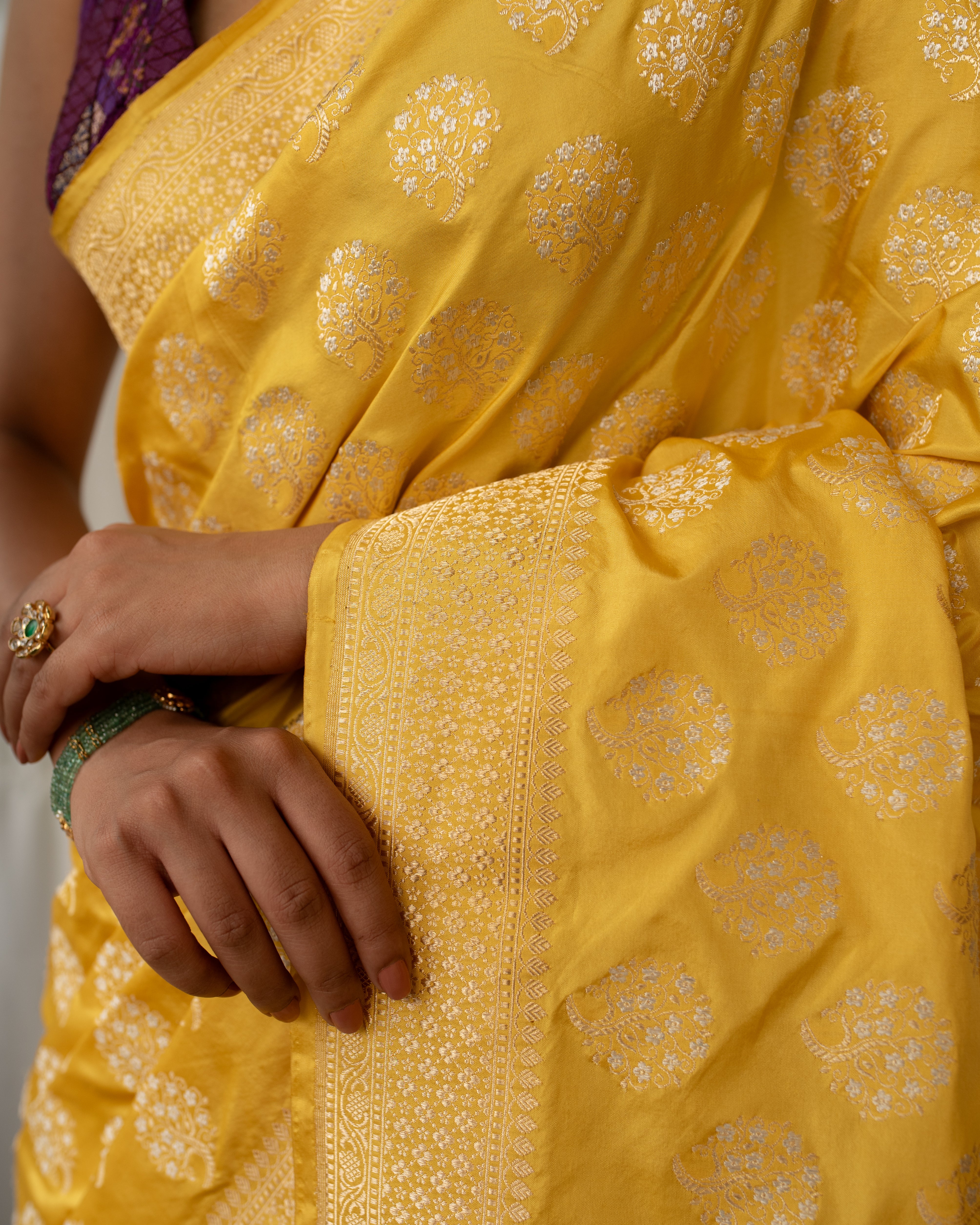
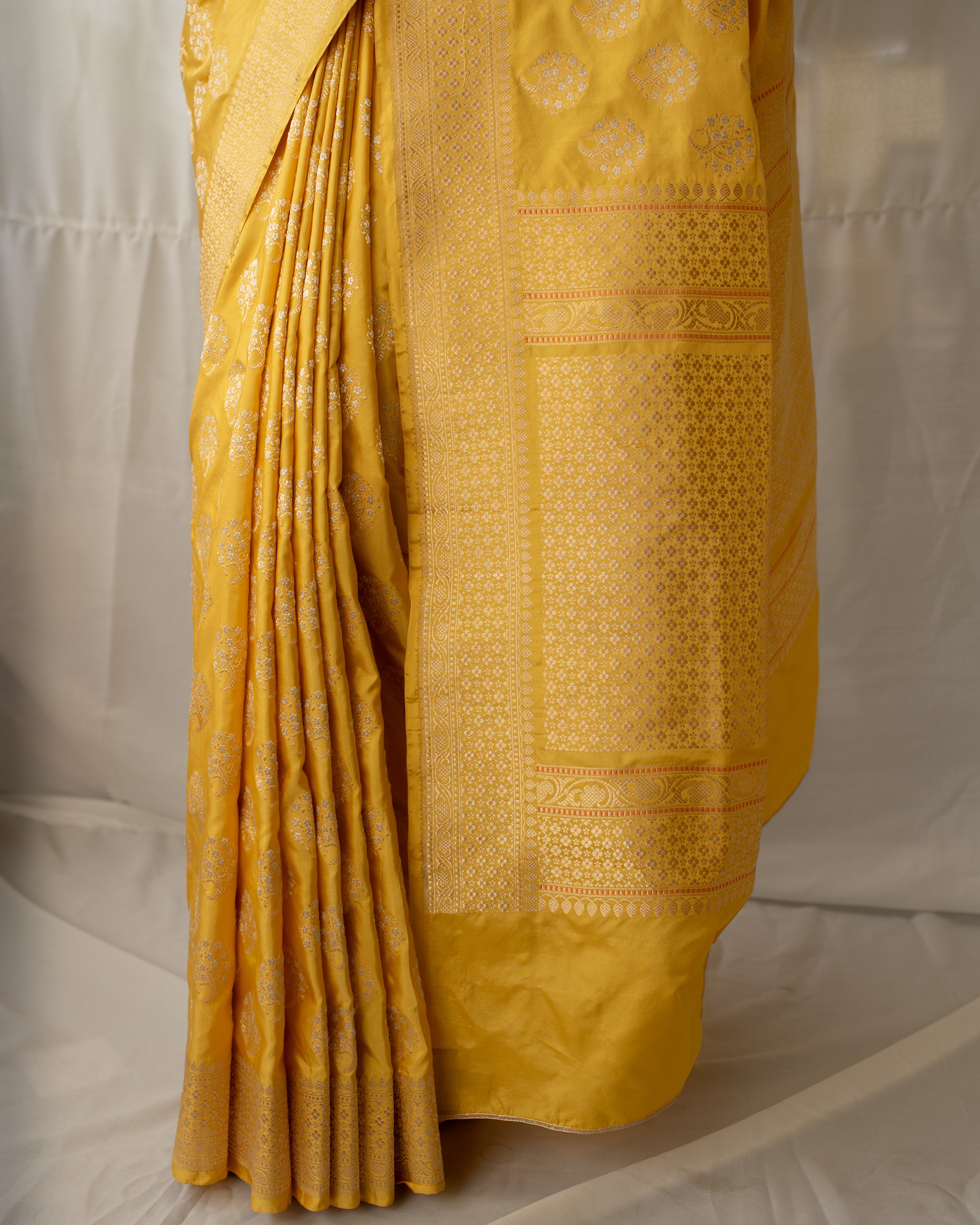
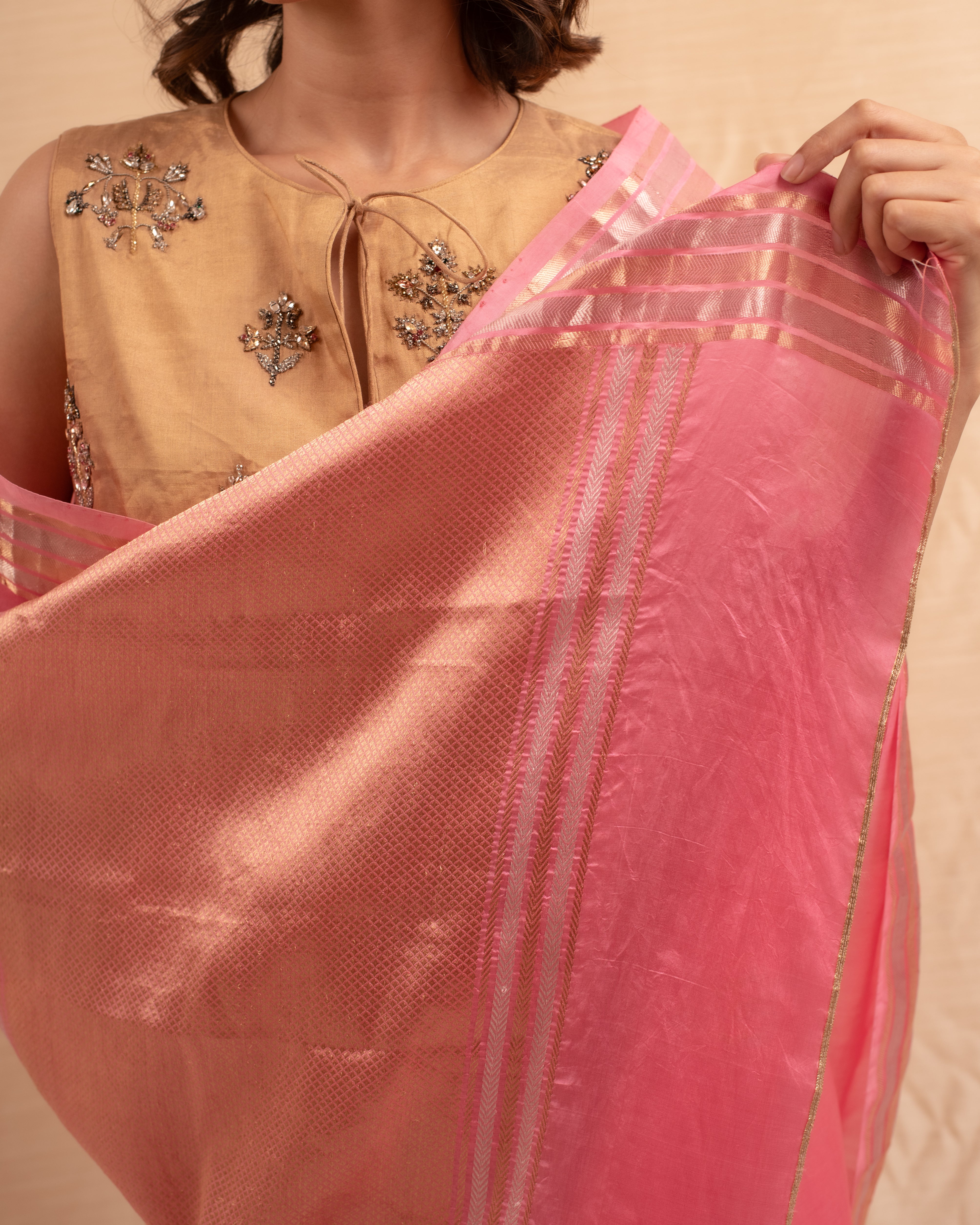
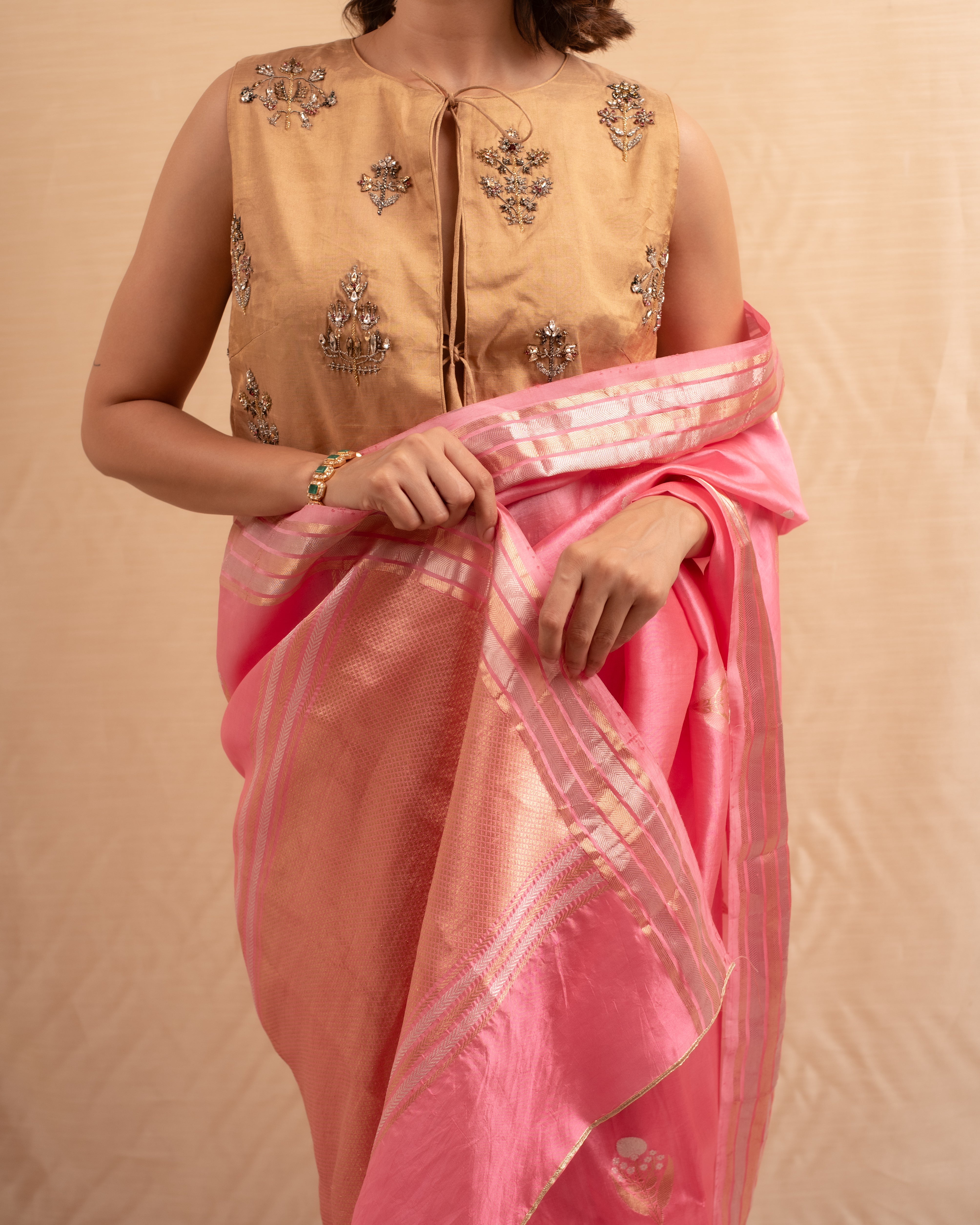
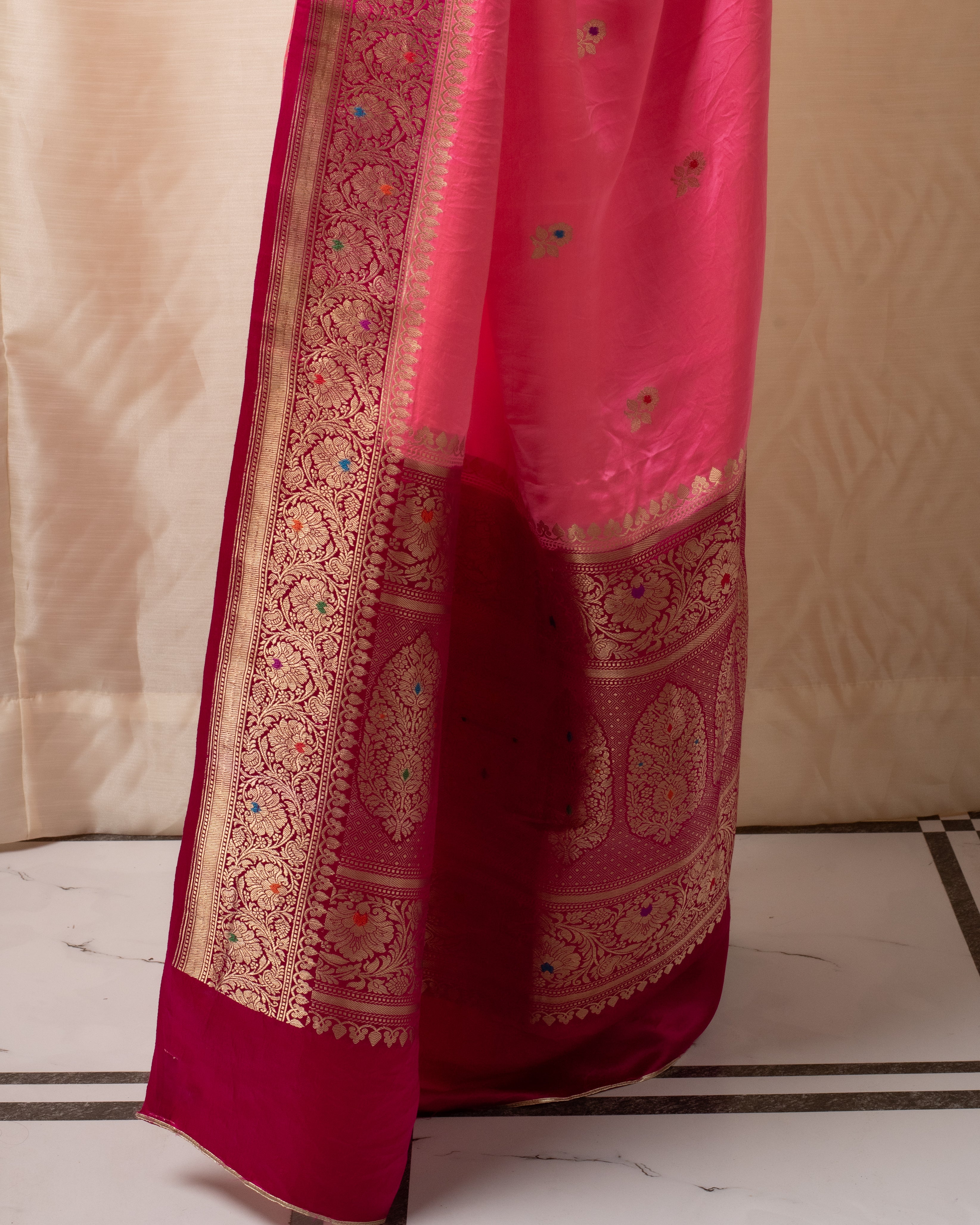
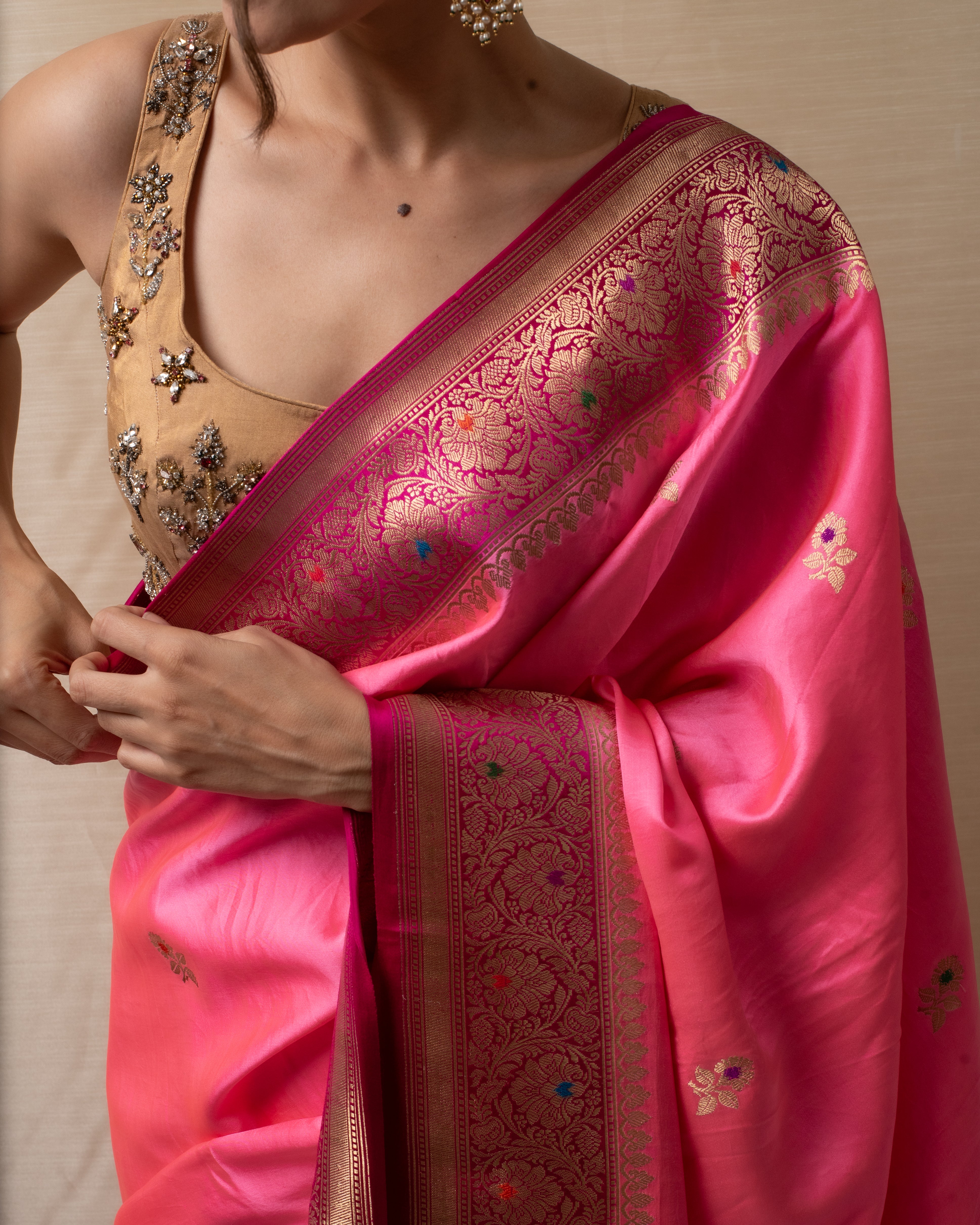
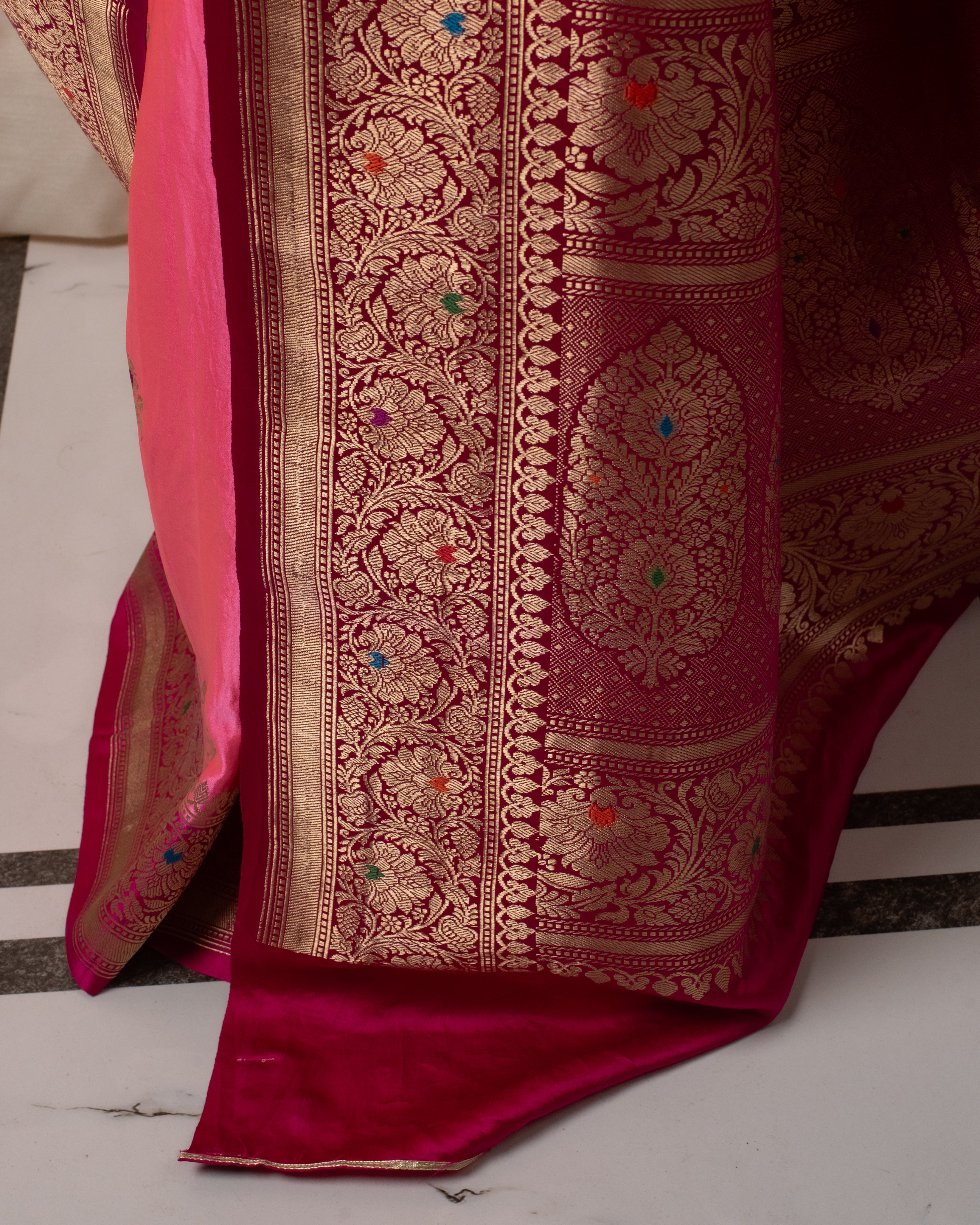
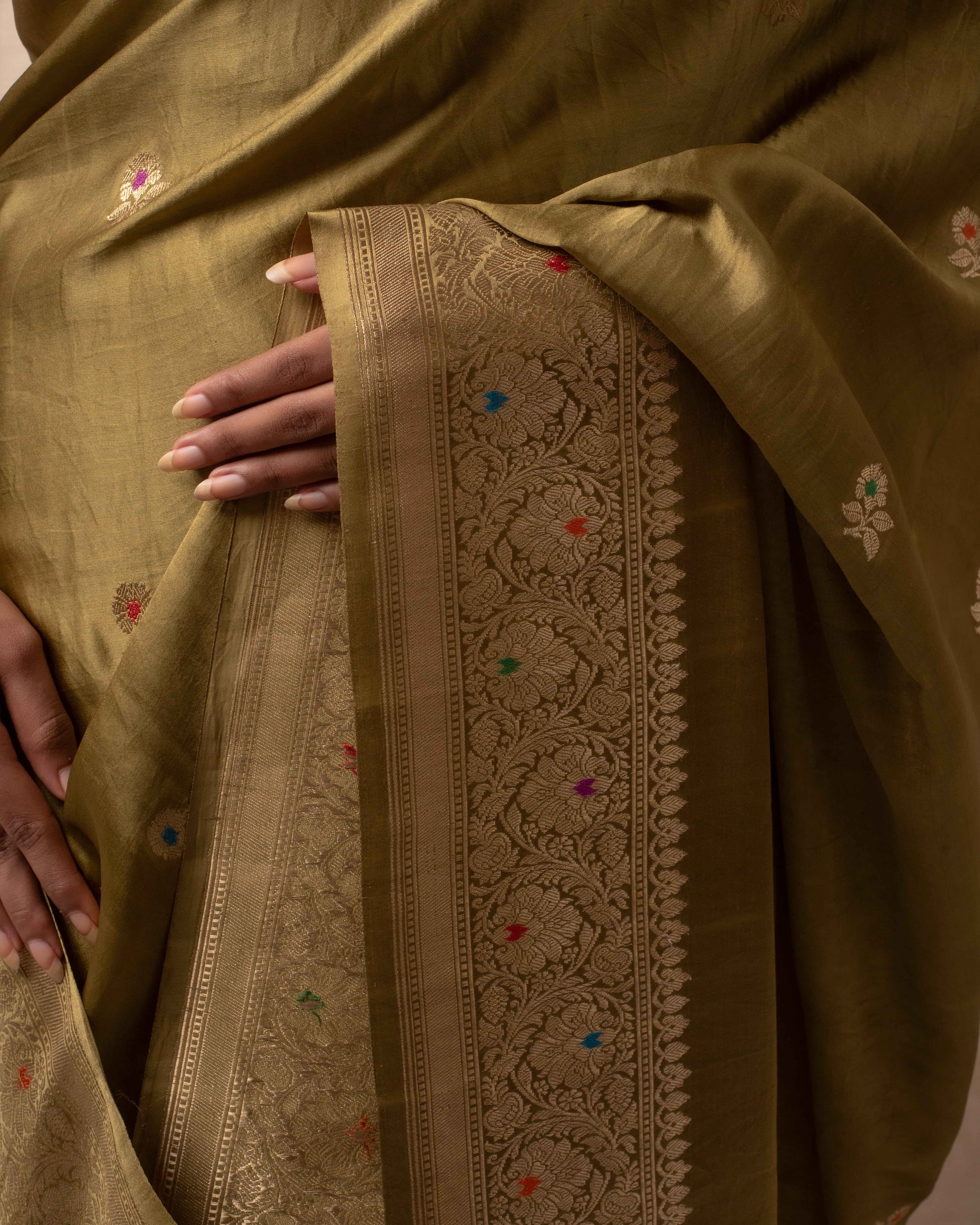
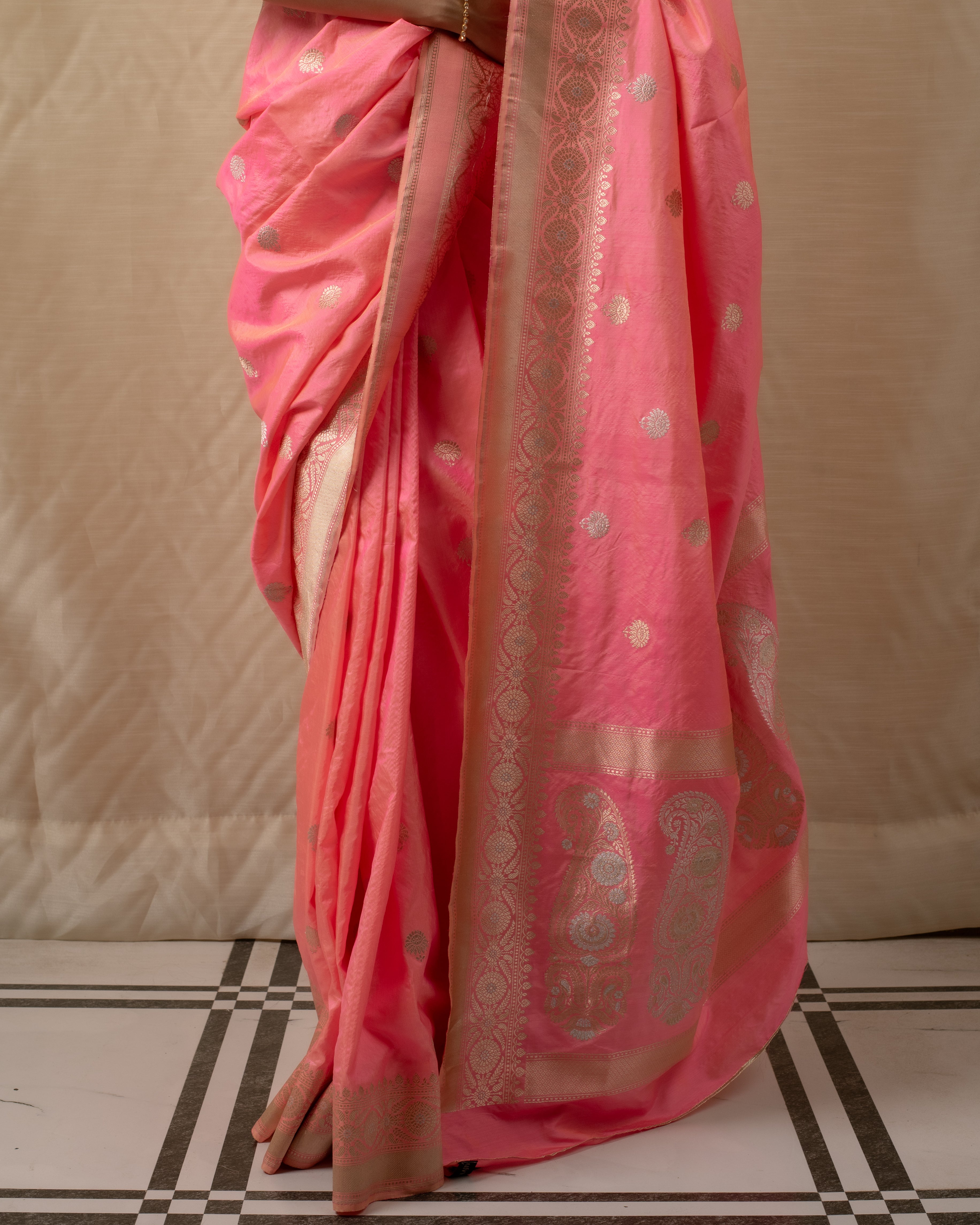
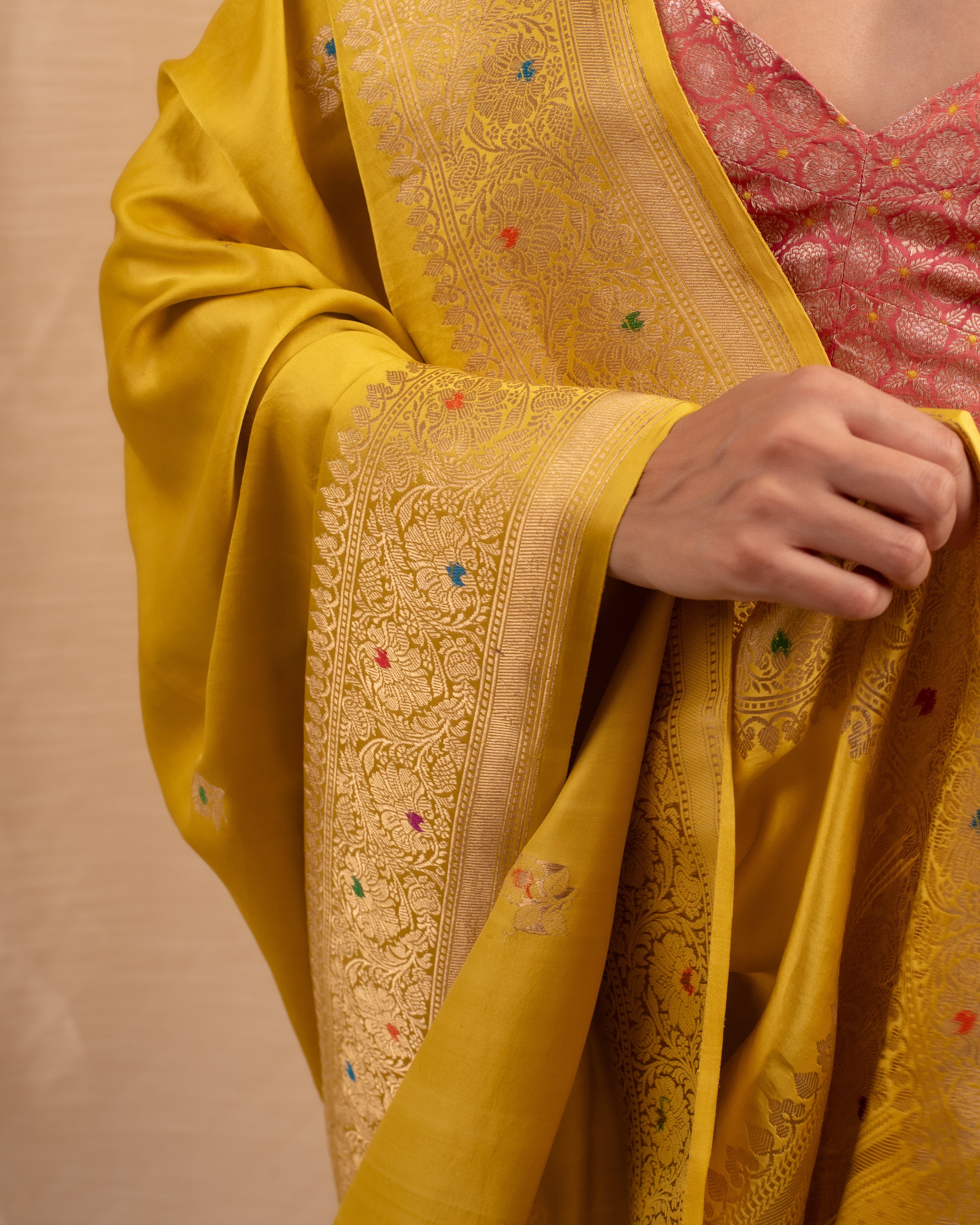
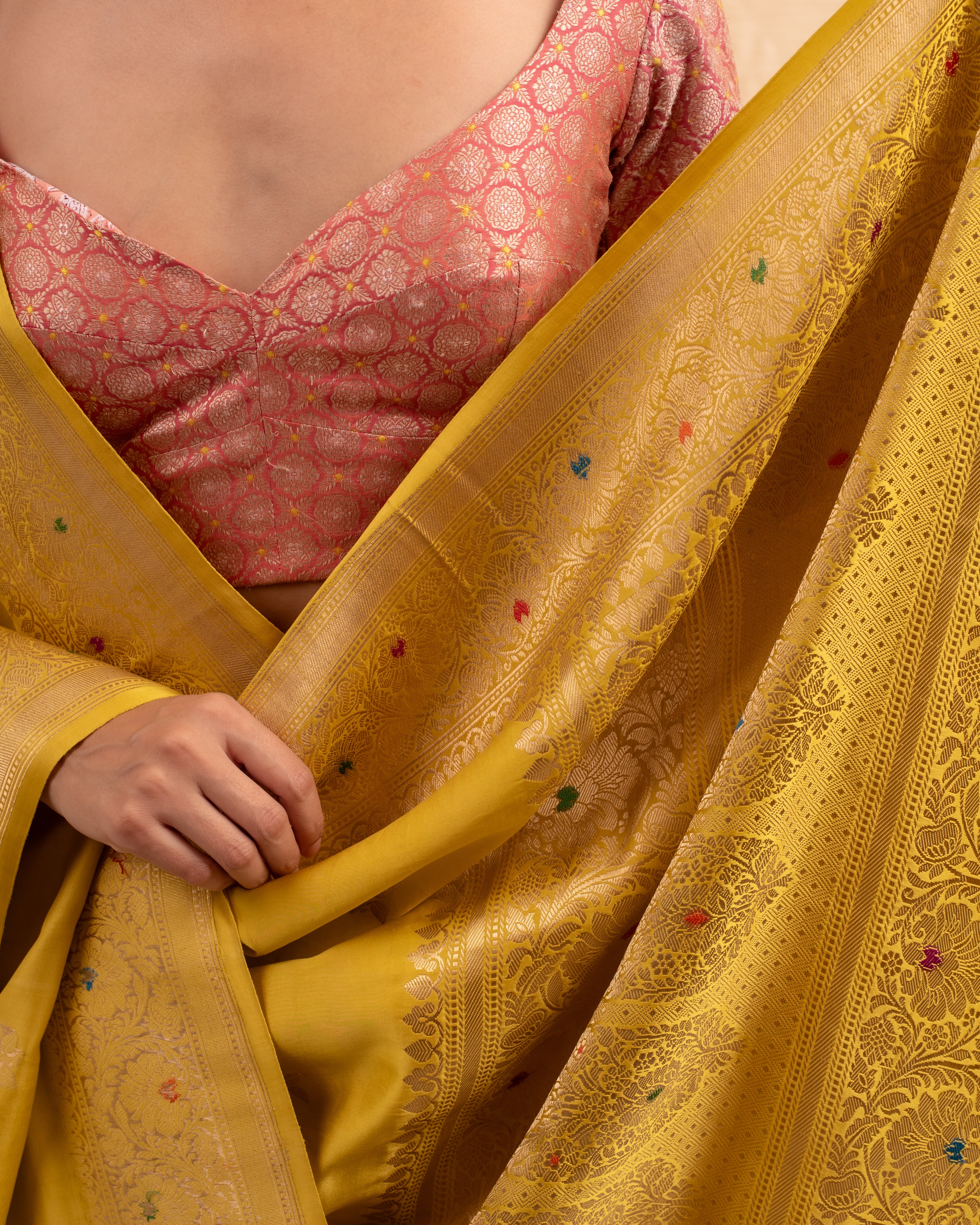
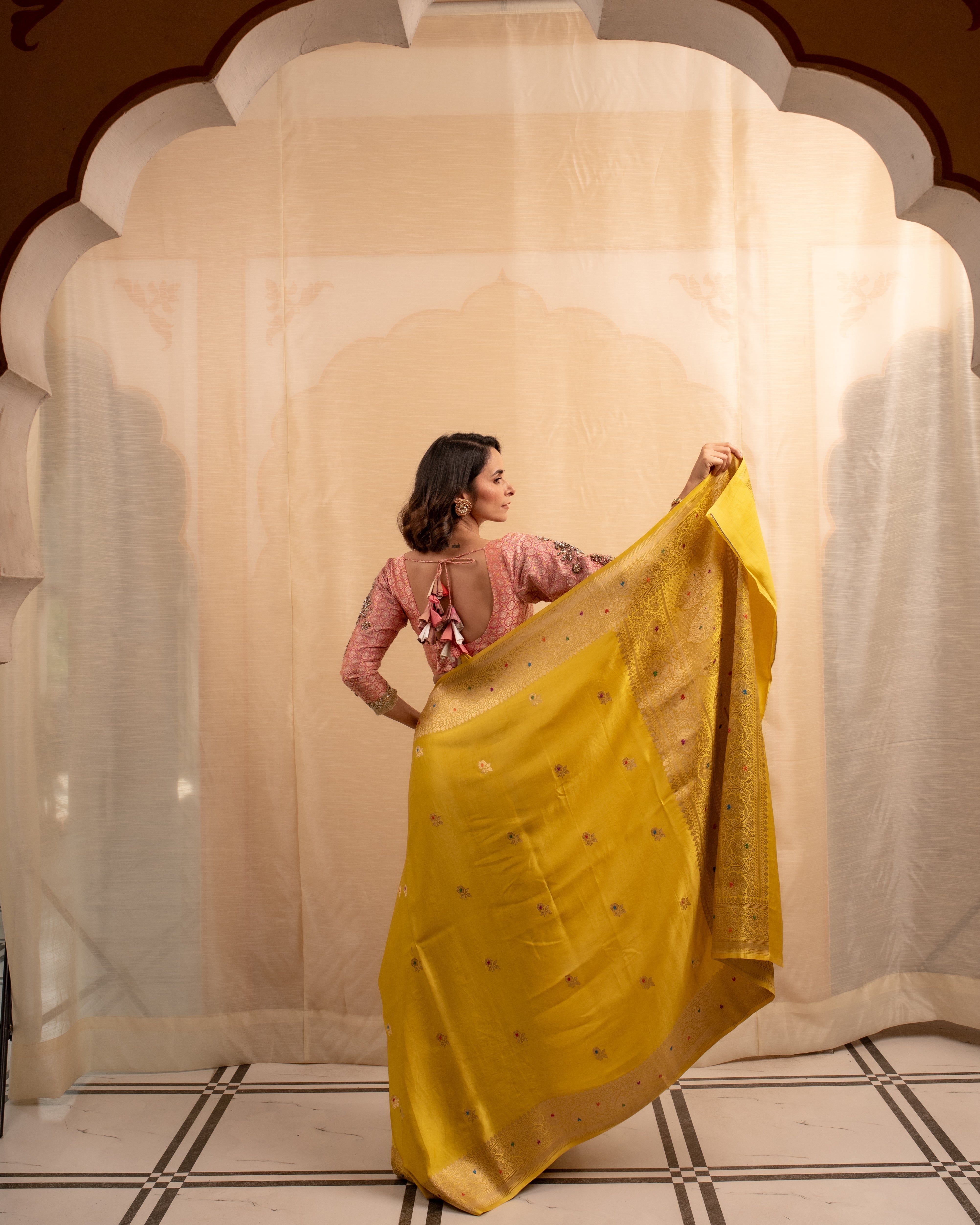
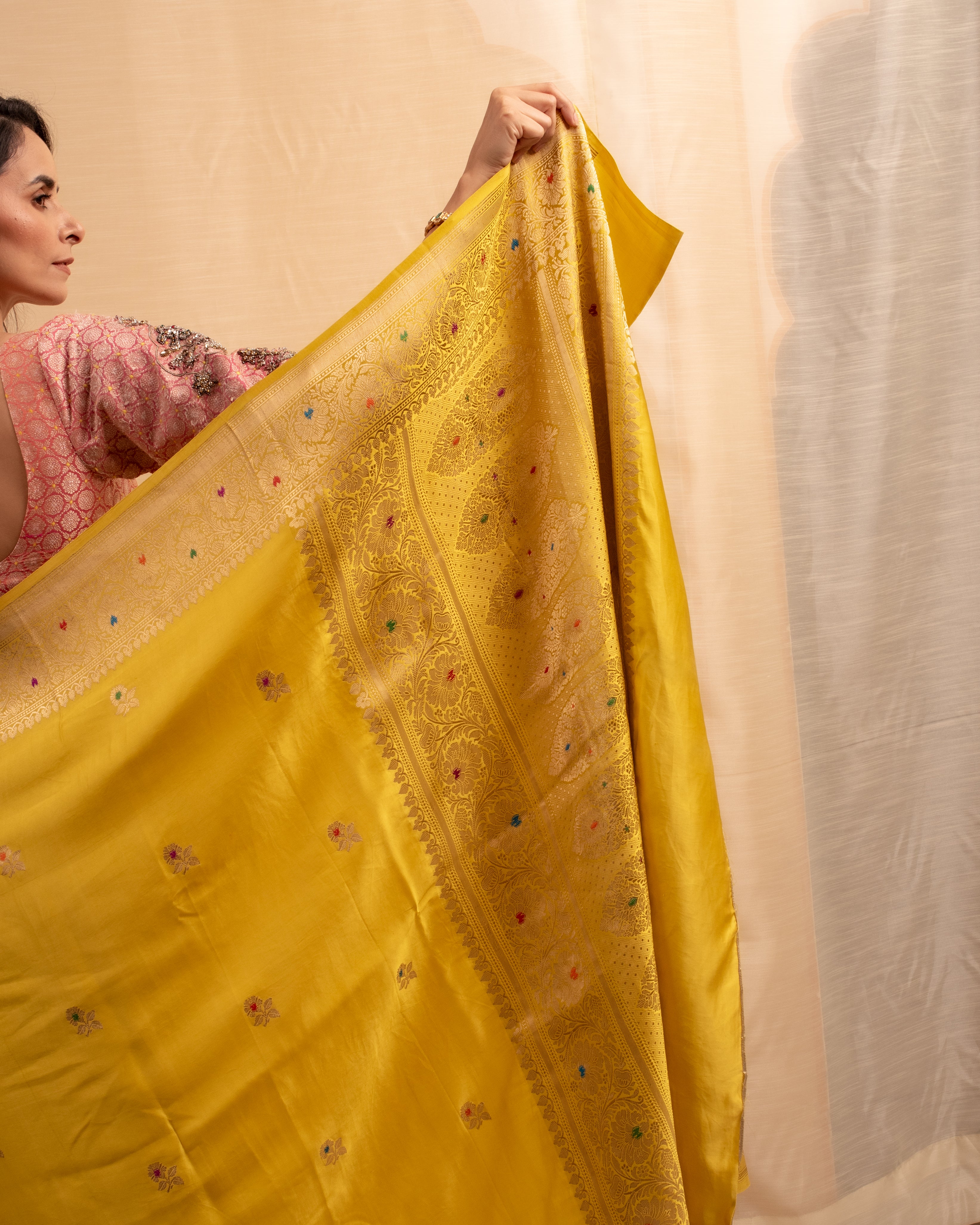
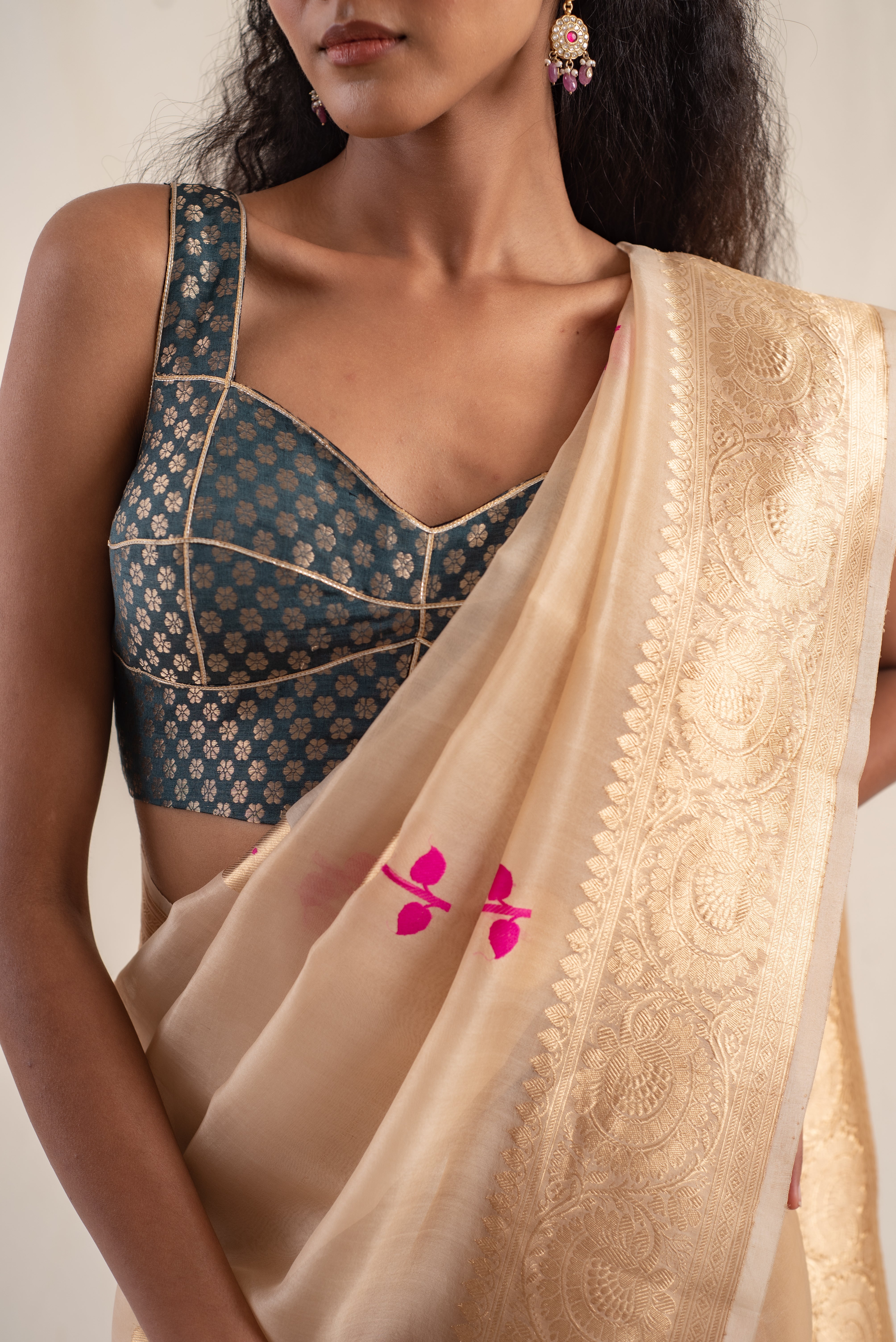
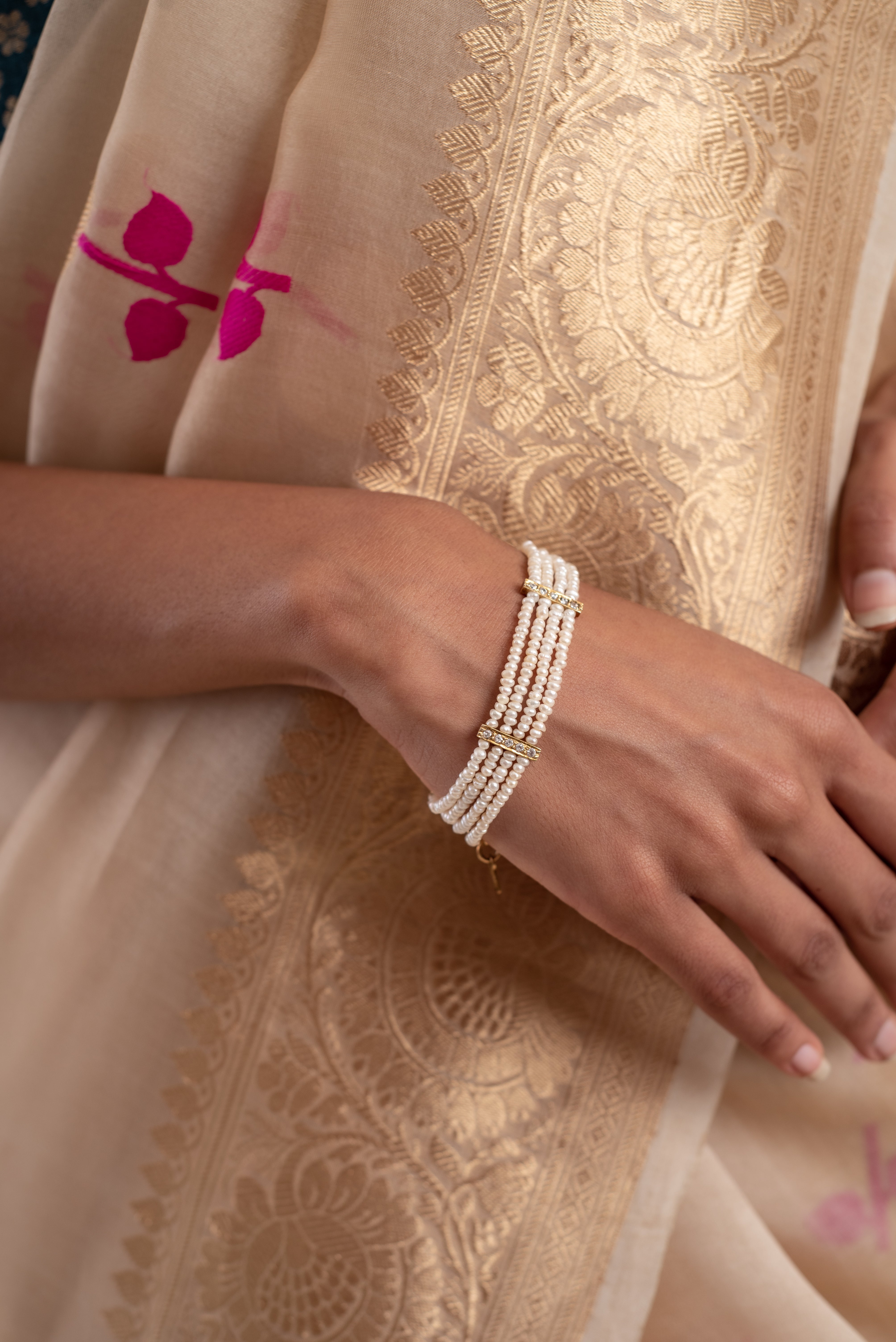
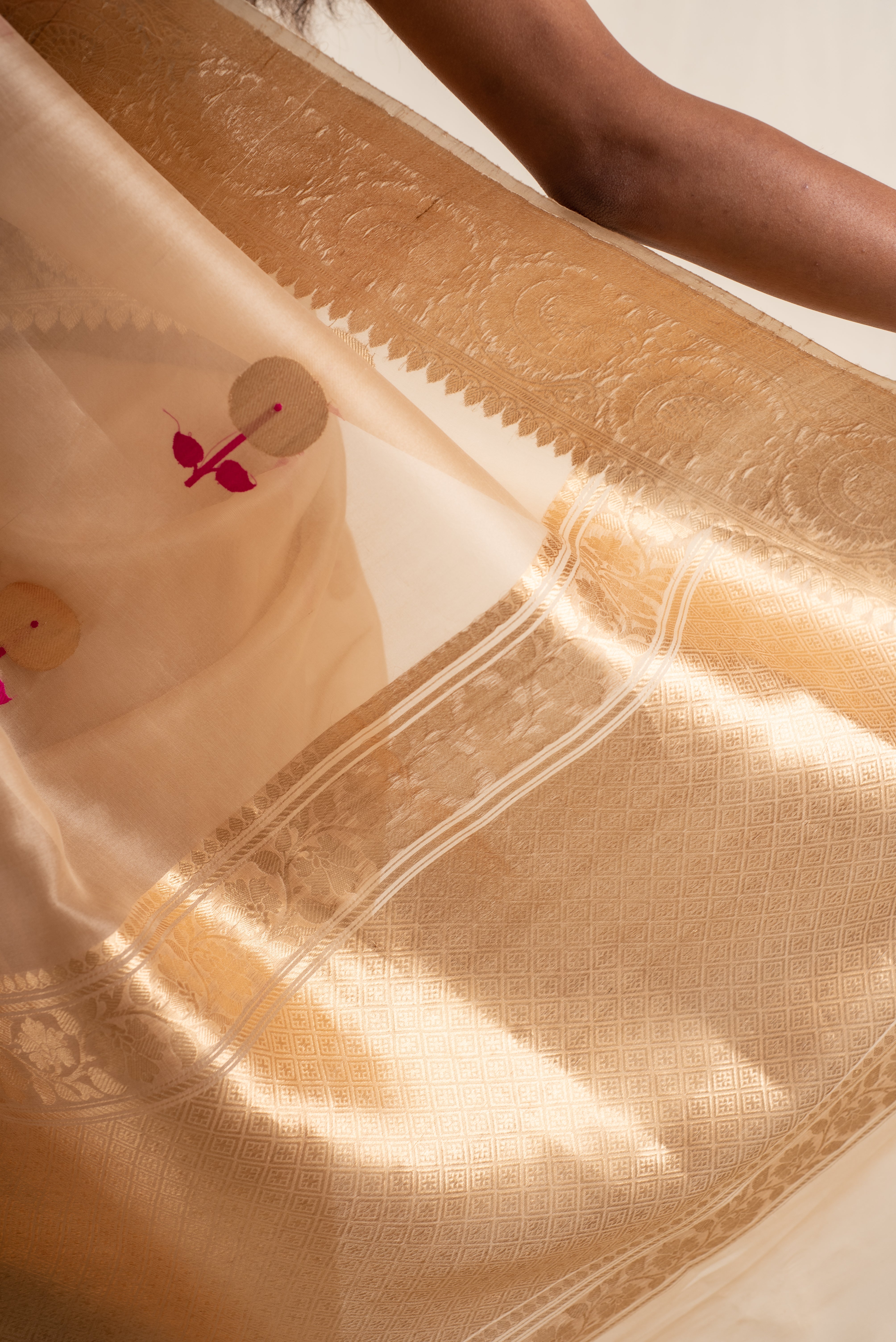
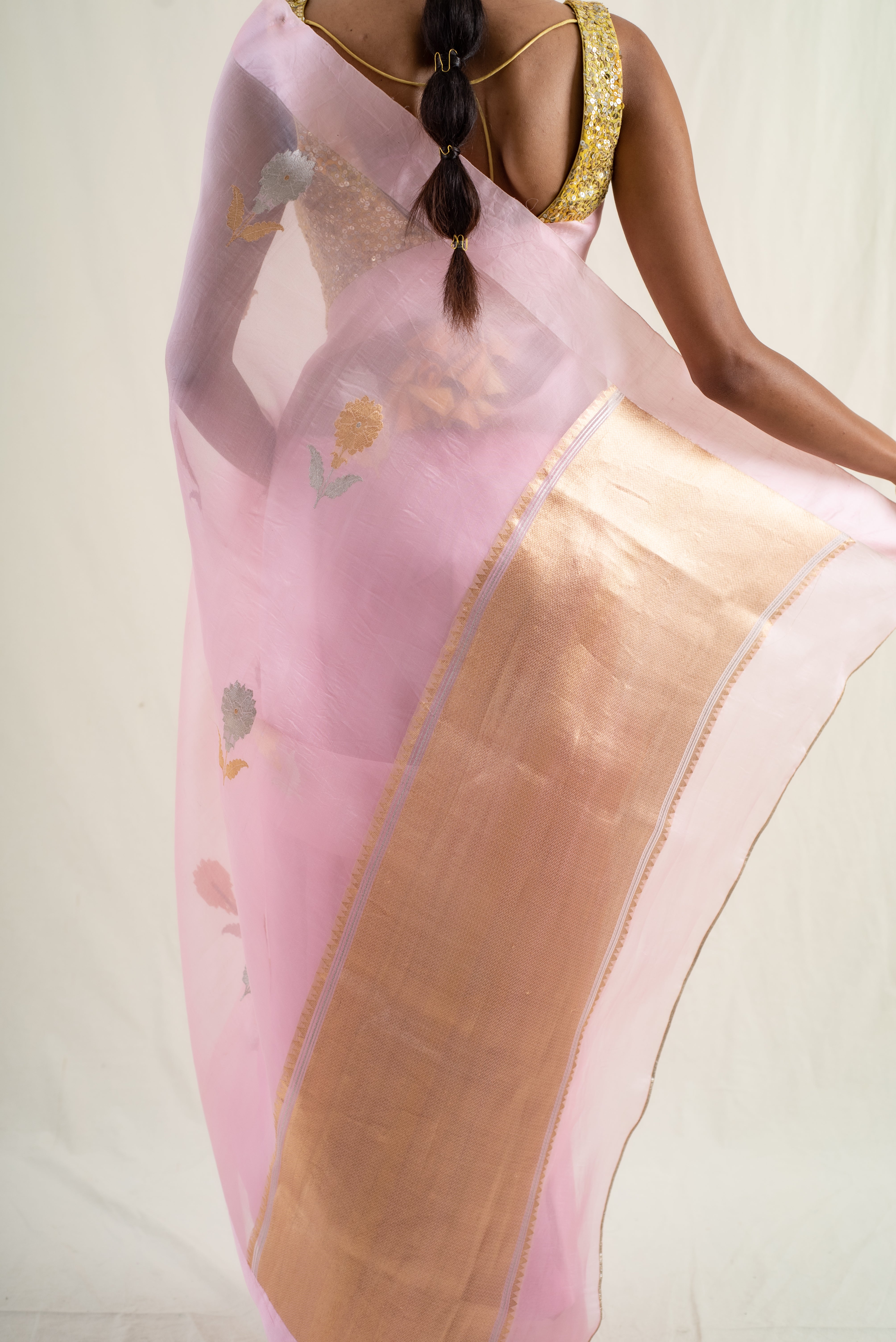
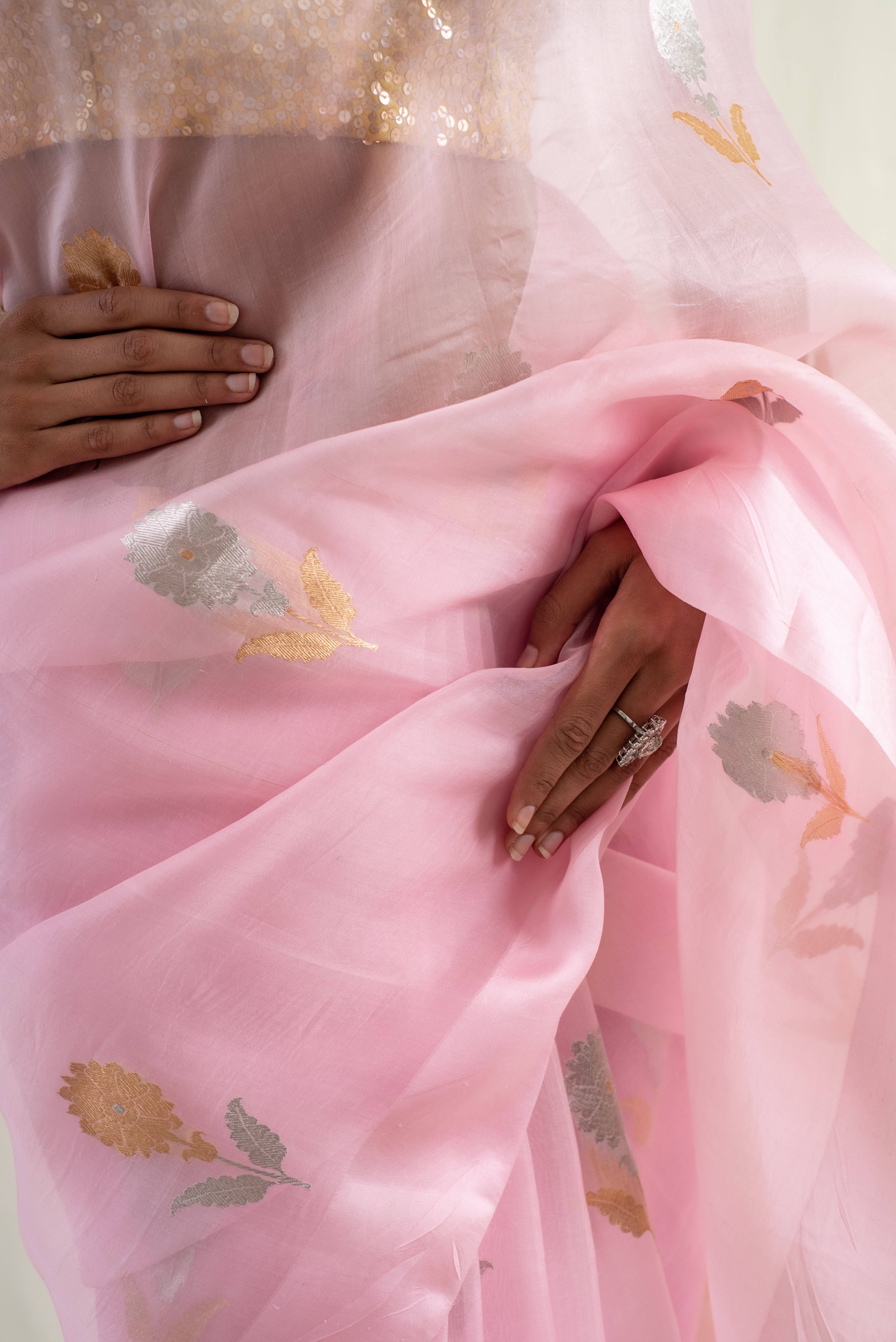
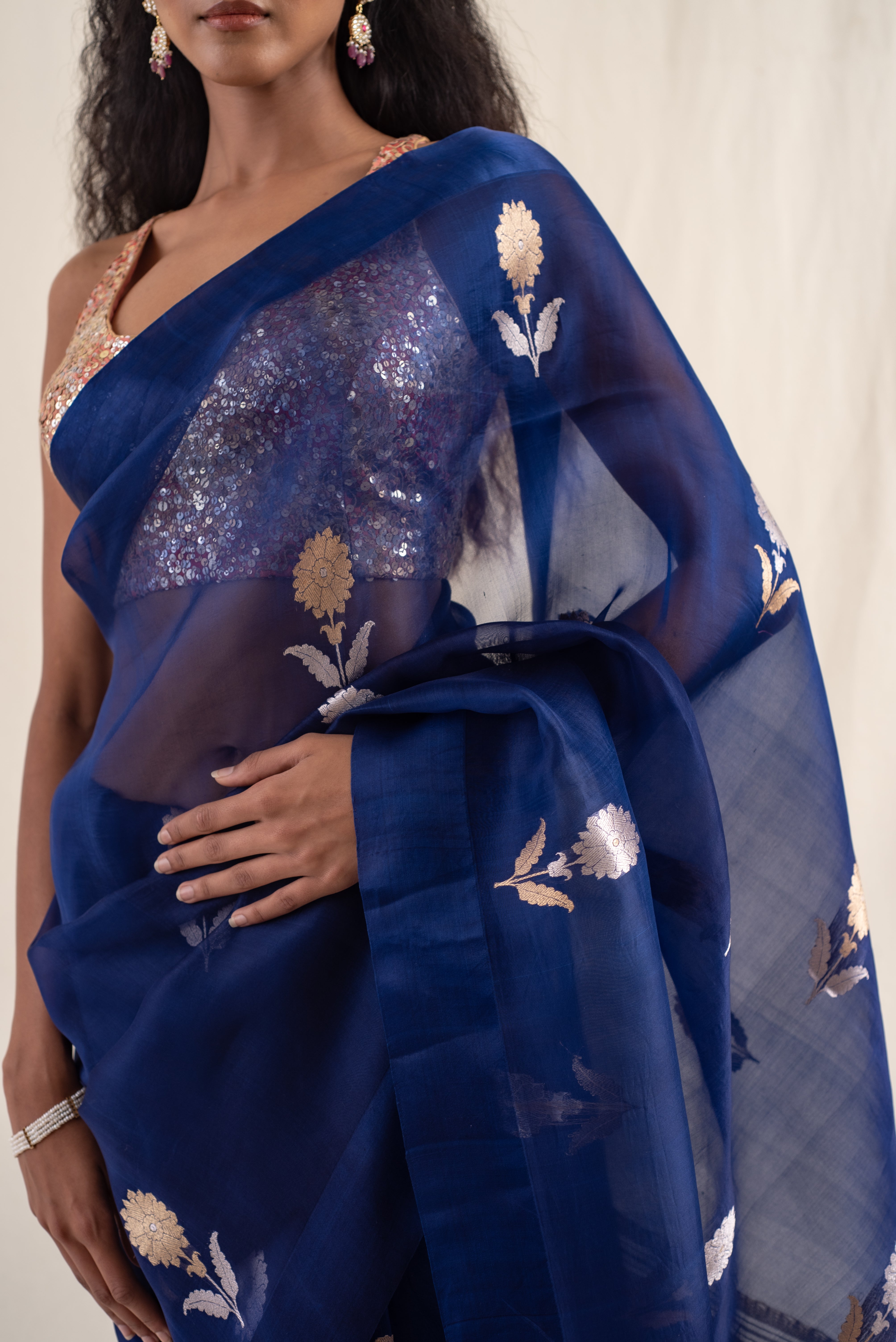
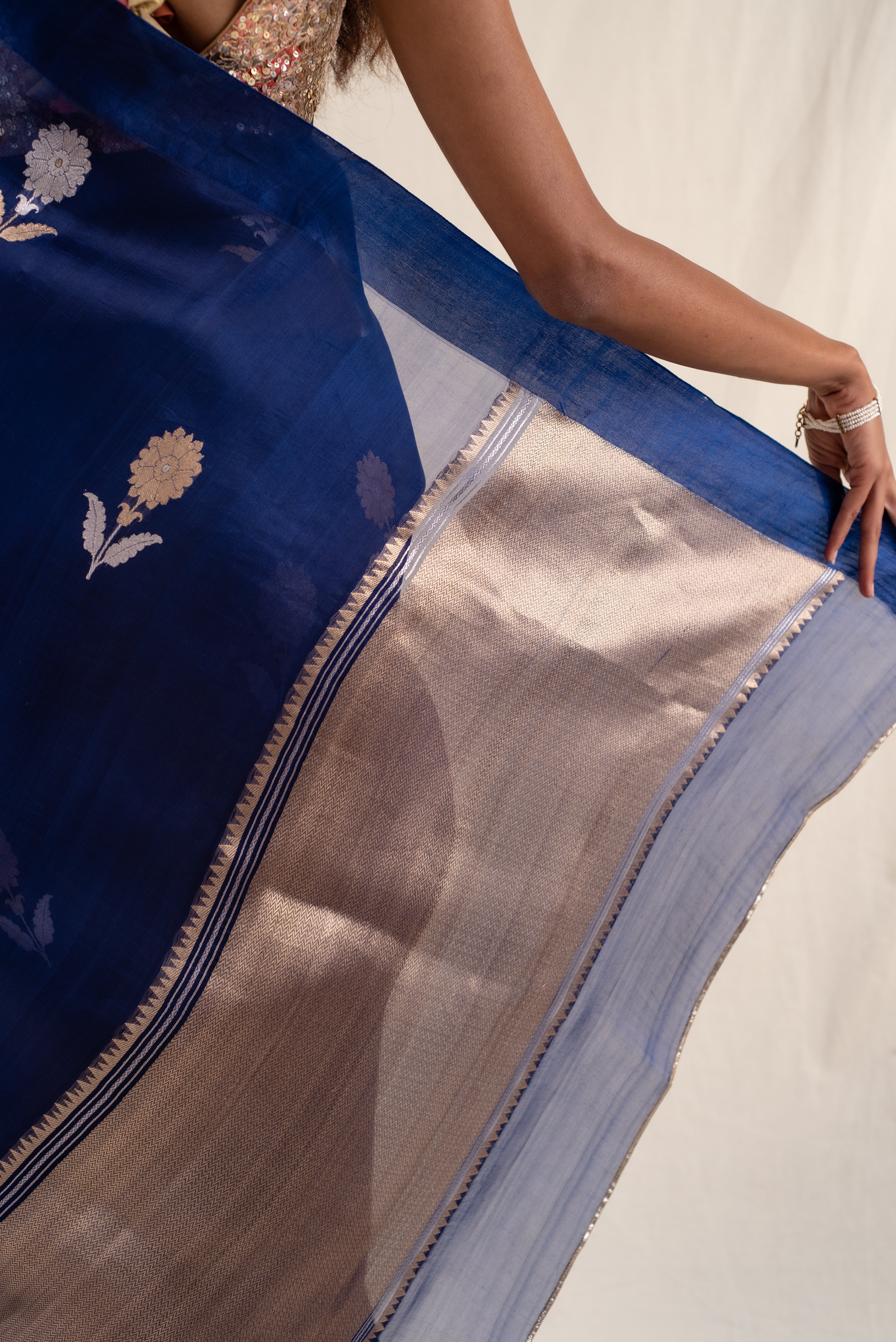
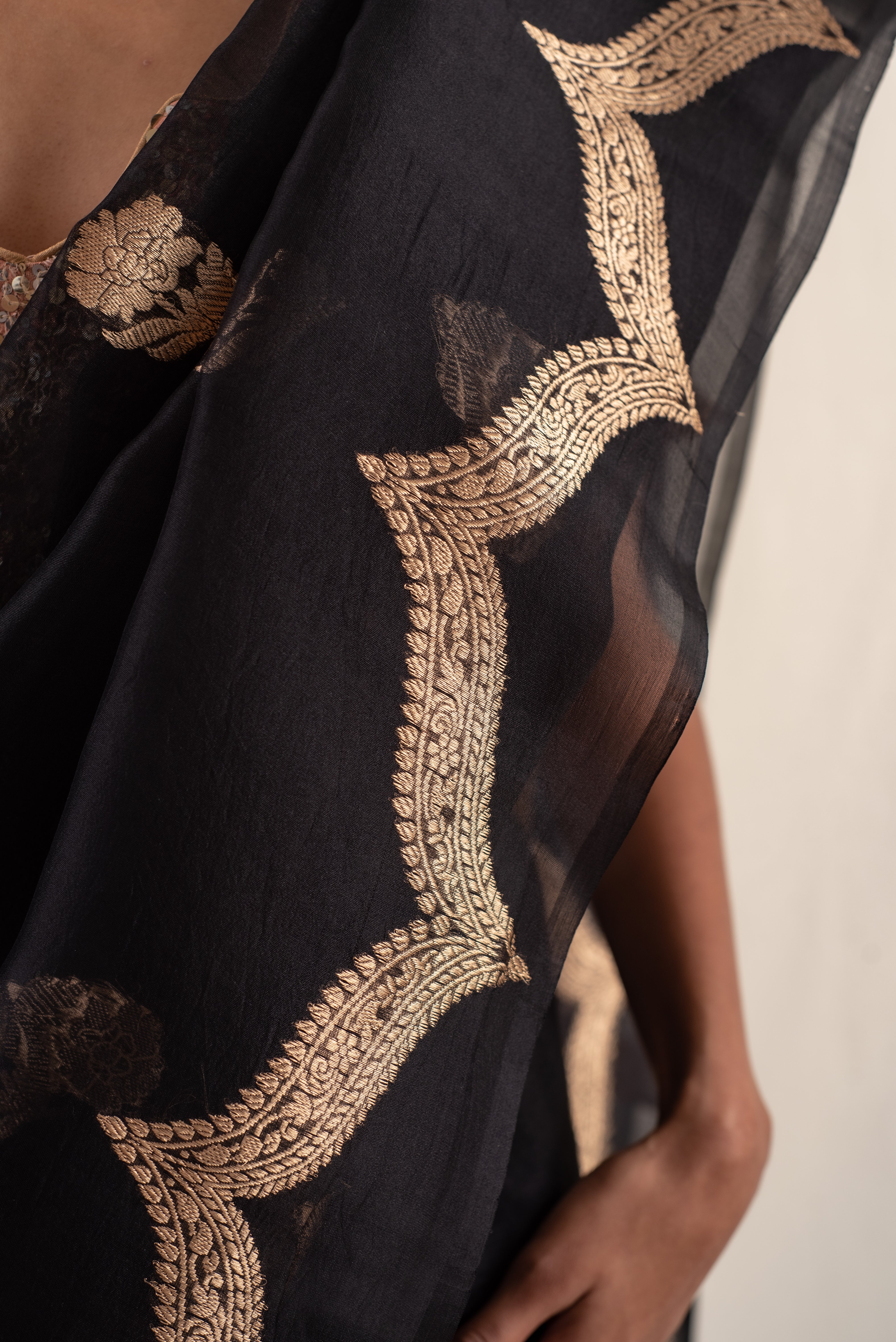
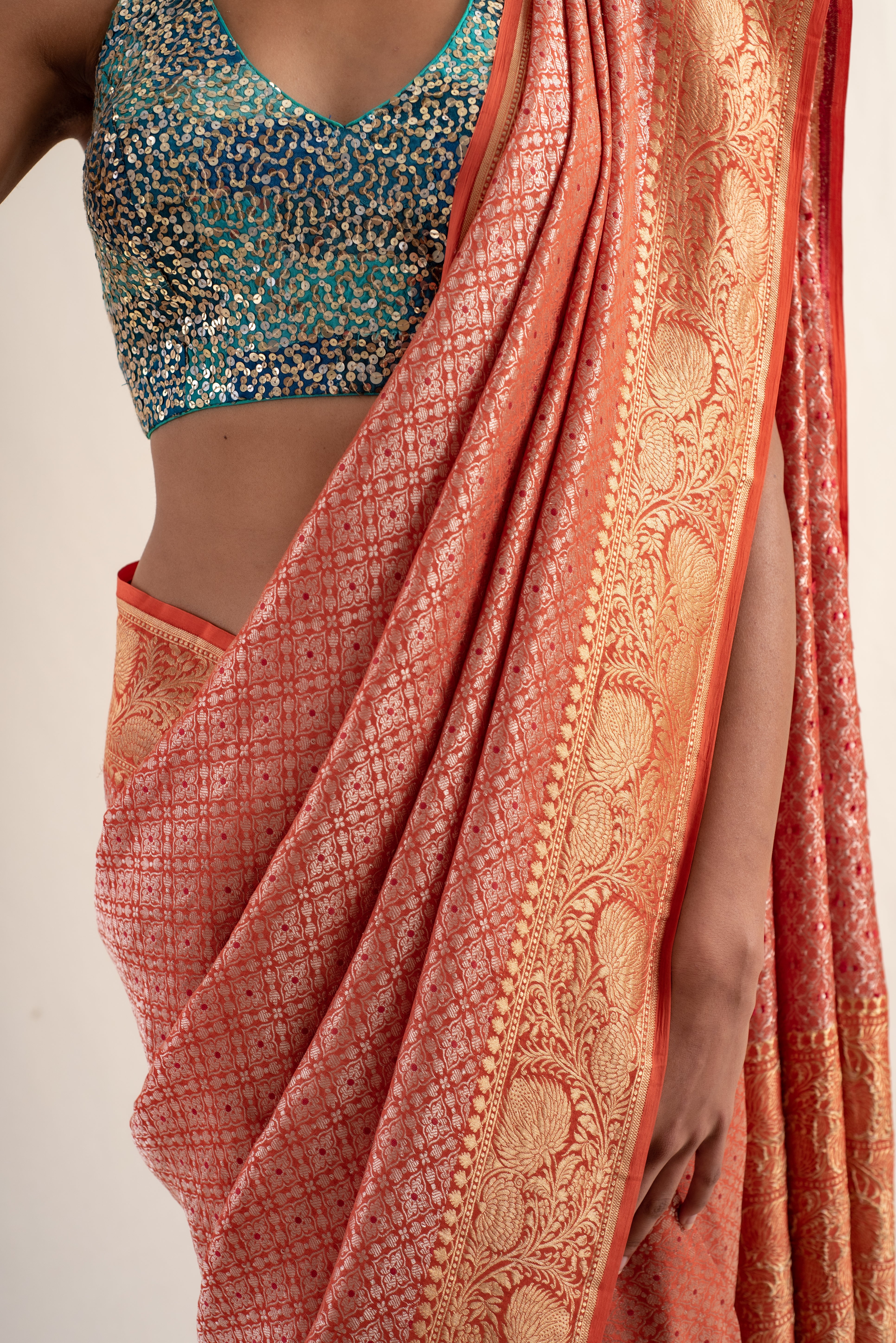
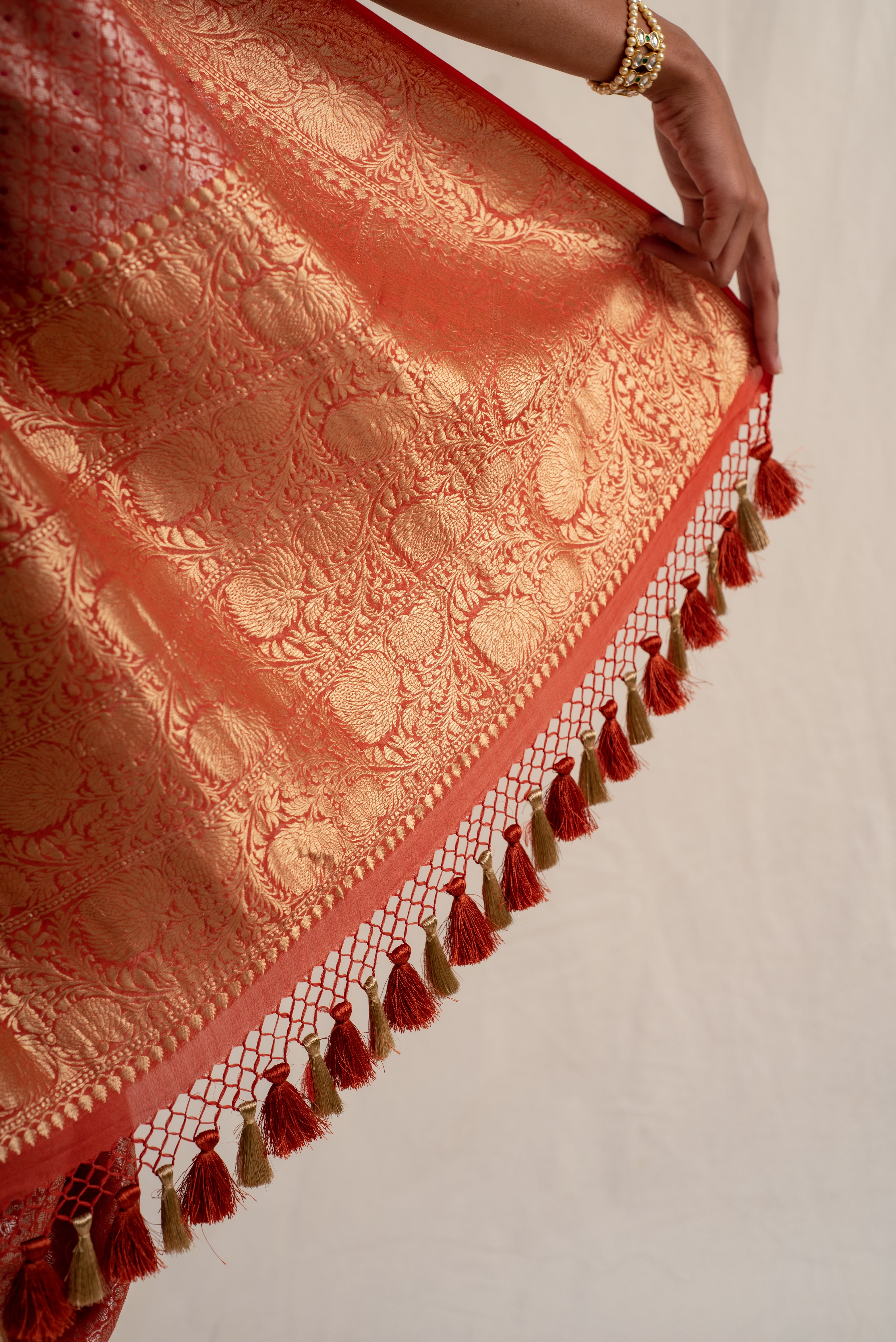
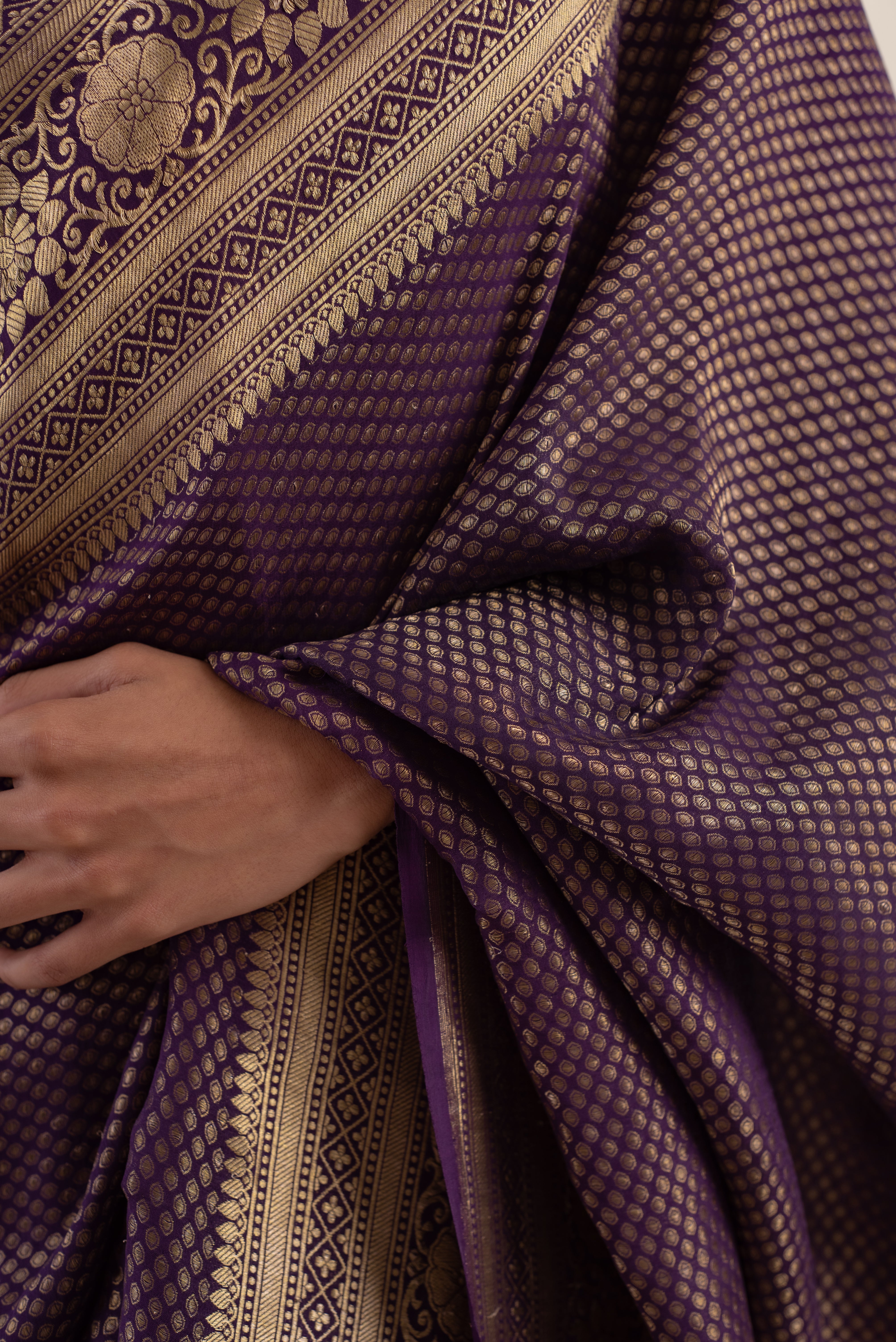
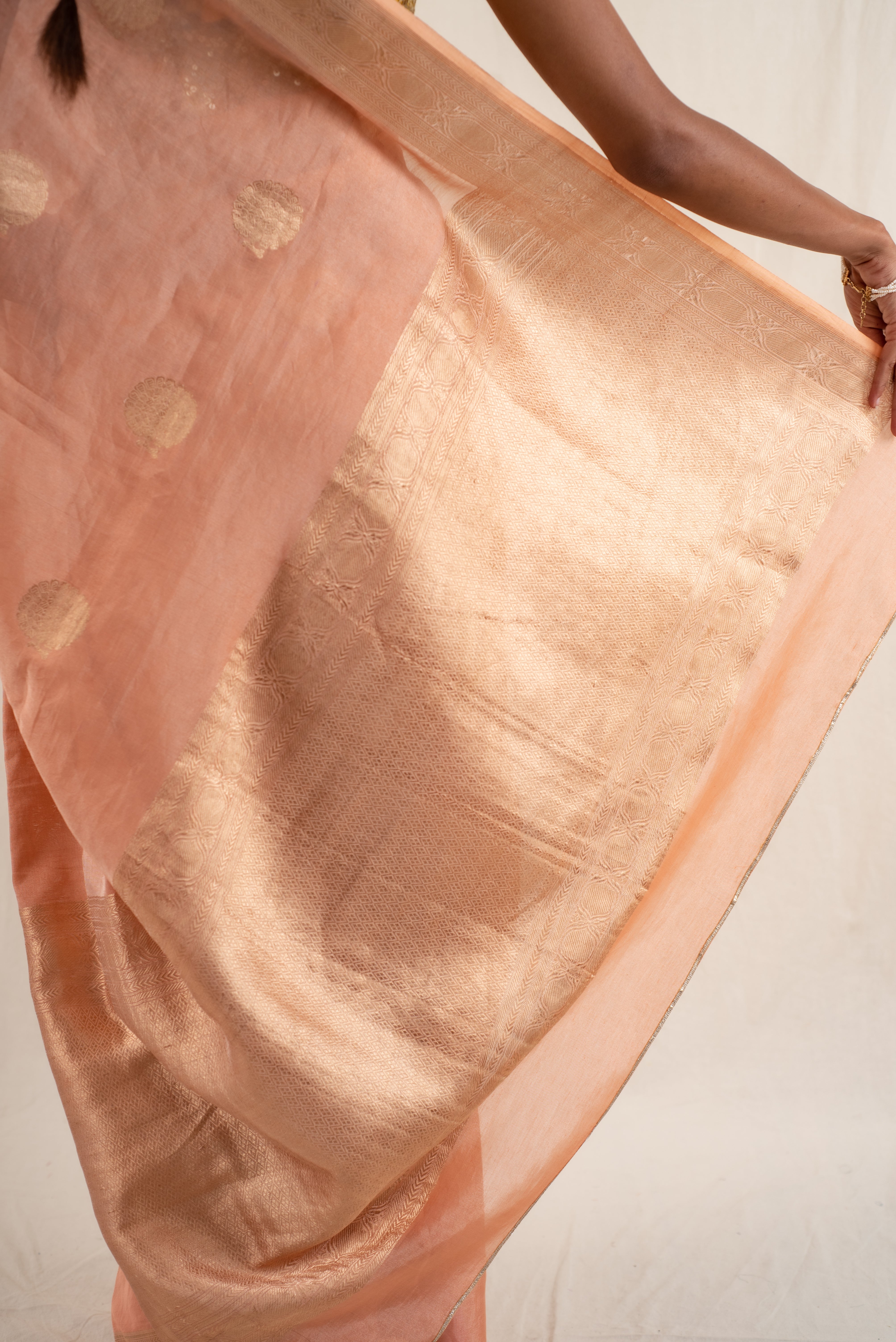
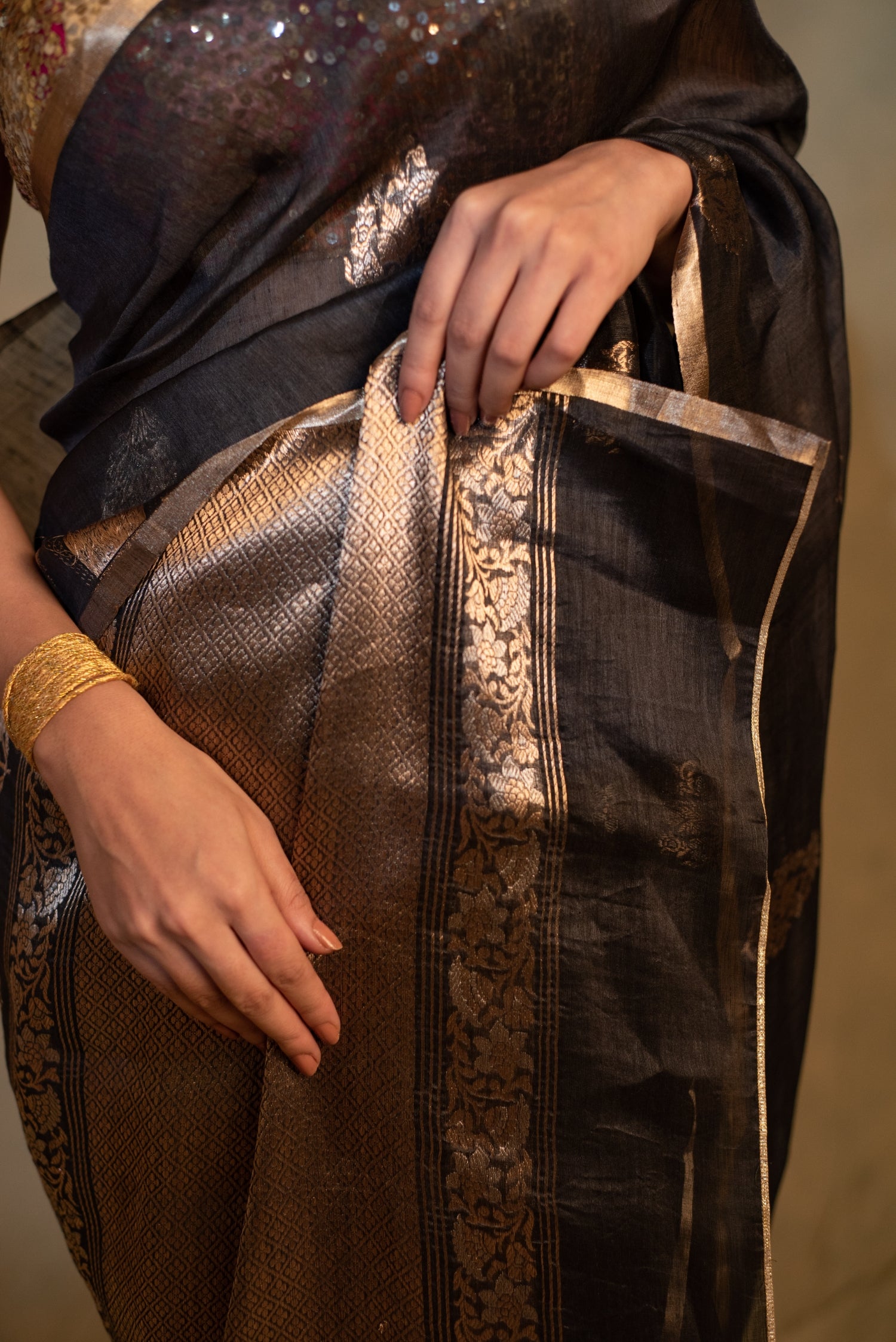
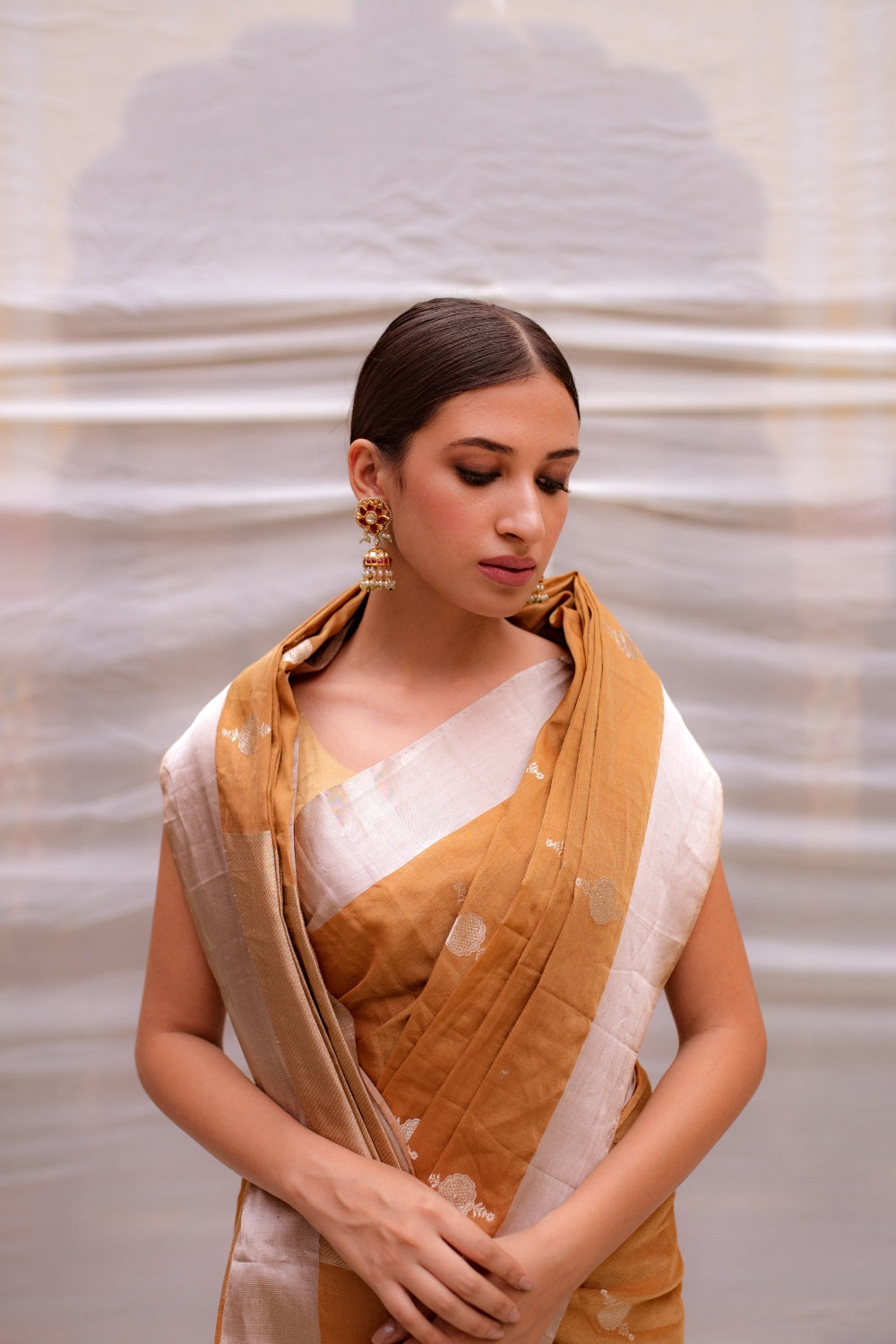
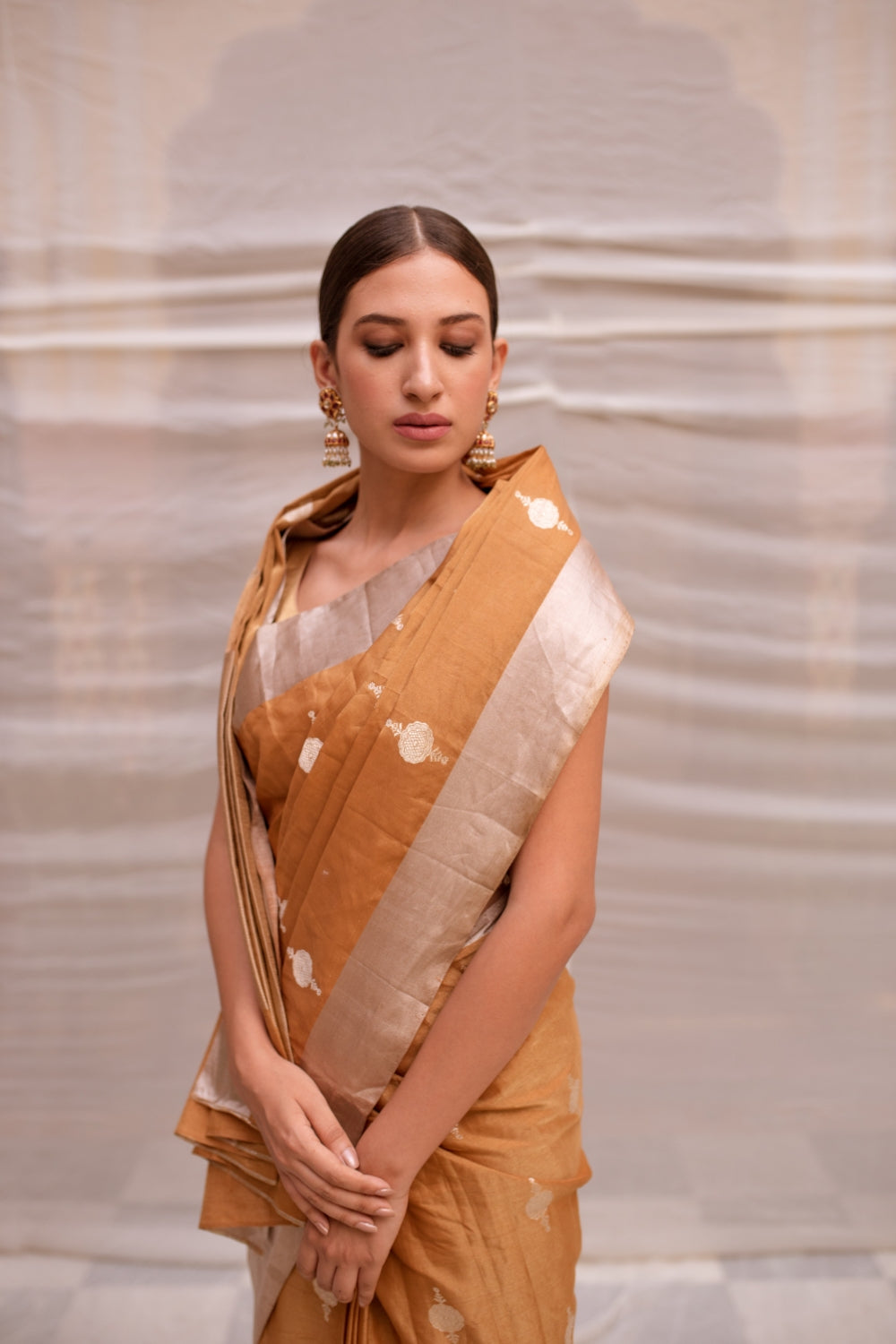
The identity of the saree is established through its weave. Motifs are not applied to the surface; they are formed within it. Supplementary weft threads are inserted, and motifs are allowed to rise subtly from the silk.
A gentle texture on the reverse is seen as the hallmark of authenticity. Floating threads, controlled irregularities, and a structured base are viewed as proof that human craftsmanship has taken precedence over mechanised shortcuts.
Some of the most recognised buttis include Ashraffi Butti, which echoes the circular form of historic gold coins (ashrafis) and symbolises prosperity and auspiciousness; Jhummar Butti, inspired by the ornate chandeliers of royal courts and palaces, translating their suspended elegance into delicate woven motifs; and Kairy Kalanga, the classic paisley form that remains one of the most enduring motifs in Indian textile design, symbolising fertility, life, and continuity.
In contrast to buttis, bail (vine) patterns form continuous, flowing compositions that traverse the fabric. These are not individual motifs but interconnected designs that create movement and density across the surface. Angoor Bail, inspired by trailing grapevine clusters, is commonly seen as part of the elaborate Jangla pattern tradition, representing abundance and organic growth through its lush, all-over layout.
What is often referred to as Mehrab Bail is more accurately understood as the Mughal Jali pattern. Derived from the intricate lattice screens of Mughal architecture, this design translates geometric and arched frameworks into woven form, resulting in a structured yet delicate network across the textile.
Together, these elements clearly distinguish between the scattered precision of buttis and the continuous flow of bail patterns, reflecting how Banarasi weaving preserves tradition while continually evolving in form and expression.
Through floating threads on the reverse, zari weight, and GI certification, where applicable.
Q2. Is real zari always used?
Not always; real and tested zari options are both available, depending on budget and occasion.
Q3. Which fabric base is most traditional?
Pure Katan silk remains the classic foundation for Butidar weaving.
Q4. Is the saree suitable for weddings?
It is underlined by salient characteristics of the saree, being mainly put to use on occasions like marriages, parties, and while giving bridal trousseaus.
Q5. Can it be preserved as an heirloom?
Provided that the right storage conditions are followed, the saree would be able to pass on for several centuries.
A gentle texture on the reverse is seen as the hallmark of authenticity. Floating threads, controlled irregularities, and a structured base are viewed as proof that human craftsmanship has taken precedence over mechanised shortcuts.
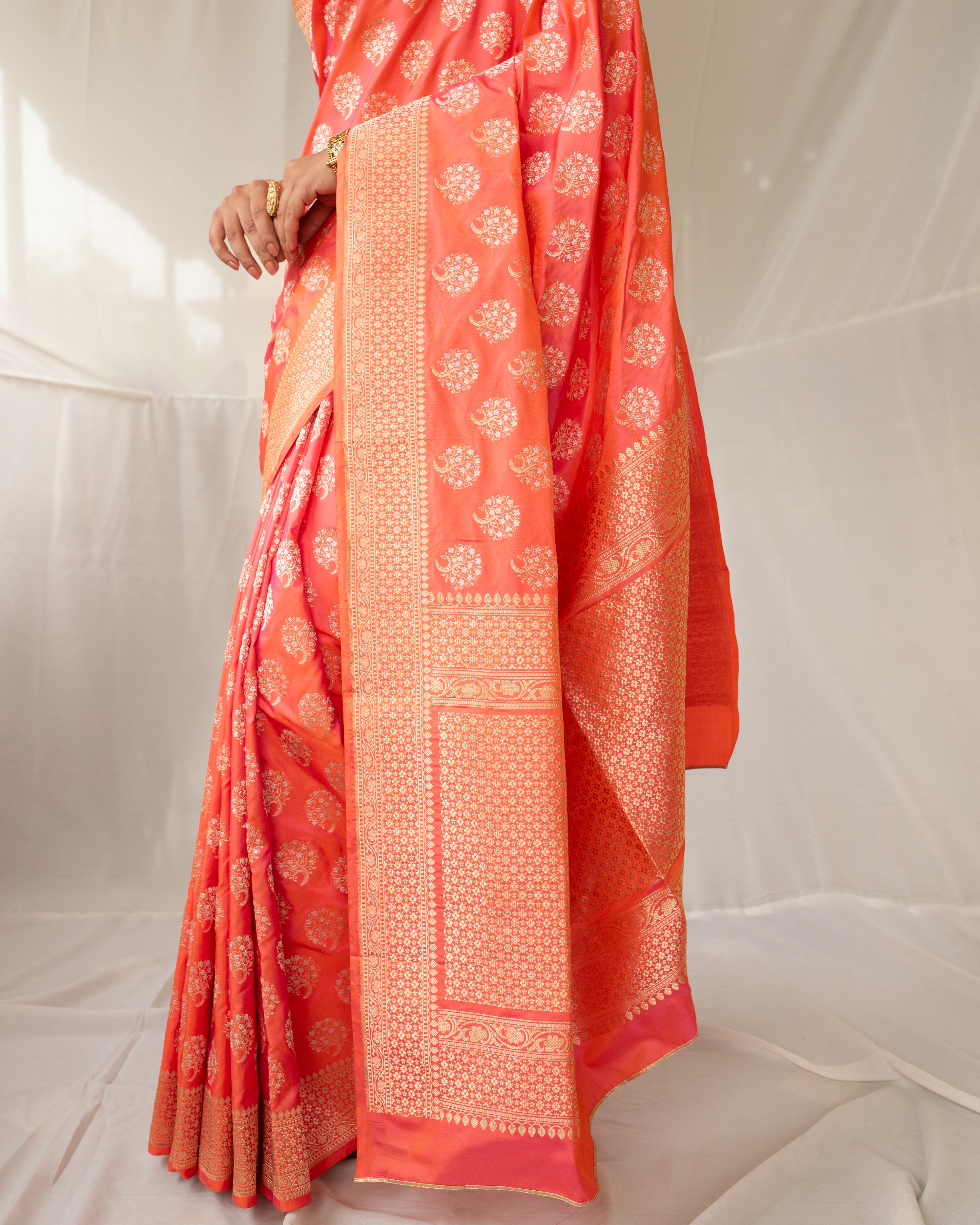
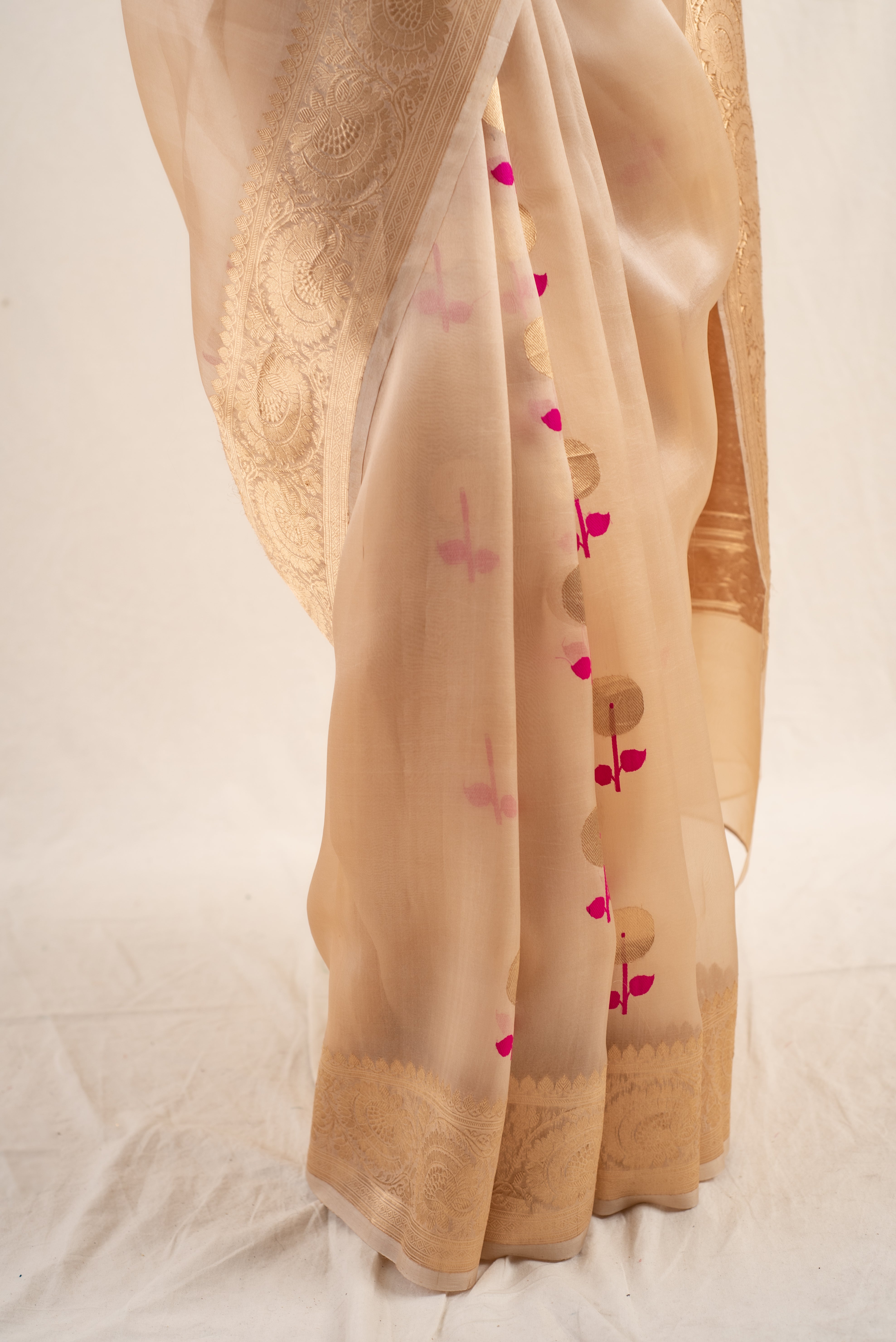
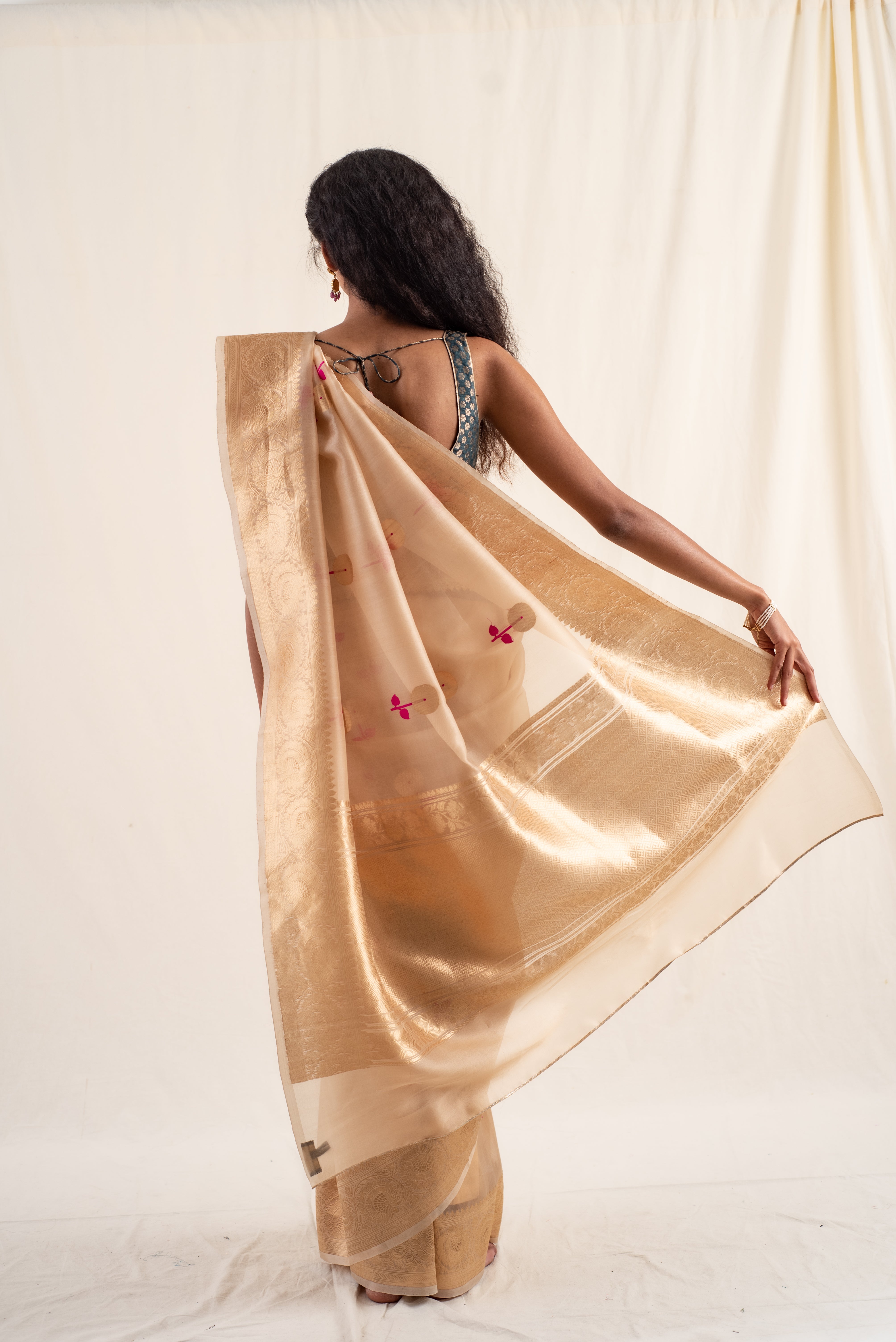
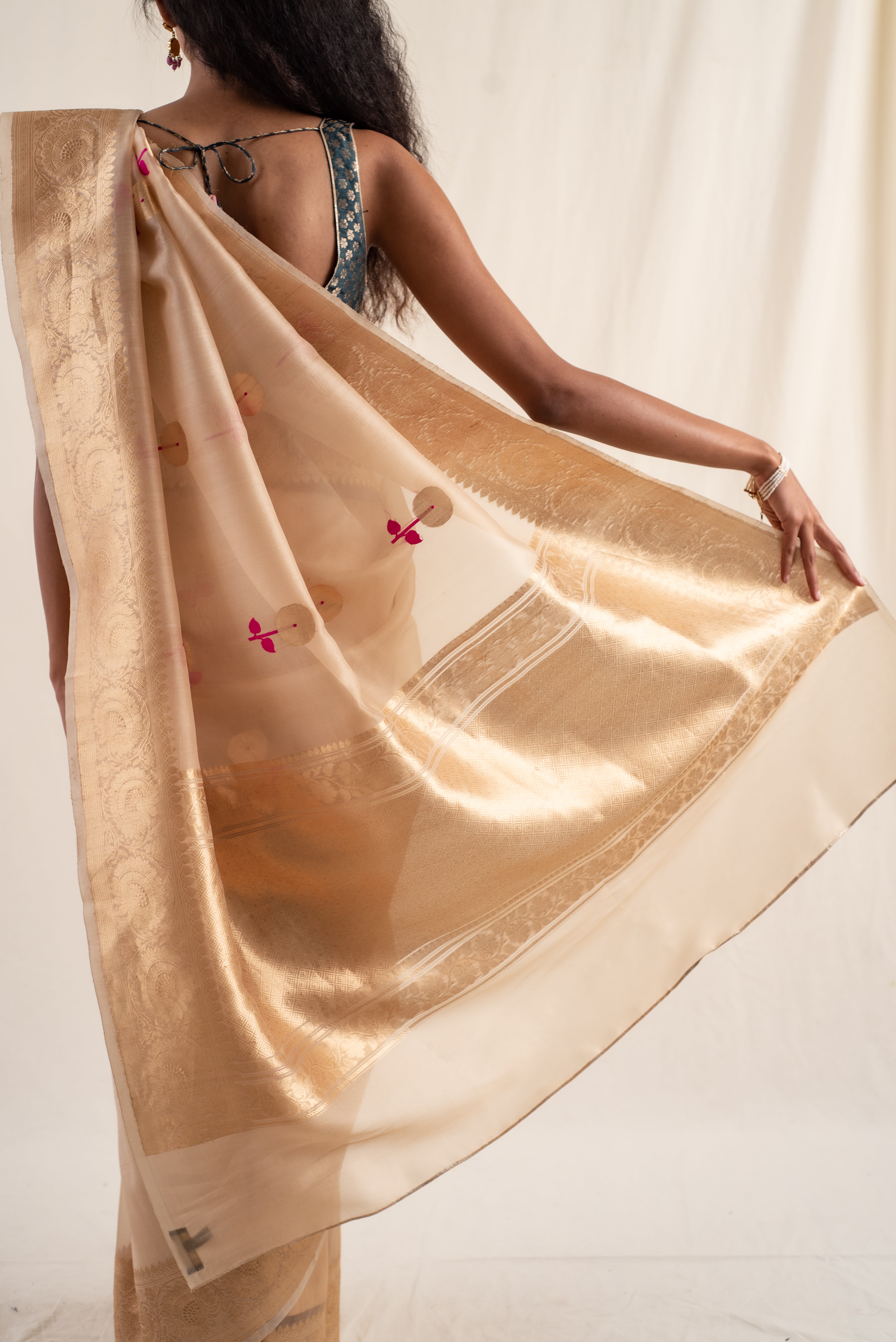
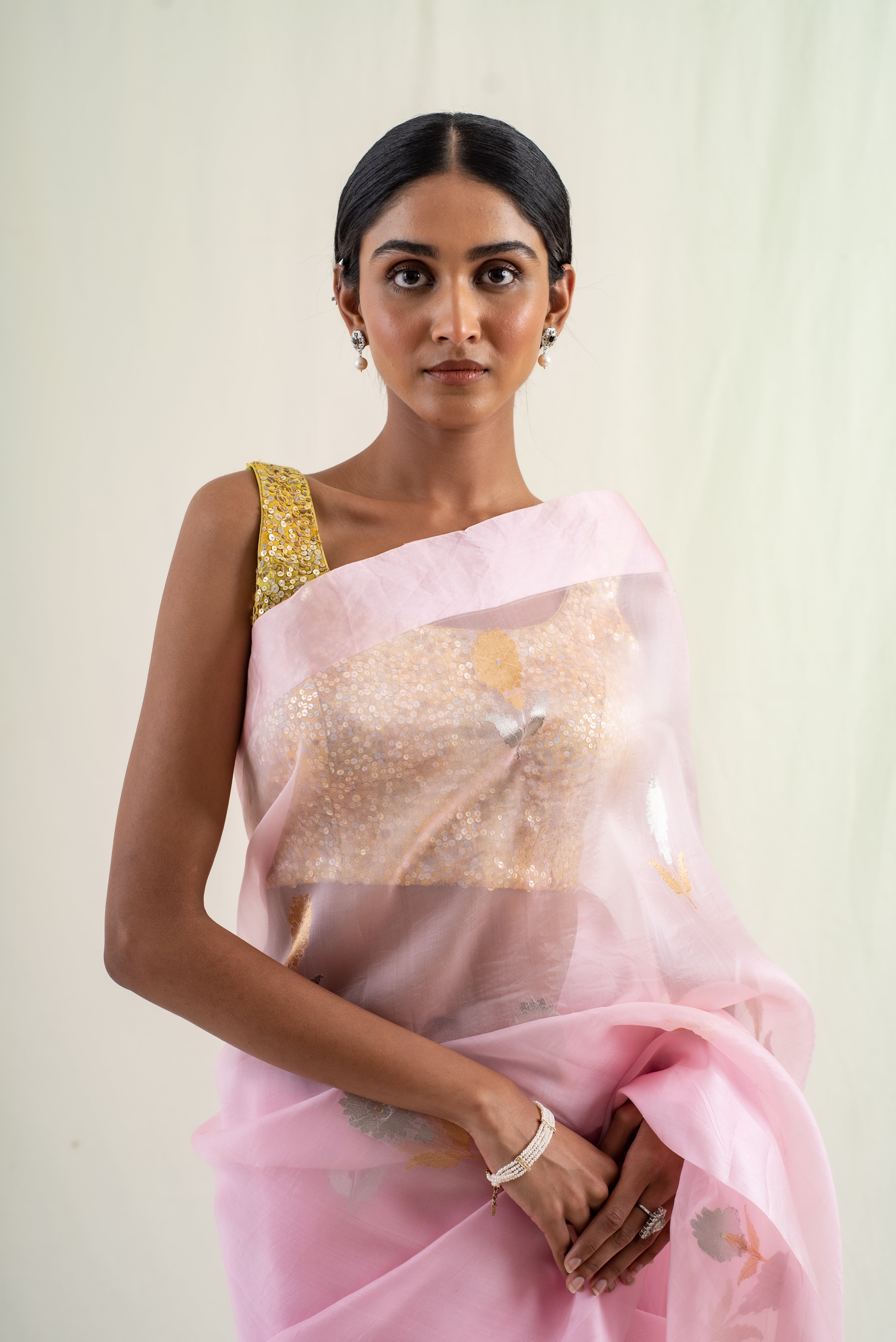
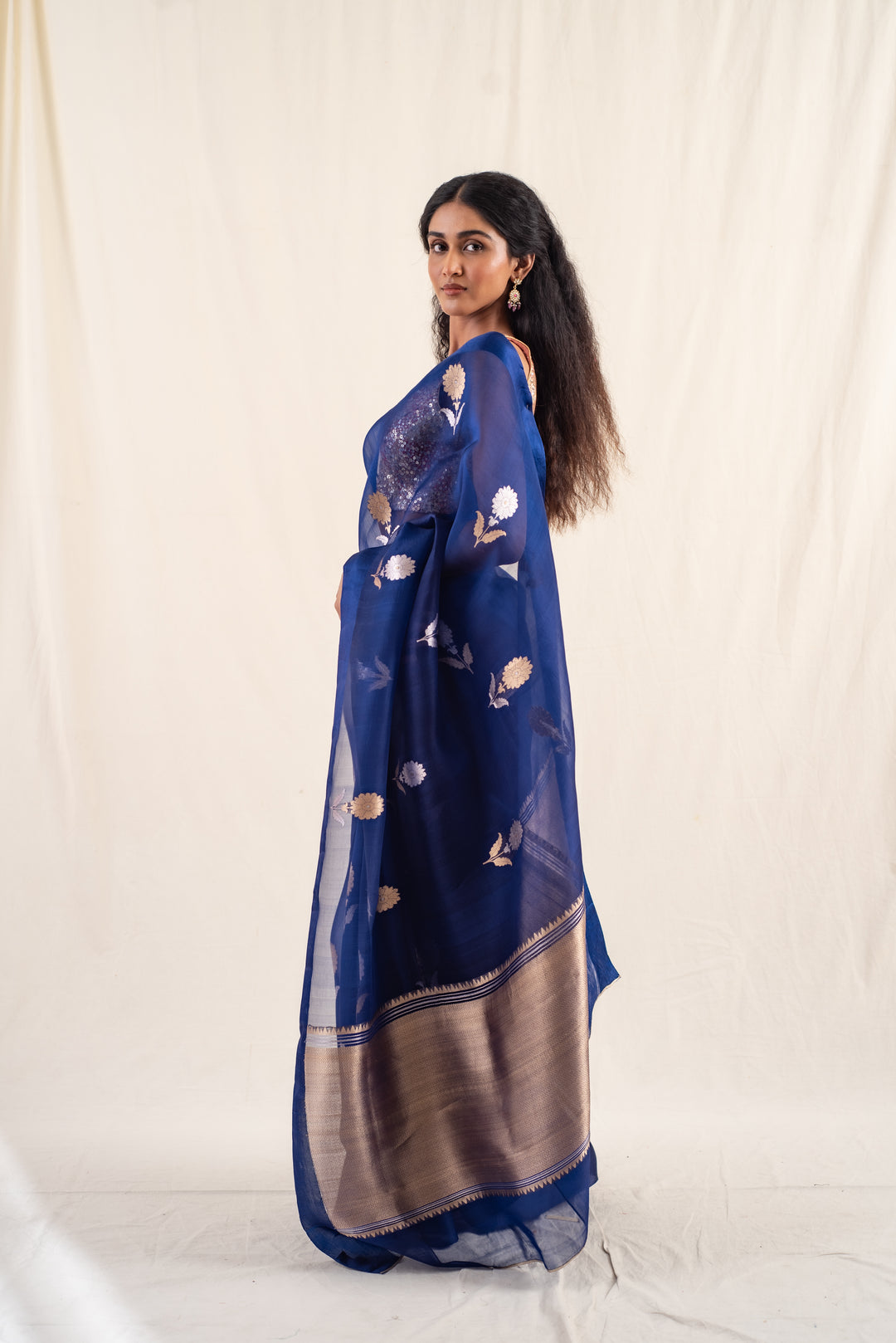
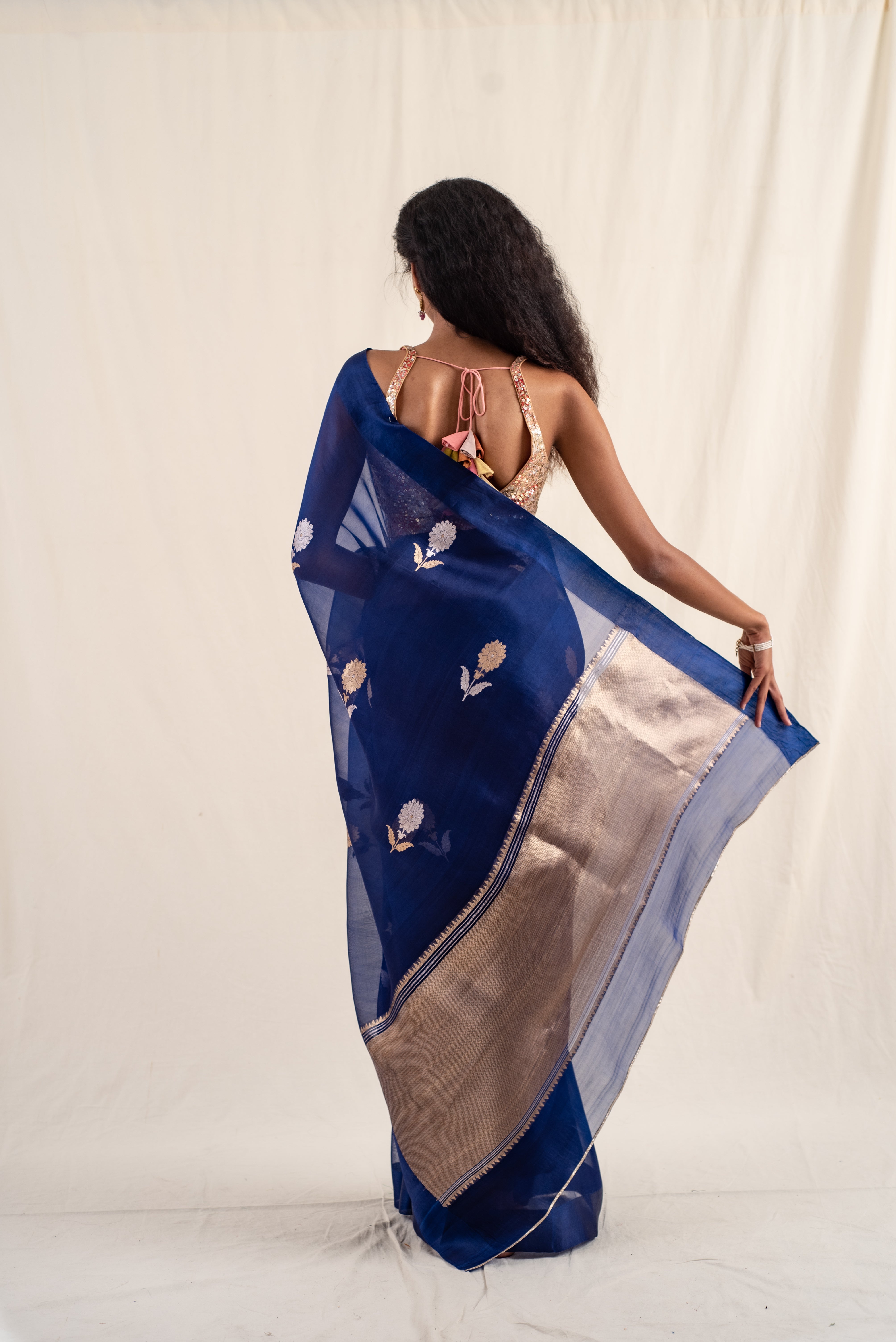
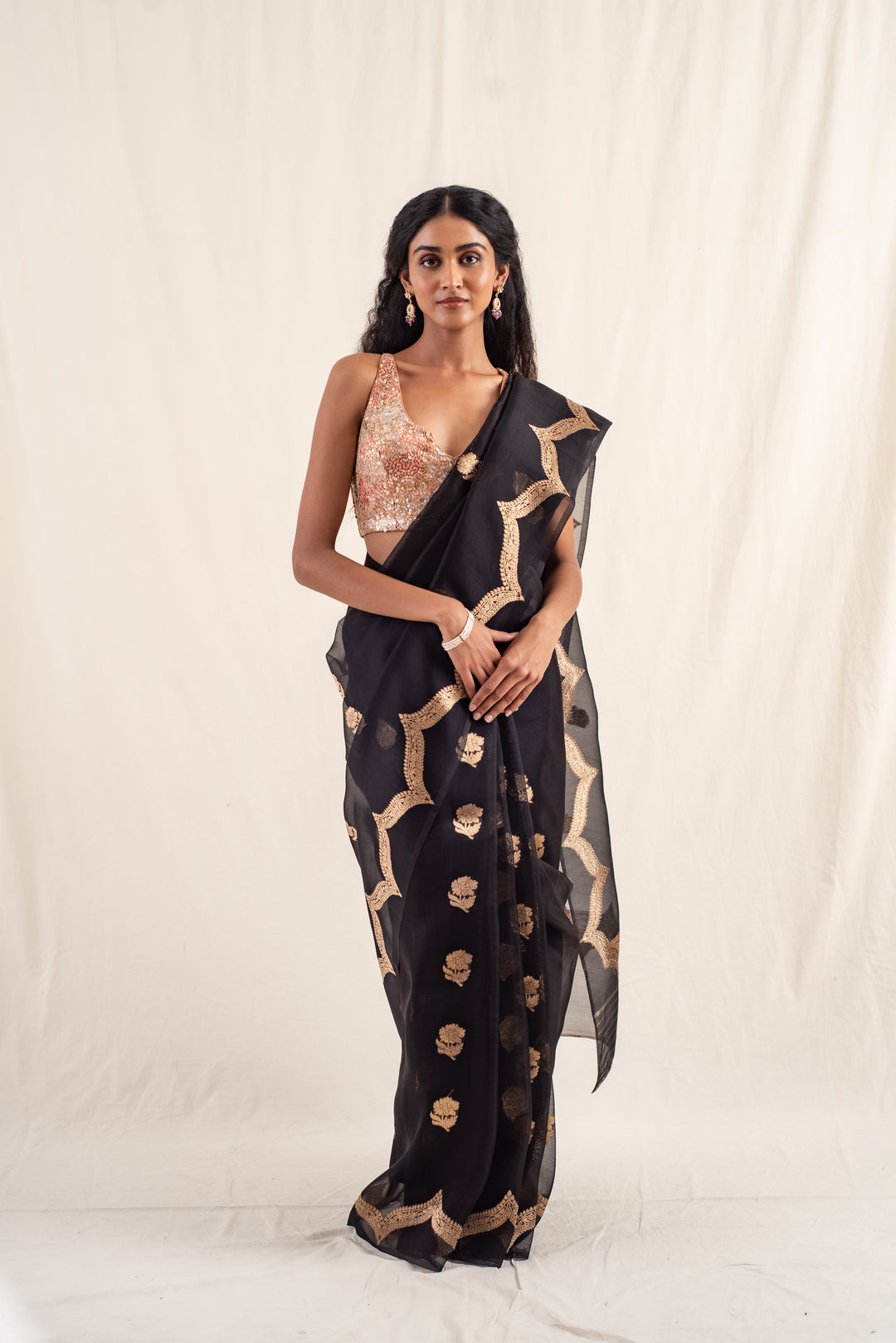
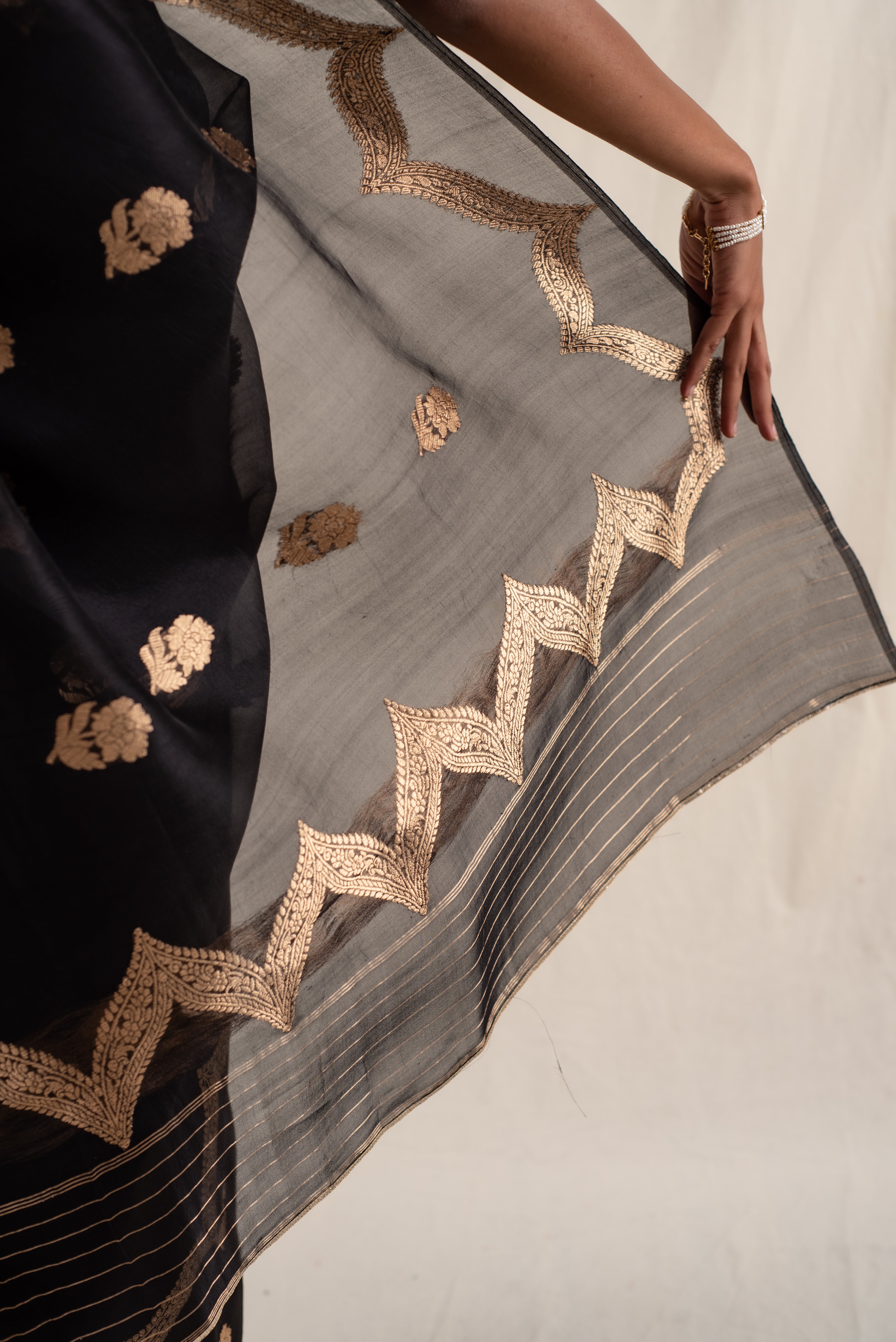
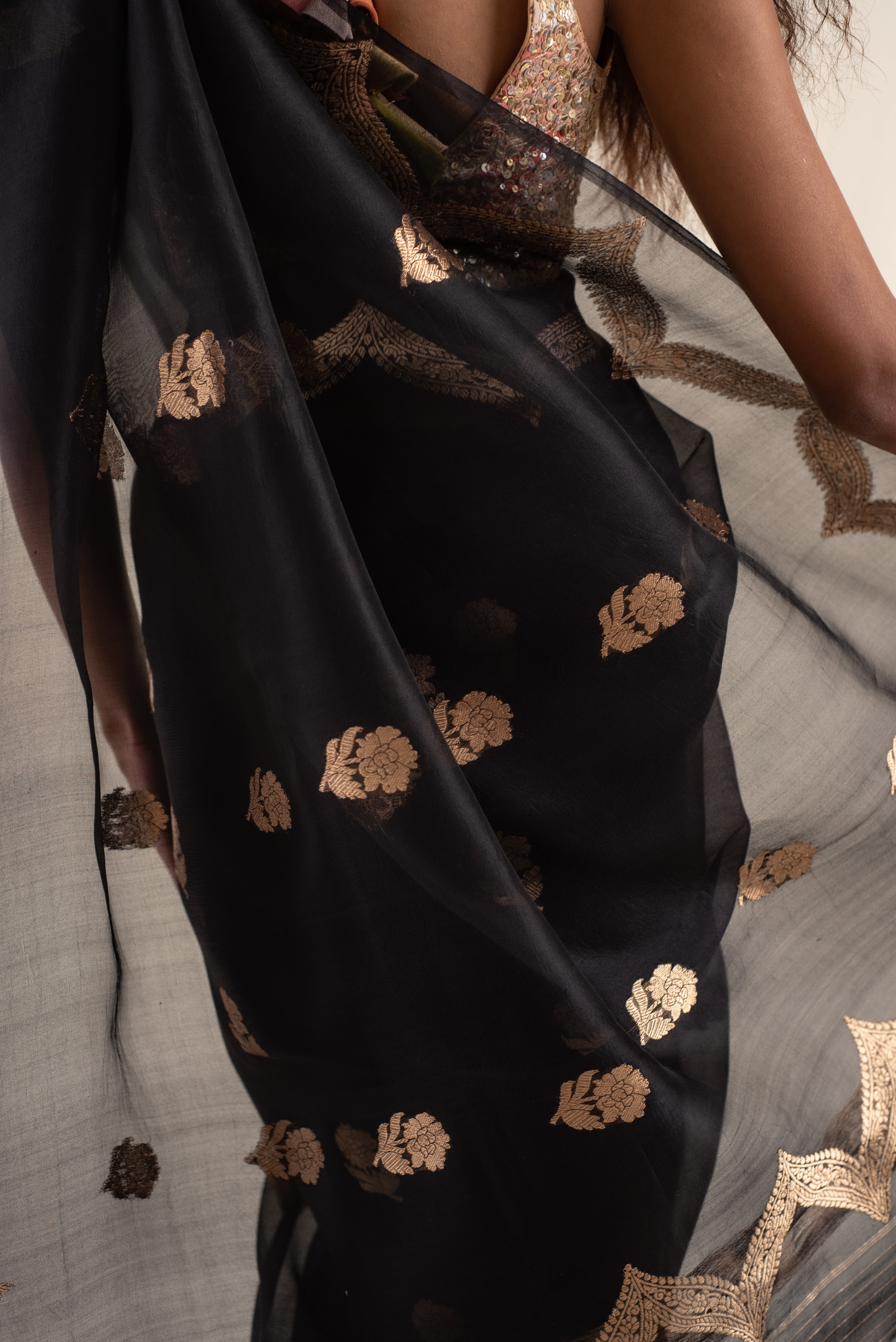
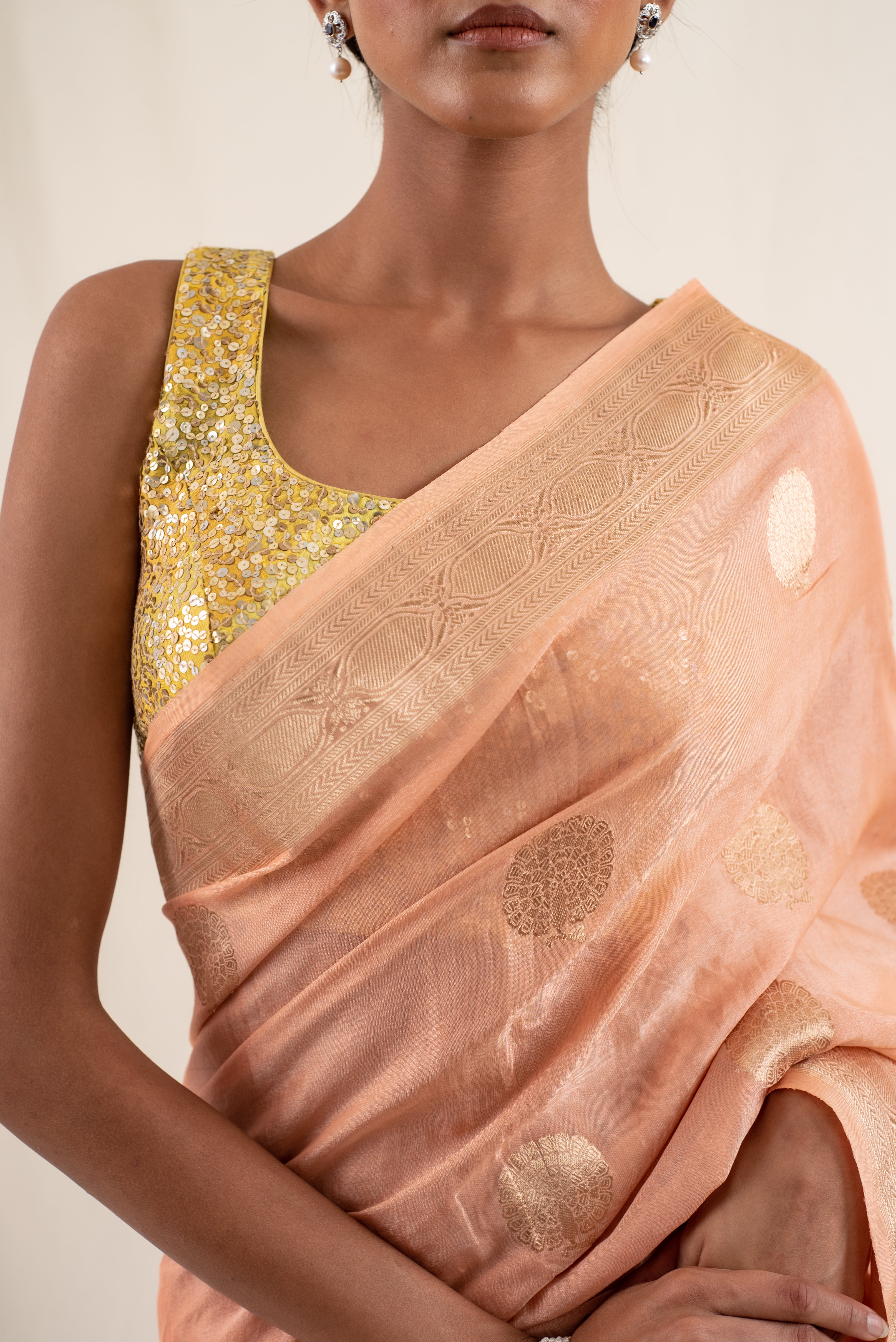
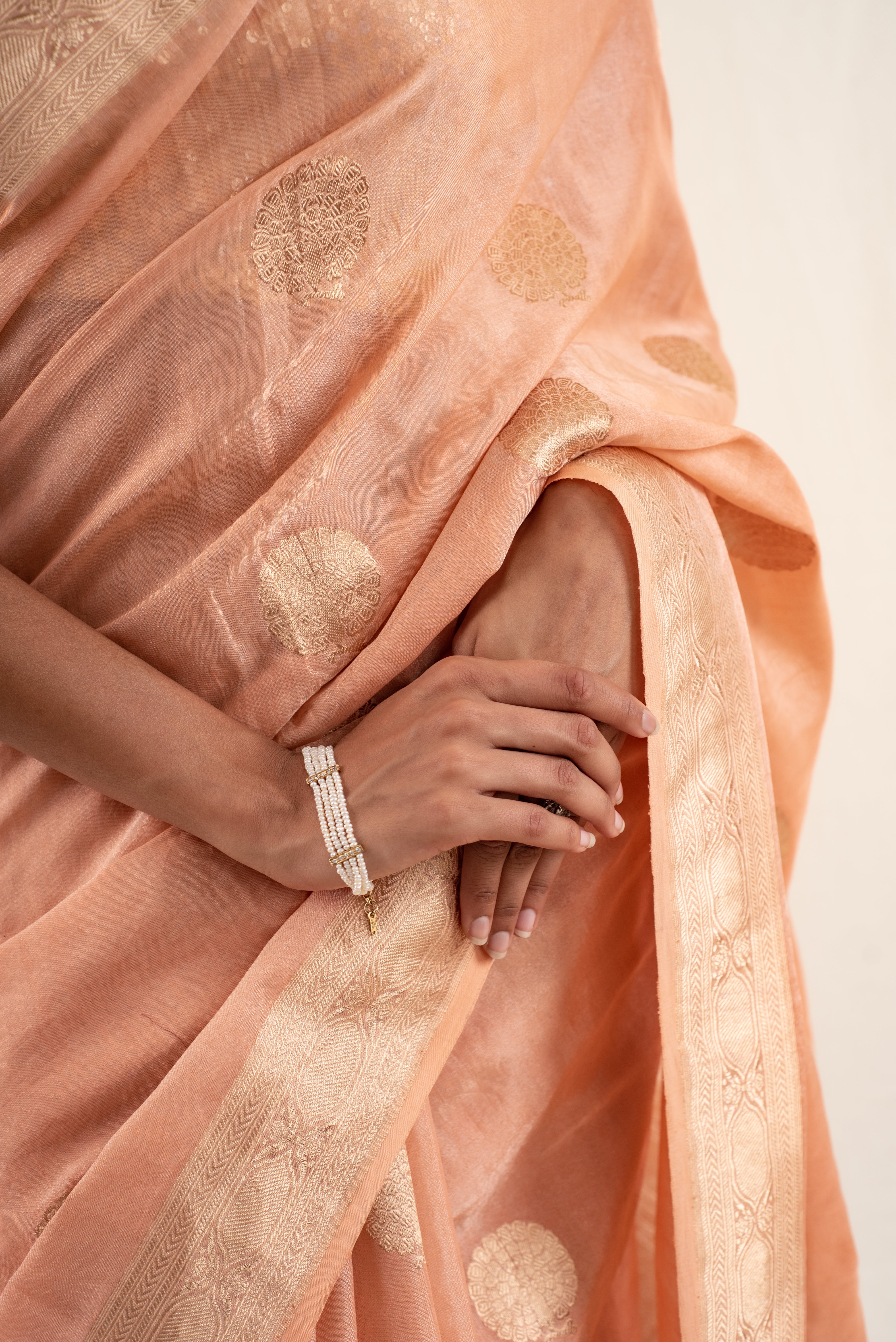
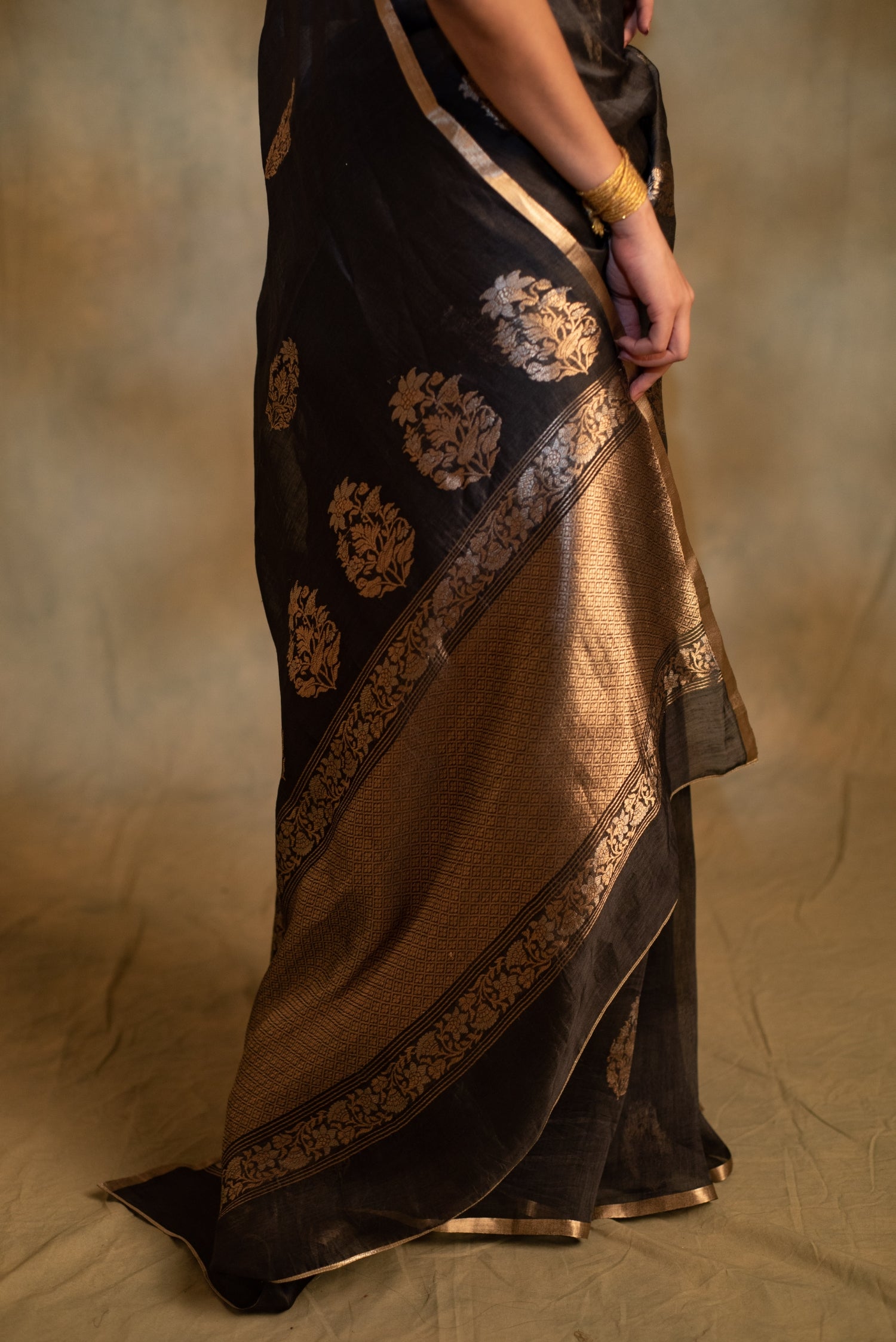
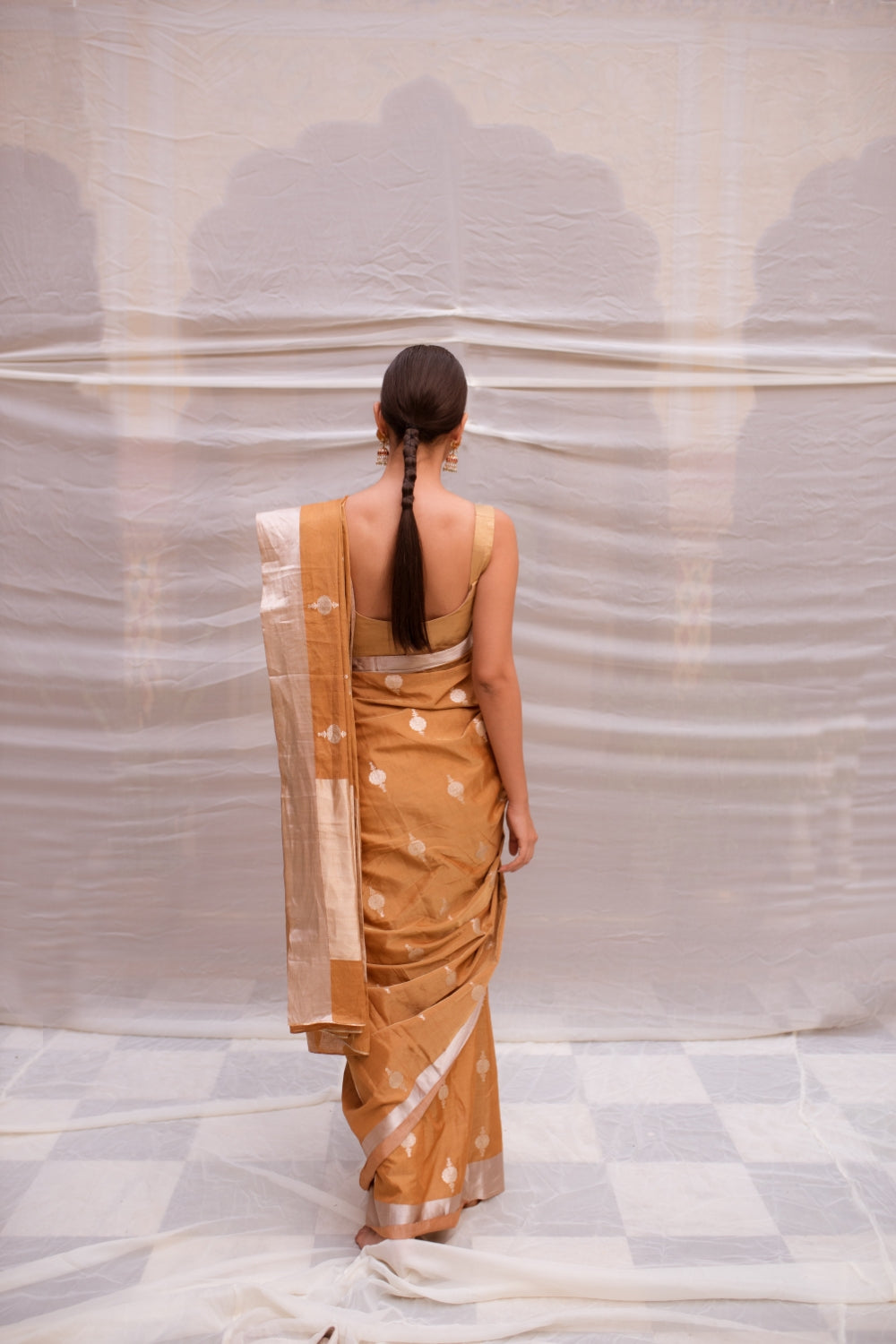
- Butti and Butta motifs are delicately scattered across the body of the saree, creating a rhythmic and elegant surface design.
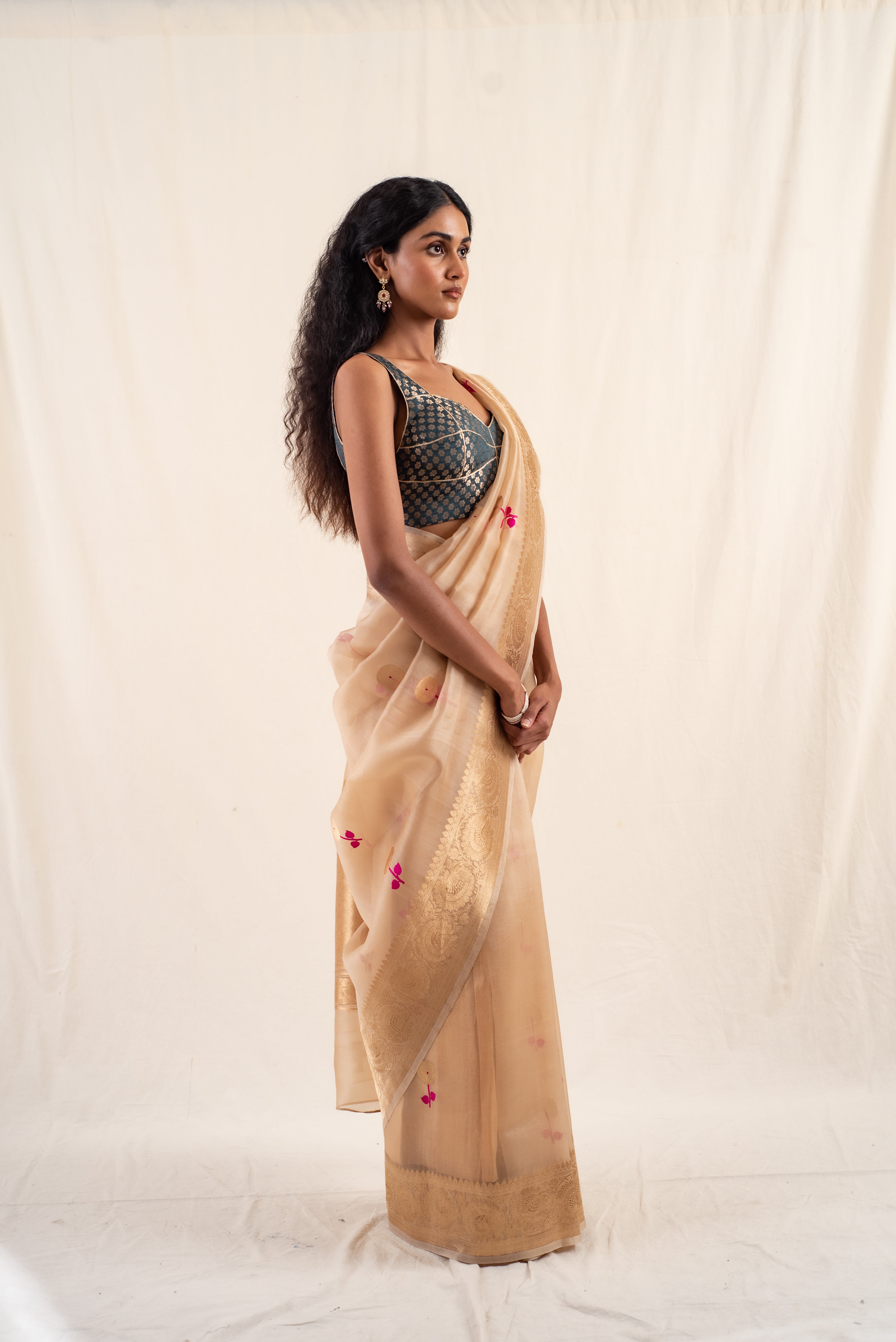
- These motifs can be woven on a variety of fabrics, including Katan silk, organza, and tussar, depending on the desired texture and drape.
- Traditionally crafted using gold or silver zari, the motifs may also feature meenakari, where coloured threads are introduced to add depth and vibrancy.
- A brocade weaving technique is often used to create the raised, intricate appearance of these motifs.
What Makes Our Banarasi Butidar Sarees Unique?
Uniqueness is established by intention rather than embellishment. Every saree has been created through generations of artists' experiences. The style of the saree's motifs is mainly influenced by Indo-Persian motifs, and the buildings depicted by the motifs show a significant Mughal influence.Signatures That Define the Weave
- Evenly distributed buttis are placed to create visual rhythm.
- Zari's work is balanced to achieve sheen, not glare.
- Katan silk is used to ensure structure and a graceful fall.
- Slight human irregularities are recognised as authenticity, not flaws.
Motifs & Their Cultural Significance
In Banarasi textile vocabulary, buttis are small, individual motifs that are intricately woven and evenly or strategically scattered across the fabric. They create rhythm, balance, and visual interest while allowing the base weave to remain visible, making them a defining feature of many classic Banarasi sarees.Some of the most recognised buttis include Ashraffi Butti, which echoes the circular form of historic gold coins (ashrafis) and symbolises prosperity and auspiciousness; Jhummar Butti, inspired by the ornate chandeliers of royal courts and palaces, translating their suspended elegance into delicate woven motifs; and Kairy Kalanga, the classic paisley form that remains one of the most enduring motifs in Indian textile design, symbolising fertility, life, and continuity.
In contrast to buttis, bail (vine) patterns form continuous, flowing compositions that traverse the fabric. These are not individual motifs but interconnected designs that create movement and density across the surface. Angoor Bail, inspired by trailing grapevine clusters, is commonly seen as part of the elaborate Jangla pattern tradition, representing abundance and organic growth through its lush, all-over layout.
What is often referred to as Mehrab Bail is more accurately understood as the Mughal Jali pattern. Derived from the intricate lattice screens of Mughal architecture, this design translates geometric and arched frameworks into woven form, resulting in a structured yet delicate network across the textile.
Together, these elements clearly distinguish between the scattered precision of buttis and the continuous flow of bail patterns, reflecting how Banarasi weaving preserves tradition while continually evolving in form and expression.
Discover Our Premium Banarasi Butidar Sarees
A selection of quality Banarasi Butidar sarees requires care in the selection process. Every piece has been selected to demonstrate the traditional artistry of weaving through rich metallic designs and all-over zari and silk thread use.The Range Includes:
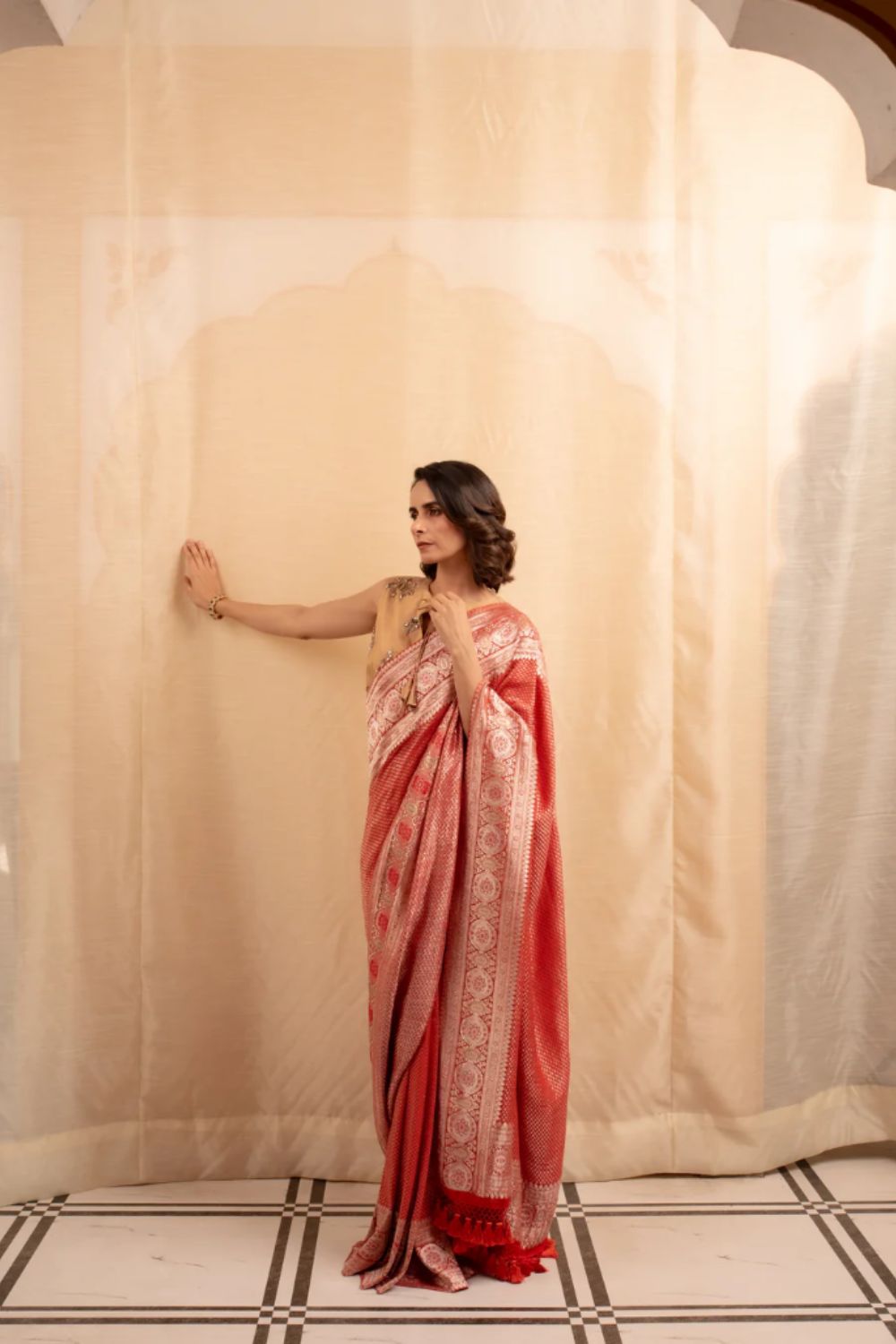
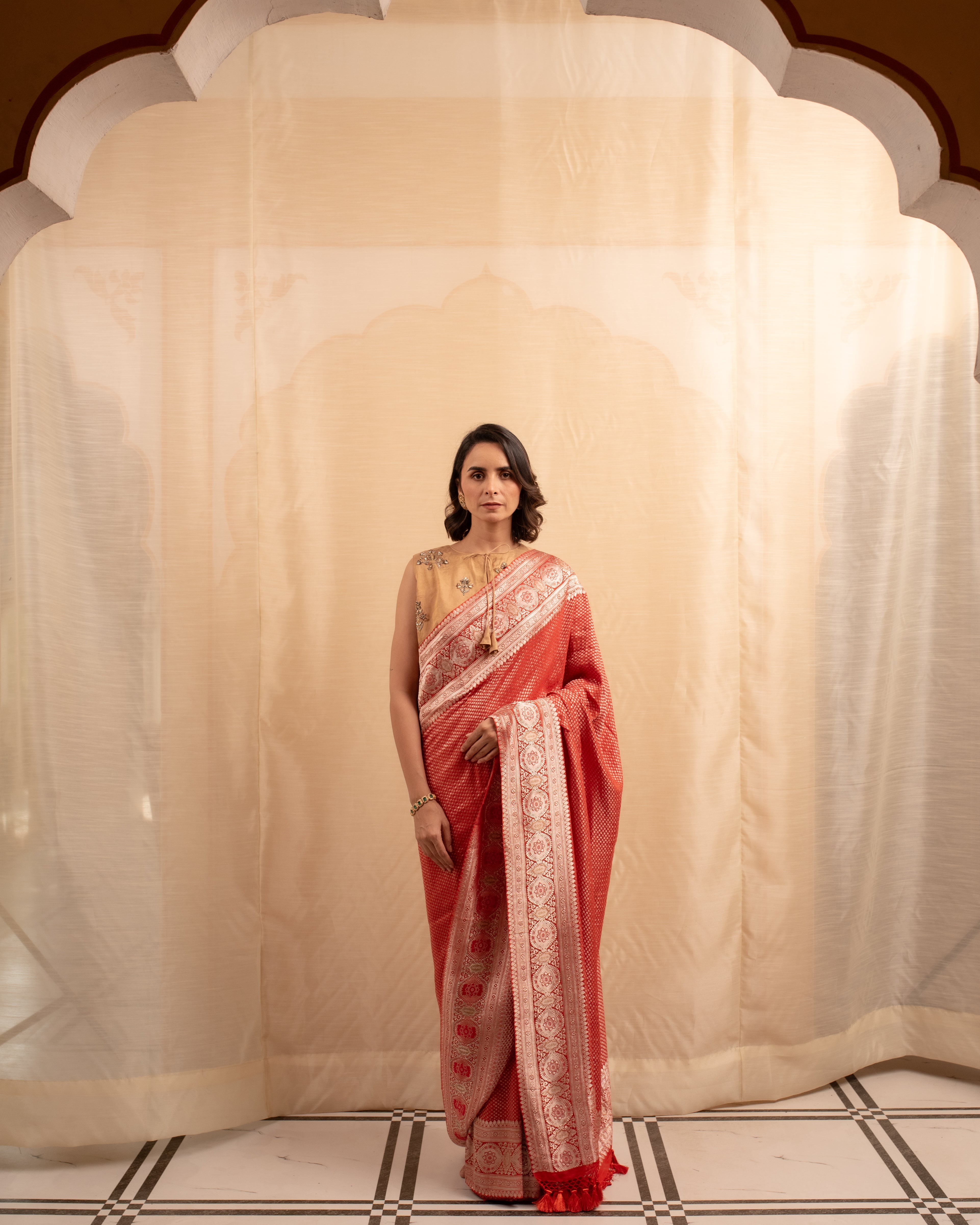
- All Over Butidar Brocade Fine metallic designs are woven throughout the body of the fabric, often worn for celebrations and ceremonial events.
- Silk & Zari Combination Richly constructed with silk base fabrics, with gold/silver woven together to create Banarasi's classic look.
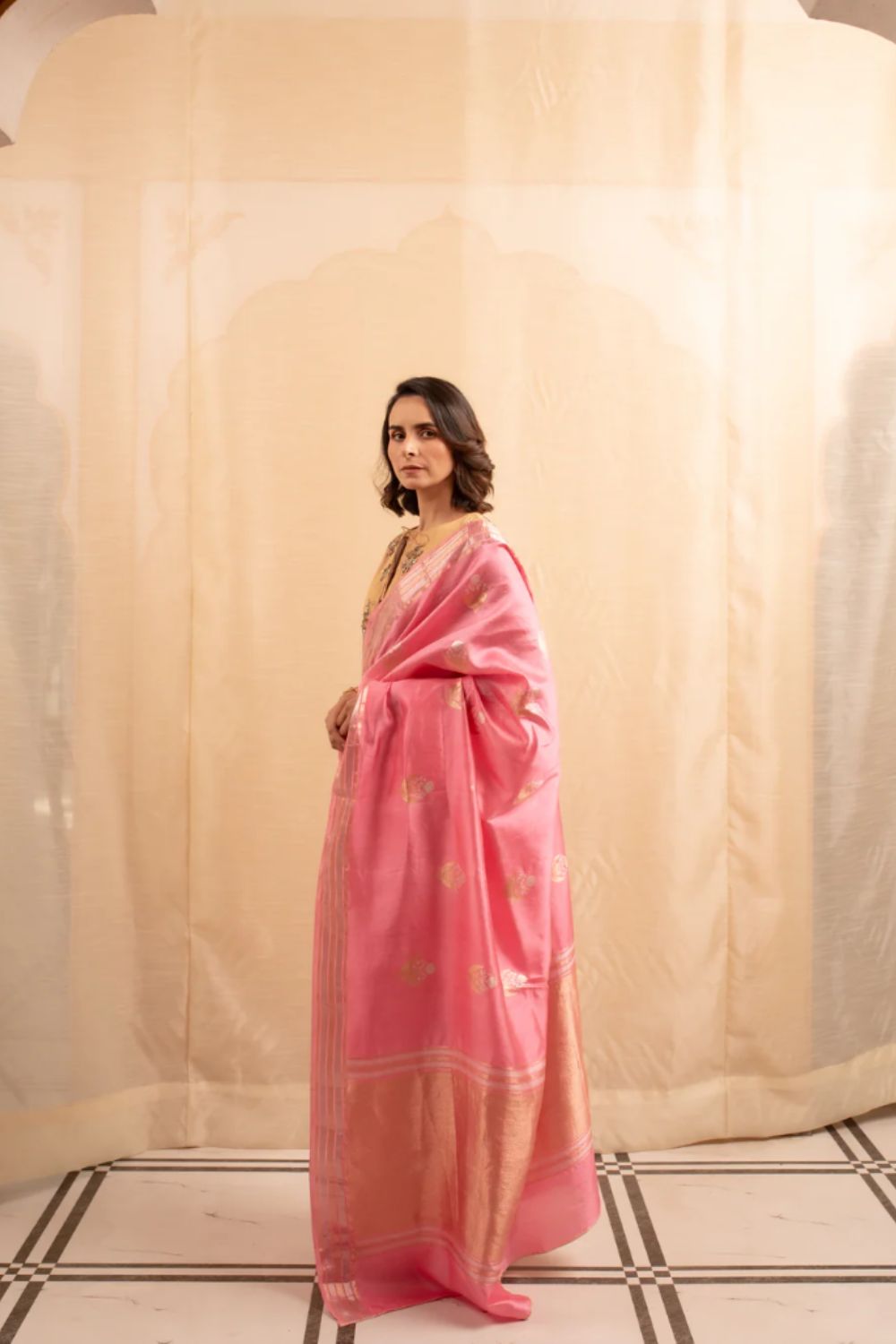
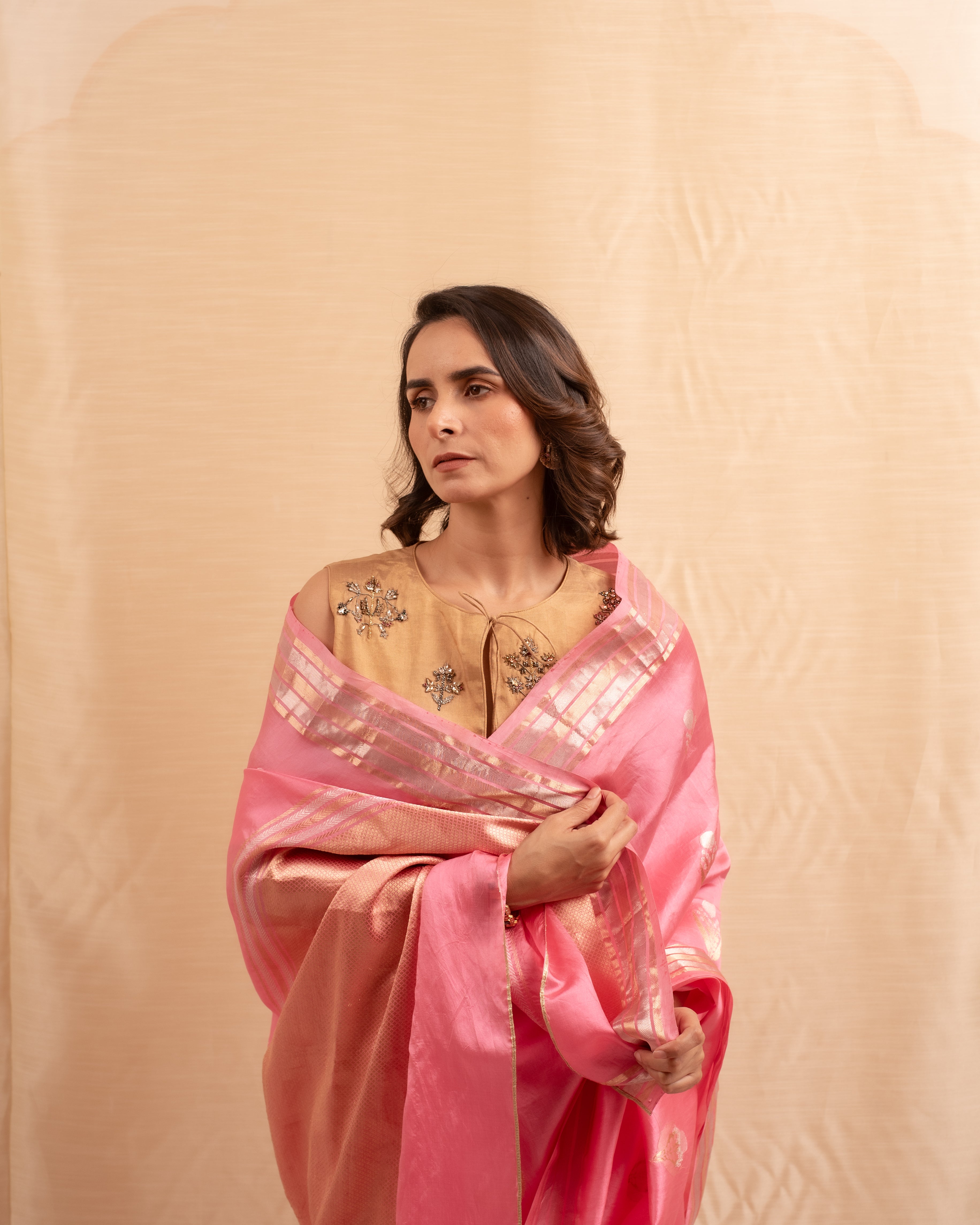
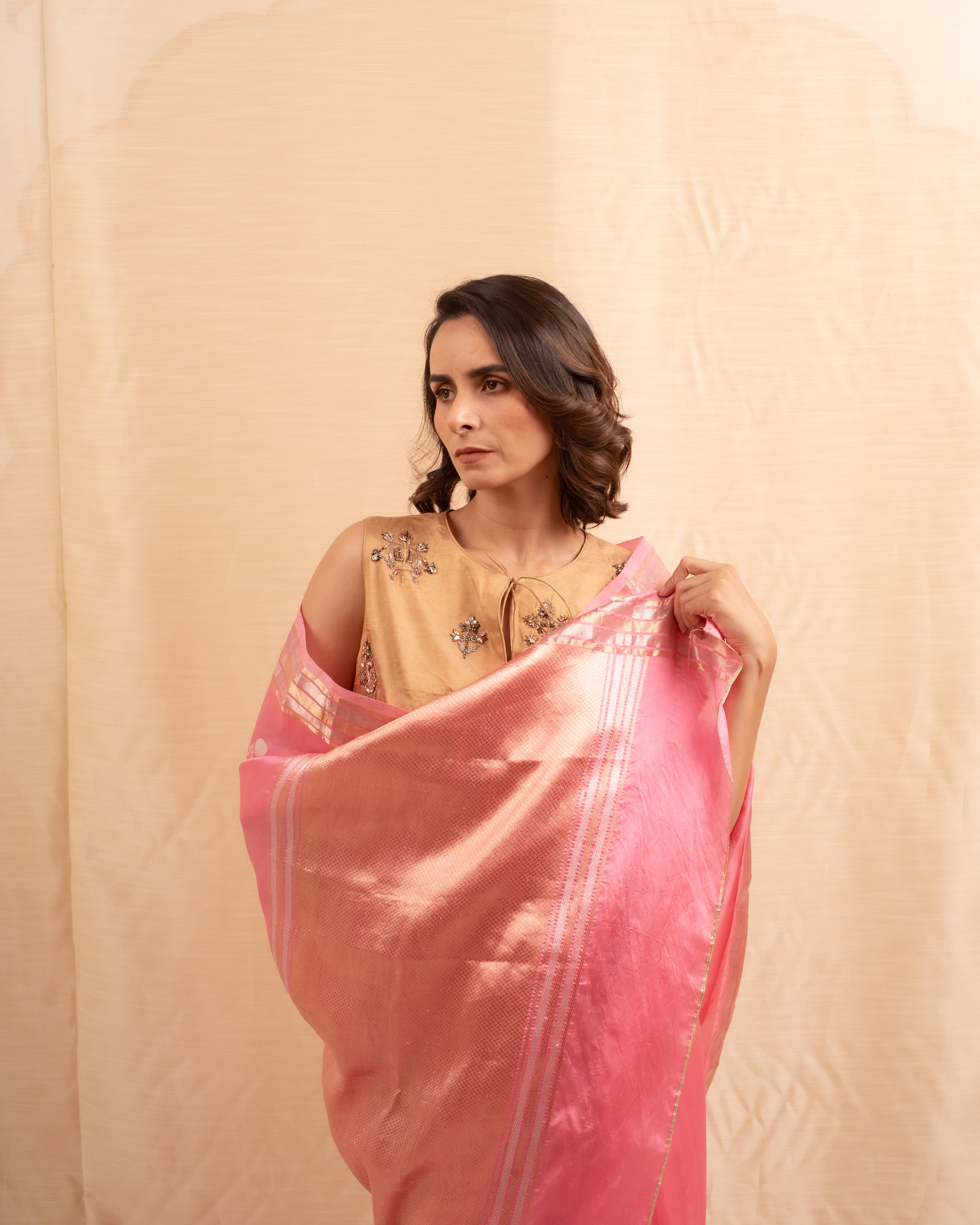
- Brocade Textures Organza/Satin Options: Some styles of weaving incorporate a lighter, organza/satin texture into the Butidar look; this allows various styles of drape, according to the way one wants to wear it, thus allowing for different occasions.
- Occasion Ready Collection. The above-mentioned styles provide ceremonial elegance while incorporating a contemporary feel for events such as heritage festivals, poojas, and family gatherings.
Authenticity Indicators
Authenticity can be identified through simple checks:- Woven motifs rather than printed forms
- Floating threads are seen on the reverse
- A gentle metallic weight if real zari is used
- GI certification, where applicable
- Silk that retains structure rather than collapsing
How Can You Take Care of Banarasi Butidar Saree?
Not only a piece of cloth, but a Banarasi Butidar saree is also a treasure of the family. The masterful combination of the finest silk with the most skilled artisanship is what makes this stunning production, which calls for careful maintenance, to be done in such a way as to preserve its longevity and beauty for the future.Care & Preservation
- Professional dry cleaning is recommended for zari protection.
- Muslin cloth wrapping is preferred over plastic storage.
- Sunlight exposure could be avoided to retain colour and zari finish.
- Low-heat ironing is done with a cotton layer placed on top.
- Fold lines are changed occasionally to prevent fabric stress.
Heirloom Protection Tip
Sarees intended for inheritance are best stored with cedar blocks or neem leaves (wrapped, not direct) to deter insects. The application of a perfumed item must be controlled every time, not to say that it should be done directly on the Zari, since that would make it more likely to lose its lustre.Draping & Styling Tips for Banarasi Butidar Saree
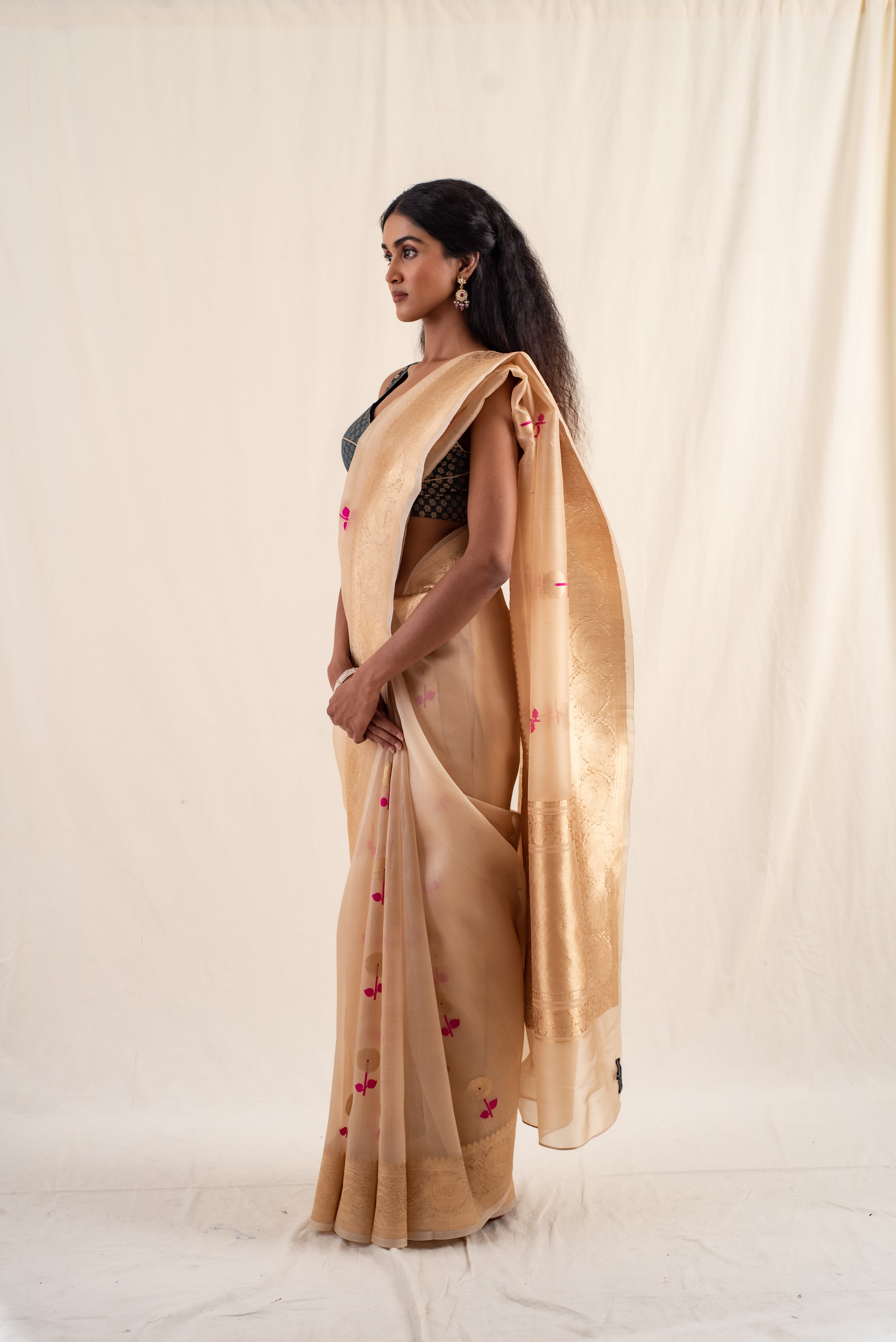
Draping choices influence how the saree’s artistry is experienced.Styling That Complements the Weave
- Bridal silhouettes are enhanced through traditional temple drapes.
- Reception looks are elevated through velvet or silk blouses in monotones.
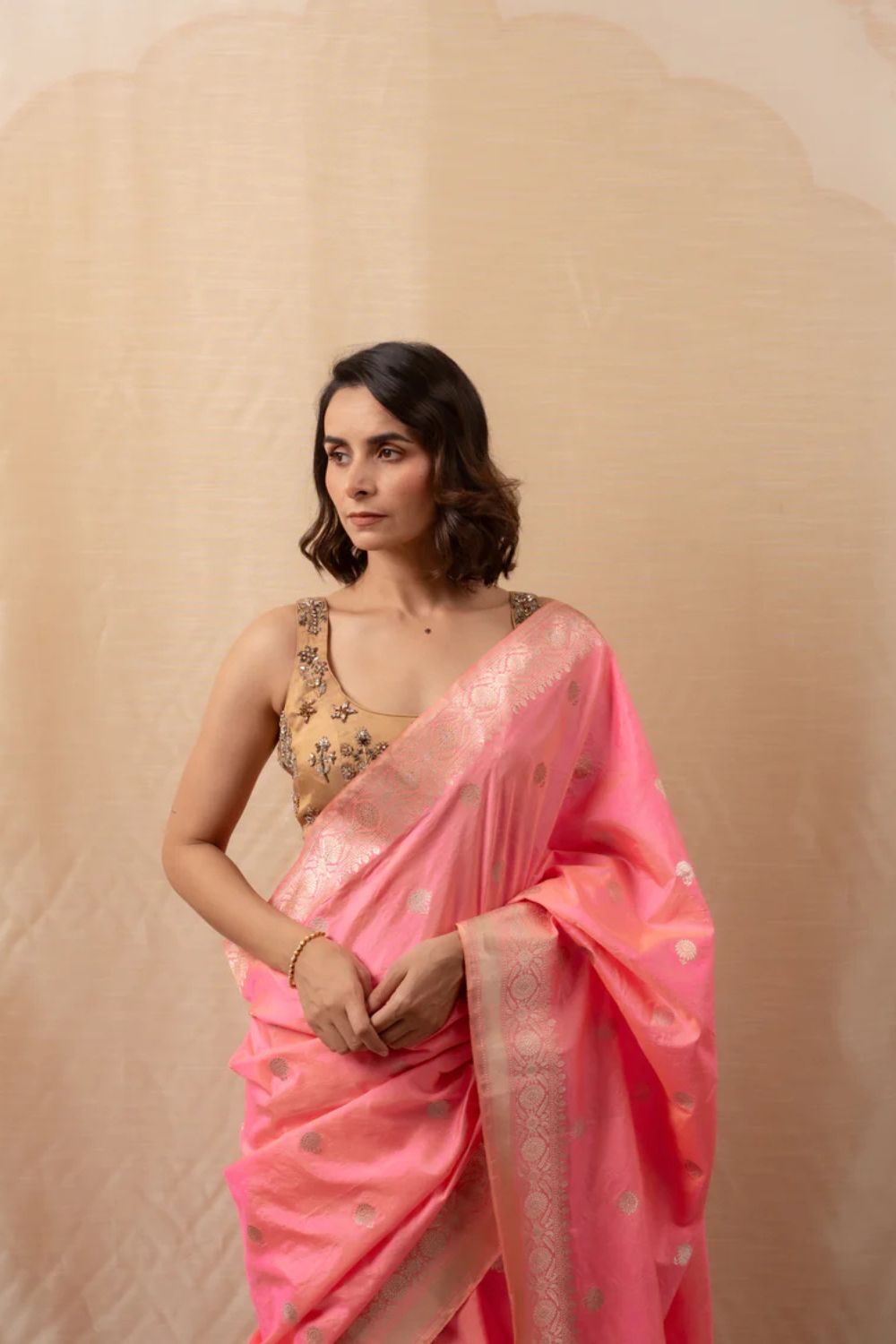
- Day ceremonies are softened through pastel Katan with fine gold buttis.
- Contemporary moods are achieved with structured blouses or belted drapes.
Conclusion
A Banarasi butidar saree is not chosen only to be worn; it is chosen to be remembered. Its value is not measured by trend but by time. Its beauty is not found in excess, but in intention.FAQs
Q1. How can authenticity be judged?Through floating threads on the reverse, zari weight, and GI certification, where applicable.
Q2. Is real zari always used?
Not always; real and tested zari options are both available, depending on budget and occasion.
Q3. Which fabric base is most traditional?
Pure Katan silk remains the classic foundation for Butidar weaving.
Q4. Is the saree suitable for weddings?
It is underlined by salient characteristics of the saree, being mainly put to use on occasions like marriages, parties, and while giving bridal trousseaus.
Q5. Can it be preserved as an heirloom?
Provided that the right storage conditions are followed, the saree would be able to pass on for several centuries.