
Different Types of Petticoats for a Perfect Saree Look (Guide)

Introduction
A saree is often remembered for its drape, fabric, and the emotion it carries, yet the layer beneath has shaped how the saree is experienced across time. There was a period when little attention was given to what lay under the saree. The focus remained on the fit of the drape or, at most, the color worn underneath.
The practice of wearing a petticoat under a saree began during the colonial period of the 18th and 19th centuries. Influenced by Victorian ideas of modesty and propriety, the traditional saree was viewed as too revealing in public spaces.
In response, Indian women began wearing petticoats beneath their sarees to create a defined waistline and offer fuller coverage. Along with the blouse, the petticoat helped reshape the saree into a form considered more acceptable in colonial society. Elite and urban women first adopted these changes before gradually becoming part of everyday dressing across regions.
Over time, what started as a functional layer settled into tradition. Today, it has moved beyond utility. As saree styling becomes more personal and expressive, attention is being given to details that were once overlooked.
The types of petticoats for saree dressing are now explored with care, as the right choice supports comfort, enhances movement, and shapes the final silhouette. Saree petticoat styles are no longer chosen only to sit unseen, but to allow the saree to fall with ease and reflect the individuality of the wearer.
Why the Petticoat Matters in Your Saree Styling?

The petticoat has always served as the backbone of a saree look. It supports pleats, defines the waistline, and shapes the silhouette. When chosen with care, it allows the saree to sit gracefully and feel secure throughout the day.
Different fabrics demand different foundations. Heavy silks, airy organza, or structured cotton sarees respond differently based on the petticoat design for the saree used underneath. A carefully selected petticoat helps the saree appear balanced rather than bulky, fluid rather than stiff. As styling becomes more intuitive, the importance of choosing the best petticoat for a saree is being widely appreciated.
Different Types of Petticoats for Sarees

Petticoats today can be understood best when viewed through two lenses: fabric and cut, followed by a newer category that has emerged through styling innovation.
Different Types of Petticoats for Sarees
Cotton Petticoats

Cotton petticoats remain a timeless choice. Breathability and softness make them suitable for long hours, especially in warmer climates. They are often preferred for daily wear sarees, cotton sarees, and light festive drapes. A cotton base allows pleats to stay neat and structured, making it a trusted foundation for traditional saree styling.
Silk Petticoats

Silk petticoats are admired for their smooth texture and subtle sheen. They are commonly paired with heavy sarees, making them a popular petticoat for wedding sarees. When draped with rich fabrics, silk petticoats add fluidity without adding volume. They are often considered the best petticoats for silk saree styling, especially for Banarasi sarees or Kanjeevaram weaves.
Lycra Petticoats

The introduction of Lycra has transformed saree foundations. A lycra petticoat for a saree offers stretch, shape, and flexibility, allowing the saree to hug the body softly. These petticoats are appreciated for their fitted appearance and comfort. Movement feels easier, and the silhouette appears refined, making them part of many modern saree petticoat designs.
Petticoats Classified by Cut and Silhouette
Fish-Cut Petticoats

Fish-cut petticoats are designed to flare at the bottom while remaining fitted around the waist and hips. This saree shape petticoat creates a defined form that works well with designer sarees and statement drapes. They are often chosen for parties or weddings, especially when structure and drama are desired.
Can-Can Petticoats

For sarees that require volume, can-can petticoats offer support. Layers beneath the saree add fullness, allowing pleats to stand out. This style is sometimes used for receptions or editorial looks, where a bold and bright colored look is preferred.
A-Line Petticoats

A-line petticoats are shaped to widen from the waist toward the hem, allowing the saree to fall in a relaxed manner. This silhouette supports everyday drapes as well as lightweight festive sarees, offering ease of movement without excessive volume. They are often preferred when a natural flow is desired, especially with cottons, linens, and softer silks.
Panelled Petticoats

Panelled petticoats are made using multiple fabric panels stitched together, creating subtle structure and movement. This design allows the saree pleats to sit evenly while adding controlled fullness at the bottom. Such petticoats are frequently paired with heavier fabrics, making them suitable for wedding sarees and layered drapes.
Stylized Petticoats for Elevated Saree Looks

As saree styling continues to evolve, a newer category of foundations has emerged where the petticoat is treated as part of the aesthetic rather than just a hidden layer. These stylized petticoats complement special fabrics and curated drapes.
Brocaded Petticoats for Translucent Sarees

Under translucent sarees such as organza, net, or sheer tissue, brocaded petticoats add quiet depth. Woven motifs beneath the drape create a layered visual effect, enhancing transparency without overpowering the saree. These foundations are often chosen for evening functions or ceremonial occasions.
Lace-Edged and Lace-Lined Petticoats

Lace-edged or lace-lined petticoats introduce softness and refinement. When paired with chiffon, net, or georgette sarees, the lace detail offers a subtle finish at the hem or waistline. The effect remains delicate and intentional.
Shimmer and Tissue Petticoats

Shimmer tissue petticoats bring a restrained glow beneath festive sarees. The light-reflective surface adds warmth and movement, especially under sarees with metallic accents, embroidery, or sequins. These are often selected for receptions or celebratory evenings.
Textured or Embroidered Petticoats

Some modern saree petticoats feature tonal embroidery or woven textures. These foundations work well with minimal sarees, where subtle detailing beneath the drape enhances the overall composition without distraction.
How to Choose the Right Petticoat for a Saree Look?

Choosing a petticoat often begins with the saree itself. Fabric, occasion, and comfort are considered before a final choice is made.
For heavy weaves, structured foundations are usually preferred. A petticoat for a banarasi saree is often chosen in silk or cotton silk to balance weight and elegance. For lighter sarees, softer materials allow the drape to remain effortless.
Waistbands and ties are also important. Adjustable closures offer ease, while elastic waists suit those seeking flexibility. Petticoat and saree colors play a role as well, as the petticoat should blend with the saree rather than distract from it.
The best petticoat for saree styling is often one that feels supportive without being noticed.
Expert Tips for Draping a Petticoat for a Saree

The petticoat is generally tied firmly yet comfortably. The height at which it is worn affects the fall of the saree, and gentle adjustments are often made. Smooth fabrics allow sarees to glide, while textured ones provide grip. Comfort, especially during long wear, is supported by breathable fabrics and clean finishing.
A Note on Sustainability and Jod™

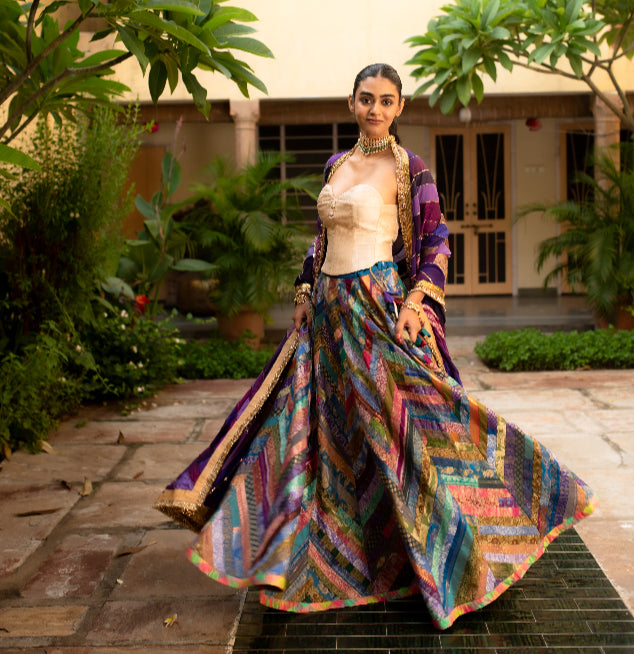
As fashion shifts toward mindful choices, foundations are also being viewed through a sustainable lens. Upcycled Jod™, a concept from Priyanka Raajiv’s collections, is built on the idea of “joining together”. Through this approach, heritage textiles, unused scraps, and graded remnants are thoughtfully assembled using patchwork, appliqué, and hand-finishing techniques.
While widely seen in sarees and blouse designs, this philosophy extends to foundations as well. Jod™-inspired sarees and coordinated elements reflect a circular design process, where materials are reused with intention.
Conclusion
A saree often tells its story through fabric and drape, yet its foundation quietly shapes that narrative. By understanding the types of petticoats for sarees, styling becomes more intentional and expressive.
From classic cottons to fitted Lycra options, each choice supports a different mood and silhouette. When chosen with care, the best petticoat for a saree enhances the presence without overpowering it.
As mindful fashion gains importance, foundations that support comfort, sustainability, and individuality continue to be valued.
FAQs
Q1.Which type of petticoat is best for a saree?
Ans: The best option depends on the saree fabric and the occasion. Cotton, silk, and Lycra petticoats are commonly chosen based on comfort and structure needs.
Q2.Can I wear a saree without a petticoat?
Ans: Some modern drapes allow alternatives, yet a petticoat remains the most supportive option for maintaining shape and ease.
Q3.Which petticoat is best for silk sarees?
Ans: Silk or cotton-silk options are often considered the best petticoats for silk saree draping due to their balance of strength and softness.
Q4.Is a fish-cut petticoat good for heavy sarees?
Ans: Fish-cut petticoats are often chosen for heavy sarees when a defined and structured silhouette is desired.
Q5.What is the benefit of a Lycra petticoat?
Ans: A Lycra petticoat for a saree offers stretch, flexibility, and a smooth fit, making movement comfortable.
Q6.How to choose the right petticoat color?
Ans: Neutral shades or colors close to the saree tone are often preferred to maintain a seamless appearance.