
Guide: Cultural Significance of all Saree Colours

A saree has always been more than a garment. It carries emotions, memories, and centuries of cultural beauty woven into its six yards. Every drape tells a story, and every hue whispers meaning. In India, colors are deeply tied to traditions and beliefs, expressing emotions and marking life’s many milestones.
Colors in sarees are being embraced today with a sense of individuality and emotion. Brides are moving beyond convention, choosing hues that reflect their personalities and stories. A pastel pink might express confidence, while emerald green feels grounded and free-spirited.
Even a black color saree or an ivory color saree, once considered unconventional for the wedding season, is now worn with pride, symbolizing strength, simplicity, and self-assurance. The new-age bride isn’t defined by tradition alone; she reinterprets it, using color as her language of authenticity and grace.
This guide celebrates that connection, exploring what each saree color signifies and how these hues continue to evolve with modern sensibilities. And even if you still don't know which colour to choose, then we can help you choose the right colour for your saree.
The Importance of Colors in Indian Culture and Traditions
In Indian culture, color is more than a visual delight; it is a symbolic language. Every hue holds emotional and spiritual meaning. During festivals, rituals, and weddings, specific colors are chosen not by chance but by belief. A yellow color saree is worn during Haldi for its joyful and auspicious vibe, while a red color saree is seen as sacred in weddings, representing love and marital bliss.
The ivory color saree, worn in moments of reflection or prayer, symbolizes detachment and peace. On the other hand, a black color saree is now being embraced for its sophistication and modern grace, even in festive settings.
Color in India connects attire with mood and purpose. From daily wear to ceremonial attire, these choices create harmony between the self and the occasion. Sarees, being timeless symbols of grace, reflect this beautifully, each color painting a unique emotional landscape. Also, if you need some suggestions for saree colours, you can check the premium and trending saree colours all over the world.
Cultural Significance of Saree Colors
Saree colors have always carried meanings far beyond style or fashion. Each hue in a saree reflects emotion, tradition, and purpose, celebrating love, purity, strength, or joy in its own way. From bridal reds to serene ivorys, every color tells a story of culture woven beautifully through generations.
Red Saree – Love, Marriage, and Auspiciousness

The red color saree has long been a symbol of passion and new beginnings. Traditionally worn by brides, the red bridal saree embodies strength, prosperity, and purity in marriage. Red has always been seen as the color of energy, and it gently fills the bride with inner strength and confidence, making her feel centered and radiant on her special day.
It naturally draws attention, allowing her presence to feel warm, powerful, and beautifully unforgettable. A red saree for wedding rituals radiates love and commitment, and even a red saree for mehendi brings the warmth of good fortune. In every setting, red remains timeless, a color that speaks of devotion and joy.
Ivory Saree – Purity, Spirituality, and Mourning

The ivory color saree is associated with calmness and purity. In traditional customs, it signifies simplicity and renunciation. However, in modern fashion, ivory has gained a new life, symbolizing peace, clarity, and elegance. An ivory bridal saree represents serenity and grace, while an ivory saree for wedding ceremonies can reflect understated sophistication. Even an ivory saree for any festive occasion adds a charm to the event.
Yellow Saree – Festivity, Positivity, and Prosperity

The yellow color saree is known for bringing warmth and joy. Often chosen for these ceremonies, a yellow saree for haldi glows like sunlight, representing happiness and spiritual energy. A yellow saree for wedding rituals invokes prosperity, while a yellow bridal saree symbolizes optimism and divine blessings.
Green Saree – Fertility, Nature, and Growth

Green is the color of life. The green color saree represents fertility, harmony, and hope. A green saree for wedding rituals expresses the wish for growth and prosperity. The green bridal saree celebrates balance, both emotional and natural. A green saree for a cocktail party brings freshness and abundance to the ceremony, blending beauty with symbolic depth.
Blue Saree – Calmness, Devotion, and Strength

The blue color saree evokes calmness and inner strength. It is seen as the color of devotion and deep emotion. A blue saree for wedding functions symbolizes loyalty and peace, while a blue bridal saree stands for faith and stability in relationships. Even a blue saree for a reception party can offer a unique and refreshing contrast, making it both graceful and memorable.
Black Saree – Power, Elegance, and Modernity

Once considered unconventional for rituals, the black color saree has emerged as a symbol of sophistication. It represents power, depth, and independence. A black saree for receptions is now seen as bold and bright, yet elegant, while a black saree redefines tradition with modern flair. Even a black saree for a cocktail party exudes a striking statement, balancing mystery and grace.
Pink Saree – Femininity, Romance, and Joy

The pink color saree is a favorite across generations. It mirrors softness, youth, and celebration. A pink bridal saree glows with tenderness and affection, while a pink saree for wedding events adds cheerfulness to every moment. A pink saree for wedding celebrations creates a playful, loving aura filled with charm and beauty.
Orange Saree – Spirituality, Courage, and Energy

Orange, or saffron, is sacred in Indian tradition and one of the best saree colors to choose. The orange color saree carries spiritual strength and courage. A vibrant orange saree for haldi radiates positivity and warmth. For weddings, an orange bridal saree represents purity and enthusiasm, while an orange saree for wedding festivities reflects the energy of new beginnings.
Purple Saree – Royalty, Luxury, and Wisdom

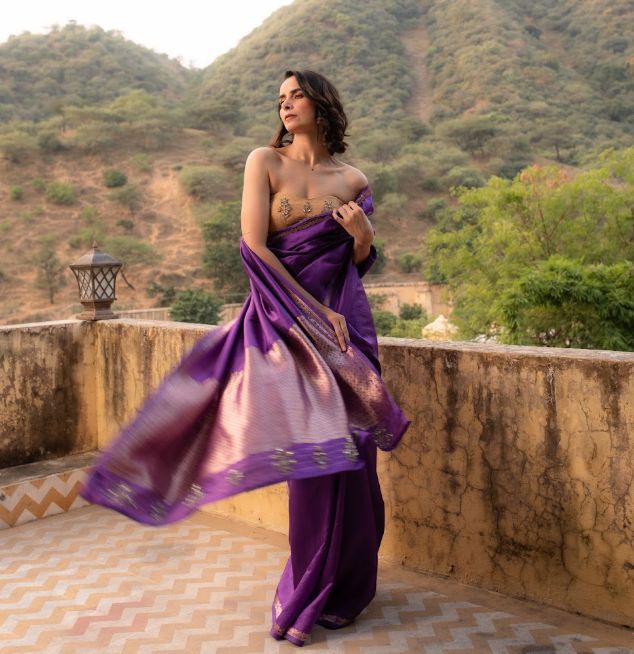
The purple color saree is regal and refined. Associated with wisdom and creativity, it adds an air of quiet grandeur. A purple bridal saree conveys dignity and confidence, while a purple saree for wedding functions brings a sophisticated allure. Even a purple saree for sangeet lends elegance to the festivities.
Gold Saree – Wealth, Grandeur, and Celebrations

Gold stands for abundance and celebration. The gold color saree is often chosen for weddings and festivals, embodying radiance and luxury. A gold bridal saree glows with festivity, and a gold saree for wedding ceremonies becomes the highlight of the event. Even a gold saree for mehendi adds a luminous touch, reflecting prosperity and grace.
Saree Colors in Festivals, Weddings, and Other Rituals
During festivals, colors are chosen with care. Yellow and orange sarees reflect joy during spring festivals, while red and gold sarees dominate during wedding seasons. A green color saree is often worn for religious rituals, representing life and gratitude.
In weddings, saree colors align with emotions: red and gold for the bride’s attire, green for blessings, pink for love, and ivory for purity in rituals. Modern brides sometimes choose a black saree for wedding receptions or a blue bridal saree for unique elegance. Every color finds its place in celebration, weaving tradition and individuality together.
Modern Interpretations of Traditional Saree Colors

Today’s saree colors are embraced with freedom. The meaning behind each hue is respected, but women now blend tradition with self-expression. A black bridal saree symbolizes confidence, a blue saree for wedding receptions conveys calm strength, and an ivory bridal saree is chosen for its pure beauty rather than symbolism alone.
Modern interpretations allow individuality to shine; women wear what feels true to them. The cultural roots of saree colors remain, but their expression has become more personal and empowering.
How to Choose the Right Saree Color for the Occasion?
Choosing a saree color depends on mood, event, and emotion. For festive mornings, a yellow color saree or orange saree for haldi brings brightness. For evening celebrations, a gold or red saree for wedding functions feels grand. A pink color saree or a green saree for wedding ceremonies creates harmony and joy.
An ivory color saree works beautifully for spiritual gatherings, while a black color saree adds poise to receptions. Blue, purple, or gold tones bring refinement to formal events. Each shade carries its own language; it is about choosing what resonates with your spirit and moment. And if you still feel confused, then you can choose the right saree based on your skin tone.
Conclusion
Every saree color tells a story. The red color saree reflects love, the ivory color saree peace, and the yellow color saree happiness. The green color saree celebrates nature, while the blue color saree speaks of devotion. The black color saree symbolizes strength, and the pink color saree represents warmth and joy. The orange color saree glows with energy, the purple color saree shines with wisdom, and the gold color saree radiates prosperity.
From a red to a black or other bridal saree for wedding receptions, every choice becomes personal. The tradition continues, yet evolves with every woman who wears it, reminding us that a saree is not just fabric; it is emotion woven with culture, self-expression, and timeless grace.
Frequently Asked Questions
Q1. Is Chanderi saree good for weddings?
Ans. Yes, Chanderi sarees are elegant and suitable for weddings. Their soft texture and subtle sheen make them ideal for festive and ceremonial occasions.
Q2. Which type of Chanderi saree is best for brides?
Ans. A Chanderi silk saree in red, gold, or pink shades is often preferred for brides, adding both tradition and grandeur to the look.
Q3. How do I style a Chanderi saree for a wedding?
Ans. It can be paired with traditional jewelry and a stylish blouse. Soft curls or a bun complement the fabric’s refined appeal.
Q4. What is the difference between Chanderi silk and Chanderi cotton sarees?
Ans. Chanderi silk sarees are glossier and more formal, ideal for weddings and receptions. Chanderi cotton sarees are lighter, often chosen for day functions or rituals.
Q5. Which color Chanderi saree is best for wedding rituals?
Ans. A red, gold, or green Chanderi saree is often chosen for wedding rituals, reflecting joy and prosperity.
Q6. Can Chanderi sarees be worn for wedding receptions?
Ans. Yes, Chanderi silk sarees in deeper tones like black, blue, or purple are perfect for receptions, offering elegance and comfort.
Q7. Are Chanderi sarees comfortable for all-day wedding functions?
Ans. Yes, they are light and breathable, making them ideal for long events. Their grace remains intact throughout the day.